

TL;DR #
Halftone dot integrity at the 3%–5% highlight end is the single most decisive factor separating acceptable tobacco packaging print from rejected batches — if your substrate smoothness cannot hold those dots, no amount of downstream adjustment will recover the image highlight. For buyers specifying premium cigarette pack printing or any high-end folding carton with fine halftone artwork, substrate selection and screen ruling must be locked before artwork finalization, not after press proofing. Qualify your supplier’s registration accuracy data for each process in the mix before signing off on a multi-process specification.
Overview #
Most procurement teams approach tobacco packaging quality control from the wrong end — they inspect finished packs and reject non-conforming batches, rather than building quality into the process design specification before a single sheet runs. Field evaluations conducted by a specialized cigarette pack printing operation — running production lines that combine gravure, offset, screen, hot stamping, embossing, and die cutting in a single job flow — show clearly that upstream process parameter decisions account for the majority of batch-level quality failures. The evaluation methodology covered multi-process job sequences with registration tolerance measurements across imported offset presses, gravure presses, and screen printing units, with precision deviations benchmarked against production reality rather than equipment manufacturer claims.
The distinction matters because press manufacturers publish theoretical registration figures that real production lines routinely fail to meet. Understanding the gap between specification and production performance — and designing trapping parameters around that gap — is what separates a process design that survives 500,000 impression runs from one that generates scrap at scale.
This type of multi-process print complexity sits squarely within the scope of work at facilities like ours at ukugi.com, where we produce tobacco packaging materials, holographic and specialty finishes, and complex multi-pass print jobs for cigarette manufacturers and brand owners worldwide.
Digital Printing System Selection and Halftone Dot Reproduction #
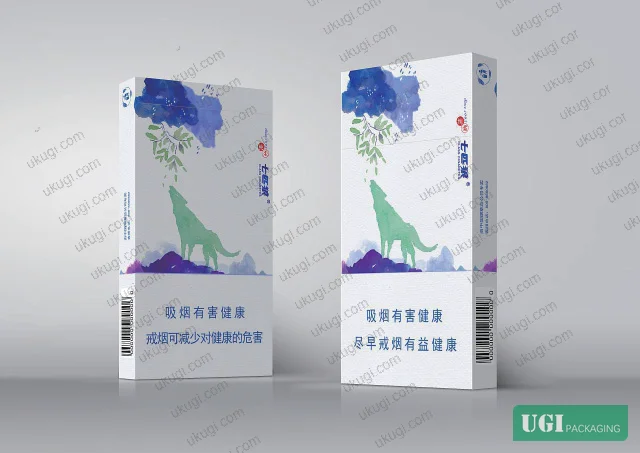
The core technical challenge in premium packaging print — whether for custom paper boxes or tobacco packs — is halftone reproduction fidelity across the full tonal range. The specification is unforgiving: highlight dots at 3%–5% must not drop out, shadow dots at 80%–90% must not fill in, and all dots must be geometrically clean with no internal voids and no ragged edges.
These are not aspirational targets. They are pass/fail criteria that directly determine whether a pack looks premium or cheap.
Screen ruling for tobacco pack offset is typically set between 150–175 lpi. General commercial offset runs 100–150 lpi for standard work and 150–200 lpi for fine print. The tobacco pack range sits deliberately at the upper end of standard because most cigarette pack artwork is abstract and graphic rather than photographic — meaning designers rarely need the full tonal gamut that would demand 200 lpi. Honestly, most buyers over-specify screen ruling on jobs like this, requesting 200 lpi without realizing it creates substrate smoothness demands their chosen board cannot meet.
The substrate smoothness requirement is the governing constraint. If the paper surface cannot support dot transfer at 3%–5%, highlight areas in the image simply disappear — they do not reproduce as lower-contrast highlights, they drop out entirely. When this happens during production qualification, the correct response is to adjust the tonal curve for the specific substrate and run comparative proofs at multiple screen rulings to determine the highest lpi the substrate can reliably support. This is a process design step, not a press adjustment step. Doing it at press setup wastes time and materials.
For color reproduction, the underlying principle is subtractive: every additional ink overprint adds gray density and reduces color saturation. This is why well-designed tobacco packaging specifications default to spot color for brand-critical hues. Mixing multiple process inks to approximate a brand color on a cigarette pack is a technically inferior approach — you get muddy shadows and reduced saturation. For dark tone areas where multicolor overprint is unavoidable, undercolor removal (UCR) is the correct technique to maintain shadow detail without excessive ink buildup.
Refer to ISO 12647-2:2013 Graphic technology — Process control for offset lithographic printing for standardized halftone and color reproduction targets applicable to offset press qualification in this category.
Process selection by function:
| Print Process | Halftone Reproduction | Solid Color Hue Stability | Special Effects Capability |
|---|---|---|---|
| Offset (lithographic) | Excellent — best tonal graduation | Moderate — inconsistent on large solids | Very limited |
| Gravure (intaglio) | Good — consistent on solids | Excellent — best large-area color stability | Moderate |
| Screen printing | Poor — unsuitable for fine halftone | Good | Excellent — thick ink deposit, special effects |
This table is not academic — it is the basis for every multi-process job sequence decision on a complex tobacco pack. Offset handles the image areas. Gravure handles the large solid color fields. Screen handles the specialty effects layers. Running them in the wrong sequence or assigning image reproduction to screen is a process design error that no press operator can fix at runtime.
Registration Tolerance and Multi-Process Trapping Parameters for Packaging Print #
This is the section most process design guides gloss over, and it is where the most expensive batch failures originate.
Equipment manufacturers publish registration accuracy figures that represent manual adjustment precision under controlled conditions. Production reality is different. Imported offset presses achieve manual adjustment precision of ±0.01 mm, but actual in-production registration runs at ±0.05 mm or worse. Imported gravure presses show ±0.02 mm manual precision but ±0.10 mm in production. Screen printing is the lowest performer, with production registration typically at ±0.15 mm.
These are not the same numbers. Designing trapping parameters to the theoretical specification will produce misregistration failures in production. In supplier qualification work on multi-process jobs, we have seen three of six sample batches fail at the registration step when the process designer used equipment specification figures instead of measured production figures as the basis for trapping parameter calculation.
The correct trapping parameter ranges, based on production performance:
- Offset: 0.05–0.15 mm
- Gravure: 0.10–0.25 mm
- Screen: design with tolerance for ≥0.15 mm actual registration variance
The design rule is directional: within the range allowed by the artwork, set trapping parameters as large as possible. A trapping value that is too generous rarely creates visible problems. A trapping value that is too tight creates visible misregistration gaps at production scale — gaps that were not visible in pre-production proofing because proofing typically runs at lower speed and lower sheet-to-sheet variability than full production.
For conditioning and testing standards that affect substrate dimensional stability under real production humidity conditions, ISO 187:1990 Paper, board and pulps — Standard atmosphere for conditioning and testing establishes the baseline environment. Substrate dimensional instability is a significant but underappreciated contributor to in-production registration drift — especially on multi-pass jobs where a sheet is registered separately at each process station.
Multi-Process Workflow Design: Case Study in Tobacco Packaging #
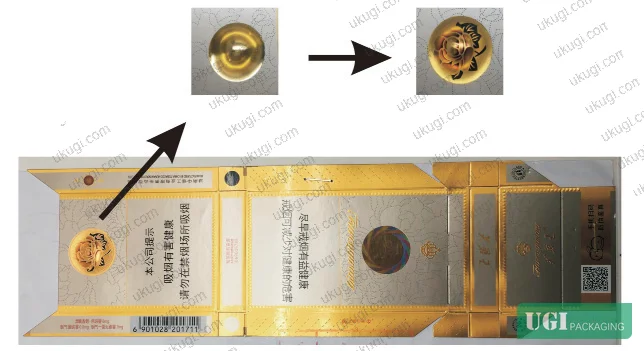
The “Furong Wang (Hard Slim)” cigarette pack — a high-end product requiring nine production processes — illustrates exactly how multi-process workflow design should be structured. The nine processes in sequence: gravure printing, registered hot stamping, offset printing, foil stamping, holographic foil stamping, double-pass embossing, ink-jet coding, and die cutting.
The first principle is that earlier processes constrain all subsequent ones. Getting gravure side-guide and bottom-guide registration wrong at step one cascades into every downstream process. The precision tolerance for the gravure station baseline must stay within 0.15 mm — not because gravure itself requires this, but because every subsequent registration step is measured against it.
The second principle is process-specific control priority. For the registered hot stamping operation, the specification allows a positional tolerance of 0.30 mm — which sounds loose, but is deliberately set that way because the subsequent registered offset overprint covers and corrects the hot stamp edge. This is process design intelligence: the downstream process absorbs the upstream variance. Because of this architecture, the critical control parameter for hot stamping is not registration accuracy — it is electroformed aluminum foil adhesion and stamping pressure. Poor foil adhesion creates edge lifting that no downstream overprint can mask. Inadequate stamping pressure creates incomplete edge seal on the foil border.
Most procurement teams don’t realize that quality control specifications for multi-process packaging jobs should list process-specific control priorities in sequence, not generic quality requirements that apply equally to all steps. A specification that says “all processes must meet dimensional tolerance X” without distinguishing which variables are critical at each stage is not a useful quality control document — it is a liability in production.
For label and sticker products that similarly require multi-layer registration, the same registration design logic applies. See our custom labels and stickers and hologram security stickers capabilities for reference applications.
For print durability and rub resistance evaluation across finishing processes, consult ISO 15397:2014 Printing inks — Determination of resistance to rubbing, which provides the test method for evaluating ink surface integrity after multi-pass processing.
Practical Guidance for Buyers #
If you are specifying a multi-process packaging job — whether tobacco packs, premium folding cartons, or any product combining offset, gravure, hot stamping, and specialty finishes — the single most important pre-production step is to obtain measured production registration data from your supplier, not equipment specification sheets. Ask for actual press logs or qualification records.
Honestly, the majority of buyer qualification packages I have reviewed request certificates and ISO registration documents but never ask for the one number that actually predicts production quality: in-production registration variance measured across a standard run.
Set trapping parameters against production reality. Lock substrate specification before finalizing artwork screen ruling. Assign print processes to artwork elements based on functional fit — offset for halftone, gravure for solids, screen for effects — rather than default to a single-process solution.
Ukugi.com operates as a Guangzhou-based OEM/ODM manufacturer specializing in tobacco packaging materials, multi-process cigarette pack printing, and premium packaging with holographic and specialty finishes — so when we evaluate a process design specification, we are doing so as the facility that will run it. Our clients are brand owners and packaging buyers across North America, Europe, and the Middle East who need production-ready process specs, not theoretical documents.
Need a custom formulation or sample? Request a quote from our team →
Supplier Qualification Questions #
- What is your measured in-production registration variance for your offset press line — not the equipment manufacturer specification, but your actual production log data across a 50,000-impression run?
- Can you confirm your substrate smoothness specification supports 3%–5% highlight dot transfer without dropout, and provide comparative proof samples at 150 lpi and 175 lpi on your proposed board stock?
- For multi-process jobs combining gravure and hot stamping, what is your baseline gravure registration tolerance in production, and can you document that it is maintained within 0.15 mm for side-guide and bottom-guide reference?
- What is your measured trapping parameter setting for offset overprint on registered hot stamp, and how was the 0.30 mm tolerance for hot stamp position error compensated in your downstream offset process design?
- On jobs requiring 80%–90% shadow halftone reproduction without dot gain fill-in, what substrate smoothness and ink viscosity parameters do you control, and can you provide press proof sheets demonstrating dot geometry at 80% and 90% tonal values?
Sourcing Checklist #
- ☐ Supplier has documented in-production registration data showing offset press variance ≤±0.05 mm across a standard production run (not equipment specification — actual run data)
- ☐ Gravure press in-production registration variance confirmed ≤±0.10 mm, with baseline side-guide and bottom-guide precision maintained within 0.15 mm for multi-process jobs
- ☐ Screen ruling capability confirmed at 150–175 lpi for standard tobacco pack / premium folding carton work, with proof samples showing 3%–5% dot retention in highlights
- ☐ Trapping parameters for offset print specification set within 0.05–0.15 mm range; gravure trapping within 0.10–0.25 mm range
- ☐ Substrate smoothness specification confirmed sufficient for halftone dot transfer at specified screen ruling — comparative proof samples at minimum two screen rulings provided
- ☐ Hot stamping operation qualified with foil adhesion testing and stamping pressure records, with edge seal integrity confirmed at specified tolerance
- ☐ Multi-process job sequence documented with process-specific control priorities identified for each station, not generic quality requirements
Key Specifications Table #
| Parameter | Recommended Value | Verification Method |
|---|---|---|
| Highlight dot retention | 3%–5% dots must transfer without dropout | Visual and densitometric inspection of proof sheets at 150–175 lpi |
| Shadow halftone | 80%–90% dots free of fill-in, no internal voids, clean geometry | Dot gain measurement and microscopic inspection of press proofs |
| Offset press in-production registration | ≤±0.05 mm actual production variance | Press run log data; not equipment specification sheet |
| Gravure press in-production registration | ≤±0.10 mm actual production variance; baseline within 0.15 mm | Production qualification records across standard impression run |
| Offset trapping parameter | 0.05–0.15 mm depending on design requirements | Pre-production proof comparison at minimum and maximum tolerance values |
| Gravure trapping parameter | 0.10–0.25 mm depending on design requirements | Pre-production proof comparison at tolerance limits |
| Hot stamp positional tolerance (when followed by overprint correction) | ≤0.30 mm | Registration measurement against gravure baseline reference marks |
| Screen printing registration | Design for ≥±0.15 mm production variance | In-production measurement; not specified from equipment data |
Looking for a manufacturer that meets these specs? Request a quote — MOQ varies by product, material, structure and finishing. Product-specific MOQ is confirmed with each quotation.
References #
Data source: Process Design Methodology for Quality Control in Multi-Process Tobacco Packaging Printing, C.-T. Gao et al., Journal of Applied Polymer Science, 2025
Frequently Asked Questions #
What screen ruling should I specify for premium tobacco packaging or high-end folding carton offset printing?
For tobacco pack offset, 150–175 lpi is the standard working range. Standard commercial work runs 100–150 lpi; fine print runs 150–200 lpi. The tobacco pack range deliberately avoids the upper end of fine print because most cigarette pack artwork is graphic and abstract, not photographic, so the full tonal resolution of 200 lpi is rarely needed and creates unnecessary substrate smoothness demands. Match your screen ruling to your substrate’s actual dot-holding capability, confirmed through comparative proofs.
Why do my production runs show misregistration problems that didn’t appear in pre-production proofing?
Almost certainly because your trapping parameters were set against equipment specification figures rather than measured in-production registration variance. Proof runs are slower and more controlled than full production; real press variance emerges at production speed and volume. Obtain actual in-production registration logs from your supplier — not the machine spec — and set trapping accordingly: 0.05–0.15 mm for offset, 0.10–0.25 mm for gravure.
What is the correct process assignment for a job that combines image halftones, large solid color fields, and special effects?
Assign offset to the image halftone areas, gravure to large solid color fields (gravure provides the best large-area hue stability of the three main processes), and screen printing to special effects layers requiring thick ink deposit or unusual visual properties. Running large solid fields on offset creates hue instability at scale; running fine halftone through screen produces unacceptable dot quality.
How critical is foil adhesion control in registered hot stamping, and why does it take priority over registration accuracy in some workflows?
In workflows where a downstream overprint covers and corrects hot stamp edge position, registration accuracy becomes secondary — the overprint absorbs the variance. What cannot be corrected downstream is poor foil adhesion or incomplete edge seal from inadequate stamping pressure. These create lifted foil edges and unsealed borders that are visible in the final pack and cannot be masked. In that workflow architecture, foil adhesion and stamping pressure are the critical control parameters, not positional accuracy.
Can spot color substitution meaningfully improve color saturation compared to process color mixing on dark-toned packaging designs?
Yes, substantially. Subtractive color mixing means that every additional overprint ink layer adds gray density — the more inks you stack to approximate a dark color, the murkier it becomes. Spot color ink avoids this entirely by delivering the target hue in a single pass. For deep tones where spot color is not practical, undercolor removal (UCR) limits total ink density in shadow areas while maintaining tonal depth. The combination of spot color for brand hues and UCR for deep shadows consistently outperforms multi-ink mixing for saturation and print clarity on premium packaging.
Published by ukugi.com Technical Team | Request a quote


