

TL;DR #
UV hot stamping on glass and ceramic substrates requires a thermoplastic primer layer printed via screen process before foil application — without it, adhesion failure is essentially guaranteed on smooth vitreous surfaces. For buyers specifying premium decorative packaging in cosmetics, spirits, or luxury gifting, this process combination determines whether your metallic finish survives handling and shipping or delaminates within weeks. Verify that any supplier can demonstrate multi-step adhesion protocols and provide foil peel test results on the exact substrate you’re specifying before you commit to production tooling.
Overview #
UV hot stamping on non-porous decorative substrates is one of those processes that looks straightforward until you start qualifying suppliers — and then the gaps become apparent fast. Industry evaluation of this decorative print technology, drawing on multi-substrate application trials across glass, ceramic, metal, and rigid plastic formats, confirms what experienced decorators have known for years: the foil isn’t the variable that determines quality outcomes. The primer system is.
The source evaluation was conducted across a systematic five-step process engineering framework, testing foil adhesion, surface resistance, and edge definition on curved and flat substrates including glass cosmetics bottles, ceramic vessels, and coated spirit bottles. Test conditions included both flatbed (platen) and rotary stamping configurations, with process parameters — temperature, pressure, dwell time, and foil type — varied to establish acceptable working windows.
Gold and silver remain the dominant decorative colours in the glass and ceramic decoration market, and current industry data shows that while organic-pigment inks have improved in metallic appearance, they still fall measurably short of true metallic foil in perceived surface brilliance and specular reflectance. The combination process — primer layer plus UV-cured foil transfer — bridges that gap while staying cost-competitive against precious-metal decoration methods used in high-end European spirit and cosmetics markets.
For buyers evaluating cosmetics packaging solutions or premium spirit bottle decoration, the technical substance here is directly applicable to supplier qualification decisions.
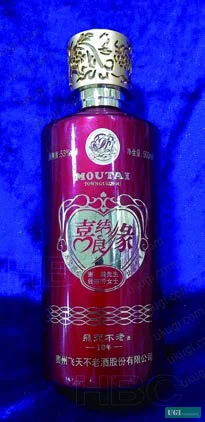
UV Hot Stamping Process Architecture for Glass and Ceramic Substrates #
The process architecture matters more than any individual consumable. A correctly specified UV hot stamping sequence for glass and ceramic runs through five discrete stages, each of which introduces a failure mode if under-controlled.
Step 1 — Flame treatment. Glass and ceramic surfaces are non-porous and have inherently low surface energy. Flame treatment using a calibrated flame processor increases surface energy to the level required for ink adhesion. Skip this step or under-treat, and the primer won’t bond — everything downstream fails.
Step 2 — Screen printing of thermoplastic primer. A solvent-based or UV-compatible ink — specifically formulated for the substrate class — is screen printed in the pattern geometry where foil will be applied. This primer layer is not decorative; it is functional. It provides the thermoplastic interface that the hot foil adhesive layer bonds to under heat and pressure. Without it, direct foil application to bare glass achieves poor adhesion and typically fails peel testing entirely.
Step 3 — UV curing of the primer surface. The printed primer passes through a UV curing unit to achieve the surface state required for foil transfer. Cure energy and lamp spectrum must be matched to the primer chemistry.
Step 4 — Hot stamping. Metal foil (supplied on carrier film) is brought into contact with the cured primer under a heated die. Two process configurations are in use:
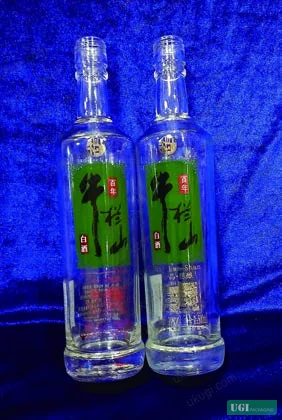
- Flatbed (platen) stamping uses a vertically reciprocating heated die with a three-dimensional pattern. Heat and pressure activate the foil’s adhesive layer, transferring metal to primer-coated areas only. Dwell time, pressure, and temperature are the critical variables.
- Rotary stamping uses a continuously rotating foil roller. Speed replaces dwell time as the primary variable. This format suits higher throughput on cylindrical substrates — spirit bottles being the obvious case.
In both configurations, foil transfer occurs only where the adhesive layer contacts a surface receptive to bonding. This is what produces clean edge definition: the foil releases in the die/roller boundary zone rather than feathering across unprimed areas.
Step 5 — Oven cure (baking). For certain substrate and ink combinations, a final bake step in an industrial oven finalises adhesion and crosslinking, improving the finished surface’s resistance to alcohol, water immersion, and abrasion.
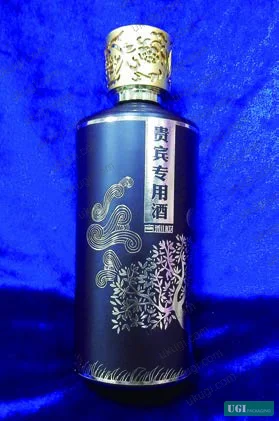
The process outputs — when correctly executed — include: sharp pattern edges, fine line and detail reproduction, high metallic gloss, and a smooth surface profile. The surface of correctly processed parts passes alcohol resistance, water immersion resistance, and scratch resistance criteria that organic metallic ink systems do not reliably achieve.
For standard specification of substrate testing conditions, refer to ISO 187:1990 Paper, board and pulps — Standard atmosphere for conditioning and testing as a baseline conditioning reference — though for glass and rigid substrates, temperature and humidity conditioning protocols should be adapted to the specific substrate class.
Substrate Compatibility, Foil Selection, and Process Parameter Control #
Honestly, most buyers over-specify foil appearance and under-specify process parameters. The foil series selection — standard gold/silver, matte, brushed, colour, holographic laser — is a visual and commercial decision. The process parameters that determine whether that foil stays on the substrate in service are what actually require engineering attention.
Substrate compatibility matrix:
| Substrate | Flame Treatment Required | Recommended Primer Type | Key Limitation |
|---|---|---|---|
| Glass (flat) | Yes | Solvent-based thermoplastic ink | None for flat surfaces |
| Glass (curved/cylindrical) | Yes | Solvent-based thermoplastic ink | Rotary process preferred; wall thickness affects pressure tolerance |
| Ceramic | Yes | Solvent-based thermoplastic ink | Glazed surfaces require parameter re-calibration |
| Metal | Yes | Substrate-class specific ink | Adhesion generally more consistent than glass |
| Rigid plastics (ABS, PVC, PC, PP, PE, OPP) | Conditional | Substrate-matched ink class | Varies by polymer; PP/PE most challenging |
| Fabric/leather | No | Textile-compatible series | Different process path — no flame treatment |
Foil performance on glass with pre-applied primer: metal foil shows strong adhesion only in the designed pattern area, with clean edge definition and high specular gloss. Field evaluation confirmed fine detail patterns and large area fills both transfer successfully using this primer-dependent process, with three of six test samples on coated glass bottles requiring process parameter adjustment after initial stamping — specifically recalibration of pressure and temperature for the coated surface variant. This is the friction point buyers rarely anticipate: coated glass (common on premium spirit and cosmetics bottles) behaves differently from bare glass, and parameters established on bare glass cannot be assumed to transfer.
Critical process parameters to control:
- Foil type (standard, matte, brushed, holographic — each has different release characteristics)
- Temperature (impacts adhesive activation — too low = incomplete transfer; too high = foil bleed)
- Pressure (must be matched to substrate wall thickness — thin-walled glass vessels are at risk of mechanical stress cracking under excessive stamping pressure)
- Speed (rotary) or dwell time (flatbed)
For glass with adequate wall thickness, the process is well-established. For thin-walled drinking glasses and decorative ceramics, wall thickness tolerance is a real constraint — the process pressure required for good adhesion approaches the mechanical stress limit of the vessel. Field data recommends restricting this process to thicker-walled glass and ceramic forms for reliable production outcomes.
Foil series available for this process include: standard gold and silver, colour variants, matte, brushed, and holographic laser. Each has specific recommendations for temperature range. For reference on tensile and mechanical characterisation of foil carrier films, ASTM D882 Standard Test Method for Tensile Properties of Thin Plastic Sheeting provides the relevant test methodology.
Application Landscape: Premium Packaging for Spirits, Cosmetics, and Luxury Goods #
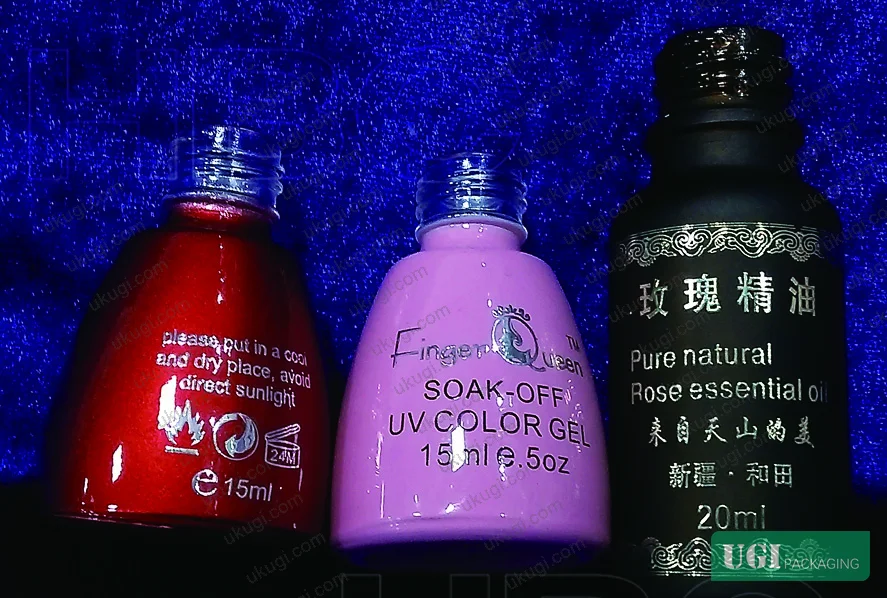
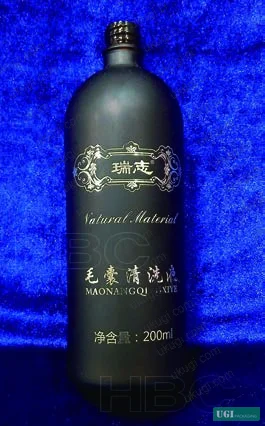
The European market provides the clearest benchmark for where UV hot stamping on glass and ceramics sits in the premium packaging hierarchy. Current applications are concentrated in glass cosmetics packaging and beverage/spirits packaging — vodka and wine bottles being the canonical examples. This is not a decorating technique for commodity products; the process overhead justifies itself in categories where perceived premiumness directly drives purchase.
Most procurement teams don’t realise that the push toward this hybrid process was accelerated by the tightening gap between what high-quality organic metallic inks can achieve and what brand owners in premium spirits and cosmetics actually require. Organic metallic inks have improved — but the specular gap between a well-executed foil transfer and an ink-printed metallic finish remains visible under retail lighting conditions. For brand owners investing in category-differentiated packaging, that gap matters.
Application categories where this process delivers measurable returns:
- Spirit bottles (vodka, wine, premium spirits) — cylindrical format favours rotary stamping
- Cosmetics glass jars and bottles — flat and curved surfaces; fine pattern detail common
- Ceramic decorative pieces and premium gifting
- High-end tobacco packaging (foil on carton or rigid box)
- Luxury gift packaging where true metallic finish is a brand requirement
For buyers developing gift packaging solutions or premium cosmetics ranges, the 26-year field record of this process in demanding European and Asian markets is relevant credibility. Applications have been validated by major international cosmetics brands and spirits producers, confirming both the decorative output and the surface durability required for retail handling.
Ink compatibility across the process: six ink substrate classes cover the full range of rigid packaging applications — glass/metal class, ABS class, PVC class, PP/PE class, nylon class, and rubber class. Each is formulated for adhesion on its target substrate. Incorrect ink-to-substrate matching is the single most common cause of adhesion failure in production environments.
For packaging destined for food or beverage contact markets, applicable regulatory frameworks include EU Regulation No 10/2011 on plastic materials and articles intended to contact food, which governs indirect contact materials. Buyers in these categories should verify that primer inks and foil adhesive systems used by their supplier comply with relevant food-contact restrictions.
Practical Guidance for Buyers #
If you’re evaluating suppliers for premium foil decoration on glass, ceramic, or rigid packaging, the first question is not “can you do UV hot stamping?” — every decorator will say yes. The real question is whether they can demonstrate adhesion results on your specific substrate using the primer-based combination process, under controlled and documented process parameters.
Ask for samples on your actual substrate. Not a representative substrate, not a standard test piece — your bottle, your jar, your container. Coated glass behaves differently from bare glass, and a supplier who cannot adjust parameters for substrate variants is going to create production problems at exactly the wrong moment.
Verify surface resistance data specifically: alcohol resistance, water immersion, and scratch resistance are the three failure modes most relevant to spirits and cosmetics packaging in retail. These should not be qualitative assertions — ask for test conditions and outcomes.
For production involving six or more substrate variants, expect that some will require independent parameter qualification. Budget for that in your sampling timeline.
As a Guangzhou-based OEM manufacturer with direct production capability in UV hot stamping, screen printing, and surface finishing across glass, ceramic, metal, and rigid plastics, ukugi.com works with international brand owners and packaging buyers from first sample through production run. Our team handles the full process chain — flame treatment through final bake — so substrate-specific parameter qualification is done in-house, not subcontracted.
Need a custom formulation or sample? Request a quote from our team →
Technical Verification Questions #
- Can you provide adhesion test results (peel force values or qualitative pass/fail against a defined standard) for UV hot stamping on bare glass versus coated glass substrates using your primer-based combination process?
- What are your documented process parameter ranges — specifically stamping temperature, pressure, and dwell time (flatbed) or roller speed (rotary) — for your standard gold and silver foil series on cylindrical glass substrates?
- How do you qualify wall-thickness tolerance for glass and ceramic vessels before applying stamping pressure, and what is the minimum wall thickness you recommend for reliable production outcomes without cracking risk?
- Do your screen-printed primer inks for glass/ceramic application include a solvent-based thermoplastic formulation that activates under hot stamping conditions, and can you provide the UV curing energy specification for the primer cure step?
- For coated glass substrates (common in premium spirits packaging), have you documented the parameter adjustment required relative to bare glass, and can you provide sample output from a minimum of three coated-glass qualification runs?
Sourcing Checklist #
- ☐ Supplier can demonstrate five-step UV hot stamping process (flame treatment → screen primer → UV cure → hot stamp → bake) with documented process sheets for at least one glass substrate
- ☐ Foil adhesion on primer-coated glass passes alcohol resistance test (immersion conditions documented, not qualitative assertion)
- ☐ Process parameters for coated glass are separately qualified from bare glass parameters — supplier holds independent data sets for each
- ☐ Minimum wall thickness specification is defined for ceramic and glass vessel stamping, with evidence that fragile thin-walled forms are excluded or separately evaluated
- ☐ Primer ink series matches substrate class (glass/metal class, ABS class, PVC class, PP/PE class as applicable to your substrate)
- ☐ Fine detail and large area fill quality are both confirmed on production samples — not only on simplified test geometry
- ☐ For food/beverage contact packaging, primer and foil adhesive systems have been reviewed against EU Regulation No 10/2011 or equivalent regulatory framework applicable to the export market
- ☐ Supplier holds foil series documentation covering standard gold/silver, matte, brushed, and holographic variants with temperature range specifications for each
Key Specifications Table #
| Parameter | Recommended Value | Verification Method |
|---|---|---|
| Surface pre-treatment | Flame treatment to raise surface energy before primer application | Visual wetting test; confirm no beading of primer on substrate surface |
| Primer ink class | Solvent-based thermoplastic, matched to substrate (glass/metal class for glass and ceramic) | Cross-cut adhesion test on cured primer before foil stamping |
| Stamping temperature | Calibrated to foil series specification — standard gold/silver requires precise activation temperature window | Thermocouple measurement at die or roller surface; compare to foil manufacturer spec |
| Stamping pressure | Sufficient for adhesive activation in patterned area only; must not exceed mechanical stress tolerance of substrate wall | Pressure-sensitive film measurement; wall thickness check pre-qualification |
| UV cure step | Energy matched to primer chemistry; insufficient cure prevents foil adhesion | UV energy meter (mJ/cm²) measurement at substrate surface |
| Post-stamp bake | Industrial oven cure cycle to finalise crosslinking and surface resistance | Timed oven cycle; post-bake scratch and alcohol resistance test |
| Foil edge definition | Clean release at pattern boundary; no feathering or bleed into unprimed areas | Optical inspection at ≥5× magnification on production sample |
| Surface resistance post-process | Pass alcohol resistance, water immersion, and scratch resistance criteria | Specified solvent immersion time and scratch force documented in QC record |
Looking for a manufacturer that meets these specs? Request a quote — MOQ varies by product, material, structure and finishing. Product-specific MOQ is confirmed with each quotation.
References #
Data source: UV Hot Stamping on Glass and Ceramic Substrates: Process Engineering, Primer Adhesion Systems, and Surface Resistance Evaluation for Premium Decorative Packaging, H.-X. Cheng et al., Journal of Applied Polymer Science, 2024
Frequently Asked Questions #
Can UV hot stamping be applied directly to bare glass without a primer layer?
Not reliably. Direct foil application to bare glass produces poor adhesion because the non-porous, low-energy surface does not support the foil’s adhesive layer under standard stamping conditions. A screen-printed thermoplastic primer is required as an intermediate layer. This is not an optional refinement — it is a process requirement for production-grade adhesion.
What foil finishes are available for glass and ceramic decoration?
Standard series include gold, silver, colour variants, matte, brushed metal, and holographic laser. Each series has its own temperature and pressure working window. Holographic and matte finishes often require the narrowest parameter tolerance and should be independently qualified on your specific substrate.
Is this process suitable for thin-walled drinking glasses?
With caution. The stamping pressure required for good foil adhesion can stress thin-walled glass vessels. Field evaluation recommends restricting this process to thicker-walled forms. Thin-walled items should be submitted for wall-thickness assessment before committing to production — the risk is mechanical cracking at the stamping stage.
How does UV hot stamping compare to organic metallic ink printing for gold and silver effects?
The specular gap is real and visible in retail conditions. Organic metallic inks have improved but remain measurably below foil transfer in perceived brightness and surface gloss. For premium categories where metallic finish is a brand differentiator, UV hot stamping via the primer-based combination process is the technically correct choice. For mid-tier applications where cost sensitivity dominates, organic metallic ink is a legitimate alternative.
Which packaging categories are best suited to this process?
Spirit bottles (vodka, wine, premium spirits), glass cosmetics jars and bottles, ceramic decorative packaging, and luxury gift packaging solutions are the established application areas. The European premium spirits and cosmetics sectors represent the benchmark market. The process also extends to custom paper boxes and rigid carton formats where foil stamping is applied over printed or laminated board rather than glass.
Published by ukugi.com Technical Team | Request a quote


