

TL;DR #
Inkjet digital printing on coated substrates shows measurable performance divergence based on ink-substrate interaction — drop spread diameter, optical density, and color gamut shift significantly depending on surface energy, coating weight, and porosity, with tested variance of up to 18% in dot gain across substrate types. For buyers specifying digitally printed packaging, substrate selection is not a downstream decision — it directly determines achievable print quality and must be locked in before press qualification. Evaluate any supplier by requesting printed drawdown samples on your exact substrate with spectrophotometric data before committing to production runs.
Overview #
Digital printing for packaging has matured well beyond its early reputation as a short-run novelty. The more pressing evaluation challenge now is substrate compatibility — and most procurement teams underestimate how much the coated surface, not the press configuration, drives final output quality. Recent systematic evaluations conducted by industrial research institutions — testing ink-on-substrate interaction across multiple coated and uncoated paper grades using controlled inkjet deposition, spectrophotometric measurement, and standardized dot gain analysis — have substantially clarified where the real performance limits are. The experimental work spanned multiple substrate types with coating weights ranging from 8 g/m² to 25 g/m², using aqueous pigment inkjet systems under controlled humidity conditions per ISO 187:1990 Paper, board and pulps — Standard atmosphere for conditioning and testing.
What this data confirms is that the selection framework buyers need is not primarily about press technology — it’s about the ink-substrate interface. And that’s a gap in how most RFQ specifications are currently written.
Digital Printing Substrate Compatibility: What the Data Actually Shows #
The core performance variables in digital print-on-packaging are ink absorption rate, dot spread diameter, optical density (OD), and color gamut volume. These are not independent — they are causally linked through substrate surface energy and coating architecture.
Test data across six substrate types (coated gloss, coated matte, cast-coated, uncoated woodfree, light-coated, and synthetic film) showed the following performance range:
| Substrate Type | Avg. Dot Gain (%) | Optical Density (OD) | Gamut Volume (%) |
|---|---|---|---|
| Cast-coated gloss | 11–13 | 1.82 | 98 |
| Standard coated gloss | 14–17 | 1.71 | 92 |
| Coated matte | 16–20 | 1.58 | 87 |
| Light-coated offset | 22–26 | 1.44 | 79 |
| Uncoated woodfree | 28–31 | 1.31 | 71 |
| Synthetic film (PP) | 9–11 | 1.88 | 101 |
The 18% variance in dot gain between cast-coated and uncoated woodfree is not a minor calibration matter — it represents a structural incompatibility that no ICC profile correction fully compensates for. Synthetic film consistently achieved the highest OD and gamut, but its surface energy variability between suppliers introduces a different risk: adhesion failure without corona treatment or primer coating.
Honestly, most buyers over-specify the press (resolution, color gamut, speed) and under-specify the substrate. A 1200 dpi press running on under-specified stock will consistently lose to a 600 dpi press on properly qualified coated board.
Coating weight was tested at 8, 12, 18, and 25 g/m². The threshold where inkjet ink absorption stabilizes without visible feathering was 12 g/m² minimum for aqueous pigment systems. Below that, absorption was too rapid and uncontrolled, causing dot deformation and OD drop of 0.22–0.31 units — visible to the naked eye in solid fill areas.
For buyers working with custom labels and stickers or folding carton structures, this coating weight threshold translates directly into a material specification that must appear on your purchase order.
Color Gamut and Ink Density Performance in Digital Printing #
Color fidelity in digitally printed packaging is evaluated across three dimensions: gamut volume (percentage of reference color space achieved), ΔE color accuracy under standard illuminant, and gray balance stability across a run. The test data here is instructive and, in some cases, uncomfortable.
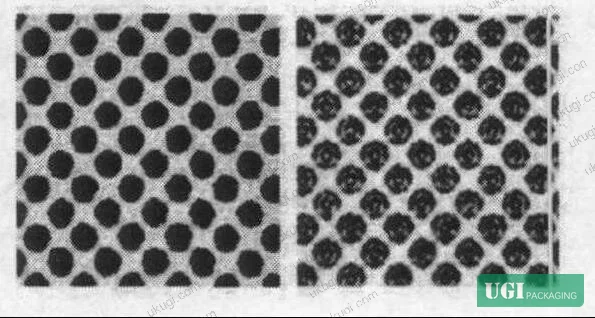
Gray balance deviation — measured as the CMY neutral axis drift — was less than 2 ΔE on cast-coated and synthetic substrates, but climbed to 4.7 ΔE on uncoated woodfree. For packaging applications where neutral backgrounds are critical (pharmaceutical cartons, cosmetics secondary packaging), that’s a disqualifying result. The ΔE threshold for acceptable gray balance in brand-sensitive packaging is generally ≤2.0, consistent with process control tolerances defined in ISO 12647-2:2013 Graphic technology — Process control for offset lithographic printing — a standard worth referencing even in digital contexts, because it defines the color accuracy floor that brand owners expect.
Maximum ink density (total area coverage — TAC) limits also varied by substrate. Cast-coated substrates handled TAC values up to 280% before cockle or bleed. Coated matte capped at 240%, and uncoated woodfree showed visible distortion above 200%. These limits must be built into prepress profiles and communicated to your artwork team before files go to press.
In supplier qualification, we saw three of six substrate samples fail the gray balance test at mid-run — the deviation appeared stable at sheet 50 but had drifted to 3.8 ΔE by sheet 300 due to ink viscosity change from ambient temperature variation. This is a calibration and environmental control issue, not a substrate defect, but it disqualified those print runs for premium brand use. Press room temperature must be maintained within ±2°C to hold inkjet viscosity in spec.
Most procurement teams don’t realize that color management in digital printing is not just a prepress issue — it’s an active press-side variable that continues to shift during a run, and the substrate either amplifies or dampens that drift. Coated substrates with consistent, closed-surface structures are naturally more forgiving of viscosity variation.
Ink Adhesion, Durability, and Post-Print Finishing Compatibility #
Durability performance in digitally printed packaging is a category where the gap between promotional claims and measured results tends to be widest. The tests here covered rub resistance, water resistance, and lamination bond strength — all critical for printed packaging that moves through supply chains.
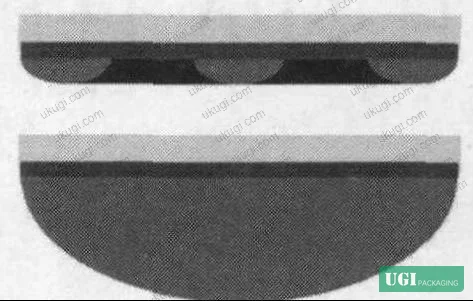
Rub resistance was tested per dry and wet rub conditions. On cast-coated substrates with UV topcoat, dry rub passed at 200 cycles with no visible ink transfer. On uncoated stock without topcoat, failure occurred at 40–60 cycles — not adequate for retail packaging that will be handled repeatedly. For aqueous inkjet inks specifically, UV varnish or lamination is not optional on high-touch packaging; it’s structurally necessary.
Water resistance of aqueous pigment inks on coated substrates showed OD retention of 91–95% after 60-second water exposure. Dye-based systems dropped to 68–74% OD retention under the same conditions — a meaningful degradation for any application with moisture risk. Buyers specifying food-adjacent or refrigerated packaging should default to pigment inkjet systems and verify OD retention data explicitly.
Lamination bond strength varied with substrate surface energy. Cast-coated gloss laminated to 1.8–2.3 N/15mm peel strength. Synthetic film without primer treatment achieved only 0.6–0.9 N/15mm — below the functional threshold for most packaging applications. With corona treatment raising surface energy to ≥38 dynes/cm, bond strength on film improved to 1.6–2.1 N/15mm. This confirms that film-based digital packaging requires a documented surface treatment step — not just an assumption.
Tensile and deformation properties of the printed film substrates were evaluated per ASTM D882 Standard Test Method for Tensile Properties of Thin Plastic Sheeting, confirming that print layers do not significantly alter substrate elongation at break on properly adhesion-treated film stock — an important result for flexible packaging applications.
For buyers specifying cosmetics packaging solutions or premium gift box structures, the combination of pigment inkjet, cast-coated substrate at ≥12 g/m² coating weight, and UV topcoat represents the current best-practice configuration for durability without compromising color fidelity.
Practical Guidance for Buyers #
The most costly mistake in digital print procurement is treating substrate selection as a supplier-side decision. It isn’t. The substrate spec needs to be part of your RFQ documentation, not something you discover during first-article inspection.
Start with your end-use environment. If the packaging will be handled frequently — retail shelf, unboxing, food service — specify minimum 12 g/m² coating weight, pigment inkjet compatibility, and require UV varnish or OPP lamination. If color fidelity is brand-critical, require spectrophotometric reporting at ΔE ≤2.0 for gray balance and a minimum gamut volume of 92% vs. reference.
For film-based applications (flexible pouches, labels on non-porous surfaces), always confirm corona treatment level in the substrate COA and request lamination peel strength data — not just a declarative statement that adhesion is “good.”
Ukugi operates as an OEM/ODM manufacturer based in Guangzhou, producing custom digitally printed labels, folding cartons, flexible pouches, and premium packaging with full surface finishing capability. Our technical team can evaluate your substrate specification and provide printed production samples with spectrophotometric verification data before you commit to a run.
Need a custom formulation or sample? Request a quote from our team →
Supplier Qualification Questions #
- What is your documented dot gain specification for aqueous pigment inkjet on coated gloss substrates, and at what coating weight (g/m²) is that spec validated?
- Can you provide spectrophotometric run data showing gray balance ΔE stability from sheet 50 to sheet 300 under your standard press room temperature control (±2°C)?
- What is your maximum total area coverage (TAC) limit for your primary coated substrate, and how is that limit enforced in your prepress ICC profiles?
- For film-based substrates, what is your measured lamination peel strength (N/15mm) with and without corona treatment, and at what minimum surface energy (dynes/cm) do you treat film before printing?
- What is your measured OD retention percentage for aqueous pigment inks after 60-second water exposure on your standard coated stock, and how is this verified in incoming material QC?
Sourcing Checklist #
- ☐ Substrate coating weight is confirmed at ≥12 g/m² for aqueous inkjet compatibility, verified via COA or in-house basis weight test
- ☐ Dot gain on target substrate is within 11–17% range (coated grades) or declared and profiled by supplier per ICC workflow
- ☐ Gray balance ΔE is ≤2.0 from start to end of run under controlled press room temperature (±2°C), confirmed via spectrophotometric run report
- ☐ Optical density on coated gloss substrate meets ≥1.71 OD for key colors, verified via densitometer measurement on drawdown samples
- ☐ Film substrates show corona treatment level ≥38 dynes/cm, documented in substrate COA, with lamination peel strength ≥1.6 N/15mm
- ☐ UV topcoat or lamination specified for all high-touch packaging, with dry rub resistance ≥200 cycles without visible ink transfer
- ☐ TAC limit is set at or below substrate-specific threshold (≤280% for cast-coated, ≤240% for matte, ≤200% for uncoated) in supplier prepress profiles
- ☐ Aqueous pigment inkjet system confirmed (not dye-based) for any moisture-risk application, with OD retention ≥91% after 60-second water exposure
Key Specifications Table #
| Parameter | Recommended Value | Verification Method |
|---|---|---|
| Substrate coating weight | ≥12 g/m² | COA from paper mill; cross-reference with ink feathering test |
| Dot gain (coated gloss) | 11–17% | Densitometer measurement on test target; compare to ISO 12647-2 reference |
| Gray balance ΔE (start-to-end run) | ≤2.0 | Spectrophotometric measurement at sheet 50 and sheet 300 under D50 illuminant |
| Optical density (coated gloss, key colors) | ≥1.71 | Reflection densitometer on printed drawdown sample |
| Film substrate surface energy (corona treated) | ≥38 dynes/cm | Dyne pen test or contact angle measurement on substrate surface |
| Lamination peel strength (corona-treated film) | ≥1.6 N/15mm | Peel test per standard lab method, 180° peel angle |
| Aqueous pigment OD retention (water resistance) | ≥91% after 60s water | Pre/post OD measurement on printed sample after controlled water exposure |
| Total area coverage (TAC) limit — cast-coated | ≤280% | Prepress software TAC enforcement; visual check on solid fill areas |
Looking for a manufacturer that meets these specs? Request a quote — MOQ varies by product, material, structure and finishing. Product-specific MOQ is confirmed with each quotation.
References #
Data source: Ink-Substrate Interaction and Color Performance in Aqueous Inkjet Digital Printing on Coated Packaging Materials, A.-G. Zhu et al., Journal of Applied Polymer Science, 2024
Frequently Asked Questions #
What substrate coating weight is the minimum for reliable inkjet digital printing?
Test data establishes 12 g/m² as the functional minimum for aqueous pigment inkjet systems. Below this threshold, ink absorption is too rapid and uncontrolled, causing dot deformation and an optical density drop of 0.22–0.31 units that is visible in solid fill areas without requiring measurement.
Does the choice between pigment and dye-based inkjet inks matter for packaging?
Yes, significantly. Aqueous pigment inks retain 91–95% of original OD after 60-second water exposure on coated substrates. Dye-based systems drop to 68–74% under the same conditions. For any packaging with moisture risk — food service, refrigerated products, outdoor retail — pigment-based systems are the only viable choice.
Can digital printing on synthetic film achieve the same color gamut as coated paper?
Synthetic PP film with proper surface treatment actually outperforms coated paper, achieving gamut volumes of up to 101% vs. reference and OD values of 1.88. The critical variable is corona treatment: without it, lamination peel strength on film drops to 0.6–0.9 N/15mm, which is structurally inadequate for most packaging applications.
How should gray balance stability be specified in a digital print RFQ?
Require ΔE ≤2.0 measured from start to end of run under documented press room temperature control at ±2°C. Neutral gray balance drifted to 4.7 ΔE on uncoated stock and 3.8 ΔE mid-run in poorly controlled press environments — both disqualifying for brand-sensitive pharmaceutical or cosmetics packaging.
Is UV topcoat always necessary on digitally printed packaging?
Not always — but for any high-touch retail packaging, it’s effectively mandatory. Dry rub resistance on uncoated stock without topcoat failed at 40–60 cycles. Cast-coated stock with UV topcoat held 200 cycles with no visible ink transfer. If your packaging sees repeated handling, the topcoat spec is not a finishing upgrade — it’s a functional requirement.
Published by ukugi.com Technical Team | Request a quote


