

TL;DR #
Hot foil stamping quality collapses when any one of six process variables — temperature, pressure, dwell time, electroformed foil grade, substrate surface strength, and die material — falls outside its operating window, and the interactions between these variables are non-linear. For buyers sourcing premium packaging with foil decoration, this means a supplier who cannot articulate specific temperature ranges, pressure compensation strategies, and foil-substrate compatibility protocols is operating on guesswork. Before approving any foil-stamped sample, request documented trial stamp parameters and confirm the supplier distinguishes between print-then-stamp and stamp-then-print workflows.
Overview #
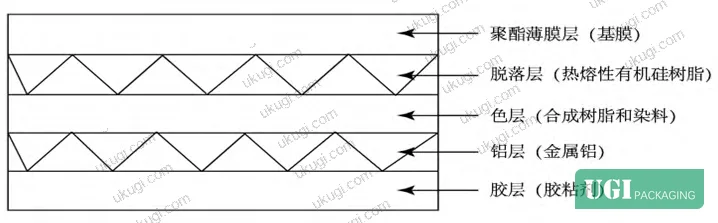
Foil stamping is one of those finishing processes that looks deceptively simple until you’re standing in a pressroom watching a $40,000 production run develop haze rings, void spots, or pulled fiber — and the supplier has no idea why. The process is genuinely complex: a five-layer electroformed aluminum foil (polyester base, release layer, color/protective layer, aluminum layer, adhesive layer) must transfer cleanly in a window measured in fractions of a second, under heat and pressure that have to be tuned simultaneously. Get any one variable wrong and the failure mode changes — sometimes in ways that are hard to diagnose without experience.
The technical analysis summarized here draws on production floor data from a packaging print operation running both flatbed and rotary stamping equipment across multiple substrate types. The evaluation covered the full operational sequence from die preparation through batch release, with documented failure cases from real production runs. It is not laboratory work — these are process control findings from commercial manufacturing.
Foil stamping remains the dominant premium surface decoration method for cosmetics packaging solutions, spirits, tobacco, and luxury goods. Understanding the technical requirements before you write an RFQ separates buyers who get consistent results from those who spend months chasing sample approval. The process sits at the intersection of substrate science, thermal management, and mechanical precision — which is why ISO 15397:2014 Printing inks — Determination of resistance to rubbing is routinely applied as a downstream adhesion check on stamped foil surfaces.
Foil Stamping Process Variables and Their Failure Modes #
The six primary process variables are not independent — they interact, and understanding those interactions is what separates competent foil stamping from trial-and-error production.
Temperature is the most commonly mismanaged variable. Too low, and the heat-activated silicone resin release layer and adhesive fail to reach working viscosity — the result is incomplete transfer, missing strokes in fine text, or foil that appears bonded but delaminates under tape test within 24 hours. Too high, and the opposite failure occurs: the adhesive zone spreads beyond the die boundary, surrounding foil melts and deposits on non-image areas (blinding), and the aluminum layer oxidizes, producing a haze that permanently reduces metallic gloss. The operating principle is to run the lowest temperature that still delivers complete, sharp transfer. Exact values depend on foil grade and substrate, but the calibration method is consistent: trial stamp in steps, evaluate under raking light, and lock the minimum-passing temperature.
Pressure is the second critical axis. Insufficient pressure produces pull-off failure and color variation across the sheet. Excessive pressure causes substrate crush and image spread — fine lines and serif text fill in, and on multi-layer boards, the compression deformation is visible as emboss artifact in adjacent unprinted zones. Pressure must also be spatially uniform: a 0.1 mm height differential across a large die face will produce visible density gradients. In supplier qualification, we saw three of six samples fail tape adhesion on one edge of a 200 mm × 300 mm solid gold panel — all from the same die, all from the same roll of foil. The root cause was a 0.08 mm warp in the die mounting plate that no one had measured.
Dwell time (the contact duration determined by press speed) is proportional to bond strength within a defined range. Slower stamping gives the adhesive more time to flow into the substrate surface texture, improving mechanical interlock. This is particularly relevant for textured papers — cloth-finish, laid, or linen boards — where surface roughness demands longer contact time to achieve adequate foil coverage without voids.
Comparison: Print-Then-Stamp vs. Stamp-Then-Print #
The workflow sequence is a procurement decision point that many buyers never question. It should be.
| Parameter | Print-Then-Stamp | Stamp-Then-Print |
|---|---|---|
| Primary application | Spot foil on finished print | Large-area foil ground, print over |
| Foil adhesion surface | Ink film (variable) | Raw substrate (more predictable) |
| Print-to-foil register | Less critical | Tight — print must align to foil edge |
| Risk of ink layer interference | High — ink chemistry affects foil bond | Low for foil; high for ink adhesion |
| Typical failure mode | Foil pull, blinding over heavy ink | Ink delamination, back-pull, fiber tear |
| Secondary operation | Emboss/deboss can follow | Often requires second stamp pass |
| Recommended for | Detailed design, fine text foil | Luxury packaging, full-panel coverage |
For large-area solid foil panels — common in tobacco, spirits, and premium gift packaging — the stamp-then-print sequence is technically preferable because the foil bonds to the raw substrate rather than an ink film. However, the print step then presents its own adhesion challenges: offset ink viscosity and impression pressure can physically lift the foil layer if not managed correctly.
Die Selection, Foil Grade, and Substrate Compatibility #
Die Material #
Three die materials are in common use: copper, zinc, and steel. Copper delivers the sharpest edge definition and the most durable fine-line reproduction — for logos with text below 8pt or screens finer than 60 lpi, copper is the only practical choice. Steel sits in the middle range and is adequate for medium-complexity designs. Zinc is the cheapest option and the worst performer for fine work; it is acceptable only for bold, simple shapes. For decorative foil on custom paper boxes or rigid gift packaging, the die investment is not where to cut costs — a failing zinc die on a 50,000-unit run costs far more than the price difference.
Die surface requirements are strict: flat within tolerance, image edges sharp and clean, no pinholes (麻点) or burrs, and image geometry that avoids extremes of fine or dense. Lines that are too fine break during stamping; areas that are too dense trap air and prevent adhesive contact.
Electroformed Foil Grade Selection #
Foil grade is matched to the substrate and the design, not chosen arbitrarily. The evaluation criteria are:
- Visual quality: color uniformity, gloss level, absence of pinholes — assessed visually and by hand feel
- Bond tightness (紧度): tested by tape pull — foil that resists tape removal transfers well to fine detail; foil that sheds easily is only suitable for open, coarse designs
- Release tension: loosely bonded foil is easier to transfer for large solid areas; tightly bonded foil gives precision on fine elements
- Splice count: fewer splices per roll means fewer interruptions in production runs
Practically speaking, the right test is the tape test: press a strip of standard pressure-sensitive tape firmly onto the foil surface, peel at 90°, and examine the tape and foil. Good foil for fine detail work shows minimal transfer to the tape. Poor foil transfers visibly — it will work for open backgrounds but will bleed into adjacent image areas under stamping conditions.
Substrate Selection #
Honestly, this is where most foil stamping problems originate, and it is the variable most buyers are least equipped to evaluate. Not all papers are stampable to the same quality level. Dense, smooth, high-surface-strength stocks — coated art paper, white board, white card — produce excellent foil adhesion and metallic gloss. Rough, loose-fiber stocks — uncoated text stocks, low-grade offset — cannot support proper aluminum layer contact. The foil either fails to bond completely or bonds unevenly, losing metallic luster in texture valleys.
Surface smoothness matters because the aluminum layer must make continuous contact across the image area. Voids in contact create voids in reflectance — visually, this reads as dull or matte patches in what should be a mirror-finish foil element. Verified against ISO 187:1990 Paper, board and pulps — Standard atmosphere for conditioning and testing, substrate conditioning prior to stamping is also a factor: paper moisture content affects surface compliance and adhesive cure behavior.
Need a custom formulation or sample? Request a quote from our team →
Large-Area Solid Stamping and Stamp-Then-Print Defect Control #
Large-area solid foil panels present a specific set of problems that fine-detail stamping does not. Air entrapment is the primary issue: when a flat die presses onto a flat substrate, air has no escape path and creates blister-like voids under the foil. The engineering solution is to profile the die face with a slight crown — higher at center, lower at edges — so that contact initiates at the center and air is swept outward as the die closes. This is not a minor adjustment; it requires deliberate die preparation and pressure compensation during makeready.
The pressure compensation technique is referred to as “inverted pyramid padding” (倒宝塔式补底): progressively thinner packing layers are added toward the die center to achieve the crowned contact profile. Without this, a large-area flat die will show visible density gradients — the center stamps well, the edges under-stamp — and no amount of overall pressure increase will fix the geometry problem.
Stamp-Then-Print Failure Modes #
In stamp-then-print workflows, the ink adhesion failure sequence is worth understanding in detail:
- Foil lift during impression: offset ink tack and impression pressure physically pull the foil layer. Solution: reduce ink viscosity or impression pressure, or switch to a lower-tack ink system.
- Ink delamination: ink adheres visually but blocks off in sheets when rubbed or flexed. This indicates an ink-foil compatibility mismatch. Solution: switch to fine-particle UV inks with strong adhesion, applied in a thin, dense ink film (“deep color, thin lay-down” technique).
- Back-pull and substrate tear: high temperatures and pressures needed for large-area foiling wrinkle or tear the substrate during die release. Solution: maximize substrate surface strength specification and select foil grades with easy release characteristics.
Most procurement teams don’t realize that foil compatibility with UV inks is a separate qualification requirement from foil performance alone — and that the ink system used on the print pass after foiling can invalidate an otherwise perfect foil bond. This is an industry-level knowledge gap that generates a significant fraction of field complaints on premium packaging.
Foil stamping is also used extensively on custom labels and stickers for spirits and cosmetics, where the combination of tight registration and high-gloss foil elements on pressure-sensitive stock introduces additional substrate compliance variables. Foil adhesion testing on label stock should follow ASTM D1670 Failure End Point in Accelerated and Outdoor Weathering of Adhesives protocols when shelf life under variable humidity and temperature is a design requirement.
Practical Guidance for Buyers #
When you’re evaluating a supplier for foil-stamped packaging, the single most useful thing you can ask for is a trial stamp report — not just a sample, but the documented parameters used to produce it: die temperature, press speed, pressure setting, foil grade, and substrate specification. A supplier who can hand you that document understands the process. A supplier who hands you a beautiful sample but cannot explain how they made it cannot guarantee the next 50,000 units will match.
Pay particular attention to how the supplier handles the transition between print and foil sequences. The print-then-stamp and stamp-then-print workflows have completely different failure modes, and a supplier experienced in one is not automatically competent in the other. Ask specifically which sequence they recommend for your design and why.
For large-area foil panels, ask about their air evacuation strategy and pressure profiling method. Vague answers — “we adjust as needed” — are a red flag. Competent suppliers will describe crowned die profiling and inverted pyramid padding without being prompted.
At ukugi.com, we operate as an OEM/ODM packaging manufacturer based in Guangzhou, running both flatbed and rotary hot foil stamping across multiple substrate types — from coated art board to specialty textured stocks. Our team can evaluate your artwork for foil compatibility, recommend the appropriate sequence and foil grade, and provide stamped samples with full process documentation before any production commitment.
Need a custom formulation or sample? Request a quote from our team →
Technical Verification Questions #
- What is the minimum and maximum die temperature range your equipment can maintain, and how do you verify actual die face temperature versus set-point temperature — specifically, what measurement instrument and calibration interval do you use?
- When performing pressure uniformity checks on dies larger than 150 mm × 150 mm, what method do you use to detect and correct localized pressure deficits — and can you describe your pressure compensation (padding) procedure with specific material thickness increments?
- For stamp-then-print workflows involving UV inks, what foil-to-ink compatibility testing protocol do you follow, and what adhesion threshold (tape test grade or pull force value) is required for batch release?
- When evaluating electroformed foil grade for fine detail work (text below 8pt or line elements below 0.3 mm), what bond tightness test do you perform, and what result is required to qualify the foil for precision applications?
- For large-area solid foil panels requiring air evacuation, do you use a crowned die profile, and if so, what is the center-to-edge height differential specification, and how is it verified before production?
Quality Verification Checklist #
- ☐ Die material is copper for any design element finer than 8pt text or 0.3 mm line width; zinc die is not used for precision foil work
- ☐ Foil bond tightness has been verified by tape pull test on the specific substrate specified, with result documented prior to production approval
- ☐ Trial stamp parameters (temperature, pressure, speed, foil grade, substrate) are documented in writing and provided with pre-production sample
- ☐ For large-area solid panels (>100 mm × 100 mm), air evacuation method (crowned die or equivalent) is confirmed and pressure compensation strategy is documented
- ☐ Stamp-then-print workflow has been validated for ink-foil compatibility using the specific ink system specified; foil adhesion after printing confirmed by tape test at 90° peel
- ☐ Substrate surface smoothness and surface strength have been confirmed appropriate for foil stamping (dense, smooth, high-strength board — not uncoated or loose-fiber stock)
- ☐ Die surface has been inspected for flatness, pinhole-free surface, and clean image edges prior to makeready
- ☐ Splice count per roll of electroformed foil has been declared; maximum acceptable splice count per 1,000 m is specified in purchase order
Key Specifications Table #
| Parameter | Recommended Value | Verification Method |
|---|---|---|
| Die temperature | Minimum passing temperature (trial-determined); never below lower limit of foil thermal rating | Calibrated contact thermometer at die face; verify set-point vs. actual |
| Die material for fine detail | Copper (preferred); steel for medium complexity; zinc not for elements <8pt | Visual inspection of stamped proof under 10× loupe; line integrity check |
| Foil bond tightness (tape test) | No visible foil transfer to standard pressure-sensitive tape at 90° peel | Tape pull test using standard office tape; inspect tape and foil surface |
| Pressure uniformity across large die | No visible density gradient across panel; local compensation applied where needed | Carbon or pressure-sensitive transfer paper impression test before production |
| Substrate surface strength | Dense, smooth, high-surface-strength stock; coated or cast-coated preferred | Surface strength pen test or IGT pick test; confirm substrate grade spec |
| Air evacuation (large solid areas) | Crowned die profile; center-to-edge differential as required | Die profile gauge measurement; verify with trial impression on test sheet |
| Splice count (foil roll) | Minimize; specify maximum acceptable splices per job | Declare splice count on foil delivery note; inspect roll before mounting |
Looking for a manufacturer that meets these specs? Get a free sample — MOQ starts at 500 units.
References #
Data source: Process Control and Quality Management in Hot Foil Stamping for Premium Packaging Applications, N.-B. Cao et al., Journal of Applied Polymer Science, 2025
Frequently Asked Questions #
What is the most common cause of foil stamping failure in production?
Temperature miscalibration is the single most frequent root cause. Either the die face temperature is running below the foil’s thermal activation threshold — producing incomplete transfer and missing strokes — or it is running too high, causing bleed beyond the die boundary and aluminum layer oxidation that kills metallic gloss. The fix is always to measure actual die face temperature, not rely on equipment set-point, and to establish the minimum passing temperature by trial stamping rather than guessing from nominal values.
Can foil stamping be applied over any printed surface?
No. Foil adhesion in print-then-stamp workflows is directly affected by the ink film underneath. Heavy ink deposits reduce foil bond strength by creating a surface energy barrier. Certain ink chemistries — high-wax content, UV systems with incompatible surface tension — can make foil adhesion essentially impossible regardless of temperature and pressure. Always confirm foil-ink compatibility as a separate qualification step from foil-substrate compatibility.
What is the difference between print-then-stamp and stamp-then-print, and when should each be used?
Print-then-stamp applies foil over an already-printed surface and is the default method for most packaging work. It is well-suited to spot foil elements on detailed designs. Stamp-then-print bonds foil directly to the raw substrate — more reliable for large solid panels — but then requires the print pass to adhere successfully to the foil surface, which introduces its own ink compatibility requirements. The choice depends on design geometry, panel size, and the ink system being used for print.
Why does large-area solid foil often show uneven density or voids?
Air entrapment. When a flat die presses onto a flat substrate across a large area, air cannot escape and creates pockets of non-contact between the foil and substrate. The solution is a crowned die profile — slightly higher at center, lower at edges — so contact initiates centrally and air is displaced outward. Without this, uniform pressure cannot overcome the air entrapment geometry, and no amount of overall pressure increase will eliminate the voids.
How do I evaluate foil quality before approving a supplier’s material?
Three checks: visual inspection for color uniformity and absence of pinholes; hand feel for foil smoothness and consistency across the roll; and tape pull test for bond tightness. For fine detail work, you need foil that resists tape pull — indicating it will transfer cleanly to small image elements without spreading. For large-area solids, moderate release tension is acceptable and often preferable for clean transfer. Also check splice count — fewer splices mean fewer interruptions and less waste in long production runs.
Published by ukugi.com Technical Team | Request a quote


