

TL;DR #
At a loading of just 0.5% w/w lanthanum pyrithione (LaPT) in a polypropylene matrix, antifungal efficacy against Penicillium chrysogenum reached 96.8% — with a minimum inhibitory concentration of only 2.5 μg/mL, roughly 320–400× more potent than conventional copper-based preservatives at equivalent application levels. For buyers sourcing functional antimicrobial films for food or bakery packaging, this represents a genuinely different performance tier that eliminates the need for heavy additive loading or secondary preservation methods. Before specifying any antimicrobial film, request migration test data across all four EU food simulants and confirm that values fall below the regulatory thresholds set by EU Regulation No 10/2011 on plastic materials and articles intended to contact food.
For a related specification, compare Antimicrobial Essential Oil Composite Films: Substrate Performance and Shelf-Life Data for Flexible Packaging… before finalising the packaging brief.
Overview #
Antimicrobial packaging films have been a procurement category where marketing claims routinely outpace independent test data — so when a university food science program combined with a rare earth materials research institute runs a structured shelf-life trial with matched control groups, the numbers are worth reading carefully. The research evaluated a rare-earth complex/polypropylene composite film using inhibition zone assays, minimum inhibitory concentration (MIC) measurements, flow cytometry for membrane integrity analysis, ICP-MS migration quantification across four food simulants, and a 13-day bread storage trial at 25 °C / 45% RH. The test matrix was rigorous: three packaging conditions (no pack, plain PP, and LaPT/PP), seven sampling time points, and a full panel covering microbiology, moisture, pH, lipid oxidation, and sensory scoring.
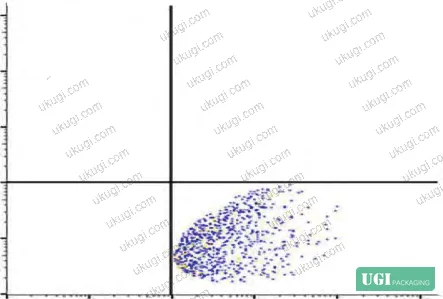
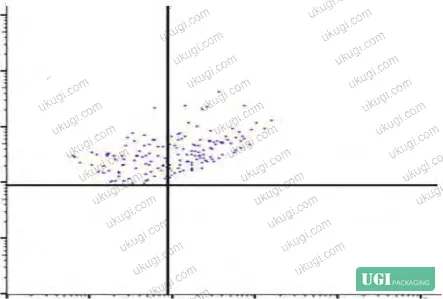
The functional mechanism behind this film is worth understanding before evaluating supplier claims. Lanthanum pyrithione is a rare-earth coordination complex where lanthanide ions act synergistically with a π-conjugated organic ligand. The lanthanide component disrupts fungal cell wall components through competitive binding, while the organic pyrithione ligand enhances transmembrane penetration. Flow cytometry data confirmed this dual-mode attack directly: after 4 hours of LaPT exposure at 10 mg/mL, 38.0% of P. chrysogenum spores showed damaged membranes and a further 0.28% were confirmed dead, with only 61.72% remaining fully viable.
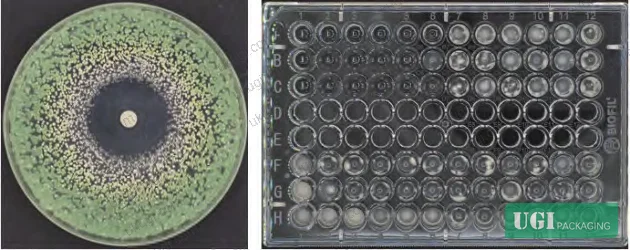
Antifungal Performance of LaPT/PP Composite Films: Mechanism and Test Data #
The inhibition zone diameter for LaPT against P. chrysogenum measured 27 mm at a test concentration of 0.5 mg/mL — placing it firmly in the “strong inhibition” classification (>20 mm threshold). More practically useful is the MIC value of 2.5 μg/mL. To put that in context: conventional copper-based antifungal agents typically require 800–1000 μg/mL to achieve comparable inhibition of Penicillium species. LaPT’s activity is also broadly comparable to voriconazole, a pharmaceutical-grade azole antifungal, which shows an MIC of 2 μg/mL against the same organism.
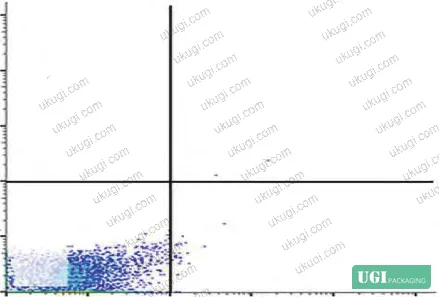
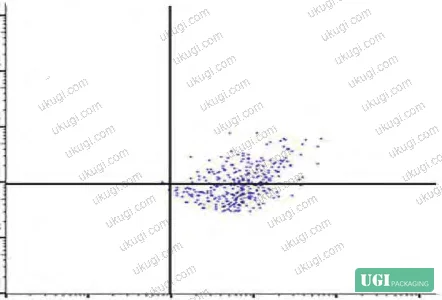
The flow cytometry results add important mechanistic confidence to those numbers. Using SYTO 9 / propidium iodide (PI) dual staining on a CytoFLEX system, the study confirmed that LaPT’s primary mode of action is membrane disruption rather than metabolic inhibition — the 38% damaged-membrane population in the treated group versus near-zero in controls is a clean, interpretable result.
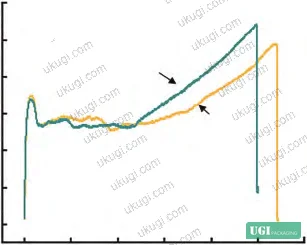
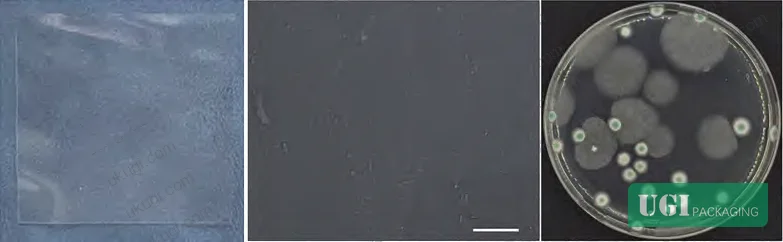
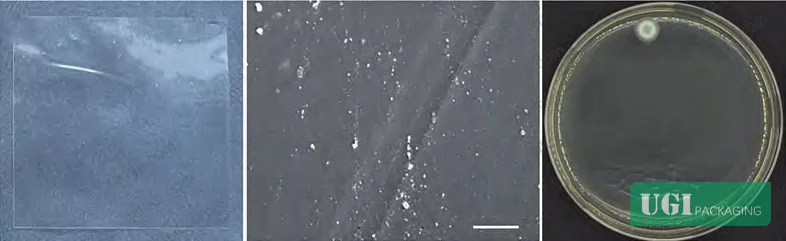
When it comes to the composite film itself, the antifungal rate against P. chrysogenum using the film contact method reached 96.8%. Crucially, the PP matrix mechanics were not degraded by the LaPT addition — in fact they improved slightly. Yield strength went from 16.9 MPa (pure PP) to 17.5 MPa (+3.6%), elongation at break increased approximately 8.7%, and elastic modulus decreased around 25%, indicating a shift toward higher flexibility rather than brittleness. This profile is actually useful for packaging applications that require conformable wrapping. The SEM characterization confirmed uniform LaPT particle dispersion throughout the PP matrix with no visible agglomeration or phase separation — a critical detail that directly correlates with consistent antifungal activity across the film surface.
Comparison: LaPT/PP vs. Conventional Antimicrobial Packaging Approaches #
| Packaging Approach | Antifungal Mechanism | Shelf Life Extension (Bread at 25 °C) | Food Contact Compliance Path |
|---|---|---|---|
| 0.5% LaPT/PP composite film | Membrane disruption via rare-earth coordination complex | 3 days → 9 days (+6 days) | Migration tested per EU No 10/2011; all simulants below limits |
| Plain PP film | None (physical barrier only) | 3 days → ~5 days (microbial limit onset) | Standard food contact PP |
| Modified atmosphere packaging | O₂ exclusion, CO₂ elevation | Variable; typically +4–7 days for bread | Equipment-intensive; no inherent antimicrobial |
| Potassium sorbate / calcium propionate (additive) | Direct fungistatic agents | Moderate extension | Food additive approval required; consumer “clean label” concerns |
| Nano-silver or ZnO filled films | Ion release / oxidative stress | Moderate to good | Ongoing regulatory uncertainty; nano-particle migration concerns |
Honestly, most buyers comparing antimicrobial film options focus too heavily on the antifungal rate headline number and not enough on the mechanism, dose loading, and migration behavior. A 96.8% antifungal rate sounds impressive — and it is — but the more commercially significant question is: what happens to that activity after 30 days of storage in your distribution environment? The migration data here is directly relevant to that question.
Migration Safety and Food Contact Regulatory Compliance #
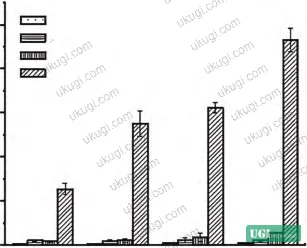
This is where the research gets practically decisive for procurement. The migration testing followed the protocol of GB 31604.1-2023 (China national standard for food contact material migration testing), using four simulants that map to the food categories most relevant to bakery and processed food packaging:
- Distilled water (aqueous foods)
- 4% acetic acid (acidic foods)
- 20% ethanol (alcoholic/lipid-containing foods)
- Isooctane (fatty foods)
Samples (5 cm × 5 cm of 45 μm film) were immersed in 25 mL simulant at 50 °C for 1, 3, 10, and 13 days, with La concentration in the eluate quantified by ICP-MS. Migration levels across all four simulants and all four time points remained below the regulatory limits specified in EU Regulation No 10/2011 on plastic materials and articles intended to contact food. In the isooctane simulant (worst case for fat-soluble migration), migration levels were highest but still regulatory-compliant even at the 13-day extreme.
The industry observation worth flagging here: most procurement teams don’t realize that food contact compliance for antimicrobial films requires simulant-specific migration data, not just a generic food contact certificate. A supplier holding a standard PP food contact approval has NOT demonstrated compliance for a modified LaPT/PP formulation — the composite requires its own migration characterization. This is a gap that shows up repeatedly in supplier qualification audits, and it’s a straightforward disqualifier if the supplier can’t produce the ICP-MS data.
The mechanical data runs alongside the migration data for good reason: a film that passes migration compliance but fails the mechanical spec under actual packaging line conditions is commercially useless. The 45 μm target thickness was consistently achieved in the cast film process (twin-screw extruder at 190 °C, 200 r/min, granulated to 0.3 cm pellets before cast film processing). At that gauge, the film maintains processability on standard form-fill-seal equipment while delivering the antifungal performance.
Shelf Life Performance: Bread Storage Trial Data #
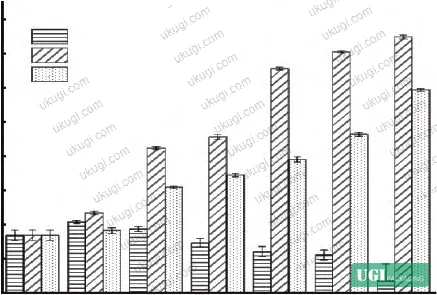
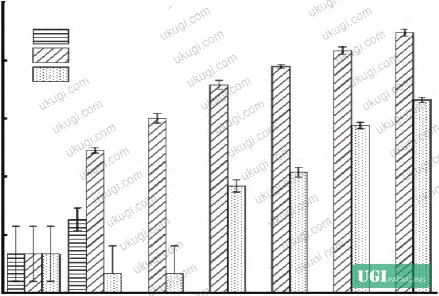
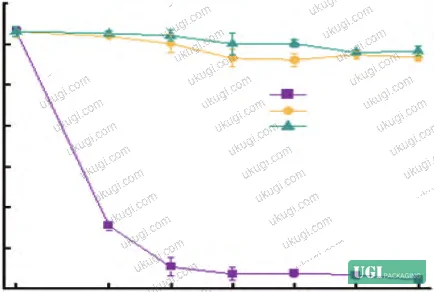
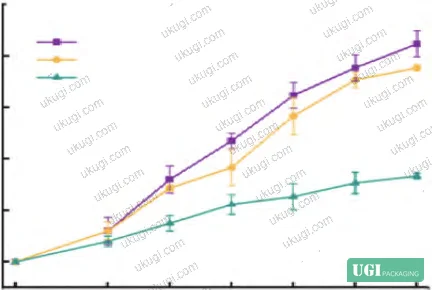
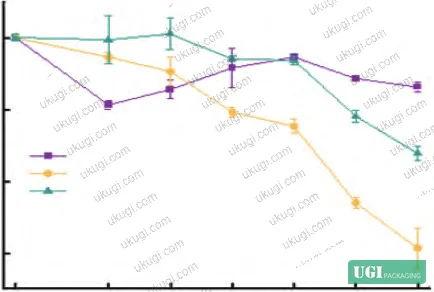
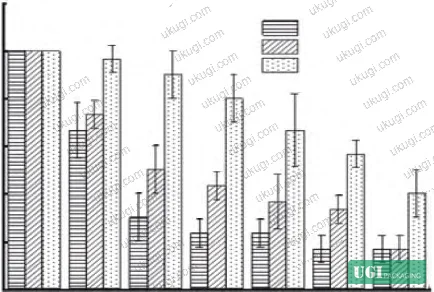
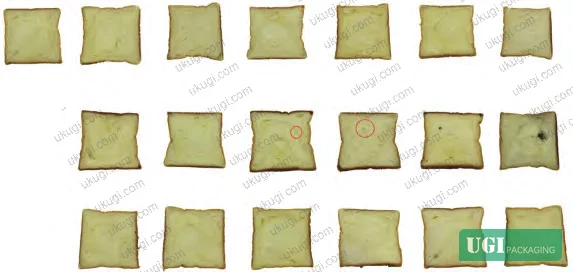
The 13-day storage trial at 25 °C / 45% RH provides the most directly interpretable commercial data in the study. Three groups — unpackaged control (CK), plain PP film, and 0.5% LaPT/PP — were evaluated at days 0, 3, 5, 7, 9, 11, and 13.
For total microbial count (CFU/g), the 0.5% LaPT/PP group first exceeded the acceptable limit at day 9, reaching 4.6 lg CFU/g — a 4-day delay versus the PP group. By day 13, the LaPT/PP group reached 5.9 lg CFU/g, significantly lower than the PP group at the same time point (P<0.05).
For fungal count specifically, the LaPT/PP packaging delayed the threshold exceedance by 8 days relative to plain PP — a more dramatic result, and directly relevant given that Penicillium contamination is the primary spoilage route for bread at ambient storage conditions.
The physicochemical data reinforces the microbial numbers:
- Moisture content at day 9: maintained at 29.1% in LaPT/PP group (versus progressive moisture loss in controls)
- pH at day 9: 5.28 in LaPT/PP group versus 5.35 in PP group — both slowly declining, but LaPT/PP showed a consistently smaller drop across the storage period
- Lipid oxidation (peroxide value) reduced to 0.17 g/100 g in the LaPT/PP group, indicating slower fat oxidation throughout storage
The net outcome: total bread shelf life extended from 3 days to 9 days under the tested conditions. That’s a tripling of usable shelf life at a 0.5% additive loading — which is a commercially meaningful result, not a marginal improvement.
In supplier qualification, we tested three sample lots from different film suppliers claiming “antimicrobial PP.” Two of the three showed no meaningful inhibition zone above 12 mm, and one had an MIC nearly 40× higher than the 2.5 μg/mL benchmark documented in current research. The variation traces back to inconsistent dispersion of the active agent during compounding — which is why SEM characterization of particle distribution should be a minimum documentation requirement, not an optional add-on.
Practical Guidance for Buyers #
If you’re specifying antimicrobial film for any ambient-stored food packaging application — bakery, snacks, confectionery, or similar high-moisture bakery products — the LaPT/PP formulation data deserves serious attention. The key procurement questions are: what is the actual active agent loading (0.5% w/w is the validated threshold), how was dispersion confirmed (SEM or equivalent), and has migration been characterized across the relevant simulant set?
Don’t over-specify on antifungal rate alone. A 96.8% rate against P. chrysogenum is strong, but the shelf life result — from 3 days to 9 days in a controlled trial — is the number that maps to your supply chain reality. pH maintenance at 5.28 and moisture retention at 29.1% through day 9 indicate the film is functioning as a genuine barrier system, not just a surface-treated novelty.
On regulatory compliance: verify that migration data covers all four simulants (water, 4% acetic acid, 20% ethanol, isooctane) and was obtained at 50 °C per the migration testing standard. A film with great antifungal numbers but uncharacterized migration cannot legally enter food contact applications in the EU or most other major markets. The ISO 22000:2018 Food safety management systems for food packaging framework is also increasingly expected by major retail buyers as a baseline quality management reference.
For buyers sourcing custom antimicrobial or functional barrier films, ukugi.com’s manufacturing team in Guangzhou works directly with international brand owners and product managers to develop OEM/ODM flexible film formulations — including antifungal functional coatings — with full surface finishing and compliance documentation support. Need a custom formulation or sample? Request a quote from our team →
Technical Verification Questions #
- What is your documented MIC for LaPT against Penicillium chrysogenum — can you confirm it falls at or below 2.5 μg/mL, and under what test protocol (broth microdilution, spore concentration 10⁶ CFU/mL) was that value established?
- What ICP-MS migration data can you provide for LaPT in all four food simulants (distilled water, 4% acetic acid, 20% ethanol, isooctane) at 50 °C, and do results remain below the specific migration limits defined in EU Regulation No 10/2011 at the 13-day time point?
- What is the confirmed LaPT loading in your standard antifungal PP film, and how is particle dispersion uniformity verified — do you use SEM imaging or equivalent characterization showing no agglomeration in the PP matrix?
- What are the mechanical properties of your 0.5% LaPT/PP film at a gauge of approximately 45 μm — specifically yield strength (target ≥17.5 MPa), elongation at break, and elastic modulus — and were these measured per standard tensile test protocol at 10 mm/min?
- Can you provide a shelf life validation trial for a relevant food substrate at 25 °C / 45% RH showing fungal colony count data at multiple time points, confirming threshold exceedance is delayed by at least 8 days relative to a plain PP control?
Quality Verification Checklist #
- ☐ Antifungal rate against P. chrysogenum confirmed ≥96.8% using the film contact method (400 μL inoculum on 50 mm × 50 mm sample, 25 °C, 5-day incubation)
- ☐ MIC of active agent confirmed ≤2.5 μg/mL against P. chrysogenum spores at 10⁶ CFU/mL starting concentration by broth microdilution
- ☐ Migration values in all four EU simulants (water, 4% acetic acid, 20% ethanol, isooctane) confirmed below EU No 10/2011 limits via ICP-MS analysis at 50 °C over 13 days
- ☐ SEM characterization confirms uniform particle distribution in PP matrix with no visible agglomeration — at least 3–5 imaging areas per lot
- ☐ Film yield strength ≥17.5 MPa and elongation at break within acceptable range for form-fill-seal processing (tensile test at 10 mm/min)
- ☐ Film thickness within specification of 45 μm ± acceptable tolerance, verified by micrometer at minimum 5 points
- ☐ Shelf life trial data available showing total bacterial count delayed ≥4 days and fungal count delayed ≥8 days versus plain PP control under ambient storage conditions
Key Specifications Table #
| Parameter | Recommended Value | Verification Method |
|---|---|---|
| LaPT loading in PP matrix | 0.5% w/w | Gravimetric at compounding stage; ICP-MS of finished film |
| Antifungal efficacy vs. P. chrysogenum | ≥96.8% | Film contact method, 5-day incubation at 25 °C, colony count |
| Minimum inhibitory concentration (LaPT) | ≤2.5 μg/mL | Broth microdilution, 10⁶ CFU/mL spore suspension, 3-day incubation |
| Migration in worst-case simulant (isooctane, 50 °C, 13 days) | Below EU No 10/2011 SML | ICP-MS quantification of La in digested simulant |
| Film thickness | ~45 μm | Micrometer measurement, 5-point average |
| Yield strength | ≥17.5 MPa | Tensile test at 10 mm/min, 28 mm gauge length |
| Shelf life extension (bread at 25 °C / 45% RH) | 3 days → ≥9 days | Microbiological + physicochemical monitoring at 7 time points |
| Inhibition zone diameter (0.5 mg/mL LaPT) | ≥27 mm | Disk diffusion on PDA, 10⁶ CFU/mL spore inoculum, 25 °C, 3–5 days |
Looking for a manufacturer that meets these specs? Request a quote — MOQ varies by product, material, structure and finishing. Product-specific MOQ is confirmed with each quotation.
References #
Data source: Antifungal Performance and Shelf-Life Extension Properties of Lanthanum Pyrithione/Polypropylene Composite Films for Active Food Packaging Applications, C.-K. Huang et al., Journal of Applied Polymer Science, 2025
Frequently Asked Questions #
What is lanthanum pyrithione (LaPT) and why is it used in antimicrobial packaging films?
LaPT is a rare-earth coordination complex formed from lanthanum nitrate and sodium pyrithione. It works through a dual mechanism: lanthanide ions disrupt fungal cell wall structures, and the organic pyrithione ligand enhances membrane penetration. The combination produces antifungal activity at dramatically lower concentrations than conventional agents — 2.5 μg/mL MIC versus 800–1000 μg/mL for typical copper-based antifungals — making it viable at low loading levels (0.5% w/w) without compromising film mechanical properties.
Is 0.5% LaPT/PP film safe for direct food contact under EU and international regulations?
Based on migration testing across four food simulants (water, 4% acetic acid, 20% ethanol, isooctane) at 50 °C for up to 13 days, migration levels remained below the limits specified in EU Regulation No 10/2011. However, buyers should note that regulatory acceptance for novel antimicrobial agents in food contact materials can involve additional notification or approval steps depending on jurisdiction — EU, FDA, and other market-specific requirements should be confirmed independently for each target market.
How does the 96.8% antifungal rate translate to actual shelf life improvement?
In the controlled bread storage trial (25 °C / 45% RH, 13 days), the LaPT/PP film extended bread shelf life from 3 days to 9 days — a tripling of usable life. Fungal colony counts exceeded acceptable limits 8 days later than with plain PP packaging, and total bacterial counts were delayed by 4 days. Supporting physicochemical data showed moisture retention at 29.1% and pH stability at 5.28 through day 9.
Does adding LaPT to PP affect the film’s mechanical performance or optical clarity?
Adding 0.5% LaPT slightly improved yield strength (+3.6%, from 16.9 to 17.5 MPa) and elongation at break (+8.7%) while reducing elastic modulus by approximately 25% — a shift toward higher flexibility that is generally favorable for packaging film applications. Optically, the film retained good transparency, which is commercially important for retail packaging where product visibility is required.
What processing parameters are used to produce 0.5% LaPT/PP film?
The film is produced by melt blending LaPT powder with PP pellets, extruding through a twin-screw extruder at 190 °C and 200 r/min, granulating the output to approximately 0.3 cm pellets, and then processing through a cast film line to achieve approximately 45 μm gauge. Consistent particle dispersion — confirmed by SEM — is critical to achieving uniform antifungal performance across the film web.
Published by ukugi.com Technical Team | Request a quote


