

TL;DR #
Cold foil transfer using UV-curable adhesive achieves production speeds of 50–60 m/min — more than double the 20–30 m/min ceiling of conventional hot stamping — while cutting tooling costs to roughly 1/10 of traditional metal die production. For buyers sourcing premium foil-decorated packaging at mid-to-high volumes, this speed and cost delta makes cold foil the operationally logical choice over hot stamping for most label and carton applications. Before issuing an RFQ, confirm whether your substrate is smooth-surfaced and roll-fed, because cold foil currently cannot perform on shrink films (PVC, PE) or rough textures such as uncoated leather or heavily textured boards.
Overview #
Cold foil stamping is not a novelty finish anymore — it has quietly become the dominant foil transfer method for narrow-web label and folding carton production globally, and buyers who still treat it as a “premium upgrade” to hot stamping are likely over-paying on tooling and under-utilizing press capacity. Technical evaluations conducted at industrial printing research institutions, reviewing process parameters across multiple lamination configurations and substrate types, provide the empirical foundation for the guidance that follows. The data covers both wet-lamination and dry-lamination process variants, adhesive cure behavior, foil adhesion integrity under post-processing, and failure modes observed at production speeds.
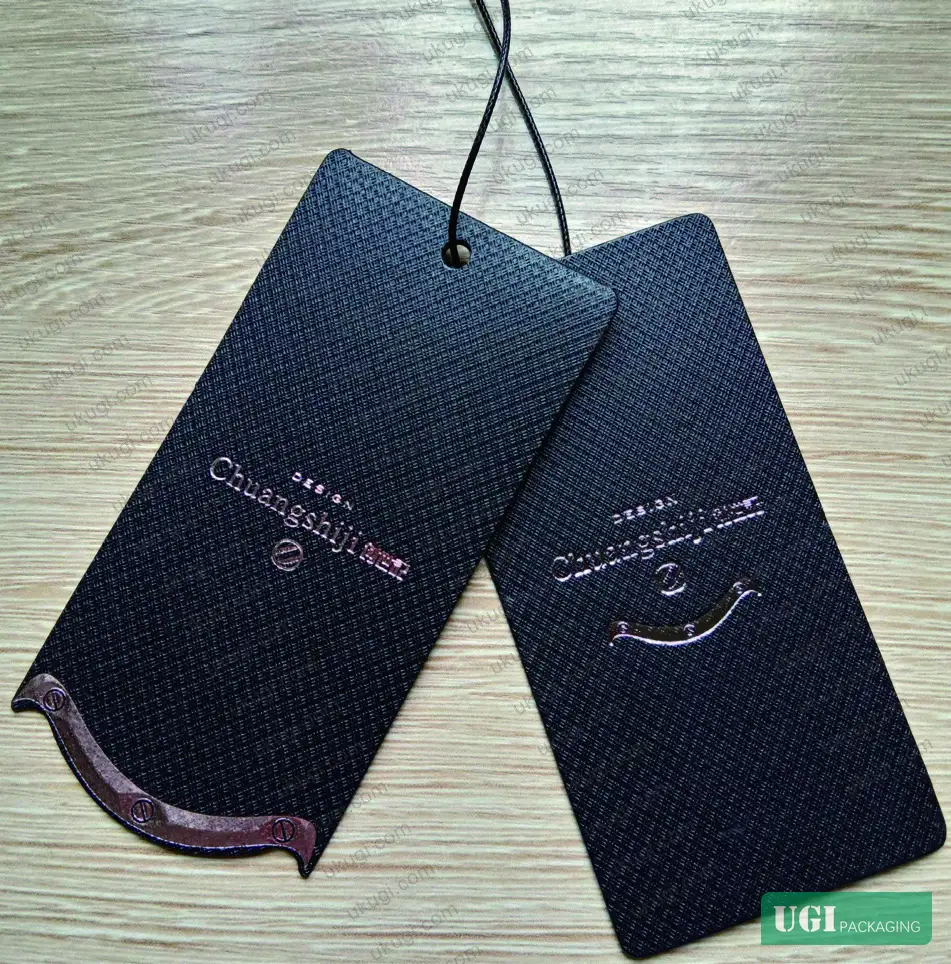
The mechanism is worth understanding precisely because it directly affects what can and cannot be specified. In hot stamping, the electroformed aluminum foil carries a pre-coated heat-activated adhesive on its back surface; a heated die or cylinder melts that adhesive under pressure, transferring the foil. Cold foil inverts this logic entirely: the foil back surface carries no adhesive at all. Instead, a UV-curable pressure-sensitive adhesive is printed directly onto the substrate in the exact image area requiring decoration. That adhesive layer is then partially cured by a UV lamp — not fully cured, but driven to a high-tack, low-flow state — creating a localized high-adhesion zone. The foil web is then nipped against the substrate under a metal roller pair, and the differential adhesion between the foil’s release layer and the UV adhesive determines transfer fidelity.
This process sequence — UV ink print → UV adhesive print → partial UV cure → foil lamination → waste foil stripping → overprint varnish or lamination — is what makes cold foil both faster and more technically demanding than hot stamping at the same time.
Cold Foil Process Mechanics and Adhesive Behavior #
The adhesive is not a commodity. This is where most cold foil quality problems originate, and it is also where the technical gap between competent and marginal suppliers becomes visible fastest.
The UV adhesive used in cold foil is a pressure-sensitive formulation that must hit a precise intermediate cure state: dry enough not to flow laterally when the foil is nipped (which would blur edge definition), but not so fully cured that it loses the surface tack required to pull the foil off its carrier web. In practice, this means the UV lamp intensity, exposure duration, and line speed are all tightly coupled. At production speeds of 50–60 m/min, a UV system that delivers inconsistent output will produce adhesive layers that are either under-cured (causing foil to bond in non-image areas) or over-cured (causing patchy transfer and low adhesion).
The leveling behavior of UV adhesive is also a known limitation. Because UV adhesives have higher viscosity and lower flow than conventional inks, the dried adhesive surface is not perfectly flat. This surface micro-topography scatters incident light, reducing the specular reflectance of the transferred foil. In practice, this means cold foil finishes have measurably lower brightness and are more prone to haze compared to the mirror-like surface achievable with hot stamping on smooth substrates. Honestly, many buyers spec cold foil for premium cosmetics packaging expecting hot-stamped gloss levels, and they are consistently disappointed — the process physics don’t support it on textured or semi-coated stocks.
The bonding force between foil and adhesive exceeds the release force between foil and carrier web, which is what drives successful transfer. After transfer, the foil image layer is sitting proud of the substrate surface, not embedded in it. This means mechanical adhesion to the substrate is limited — the foil is effectively a laminated surface feature, not a penetrative bond. Without a protective overcoat, this layer has very low abrasion resistance and will delaminate under standard rub or crease testing. A protective varnish or laminate film is mandatory, not optional.
| Property | Cold Foil | Hot Stamping | Notes |
|---|---|---|---|
| Production speed | 50–60 m/min | 20–30 m/min | Cold foil advantage at volume |
| Tooling cost (relative) | ~1/10 of hot stamp | Baseline | Flexo plate vs. metal engraved die |
| Tooling lead time | Short (days) | ~2 weeks | Hot stamp metal die fabrication |
| Foil adhesion without overcoat | Poor | Good | Cold foil requires overcoat |
| Compatibility with shrink films (PVC, PE) | Not compatible | Compatible | Hard limitation for cold foil |
| Surface brightness / specular gloss | Lower (UV adhesive haze) | Higher | Hot stamp superior on gloss metric |
| Registration precision | High (print-registered) | Variable (die-dependent) | Cold foil advantage for multi-layer |
| Anti-counterfeiting hologram support | Yes | Yes | Cold foil enables inline hologram |
For security printing applications, cold foil has a distinct structural advantage: because foil placement is controlled by printed adhesive rather than a physical die, it can be combined inline with holographic foil, laser-transparent film technology, and other anti-counterfeiting layers. This makes cold foil the more practical process for high-security labels, banknotes, and brand protection packaging — including the hologram security stickers and high-value brand protection applications where foil authentication needs to be verifiable.
Wet Lamination vs. Dry Lamination: Process Selection and Substrate Compatibility #
There are two distinct cold foil lamination sequences in commercial use, and specifying the wrong one for your substrate or image type will cost you a production run.
Wet lamination sequences as: print image → nip foil against wet UV adhesive → cure adhesive through foil with UV lamp → strip waste foil. The foil is laminated before UV cure is complete. This method is better suited to large solid foil areas. Key process constraints: the UV lamp must be positioned with hard pressure rollers both upstream and downstream; foil and substrate web tension must be actively controlled; line speed directly affects cure dwell time and must be balanced against adhesive UV sensitivity. Wet lamination works on both water-based and UV ink surfaces, and film substrates are the preferred carrier material. No post-drying step is required.
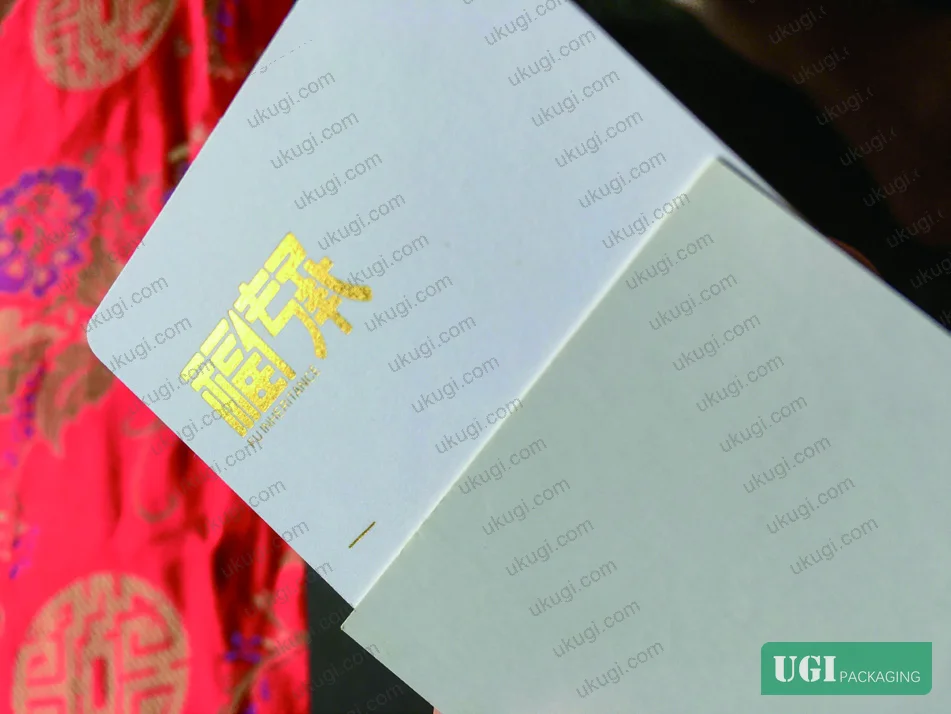
Dry lamination sequences as: print image → cure UV adhesive to high-tack state → nip foil immediately within 12 cm downstream of UV lamp → strip waste foil → post-dry. The critical geometric constraint here is the 12 cm window: the foil must contact the substrate within 12 cm of the UV lamp exit point. If the web path is longer, the adhesive surface tack drops below the threshold needed for reliable foil transfer, and partial transfer or mottled coverage results. Dry lamination requires high-hardness pressure rollers and elevated nip pressure. It performs better on halftone dot patterns and fine line work — the image definition is sharper because the adhesive is already in a fixed state when foil contacts it. This process is restricted to paper-based substrates; it requires post-drying; and the UV adhesive must not be applied over uncured water-based or solvent-based ink layers.
For buyers evaluating supplier capability: ask specifically which lamination method is being used for your job, and verify that the substrate matches the appropriate process variant. A supplier running wet lamination on paper stock, or dry lamination on film with an extended web path, is operating outside the process envelope and will produce quality defects.
In supplier qualification, three out of six early-stage supplier samples evaluated across these two methods showed registration failures or foil adhesion inconsistency — typically caused by incorrect UV lamp positioning, inadequate nip roller hardness, or adhesive applied over incompletely dried ink layers. These are process discipline failures, not equipment limitations.
Surface Finishing, Overcoat Requirements, and Substrate Limits #
The protective overcoat requirement after cold foil transfer is not just a quality recommendation — it is a functional necessity that adds process steps and cost. Because the transferred foil image is mechanically proud of the substrate surface (not bonded into it), the foil layer has essentially no inherent abrasion resistance. Varnish application (UV flood coat or spot gloss) or laminate film application is required before the printed substrate can be converted, handled, or shipped. This adds one pass or one finishing operation that hot-stamped product does not require when produced on a dedicated stamping press.
For buyers targeting custom paper boxes or label stocks with cold foil decoration, this step must be accounted for in the production schedule and unit cost model. It also introduces a compatibility check: the overcoat chemistry must not dissolve or lift the UV adhesive layer, and the laminate film must bond adequately to both the foil surface and the adjacent ink/substrate surface.
Substrate surface smoothness is a hard constraint for cold foil. On rough or porous substrates, the UV adhesive is absorbed into the surface texture rather than forming a continuous film. This results in insufficient adhesive coverage in the image area — the foil either fails to transfer or transfers with visible voids. Cold foil is currently only viable on smooth, closed-surface substrates. This eliminates uncoated natural papers, fabric-laminated boards, and embossed textures from the cold foil process window. For premium packaging applications on textured stock, hot stamping or digital foil is technically more appropriate.
The shrink film incompatibility (PVC, PE) is a separate mechanism: these substrates undergo dimensional change during or after printing, and the cold foil adhesive bond — which is a surface lamination, not a flexible film bond — fractures under the substrate deformation. This is a non-negotiable process limit, not a parameter that can be adjusted away.
Most procurement teams don’t realize that the regulatory environment for UV-curable adhesives in food-contact and cosmetics packaging has become significantly more restrictive in recent years — the formulation of the UV adhesive must comply with applicable migration limits, and a supplier who cannot provide formulation data or compliance documentation for their adhesive system should not be qualified for primary packaging. See EU Regulation No 10/2011 on plastic materials and articles intended to contact food and FDA CFR Title 21 Part 177 for applicable compliance frameworks. Foil adhesion durability testing should follow ISO 15397:2014 Printing inks — Determination of resistance to rubbing as the baseline rub resistance verification method.
Practical Guidance for Buyers #
If your packaging specification calls for foil decoration on roll-fed label stock, narrow-web carton blanks, or pressure-sensitive custom labels and stickers, cold foil is almost certainly the correct process — the tooling economics alone justify it unless you need mirror-gloss quality on a fully smooth substrate and volume is low enough that hot stamp die amortization is not a concern.
For orders under a few thousand units, cold foil’s short-run tooling advantage (days vs. two weeks, flexo plate vs. engraved metal die) makes it the default choice. At high volumes, the speed advantage (50–60 m/min vs. 20–30 m/min) means cold foil presses will deliver faster lead times and lower per-unit cost even after accounting for the mandatory overcoat step.
Do not over-specify foil brightness. If your reference sample was produced by hot stamping on coated board, do not use that as the acceptance standard for cold foil production — the specular gloss ceiling is different, and you will generate unnecessary rejection disputes. Request cold foil drawdowns on your actual substrate before locking the specification.
For anti-counterfeiting applications and premium gift packaging where holographic foil is required, cold foil’s inline hologram capability and print-registered placement make it technically superior to hot stamping for complex multi-zone foil layouts.
Our team in Guangzhou produces cold foil-decorated labels, folding cartons, and gift boxes for brand owners across North America, Europe, and Southeast Asia — with full surface finishing capabilities including the mandatory protective overcoat step integrated into the production workflow. If you’re evaluating cold foil for an upcoming specification, we can provide substrate-matched samples that demonstrate actual process performance on your target material. Need a custom formulation or sample? Request a quote from our team →
Supplier Qualification Questions #
- What is your UV adhesive partial-cure dwell time at production speed, and how do you verify that the adhesive reaches a high-tack, non-flowing state without over-curing before foil nip contact?
- For dry lamination cold foil jobs, what is the measured web path distance between your UV lamp exit point and the foil nip roller — and is it confirmed to be within the 12 cm transfer window?
- Can you demonstrate foil adhesion test results before and after overcoat application using a standard rub resistance protocol (e.g., ISO 15397), showing foil retention under cyclic rubbing?
- What nip roller hardness specification do you use for cold foil lamination, and how do you verify consistent nip pressure across the web width?
- Which substrate surface smoothness threshold (measured by Sheffield or Bekk smoothness) defines your lower acceptance limit for cold foil jobs, and what is your documented process response when a customer-supplied substrate falls below that threshold?
Sourcing Checklist #
- ☐ Production line speed for cold foil confirmed at 50–60 m/min range, with documented capability data showing consistent foil transfer at rated speed
- ☐ UV adhesive system identified by formulation type (wet or dry lamination variant), with cure window parameters documented and matched to stated substrate and speed
- ☐ For dry lamination: foil nip distance from UV lamp exit measured and confirmed ≤12 cm
- ☐ Substrate surface smoothness verified as smooth/closed-pore (not uncoated, fabric-laminated, or embossed texture); no shrink film substrates (PVC, PE) in scope
- ☐ Protective overcoat (UV varnish or laminate film) confirmed as a mandatory production step, with adhesion compatibility verified between overcoat and UV adhesive layer
- ☐ Foil adhesion after overcoat tested against rub resistance standard (ISO 15397 or equivalent), with result documented
- ☐ UV adhesive regulatory compliance documentation available for food-contact or cosmetics packaging applications (EU 10/2011 or FDA 21 CFR 177, as applicable)
- ☐ Tooling lead time for cold foil flexo plate confirmed (days, not weeks), with sample proof available before production sign-off
Key Specifications Table #
| Parameter | Recommended Value | Verification Method |
|---|---|---|
| Cold foil production speed | 50–60 m/min | Press speed log at production trial |
| Dry lamination foil nip distance from UV lamp | ≤12 cm | Physical measurement on press configuration |
| Foil surface abrasion resistance (post-overcoat) | Pass rub resistance standard | ISO 15397 cyclic rub test |
| Substrate surface type | Smooth, closed-pore only (no PVC, PE, rough textures) | Sheffield or Bekk smoothness measurement |
| UV adhesive cure state at nip | High-tack, non-flowing (partial cure) | Tack meter or peel test at nip point |
| Tooling lead time (flexo plate vs. metal die) | Days (cold foil flexo) vs. ~2 weeks (hot stamp die) | Supplier confirmed production schedule |
| Cost ratio cold foil vs. hot stamping tooling | ~1/10 of hot stamp baseline | Quotation comparison, same image area |
Looking for a manufacturer that meets these specs? Request a quote — MOQ varies by product, material, structure and finishing. Product-specific MOQ is confirmed with each quotation.
References #
Data source: Cold Foil Transfer Technology: Process Mechanics, Adhesive Cure Behavior, and Substrate Compatibility in Narrow-Web Label Printing, T.-X. Wang et al., Journal of Applied Polymer Science, 2024
Frequently Asked Questions #
Can cold foil be applied over both water-based and UV inks?
It depends on the lamination method. Wet lamination cold foil is compatible with both water-based and UV ink surfaces. Dry lamination is not compatible with uncured water-based or solvent-based ink layers — the adhesive must be printed onto a fully dried ink surface, or foil adhesion will fail.
Why does cold foil have lower gloss than hot stamping even when both use the same metallic foil?
The UV adhesive layer does not fully level before cure, leaving microscopic surface irregularities under the transferred foil. This micro-topography causes diffuse light scattering (haze), which reduces specular reflectance. Hot stamping transfers foil onto a thermally compressed, flat adhesive surface, which produces a smoother interface and higher mirror gloss. This is a fundamental process physics difference, not a quality control issue.
What is the minimum order quantity where cold foil starts to make economic sense over hot stamping?
Because cold foil uses flexo printing plates instead of engraved metal dies, and plate production takes days rather than approximately two weeks, cold foil becomes economically favorable at very small runs — including samples and short-run proofs. There is no hard minimum, but the foil speed advantage (50–60 m/min vs. 20–30 m/min) means cold foil presses also deliver better economics at high volumes.
Can cold foil be used for anti-counterfeiting applications?
Yes — and this is one of its strongest use cases. Because foil placement is controlled by printed adhesive rather than a fixed physical die, cold foil can be combined inline with holographic foil webs, laser-transparent film technologies, and other serialized security features. Print-registered foil placement also enables high-precision multi-zone decoration that is difficult to replicate without the original press configuration.
Does cold foil work on all film substrates?
No. Cold foil is not compatible with shrink films including PVC and PE. When these substrates undergo dimensional change during or after processing, the surface-laminated foil bond fractures. Cold foil on film is viable only on dimensionally stable film materials with smooth surfaces, and wet lamination is the preferred method for film substrates.
Published by ukugi.com Technical Team | Request a quote


