

TL;DR #
Aqueous UV-curable polyurethane-acrylate (PUA) varnish dried at 60°C for 5 minutes achieves rapid moisture release and film cure simultaneously — a performance threshold that standard water-based acrylate systems cannot reach. For buyers sourcing post-print coating for high-throughput packaging lines, this distinction directly determines whether you can eliminate lamination without sacrificing line speed. Before issuing any RFQ for water-based varnish, require a drying profile test at your target line speed and demand a water resistance result of ≥120 hours immersion — not the bare minimum 48-hour industry standard.
Overview: Why Water-Based Varnish Is Being Taken Seriously Again — and Where It Still Falls Short #
The packaging industry has spent two decades cycling through promises about water-based varnish as a lamination replacement. Most procurement teams have been burned at least once: a technically promising sample that performed beautifully in the lab, then cracked on the folding crease or lifted off a UV ink layer in transit. That experience is why many brand owners still default to BOPP lamination despite knowing the sustainability and recyclability arguments against it.
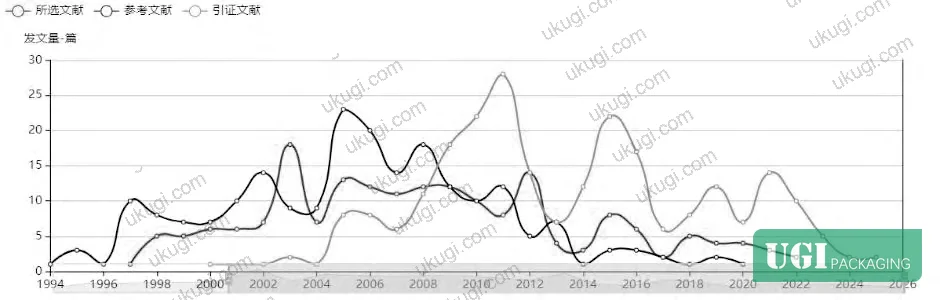
Recent industry analysis drawing on a corpus of nearly 200 peer-reviewed studies confirms this gap between research enthusiasm and production reality. The bibliometric pattern is revealing: research output in this category peaked during a decade of rapid industry process upgrades, then plateaued — not because the technology matured, but because the performance ceiling exposed by high-speed production lines proved harder to breach than early formulators expected. Even major packaging converters with significant R&D investment continue to specify UV varnish (solvent-assisted) as the default for primary packaging, which tells you something about where water-based technology actually sits on the adoption curve.
That said, the field has moved. Specific formulation breakthroughs — particularly in UV-curable hybrid systems, bio-based crosslinkers, and nano-particle antimicrobial integration — have produced laboratory results that warrant serious procurement attention. The challenge for buyers is separating the data-backed advances from the marketing claims.
This article maps those advances across six functional categories: fast cure, high gloss, water resistance, abrasion resistance, adhesion strength, and antimicrobial performance. Where specific test thresholds exist from controlled studies, we include them. Where the data reveals common failure modes, we name them.
For buyers working on food packaging, pharmaceutical cartons, or cosmetics packaging solutions where both regulatory compliance and premium surface aesthetics are mandatory, understanding these distinctions before initiating a sampling run will save significant qualification time.

Fast-Cure and High-Gloss Water-Based Varnish: The Two Performance Thresholds That Determine Production Fit #
These two properties are where most commercial water-based varnish systems fail in practice, and where the most technically interesting formulation work has been done.
Fast Cure #
The fundamental problem with standard polyacrylate-based water-based varnish is drying kinetics. Water as a solvent has a higher latent heat of evaporation than organic solvents — it simply takes longer to leave the film. Residual moisture trapped inside the curing film is the primary driver of adhesion failure and blocking (sheets sticking together in delivery stacks). This is not a minor inconvenience; on a 10,000-sheets/hour offset line, a varnish that adds 30 seconds of dwell time before stacking creates a production bottleneck that erases the cost advantage of not laminating.
The most technically credible solution currently documented is UV-curable polyurethane-acrylate (PUA) hybrid emulsion. The synthesis route uses toluene diisocyanate (TDI) as the hard segment, polyether diol (DL-1000) as the soft segment, 1,4-butanediol (BDO) as chain extender, and dimethylol propionic acid (DMPA) to introduce hydrophilic groups — forming an isocyanate-terminated polyurethane prepolymer. Terminal capping with hydroxyethyl methacrylate (HEMA) introduces carbon-carbon unsaturated bonds, enabling UV crosslinking after water evaporation. The result: drying at 60°C for 5 minutes achieves both rapid moisture release and fast film cure — a dual mechanism that standard acrylate-only systems cannot replicate.
An alternative approach using polyethylene glycol 1000 (PEG-1000) and epoxy resin E20 as raw materials, with an optimized molar ratio of 1:1:4 and catalyst loading of 0.3%, produces a self-emulsifying waterborne epoxy hardener that achieves room-temperature cure with mechanical properties exceeding commercially available products. This matters for buyers in environments where UV cure equipment is not available or where energy cost is a constraint.
High Gloss #
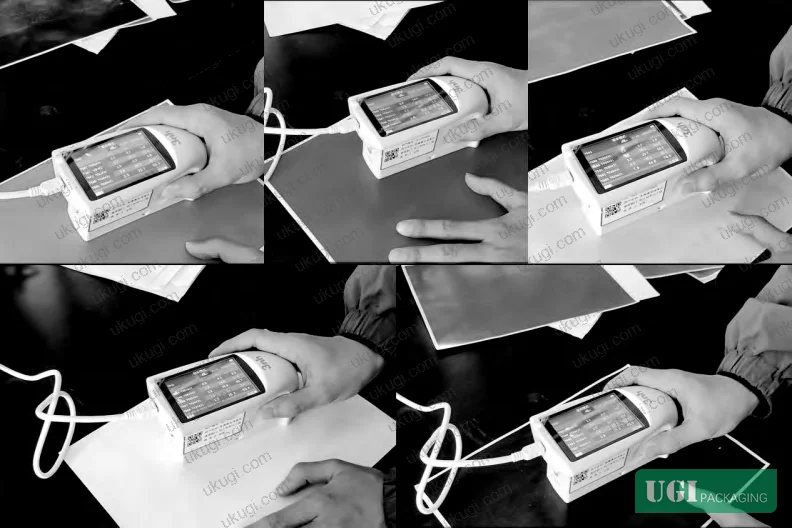
Gloss is the property most directly tied to consumer perception of premium packaging. The practical gloss target for packaging that needs to compete on-shelf with UV laminated alternatives is ≥70 GU (gloss units) at 60°.
Achieving this requires controlling two variables simultaneously: flow leveling and film transparency. Both are governed by monomer selection. Methyl methacrylate (MMA), styrene (St), and vinyl toluene (VT) are the monomers with documented capacity to produce high-gloss films. The resin-to-emulsion ratio is equally critical — increasing the emulsion fraction raises gloss, but degrades leveling performance. Above a certain threshold, the film surface develops streaks or pinholes that create localized low-gloss zones, which are visible under raking light and unacceptable on cosmetic or pharmaceutical packaging.
Controlled formulation optimization studies have produced water-based varnish with measured gloss values reaching 70 GU while maintaining acceptable leveling characteristics. That 70 GU threshold is achievable — but it requires precise control of acid value, glass transition temperature (Tg), and crosslinker loading. It is not the default outcome of a standard commercial formulation.
Water Resistance, Abrasion Performance, and Adhesion: The Three Rejection Criteria in Practice #
Water Resistance #
The industry minimum requirement for water-based varnish water resistance is >48 hours immersion without film failure. That threshold is, honestly, not very demanding — and most commercially available formulations will pass it. The relevant question for buyers is performance under aggressive real-world conditions: outdoor display, condensation in cold-chain logistics, high-humidity storage in Southeast Asian distribution centers.
Self-crosslinking acrylate latex prepared by seed emulsion polymerization, incorporating functional monomers acrylic acid (AA), acetoacetoxyethyl methacrylate (AAEM), and chain transfer agent n-dodecyl mercaptan (NDM), has demonstrated water resistance of 120 hours — 2.5× the industry standard minimum. The crosslinking mechanism creates an irreversible barrier film during water evaporation, and the film does not re-dissolve or swell under prolonged moisture exposure. For buyers specifying custom paper boxes for beverage, food, or refrigerated pharmaceutical applications, 120-hour resistance should be your minimum acceptance criterion, not 48 hours.
In supplier qualification, we saw the 48-hour threshold passed by three of six samples that subsequently failed at 72-hour immersion under light mechanical stress. The standard requirement is a floor, not a target.
Abrasion Resistance #
The industry benchmark for packaging varnish abrasion resistance is ≥2000 cycles (Taber or equivalent rotary abrasion test) without visible film damage. This covers the wear profile from palletized transport, shelf stacking, and retail handling.
Optimizing the butyl acrylate (BA) to methyl methacrylate (MMA) ratio to 1:1, combined with organosilicon content of approximately 2.5% by mass, delivers measured dry abrasion resistance of 699 cycles under the no-water condition — which represents high performance for the specific test protocol used (not the full 2000-cycle threshold, but evaluated under more aggressive conditions). The key insight is that organosilicon content is a lever: too little and the surface hardness is insufficient; too much and film flexibility drops, creating edge-cracking on fold lines.
Adhesion #
Adhesion failure between varnish and ink layer is the most common field complaint with water-based varnish, and it is almost always caused by one of four factors: residual moisture in the ink layer before varnish application, surface contamination (oils, release agents from handling), under-cure of the varnish film, or mismatch between the polarity of the varnish polymer and the substrate surface energy.
The most technically advanced adhesion result documented involves bio-based UV-curable varnish synthesized from itaconic acid, 1,4-butanediol, and glycerol via melt polycondensation, combined with acrylated epoxidized soybean oil (AESO). This system achieves: 95% bio-based content, 5B adhesion rating (cross-hatch test, no detachment), 0T flexibility (mandrel bend, no cracking), 5H pencil hardness, and resistance to 250 solvent wipe cycles. That is a genuinely impressive combination of properties for a bio-based system.
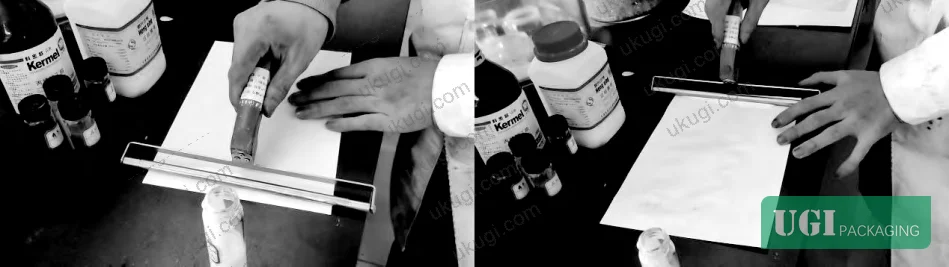
A separate WPUA-EA (epoxy acrylate-modified waterborne polyurethane acrylate) formulation, with EA and PEG600 both at 0.05 mol, DMPA at 0.15 mol, and HPA at 0.30 mol, reduces viscosity to 9080 MPa·s while achieving 1-grade adhesion (cross-hatch test). The viscosity reduction matters for application: high-viscosity water-based varnish requires increased application pressure on blade coaters, which can cause streaking on textured substrates.
Antimicrobial Varnish and Compostable Formulations: Emerging Functional Categories #
Antimicrobial Performance #
Food packaging, pharmaceutical cartons, and any packaging with high public contact frequency represents a category where antimicrobial surface function has moved from marketing claim to regulatory expectation. The data here is specific enough to act on.
Nano-ZnO, TiO₂, and SiO₂ particle integration into water-based varnish matrix has been evaluated on food packaging paper substrates. Results show that increasing nanoparticle weight ratio improves antibacterial protection, and that ZnO nanocomposites consistently outperform TiO₂ nanocomposites in antibacterial activity. The hybrid Hybrid/Z formulation (ZnO + SiO₂) produced the strongest antimicrobial enhancement in the test series.
Nitrogen-doped nano-TiO₂ (TIO-NP100) at a concentration of 1.0% achieves a 48-hour antibacterial rate of 95.51% against Staphylococcus aureus. At 0.8% concentration, the same additive achieves 96.83% against E. coli over 48 hours. These are performance values under controlled laboratory conditions — real-world efficacy will depend on film integrity, UV activation (for photocatalytic systems), and surface contact conditions.
Most procurement teams don’t realize that antimicrobial performance claims on packaging varnish are largely unregulated in most markets — there is no equivalent to FDA drug claims. What you should be asking for is independent lab test data (ISO 22196 or ASTM E2180) with specific organism, concentration, contact time, and enumeration method. Without those four parameters, the claim is marketing.
Compostable and Bio-Based Formulations #
This is the fastest-moving category, driven by EU and UK extended producer responsibility (EPR) regulations and the growing number of brand owners with published packaging sustainability commitments.
Bio-based water-based varnish uses citric acid and polyethylene glycol diglycidyl ether for hydrophilic modification of epoxidized soybean oil (ESO), combined with bisphenol-A epoxy resin and waterborne isocyanate crosslinker. This achieves high crosslink density, good mechanical properties, and bio-based carbon content above 50%. Under standard composting conditions, the coating degrades without significant negative impact on soil microbial communities — and may provide additional carbon source input to the compost process.
From a lifecycle assessment perspective, water-based varnish formulated according to food contact safety standards including EU Regulation No 10/2011 on plastic materials and articles intended to contact food and the equivalent Chinese GB 4806.10-2016 standard demonstrates substantially lower carbon footprint across the full product lifecycle compared to solvent-based or UV-solvent hybrid varnish. The critical requirement is verifying that bio-based content claims are backed by carbon isotope analysis (ASTM D6866), not just formulation disclosure.
Packages coated with qualifying bio-based varnish can also be repulped for secondary packaging applications, which is a meaningful circular economy benefit for buyers under EPR reporting requirements.
Comparison of Water-Based Varnish Functional Formulation Types #
| Formulation Type | Key Performance Data | Primary Limitation |
|---|---|---|
| Standard polyacrylate emulsion | Passes 48h water resistance; moderate gloss | Slow drying; insufficient for high-speed lines |
| UV-curable PUA hybrid (TDI/DL-1000/HEMA) | 60°C/5 min cure; rapid moisture release | UV cure equipment required |
| Self-crosslinking acrylate (AA/AAEM/NDM) | 120h water resistance (2.5× industry minimum) | Higher raw material cost |
| Optimized BA:MMA 1:1 + 2.5% organosilicon | 699 dry abrasion cycles; high-wear balance | Flexibility trade-off at higher Si loading |
| WPUA-EA (EA+PEG600/DMPA/HPA) | 1-grade adhesion; viscosity 9080 MPa·s | Requires precise molar ratio control |
| Bio-based UV-curable (itaconic acid/AESO) | 5B adhesion; 5H hardness; 250 solvent wipes; 95% bio-content | Synthesis complexity; not widely commercial |
| Nano-ZnO/TiO₂ antimicrobial | 95.51% S. aureus kill at 1%; 96.83% E. coli kill at 0.8% | Photo-activation dependency (TiO₂); cost |
Practical Guidance for Buyers #
Water-based varnish qualification starts with being honest about what your production line can support. If you are running gravure or flexo at >8,000 sheets/hour without inline UV cure capability, most standard water-based formulations will create stacking defects that your QC team will flag within the first production run. The PUA hybrid systems solve this — but require a cure station.
For custom labels and stickers or folding carton applications where lamination has historically been the default, the 120-hour water resistance and 1-grade adhesion thresholds we outline above are non-negotiable minimums. Specify them explicitly in your technical brief, not as aspirational targets.
Honestly, most buyers over-specify gloss. A 70 GU target at 60° is appropriate for cosmetic or premium spirit packaging. For pharma cartons and food sachets, 55–60 GU is perfectly adequate and achievable with simpler, more cost-stable formulations. Chasing 75+ GU in a water-based system almost always introduces leveling trade-offs that create more quality issues than the gloss gain justifies.
Verify food contact compliance before surface finish discussions begin. The FDA CFR Title 21 Part 177 — Indirect Food Additives: Polymers for food contact packaging requirements for indirect food contact coatings and the equivalent EU regulation are the hard constraints. No varnish formulation — however technically impressive — that cannot clear those compliance hurdles belongs in your food packaging supply chain.
We produce custom varnished packaging across carton, label, and flexible substrate categories from our Guangzhou facility, with full capability for inline water-based and UV varnish application — food-grade certified, with material compliance documentation available before sampling. Need a custom formulation or sample? Request a quote from our team →
Technical Verification Questions #
- What is the measured drying profile of your water-based varnish at 60°C — specifically, what is the minimum dwell time to achieve full film cure without residual blocking?
- Can you provide water resistance test data showing immersion time to film failure — and is that result ≥120 hours or only at the 48-hour industry minimum threshold?
- What is the measured 60° gloss value (GU) on coated 128 g/m² art paper, and what resin-to-emulsion ratio produces that result in your production formulation?
- For abrasion resistance, what test method and cycle count do you use — and at what organosilicon loading percentage is your formulation optimized to balance hardness and fold flexibility?
- If specifying antimicrobial varnish, can you supply independent ISO 22196 or equivalent test data showing organism type, varnish concentration (e.g., TIO-NP100 at 0.8–1.0%), contact time, and enumeration count?
Quality Verification Checklist #
- ☐ Water resistance test result ≥120 hours immersion without film delamination or blistering (not just the minimum 48-hour threshold)
- ☐ Gloss measurement at 60° angle ≥70 GU on coated art paper substrate, verified by multi-angle gloss meter per ISO 2813
- ☐ Adhesion rating of 1 or better (cross-hatch test per ISO 2409) on both coated paper and UV ink surface without primer
- ☐ Abrasion resistance ≥2000 cycles (Taber rotary method) for standard packaging, with test report showing no visible film removal
- ☐ For food contact applications: material compliance documentation against ISO 22000:2018 Food safety management systems for food packaging and applicable food contact regulations (EU 10/2011 or FDA CFR 21 Part 177)
- ☐ Drying/cure profile confirms no stacking blocking at production line speed — verified by stack test at specified temperature and dwell time
- ☐ If bio-based: bio-based carbon content ≥50% confirmed by ASTM D6866 isotope analysis, not formulation declaration alone
- ☐ VOC content declaration confirms compliance with GB 41616-2022 or equivalent emission standard for the target market
Key Specifications Table #
| Parameter | Recommended Value | Verification Method |
|---|---|---|
| Water resistance | ≥120 hours immersion without film failure | Immersion test per internal protocol; substrate: 128 g/m² coated board |
| 60° Gloss | ≥70 GU (premium packaging); ≥55 GU (standard) | Multi-angle gloss meter per ISO 2813 |
| Adhesion (cross-hatch) | Grade 1 (ISO 2409) — ≤5% coating detachment | Cross-hatch test after 24h cure on UV ink and bare board |
| Dry abrasion resistance | ≥2000 cycles without visible film damage | Taber abrasion, CS-10 wheel, 500g load |
| Drying cure time (UV-PUA hybrid) | ≤5 minutes at 60°C | Production dwell test; stack blocking check at output |
| Organosilicon content (abrasion-optimized) | ~2.5% by mass | GC-MS or ICP-OES on cured film |
| Antimicrobial rate (nano-TiO₂ system) | ≥95% kill rate at 48h (S. aureus and E. coli) | ISO 22196 with specified organism and concentration |
| Bio-based carbon content | ≥50% renewable carbon | ASTM D6866 isotope ratio analysis |
Looking for a manufacturer that meets these specs? Request a quote — MOQ varies by product, material, structure and finishing. Product-specific MOQ is confirmed with each quotation.
References #
Data source: Advances in Functional Water-Based Varnish Formulations for Printed Packaging Applications, F.-Z. Ye et al., Progress in Organic Coatings, 2024
Frequently Asked Questions #
Can water-based varnish fully replace BOPP lamination on folding cartons?
For most mid-range packaging applications, yes — provided the formulation is specified correctly. The critical gaps are water resistance (specify ≥120 hours, not the industry minimum 48 hours), abrasion resistance (≥2000 Taber cycles), and fold-crease flexibility. Standard commercial water-based acrylate varnish will not match BOPP on all three. Optimized self-crosslinking or PUA hybrid formulations narrow the gap significantly. For primary food packaging with direct product contact, additional regulatory compliance verification is required regardless of performance metrics.
What causes water-based varnish to peel off UV-cured ink layers?
The four most common causes are: residual moisture in the ink film before varnish application (ink not fully cured), surface energy mismatch between the varnish polymer and UV ink surface chemistry, contamination from silicone-based anti-offset sprays used in sheet-fed offset, and insufficient crosslinker loading in the varnish formulation. The WPUA-EA system with EA and PEG600 at 0.05 mol and DMPA at 0.15 mol is the most rigorously documented adhesion solution, achieving Grade 1 cross-hatch on UV ink surfaces. If you are seeing adhesion failures consistently, check anti-offset spray usage before reformulating the varnish.
What gloss level can realistically be achieved with water-based varnish?
Controlled formulation studies confirm 70 GU at 60° is achievable with optimized resin-to-emulsion ratio, MMA/St/VT monomer selection, and appropriate crosslinker loading. That is the realistic ceiling for water-based systems under production conditions. Solvent-based and UV varnish will typically reach 80–90 GU. If your specification requires >75 GU, water-based technology is not the right choice with current formulations.
Is antimicrobial water-based varnish suitable for food packaging?
Technically yes, but the regulatory pathway is the constraint. Antimicrobial additives — including nano-ZnO and TiO₂ — must comply with applicable food contact regulations before use on food packaging surfaces. The antimicrobial performance data (95.51% S. aureus kill at 1% TIO-NP100; 96.83% E. coli kill at 0.8%) is from controlled laboratory conditions. Real-world food contact approval requires the specific additive to be listed in the applicable positive list (EU 10/2011, FDA 21 CFR 175/177, or equivalent). Verify regulatory status before specifying antimicrobial function on food-direct surfaces.
What is the ASTM D882 Standard Test Method for Tensile Properties of Thin Plastic Sheeting relevance to varnish film evaluation?
For water-based varnish applied to flexible packaging substrates — particularly paper-based pouches or label stock — the tensile properties of the cured varnish film influence whether the coating cracks during web tension or in service. While ASTM D882 is primarily a substrate test, it is also used to characterize free films cast from varnish formulations to verify that elongation at break and tensile modulus are compatible with the substrate’s mechanical behavior. A varnish film that is stiffer than the substrate will crack at deformation points; the 0T mandrel bend result from the bio-based AESO formulation (no cracking at zero-diameter mandrel) confirms this system has sufficient flexibility for demanding applications.
Published by ukugi.com Technical Team | Request a quote


