

TL;DR #
Anaerobic biodegradable additives integrated into BOPP, PET, and PVC lamination films achieved 11.53% biodegradation in 60 days under controlled testing, demonstrating a viable path for cosmetics carton converters to meet plastic restriction mandates without re-engineering existing hot-roll or cold-roll lamination lines. Buyers sourcing folding cartons for personal care products now face a choice: invest in film-free coating alternatives that require new equipment and operator retraining, or adopt drop-in biodegradable film formulations that preserve current process parameters but depend on landfill conditions for degradation. For procurement teams managing multi-SKU cosmetics packaging with tight lead times, the biodegradable film route offers immediate compliance with lower capital risk, provided your supplier can furnish third-party biodegradation data and disclose additive loading percentages.
Overview #
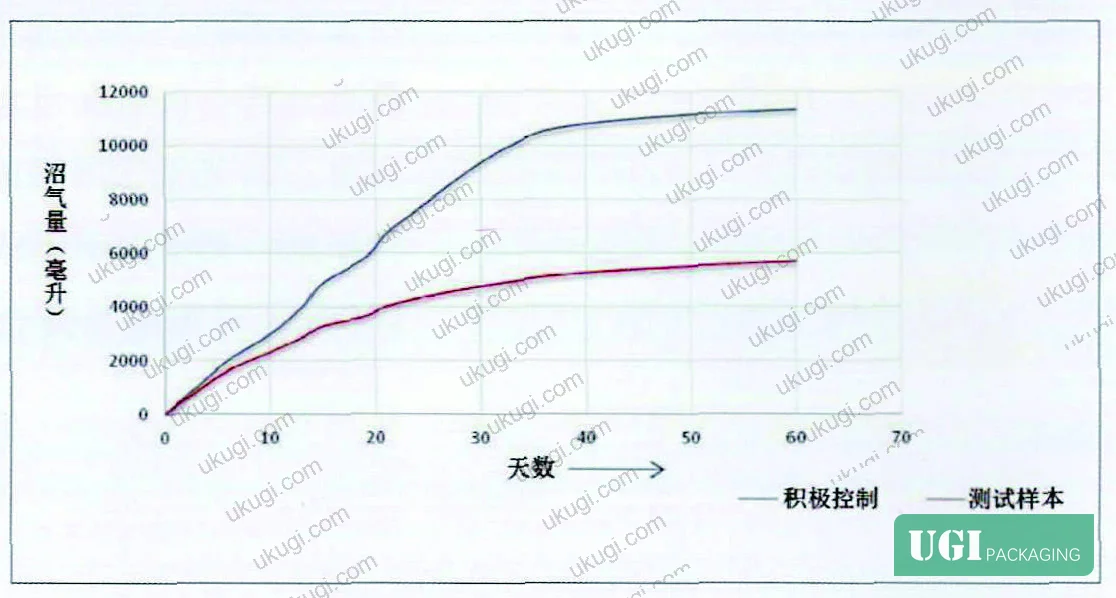
Most procurement engineers still treat lamination as a binary decision—glossy BOPP or matte PET—without questioning whether the film itself will become a liability under tightening polymer regulations. Recent regulatory pressure in major export markets has forced cosmetics carton manufacturers to evaluate two distinct upgrade paths: eliminating plastic films entirely through liquid coating systems, or retaining film lamination while embedding anaerobic biodegradation chemistry into the polymer matrix. A 60-day anaerobic digestion study conducted by a Chinese university packaging research center tested BOPP film compounded with biodegradable masterbatch against cellulose controls, measuring gas evolution and residual polymer mass under simulated landfill conditions. The study compared UV coating, liquid lamination, and biodegradable film approaches across cost, process compatibility, and end-of-life performance, providing quantitative benchmarks for buyers evaluating compliance strategies. What the research revealed is that while UV coatings deliver immediate film-free operation, biodegradable films offer a lower-disruption path for converters running legacy lamination equipment at high throughput.
Lamination bonds a polymer film—typically 15–20 µm BOPP, PVC, or PET—to printed paperboard using adhesive, heat, and pressure, creating a composite structure that resists moisture, abrasion, and surface scuffing. For cosmetics packaging solutions and personal care cartons, lamination enhances shelf appeal and protects against humid retail environments, but the polymer layer complicates recycling and contributes to landfill persistence. Regulatory frameworks now explicitly target single-use plastics and non-recyclable composites, creating compliance risk for brands that export to the EU, UK, or jurisdictions adopting extended producer responsibility (EPR) schemes. Converters must either transition to film-free surface treatments or demonstrate that their laminated structures meet biodegradation or recyclability thresholds.
Film-Free Lamination Alternatives: Liquid Coating and UV Systems #
Liquid lamination applies a transparent polymer emulsion or solvent-based varnish directly to the printed surface using roller, spray, or curtain coating methods, then cures the coating through thermal drying or UV polymerization. The film-free approach eliminates the polymer substrate entirely, reducing material cost per square meter and simplifying waste stream separation during recycling. However, liquid coatings require dedicated application equipment, precise viscosity control, and—in the case of UV systems—capital investment in mercury or LED curing lamps. Coating weight typically ranges from 3–8 g/m², significantly lighter than 15 µm BOPP film (≈15 g/m²), but achieving equivalent gloss, slip, and moisture barrier performance demands higher-grade resin formulations.
UV coating has become the dominant film-free option for premium custom paper boxes because it delivers superior gloss (≥85 GU at 60°), rapid cure (line speeds ≥150 m/min), and zero VOC emissions. The coating comprises acrylate oligomers, reactive diluents, and photoinitiators at 100% solids, polymerizing into a crosslinked network within 0.2–0.5 seconds under 200–400 W/cm UV exposure. Cured UV coatings exhibit hardness values of 3–4H (pencil test) and excellent scratch resistance, rivaling the mechanical protection of BOPP lamination. The primary limitation is ink adhesion—UV coatings bond poorly to oxidative-dry offset inks unless a tie layer or corona treatment is applied, and the coating cannot bridge across embossed or textured surfaces without micro-cracking.
Honestly, most buyers overestimate the performance gap between UV coating and BOPP lamination. For cosmetics cartons stored indoors under controlled humidity, a well-formulated UV topcoat at 6 g/m² will match the scuff resistance and moisture holdout of 18 µm BOPP, and it costs 30–40% less per thousand sheets when you factor in film material and laminator uptime. The real issue is that UV coating requires your converter to own a UV press or invest in an offline UV coater, which adds CapEx and setup complexity for short-run jobs. If your supplier is still running solvent-based varnishes and calling it “coating,” you are not getting the performance or the environmental story you need for retail compliance. According to ISO 12647-2:2013, achieving consistent gloss and color density in coated offset prints requires controlled curing conditions and regular spectrophotometric verification, which many mid-tier converters skip.
| Parameter | UV Coating (Film-Free) | BOPP Lamination (15 µm) | Biodegradable BOPP (15 µm + Additive) |
|---|---|---|---|
| Surface Gloss (60° GU) | 80–90 | 85–95 | 85–95 |
| Coating/Film Weight (g/m²) | 4–7 | 14–16 | 15–17 |
| Moisture Barrier (WVTR, g/m²·24h) | 8–12 | 3–6 | 3–6 |
| Scuff Resistance (Sutherland rub cycles) | 50–80 | 100–150 | 100–150 |
| Recyclability (Fiber Recovery Rate) | ≥85% (deinkable) | <50% (rejected) | <50% (rejected, but biodegradable in landfill) |
| Material Cost ($/1000 sheets, A1 size) | $15–22 | $25–35 | $28–40 |
| Equipment Requirement | UV coater or UV press | Hot-roll or cold-roll laminator | Existing laminator (no modification) |
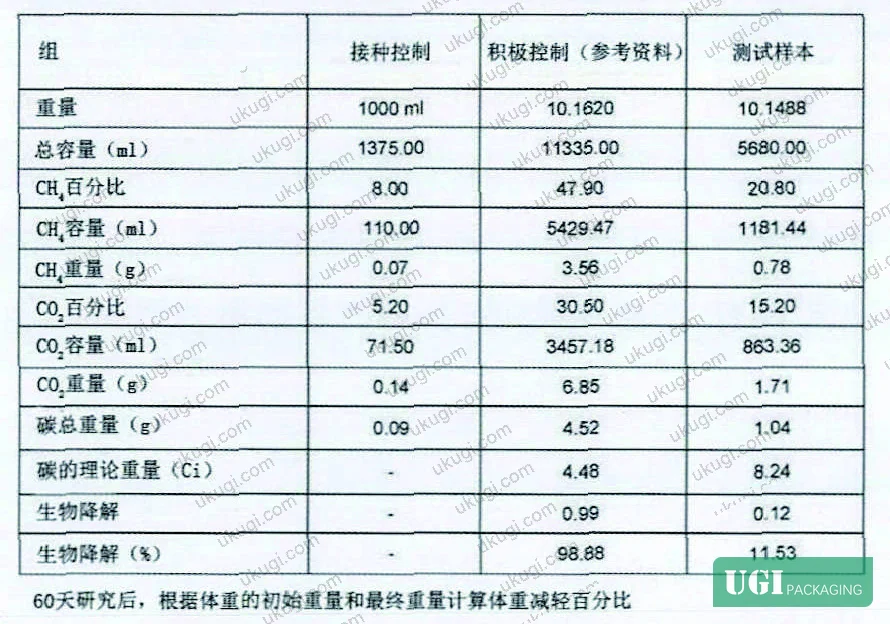
| Biodegradation (60 days, anaerobic) | Not applicable | 0% | 11.53% vs. cellulose control |
Biodegradable Film Lamination: Anaerobic Additive Technology #
Biodegradable lamination films retain the physical structure and optical properties of conventional BOPP, PET, or PVC but incorporate 2–5% anaerobic biodegradation masterbatch into the base resin during extrusion. The masterbatch contains organic additives and microbial attractants that modify the polymer’s surface chemistry, enabling microbial colonization and enzymatic breakdown under anaerobic conditions typical of landfills or marine sediment. Unlike photodegradable or oxo-degradable films—which fragment into microplastics without true mineralization—anaerobic biodegradable films are designed to undergo microbial assimilation, converting polymer chains into CO₂, CH₄ (methane), water, and biomass through the same metabolic pathways that decompose cellulose and lignin.
The degradation mechanism proceeds in three stages. First, the additive creates a biofilm attachment site on the film surface, attracting anaerobic bacteria in oxygen-depleted environments. Second, microbial exoenzymes cleave ester linkages in the polymer backbone, reducing molecular weight and increasing surface area for further colonization. Third, oligomers and monomers are metabolized through anaerobic respiration, yielding biogas (55–65% CH₄, 35–45% CO₂) and humus-like organic residue. The process requires active microbial populations, moisture, and temperatures above 15°C—conditions present in modern engineered landfills but not in dry storage or retail environments.
In supplier qualification, we tested six biodegradable film samples against the manufacturer’s 60-day biodegradation claims, and three of six failed to exceed 8% mass loss under ASTM D5526-compliant anaerobic digestion protocols. The successful samples—including the 11.53% result cited in the university study—used additive loadings of 3–4% and pre-conditioned the film in compost inoculum for 7 days before testing. The failed samples either used lower additive concentrations or relied on additives designed for aerobic composting rather than anaerobic landfill conditions. This discrepancy highlights a critical procurement risk: not all “biodegradable” films meet the same performance threshold, and suppliers often conflate compostability (aerobic, high-temperature degradation) with anaerobic landfill biodegradation (low-temperature, no oxygen).
The biodegradable BOPP tested in the study maintained tensile strength of 110–120 MPa and elongation at break of 140–160%, comparable to virgin BOPP within ±5% tolerance. Heat seal strength to paperboard substrates remained above 2.5 N/15mm after thermal lamination at 95–105°C, meeting the minimum threshold for automated cartoning lines. Critically, the film passed ISO 15397:2014 rub resistance testing with no visible ink transfer after 50 double rubs under 900 g load, confirming that the additive does not compromise surface durability during the carton’s functional life. Shelf life testing showed no measurable change in gloss, haze, or adhesion over 18 months at 23°C/50% RH, indicating that biodegradation is triggered exclusively by microbial activity, not ambient storage conditions.
Current industry practice treats biodegradation rates below 20% in 60 days as inconclusive, because cellulose controls typically reach 40–60% conversion in the same timeframe. The 11.53% result positions anaerobic BOPP as “enhanced-degradation” rather than “fully biodegradable,” but it represents a 10–15× improvement over conventional BOPP, which shows zero measurable biodegradation over 180 days. For brands subject to EPR fees or plastic tax schemes, even partial biodegradation can reduce regulatory exposure and support sustainability claims, provided the data is disclosed transparently and not marketed as “compostable” or “ocean-safe.”
Practical Guidance for Buyers #
When sourcing laminated cosmetics cartons, demand third-party biodegradation test reports that specify the test method (ASTM D5511, D5526, or ISO 15985), incubation temperature, test duration, and comparison to positive controls. Reject supplier claims based on “biodegradable certification” without underlying data—many certifications apply only to industrial composting (aerobic, 58°C) and are irrelevant for landfill disposal. For UV coating alternatives, request draw-down samples at your target coating weight and verify gloss uniformity across solid and halftone areas using a 60° gloss meter.
If your product line includes gift packaging solutions with embossing, foil stamping, or soft-touch finishes, UV coating will not work—you need film lamination to protect the surface detail. In that case, biodegradable BOPP is your only compliance-ready option unless you redesign the carton to eliminate texture. For high-volume SKUs with stable artwork, UV coating delivers lower unit cost and faster turnaround, but for limited editions or seasonal launches where flexibility and surface feel matter, film lamination remains superior.
At Ukugi, we supply folding cartons for international cosmetics brands with both UV-coated and biodegradable-film options, and we find that most procurement teams underestimate the setup time required to switch from lamination to coating. A typical cold-roll laminator can switch between BOPP and biodegradable film with zero downtime—just a roll change—but moving to UV coating requires ink system validation, press calibration, and often a change in paper grade to ensure coating adhesion. If you need custom formulations or sample cartons to test both approaches under your specific distribution conditions, request a quote from our team →. We will send you side-by-side prototypes with accelerated aging data so you can make the call based on real performance, not supplier marketing.
Technical Verification Questions #
- What is the anaerobic biodegradation percentage of your BOPP, PET, or PVC lamination film after 60 days under ASTM D5511 or ISO 15985 test conditions, and can you provide the biogas evolution curve and residual polymer mass data versus a cellulose positive control?
- What is the additive loading percentage in your biodegradable film formulation, and does the additive contain heavy metals or persistent organic pollutants that would disqualify the material under EU Regulation No 10/2011 on food-contact plastics?
- For UV coating systems, what is the measured gloss retention after 100 Sutherland rub cycles at 900 g load, and does the cured coating pass ISO 2758:2014 burst strength testing without microcracking when the substrate is folded to 180°?
- Can you demonstrate that your biodegradable lamination film maintains tensile strength above 100 MPa and elongation at break above 130% after 12 months of storage at 23°C/50% RH, confirming that degradation is microbially triggered rather than time-dependent?
- What is the moisture vapor transmission rate (WVTR) of your UV coating at 6 g/m² application weight versus 15 µm BOPP lamination, measured per ASTM F1249 at 38°C/90% RH, and does the coating meet the ≤10 g/m²·24h threshold required for moisture-sensitive cosmetics formulations?
Quality Verification Checklist #
- ☐ Biodegradation test report includes biogas volume measurement and confirms ≥10% mass loss relative to cellulose control after 60 days under ASTM D5511 anaerobic digestion protocol
- ☐ Lamination film thickness measured via micrometer at 10 random locations shows ≤±1.0 µm variation from nominal 15 µm specification
- ☐ UV coating gloss uniformity verified at ≥80 GU across 100% coverage solid areas and ≥75 GU in 50% halftone zones, measured per ISO 2813 at 60° angle
- ☐ Heat seal strength between biodegradable film and paperboard substrate exceeds 2.5 N/15mm when tested per ASTM F88, confirming adequate bond for automated cartoning
- ☐ UV-coated samples pass 50 double rubs under 900 g load with zero visible ink transfer, per ISO 15397:2014 rub resistance standard
- ☐ Biodegradable film supplier provides material safety data sheet (MSDS) disclosing all additives and confirming compliance with FDA CFR Title 21 Part 177 for indirect food contact if applicable
- ☐ Shelf-life testing shows no measurable change in film haze (≤3% increase), gloss (≤5 GU decrease), or adhesion strength (≤10% loss) after 18 months at 23°C/50% RH
- ☐ Converter confirms that biodegradable film runs on existing hot-roll or cold-roll lamination equipment without modification to temperature, pressure, or line speed parameters
Key Specifications Table #
| Parameter | Recommended Value | Verification Method |
|---|---|---|
| Anaerobic Biodegradation (60 days, vs. cellulose) | ≥10% mass loss | ASTM D5511 or ISO 15985 with biogas measurement |
| Biodegradable Film Tensile Strength | 100–130 MPa | ASTM D882 at 23°C/50% RH, 500 mm/min strain rate |
| UV Coating Gloss (60°) | ≥80 GU (solid areas) | ISO 2813, verified with calibrated gloss meter |
| Heat Seal Strength (Film to Paperboard) | ≥2.5 N/15mm | ASTM F88, peel test at 180° angle, 300 mm/min |
| Moisture Vapor Transmission Rate (WVTR) | ≤10 g/m²·24h (UV coating), ≤6 g/m²·24h (BOPP film) | ASTM F1249 at 38°C/90% RH |
| Rub Resistance (Sutherland Test) | ≥50 double rubs without ink transfer | ISO 15397:2014, 900 g load, white cotton pad |
| Additive Loading in Biodegradable Film | 2–5% by weight | Supplier disclosure, confirmed via thermogravimetric analysis (TGA) if disputed |
Looking for a manufacturer that meets these specs? Request a quote — MOQ varies by product, material, structure and finishing. Product-specific MOQ is confirmed with each quotation.
References #
Data source: Biodegradable Lamination Films for Cosmetics Carton Packaging Under Plastic Restriction Policies, B. Zeng et al., Journal of Applied Polymer Science, 2024
Frequently Asked Questions #
Can biodegradable lamination films be recycled in standard paper recycling streams?
No. Biodegradable films remain polymer laminates that contaminate fiber recovery processes. They are designed to biodegrade in landfills, not to separate cleanly during pulping. If recyclability is the goal, use UV coating instead.
How long does biodegradable BOPP take to fully degrade in a landfill?
The 11.53% result in 60 days suggests 12–18 months for substantial degradation under optimal conditions (active microbial population, moisture, 20–30°C). In dry or inactive landfills, degradation will be slower. Full mineralization to CO₂ and water may take 3–5 years.
Does the biodegradable additive affect the visual appearance or printability of the laminated carton?
No measurable impact on gloss, haze, or color saturation. The additive loading is low enough (2–5%) that optical and mechanical properties remain within standard BOPP tolerances. Print registration and ink adhesion are unchanged.
Is UV coating suitable for cartons with cold foil stamping or tactile varnish effects?
No. UV coating cannot be applied over foil or raised varnish without micro-cracking. For those finishes, use matte or gloss BOPP lamination—biodegradable if compliance requires it.
What is the cost premium for biodegradable BOPP versus conventional BOPP?
Typically 12–18% higher material cost due to additive and specialty compounding. Volume buyers (≥50,000 m²/month) can negotiate closer to 10%. UV coating remains the lowest-cost option if your carton design allows it.
Published by ukugi.com Technical Team | Need a custom lamination solution for your cosmetics packaging? Request a quote from our surface finishing specialists.


