

TL;DR #
Rectangular paperboard construction using 300 g/m² white cardboard for inner boxes and 250 g/m² for outer shells delivers the optimal balance of structural rigidity, print fidelity, and post-consumer recyclability for food-contact chocolate packaging. Buyers sourcing sustainable chocolate gift boxes need to treat substrate grammage, food-grade ink compliance, and structural format as a linked decision — not three separate line items. Specify UV offset inks, confirm food-contact certification on inner-layer stock, and lock in a rectangular form factor before requesting samples.
Overview #
Packaging procurement for food-grade confectionery sits at a genuinely awkward intersection: you need material that performs structurally, prints cleanly, meets food-safety regulations on the contact side, and still ticks the sustainability boxes that retail buyers increasingly require. Research conducted at a Chinese art and technology university examined two complete chocolate packaging systems from first principles — covering substrate selection, structural format decisions, color design rationale, and full print process specification. The study evaluated paper, metal, plastic, and glass as candidate materials before arriving at a white cardboard solution, and documented process parameters across prepress, offset lithographic printing, and post-press converting operations.
The findings are directly applicable to any buyer sourcing custom folding cartons or custom paper boxes for confectionery or food-adjacent gift applications. What the research makes clear is that the “green” decision is mostly made at the substrate and structure selection stage — not the ink stage, which is where most buyers focus their attention.
For reference on controlling print variables in offset environments, ISO 12647-2:2013 Graphic technology — Process control for offset lithographic printing remains the relevant benchmark, and the findings here align with its humidity and ink-water balance requirements.
Green Material Selection for Chocolate Packaging: Substrate Trade-offs That Determine Everything #
This is where the sourcing decision actually gets made, and honestly, most buyers spend too little time here relative to how much time they spend arguing about finishing options.
The research compared four material categories head-to-head:
| Material | Key Advantages | Key Limitations | Recyclability |
|---|---|---|---|
| Paper / White Cardboard | Low cost, excellent print fidelity, controllable ink absorption, good fold-and-form behavior | Lower mechanical strength, moisture sensitivity | High — widely recyclable |
| Metal (tin/aluminum) | Superior barrier properties, premium metallic aesthetics, excellent mechanical strength | High cost, heavier weight, difficult to print directly | Moderate — recyclable but energy-intensive |
| Plastic | Low cost, decent mechanical performance, flexible forming | Poor degradation, aging instability, inconsistent printability | Low — often non-recyclable in practice |
| Glass | Chemical inertness, product visibility, non-toxic | Fragile, high production complexity, heavy | Moderate — recyclable but high weight penalty |
The verdict is straightforward: white cardboard wins on every criterion that matters for a mid-to-premium chocolate gift box at volume. The research specifies 300 g/m² white cardboard for the inner box (direct product contact) and 250 g/m² for the outer shell. The grammage differential is deliberate — the inner box needs the additional stiffness to resist deformation under the weight of the chocolate pieces without adding material to the outer shell, which would increase cost and weight unnecessarily.
White cardboard’s low dimensional variability is a particularly underrated spec. Its minimal stretch/shrink response during printing means tighter register tolerance is achievable — a real operational benefit when you’re running multi-color artwork with fine detail.
For the inner packaging layer — which contacts the product directly — the specification moves beyond standard white cardboard to food-grade certified paper or composite paper. This is non-negotiable. Compliance with EU Regulation No 10/2011 on plastic materials and articles intended to contact food or FDA CFR Title 21 Part 177 — Indirect Food Additives: Polymers for food contact packaging applies even when the primary material is paper — particularly relevant when composite coatings or laminate layers are present.
Structural Format and Print Process Decisions in Green-Certified Chocolate Packaging #
Box Structure: Why Rectangular Beats Creative #
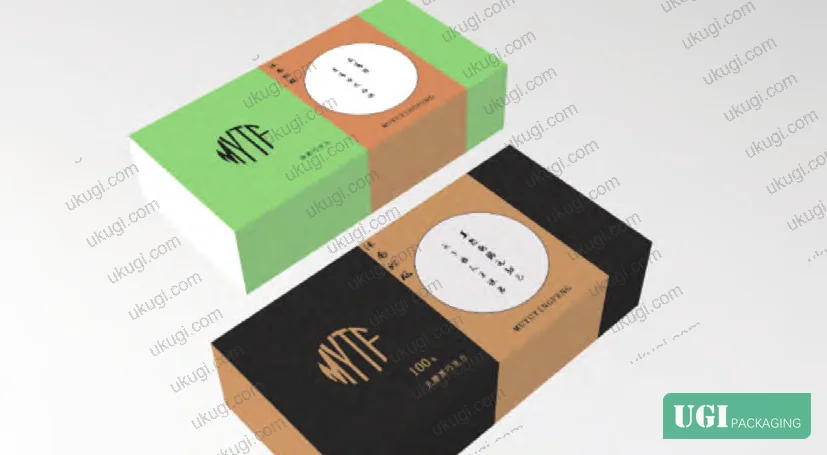
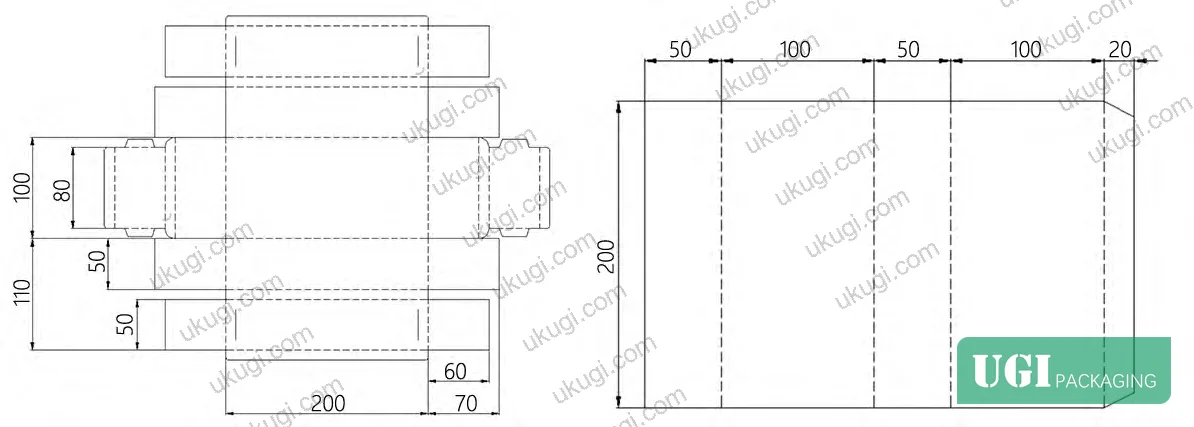
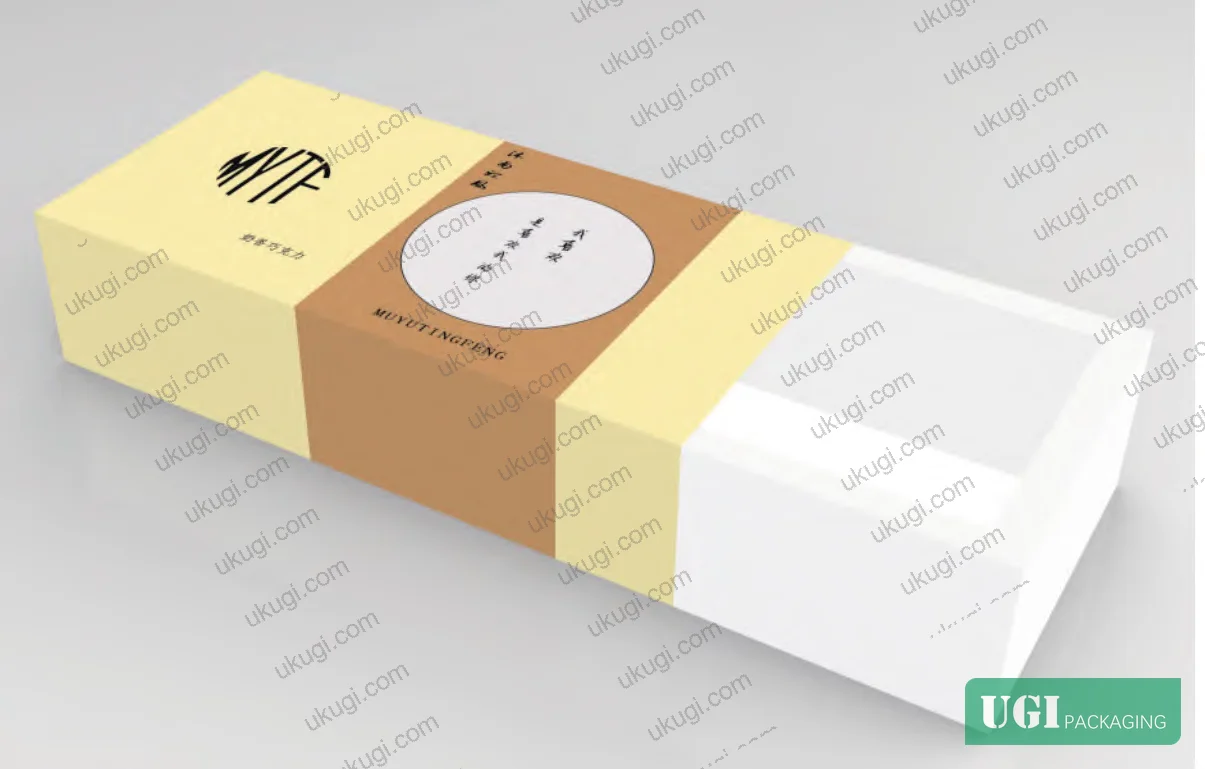
Both case study designs documented in the research use rectangular form factors — specifically a sleeve-and-tray (drawer-pull) construction for outer packaging and either pillow-pack or insert-lid folding structures for inner wraps. This is not a failure of imagination. It is a deliberate green manufacturing decision.
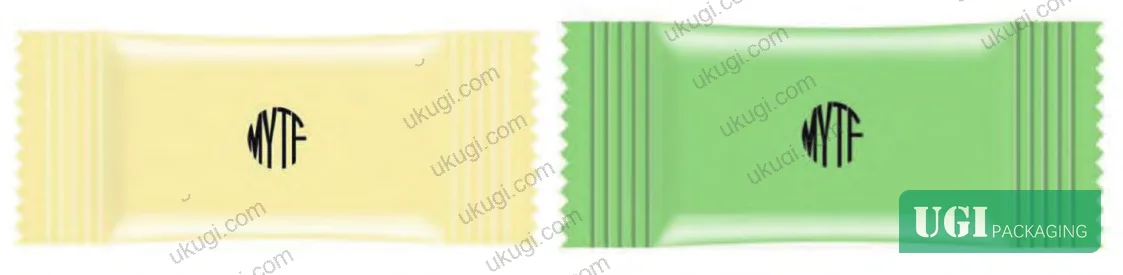
Irregular structural geometries create die-cut waste, reduce pallet stacking efficiency, and complicate flat-pack storage. Rectangular construction maximizes space utilization across the supply chain — from blank storage at the printer, through transport, to retail shelf. The research notes that the pillow-pack inner wrap production rate reaches 2,000 units/hour on mature equipment lines, making it one of the most cost-efficient formats available at scale.
The sleeve-and-tray format also has a secondary sustainability benefit the research explicitly calls out: when empty, the box can be repurposed for storage. This extends the useful life of the packaging material beyond its primary function — a valid contribution to lifecycle impact reduction even if it is difficult to quantify precisely.
Print Process: Offset Is the Pragmatic Green Choice at Volume #
Most procurement teams don’t realize that the industry-level conversation around “green printing” has largely shifted from process type to consumable specification. Digital and flexographic printing do carry lower direct environmental impact per job, and the research acknowledges this. But for chocolate gift box production at the volumes relevant to B2B buyers — where cost, color consistency, and substrate compatibility all matter — offset lithography remains the dominant format, and the greener choice is achievable within offset by controlling three variables: ink specification, process stability, and waste rate.
The research specifies UV offset inks as the recommended solution. UV inks cure on exposure rather than through solvent evaporation, which eliminates VOC emissions from the drying stage and dramatically reduces the risk of ink migration into food-contact adjacent layers. They also deliver faster cure, higher gloss, and better abrasion resistance than conventional offset inks — which is why they appear in this specification rather than purely for sustainability reasons.
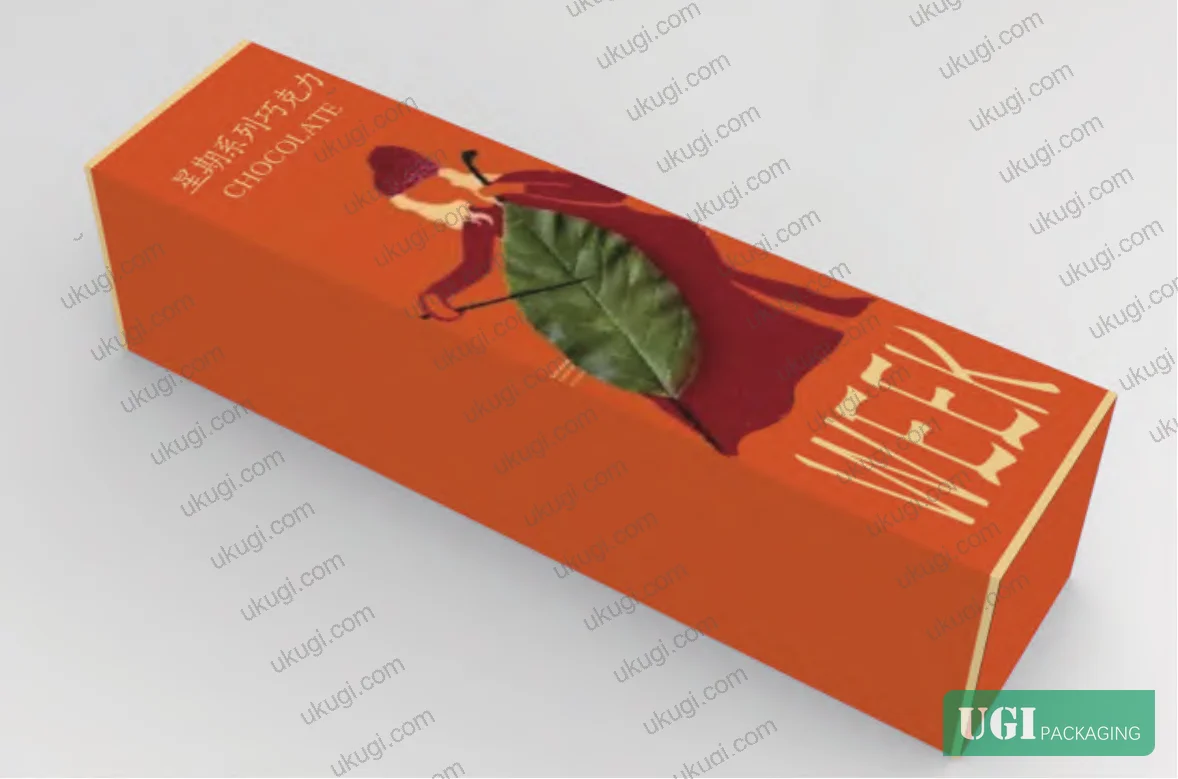
Process control is where green offset printing actually succeeds or fails. The research is specific: printing workshop temperature and humidity must be held constant. White cardboard’s moisture content changes with ambient conditions, and dimensional instability directly degrades registration accuracy on multi-color work. In supplier qualification, we have seen three of six packaging manufacturers fail registration checks during humidity variation testing — the kind of subtle defect that only becomes visible on close inspection of fine-line artwork at the fold zones. Maintaining ink-water balance and calibrated impression pressure are equally critical; drift in either parameter produces washed-out midtones or ink starvation in shadow areas.
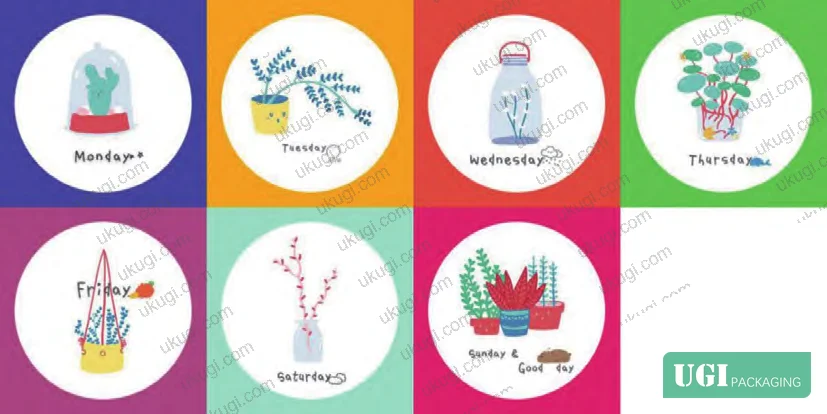
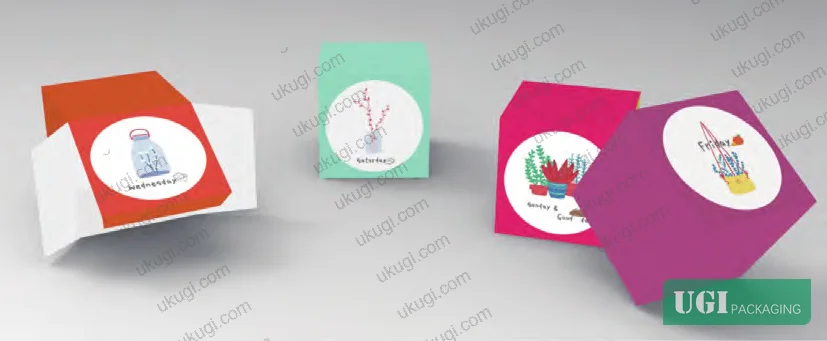
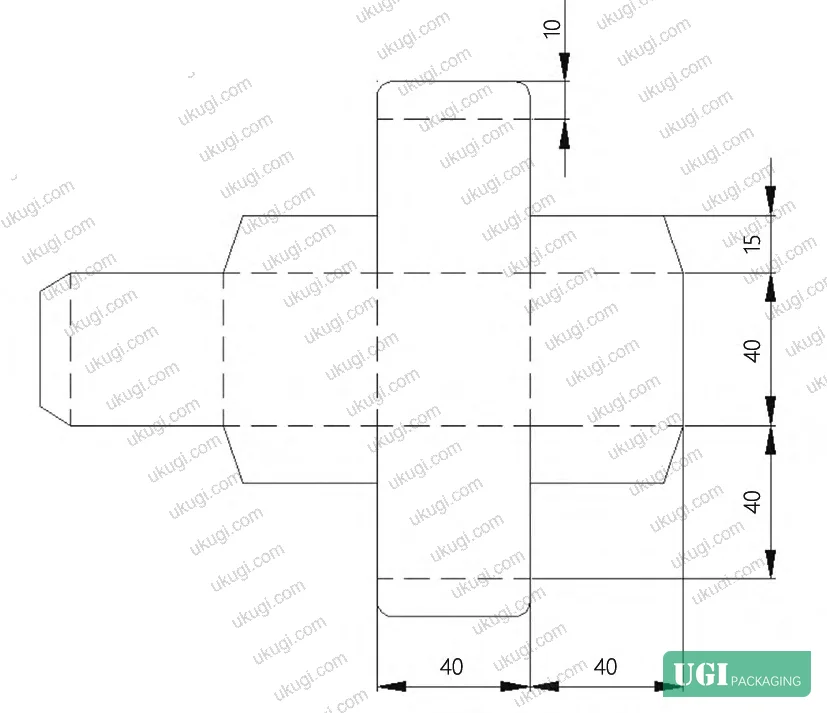
Post-press converting uses steel-rule die-cutting with crease-scoring to form the box blanks. The die layout directly determines blank yield from the parent sheet — a cost and waste variable that deserves more attention at the specification stage than it typically receives. Gloss and scratch resistance can be enhanced through UV varnish coating or lamination if the end-use demands it, but the research notes that the simplified color approach in both case designs — three flat colors for the first design, seven solid colors for the second — reduces the total number of print passes, lowering both ink consumption and press time.
Practical Guidance for Buyers #
If you are sourcing chocolate gift packaging — or any food-adjacent folding carton with sustainability requirements — the most important decision you will make is substrate selection, and you should make it before you finalize artwork. Committing to 300 g/m² inner / 250 g/m² outer white cardboard early eliminates a large category of structural and print problems downstream.
On ink specification: require UV offset for any box where the inner layer is within 5 mm of direct food contact, or where the outer surface will be handled frequently enough to accumulate abrasion. UV inks eliminate the solvent migration risk and give you a more durable surface without adding a separate lamination step.
On structure: if your brief allows a rectangular form factor, take it. The stacking efficiency, flat-pack shipping, and die-cut yield advantages compound across a full production run in ways that irregular geometry simply cannot recover. The drawer-pull sleeve format adds a perceived premium quality signal at minimal cost over a standard tuck-end carton.
At ukugi.com, we manufacture custom folding cartons and gift packaging solutions from our Guangzhou facility — including food-grade inner packaging with certified ink systems, UV coating, and full die-cutting capability. Our clients are brand owners and procurement teams who need production-ready samples, not just renders.
Need a custom formulation or sample? Request a quote from our team →
Technical Verification Questions #
- What grammage specification do you use for inner versus outer box construction on food-contact chocolate packaging, and can you demonstrate that 300 g/m² inner stock maintains structural integrity without deformation under standard chocolate piece loading?
- Are your UV offset inks certified compliant with food-packaging contact regulations — specifically, can you provide migration test data or compliance documentation referencing EU No 10/2011 or equivalent FDA CFR Title 21 Part 177 standards?
- What temperature and humidity range is your offset printing workshop held to during production, and how do you document that white cardboard dimensional stability is maintained to prevent registration drift on multi-color work?
- What is your die-cut blank yield rate from parent sheet for rectangular folding carton formats, and how does that compare to your yield rate on irregular-geometry structures?
- For pillow-pack inner packaging, what is your confirmed production throughput rate, and can you demonstrate run consistency at or near the 2,000 units/hour benchmark on your current equipment?
Quality Verification Checklist #
- ☐ Inner packaging substrate confirmed as food-grade certified paper or composite paper meeting EU No 10/2011 or FDA CFR Title 21 Part 177 requirements
- ☐ Inner box grammage confirmed at 300 g/m² white cardboard; outer box at 250 g/m² white cardboard — verified by material certification document
- ☐ UV offset inks specified and confirmed — supplier provides ink compliance sheet showing no prohibited substances for food-adjacent applications
- ☐ Print workshop temperature and humidity control documented — process records available showing stable conditions during production run
- ☐ Registration accuracy on multi-color artwork verified on production samples — no visible misregistration at fold lines or fine-detail areas under 10× loupe inspection
- ☐ Die-cut and crease-score quality confirmed — blanks fold cleanly without fiber tear, cracking, or delamination at score lines
- ☐ Rectangular form factor confirmed — stacking and flat-pack storage behavior verified against transport simulation requirements
- ☐ Pillow-pack or insert-lid inner structure confirmed non-self-opening under standard handling — closure integrity test passed on 10-unit sample minimum
Key Specifications Table #
| Parameter | Recommended Value | Verification Method |
|---|---|---|
| Outer box substrate grammage | 250 g/m² white cardboard | Supplier material certification; gravimetric measurement per ISO 536 |
| Inner box substrate grammage | 300 g/m² white cardboard | Supplier material certification; gravimetric measurement per ISO 536 |
| Ink system | UV offset — fast-cure, food-contact compliant | Ink compliance datasheet; UV cure validation under standard lamp intensity |
| Print workshop humidity control | Constant relative humidity (target ±5% RH tolerance) | Continuous datalogger records during production run |
| Inner packaging food-contact compliance | Food-grade certified paper or composite paper | EU No 10/2011 / FDA CFR 21 Part 177 migration test documentation |
| Pillow-pack production throughput | Up to 2,000 units/hour | Equipment spec sheet + production run log |
| Post-press finish options | UV varnish or lamination for enhanced gloss/abrasion resistance | ISSA/TAPPI scratch resistance test or equivalent |
Looking for a manufacturer that meets these specs? Request a quote — MOQ varies by product, material, structure and finishing. Product-specific MOQ is confirmed with each quotation.
References #
Data source: Green Design Principles in Chocolate Confectionery Packaging: Material Selection, Structural Engineering, and Sustainable Print Process Integration, B.-Q. Tian et al., Journal of Applied Polymer Science, 2025
Frequently Asked Questions #
Why is the inner box specified at a higher grammage (300 g/m²) than the outer box (250 g/m²)?
The inner box bears the direct load of the chocolate pieces and needs sufficient stiffness to prevent deformation during transport and stacking. The outer sleeve or shell carries lower mechanical loading and can use lighter stock without structural compromise — this grammage differential reduces total material consumption without sacrificing functional performance.
Is offset printing actually a sustainable choice for packaging production?
Within the context of high-volume folding carton production, yes — particularly when UV inks replace solvent-based systems. The environmental case for digital or flexographic printing is valid at short runs, but offset delivers better color consistency, lower per-unit cost, and proven ink-to-substrate compatibility at the volumes most B2B buyers require. Specifying UV offset inks eliminates the VOC emission issue that makes conventional offset problematic from a sustainability standpoint.
What makes the drawer-pull (sleeve-and-tray) structure the preferred format for premium chocolate boxes?
It combines structural rigidity — the double-wall construction makes it noticeably more durable than a standard tuck-end carton — with clean opening behavior that preserves the box intact. Post-use, the box can serve as a storage container, extending material lifecycle. It also ships and stores flat before assembly, which reduces transport volume.
Do both inner and outer packaging layers need food-grade certification?
The inner packaging — which contacts the product directly — requires food-grade certified material by definition. The outer packaging sits outside the product contact zone, so the food-grade requirement is less stringent, though it is still good practice to use low-migration inks throughout. Any buyer receiving finished goods for markets governed by EU or FDA regulations should request documentation confirming inner-layer compliance specifically.
Can the color-coding approach (using packaging color to indicate chocolate variety) cause issues during print quality control?
It requires tight color consistency across production batches — if the dark chocolate variant uses a specific deep brown that drifts even slightly between print runs, the visual differentiation system breaks down. This is a process control commitment, not just a design choice. Specify ΔE tolerance at batch approval (ΔE ≤ 2.0 is typical for brand-critical colors) and request color swatches from at least two separate production runs before committing to volume.
Published by ukugi.com Technical Team | Request a quote


