

TL;DR #
If you’re specifying pressure-sensitive labels for industrial equipment and still treating facestock selection as an afterthought — deciding material after the artwork is approved — you’re already behind. The substrate choice, adhesive system, and print process are design decisions, not production details. Get them wrong and you’re looking at delamination on curved surfaces, adhesive bleed under elevated temperature, or regulatory markings that fail legibility audits in under 18 months of field use.
Procurement teams can source qualified custom labels and stickers and durable sticker labels from Ukugi for industrial and consumer applications. For brand protection requirements, Ukugi also offers certified hologram stickers with custom authentication features.
PSA labels for industrial products span a surprisingly wide functional range: identification and traceability, safety warnings, anti-counterfeiting, instructional overlays, and purely decorative finish enhancement. Each category has a different specification profile. The mistake most procurement teams make is sourcing all of them from the same supplier on the same stock — because it’s convenient — and then discovering mid-production run that the decorative label for a children’s medical device has the same thermal resistance rating as the barcode label on a cardboard shipping carton.
This guide covers the full PSA label selection workflow as it applies to industrial product applications, from facestock and adhesive qualification through print process selection and field application constraints. Specific case data is drawn from MRI equipment labeling for pediatric environments, which represents one of the more demanding qualification scenarios you’ll encounter.
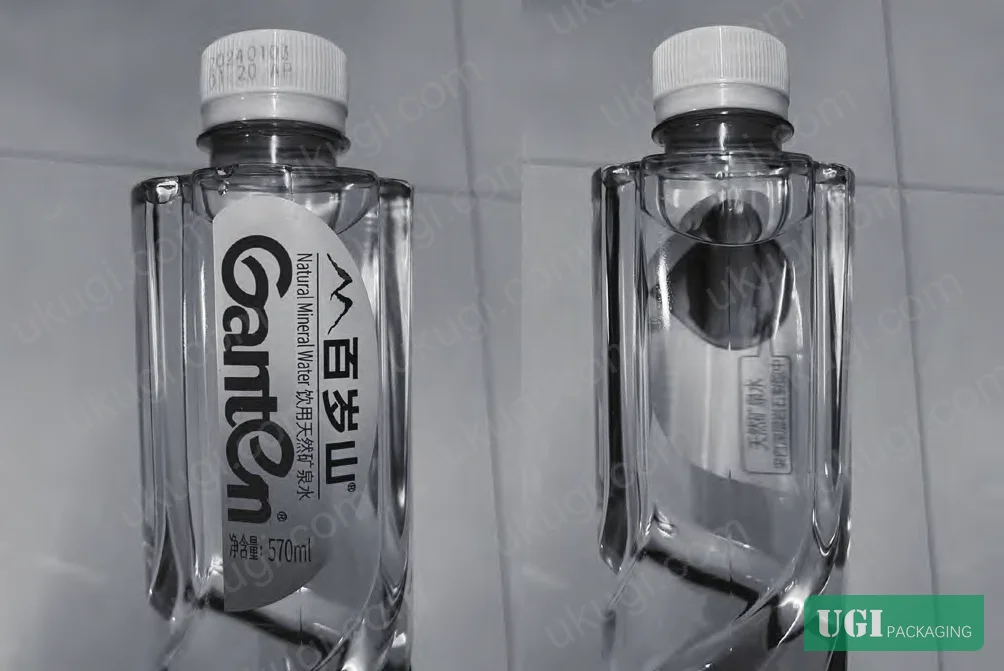
PSA Label Construction and Facestock Selection #
A PSA label is a three-layer laminate: facestock (the print-bearing surface), pressure-sensitive adhesive, and release liner. Simple enough in principle. Where buyers consistently get into trouble is treating these three layers as independent decisions rather than as a system that has to perform together under the application’s specific environmental, mechanical, and regulatory conditions.
Facestock Options by Application Class #
The three most common facestock materials in industrial product labeling are coated paper (art paper/cast-coated), PVC film, and PET film. Each has a defined performance envelope.
| Facestock Material | Typical Temp Resistance | Surface Conformability | Primary Application |
|---|---|---|---|
| Coated art paper | Up to ~70°C | Low — flat surfaces only | General product info, brand labels, instructional overlays |
| PVC film | Up to ~100°C (standard grades) | High — wraps curved/irregular surfaces | Appliance labels, equipment panels, medical device decoration |
| PET film | Up to ~150°C (standard grades) | Medium — moderate curves | High-durability nameplates, electronic equipment ID labels |
| Laser-finish paper | Up to ~60°C | Low | Decorative, promotional, consumer packaging |
Minimum viable specification for most industrial equipment labeling starts at PVC or PET. Coated paper is appropriate for instructional overlays designed to be removed after first use — the paper tearaway tutorial label is a legitimate application — but not for permanent identification or safety markings in any environment with moisture, cleaning agents, or temperature cycling.
For kitchen appliance labels and other heat-adjacent applications, PVC with appropriate plasticizer formulation is the standard choice, with a functional threshold in the 85–100°C continuous service range depending on grade. PET pushes that envelope higher, into the 130–150°C range, and offers better dimensional stability for precision die-cut labels.
Honestly, most buyers over-specify PET when PVC would perform identically in their application — and then under-specify the adhesive system, which is where actual field failures originate. The facestock gets scrutinized; the adhesive gets a line item.

Relevant standards for industrial label material performance include ISO 11073 (medical device labeling systems), ASTM D1000 (pressure-sensitive adhesive coated tapes), and EN 15designation for self-adhesive labels — UL 969 for label permanency and legibility in equipment marking.
Print Process Selection and Pre-Press Requirements #
Print process selection for PSA labels is not just a cost decision — it determines achievable resolution, color gamut, and the range of finishing effects you can specify. For industrial product labels, the relevant print processes are offset, flexographic, digital (inkjet and laser), and screen, with hot-stamp and cold-foil finishing as add-on options.
Image resolution for raster content must meet a minimum of 300 ppi at final output size. This is a hard floor, not a guideline. Below 300 ppi, halftone dot gain on film substrates produces visible image degradation that will not pass visual QC at standard viewing distance. Vector artwork — logos, type, geometric decoration — should remain in vector format through the entire pre-press workflow and only rasterized at RIP stage.
Color space management is a consistent source of production errors. Design work is typically executed in RGB. Output — whether to offset, flexo, or digital — requires a properly managed CMYK conversion with output-intent ICC profiles matched to the press and substrate. Skipping the conversion and sending RGB files to a flexo shop is one of the more reliable ways to generate a color complaint from a brand owner on the first production run.
For text-heavy functional labels — safety markings, regulatory compliance text, product specification panels — all type should be converted to outlines (curves) before file handoff. Font substitution errors in a safety warning label are not a cosmetic problem. They are a compliance problem.
When specifying hot-stamp or foil finishing, the imposition (step-and-repeat layout) must account for foil film thickness and the mechanical registration tolerance of the stamping die. In practice, this means leaving a minimum clearance zone around the foil area in the label design — the exact value depends on equipment and foil type, but 1.5–2.0 mm is a reasonable working figure for label converters running standard equipment.
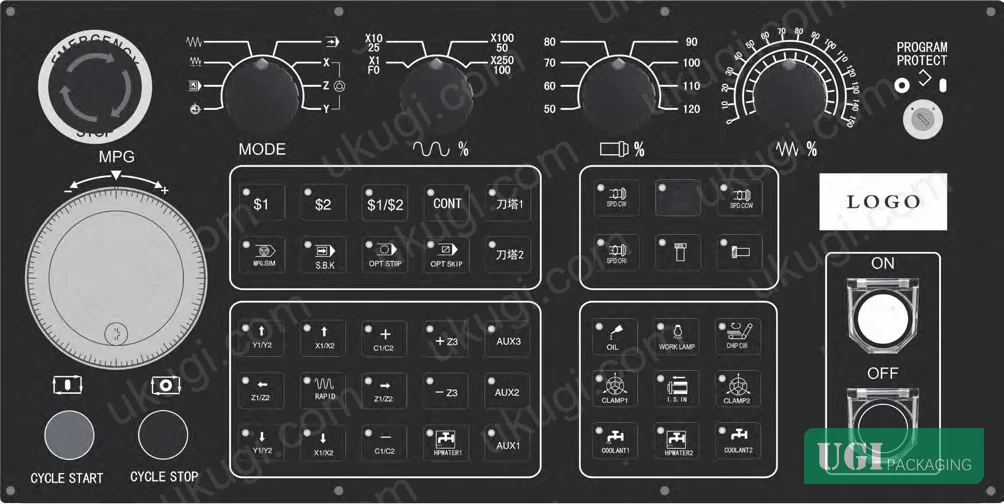
Most procurement teams don’t realize that ISO 7000 (graphical symbols for use on equipment) was significantly expanded in its recent revision to include new symbol sets for electronic and connected device interfaces — including NFC/RFID interaction indicators. If you’re specifying labels for smart-connected equipment and using safety or instructional symbols, verify your symbol set against the current ISO 7000 index before going to print. Using a deprecated symbol on a CE-marked product creates a documentation gap that will surface during conformity assessment.
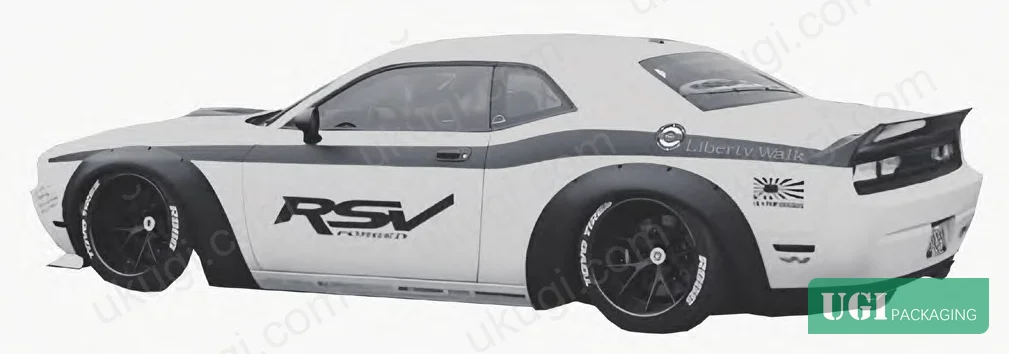
Application Engineering: Surface Conformability and Labeling Methods #
Label application — the actual transfer of label to product surface — is where design decisions made upstream either perform or fail. There is no recovery from a specification that ignores surface geometry, surface energy, or the production volume constraints of the application environment.
Surface Geometry and Material Selection #
For flat or near-flat surfaces (panels, flat-face housings, packaging cartons), virtually any facestock performs. The differentiation becomes critical on:
- Cylindrical surfaces: Requires facestock with sufficient MD (machine direction) flexibility to conform without flagging at label edges. PVC film outperforms PET here; coated paper is marginal and typically unsuitable for diameters below approximately 40 mm.
- Compound curves and irregular surfaces: Demands both flexible facestock and a high-tack adhesive with good wet-out on low-surface-energy substrates. This is where most field failures occur.
- Mold parting lines and surface steps: Labels bridging a parting line or surface discontinuity will tent and fail adhesion at the step. The correct specification is to use the parting line as a registration datum and design the label to terminate at — not cross — the geometric feature.
For large-format labels on equipment with complex surface geometry (industrial machinery, medical imaging equipment), manual application is the standard method for low-to-medium volume. Automatic label applicators require label dimensions and liner geometry to be matched to the equipment’s feed and placement specifications — this is not a design afterthought; it has to be engineered into the label specification from the start.
Qualification Data: MRI Equipment Label Application #
In supplier qualification for a pediatric MRI equipment labeling program, the following application parameters were evaluated. The equipment housing is fabricated from electromagnetic-shielding steel alloy with a powder-coat topcoat. Operating temperature at the housing exterior surface was measured at 45–65°C during continuous imaging cycles. The label specification required:
- Facestock: PVC film (plasticized, 80 µm nominal thickness)
- Adhesive: Acrylic permanent, rated to 100°C continuous service
- Surface preparation: IPA wipe, 30-second dwell before application
- Application method: Manual, with squeegee tool, using mold parting lines as registration reference
In supplier qualification, three of six submitted sample sets failed the 72-hour adhesion retention test at 70°C. Two failure modes were identified: adhesive softening with edge lift (two samples, both from the same converter using a rubber-based adhesive system instead of specified acrylic), and facestock plasticizer migration causing adhesive contamination (one sample, using an off-spec PVC formulation with elevated plasticizer content). The acrylic adhesive specification is non-negotiable for this application class. Rubber-based adhesives are cheaper and some converters will substitute without disclosure.
For regulatory compliance on medical device labeling, the applicable framework is MDR 2017/745 (EU Medical Device Regulation), which specifies labeling requirements for durability and legibility throughout the stated service life of the device.
Functional and Innovative PSA Label Types #
Beyond standard identification and decoration, the PSA label format supports several functional constructions relevant to industrial procurement:
Dual-sided (double-face print) labels are applied to transparent substrates — clear housings, glass panels, transparent packaging. The label reduces occluded surface area while delivering information readable from both sides. Useful in consumer electronics and instrumentation where housing transparency is a design feature.
Thermochromic labels use inks whose color shifts reversibly with temperature change. In beverage or food-contact applications this is a consumer-facing feature. In industrial applications — heating equipment, process vessels, electrical enclosures — it functions as a passive thermal indicator visible without instrumentation. The color-shift threshold temperature must be specified and verified; it is not a self-certifying claim.
NFC electronic labels embed an antenna and IC within the PSA label construction. The user interaction is contactless — a mobile device within the read range (typically 0–10 cm for passive NFC) triggers data exchange. For industrial products this enables asset tracking, maintenance history access, and authentication workflows without requiring a separate hardware interface. Label construction thickness and antenna geometry must be compatible with the housing material — metallic substrates detune passive NFC antennas and require ferrite shielding layers in the label construction.
Anti-counterfeiting labels combine covert and overt security features: invisible UV-reactive inks, micro-text, holographic overlays, serialized QR or DataMatrix codes. For industrial OEM applications, serialized covert codes provide unique-item traceability that supports supply chain authentication audits.
Internal resources on functional and security printing and specialty functional inks provide deeper specification guidance on these constructions.
Practical Guidance for Buyers #
Start with the application environment, not the artwork. The sequence that generates the fewest rework cycles is: define surface geometry and substrate material → specify temperature and chemical exposure range → select facestock and adhesive system → then brief the designer with those constraints already fixed.
For industrial equipment labeling in regulated product categories (medical devices, electrical equipment, machinery with CE/UL marking requirements), treat label durability and legibility as compliance attributes, not aesthetic ones. Request test data from your converter against the relevant standard — UL 969 for equipment marking is the most commonly applicable — not just a material data sheet.
Insist on acrylic adhesive systems for any application involving elevated temperature, chemical cleaning agents, or long service life requirements. Rubber-based systems are cost-competitive at time of procurement and frequently underperform in field conditions. The converter qualification process should include adhesion retention testing at the application’s maximum service temperature, minimum 72 hours dwell.
For large-format manual-application labels, design the registration system before finalizing the artwork. Parting lines, assembly seams, and machined edges are reliable registration datums. Labels that rely on freehand placement produce unacceptable variation at scale.
Bleed allowance on label artwork should be a minimum of 3 mm on all sides for standard die-cut labels. Less than that and edge trim variation will cut live content.
Frequently Asked Questions #
Q: What’s the minimum print resolution for PSA labels going on industrial equipment?
A: 300 ppi at final output size is the hard floor for raster content. For type and line art, keep those elements in vector format all the way through pre-press — rasterizing clean vector geometry introduces aliasing that makes fine detail look soft at print size.
Q: When should I specify PET facestock over PVC for an equipment label?
A: PET makes sense when you need dimensional stability in a precision die-cut label (tight registration on multi-up label sheets, for example), or when the service temperature exceeds the reliable range of standard PVC — roughly above 100°C continuous. For most industrial panel and housing applications below that threshold, PVC with an acrylic adhesive will perform equivalently and typically costs less. Don’t pay for PET performance you won’t use.
Q: Our equipment housing is powder-coated steel. Do we need surface prep before label application?
A: Yes. Powder-coat surfaces have variable surface energy depending on the coating chemistry, and they accumulate mold-release residue and handling contamination during assembly. IPA wipe with a minimum 30-second dwell before application is standard practice. For labels in elevated-temperature service, consider a more aggressive surface prep protocol — some converters recommend a two-step solvent wipe — and verify adhesion retention at temperature with a 72-hour soak test before approving the label specification.
Q: Can NFC labels be applied directly to metal housings?
A: Standard passive NFC labels cannot. Metallic substrates detune the antenna and effectively eliminate read range. Labels intended for metal surfaces require a ferrite shielding interlayer between the antenna and the substrate — this changes the label construction thickness and adds cost. Specify “on-metal NFC label” explicitly when sourcing; the default NFC label construction will not function.
Q: What regulatory framework applies to PSA labels on medical devices sold in the EU?
A: MDR 2017/745 is the primary regulation. It requires that labeling remain legible and intact throughout the stated service life of the device, and sets specific content requirements for symbols, language, and UDI (Unique Device Identification) marking. For pediatric-specific medical devices, there are additional Human Factors considerations around label design that feed into the usability engineering file. Confirm with your regulatory affairs team whether your label specification needs to be documented as part of the technical file — for Class II and above, it almost certainly does.
Published by ukugi.com Technical Team | Request a sourcing quote
Content reviewed by michael.wong | © ukugi.com — All rights reserved. Unauthorized reproduction prohibited.


