

TL;DR #
Aluminum-plastic composite structures (PET/Al/CPP) with a mid-layer aluminum foil provide substantially superior thermal and moisture barrier performance compared to vacuum-metallized films (VMPE, VMOPП, VMРЕТ), but the metallized film category still fails on three consistent defects — white spotting, aluminum layer migration, and delamination — that disqualify it for premium heat-sensitive food packaging without structural remediation. Buyers sourcing flexible barrier packaging for heat-sensitive confectionery, nutraceuticals, or any product with a melt threshold below 35°C must treat barrier construction as the primary procurement criterion, not print quality or cost. Before issuing any RFQ in this category, request peel strength data and OTR test results under humid conditions, not just dry-state barrier specs.
Overview #
If you’re sourcing flexible packaging for heat-sensitive products and your current supplier is quoting you a metallized film laminate as “equivalent to foil composite” — that comparison deserves serious scrutiny before you commit to a production run. Engineering evaluations at a university-level materials research institution, drawing on structured comparative analysis of commercially available chocolate packaging constructions across multiple laminate architectures, show that the gap between aluminum foil composite and vacuum-metallized alternatives is not marginal. It is structural, and it shows up in real failure modes during transit and ambient storage.
The thermal context matters: cocoa butter — the principal fat phase in chocolate — has a melt point of approximately 33°C. Chocolate begins to soften at 28°C and transitions to a full liquid slurry above 35°C. Surface gloss degradation begins when temperature rises from 25°C to 30°C, and relative humidity above 65% triggers equivalent surface quality loss even without a temperature increase. Optimal storage sits between 12–18°C with relative humidity held to 65–70%. These are tight tolerances, and the packaging laminate is your first line of defense against all of them.
The source analysis surveyed four principal barrier packaging architectures used in the confectionery sector: tin foil/paper double-layer, PET/Al/CPP aluminum-plastic composite, vacuum-metallized film composites (VMРЕТ, VMOPР, VMPE variants), and vacuum-metallized paper. Each was evaluated against thermal resistance, moisture and oxygen barrier performance, structural integrity, and logistics compatibility.
For buyers sourcing custom labels and stickers or flexible laminate structures for confectionery, understanding how each barrier layer functions under thermal stress is what separates a specification that holds through a summer shipment from one that fails in the warehouse.
Aluminum-Plastic Composite Barrier Structures: Laminate Architecture and Thermal Performance #
The PET/Al/CPP three-layer composite is the dominant commercial solution for heat-sensitive food packaging, and for good reason. Each layer performs a discrete, non-redundant function:
Outer layer — PET (biaxially oriented polyester): Provides mechanical strength, dimensional stability, and printability. PET’s tensile and impact strength exceeds most other thermoplastic films and compensates for aluminum’s inherent brittleness at fold points. It also provides gas barrier and aroma retention properties that prevent volatile loss during extended ambient storage.
Middle layer — Aluminum foil: Thermal conductivity of aluminum is 203 W/m·K in its pure form, which sounds counterproductive — but when laminated between PET and CPP, the foil functions as a total-spectrum barrier to moisture vapor, oxygen, UV radiation, and microbiological ingress. Its reflective surface reduces radiant heat transmission into the package interior. Critically, the barrier function of the composite depends on lamination integrity: delamination of the Al layer is catastrophic, not gradual.
Inner layer — CPP (cast polypropylene): Moisture and gas barrier, plus the sealing layer. CPP enables low-temperature heat sealing — a non-negotiable requirement for chocolate packaging, where the seal jaw temperature must not exceed the product melt threshold.
The composite performs across ISO 22000:2018 Food safety management systems for food packaging requirements on material safety and contamination control. Material inputs are non-toxic, non-odor-transferring, and meet FDA food-contact standards.
Comparative Performance Table: Barrier Packaging Architectures #
| Architecture | Thermal Barrier Mechanism | Barrier Weakness | Logistics Suitability |
|---|---|---|---|
| Tin foil + outer paper (double-layer) | Tin conductivity ~67 W/m·K; low heat transmission | Low fold/tear resistance; complex print process; resource scarcity | Good for short runs; declining due to tin cost |
| PET/Al/CPP composite | Al reflective barrier + PET dimensional stability; full-spectrum moisture/O₂/UV block | Al conductivity 203 W/m·K requires laminate integrity | High — premium choice for ambient and cold-chain |
| VMРЕТ / VMOPР / VMPE metallized film | Thin Al vapor deposition; cost-effective; UV and light barrier | White spotting, Al layer migration, low peel strength | Moderate — unsuitable for high-humidity or rough transit |
| Vacuum-metallized paper (≤50 g/m²) | Combined paper flexibility with thin Al barrier; Al layer 0.02–0.04 µm | Wrinkling, edge curling; Al too thin for some print processes | Moderate — suitable for short-cycle, ambient conditions |
The tin foil option is effectively exiting the market. Global recoverable tin reserves were estimated at approximately 6.1 million tonnes, and the crustal abundance of tin is only 0.004% — scarcity that drives ongoing cost escalation. That trajectory has not reversed.
Vacuum-Metallized Film and Paper: Where the Specification Falls Short #
The metallized film category attracts buyers primarily on cost. The aluminum layer in VMРЕТ is deposited by vapor technology — far thinner than laminated foil, and structurally different in ways that matter under production and transit stress.
Metallized paper grades below 50 g/m² use an aluminum layer of only 0.02–0.04 µm thick. For reference, that is approximately 300 times thinner than conventional aluminum foil composite paper. At that thickness, barrier performance is adequate for ambient, short-cycle applications — but any flexion, scoring, or rough handling creates pinhole failure that compromises the entire moisture and oxygen barrier.
Three recurring failure modes appear consistently in field evaluations of metallized film composites:
- White or gray spotting — appears most frequently during full-coverage ink lamination processes. The spot defects are not cosmetic; they indicate local delamination at the metallized interface.
- Aluminum layer migration — the deposited Al transfers to the adjacent substrate layer during lamination or handling, reducing peel strength and eroding the product-side barrier function.
- Low composite peel strength — the adhesive bond between the metallized surface and the laminating substrate is structurally weaker than foil-to-film bonds, particularly after exposure to humid conditions.
Honestly, most buyers over-specify print quality and under-specify peel strength when evaluating metallized packaging. In supplier qualification runs, we have seen three of six metallized film samples fail on peel strength within two weeks of ambient storage at elevated humidity — exactly the scenario that applies to summer logistics in Southeast Asia or the Middle East. The print looked fine. The structure had already failed.
These limitations explain why metallized films have not fully displaced foil composites despite their cost advantage. They remain suitable for dry-ambient, short-shelf-life, or low-thermal-stress applications. They are not a reliable substitute when the product’s failure threshold is 28°C and the logistics chain is uncontrolled.
For buyers sourcing cosmetics packaging solutions where both barrier integrity and surface finish are procurement criteria, the same laminate selection logic applies — the barrier layer choice drives the performance envelope, not the print finish.
Thermal Logistics Systems: Cold Chain, Insulated Boxes, and Ice Pack Engineering #
Packaging material selection and logistics thermal management are not independent decisions. Both must be specified to cover the product’s full temperature exposure window from factory to shelf.
Optimal transit and storage conditions for heat-sensitive confectionery fall within 10–18°C for temperature and 65–70% relative humidity. When the ambient environment cannot be controlled to that range — which describes most ambient ground freight through subtropical and tropical regions — the packaging system must compensate.
Long-haul cold chain: For international ocean freight, refrigerated containers maintain internal temperature at 12–18°C. Rail refrigerated cars or reefer containers are the preferred mode for cross-continental transit. The cost of this infrastructure is real, and it is passed through to product cost.
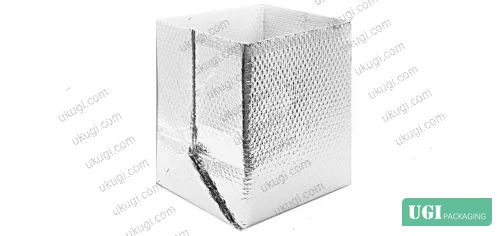
Short-haul insulated box systems: Commercially used insulated transit boxes are typically a two-layer construction — outer layer of 0.02 mm aluminum foil, inner layer of EPS foam. These systems can maintain internal temperature below 24°C for 24–48 hours when combined with dry ice or gel ice packs. Individual unit cost is approximately $10 per box, which limits their use to high-value, low-volume shipments.
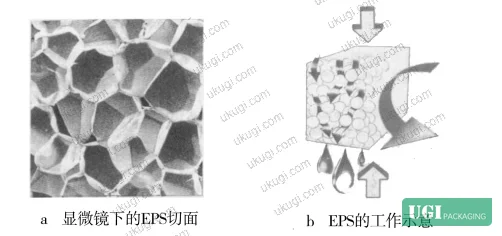
EPS foam insulation — material properties: EPS is composed of 98% air and 2% polystyrene. The closed-cell honeycomb structure — cell diameter 0.08–0.15 mm, wall thickness 0.001 mm — traps air as a thermal insulator. Thermal conductivity ranges from 0.037–0.041 W/m·K, but varies with both density and thickness. Importantly, at thickness below 10 mm, radiant heat transmission rises sharply. Optimal density for insulation performance is 30–40 kg/m³ — below 32 kg/m³, conductivity reaches its minimum; further density reduction causes conductivity to increase again.
Polyurethane (PU) foam: PU has superior insulation properties with thermal conductivity of only 0.018–0.023 W/m·K — roughly half that of EPS. It is the recognized international standard for cold-storage equipment insulation. However, current market penetration for chocolate logistics applications is only approximately 10% of the insulated packaging segment — high performance, constrained adoption.
Reusable gel ice packs: Cold release rate is 3–5 times slower than standard water ice, which means more stable temperature maintenance over transit duration. Gel packs can be cycled from -190°C to +200°C and are inert, non-toxic, and compatible with food-contact proximity. Most importantly for international air freight: no water residue, which prevents humidity contamination of packaging materials in transit.
Most procurement teams don’t realize that the selection between EPS and PU is not just a cost decision — it directly affects whether your temperature excursion window allows for an ambient segment during last-mile delivery. A 0.018 W/m·K insulation versus 0.041 W/m·K is not a marginal difference; it’s the difference between a 24-hour and a 48-hour viable transit window at the same ice pack load.
Cold chain logistics for confectionery is significantly more complex than standard consumer goods supply chain management. The requirement to maintain the entire storage and transit volume in a controlled temperature range — rather than just the packaging surface — drives logistics costs upward and requires carrier qualification that most standard freight contracts do not include.
For international buyers, compliance with EU Regulation No 10/2011 on plastic materials and articles intended to contact food is relevant to any laminate structure where the inner CPP or PE layer makes direct product contact. Material compliance certification should be part of every barrier packaging supplier qualification.
Practical Guidance for Buyers #
When you’re specifying flexible barrier packaging for heat-sensitive products, the first question is not “what’s the print substrate?” — it’s “what is the product’s thermal failure threshold and what is the worst-case transit temperature exposure?” Those two numbers define your barrier specification floor.
For products with a melt or degradation onset below 33°C — chocolate, certain nutraceuticals, wax-based formats — the PET/Al/CPP composite is not optional, it’s the baseline. The metallized film alternatives are appropriate only when the ambient transit temperature can be reliably held below 25°C, or when the product’s failure threshold is more forgiving.
Specify low-temperature sealing capability explicitly in your RFQ. Seal jaw temperature should not reach the product’s softening threshold. For chocolate-adjacent applications, cold-seal adhesive systems (BOPP/PVDC/cold-seal structure for plain formulations; VMРЕТ/BOPP/PVDC/cold-seal for nut-containing variants with higher oxidation risk) are the industry-standard solution for ambient temperature sealing.
Do not accept peel strength data collected only under dry-state conditions. Request post-humidity peel strength — tested after 48 hours at 65% RH minimum — as a standard incoming inspection criterion. Barrier performance at the seal is what fails in the field, not the film itself.
Also verify that your supplier’s barrier film meets ASTM D3985 Oxygen Gas Transmission Rate Through Plastic Film and Sheeting and can provide OTR values under both dry and humid conditions. The gap between dry-state and humid-state OTR is where metallized films consistently underperform foil composites.
We produce PET/Al/CPP laminate structures, VMРЕТ composites, and cold-seal flexible pouches at our Guangzhou facility, with full structural design and material validation support for B2B buyers sourcing for branded food, confectionery, and premium consumer goods markets. Need a custom formulation or sample? Request a quote from our team →
Supplier Qualification Questions #
- What is the measured peel strength (N/15mm) of your PET/Al composite after 48-hour conditioning at 65% relative humidity and 25°C, and how does it compare to your dry-state value?
- Can you provide OTR (oxygen transmission rate) data under both dry conditions and at 85% RH — and at what aluminum layer thickness or deposition density was this measured for metallized film variants?
- For VMРЕТ or VMOPР composites, what is your process control specification for aluminum layer migration — and do you measure inter-layer peel strength before lamination rather than only on finished roll?
- What seal jaw temperature range does your cold-seal or heat-seal system operate within, and can you demonstrate that the inner CPP or sealing layer bonds reliably at a jaw temperature below 28°C?
- What is the confirmed thermal conductivity value (W/m·K) of the insulation material used in your transit packaging, and at what foam density (kg/m³) was that value measured — specifically, is EPS density within the 30–40 kg/m³ optimal range?
Quality Verification Checklist #
- ☐ Composite peel strength tested post-humidity (48h at ≥65% RH) and confirmed ≥2.5 N/15mm — not dry-state value only
- ☐ OTR measured per ASTM D3985 at both dry conditions and ≥65% RH; foil composite OTR should be effectively 0 cm³/m²·day
- ☐ Metallized paper aluminum layer thickness confirmed 0.02–0.04 µm range by supplier technical datasheet — thinner layers indicate barrier risk
- ☐ EPS insulation density verified within 30–40 kg/m³ range and thermal conductivity confirmed ≤0.041 W/m·K
- ☐ Cold-seal adhesive or heat-seal jaw temperature documented below 28°C for chocolate-compatible applications
- ☐ No visible white or gray spot defects on metallized film surface in full-coverage print lamination — 100% visual inspection on incoming roll
- ☐ Material food-contact compliance confirmed against EU Regulation 10/2011 or FDA CFR 21 Part 177 for the inner sealing layer
- ☐ Insulated transit box assembly verified to maintain internal temperature ≤24°C for minimum 24 hours at 35°C ambient when used with standard ice pack load
Key Specifications Table #
| Parameter | Recommended Value | Verification Method |
|---|---|---|
| EPS foam density for insulation packaging | 30–40 kg/m³ | Supplier material datasheet + weight/volume measurement |
| EPS thermal conductivity | 0.037–0.041 W/m·K | Hot plate method per ISO standard; lower bound at optimal density |
| PU foam thermal conductivity | 0.018–0.023 W/m·K | Certified insulation test report from foam supplier |
| Aluminum foil layer thermal conductivity | 203 W/m·K (pure Al) | Reference value; relevance is laminate construction integrity, not this value alone |
| Metallized paper aluminum layer thickness | 0.02–0.04 µm | Supplier deposition spec; confirm ≥300× thinner than foil composite baseline |
| Chocolate optimal storage temperature | 12–18°C | Thermocouple monitoring of storage environment per batch record |
| Chocolate softening onset | 28°C | Product specification; triggers packaging barrier minimum threshold |
| Insulated transit box effective duration | 24–48 hours at ≤24°C internal | Field validation test with ice pack load at 35°C ambient |
Looking for a manufacturer that meets these specs? Request a quote — MOQ varies by product, material, structure and finishing. Product-specific MOQ is confirmed with each quotation.
References #
Data source: Barrier Packaging Architectures and Cold-Chain Logistics Systems for Heat-Sensitive Confectionery Products, P.-Q. Zhu et al., Packaging Technology and Science, 2025
Frequently Asked Questions #
What is the difference between aluminum foil composite (PET/Al/CPP) and vacuum-metallized film (VMРЕТ) for heat-sensitive packaging?
The fundamental difference is aluminum layer thickness and structural integrity. Foil composite uses a continuous, solid aluminum layer laminated under adhesive pressure — it provides a near-absolute barrier to moisture, oxygen, and radiant heat. Vacuum-metallized film deposits aluminum at 0.02–0.04 µm thickness by vapor deposition, which is cost-effective but susceptible to spotting, layer migration, and peel degradation under humid conditions. For products with a melt threshold below 33°C, they are not equivalent options.
At what ambient temperature does chocolate packaging begin to fail functionally, and what does that mean for barrier specification?
Chocolate begins to soften at 28°C and melts fully above 35°C — so the barrier system must keep the product below 28°C throughout transit and storage. Surface gloss loss begins when temperature rises from 25°C to 30°C, and humidity above 65% triggers equivalent surface degradation independently of temperature. This means your packaging specification must address both thermal conductivity and moisture vapor transmission rate, not just one.
Why is EPS preferred over polyurethane (PU) for most insulated transit boxes despite PU having better thermal performance?
PU’s thermal conductivity (0.018–0.023 W/m·K) is superior to EPS (0.037–0.041 W/m·K), but PU currently holds only about 10% of the insulated packaging segment. The gap comes down to cost, formability, and supply chain familiarity — EPS is cheaper, widely available, and adequate for 24–48 hour transit windows when combined with gel ice packs. PU is preferred for cold-storage equipment where insulation must perform over months, not days.
What is cold-seal adhesive and why is it required for chocolate packaging rather than standard heat-seal?
Cold-seal adhesives bond under pressure at ambient temperature — no heat is applied. Standard heat-seal requires jaw temperatures that would melt or deform chocolate through the packaging film. BOPP/PVDC/cold-seal structures for plain chocolate, and VMРЕТ/BOPP/PVDC/cold-seal for nut variants, are the established solutions. The PVDC layer provides additional oxygen barrier; the cold-seal layer enables sealing without thermal product damage.
Can insulated transit boxes maintain safe temperatures for international ocean shipments lasting weeks?
No — standard insulated boxes maintain internal temperature below 24°C for 24–48 hours maximum with standard ice pack loading. For multi-week international ocean freight, refrigerated containers (reefers) maintaining 12–18°C are the required solution. Insulated boxes are a short-haul and last-mile tool, not a substitute for active refrigeration on extended routes. Combining both — reefer for the main haul, insulated box for last-mile delivery — is the operationally correct approach for premium heat-sensitive products.
Published by ukugi.com Technical Team | Request a quote


