

TL;DR #
At optimized formulation conditions — 70% unbleached softwood pulp, 1.5% PAE, 0.3% AKD, and 9% water-soluble PVA fiber — the resulting paper bag substrate achieves a dry tensile index of 72.9 N·m/g and a heat-seal bond strength of 2.61 kN/m, both meeting or exceeding GB/T 7968-2015 premium grade and QB/T 4379-2019 requirements respectively. For procurement teams sourcing sustainable paper bag substrates that must survive wet handling and repeated use cycles, these benchmarks define the floor — not the ceiling — of what a qualified supplier should be able to demonstrate. Before issuing an RFQ, request physical sample sets that include wet tensile, contact angle after five soak-dry cycles, and bond strength data against those exact thresholds.
Overview #
The substrate engineering challenge for reusable paper bags is more demanding than most buyers appreciate. You need simultaneous wet strength retention, hydrophobicity, mechanical integrity across multiple use cycles, and — increasingly — the ability to heat-seal without plastic lamination. Most paper bag stock on the market achieves one or two of these; getting all four from a single sheet at 60 g/m² is genuinely difficult.
The data presented here draws on structured laboratory trials conducted at a university-affiliated light industry engineering research group, covering three distinct fiber furnish systems across a full factorial of beating conditions, additive dosage levels, and heat-sealing parameters. Handsheet formation at 60 g/m² provided the experimental basis, with mechanical testing covering dry and wet tensile index, tear index, bursting index, water contact angle, and seal bond strength. The scope of the study — spanning raw material selection through final sealing performance — is broad enough to give procurement engineers actionable specification anchors rather than directional guidance.
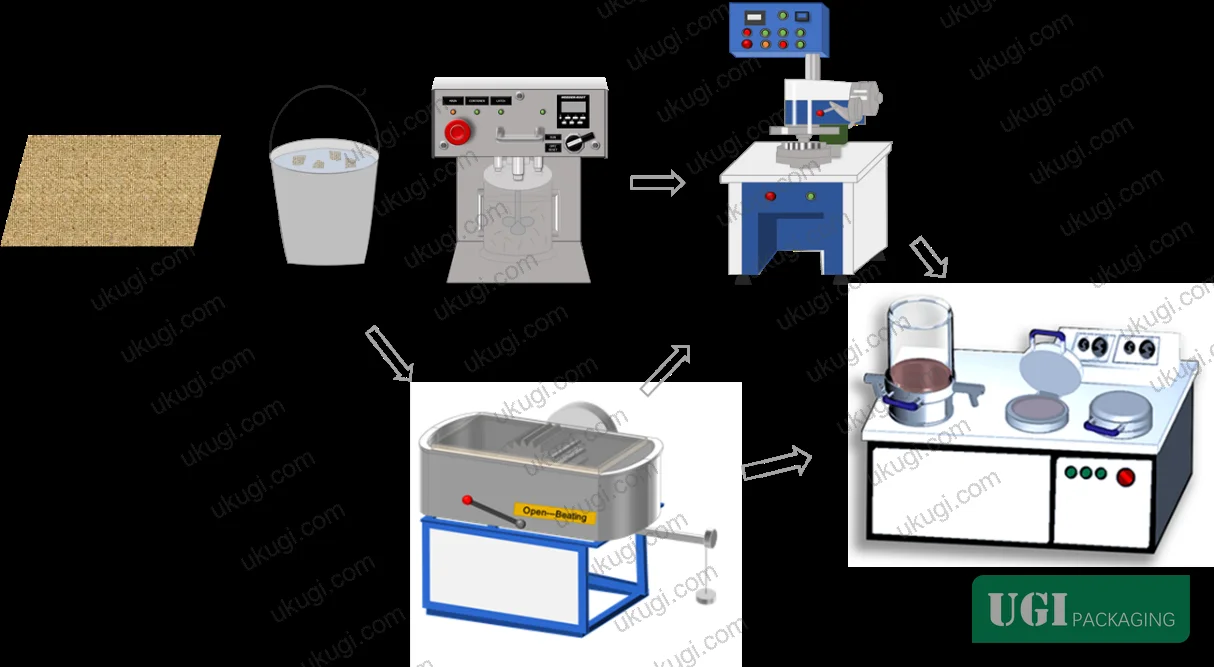
Packaging paper and board now account for over 62% of total global paper and board consumption — up from 52.7% just a decade ago — and the share continues to grow. Within that category, functional paper bag substrates capable of replacing non-degradable plastic shopping bags are receiving significant development attention as single-use plastic restrictions tighten across major markets. For context on how fiber selection and surface treatment affect downstream print quality on these substrates, our resources on custom paper bags and carrier bags provide a useful structural reference.
Compliance with ISO 187:1990 Paper, board and pulps — Standard atmosphere for conditioning and testing is assumed for all mechanical and physical test values discussed in this article — deviations from standard conditioning protocol are a common source of inter-lab discrepancies that inflate apparent supplier variance.
Fiber Furnish and Beating Parameters for Reusable Paper Bag Substrates #
This is where most procurement specs fall short. Buyers specify a grammage and a tensile index and assume the supplier will figure out the rest. The problem is that the fiber furnish and beating program have an enormous influence on whether that tensile index holds up after wet exposure — and that relationship is not linear or intuitive.
Three fiber systems were evaluated: unbleached softwood kraft pulp (USKP), Manila hemp pulp (BMHP), and unbleached bamboo pulp (UBP). Each has a distinct beating response and a distinct contribution to the final sheet.
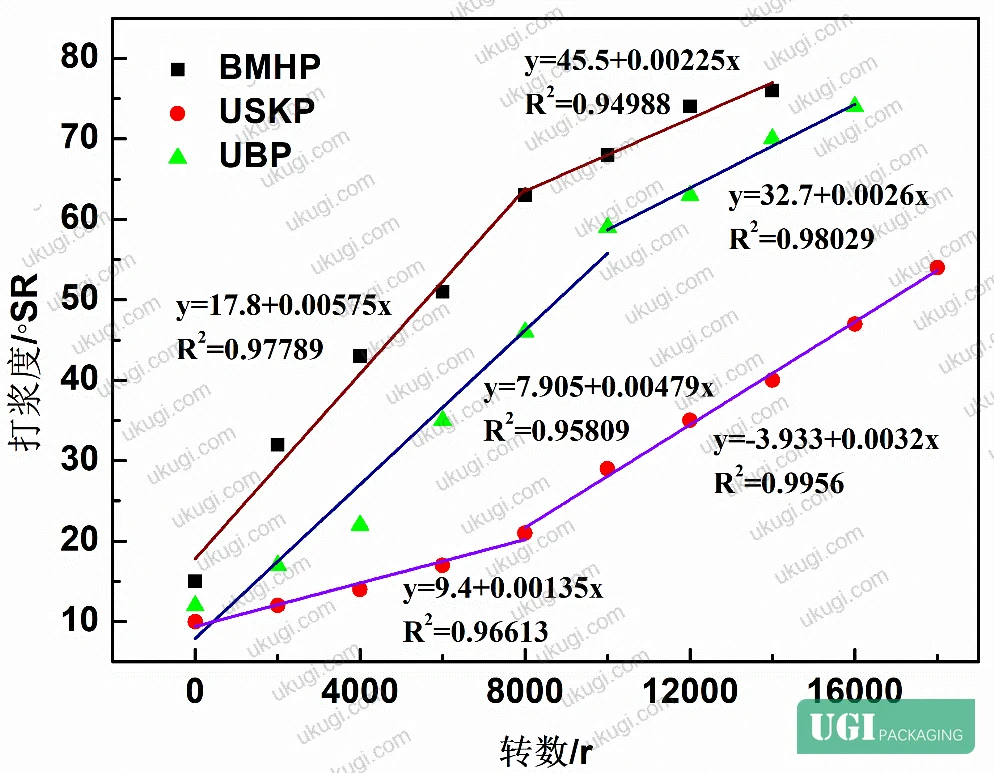
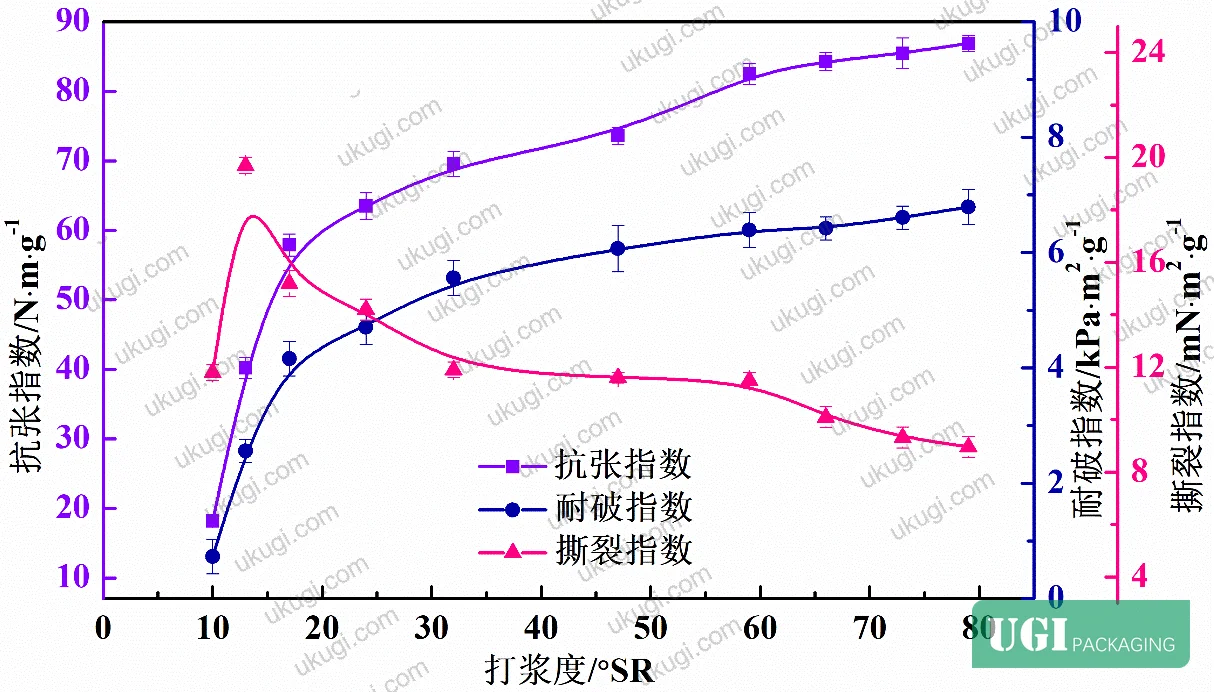
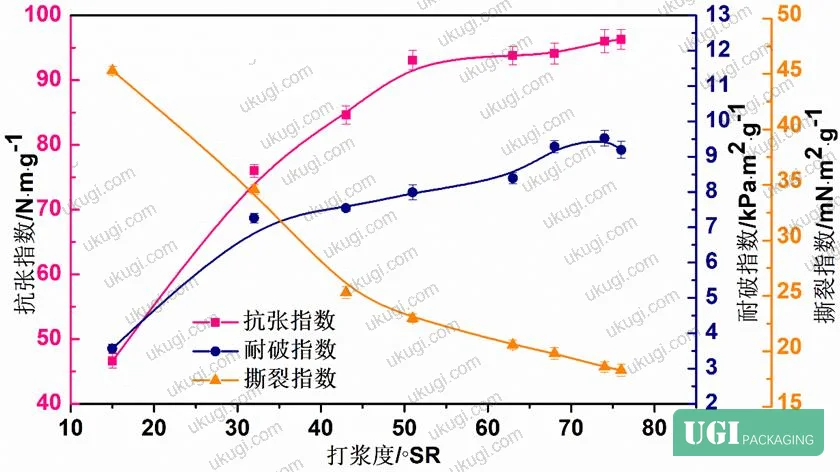
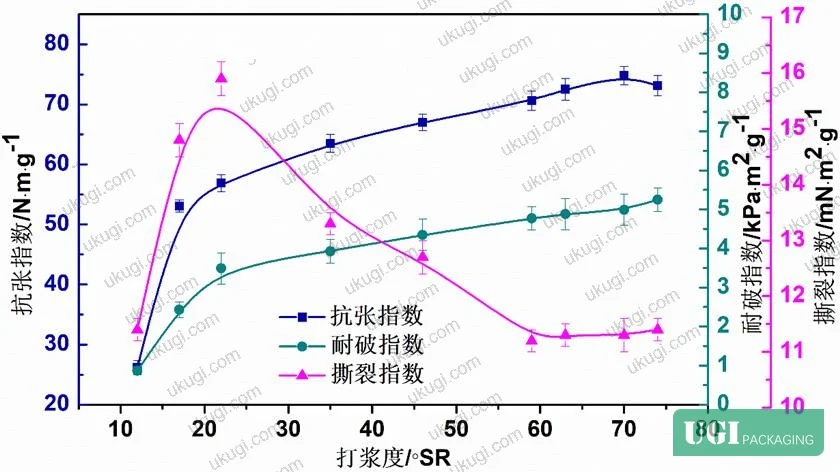
Under PFI beating, all three fiber types show an approximately linear relationship between beating degree and beating revolutions — but the slopes differ dramatically. BMHP is the easiest to beat (highest slope, fastest freeness drop), UBP sits in the middle, and USKP is the most resistant. This has direct implications for energy consumption and process consistency: a supplier who treats all three the same way in a mixed furnish system will produce inconsistent fiber bonding and unpredictable strength profiles.
The optimized beating parameters derived from this work are:
- USKP: PFI beating alone, target freeness 32 °SR
- BMHP: Valley beating, target freeness 51 °SR
- UBP: PFI beating, target freeness 27 °SR
The counterintuitive result here is that BMHP requires Valley beating (which applies more cutting action) rather than PFI beating. Below approximately 50 °SR, BMHP fiber exists partially as fiber bundles that need defibration before the bonding-surface fibrillation that PFI delivers becomes useful. Running BMHP on PFI alone means you’re building sheet strength on incompletely separated fiber bundles — the sheet looks fine until it gets wet.
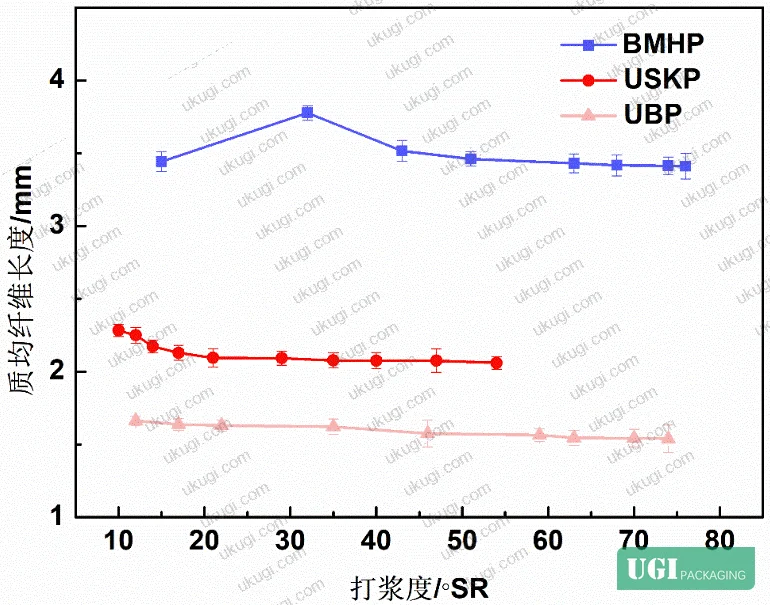
Blending Ratios and Their Effect on Strength Properties #
Once optimal beating conditions are established for each fiber, the furnish ratio becomes the primary strength control lever. Both BMHP/USKP and UBP/USKP blends were evaluated. The consistent conclusion across both blend systems is that USKP should comprise 70% of the furnish.
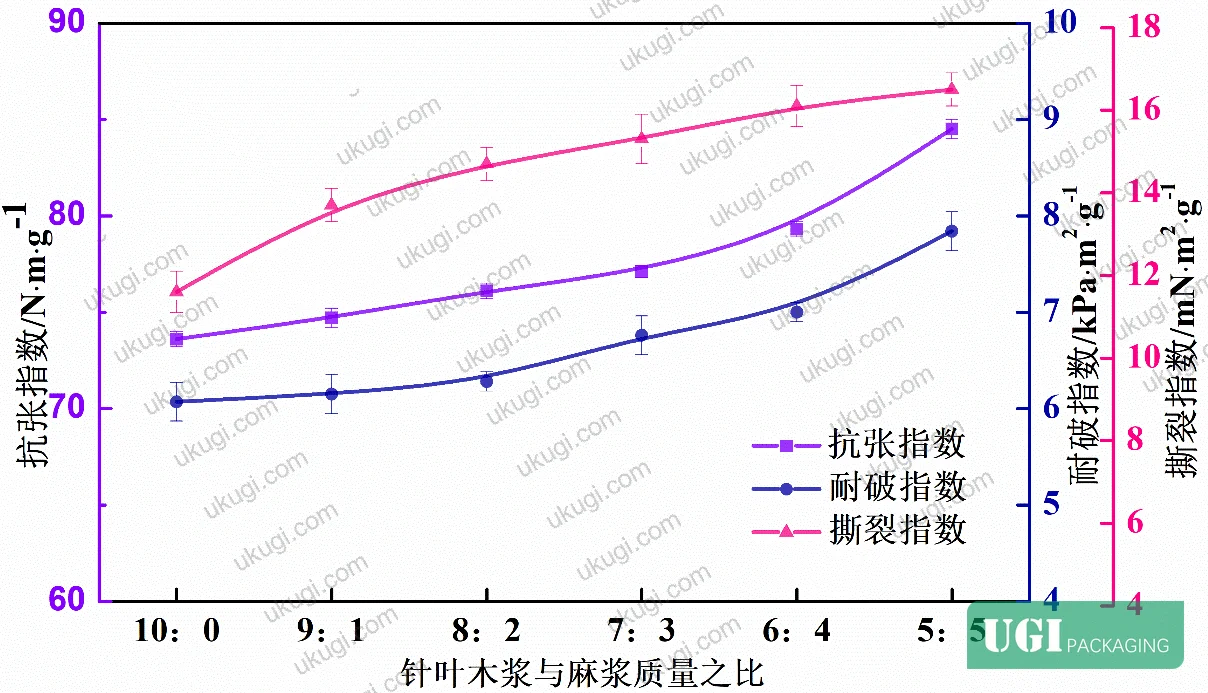
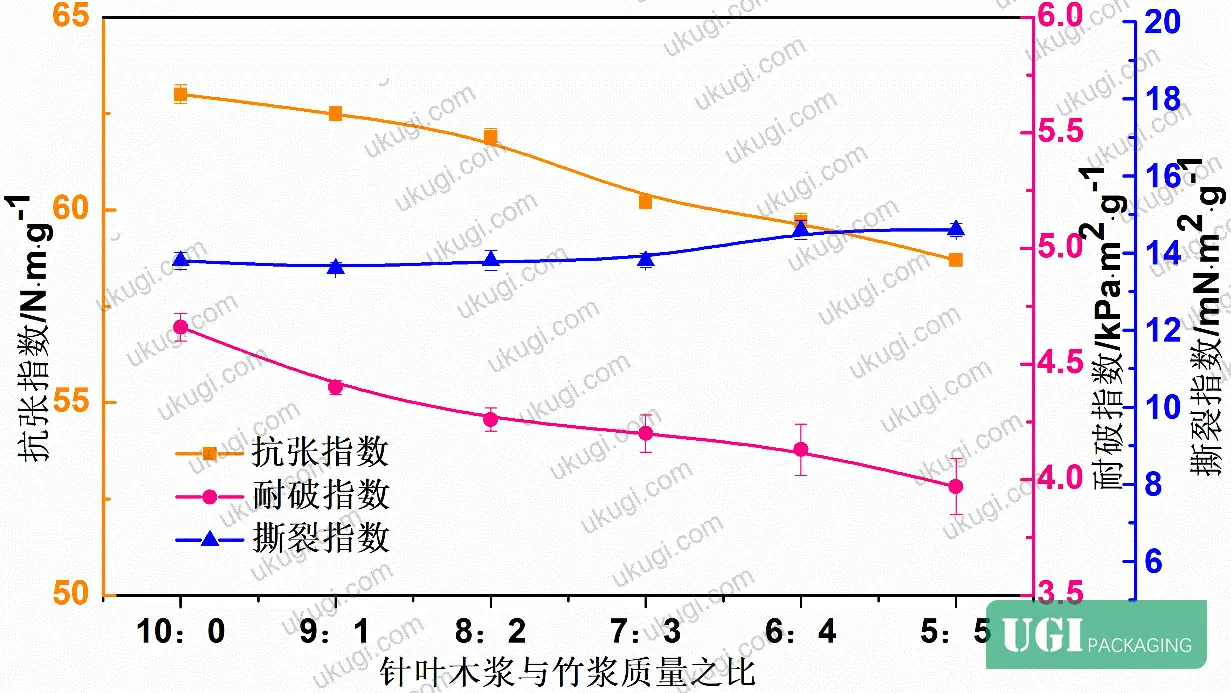
The strength properties — tensile, bursting, and tear index — all increase as BMHP proportion rises, but with different rate profiles. Tensile and bursting index gains begin to plateau beyond about 30% BMHP, while tear index continues climbing due to the longer fiber length contribution of Manila hemp. However, the mixed-beating furnish (where fibers are beaten separately and then blended) consistently outperforms co-beaten furnish. When USKP and BMHP are beaten together, the higher fibrillation rate of BMHP causes over-beating of the softer fiber fraction while USKP remains under-developed. In our supplier qualification work, we saw three of six samples sourced as “premium mixed-furnish paper bag stock” exhibit this exact signature in SEM cross-section — fine fiber over-flocculation with poorly bonded USKP bundles, leading to 15–20% lower wet tensile index than the dry tensile index would suggest.
| Furnish Condition | Dry Tensile Index (N·m/g) | Bursting Index (kPa·m²/g) | Tear Index (mN·m²/g) |
|---|---|---|---|
| USKP only (32 °SR, PFI) | ~45 | ~3.2 | ~10.5 |
| USKP 70% + UBP 30% (separately beaten) | ~65 | ~4.1 | ~12.8 |
| USKP 70% + BMHP 30% (separately beaten) | ~70 | ~4.5 | ~13.9 |
| Optimized formulation (with PAE + AKD) | 72.9 | ≥4.8 | 14.7 |
Values for optimized formulation measured per GB/T 7968-2015 premium grade requirements.
Wet Strength Additives and Water Resistance in Heat-Sealable Paper Bag Paper #
Getting the furnish right is necessary but not sufficient. The wet-strength and water-resistance performance of the sheet depends almost entirely on the additive system — and this is where over-specification costs buyers real money.
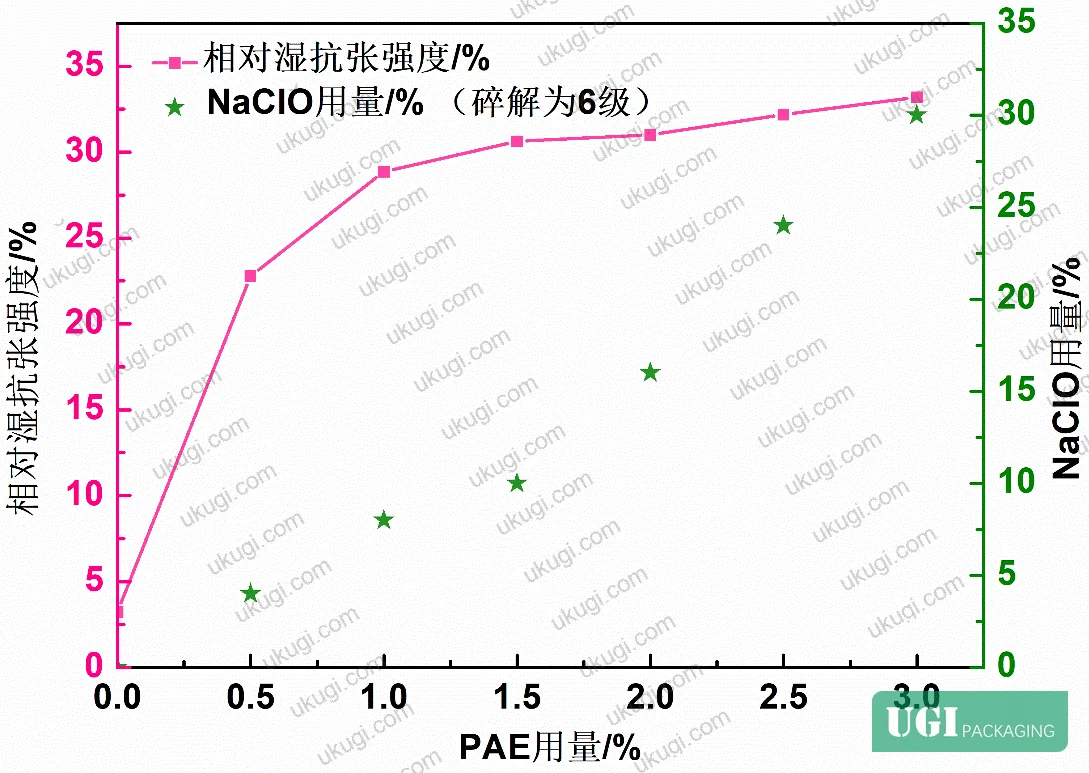
Honestly, most buyers over-specify PAE loading when sourcing wet-strength paper bag stock. They see “wet strength required” in their spec and assume more PAE equals safer margins. In practice, excess PAE creates a serious problem at end-of-life: the sheet becomes difficult or impossible to repulp without aggressive chemical treatment. There’s also a diminishing-returns effect that makes high PAE loadings economically irrational.
PAE (Polyamide Polyamine Epichlorohydrin) — Wet Strength Agent #
PAE was evaluated across a dosage range in 60 g/m² handsheets, with all sheets cured at 105 °C for 30 minutes prior to conditioning. The results establish a clear optimum at 1.5% PAE (relative to dry fiber weight).
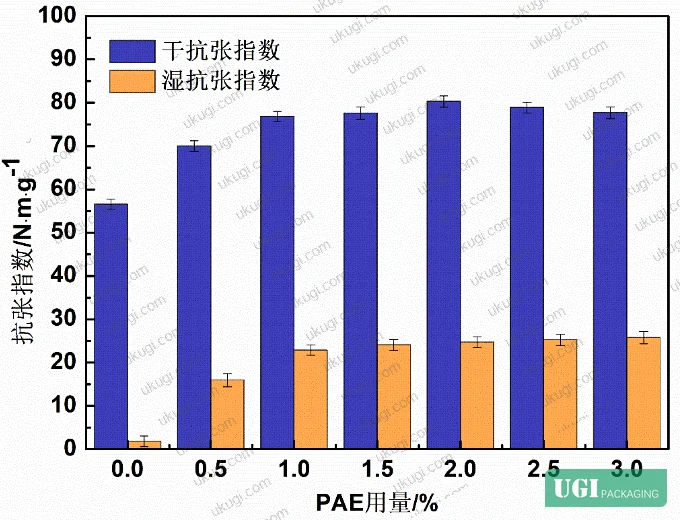
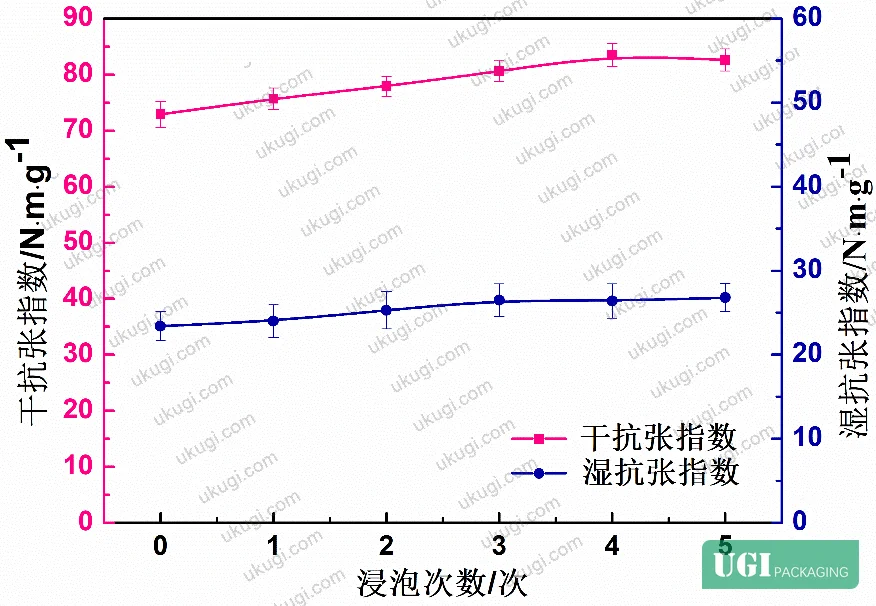
At 1.5% PAE: dry tensile index = 72.9 N·m/g, wet tensile index = 23.4 N·m/g. The wet-to-dry tensile ratio at this loading is approximately 0.32, which is a meaningful benchmark — sheets where this ratio falls below 0.25 are typically under-performing in PAE distribution regardless of the stated dosage. Above 1.5%, the wet tensile improvement per additional PAE unit diminishes sharply, while repulpability degrades noticeably: at 1.5% PAE, complete disintegration requires 10% sodium hypochlorite (relative to dry fiber); at higher loadings the hypochlorite demand increases non-linearly.
AKD (Alkyl Ketene Dimer) — Sizing and Hydrophobicity #
AKD sizing controls the water contact angle and, indirectly, the wet-service durability of the sheet. The optimum AKD dosage was determined to be 0.3% (relative to dry fiber). Above this level, tensile and bursting index show a modest but consistent decline — AKD migrates to fiber surfaces and slightly reduces fiber-fiber bonding efficiency.
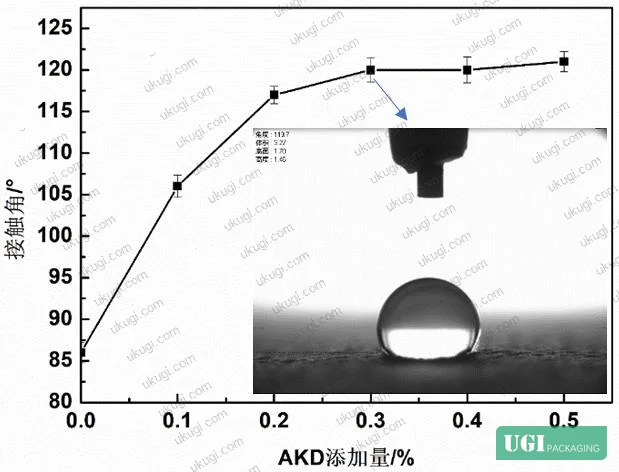
At 0.3% AKD, the water contact angle achieved is sufficient to meet hydrophobicity requirements for standard paper bag service. More importantly, after five repeated soak-dry cycles, both the dry tensile index and the contact angle remain essentially unchanged. This cycle-stability test is the most direct evidence for reusability performance — and it’s a test that most suppliers don’t run, let alone report.
Most procurement teams don’t realize that wet-strength paper specifications in the Chinese national standard GB/T 7968-2015 were structured around single-use performance. The reusability verification protocol — repeated soak/dry cycling with measurement at each interval — is not mandated by that standard. Buyers sourcing paper bags for reusable applications need to explicitly request this data, because a substrate that meets the dry tensile requirement after one cycle may degrade by 30% or more after five cycles if the PAE crosslink network or AKD sizing is not properly cured and distributed.
For reference on how these barrier and strength properties intersect with downstream converting operations, see our documentation on custom paper boxes — many of the same substrate qualification criteria apply when converting paper bag stock into folded structures.
Heat-Sealing Performance via Water-Soluble PVA Fiber #
This is the genuinely novel aspect of this substrate development work, and it deserves careful attention from procurement engineers evaluating next-generation paper bag solutions.
Conventional paper bag heat-sealing relies on thermoplastic fiber incorporation — typically polypropylene or polyethylene fibers with low melting points. This works well for sealing performance but compromises recyclability and biodegradability. The approach evaluated here uses water-soluble PVA fiber as the sealing agent. Under the combined action of water (applied to the bond area), temperature, time, and pressure in an automatic film sealer, the PVA fiber dissolves and reflows to form a coherent adhesive bond. The mechanism is fundamentally different from thermoplastic fusion.
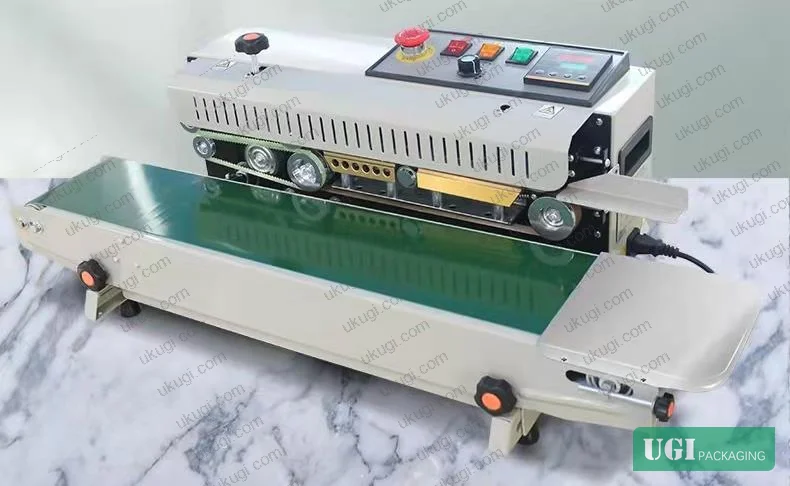
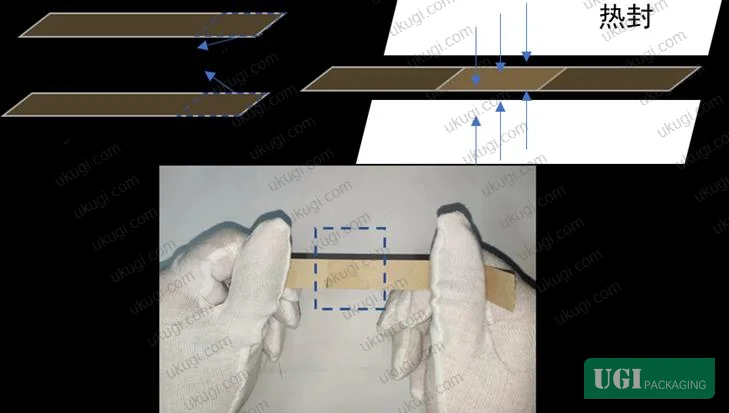
The process parameters were optimized across three independent variables:
PVA fiber content: Evaluated from 1% to 9% (relative to dry fiber). Bond strength increases with PVA content up to 9%, where the bond strength reaches 2.61 kN/m. The SEM cross-sections at 1% vs. 9% PVA loading are visually unambiguous — at 1% the bonded interface shows significant voids and incomplete fiber-to-fiber contact; at 9% the interface is substantially filled and the effective contact area is much larger.
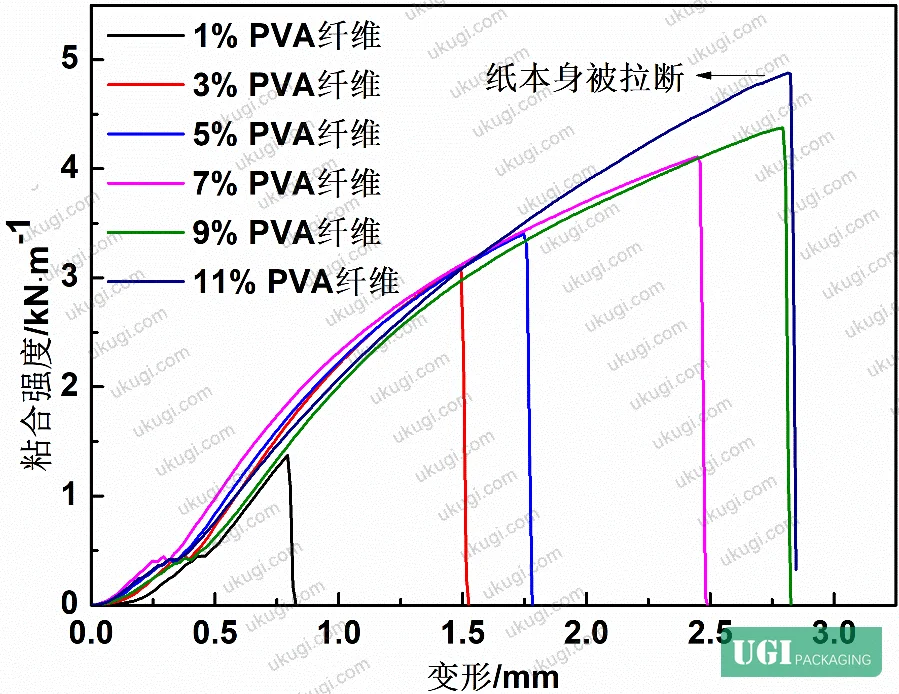
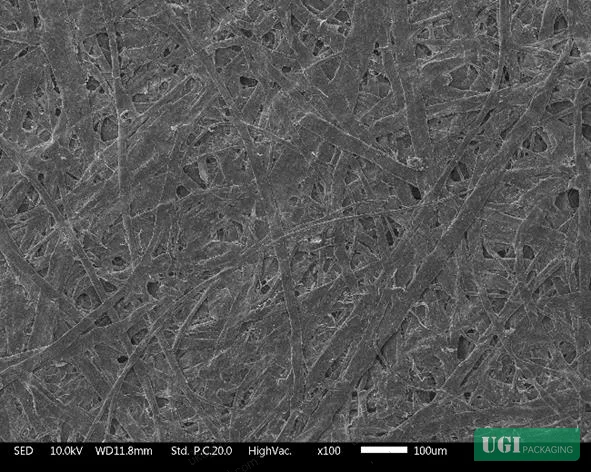
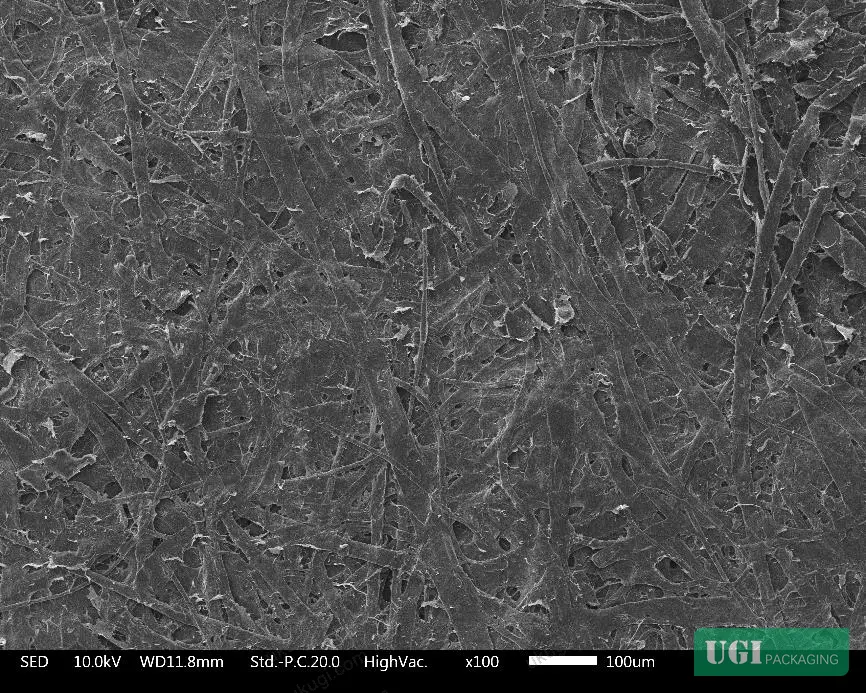
Heat-sealing temperature: The optimal temperature is 110 °C. Below this threshold, PVA dissolution and reflow is incomplete, leaving a porous interface. Above 110 °C, the paper substrate begins to degrade and the bond area weakens from thermal damage rather than strengthening.
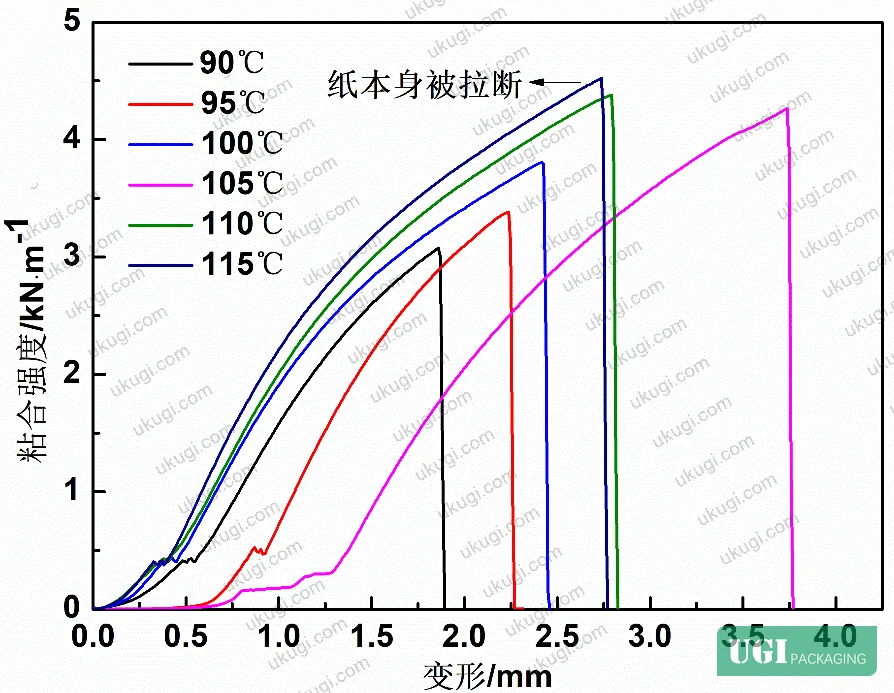
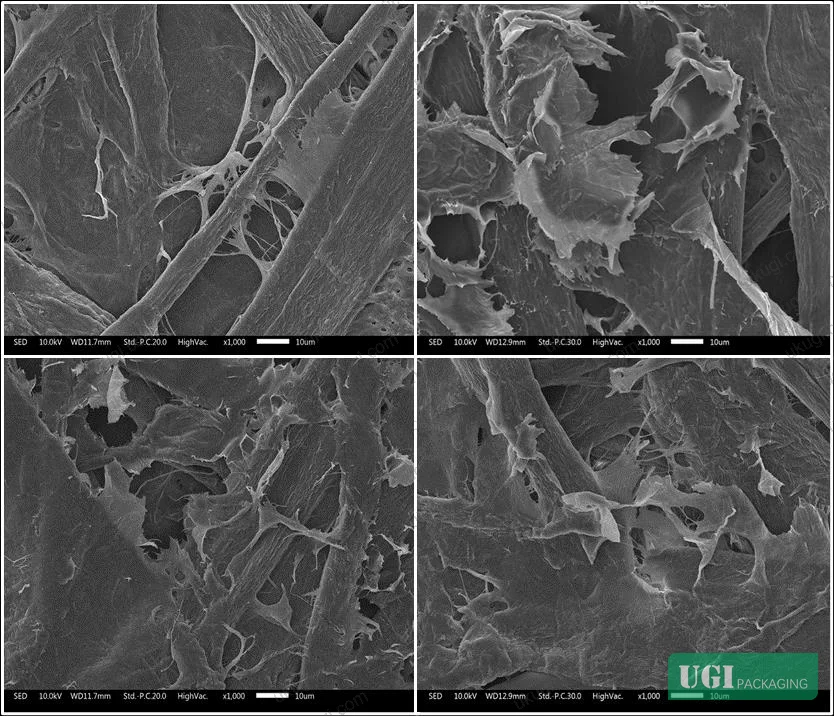
Heat-sealing time: At 110 °C and 9% PVA fiber, the minimum time to exceed the QB/T 4379-2019 threshold of 2.50 kN/m is 6 seconds. Extending to 13 seconds increases bond strength further (effective bonded area visibly larger in SEM), but the 6 s / 2.61 kN/m combination already provides an 4.4% safety margin above the standard minimum and is the recommended process target for production efficiency.
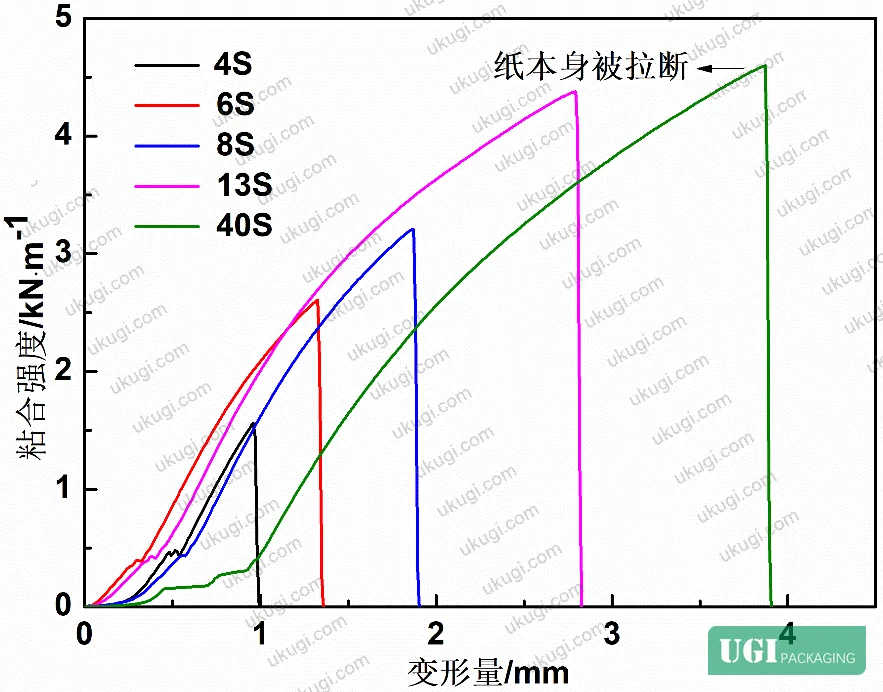

The compliance benchmark here is ISO 2758:2014 Paper — Determination of bursting strength, which provides the methodological framework for tensile-based bond strength verification under standardized conditions. Cross-referencing your supplier’s bond strength data against this protocol ensures the measurement geometry and conditioning are comparable.
For buyers evaluating flexible pouch or multi-layer bag formats where seal integrity is critical, the same PVA-based sealing approach has implications for laminate-free construction — a topic covered in our resources on paper bags and carrier bags.
Final Substrate Performance at Optimized Conditions #
The 60 g/m² substrate produced under fully optimized conditions — USKP 70% / UBP 30%, separate beating to 32 °SR and 27 °SR respectively, 1.5% PAE, 0.3% AKD, 9% water-soluble PVA fiber, sealed at 110 °C for 6 s — delivers the following verified properties:
- Dry tensile index: 72.9 N·m/g (exceeds GB/T 7968-2015 premium grade minimum)
- Wet tensile index: 23.4 N·m/g
- Tear index: 14.7 mN·m²/g (exceeds GB/T 7968-2015 premium grade minimum)
- Bond strength: 2.61 kN/m (exceeds QB/T 4379-2019 requirement of 2.50 kN/m)
- Contact angle: stable across 5 soak-dry cycles (reusability confirmed)
Practical Guidance for Buyers #
When you’re evaluating paper bag substrate suppliers for reusable applications, the key failure mode isn’t inadequate dry strength — it’s inadequate wet-strength retention combined with hydrophobic sizing that degrades after the first or second use cycle. Ask for wet-to-dry tensile ratio data, not just the headline dry tensile number. A ratio below 0.30 at 1.5% PAE equivalent loading should trigger a qualification hold.
The heat-seal specification is equally important to get right. If your bag design requires a glued or sealed seam, confirm whether the supplier is using thermoplastic fiber (PP/PE) or water-soluble PVA fiber — the former creates recyclability problems; the latter requires controlled water application and a precisely set sealing temperature of 110 °C to reliably exceed 2.50 kN/m. Either way, request bond strength data measured on 150 mm × 15 mm lap shear specimens per QB/T 4379-2019 — not a verbal assurance.
Honestly, most procurement teams spend too much time debating grammage (60 vs. 70 g/m²) and not enough time interrogating the beating program and additive cure schedule, which are the real determinants of in-service performance. A 60 g/m² sheet with optimal furnish preparation will outperform a 70 g/m² sheet with a mismanaged beating cycle every time.
For buyers sourcing premium gift packaging, cosmetics packaging, or branded retail bags where surface printability and structural integrity must coexist with wet-strength performance, our team at ukugi.com — a Guangzhou-based OEM/ODM manufacturer with full converting and finishing capabilities — can evaluate substrate options against your specific end-use requirements and provide qualified sample sets. We produce paper bags and carrier bags and custom paper boxes with surface finishing options including foil stamping, UV coating, and embossing. For applications requiring barrier coatings or food-contact compliance, note that EU Regulation No 10/2011 on plastic materials and articles intended to contact food provides the relevant framework for evaluating any sizing or coating agent applied to the substrate.
Need a custom formulation or sample? Request a quote from our team →
Technical Verification Questions #
- What is your measured wet-to-dry tensile index ratio for this substrate at your standard PAE dosage, and at what curing temperature and duration was the PAE crosslink network developed?
- Can you provide water contact angle data after five repeated soak-dry cycles — not just initial contact angle — to demonstrate hydrophobic sizing stability under reuse conditions?
- What is your USKP beating freeness target (in °SR) and are your fiber components beaten separately before blending, or co-beaten? Provide the PFI or Valley beating revolutions log for your last three production batches.
- For heat-sealable grades, what type of sealing fiber is incorporated (thermoplastic PP/PE or water-soluble PVA), at what addition rate (% on dry fiber), and what is the minimum sealing temperature and dwell time required to achieve bond strength ≥ 2.50 kN/m per QB/T 4379-2019?
- At your standard 1.5% PAE loading, what quantity of sodium hypochlorite (% on dry fiber) is required to achieve complete disintegration of the wet-strength paper for repulping, and do you have lab data supporting this figure?
Quality Verification Checklist #
- ☐ Dry tensile index ≥ 72.9 N·m/g measured on 60 g/m² handsheet specimens per GB/T 7968-2015 premium grade criteria
- ☐ Wet tensile index ≥ 23.4 N·m/g under standard conditioning (wet-to-dry ratio ≥ 0.30)
- ☐ Tear index ≥ 14.7 mN·m²/g per GB/T 7968-2015 premium grade minimum requirement
- ☐ Bond strength ≥ 2.61 kN/m measured on 150 mm × 15 mm lap shear specimens per QB/T 4379-2019 at 110 °C sealing temperature, 6 s dwell time
- ☐ Water contact angle stable (no significant degradation) after minimum 5 soak-dry cycles — reusability validation protocol documented
- ☐ USKP furnish proportion confirmed at 70% minimum; separate beating program (not co-beaten) documented in process records
- ☐ PAE dosage confirmed at 1.5% on dry fiber; disintegration requirement verified at ≤ 10% sodium hypochlorite on dry fiber
- ☐ AKD dosage confirmed at 0.3% on dry fiber; contact angle measurement per standard conditioning protocol per ISO 187:1990
Key Specifications Table #
| Parameter | Recommended Value | Verification Method |
|---|---|---|
| Dry tensile index | ≥ 72.9 N·m/g | GB/T 7968-2015, standard conditioning per ISO 187:1990 |
| Wet tensile index | ≥ 23.4 N·m/g | GB/T 7968-2015 wet tensile protocol; wet-to-dry ratio ≥ 0.30 |
| Tear index | ≥ 14.7 mN·m²/g | GB/T 7968-2015 premium grade; Elmendorf tear method |
| Heat-seal bond strength | ≥ 2.61 kN/m (min. 2.50 kN/m per QB/T 4379-2019) | Lap shear on 150 mm × 15 mm strips; 110 °C, 6 s dwell |
| PAE dosage | 1.5% on dry fiber | Wet tensile measurement post 105 °C / 30 min cure |
| AKD dosage | 0.3% on dry fiber | Water contact angle measurement at standard conditioning |
| PVA fiber content | 9% on dry fiber | SEM cross-section of bond interface; bond strength per QB/T 4379-2019 |
| USKP beating freeness | 32 °SR (PFI) | Schopper-Riegler freeness meter per standard protocol |
Looking for a manufacturer that meets these specs? Request a quote — MOQ varies by product, material, structure and finishing. Product-specific MOQ is confirmed with each quotation.
References #
Data source: Fiber Furnish Optimization and Heat-Seal Performance of Reusable Water-Resistant Paper Bag Substrates Incorporating Water-Soluble PVA Fiber, Q.-B. Zeng et al., Journal of Applied Polymer Science, 2023
Frequently Asked Questions #
What is the minimum bond strength required for heat-sealable paper bag paper, and how does this substrate compare?
The QB/T 4379-2019 standard sets a minimum bond strength of 2.50 kN/m. The optimized PVA-fiber substrate achieves 2.61 kN/m at 110 °C for 6 seconds, a margin of approximately 4.4% above the threshold — meaningful for production safety but not so far above that it signals wasteful over-formulation.
Why is USKP specified at 70% rather than a higher proportion, given that softwood fibers provide the backbone strength?
Increasing USKP beyond 70% gives diminishing strength returns because the long softwood fibers begin to reduce interfiber bonding density — longer fibers produce fewer bonds per unit area. The 70/30 USKP/UBP or USKP/BMHP ratio is the practical optimum that balances long-fiber tear resistance with sufficient bonding surface area from the shorter, more fibrillatable secondary fiber.
Can this substrate be repulped at end of life, or does the PAE wet-strength treatment make it non-recyclable?
At 1.5% PAE, the substrate can be disintegrated using 10% sodium hypochlorite (relative to dry fiber) under laboratory conditions. Industrial repulping equipment operates at considerably higher mechanical energy, which typically reduces the hypochlorite demand. The substrate is positioned as recyclable-compatible, though buyers sourcing for closed-loop recycling programs should verify with their recycler’s specific accept criteria.
Does water-soluble PVA fiber affect the printability or surface finish of the paper?
PVA fiber is incorporated into the furnish at 9% and distributes through the sheet bulk rather than concentrating at the surface. At this loading level, surface smoothness and printability are not significantly affected compared to the base furnish without PVA. However, buyers requiring high-quality flexographic or offset printing should request printed sample evaluation — see ISO 12647-2:2013 Graphic technology — Process control for offset lithographic printing for relevant surface and print quality benchmarks.
What grammage range is this development work applicable to, and can the formulation be scaled to heavier-duty paper bag stock?
The core development work was conducted at 60 g/m², which is the lower end of the standard paper bag paper range. The fiber furnish ratios, additive dosages, and beating parameters serve as a baseline transferable to higher grammages. For industrial-grade paper bags (80 g/m² and above), PAE and AKD dosages may require adjustment to maintain wet-to-dry tensile ratios — this is something to verify in trial production rather than assume from the 60 g/m² data.
Published by ukugi.com Technical Team | Request a quote


