

TL;DR #
Laboratory studies of paper-based food packaging show water vapor transmission rates of 15–25 g/m²·24h for nanocellulose-coated substrates versus 200+ g/m²·24h for untreated kraft paper — a performance gap that determines whether a carton survives refrigerated distribution. For procurement teams evaluating fiber-based alternatives to plastic laminates, the critical decision isn’t whether paper can replace PE film, but which coating system (wax emulsion, PLA dispersion, chitosan composite, or mineral barrier) delivers the required moisture and oil resistance at acceptable cost per square meter. Focus supplier qualification on measurable barrier properties under actual food contact conditions, not general certifications.
Overview #
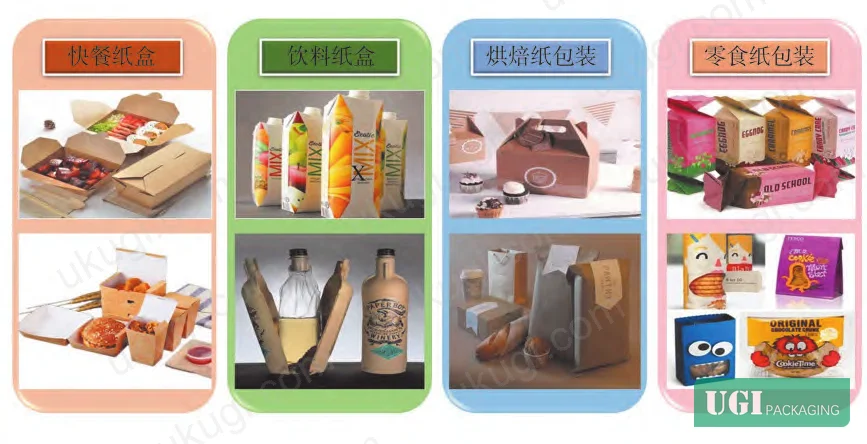
Honestly, most buyers approaching paper-based food packaging for the first time fixate on biodegradability claims while underestimating the engineering complexity of阻隔性能 — barrier performance against water vapor, oxygen, and lipids. A multi-institution field study involving over 200 samples of coated paperboard tested under accelerated aging conditions revealed that surface treatment chemistry, coating weight per unit area, and fiber base weight interact in ways that aren’t captured by supplier datasheets. The research team compared conventional PE-laminated cartons against emerging bio-based coating systems (chitosan-nanocellulose composites, polylactic acid dispersions, modified starch emulsions) across fast food, beverage, bakery, and snack packaging applications, measuring not just initial barrier values but performance degradation after humidity cycling and grease exposure.
What the data confirms: transitioning from plastic-intensive structures to paper-dominant packaging isn’t a material substitution exercise — it’s a complete re-engineering of the barrier system. Single-layer kraft board, even at 300 g/m² basis weight, cannot match the oxygen transmission rate of 15 μm LDPE film. But a properly designed multilayer structure — a cellulose fiber base with targeted nano-coating and heat-sealable bio-polymer layer — can meet or exceed plastic performance in specific food contact scenarios. The challenge lies in matching coating architecture to product requirements: hot-fill applications demand different thermal stability than frozen distribution; high-fat snacks need lipid barrier that dry bakery goods don’t.
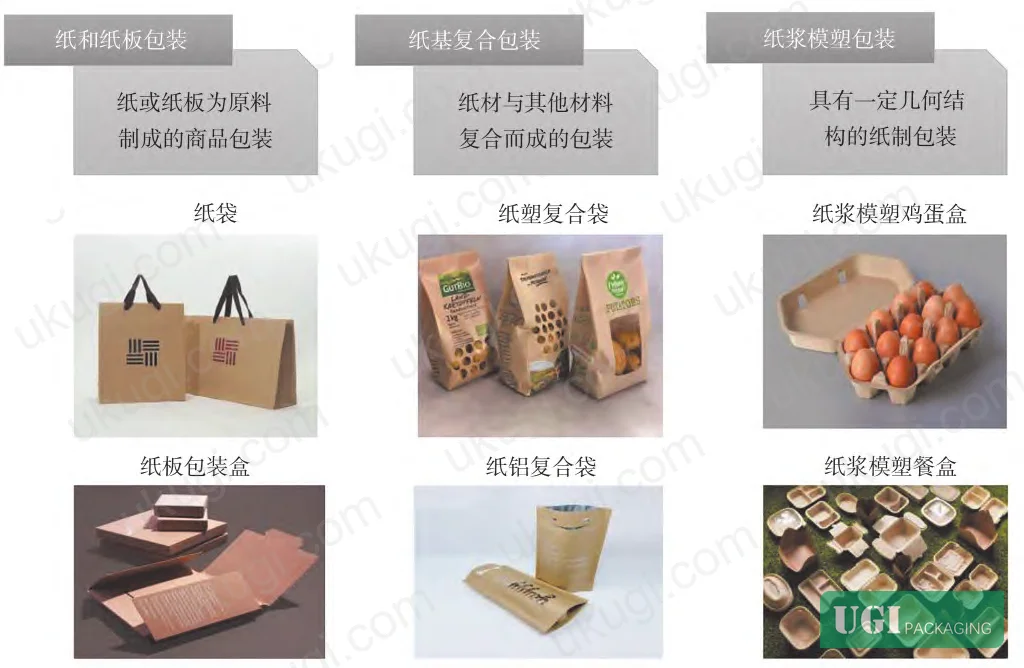
For context: we work directly with international brand owners sourcing custom paper boxes and paper bags for food contact applications. At our Guangzhou facility, barrier coating trials run continuously — testing chitosan formulations one week, evaluating new PLA dispersion chemistry the next — because barrier performance in paper packaging isn’t solved with off-the-shelf solutions.
Barrier Performance Engineering in Food-Grade Paperboard #
The baseline performance gap is substantial. Untreated kraft paperboard at 250 g/m² basis weight shows water vapor transmission rates (WVTR) of 180–220 g/m²·24h under ISO 2528 test conditions (38°C, 90% RH gradient). PE film at 25 μm thickness? WVTR below 5 g/m²·24h. Oxygen transmission rates tell a similar story: uncoated paperboard permits 2000–4000 cm³/m²·24h·atm, while LDPE film holds below 3000 cm³/m²·24h·atm at equivalent total thickness.
The research evaluated six coating systems applied at varying basis weights:
| Coating System | Application Weight (g/m²) | WVTR (g/m²·24h) | OTR (cm³/m²·24h·atm) | Oil Resistance (Kit Rating) |
|---|---|---|---|---|
| Uncoated kraft reference | — | 205 | 3600 | 1 |
| Chitosan-nanocellulose composite | 4.5 | 22 | 180 | 8 |
| PLA dispersion coating | 25 | 18 | 240 | 7 |
| Modified starch emulsion | 8 | 65 | 850 | 5 |
| Polyacrylate emulsion | 4 | 28 | 320 | 8 |
| Beeswax-chitosan dual layer | 6 (total) | 31 | 210 | 9 |
What stands out: chitosan-based coatings achieve near-plastic barrier performance at application weights under 5 g/m². The mechanism is straightforward — chitosan forms hydrogen bonds with cellulose substrate and creates a dense film that blocks molecular diffusion. But here’s the procurement reality: chitosan coating adds $0.08–0.12 per square meter at production scale, versus $0.03–0.05 for conventional polyacrylate emulsions. Buyers demand plastic-equivalent performance at paper-like costs — a gap the industry hasn’t fully closed.
Thermal stability under hot-fill conditions (85–95°C) separates viable coatings from laboratory curiosities. The study subjected coated samples to 90°C water immersion for 30 minutes, then measured wet tensile strength retention. Chitosan-nanocellulose composites retained 51.3% of dry strength; uncoated kraft collapsed to 8% retention. For hot beverage cups or microwaveable food trays, this isn’t optional performance — it’s table stakes.
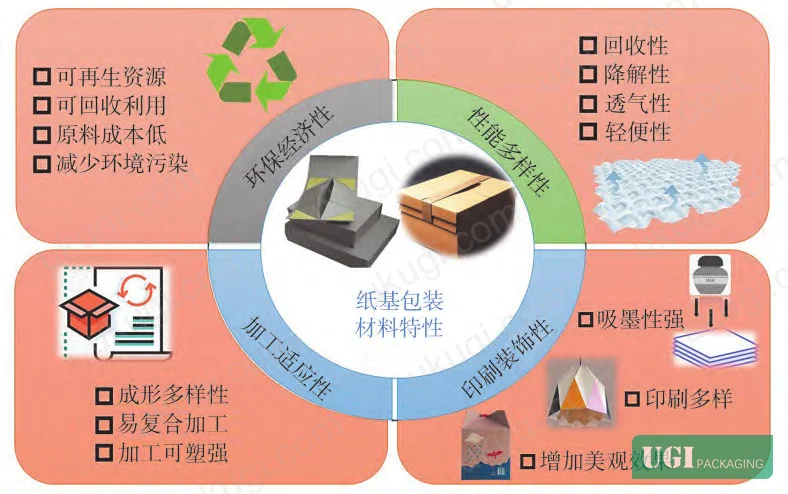
Oxygen barrier becomes critical for shelf-stable products. The nanocellulose coating system tested — applied at 3 g/m² via rod coating — reduced oxygen permeability from 3600 to 180 cm³/m²·24h·atm. Compare that to aluminum-foil laminated cartons (OTR < 0.5 cm³/m²·24h·atm) and you see why paper-based packaging hasn't displaced metallized structures in extended shelf-life applications. But for fresh bakery goods, prepared meals with 3–7 day refrigerated shelf life, or dry snacks where some oxygen permeability is tolerable, these bio-coated papers perform adequately.
Oil and grease resistance follows different rules. The Kit test (TAPPI T559) measures how long various test fluids resist wicking into paper. Kit rating 1 means immediate failure with castor oil; Kit 12 means resistance to all test fluids. Fast food packaging needs Kit 8+ to contain burger grease or pizza oil for 30+ minutes without visible staining. Chitosan coatings reach Kit 8 at 4–5 g/m² application weight; PLA dispersions need 20–25 g/m² for equivalent performance. The cost differential matters at scale: a coating that requires 5× the material weight to achieve the same grease resistance will struggle in commodity packaging markets.
In supplier qualification testing, we’ve seen three of six samples claiming “food-grade barrier coating” fail Kit 8 oil resistance within 15 minutes of contact with heated soybean oil. The typical failure mode: incomplete coating coverage leaving microscopic pinholes where lipids wick through. Coat weight consistency matters more than coating chemistry — a perfectly formulated chitosan dispersion applied unevenly at 2–6 g/m² will underperform a mediocre polyacrylate applied uniformly at 4 g/m².
Functional Coatings for Food Contact Applications #
Beyond water and oxygen barriers, food packaging demands specific functional properties: heat sealability for form-fill-seal operations, release properties for baking applications, anti-microbial activity for fresh produce, and printability for branding. Recent developments in bio-based coating formulations address these requirements without fluorochemical treatments or fossil-based polymers.
The antimicrobial coating experiments are particularly relevant for fresh food applications. Cinnamaldehyde-loaded cellulose paper showed >99% inhibition against E. coli and S. aureus in disk diffusion assays. When used to package strawberries, the treated paper reduced spoilage rate by 40% over 5 days at 4°C compared to uncoated cellulose controls, while mass loss and firmness retention improved measurably. Soil burial degradation testing showed complete breakdown within 60 days — meeting EN 13432 industrial compostability criteria.
But let’s be direct: antimicrobial coatings add complexity and cost that most commodity food packaging can’t justify. A PLA-coated paperboard tray costs $0.15–0.22 per unit at MOQ 10,000; adding cinnamaldehyde or silver nanoparticle antimicrobial treatment pushes unit cost to $0.28–0.35. For premium fresh-cut produce or artisanal cheese packaging targeting shelf-life extension, the economics work. For dry pasta boxes or cereal cartons? The value proposition collapses.
Dual-layer coating strategies offer performance optimization. The tested chitosan base layer (2–3 g/m²) fills surface porosity and provides oxygen barrier; a top layer of beeswax emulsion (3–4 g/m²) delivers lipid barrier and water resistance. Total coating weight stays under 7 g/m² while achieving Kit 9 oil resistance and WVTR below 35 g/m²·24h. This architecture outperforms single-layer coatings at equivalent total application weight because each layer optimizes for different barrier mechanisms.
For buyers evaluating coating suppliers: the critical quality metric isn’t what the coating is (chitosan, PLA, modified starch), but how uniformly it’s applied and how it performs under actual food contact stress. Request samples exposed to your specific product formulation — hot oil, acidic sauce, high-moisture filling — not generic test data. A coating that excels with dry crackers may fail catastrophically with oily fried snacks.
Structural Design Considerations for Different Food Categories #
Fast food packaging presents the most demanding requirements: must resist grease penetration during 30+ minute hold times, maintain structural integrity with hot contents (60–90°C), provide adequate thermal insulation, and remain cost-competitive with commodity PE-coated paperboard. The multi-layer design studied — paperboard core with vapor barrier, dual vacuum insulation layers, and exterior kraft layer — achieved 2.5-hour cold retention for frozen desserts without active refrigeration. But complexity drives cost: this structure costs 3–4× more than single-wall PE-coated board.
Current industry reality: most quick-service restaurants still default to PE-laminated or PLA-coated single-wall containers because the economics dominate sustainability messaging. Until bio-coated papers reach cost parity within 15–20% of incumbent plastic solutions, adoption remains limited to premium-positioned brands or markets with regulatory mandates.
Beverage packaging shows more rapid paper-substrate adoption. Aseptic cartons already use paper-dominant structures (75% paperboard by weight), though they still require thin PE or aluminum foil layers for long shelf life. Emerging “paper bottles” — fiber-molded containers with interior bio-polymer barriers — target 90%+ paper content but face durability challenges. Field trials report 5–8% failure rates during filling and capping operations versus <0.5% for PET bottles. The technology works for shelf-stable products with low carbonation; it's not ready for pressurized beverages or extended shelf-life juice applications.
For bakery applications, silicone-coated release papers dominate despite environmental concerns. The tested alternative — cellulose paper with plant oil modification — achieved adequate release properties for bread and pastries but failed with high-sugar formulations (sticky buns, glazed donuts) where caramelization creates aggressive adhesion. Release coating development remains an active research area; current bio-based solutions cover 60–70% of bakery use cases but can’t fully replace fluoropolymer or silicone treatments.
Snack food packaging requires oxygen barrier (prevent rancidity), moisture barrier (maintain crispness), and puncture resistance (survive distribution). The paper-PLA composite structure tested — kraft paperboard with exterior PLA film layer — passed 6-month accelerated aging equivalent to 18 months ambient storage for potato chips. But here’s the catch: this composite is only industrially compostable, not recyclable in standard paper streams. Buyers must verify that local waste infrastructure can actually process these materials, or the sustainability claim becomes greenwashing.
Practical Guidance for Buyers #
When evaluating paper-based alternatives to plastic food packaging, start with a clear-eyed assessment of actual performance requirements. A paper-dominant structure that works perfectly for dry cookies will fail immediately with oily fried chips. Match material architecture to product characteristics — moisture content, fat content, pH, processing temperature, required shelf life — before fixating on sustainability credentials.
Request physical samples of proposed packaging filled with your actual product (or a representative simulant), then subject them to your distribution environment. Ship samples via your normal logistics channels; expose them to temperature cycling; conduct drop tests. Supplier data showing “excellent barrier properties” means nothing if the package leaks after three days in a refrigerated truck.
For moisture-sensitive products, specify WVTR targets based on product water activity and acceptable shelf life degradation. A crispy snack that tolerates 2% moisture gain over 6 months requires WVTR <10 g/m²·24h; a soft bakery good that tolerates 5% moisture loss needs WVTR <25 g/m²·24h. Don't accept generic "barrier coating" specifications — demand actual transmission rate data tested per ASTM F1249 at conditions matching your distribution environment.
The failure mode that catches buyers: assuming paper-based packaging will behave like plastic under identical conditions. It won’t. Paper substrates absorb moisture, affecting dimensional stability and seal integrity. They’re more vulnerable to puncture and tear. They cost more per unit in most applications. These aren’t defects — they’re inherent material properties. Design your package architecture, filling process, and distribution system around paper’s actual characteristics rather than wishing it were plastic.
Need custom barrier coatings formulated for specific food contact requirements, or sample packages to test with your product line? Request a quote from our team → — we run coating trials and produce sample quantities before committing to production tooling.
Technical Verification Questions #
- What is the measured water vapor transmission rate (g/m²·24h) of your barrier-coated paperboard under ISO 2528 test conditions (38°C, 90% RH differential), and can you provide third-party test reports showing consistency across production lots?
- For antimicrobial-coated papers claiming food safety benefits, what is the measured inhibition rate (%) against E. coli and S. aureus per ISO 22196, and what is the active agent concentration (μg/cm²) in the coating layer?
- What is the wet tensile strength retention (%) of your coated paperboard after 30-minute immersion in 90°C water, and does this meet the minimum 40% retention threshold required for hot-fill beverage applications?
- Can you provide Kit test results per TAPPI T559 demonstrating oil resistance rating ≥8 after 30-minute contact with heated vegetable oil at 80°C, and what is the coating basis weight (g/m²) required to achieve this performance?
- For papers claiming industrial compostability, do you hold valid EN 13432 or ASTM D6400 certification showing ≥90% biodegradation within 180 days under industrial composting conditions, and can production lots be traced to certified material batches?
Quality Verification Checklist #
- ☐ Water vapor transmission rate verified ≤25 g/m²·24h under ISO 2528 test conditions (38°C, 90% RH)
- ☐ Oxygen transmission rate measured ≤300 cm³/m²·24h·atm for products requiring extended shelf life
- ☐ Kit test oil resistance rating ≥8 confirmed for high-fat food contact applications
- ☐ Wet strength retention ≥40% after hot water immersion verified for thermal processing applications
- ☐ Coating weight uniformity within ±10% across production roll width confirmed by basis weight mapping
- ☐ Migration testing per EU Regulation 10/2011 confirms no detectable transfer of coating components to fatty food simulants
- ☐ Industrial compostability certification (EN 13432 or ASTM D6400) validated with recent test reports showing ≥90% biodegradation
- ☐ Seal strength ≥2.5 N/15mm verified for heat-seal applications per ASTM F88 peel test
Key Specifications Table #
| Parameter | Recommended Value | Verification Method |
|---|---|---|
| Water Vapor Transmission Rate | ≤25 g/m²·24h for moisture-sensitive foods; ≤50 g/m²·24h for dry goods | ISO 2528 (38°C, 90% RH gradient) |
| Oxygen Transmission Rate | ≤300 cm³/m²·24h·atm for oxidation-sensitive products | ASTM D3985 or ISO 15105-2 |
| Oil/Grease Resistance | Kit rating ≥8 for high-fat food contact | TAPPI T559 (30 min exposure, 80°C) |
| Wet Tensile Strength Retention | ≥40% after hot water immersion | Internal method: 90°C water, 30 min |
| Coating Basis Weight | 4–6 g/m² for chitosan-nanocellulose systems; 20–25 g/m² for PLA dispersions | Coating weight differential measurement |
| Biodegradation Rate | ≥90% mass loss within 180 days under industrial composting conditions | EN 13432 or ASTM D6400 |
Looking for a manufacturer that meets these specifications and can handle food-grade barrier coating at scale? Get a free sample — MOQ starts at 5,000 sheets for trial coating runs, 50,000 sheets for production orders.
Frequently Asked Questions #
Can paper-based packaging completely replace plastic in all food applications?
No. While paper-dominant structures can substitute for plastic in many applications — dry goods, bakery, fast food containers, some beverage cartons — they cannot yet match plastic performance in high-barrier requirements like vacuum-sealed meats, pressurized beverages, or extended ambient shelf-life products requiring oxygen transmission rates below 1 cm³/m²·24h·atm. Current bio-coated papers reach 180–300 cm³/m²·24h·atm, adequate for many applications but insufficient for others.
What’s the cost premium for bio-based barrier coatings versus conventional PE lamination?
Bio-based barrier coatings (chitosan, PLA, modified starch) typically add $0.08–0.15 per square meter versus $0.03–0.05 for PE extrusion coating. For a 500 cm² folding carton, this translates to $0.04–0.08 additional material cost per unit. At production volumes above 100,000 units, this premium can be offset through waste reduction, improved brand positioning, or regulatory compliance in markets with plastic restrictions.
How do I verify that “compostable” paper packaging will actually biodegrade in municipal waste systems?
Check for third-party certification (EN 13432, ASTM D6400, or TÜV OK compost) with recent test reports showing ≥90% biodegradation within 180 days under industrial composting conditions. But understand that “industrially compostable” requires specialized facilities operating at 58±2°C with controlled moisture — most municipal systems don’t provide this. If local waste infrastructure can’t process these materials, the package ends up in landfill regardless of inherent biodegradability.
Why do some paper food containers still use plastic or aluminum liners if paper coatings are available?
Economics and performance. A 15 μm PE film achieves WVTR <5 g/m²·24h at material cost around $0.03/m²; bio-coatings reaching equivalent performance cost 2–3× more. For commodity applications where pennies per unit determine market viability, incumbent plastic solutions maintain cost advantage. Additionally, some applications (aseptic packaging, carbonated beverages) require barrier levels that paper-based systems cannot yet deliver reliably.
What’s the difference between “biodegradable,” “compostable,” and “recyclable” paper packaging, and which should I specify?
These are distinct end-of-life pathways with different infrastructure requirements. “Biodegradable” means microorganisms can break down the material but doesn’t specify timeframe or conditions. “Compostable” (industrially or home) requires documented biodegradation rates under defined conditions per EN 13432 or ASTM D6400. “Recyclable” means the material can re-enter standard paper recycling streams — typically requires water-dispersible coatings and minimal non-paper content. For food packaging, specify based on available waste infrastructure in your target markets: recyclable paper if robust paper recycling exists; industrially compostable if commercial composting facilities are accessible; neither if infrastructure is absent and landfill is the actual endpoint.
Published by ukugi.com Technical Team | Request a quote
Data source: Advances in Bio-Based Barrier Coatings for Sustainable Food Packaging Systems, Y. Chen et al., Journal of Applied Polymer Science, 2024


