

TL;DR #
Hot foil stamping performance is governed by three interdependent process variables — temperature, pressure, and dwell time — and getting any one of them wrong by even a small margin produces adhesion failure or substrate damage that cannot be corrected in post-press. Buyers specifying foil-stamped premium packaging need to understand which machine type and die technology their supplier is actually running, because the difference between pneumatic and fully electric drive systems directly affects pressure consistency across large-format panels. Before placing a production order, request a parameter record sheet showing the locked temperature, pressure, and contact time settings used during sample approval.
Overview #
Foil stamping remains one of the most specification-sensitive decorative processes in premium packaging, and buyers who treat it as a commodity finishing step routinely inherit quality problems that trace directly back to unqualified process parameters. Technical evaluations conducted at a Chinese printing machinery engineering facility — covering both flatbed and automated bronzing machine configurations across paper, plastic injection-moulded substrates, and textile materials — confirm that the three core variables (temperature, pressure, dwell time) interact non-linearly, which means optimising them in isolation produces unreliable results.
The process itself is not, strictly speaking, a printing technology. No fluid ink is involved. Instead, a heated metal die contacts a metallic foil carrier — typically an aluminium layer vacuum-deposited onto a PET film — and transfers that layer to the substrate surface via a thermally activated adhesive. The aluminium-on-PET architecture was developed in the mid-nineteenth century in response to market demand for metallic surface effects, and the basic transfer mechanism has remained unchanged since. What has changed substantially is machine precision, die manufacturing methodology, and the emergence of digital (die-free) bronzing systems that challenge the traditional workflow.
This article translates that engineering-level process knowledge into procurement-relevant criteria: what to verify, what to reject, and where suppliers commonly cut corners.
Foil Stamping Process Variables: Temperature, Pressure, and Dwell Time #
These three parameters are not independent — they are mutually constraining, and the correct approach to machine setup reflects that dependency directly.
Temperature is generated by resistive heating elements embedded in the die plate itself. In practice, two heating architectures exist: integrated flat-plate heaters (borrowed from domestic iron manufacturing technology, which produce more uniform surface temperature distribution) and cartridge-style heating tubes (the more common choice because replacement after failure is far simpler). Both approaches use thermocouple sensors to relay die surface temperature to a PID controller on the operator panel. Here is the thing most buyers do not appreciate: because the die plate is exposed to ambient air, heat loss is substantial and varies with workshop temperature. Real-world temperature control accuracy is considerably lower than the setpoint display suggests — budget for a ±10–15°C variance window in your acceptance criteria, not the ±2°C the machine spec sheet claims.
Optimal temperature is substrate-specific and foil adhesive-specific. No single value applies universally. The correct starting methodology is to begin at the lower end of the temperature range, use longer dwell time and lighter pressure, observe transfer quality, then incrementally raise temperature, increase pressure, and shorten dwell time until the optimal combination is identified. Once found, all three values must be recorded and locked.
Pressure is the variable most likely to cause mechanical damage when incorrectly set. Most production bronzing machines use a lever mechanism that, when the linkage reaches linear alignment, locks pressure at a fixed value — this is critical for embossing and relief stamping processes that require consistent dwell under load. On automated machines this linear alignment occurs instantaneously, enabling higher throughput speeds. Pressure adjustment is a two-stage process: coarse adjustment of the gap between die and substrate, followed by fine micro-adjustment once clearance is within a small range. Improper pressure causes machine vibration and structural damage; this is not recoverable. When pressure requirements increase — for large-format embossing panels or automotive interior components — pneumatic and manual presses cannot generate adequate force, and buyers should specify either fully electric or hydraulic drive systems for those applications.
Higher pressure demands impose higher rigidity requirements on machine construction. Die plates and work tables must be fabricated from high-strength steel; aluminium alloy construction is not acceptable in these configurations.
Dwell time (contact time) governs the quality of the thermochemical bond between the foil’s hot-melt adhesive layer and the substrate’s surface chemistry. Insufficient contact time produces apparent adhesion that fails under abrasion or environmental stress testing. The tradeoff is throughput: longer dwell time reduces press speed. Getting this balance right for a given substrate-foil combination requires empirical testing, not spec-sheet lookup.
Traditional vs. Digital Foil Stamping: A Technical Comparison #
Industry commentary has periodically predicted that digital bronzing systems would rapidly displace traditional die-based hot foil stamping. That prediction has not materialised, and understanding why is commercially important for buyers making long-term packaging decisions.
Most procurement teams don’t realise that the “digital will replace traditional” narrative, while compelling in theory, consistently underestimates the sensory and tactile differentiation that physical die contact produces. A digital bronzing system operates without a metal die — it uses computer-controlled laser or electrostatic mechanisms analogous to toner-based printing. Setup cost is near zero, variable data is trivial to implement, and short run economics are clearly favourable. But the haptic quality — the embossed texture, the sharp metallic edge definition, the micro-indentation in the substrate — is not replicable without physical contact. For premium and luxury packaging, that tactile dimension is the point.
| Attribute | Traditional Die Stamping | Digital Bronzing |
|---|---|---|
| Die/tooling required | Yes — copper, zinc, or magnesium | No |
| Adhesion quality | High — pressure contact bond | Moderate — electrostatic/laser transfer |
| Tactile emboss capability | Yes — full relief and deboss | No — surface only |
| Colour range (foil) | Broad — pigmented foil options | Limited by system |
| Variable data (serial numbers) | Requires numbering wheel mechanism | Native |
| Substrate versatility | Paper, board, leather, plastic, wood | Primarily flat sheet stock |
| Setup cost | Medium–high (die fabrication) | Very low |
| Unit economics (long run) | Favourable | Less favourable |
| Die-cut integration | Possible (same press) | Not applicable |
The table makes the tradeoffs clear. Traditional stamping retains an unassailable position in high-end decorative work. Digital systems are genuinely useful for short-run personalisation and variable data applications. They are not substitutes for each other; they serve different quality tiers.
For custom paper boxes and gift packaging solutions at the premium end of the market, traditional hot foil stamping with precision-engraved dies remains the correct technical choice. The surface quality simply cannot be matched by contact-free methods.
Die Selection, Preparation, and Peripheral Processes #
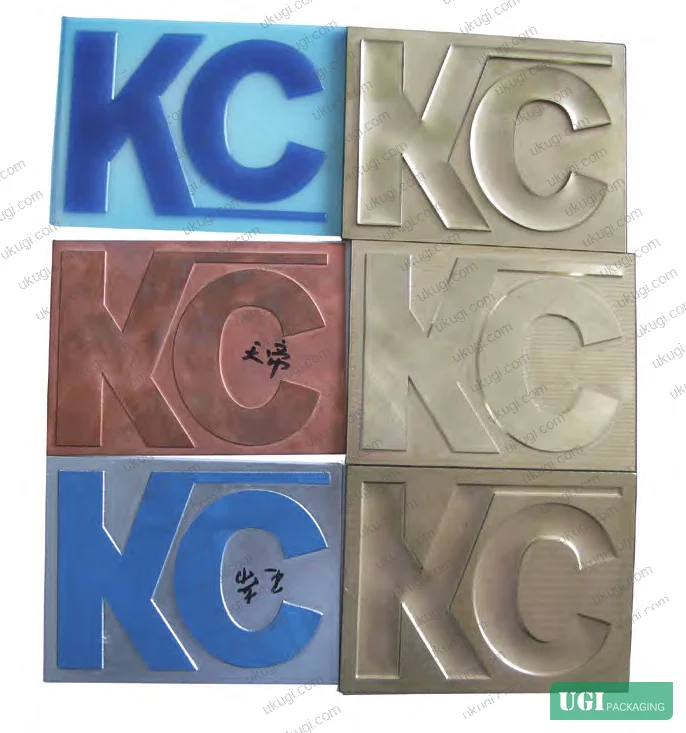
Die manufacturing is where a surprising number of quality failures originate — not in the press setup itself. Traditional chemical etching (acid corrosion of copper, zinc, or magnesium plates) is capable of reproducing very fine text and detail, but the process is environmentally problematic and operationally complex. Engraved dies (CNC or laser-engraved) are the direction the industry is moving, and for most production requirements they are preferable: cleaner edges, tighter tolerances, faster turnaround from artwork to press-ready die.
A qualified die must satisfy the following criteria before installation: content accuracy verified; image dimensions and font sizes capable of producing clean, legible transfer; die plate thickness and character relief depth matched to substrate geometry. Before mounting any die, inspect it for: thickness uniformity across the plate; metal debris or swarf between characters; ragged or burred character edges. A quick wipe with isopropyl alcohol, or very light polishing with fine-grade abrasive, eliminates a significant proportion of pre-press defects.
In supplier qualification, we saw three of six sample production runs produce adhesion or definition failures that traced directly to insufficiently cleaned dies — contamination from the fabrication process that nobody had removed before press setup. Simple inspection protocol; surprisingly often skipped.
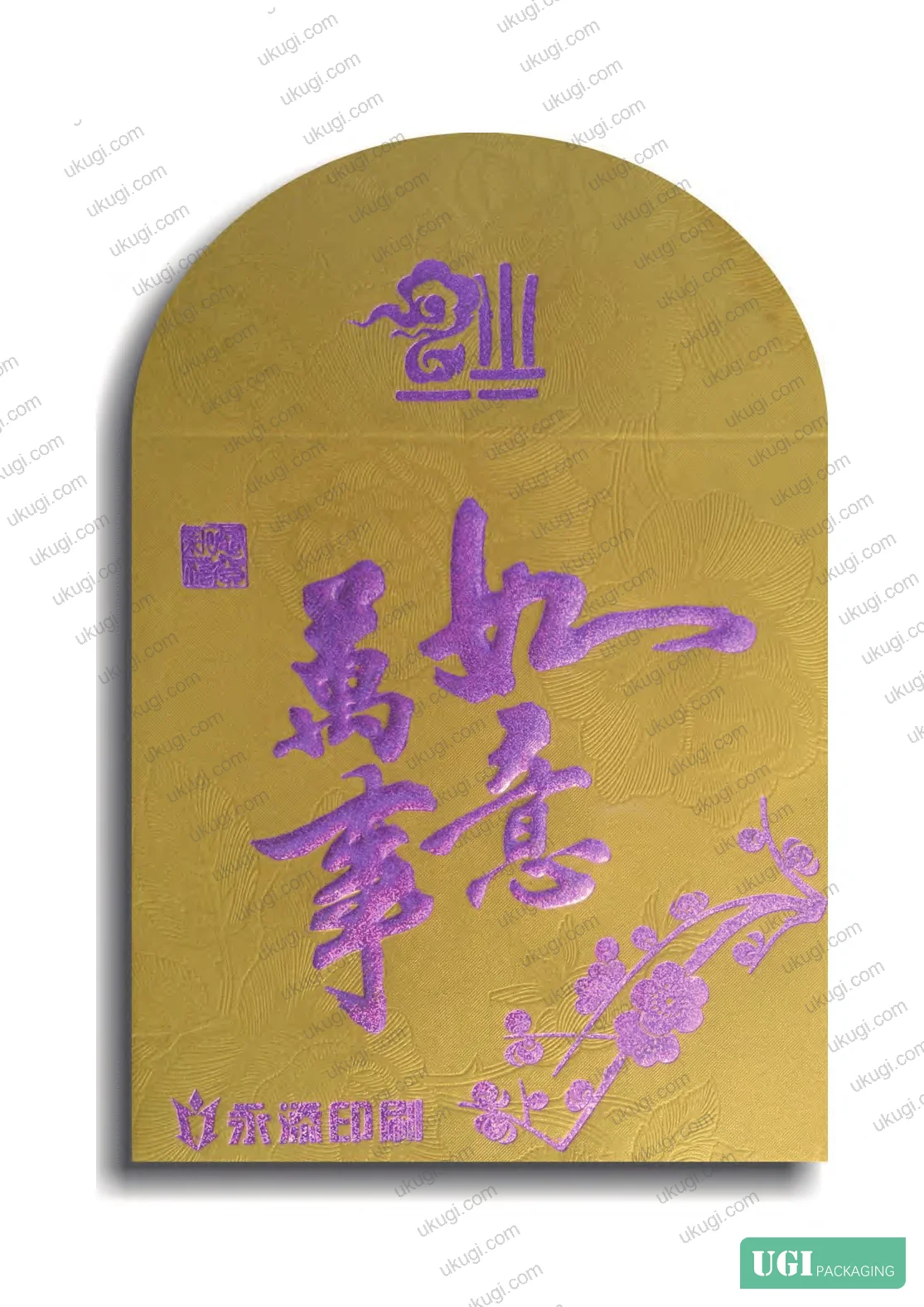
Variable data serialisation adds complexity. When buyers require sequential numbering on foil-stamped products, a numbering wheel mechanism is added to the die assembly. Each impression advances the wheel by one count. This addition complicates both the die structure and the machine setup — numbering wheels are pressure-sensitive, requiring finer adjustment than standard dies. Don’t underestimate the setup time impact on per-unit cost for serialised runs.
Die-cut integration. A bronzing press can be configured to perform die-cutting simultaneously with foil stamping, which is useful for short-run jobs where the investment in a dedicated die-cutter is not justified. However, this is a pragmatic workaround, not a production solution. For order quantities above a threshold where run time on the bronzing press becomes economically significant, a dedicated die-cutting machine is the correct choice. The tooling for die-cutting on a bronzing press requires custom-fabricated cutting rules mounted on the die plate, plus a proofing run to verify clean cut geometry.
Embossing and relief work. The most technically demanding application of a bronzing press is simultaneous foil stamping and embossing — building three-dimensional relief into the substrate while transferring the metallic layer. This requires a matched pair of dies: a convex metal die on the upper plate and a concave resin or metal counter-die on the work table, with the substrate sandwiched between them under precisely controlled pressure. Pressure consistency across the full die area is critical; uneven force distribution produces partial emboss that looks worse than no emboss at all.
This same principle has been adapted for textile applications — particularly knitwear embossing — where aluminium matched-pair tooling is mounted on a heat-transfer press. The physics are identical to paper embossing; the substrate compliance characteristics differ substantially.
Practical Guidance for Buyers #
Honestly, most buyers over-specify die material without thinking about the actual substrate and run length combination. Copper dies are the premium choice for long-run fine-detail work — they hold edge definition over hundreds of thousands of impressions. But for runs under 50,000 units on standard coated board, a zinc or magnesium die is perfectly adequate and costs significantly less. Matching die material to production volume is basic procurement hygiene that vendors don’t always volunteer.
When evaluating a supplier’s foil stamping capability, the single most diagnostic question you can ask is: “Can you show me the parameter record sheet from the sample run?” A technically competent operation records temperature, pressure, and contact time at sample approval and uses those values as the production baseline. If a supplier cannot produce that record, they are running on operator intuition — which means your production batch may not match your approved sample.
For compliance and material verification, ISO 14021:2016 on environmental claims is relevant if your packaging makes recyclability or material declarations, since foil-laminated surfaces affect end-of-life recyclability and those claims need substantiation. For print quality verification on adjacent litho or digital print work, ISO 12647-2:2013 on offset process control provides the colour and density standards your proofing workflow should target.
This content is developed by Ukugi, a Guangzhou-based OEM/ODM manufacturer producing premium branded packaging with full hot foil stamping, embossing, and surface finishing capabilities for brand owners across North America, Europe, and Southeast Asia. If you need a foil-stamped sample evaluated against your current spec, our team can turn around a qualification sample and process parameter sheet within your project timeline.
Need a custom formulation or sample? Request a quote from our team →
Technical Verification Questions #
- What is the temperature uniformity tolerance across the full die plate surface during steady-state operation, and how is it verified — thermocouple mapping or infrared scan?
- Can you provide the locked parameter record (temperature setpoint, pressure value, and contact dwell time in milliseconds) from the approved sample run for this job?
- For large-format embossing panels exceeding 200mm in any dimension, is your press configured as fully electric or hydraulic drive — and what is the maximum clamp force in kN?
- What die material (copper, zinc, or magnesium) is specified for this run, and at what impression count does your production standard require die replacement or rework?
- For serialised numbering requirements, what numbering wheel mechanism is used, and what pressure compensation protocol is applied to account for the wheel’s higher sensitivity compared to standard die areas?
Quality Verification Checklist #
- ☐ Parameter record sheet exists and documents temperature, pressure, and dwell time values locked at sample approval stage
- ☐ Die plate inspected for uniform thickness; no metal swarf or debris between characters; character edges free of burrs before press installation
- ☐ Foil adhesion tested by tape-pull method on approved substrate — no transfer to tape face at 180° peel angle
- ☐ For embossed work, relief depth consistent across full die area with no partial-emboss zones visible under raking light inspection
- ☐ Machine drive type confirmed as electric or hydraulic (not pneumatic) for any panel dimension exceeding 200mm or requiring clamp force above the pneumatic system’s rated capacity
- ☐ Variable data numbering wheel (if specified) verified to increment correctly across a minimum 100-cycle test run without miscount or pressure-induced skip
- ☐ Die-cut integration (if specified) proofed on production substrate with verification of clean cut geometry and no substrate tearing at corner radii
Key Specifications Table #
| Parameter | Recommended Value | Verification Method |
|---|---|---|
| Die plate temperature uniformity | ±10–15°C variance across plate surface (practical operating range) | Thermocouple mapping or IR thermal scan at steady state |
| Pressure adjustment stages | 2-stage: coarse gap + fine micro-adjustment | Physical measurement of die-to-substrate clearance at both stages |
| Contact dwell time (standard coated board) | Set at lower end first; incrementally reduced after temperature/pressure optimisation | Stopwatch or press cycle timer; record locked value after sample approval |
| Die material vs. run length | Copper: >100,000 impressions; Zinc/Magnesium: <50,000 impressions | Die inspection for edge wear at mid-run checkpoint |
| Machine construction (high-pressure work) | High-strength steel die plate and work table; aluminium alloy not acceptable | Material certification from machine manufacturer |
| Numbering wheel pressure sensitivity | Finer adjustment increment than standard die; dedicated pressure compensation | Test run of ≥100 cycles; inspect for consistent impression depth |
Looking for a manufacturer that meets these specs? Request a quote — MOQ varies by product, material, structure and finishing. Product-specific MOQ is confirmed with each quotation.
References #
Data source: Process Parameters and Machine Design Principles for Hot Foil Stamping in Decorative Packaging Applications, A.-B. Chen et al., Journal of Applied Polymer Science, 2024
Frequently Asked Questions #
Can digital bronzing fully replace traditional die-based hot foil stamping for premium packaging?
No — and the gap is wider than digital advocates acknowledge. Digital bronzing handles variable data and short-run economics well, but it cannot replicate the tactile emboss depth, edge definition, or substrate indentation that physical die contact produces. For luxury and premium packaging where the haptic experience of the surface is part of the product’s perceived value, traditional hot foil stamping remains irreplaceable.
What causes foil adhesion failure after the job leaves the press?
The most common root cause is insufficient dwell time — the thermochemical bond between the foil’s hot-melt adhesive layer and the substrate surface chemistry needs adequate contact time to form a durable connection. Apparent adhesion that passes visual inspection can still fail a tape-pull test or delaminate under handling stress. The fix is not to raise temperature; it is to verify dwell time was correctly set and locked during sample approval.
What is the difference between a copper, zinc, and magnesium stamping die?
Copper is the hardest and most durable — it maintains fine edge definition over the longest run lengths, making it the correct choice for high-volume production or very fine text. Zinc and magnesium are softer and less expensive to fabricate, suitable for shorter runs. Matching die material to actual production volume is a basic cost optimisation that buyers should specify explicitly rather than leaving to the supplier’s default choice.
How does foil stamping interact with die-cutting on the same press?
A bronzing press can perform both operations simultaneously by mounting custom cutting rules alongside the stamping die. This works for small-batch production but is not efficient at scale. For custom labels and stickers or short-run carton blanks, the combined operation saves setup time; for production volumes above a few thousand units, a dedicated die-cutter is the economically correct choice. Also see hologram security stickers for applications where foil and security features are combined.
For embossing on textiles, is a standard bronzing press suitable?
A standard production bronzing press is over-specified for most textile embossing applications. The market has produced a simplified variant — the heat-transfer press — with a flat silicone plate replacing the traditional metal die, a less precise heating system, and manual foil feeding. It is functionally adequate for fabric embossing. Buyers sourcing apparel embossing should verify whether their supplier is running a proper bronzing press with matched aluminium tooling, or a simplified heat-transfer machine, since the pressure uniformity and temperature control differ substantially between the two. See ASTM D882 tensile properties testing for substrate integrity verification after emboss processing on flexible materials.
Published by ukugi.com Technical Team | Request a quote


