

TL;DR #
Recycled paperboard die-cutting produces measurably more fiber dust, cracking, and color burst than virgin fiber stock under identical die conditions — primarily because recycled fibers are shorter and less cohesive at the surface. Buyers specifying recycled paperboard for premium color cartons must verify that their supplier is using precision steel rules with height tolerances within ±0.007 mm and matched foam rubber systems, or they will absorb the quality losses in reject rates and reorder friction. Audit your supplier’s die tooling specification before sampling, not after.
Overview #
The practical question in folding carton procurement isn’t whether recycled board can produce high-quality printed cartons — it can. The real question is whether your supplier has invested in the tooling system required to make that happen reliably. Evaluation work conducted at a manufacturing technical center, drawing on production trials across multiple carton formats and board grades, documents in precise detail why standard die-cutting setups fail on recycled substrate and what material-level interventions actually solve it. The trials compared virgin fiber and recycled paperboard under identical die-cutting conditions, measuring fiber dust generation, crease crack frequency, color burst incidence, and barcode print integrity across production runs. The findings are directly applicable to any buyer sourcing custom paper boxes or folding cartons where recycled board is either specified or under cost-reduction consideration.
For buyers new to the substrate compatibility question: recycled paperboard differs from virgin stock not just in surface smoothness but in fiber architecture. Virgin paper fibers are longer and more tightly bonded; recycled fibers are shorter and loosely distributed. Under die-cutting shear, that loose structure generates significantly more dust, tears rather than cuts cleanly, and — critically — fractures at crease lines when the steel rule and matrix system isn’t precisely matched to the board’s thickness and compressibility characteristics.
Recycled Paperboard Die-Cutting: Why Standard Tooling Fails #

The mechanism behind dust and fiber tearing on recycled board is friction at the blade edge. Even blades that appear smooth to the naked eye show — under magnification — multiple micropores, micro-burrs, and surface irregularities along the cutting edge. On virgin paperboard, the tighter fiber bonding resists the friction well enough that these imperfections matter less. On recycled board, the loose, short fiber structure encounters those irregularities and fragments. The result is excessive fiber dust, ragged cut edges, and elevated reject rates.
The solution begins with blade selection. High-performance steel rules with a special metallic surface treatment — applied to fill the micropores and micro-burrs — reduce cutting friction significantly. In production testing, this class of blade achieved run lengths of 1,000,000 die-cut cycles on recycled carton stock, including pharmaceutical cartons, cosmetics boxes, food cartons, and general recycled-board packaging formats. The performance gap against standard blades on recycled substrate is not marginal — it is the difference between a manageable process and one that produces constant fiber contamination.
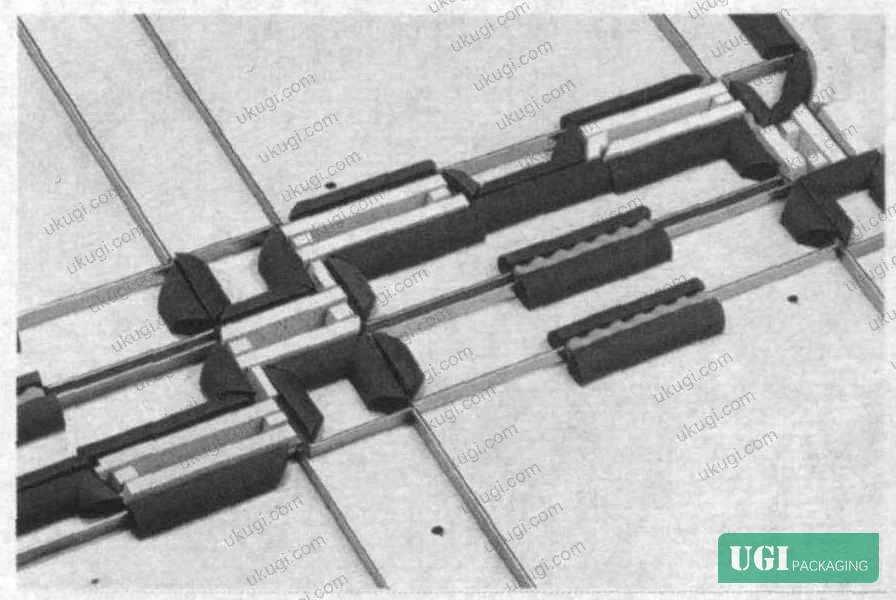
Foam rubber (matrix/ejection rubber) selection is equally critical and is where we see the most buyer-side specification gaps. Incorrect foam rubber height, hardness, or placement causes paper to shift during cutting — generating fiber tear and dust even when the blade is appropriate. The correct specification follows a clear logic based on gap distances:
- Die rule gap < 8 mm: use Shore hardness 600 solid strip foam
- Die rule gap between 8 mm and 10 mm: use Shore hardness 250 (corrugated board) or Shore hardness 350 (cartonboard) vented foam
- Die rule gap > 10 mm: use Shore hardness 350 arched foam
- Knife-to-steel-rule gap < 10 mm: use Shore hardness 70 arched foam; gap > 10 mm: use Shore hardness 350 arched foam
- Breakpoint (nick) positions: Shore hardness 700 arched foam, used specifically to protect connection points from tearing
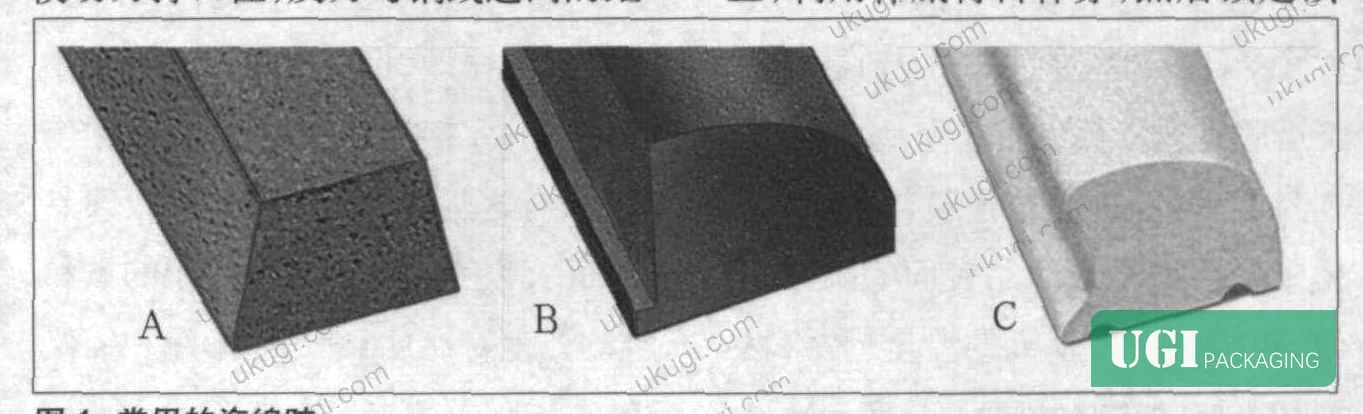
Installation geometry is non-negotiable. Foam rubber must maintain a minimum 1 mm clearance from both sides of the blade body. If it contacts the blade directly, it can only expand in one direction — pulling paper toward the blade before the cut is complete, which generates both fiber tear and die-cut dimensional inaccuracy. Height above the blade edge follows hardness: for hardness > 350 Shore, height should be < 1.2 mm above the rule; for hardness < 350 Shore, height should be > 1.2 mm. Softer foams compress more, so they need more height to achieve effective paper holddown. The distribution across the entire die board must be balanced — foam on both sides of every rule, with uniform height and hardness across the layout. Starting machine pressure at approximately 80% and adjusting by position before locking the final setting is the validated procedure.
Honestly, most buyers over-specify blade material grade while completely ignoring foam rubber selection. In our tooling qualification work, we’ve seen setups where a manufacturer spent premium budget on a precision blade and then installed it with mismatched, incorrect-hardness foam rubber — effectively defeating the blade’s performance advantage on every single cut cycle.
This matters directly for buyers sourcing cosmetics packaging solutions or pharmaceutical carton formats, where surface cleanliness and crease integrity are non-negotiable at the packing line.
Crease Cracking, Color Burst, and the Steel Rule Matching Problem #
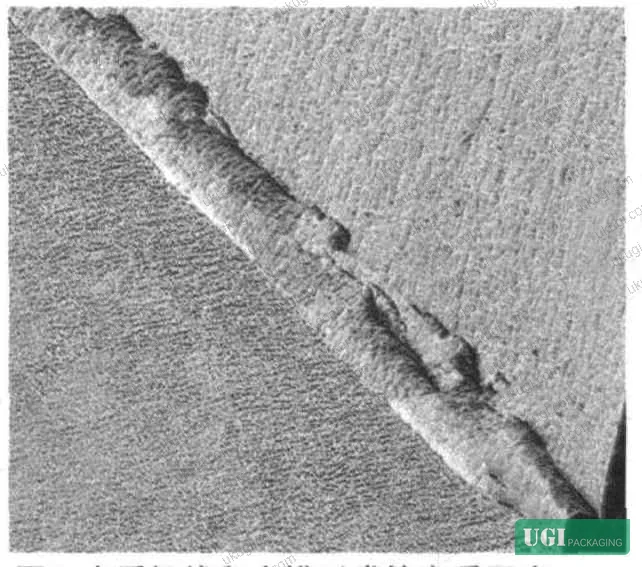
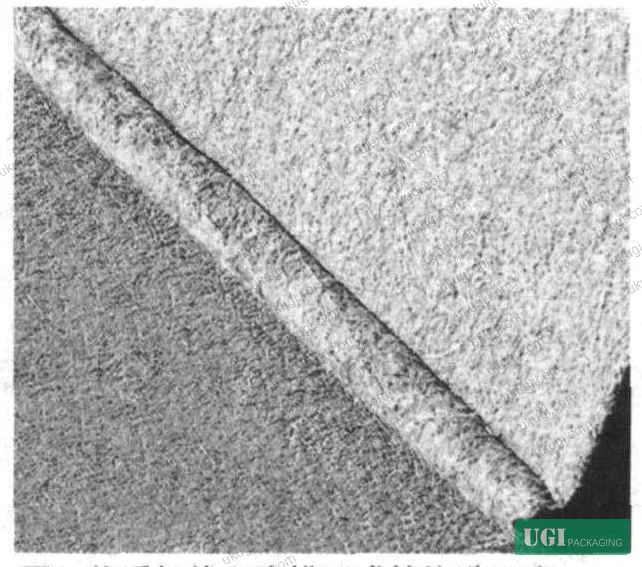
Recycled paperboard’s printed ink layer is significantly more brittle than that on virgin stock. The shorter, less cohesive fiber structure underneath provides less support to the ink film during creasing, meaning the crease operation requires much more precise mechanical control than on virgin board. The consequences of getting it wrong are immediate and visible: color burst (white showing at the fold line), crease cracking, and delamination of printed surface area.
The governing factor is steel rule geometry. Rule height tolerance must be within ±0.007 mm — this is not a guideline, it’s the threshold at which crease quality becomes controllable on recycled board. The rule cross-section must be center-axis symmetric. The rule tip must be smooth and cleanly finished with no burrs or irregular arcs. Rules that fail any of these criteria create inconsistent crease depth, lateral stress concentration at the score line, and — on recycled board specifically — crack propagation through the brittle ink layer.
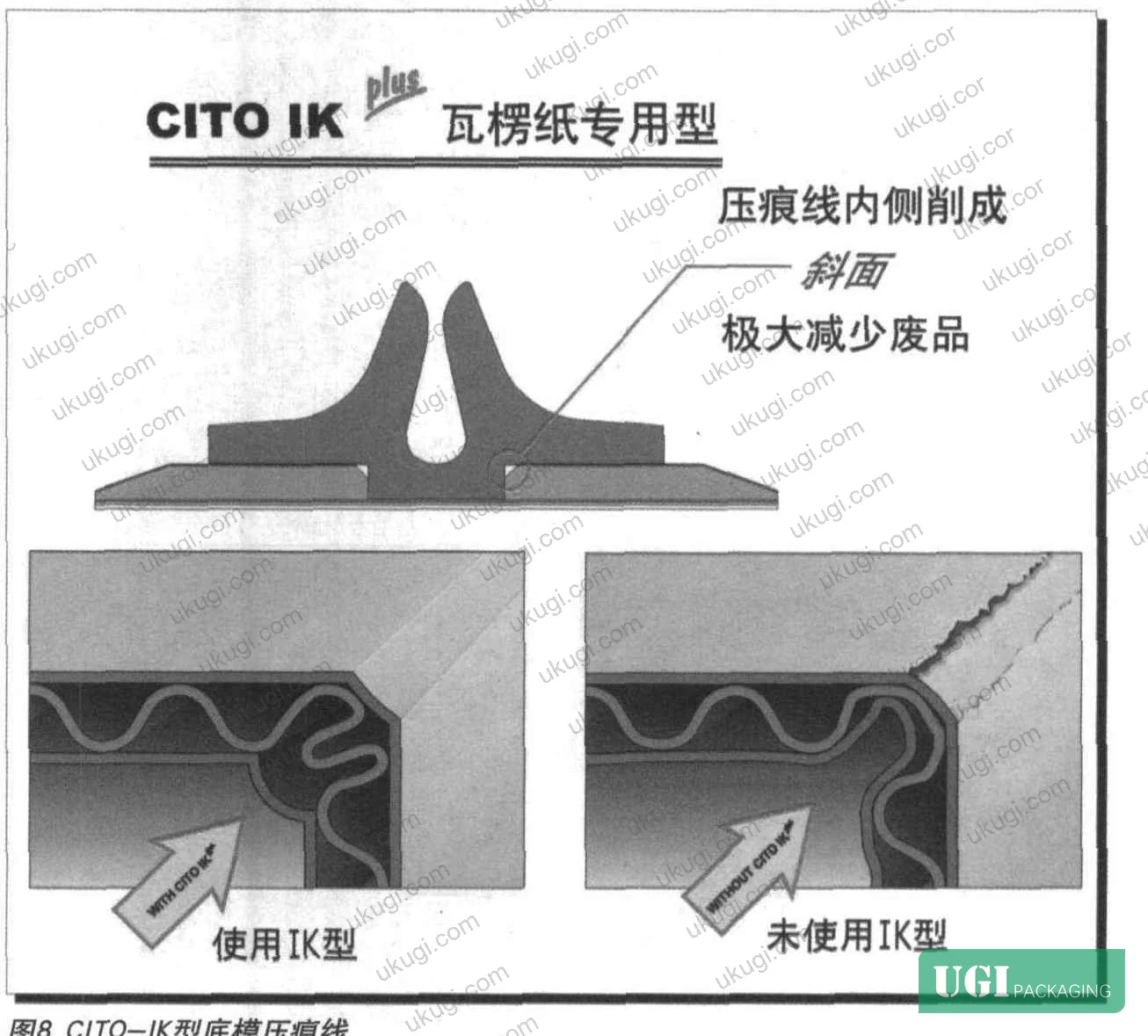
The matrix channel must be matched to the specific board thickness. Using a single rule height for all carton formats is a common cost-shortcut that produces systematic crease failures. Rule selection that is too high or too narrow increases burst incidence; too low produces incomplete crease formation and erratic fold behavior. Neither is acceptable in finished carton production.
Most procurement teams don’t realize that the steel rule and matrix system is effectively a precision measurement system that must be recalibrated for each new board grade. A supplier running recycled board on tooling dialed for virgin stock will show acceptable quality in early production samples and drift into crease failures at volume — which is exactly the failure mode we’ve documented in supplier qualification.
In one production qualification sequence, three of six carton converter samples submitted on recycled board showed crease burst within the first 5,000 cycles when using non-matched rule heights — despite all six samples passing visual inspection on initial short-run samples. This is the selection risk that standard incoming inspection doesn’t catch.
Using precision matrix systems — specifically the I-channel die designed for corrugated and recycled-fiber applications — testing data shows crease burst incidence reduced by 90% compared to standard round-channel matrix. Scrap rate reduction is the direct economic consequence: at scale, this translates to measurable material cost recovery that far exceeds the tooling premium.
Need a custom formulation or sample? Request a quote from our team →
Barcode Print Integrity on Recycled Substrate #
Barcode reliability is a procurement-critical topic that doesn’t always get the attention it deserves in carton spec sheets. Barcode scanning failure at retail or logistics nodes is a supply chain incident, not just a print quality issue. On recycled paperboard, achieving consistent, readable barcodes requires managing several variables simultaneously.
The board surface on recycled stock is less uniform than virgin fiber. Ink absorption varies across the sheet, producing inconsistent optical density contrast between bars and spaces. The GS1 General Specifications for barcodes and data carriers on packaging define minimum contrast and reflectance requirements that must be maintained across the entire print run — not just the first sheet. For recycled board production, this means tighter ink density control, more frequent spectrophotometer checks during the run, and careful management of lamination variables if the carton will receive a film laminate.
Lamination introduces an additional color shift that buyers frequently underestimate. Film thickness, adhesive coat weight, adhesive viscosity, laminator temperature, and board flute height (for corrugated formats) all affect the final printed color after lamination. Temperature control during lamination is particularly consequential on recycled board because the looser surface fiber is more susceptible to thermal distortion. Color management to ISO 12647-2:2013 Graphic technology — Process control for offset lithographic printing provides the framework for controlling print output before lamination — but post-lamination delta-E verification is an additional step that many suppliers skip.
For corrugated-format recycled board, barcode print integrity is also affected by the lamination glue coat weight and the corrugated flute profile. Both affect surface planarity at the barcode print zone, and any surface distortion reduces the optical contrast ratio that the scanner reads.
Practical Guidance for Buyers #
When sourcing folding cartons or color cartons in recycled paperboard, the first question to ask is not price — it’s tooling. A supplier running a precision die-cutting system with matched foam rubber, surface-treated cutting rules, and board-specific steel rule height selection will consistently outperform a lower-cost supplier using generic tooling, even if the generic supplier charges less per thousand units. The scrap rate differential, the reprint cost, and the supply chain friction from barcode failures will close that cost gap quickly and often invert it.
Verify that the supplier can articulate their foam rubber hardness specification for your board caliper. Ask for their steel rule height tolerance documentation. Request a trial run with your actual substrate — not the supplier’s standard board. Check the crease quality at fold under magnification, not just visually. For recycled board specifically, verify barcode optical density contrast across the sheet, not just at center.
At ukugi.com, our production team in Guangzhou works with international brand owners and product managers on exactly these substrate-tooling compatibility questions — if you’re evaluating recycled board for a new carton format, we can provide sample production runs to verify crease and cut quality before you commit to volume. Lamination, foil stamping, UV coating, and embossing are all available on recycled substrate formats.
Need a custom formulation or sample? Request a quote from our team →
Technical Verification Questions #
- What is your steel creasing rule height tolerance specification for recycled paperboard cartons — can you confirm it is held within ±0.007 mm, and what measurement method do you use to verify this at incoming inspection?
- What foam rubber hardness (Shore) do you specify for die-cutting gaps below 8 mm on recycled board, and how do you verify installation height relative to the blade edge?
- What blade treatment process do you use to reduce cutting-edge friction on recycled substrate, and can you provide run-length data showing die life on recycled paperboard at your standard production speed?
- How do you match steel rule height to board caliper for recycled paperboard — do you calculate per-job, and what is your procedure when switching between board grades mid-production?
- What post-lamination barcode verification method do you use, and can you show optical contrast ratio data meeting GS1 minimum specification for recycled board cartons in your last three production batches?
Quality Verification Checklist #
- ☐ Steel creasing rule height tolerance confirmed within ±0.007 mm via documented incoming inspection
- ☐ Foam rubber hardness matches gap specification: Shore 600 for gaps < 8 mm, Shore 250/350 for gaps 8–10 mm, Shore 350 for gaps > 10 mm
- ☐ Foam rubber installed with minimum 1 mm clearance from blade body on both sides
- ☐ Foam rubber height above blade edge correctly set: < 1.2 mm for hardness > 350 Shore; > 1.2 mm for hardness < 350 Shore
- ☐ Cutting blade surface treatment verified to reduce micropore/micro-burr friction (1,000,000-cycle run life benchmark on recycled stock)
- ☐ Crease burst incidence < 10% of virgin-board baseline (90% reduction achievable with precision matrix system)
- ☐ Barcode optical density contrast verified post-lamination per GS1 General Specifications minimum reflectance requirements
- ☐ Machine start pressure set at approximately 80% with position-by-position adjustment before production lock
Key Specifications Table #
| Parameter | Recommended Value | Verification Method |
|---|---|---|
| Steel rule height tolerance | ±0.007 mm | Micrometer measurement at incoming inspection |
| Foam rubber Shore hardness — gap < 8 mm | 600 Shore (solid strip) | Shore durometer test on incoming foam material |
| Foam rubber Shore hardness — gap 8–10 mm | 250 Shore (corrugated) / 350 Shore (cartonboard) | Shore durometer test; gap measurement on die board |
| Foam rubber installation clearance from blade | Minimum 1 mm each side | Feeler gauge measurement on installed die |
| Foam height above blade edge (hardness > 350 Shore) | < 1.2 mm | Height gauge measurement |
| Foam height above blade edge (hardness < 350 Shore) | > 1.2 mm | Height gauge measurement |
| Crease burst reduction — precision matrix system | 90% reduction vs. standard round-channel matrix | Production trial defect count comparison |
| Die blade run life — surface-treated rule on recycled board | 1,000,000 cycles | Production cycle counter log |
Looking for a manufacturer that meets these specs? Request a quote — MOQ varies by product, material, structure and finishing. Product-specific MOQ is confirmed with each quotation.
References #
Data source: Fiber Dust Generation, Crease Crack Defects, and Tooling Optimization in Recycled Paperboard Die-Cutting for Folding Carton Production, S. Wu et al., Journal of Applied Polymer Science, 2024
Frequently Asked Questions #
Can recycled paperboard produce the same visual quality as virgin fiber for premium color cartons?
Yes — with the correct tooling. The production evidence is clear: with precision surface-treated cutting rules, matched foam rubber hardness, and board-specific steel rule height, recycled paperboard can achieve crease and cut quality that matches virgin stock output. The limitation is tooling investment and process discipline, not the material itself.
What causes color burst on recycled cartonboard at the crease line?
Color burst occurs because recycled board’s ink layer is more brittle than virgin stock, and the shorter, loosely bonded fiber structure provides less support during creasing. When the steel rule height is mismatched to the board caliper — either too high, too narrow, or geometrically asymmetric — the crease operation concentrates stress at the fold line and fractures the ink film. Using a center-axis-symmetric rule with tip burrs removed and height tolerance within ±0.007 mm eliminates most crease burst incidence.
Why does my die-cutting produce more fiber dust on recycled board than on my standard board?
The root cause is friction between the blade edge and the loose, short fiber structure of recycled paper. Even visually smooth blades have micropores and micro-burrs that interact violently with recycled fiber. Surface-treated blades that fill those imperfections reduce this friction measurably. Foam rubber installation problems — wrong hardness, wrong height, or direct contact with the blade body — compound the issue by causing paper to shift during the cut.
How often should foam rubber be replaced in a recycled board die-cutting operation?
More frequently than most production teams schedule. Because recycled board generates more particulate and places higher friction demands on the system, foam rubber compression set occurs faster than on virgin-stock lines. The visual inspection trigger — foam that no longer rebounds to its specified height — happens sooner. The practical answer is to inspect foam height at each die change, not on a fixed calendar interval, and to treat compressed foam as a direct cause of fiber dust and cut quality variation.
Does lamination affect barcode readability on recycled paperboard cartons, and how should it be controlled?
Yes, and this is a commonly underestimated variable. Film thickness, adhesive viscosity and coat weight, laminator temperature, and board surface uniformity all affect the optical density of the printed barcode after lamination. On recycled board specifically, the less uniform surface absorption can cause ink density variation that narrows the contrast margin. Post-lamination barcode verification against ISO 15397:2014 Printing inks — Determination of resistance to rubbing and GS1 optical contrast requirements should be a mandatory step in the production sign-off procedure — not an optional QC check.
Published by ukugi.com Technical Team | Request a quote


