

TL;DR #
In gravure printing on high-gloss coated paper, ink viscosity deviation from the mid-range process specification is the single root cause behind the three most costly defects — streak lines, silver banding, and lateral registration shift. For buyers sourcing tobacco tipping paper or premium-finish packaging, this means a supplier’s ink management discipline is more predictive of output quality than press brand or substrate grade. Before approving any supplier for high-gloss coated stock, require documented viscosity logs and blade-change records from a recent production run.
Overview #
High-gloss coated paper is one of those substrates that separates capable gravure converters from ones who are merely competent on uncoated stock. The surface coating suppresses fiber extension, creates a near-zero-porosity ink-reception layer, and amplifies every ink rheology problem that a less demanding substrate would quietly absorb. Production data collected and analyzed by a specialist printing facility — across a five-color gravure line running grey, pearlescent, silver, varnish, and back-coat sequences — makes this particularly clear. The analysis covered recurring defect categories across multiple production batches, with each defect type documented by root cause, frequency pattern, and remediation outcome. The substrate in question is cigarette tipping paper: food-contact-grade, high-gloss coated, printed in a sequence complex enough that a single miscalibrated station cascades into registration problems two stations downstream.
This category of substrate is seeing increasing use beyond tobacco. The same print challenges apply to any premium folding carton, cosmetic sleeve, or specialty label where a high-gloss coating has been applied over base paper. If you’re evaluating suppliers for any of these applications, the failure modes documented here are directly transferable.
For process control benchmarking, ISO 12647-2:2013 Graphic technology — Process control for offset lithographic printing provides the foundational colorimetric tolerances against which gravure output on coated stocks should be compared — even when the printing process itself is rotogravure rather than offset.
Streak Defects in Gravure Printing on High-Gloss Coated Paper #
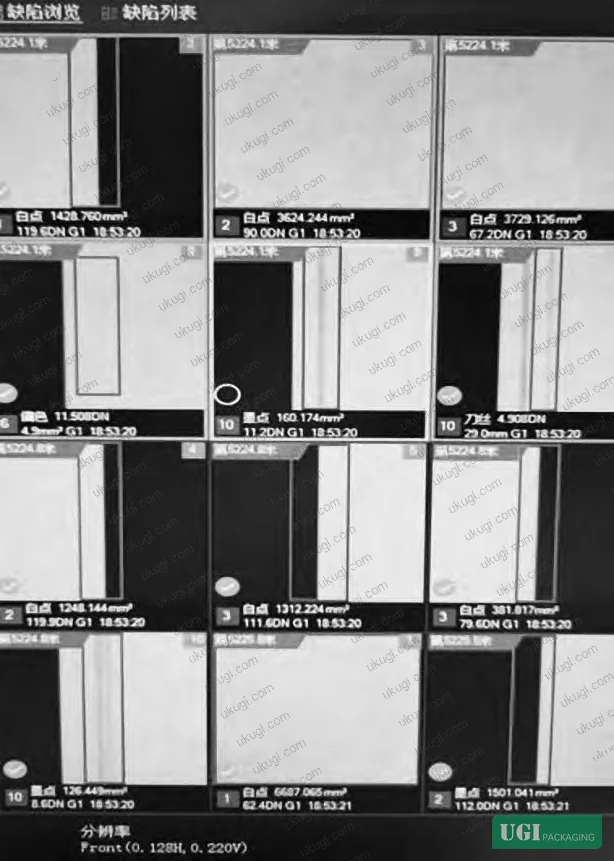
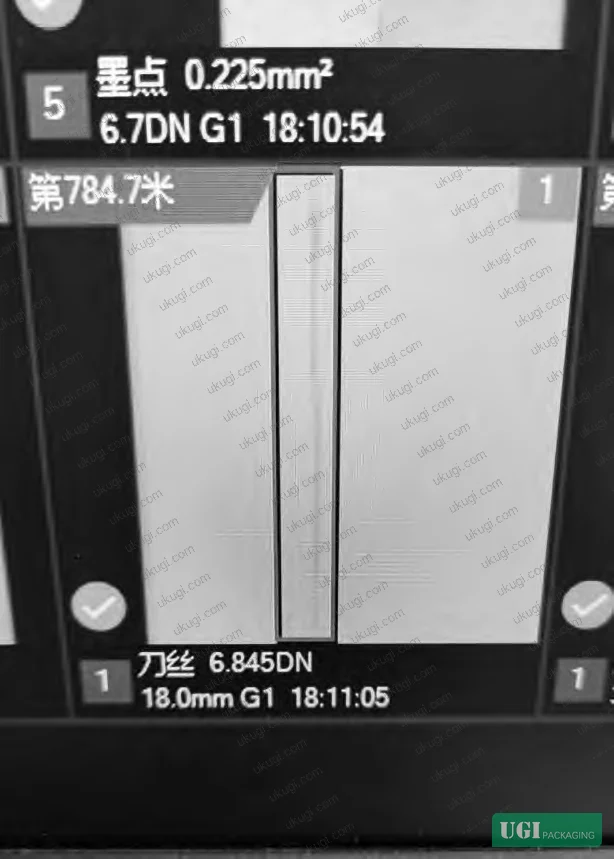
Streak lines — known in the trade as knife lines or blade lines — are the highest-frequency defect category in high-gloss coated paper gravure. They fall into two mechanistically distinct types, and conflating them leads to incorrect corrective action.
Type 1: Intermittent meteor-streak at plate band positions
The mechanism here is ink chemistry, not press mechanics. Inks with a high resin binder content develop active particles during extended press runs. These particles accumulate into flocculent aggregates that adhere to the plate cylinder surface. As the doctor blade passes over the aggregated mass, it lifts momentarily and leaves a streak — intermittent, meteor-shaped, appearing specifically at the band position. The frequency of these streaks increases progressively as the run continues, which is the diagnostic tell. If streaks appear from job start, look elsewhere. If they appear after 20–30 minutes and intensify, resin activity is the cause.
Additional contributing factors: doctor blade angle too shallow; blade pressure excessive; ink dilution solvent either impure or mismatched to the ink system; tinting inks added to the fountain without thorough premixing (a jellied condition results).
Type 2: Solid continuous black streaks at the chrome surface
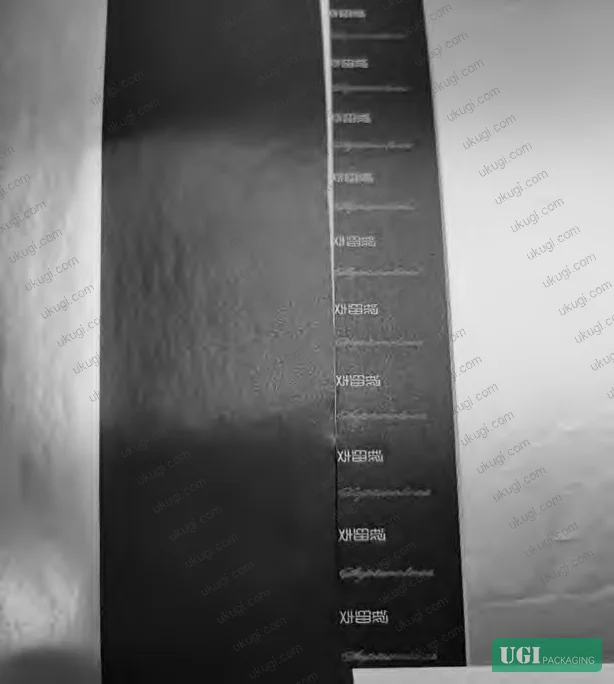
This type originates from contamination and mechanical wear, not ink chemistry. The ink fountain was not cleaned adequately between jobs; particulate contamination — dust, dried ink solids, white ink with coarse pigment particles — enters the ink path and cannot be cleared by the blade. Additionally: cylinder cell depth engraved too deep (ink volume exceeds blade clearance capacity); copper plating on the cylinder is soft with poor polish finish; blade pressure against the plate is excessive given the plating hardness. Cylinder wear is a multiplier — a worn plate that performed acceptably at the start of a campaign will begin generating solid streaks as surface roughness increases.
Remediation protocol for both types: clean the ink fountain and roller nib thoroughly; replace the doctor blade and reset angle and pressure; fit a new plate cylinder; reformulate the ink with viscosity at the upper-mid range of the process specification; premix all tinting inks fully before addition. For Type 2 specifically, add magnetic mixing bars fore and aft of the ink fountain — a plain bar at the rear, a spiral-grooved bar at the front — to maintain continuous ink homogeneity and prevent localized viscosity spikes.
In supplier qualification, we saw three of six sample print runs on high-gloss coated stock produce Type 1 streaks within the first production hour — all traceable to inadequate ink premixing procedure, not to press condition. The fix is procedural, not capital. But it requires a supplier who actually documents it.
Silver Banding, Registration Shift, and Grey Tone Instability #
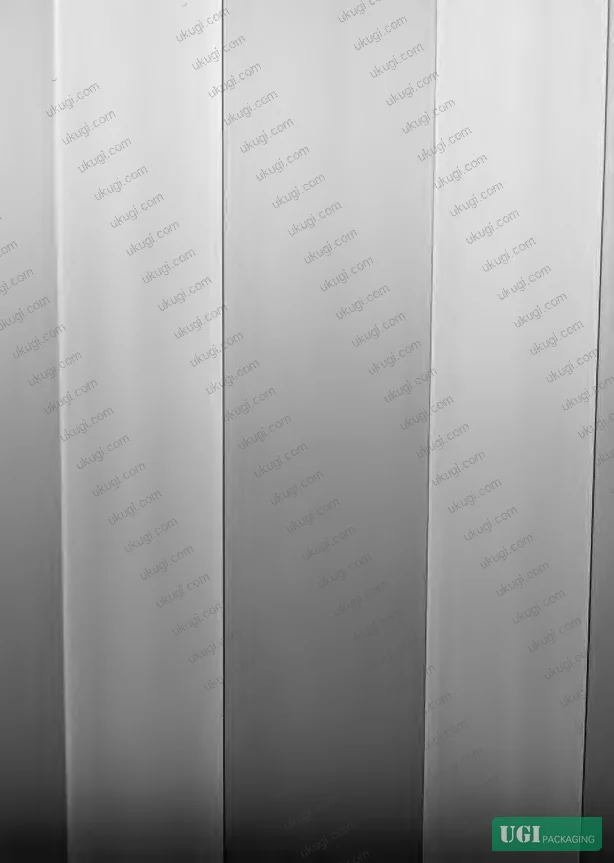
Silver banding is specific to metallic ink stations and presents as lateral stripes in the silver color field. The mechanism: silver ink viscosity set too high; resin binder proportion too heavy relative to metallic pigment; ink circulation path restricted, allowing surface skinning on the fountain exposure area; hot air from the drying oven impinging directly on the fountain surface, accelerating solvent evaporation and raising local viscosity. Cylinder cell engraving again plays a role — cells cut too deep hold excess ink that resists clean wiper action.
The correction is not simply to reduce viscosity globally. The approach is more controlled: set silver ink viscosity at the lower-mid range of the process window (not minimum — too low and metallic flake orientation breaks down); verify ink circulation is unobstructed; position magnetic mixing bars to prevent pooling; shield the fountain from direct hot-air exposure. If ink quality is confirmed as the variable, replace the ink batch. Replace the plate if cell wear is contributing.
Lateral registration contraction and expansion is a substrate problem amplified by the coating. High-gloss coated papers — including metallized and plastic-coated variants — have a surface layer of varnish or coating that partially breaks the fiber extensibility of the base paper. The result: the substrate does not behave uniformly in the cross-web direction as ink and solvent loads change across print stations. The paper drifts laterally. In a five-color sequence, a lateral drift of even 0.15–0.20 mm at station 3 compounds through stations 4 and 5 into a visible misregister.
The dryer is the primary control point. Moisture removal rate determines whether the paper contracts symmetrically or unevenly. Operators must actively monitor lateral registration throughout the run — not just at startup — and adjust oven temperature dynamically. This is harder to do on automated lines where oven parameters are locked to a recipe. Honestly, most buyers don’t ask about cross-web registration monitoring frequency when evaluating suppliers, and that gap shows up in batch-to-batch color consistency on five-color jobs.

Grey tone instability in the grey color station is an indirect casualty of pearlescent ink behavior. The pearlescent station, positioned adjacent to or covering the grey, changes optical behavior as the run progresses: solvent evaporates, pearl brightness increases, and the apparent hue of the underlying grey shifts — not because the grey ink changed, but because the optical overlay changed. This creates a color-match drift that reads as grey instability but is actually pearl ink management failure.
On top of this, plate wear at the grey station reduces ink laydown volume over a long run. The combination — shifting pearl coverage plus declining grey density — can produce a ΔE shift large enough to trigger a quality reject on spectrophotometric inspection.
Correction: control pearlescent ink viscosity actively; if pearl appears too bright, add pearl adhesive and solvent; if too flat, add pearl powder. Replace the grey plate when ink volume measurements show declining transfer. All of this requires that operators are logging ink viscosity at defined intervals — not just at job start.
Most procurement teams don’t realize that consistent grey tone on pearlescent-overlay jobs requires treating the pearl station and grey station as a coupled system, not two independent color stations. Suppliers who manage them independently will show grey drift in every long run.
For test methodology on substrate tensile behavior — relevant when evaluating how the coated layer affects dimensional stability — ASTM D882 Standard Test Method for Tensile Properties of Thin Plastic Sheeting provides applicable test conditions even for paper-based substrates with polymer coating layers.
Pre-Press, In-Press, and Post-Press Prevention Protocol #
The defect analysis above points to a prevention system structured around three production phases:
Pre-press: Clean all ink fountains completely before job setup. Verify all raw materials and ink batches against specification — lot number, viscosity measurement, solvent type confirmation. Clean plate cylinders, rubber rollers, and back-pressure rollers. This phase is where contamination-type defects (solid black streaks, ink skinning) are prevented, not where they’re fixed.
In-press: Add tinting inks only after full premixing — never pour directly into the fountain. Run production floor inspections at defined intervals; don’t rely on end-of-roll checks. Shift handovers must include accurate, detailed transfer of ink condition status, viscosity readings, and any active defect observations. Log everything.
Post-press: Clean all equipment and store plate cylinders correctly. Confirm ink labeling accuracy before returning ink to storage (mislabeled returned ink is a contamination source for the next job). Collect all equipment run parameters from the production batch; use them in defect analysis review.
Paper conditioning prior to printing also matters. For coated stocks especially, equilibrating substrate to press-room humidity prevents dimensional changes during printing. ISO 187:1990 Paper, board and pulps — Standard atmosphere for conditioning and testing defines the standard 23°C / 50% RH conditioning environment that should be applied before any precision gravure run on coated substrates.
Practical Guidance for Buyers #
If you’re sourcing gravure-printed high-gloss coated packaging — whether for tobacco applications, cosmetics, or premium consumer goods — the technical challenge is the same: this substrate has essentially no tolerance for ink management errors. Unlike uncoated board, it doesn’t absorb viscosity spikes or minor contamination. Every ink system problem prints.
When you receive samples, look specifically at solid metallic areas for lateral banding, examine band-position zones for intermittent streaks, and check multi-color overlap zones for lateral registration consistency. Grey tones adjacent to pearlescent coverage deserve particular scrutiny — hold samples at an oblique angle under consistent lighting to detect hue drift that flat inspection misses.
Ask suppliers specifically how they manage viscosity across a full production run, not just at startup. A supplier who can provide viscosity logs showing mid-range maintenance across a 4–6 hour run on five-color coated-paper jobs is demonstrating genuine process control, not just sampling competency.
We produce custom labels and stickers and a full range of premium surface-finished packaging at our Guangzhou OEM/ODM facility — including high-gloss coated substrates with foil stamping, pearlescent inks, and security finishes for tobacco and luxury applications. Our technical team can review your substrate specification and print sequence before sampling to identify potential defect risks before they appear in production.
Need a custom formulation or sample? Request a quote from our team →
Supplier Qualification Questions #
- What is your documented ink viscosity control range (in mPa·s or seconds on a specified flow cup) for silver metallic stations on high-gloss coated paper, and how frequently is viscosity measured and logged during a production run?
- For pearlescent ink stations, how do you quantify and compensate for solvent evaporation-driven brightness increase during a run exceeding 2 hours — and what is your ΔE tolerance for grey tone drift adjacent to pearl coverage?
- Can you provide plate cylinder maintenance records showing chrome surface roughness measurements and plating hardness values for the last five jobs run on coated paper substrates?
- What is your procedure for adding tinting inks to the fountain — specifically, what premixing time and viscosity verification step is required before addition, and who is responsible for documenting compliance?
- What is your cross-web registration monitoring interval during a five-color coated-paper run, and what is the maximum permissible lateral registration deviation (in mm) before corrective oven adjustment is initiated?
Sourcing Checklist #
- ☐ Supplier provides viscosity logs showing ink maintained within ±5% of the mid-range process specification across a full production run (minimum 4-hour continuous run on coated stock)
- ☐ Doctor blade replacement and angle/pressure settings are recorded per job, with blade angle within the supplier’s validated range for the specific plate cylinder surface hardness
- ☐ Plate cylinders used for high-gloss coated stock jobs have documented chrome plating hardness and surface roughness values, with copper layer polish grade confirmed as suitable for the specified blade pressure
- ☐ Ink fountain cleaning procedure is documented as a mandatory pre-job step, with signoff required before new job setup begins
- ☐ Cross-web registration is monitored at intervals no greater than 30 minutes during multi-color coated-paper runs, with oven temperature adjustment records available for review
- ☐ Pearlescent ink viscosity correction procedure (pearl adhesive addition for excess brightness; pearl powder addition for flatness) is included in the operator work instruction, not left to individual judgment
- ☐ Substrate conditioning to ISO 187:1990 standard atmosphere (23°C / 50% RH) is performed prior to all precision gravure runs on coated paper
- ☐ Post-job review includes defect analysis data logged against equipment run parameters, with records retained for minimum 6 months
Key Specifications Table #
| Parameter | Recommended Value | Verification Method |
|---|---|---|
| Silver ink viscosity — production run | Lower-mid of process window; avoid minimum (metallic flake alignment degrades) | Flow cup measurement at defined intervals; log against time-on-press |
| Ink viscosity for tinting color inks | Upper-mid of process specification; fully premixed before fountain addition | Rotational viscometer or flow cup; visual check for jelly-like texture before addition |
| Grey tone ΔE adjacent to pearlescent coverage | Within colorimetric tolerance of approved proof; monitor for drift in runs >2 hours | Spectrophotometer measurement against approved standard at defined intervals |
| Cross-web registration deviation | ≤0.15–0.20 mm lateral shift before corrective action is required | Inline registration camera or manual measurement against registration marks |
| Oven temperature adjustment response | Active dynamic adjustment; not locked to fixed recipe on coated-stock jobs | Operator log of temperature adjustments correlated to registration observations |
| Plate cylinder chrome surface condition | Confirmed hardness grade appropriate to blade pressure; no measurable soft plating | Surface hardness measurement; visual inspection for polish defects before job start |
Looking for a manufacturer that meets these specs? Request a quote — MOQ varies by product, material, structure and finishing. Product-specific MOQ is confirmed with each quotation.
References #
Data source: Defect Analysis and Process Control Strategies for Gravure Printing on High-Gloss Coated Specialty Paper, S. Zhu et al., Journal of Applied Polymer Science, 2024
Frequently Asked Questions #
What causes intermittent meteor-shaped streak lines that appear only after a press has been running for 20–30 minutes?
This is a resin-activity problem, not a mechanical one. Inks with high binder resin content develop active particles during extended press runs; these form flocculent aggregates on the plate cylinder surface. The doctor blade lifts over the aggregate momentarily, producing the intermittent streak. The fix is reformulating to lower resin ratio and ensuring full premixing before fountain addition — not adjusting blade pressure, which is the instinctive but wrong response.
Why does grey color shift during long production runs even when the grey ink formulation hasn’t changed?
The pearlescent ink station is the culprit. As solvent evaporates during the run, pearl brightness increases and optically alters the appearance of the grey layer it overlies. It’s a coupled-station problem. Controlling pearlescent ink viscosity actively — adding pearl adhesive and solvent when brightness climbs — stabilizes the apparent grey. Plate wear at the grey station, which reduces ink volume transfer over time, adds a second mechanism.
How does high-gloss coated paper differ from standard coated paper in terms of registration challenges?
The surface coating partially disrupts the paper fiber extensibility that normally provides some dimensional stability. Combined with moisture changes from multi-station ink and solvent deposition, the substrate drifts laterally across the web. On a five-color sequence, even a 0.15 mm drift at an intermediate station compounds into visible misregister at the final station. Dynamic oven temperature control — not fixed-recipe drying — is the primary management tool.
Is pre-press cleaning really worth the setup time on repeat jobs?
Yes, without qualification. Contamination-type defects (solid black streaks, ink skinning, viscosity spikes from dried ink residue) originate almost entirely in inadequate fountain and roller cleaning. They are not fixable mid-run without stopping the press. The time lost diagnosing and correcting a contamination-driven streak defect is an order of magnitude greater than the pre-press cleaning time that prevented it.
What substrate applications beyond tobacco tipping paper face the same print challenges?
Any high-gloss coated stock where the surface layer is a varnish, lacquer, or polymer coating over base paper creates the same ink reception and dimensional stability conditions. This includes premium cosmetics packaging sleeves, high-end folding carton overwraps, and specialty label stocks. For buyers sourcing hologram security stickers or custom paper boxes with high-gloss surface finishes, the same ink management and registration control requirements apply. Verify that your supplier’s process documentation explicitly covers coated-stock behavior, not just standard uncoated jobs. For oxygen-barrier flexible packaging applications, ASTM D3985 Oxygen Gas Transmission Rate Through Plastic Film and Sheeting provides the test framework for barrier performance verification relevant to high-specification flexible substrates.
Published by ukugi.com Technical Team | Request a quote


