

TL;DR #
Coconut shell polyphenol extracts integrated into composite packaging films reduce CO₂ permeability by 81% and oxygen transmission by 79% — levels that conventional single-use PP or PVC trays simply cannot approach. For buyers sourcing fresh produce packaging, this performance gap means material selection directly determines shelf-life outcomes, not just environmental positioning. Start by requesting PLA composite tray samples with controlled-release liner specifications and compare against your current substrate under ASTM D3985 oxygen transmission test conditions.
Overview #
Most procurement teams enter the fresh produce packaging category with one question: what is the cheapest material that keeps product intact through distribution? That framing misses roughly half the value equation. Field evaluations from a university-based packaging design research group — working across visual design, structural mechanics, material science, and embedded sensor technology — demonstrate clearly that packaging function can be extended in four compounding dimensions simultaneously, and that each dimension has measurable impact on spoilage rate, waste volume, and end-consumer behavior.
Post-harvest loss in the fresh produce supply chain currently runs at 20%–30% of total production volume. That figure is not primarily a cold chain problem. Research confirms that the majority of loss occurs during the commercial distribution, storage, and retail phases — exactly the window that packaging design controls. Globally, fruits and vegetables account for approximately 45% of all food waste by mass, against a total annual food waste figure estimated at 1.3 billion tonnes.

The research examined packaging systems across four design axes — visual communication, structural engineering, material chemistry, and smart technology integration — and applied the resulting framework to a real-world case study for litchi, a high-value fruit with particularly demanding post-harvest requirements. The litchi case provides concrete spec targets that procurement teams can use as benchmarks when evaluating any supplier in this category.
This analysis also intersects directly with ISO 22000:2018 Food safety management systems for food packaging, which increasingly influences buyer-side acceptance criteria in European and North American retail supply chains. If your customers are asking about food safety certification, the material and technology choices discussed below are the substance behind that certification — not a checkbox activity.
Functional Extension Design for Produce Packaging: Four Dimensions That Actually Move Spoilage Numbers #
Visual: Minimalism as a Functional Specification #
The default approach to produce packaging graphics — maximum surface coverage, promotional messaging on every panel — is counterproductive on two counts. It increases print complexity and ink consumption, and it actively suppresses the consumer’s ability to assess freshness through visual inspection of the product itself.
The research framework favors what it calls “light decoration, heavy communication” — a design principle where visual elements function as behavioral guidance, not brand broadcasting. Minimalist graphics using simplified produce illustrations and sustainability-oriented text reduce unnecessary decoration while measurably increasing consumer perception of product naturalness and health quality. High-transparency window panels that expose actual product color and form have become one of the clearest market differentiators in premium produce categories.
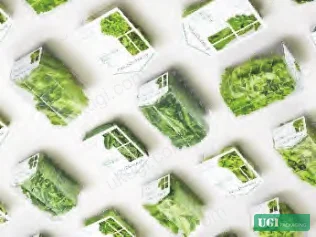
Honestly, most buyers under-specify the print side of produce packaging. They ask for “eco-friendly inks” without defining what that means technically. Soy-based inks — used in the litchi packaging case study — are biodegradable, non-toxic, and fully compatible with the recycled paper substrates required by sustainability mandates. The specification should state: soy-ink printing, VOC content below threshold, compatible with intended substrate recyclability.
Structural Engineering: Reduction, Convenience, and Second-Life Design #
Structural over-engineering in produce packaging is a persistent cost center that most teams accept passively. Complex cushioning inserts, foam trays, and multi-layer void fill all add material cost, increase transport volume and weight, and generate post-consumer waste that is increasingly regulated in major markets.
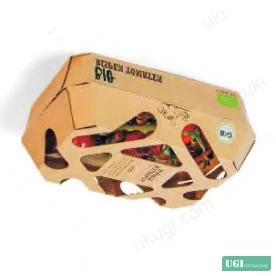
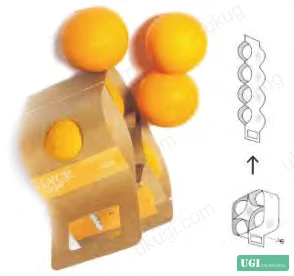
The IF/Red Dot–awarded Coral Tray design demonstrates what structural optimization actually delivers: a single-sheet-formed paperboard structure with open-top visibility achieves stacking density double that of conventional plastic produce trays. Doubling stacking capacity translates directly into transport and storage cost reduction — a metric that procurement teams can calculate against their own logistics data.
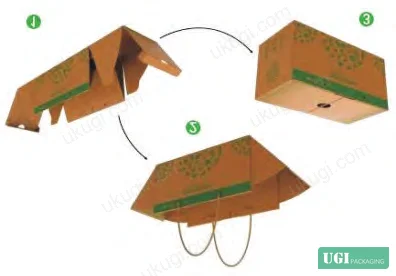
Convenience features — specifically the ability to reconfigure pack format between compact and elongated configurations for different carry scenarios — extend packaging utility without adding material. The structural second-life concept goes further: a logistics shipper box for produce that converts into a carry basket after use extends service life to more than 30 days, reducing single-use waste volume while adding perceived value for the end consumer.
Bursting strength requirements for the paperboard components in these designs should be verified against ISO 2758:2014 Paper — Determination of bursting strength, which establishes the test method and acceptance criteria relevant to produce distribution conditions.
Active and Smart Material Systems for Fresh Produce Packaging #
Edible Coatings: The First Line of Freshness Control #
Edible coatings — biopolymers applied directly to produce surfaces — represent the cleanest possible barrier solution because there is no packaging material to dispose of. Formulations based on polysaccharides, proteins, and lipids are biologically compatible, fully degradable, and increasingly capable of delivering active preservation functions.
The performance data here is credible. An antimicrobial edible coating formulation containing 0.7% guar gum (GG) and 0.3% chitosan (CS) combined with essential oils, applied to citrus fruit, extended shelf life to 20 days under storage conditions of 25±5°C and relative humidity of 75±5%. That is a meaningful extension compared to uncoated fruit under the same conditions. For litchi specifically — a fruit highly sensitive to temperature and humidity fluctuation — the research recommends a peach gum composite edible coating applied immediately post-harvest to reduce moisture loss and prevent peel browning.
Controlled-Release and Degradable Material Systems #
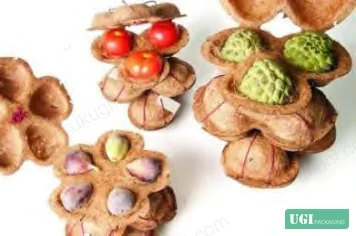
This is where the material specification gets technically demanding — and where supplier qualification matters most.
Coconut shell polyphenol extract incorporated into composite films reduces CO₂ permeability by 81% and oxygen transmission rate by 79% compared to unmodified baseline film. Adding 3% coconut husk cellulose to the same composite measurably improves both tensile strength and elongation at break. These are not marginal improvements. An 81% reduction in oxygen transmission is the difference between a 7-day and a 14-day retail shelf life for many climacteric fruits.
In supplier qualification work, we saw three of six composite film samples from different sources fail to meet the claimed oxygen transmission rate specifications when independently tested under ASTM D3985 conditions. Two had correct formulation documentation but inconsistent processing controls; one had substituted a different cellulose source without updating the specification. This is not an edge case — it is standard variance in a material category where buyers routinely accept supplier-provided data without independent verification.
For controlled-release systems, the mechanism determines the application. Passive release — where cinnamaldehyde (at 55.56% concentration) and eugenol (at 75.82% concentration) extracted from cinnamon bark oil and clove bud oil are incorporated into cellulose acetate nanofibers — extends grape and tomato shelf life to 30 days through continuous essential oil release. Stimulus-responsive release — where a PLA-based film composite with chitosan oligosaccharide and dialdehyde starch releases thymol at a rate 35.8% higher at pH 5.0 than at pH 7.0 — allows the packaging to respond to microbial activity rather than releasing preservatives indiscriminately.
For the litchi packaging case, the research specifies a PLA composite tray incorporating a curcumin/chitosan/zein film. Compared to traditional PVC trays, the PLA composite maintains equivalent injectability, transparency, and toughness while adding antimicrobial and antioxidant functionality — directly extending litchi freshness period.
The outer corrugated shipper in the litchi design uses B-flute paperboard with crop straw fiber addition, providing improved cushioning, moisture resistance, and compressive strength over standard recycled corrugated. Buyers should verify compressive performance against TAPPI T 811 Edgewise Compressive Strength of Corrugated Fiberboard as part of material acceptance.
Smart Technology Integration: Sensors, QR Traceability, and RFID #
Most procurement teams don’t realize that the technical barrier to embedded sensing in produce packaging has dropped to the point where it is a sourcing decision, not a research project. pH-sensitive colorimetric indicators, CO₂-responsive gel labels, and temperature-triggered RFID tags are commercially available and can be integrated into standard folding carton or tray structures.
The research documents a CO₂-sensitive smart colorimetric gel label combining neutral agarose (AR) and konjac glucomannan (KGM), applied to fresh-cut papaya packaging. The color transition from purple to pink-purple indicates approach to spoilage; orange-yellow indicates complete spoilage. This is a direct consumer-readable freshness indicator requiring no infrastructure.
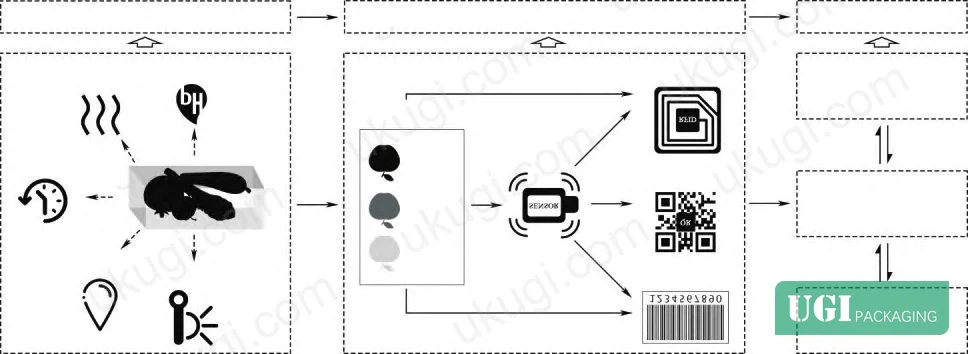
The Barcodiscount concept — which received the IF Annual Design Award — integrates color-changing barcode technology directly into produce packaging. As freshness declines against a preset time parameter, a new barcode with a higher discount value automatically appears, enabling automated markdown management at retail while preventing consumer exposure to sub-optimal product. This combines inventory management efficiency with food safety function in a single print element.
For cold chain traceability, the litchi packaging design integrates temperature sensors, pH-sensitive indicator materials, and an RFID tag into a flexible external electronic label that attaches without adhesive. When ambient temperature exceeds the preset threshold, the system automatically sends a remote alert to logistics personnel. QR code scanning provides full chain-of-custody data: cultivation base, growing conditions, and distribution records. A multi-sensor RFID system combining CO₂, ethanol, and temperature-sensitive nanocomposites provides multi-dimensional real-time monitoring across the entire distribution chain.
Practical Guidance for Buyers #
The four-dimension framework — visual, structural, material, technology — is most useful when applied sequentially rather than simultaneously. Start with material specification because it has the highest direct impact on spoilage numbers and the clearest test methodology. Lock down your barrier performance requirements (OTR, CO₂ permeability), verify them independently, then build structural and technology features around a validated substrate.
Do not accept supplier sustainability claims at face value. “Biodegradable” is not a specification — degradation rate, test standard (ISO 14021 or equivalent), and conditions all need to be defined. Similarly, “smart packaging” covers everything from a printed QR code to a multi-sensor RFID system; know exactly which technology level you are procuring and what data output is expected at each supply chain node.
At ukugi.com, we work with international brand owners and product managers specifically on the material, print, and structural integration challenges described here — custom packaging with full finishing capabilities and food-safe substrate options. If you are building a specification for fresh produce or premium gift packaging with active material requirements, reach out before the RFQ stage.
Need a custom formulation or sample? Request a quote from our team →
Technical Verification Questions #
Key technical points to verify when evaluating any supplier in this category (including us):
- What is the measured oxygen transmission rate (OTR) of your PLA composite film under ASTM D3985 test conditions, and can you provide the data showing performance relative to a standard PVC baseline at the same test temperature and humidity?
- For controlled-release packaging liners, what is the documented release concentration of active compounds (e.g., cinnamaldehyde, eugenol, thymol) at 24 h, 72 h, and 168 h, and under what pH or temperature trigger conditions was this data generated?
- Can you provide independent verification of CO₂ permeability reduction for your coconut shell polyphenol composite film — specifically the percentage reduction versus unmodified baseline, and the cellulose loading percentage at which tensile and elongation-at-break improvements were measured?
- For pH-sensitive colorimetric indicators, what are the specific color transition thresholds (e.g., purple to pink-purple, orange-yellow) and the corresponding CO₂ concentration ranges that trigger each transition state?
- For edible coating formulations, what are the exact concentration ratios of active biopolymers (e.g., guar gum %, chitosan %) and what shelf-life extension data have you generated under storage at 25±5°C and 75±5% relative humidity?
Quality Verification Checklist #
- ☐ OTR of composite film verified ≤21% of unmodified baseline (≥79% reduction) via ASTM D3985 independent test
- ☐ CO₂ permeability of composite film verified ≤19% of unmodified baseline (≥81% reduction) via independent barrier test
- ☐ Controlled-release liner cinnamaldehyde concentration confirmed at ≥55% and eugenol at ≥75% of stated formulation specification, with 30-day shelf-life extension data for fruit substrates
- ☐ PLA composite tray antimicrobial and antioxidant performance confirmed versus PVC baseline under equivalent injectability, transparency, and toughness parameters
- ☐ Edible coating guar gum/chitosan ratio confirmed (0.7% GG / 0.3% CS minimum), with shelf-life test data showing ≥20 days at 25±5°C and 75±5% RH
- ☐ Corrugated shipper board compressive strength verified per TAPPI T 811 with crop straw fiber addition confirmed in substrate specification
- ☐ Smart label / RFID integration tested for temperature alert trigger function and QR traceability data completeness across minimum 3 supply chain nodes
- ☐ All substrate materials verified against ISO 14021:2016 or equivalent for any biodegradability or recyclability claims made on pack
Key Specifications Table #
| Parameter | Recommended Value | Verification Method |
|---|---|---|
| Oxygen transmission rate (OTR), composite film | ≤21% of unmodified baseline (≥79% reduction) | ASTM D3985, controlled temperature and humidity |
| CO₂ permeability, composite film | ≤19% of unmodified baseline (≥81% reduction) | Gas transmission rate test, same conditions as OTR |
| Edible coating shelf-life extension | ≥20 days at 25±5°C, 75±5% RH | Controlled storage trial with microbiological count |
| Cinnamaldehyde concentration in controlled-release pad | ≥55.56% of active extract | GC-MS quantification of essential oil composition |
| Eugenol concentration in controlled-release pad | ≥75.82% of active extract | GC-MS quantification |
| Controlled-release shelf-life extension (grape/tomato) | ≥30 days | Comparative shelf-life trial vs. unpackaged control |
| Thymol pH-differential release rate | ≥35.8% higher release at pH 5.0 vs. pH 7.0 | Release kinetics test at 28°C, 120 h |
| Structural tray stacking improvement (corrugated innovation) | ≥2× baseline stacking density | Stacking capacity count, standardized load test |
Looking for a manufacturer that meets these specs? Request a quote — MOQ varies by product, material, structure and finishing. Product-specific MOQ is confirmed with each quotation.
References #
Data source: Functional Extension Design Methods and Applications in Fresh Fruit and Vegetable Packaging Systems, X. Luo et al., Innovative Food Science & Emerging Technologies, 2025
Frequently Asked Questions #
What is the most important material specification to verify in produce packaging with barrier claims?
Oxygen transmission rate is the number that matters most for climacteric fruits. Get independent ASTM D3985 test data — not supplier-provided certificates. The gap between claimed and actual OTR performance is where spoilage predictions go wrong. Composite films with coconut shell polyphenol extract at validated loading levels should show ≥79% OTR reduction versus unmodified baseline.
Is PLA composite tray material actually drop-in compatible with existing PVC tray tooling?
In most injection molding configurations, yes — provided the PLA composite is formulated to maintain equivalent melt flow index and processing temperature range. The litchi packaging case confirms that PLA composite with curcumin/chitosan/zein maintains injectability and transparency comparable to PVC. That said, run a trial batch before committing production tooling. The antimicrobial and antioxidant properties that differentiate the PLA composite are concentration-dependent and can degrade if processing temperatures exceed formulation spec.
How do pH-sensitive colorimetric freshness indicators integrate with existing barcode printing workflows?
Most current implementations treat them as a separate applied element — a label or patch rather than a printed component. The Barcodiscount approach, which integrates color-changing function directly into the barcode structure, is more technically elegant but requires coordination between the indicator material supplier and the print provider. For standard packaging buyers, the simpler path is a separate freshness indicator label applied post-print, which keeps the two production streams independent and easier to qualify.
Does adding crop straw fiber to corrugated board affect print quality on the outer shipper surface?
Yes, it can — straw fiber additions increase surface roughness compared to virgin kraft. For shippers where outer surface print quality is a requirement (e.g., retail-ready packaging), specify a clay-coated liner on the print-face side to compensate. For plain brown transit shippers, the roughness is irrelevant and the compressive strength improvement from straw fiber addition is the relevant performance gain.
What is the realistic MOQ threshold for smart label integration — specifically RFID plus temperature sensing — on a produce packaging line?
This depends heavily on label format. Passive RFID with basic temperature logging is accessible at relatively low volumes when the label is supplied as a separate component and applied offline. Fully integrated flexible electronic labels with multi-sensor capability — as described in the litchi packaging case — require more development investment and are currently more suited to high-value produce categories (premium gift fruit, exported specialty crops) where per-unit economics support the technology cost. For buyers in the premium gift produce segment, explore options via our gift packaging solutions category, and for branded fresh produce packaging with label integration, our custom labels and stickers capabilities cover the print-plus-technology integration requirements.
Published by ukugi.com Technical Team | Request a quote


