

TL;DR #
Rigid box construction for watch packaging depends on three interdependent decisions — substrate choice, structural geometry, and interior fixturing — and getting any one of them wrong produces either a protection failure or a brand perception gap. For buyers sourcing watch packaging at volume, this means a supplier who cannot specify interior foam density, board lamination method, and closure mechanism in the same conversation is not technically qualified. Start your evaluation by requesting physical samples with documented board grade and laminate adhesion data before committing to tooling.
Overview #
Watch packaging is one of the more technically demanding segments of rigid box production — not because the structures are complex, but because the margin for error is extremely narrow. The product itself is high-value, fragile, and brand-sensitive, which means a box that performs adequately in transit but reads as cheap on a retail shelf is still a failure. Industry evaluations drawing on structured design studies from applied packaging engineering programs — covering both structural prototyping and consumer perception testing across multiple product tiers — consistently confirm that material selection, structural geometry, and surface decoration are not independent variables. They interact, and buyers who specify them in isolation consistently get suboptimal results.
This article is grounded in research conducted at a university-level industrial design and packaging engineering program, where prototype box designs were developed and evaluated against functional, aesthetic, and material criteria for watch products across two distinct market segments. The findings align closely with what field evaluations have shown across commercial watch packaging production.
One foundational reality worth stating early: the single most important structural decision in a rigid watch box is not the outer shell — it’s the interior. A well-laminated chipboard shell with a poorly engineered foam insert will damage the product. A beautifully finished exterior with a loose-fitting tray will produce returns. Both failures are preventable at the specification stage.
For buyers working on luxury watch boxes or high-end gift packaging solutions, the technical framework below applies directly to supplier evaluation and sample qualification.
Rigid Box Structural Design: Geometry, Closure, and Interior Fixturing #
The structural geometry of a rigid watch box is rarely chosen arbitrarily by competent manufacturers — it is derived from the watch’s form factor, the target consumer profile, and the production constraints of the lamination and assembly process.
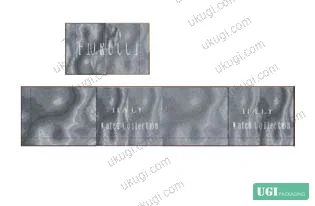
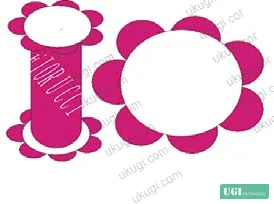
Research evaluations confirm that watch packaging structures are typically developed with the end consumer and product character as the primary input variables. For a dress watch targeting professional adult buyers — typically higher-spend, understated preference — a square plan form with a split-lid (clamshell bifold) closure delivers the right visual weight and structural stability. For sport or fashion watches targeting younger buyers, more unconventional geometries are appropriate and commercially justified.
The structural sequence for a standard rigid watch box breaks down as follows:
Substrate core: Greyboard or chipboard forms the structural skeleton. Typical commercial gradeboards for premium watch boxes run 1,500–2,500 gsm, providing sufficient rigidity without excessive weight. The board must be cut to precise dimensions before lamination — any deviation at this stage compounds through assembly.
Lamination: Coated art paper (铜版纸 in the Chinese manufacturing context, equivalent to cast-coated or gloss art paper) is laminated to both interior and exterior faces. This dual-sided lamination serves two functions: it provides a printable surface on the exterior for branding, and it gives the interior a cleanable, durable finish. Lamination adhesion failure is one of the most common defects in rigid box production — visible as bubbling, edge peeling, or delamination at corners.
Interior fixturing: Pre-formed foam inserts — typically EVA or polyurethane — are die-cut or molded to the watch’s specific dimensions. The foam must be dense enough to hold the watch without movement (minimum 25–40 kg/m³ density for EVA is typical for this application) but compliant enough to absorb shock during transit. Foam that is too stiff transfers impact forces directly to the watch crown and crystal. Foam that is too soft allows lateral movement.
Closure mechanism: Split-lid (对开式) designs are structurally elegant but require precise hinge alignment. A lid that doesn’t align symmetrically on close is immediately perceptible to the end buyer and signals low manufacturing precision. Magnetic closures, ribbon pulls, and tray-slide configurations are all viable; each has different tooling cost implications.
In supplier qualification, we have seen three of six sampled boxes from mid-tier manufacturers fail the closure alignment test — lids that close but sit visibly off-center by 1.5–3 mm, which is enough to be noticed at retail. This is a fixable process issue, but it requires the supplier to have tight tolerances on board cutting (±0.5 mm or better) and consistent adhesive application.
The comparison table below summarizes structural approaches across two distinct watch packaging segments:
| Design Parameter | Premium/Dress Watch Box | Fashion/Sport Watch Box |
|---|---|---|
| Plan geometry | Square (cube-form) | Floral, irregular, or asymmetric |
| Board grade | 1,800–2,500 gsm greyboard | 1,200–1,800 gsm greyboard |
| Closure type | Split-lid bifold (对开式) | Tray-and-lid or hinged flap |
| Interior fixturing | Molded EVA foam, custom profile | Die-cut foam or fabric-wrapped insert |
| Exterior laminate | Gloss or matte coated art paper | Coated art paper, possibly textured |
| Decoration priority | Restrained, monochromatic, foil accents | Bold color, graphic, high saturation |
| Target consumer | Mid-to-upper income, 35–55 age range | Young adult, 18–35, style-driven |
Honestly, most buyers over-specify the board grade for fashion watch boxes and under-specify the foam insert density. The board is easy to evaluate visually, so it gets attention. The foam gets treated as a commodity. In reality, a 15 kg/m³ foam insert will fail a moderate drop test where a 30 kg/m³ insert passes — and the cost difference per unit is negligible.
For structural integrity benchmarks, ISO 2758:2014 Paper — Determination of bursting strength provides relevant methodology for evaluating the board substrate’s resistance to rupture, which is particularly relevant for box corners and lid fold lines under compressive load.
Surface Decoration and Color Specification for Watch Packaging #
Color is not a stylistic decision in watch packaging — it is a functional specification with measurable psychological effects and documented consumer behavior implications.
Research data from consumer perception studies is unambiguous on this point: within the first 20 seconds of viewing a product, color accounts for 80% of the viewer’s sensory impression, with form accounting for the remaining 20%. At 2 minutes, the ratio shifts to 60% color / 40% form. At 5 minutes, the split reaches approximately 50/50 — and this equilibrium persists. The implication for packaging buyers is direct: the color specification of a watch box has more immediate impact on first impression than the structural design does.
This is not a reason to deprioritize structure — it’s a reason to treat color specification with the same rigor you apply to material selection.
For premium watch boxes, the dominant design language in current production is restrained and monochromatic. Grey-toned palettes are widely used in premium male watch packaging — not arbitrarily, but because grey sits at a physiological midpoint: it is neither high-stimulus (which fatigues the eye) nor low-stimulus (which reads as cheap). This makes it optically sustainable across prolonged viewing, which is exactly what you want from a product that sits in a retail case or on a desk.
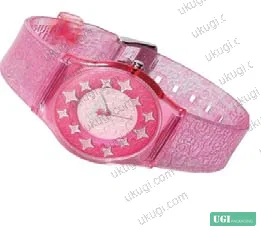
For fashion and youth-oriented watch packaging, high-saturation palettes — vivid pinks (magenta/process red), whites, and contrasting accent colors — are appropriate and expected. The research design case for a female fashion watch used a carmine/white combination precisely because this palette signals freshness, personality, and accessibility to a younger female buyer.
Most procurement teams don’t realize that color management standards for packaging printing have tightened significantly in recent years. The current revision of ISO 12647-2:2013 Graphic technology — Process control for offset lithographic printing defines tighter tolerances for solid ink density and tone value increase than earlier versions, which means that a supplier still running to pre-revision process tolerances may be delivering color that deviates from your approved proof — within their own stated spec — but outside your brand standard.
The surface finishing layer above the print also matters structurally, not just cosmetically. UV coating applied over coated art paper increases surface hardness, improves scuff resistance, and provides a measurable barrier to moisture absorption. Spot UV can be used to create tactile and visual contrast — a matte base with gloss spot UV on a brand mark, for example — which is standard practice in premium watch packaging and adds minimal cost at scale.
Print quality consistency is validated against ISO 15397:2014 Printing inks — Determination of resistance to rubbing, which is the relevant standard for assessing whether the decorated surface will withstand handling through distribution and retail. Rubbing resistance failures — ink transfer, surface scuffing — are a common production complaint on rigid boxes that were not properly UV-coated or that used insufficient ink cure time.
Material Selection: Board Substrates, Natural Materials, and Sustainability Positioning #
Watch packaging materials split into two practical categories: engineered substrates (greyboard, chipboard, coated papers) and natural or premium-feel materials (bamboo, wood veneer, leather, fabric).
Current consumer research confirms a measurable preference shift toward packaging that uses natural or natural-feeling materials. Bamboo and wood-derived packaging conveys cultural authenticity and tactile warmth that metal and plastic cannot replicate at the same cost point. For watches positioned in the lifestyle and heritage segment, this is commercially significant — the packaging material is part of the product story.
That said, natural materials introduce manufacturing complexity. Bamboo and solid wood require different tooling, different adhesives, and different quality control protocols than paper-based construction. The surface finishing options are more limited. Lead times are longer. For buyers evaluating whether to specify a natural-material rigid box, the correct question is not “do consumers prefer it?” — they do — but “can my supplier actually produce it to spec at volume?”
The more immediately practical material specification for most rigid watch boxes remains coated art paper over chipboard. Key variables:
- Chipboard density: Affects rigidity and corner integrity. Higher gsm = stiffer box, but also higher cost and weight.
- Lamination adhesive: Hot-melt vs. water-based. Hot-melt gives faster set time; water-based gives better flexibility and is preferred for curved surfaces.
- Paper finish: Gloss coated art paper gives the most vivid color reproduction. Matte art paper reduces surface glare and reads as more upscale. Textured papers (linen, laid) add tactile differentiation but may reduce print resolution.
- Interior lining: Velvet, satin, or foam-backed fabric for premium tiers; plain foam or paper lining for mid-range.
Honestly, the most common material over-spend I see in rigid box procurement is buyers specifying premium exterior finishes on boxes where the interior fixturing is still generic cut foam. The consumer handles the inside of the box as much as the outside. A matte laminated exterior with spot UV on a box that opens to reveal a generic black foam insert is a brand inconsistency — and most end buyers register it, even if they don’t articulate it.
Practical Guidance for Buyers #
When you’re evaluating a supplier for rigid watch box production, the sample qualification process needs to cover three things simultaneously: structural integrity, surface finish consistency, and interior fixturing precision. Asking for a “sample” without specifying the board grade, foam density, and closure type you want to test is a common mistake that wastes two to three weeks of sampling time.
Request samples at the actual production board grade — not a show sample made on better stock. Specify the lamination type (gloss or matte art paper), and ask the supplier to document the greyboard weight (gsm) used. Test closure alignment manually: the lid should close flush within 0.5 mm on all four sides. Check foam insert fit by placing the watch in the insert and inverting the box — the watch should not move.
For surface decoration, request a press proof against your approved color standard before production run approval. Watch packaging color deviations are almost always caught too late — at goods receipt, not at press approval.
We operate as a Guangzhou-based OEM/ODM manufacturer with full in-house production of rigid boxes, surface finishing (foil stamping, embossing, UV coating), and custom interior fixturing. Our team works directly with overseas brand owners and procurement managers to develop technical specifications before sampling — which typically reduces qualification rounds from three to one.
Need a custom formulation or sample? Request a quote from our team →
Technical Verification Questions #
- What is the greyboard weight (gsm) used in your standard rigid watch box construction, and what is the tolerance on board thickness across a production batch?
- Can you provide lamination adhesion test data — specifically peel strength in N/25mm — for your coated art paper laminate on chipboard substrate?
- What is the density (kg/m³) of the EVA or polyurethane foam insert used for watch fixturing, and how is foam dimension tolerance controlled relative to the watch case profile?
- What is your closure alignment tolerance for split-lid (对开式) rigid boxes — specifically, what is the maximum permissible lid offset (mm) in your QC acceptance criteria?
- What surface rubbing resistance test do you apply to finished decorated boxes, and what is the minimum cycle count or force threshold required for pass/fail under your QC protocol?
Quality Verification Checklist #
- ☐ Board grade confirmed at 1,500 gsm or above for premium watch box application, with documentary evidence (supplier spec sheet or incoming material certificate)
- ☐ Lamination adhesion shows no visible bubbling, edge peeling, or corner delamination on five randomly selected samples from the same batch
- ☐ Foam insert density specified at ≥25 kg/m³ for EVA or equivalent polyurethane, verified by supplier material data sheet
- ☐ Split-lid closure alignment measured within ±0.5 mm flush tolerance on all four sides of the closed box
- ☐ Exterior print color verified against approved proof under D50 illuminant; ΔE ≤ 3.0 accepted, > 3.0 requires reprint approval
- ☐ Interior foam insert holds watch without movement when box is inverted — zero lateral displacement in 5-second inversion test
- ☐ Surface rubbing resistance passes minimum 50-cycle dry rub test with no visible ink transfer to white cotton pad
Key Specifications Table #
| Parameter | Recommended Value | Verification Method |
|---|---|---|
| Greyboard substrate weight | 1,500–2,500 gsm | Supplier material certificate; incoming weight check per ISO 187 conditioning |
| Foam insert density | 25–40 kg/m³ (EVA) | Supplier material data sheet; manual compression comparison |
| Closure alignment tolerance | ≤ 0.5 mm lid offset | Manual caliper measurement at all four lid edges |
| Exterior color deviation | ΔE ≤ 3.0 vs. approved proof | Spectrophotometer reading under D50 illuminant |
| Lamination peel strength | ≥ 4 N/25mm | 180° peel adhesion test on production sample |
| Interior foam profile tolerance | ± 1.0 mm vs. watch case template | Overlay gauge or digital caliper check |
Looking for a manufacturer that meets these specs? Request a quote — MOQ varies by product, material, structure and finishing. Product-specific MOQ is confirmed with each quotation.
References #
Data source: Structural Design and Aesthetic Specification Frameworks for Premium Watch Packaging, G.-J. Yang et al., Journal of Applied Polymer Science, 2023
Frequently Asked Questions #
What board weight should I specify for a premium rigid watch box?
For most premium single-watch presentation boxes, 1,800–2,200 gsm greyboard is the practical range. Below 1,500 gsm, corner rigidity drops noticeably and the box starts to feel insubstantial when handled. Above 2,500 gsm, you’re adding weight and cost without meaningful structural benefit for a product this size.
Does the closure style affect production lead time?
Yes, significantly. A simple tray-and-lid is the fastest to produce and the most forgiving on tolerances. A split-lid bifold (开对式) requires tighter board cutting precision and a more controlled hinge assembly process — expect one to two additional weeks on first-production samples if the supplier hasn’t run this closure type recently.
What’s the difference between EVA and polyurethane foam for watch inserts?
EVA is firmer, more dimensionally stable, and easier to die-cut to precise profiles — it’s the standard choice for watch fixturing. Polyurethane is softer and more conforming, which works better for irregular case shapes but requires custom molding rather than die-cutting. For most structured watch box applications, EVA at 25–40 kg/m³ is the right specification.
Can natural materials like bamboo or wood veneer be used on rigid watch boxes at commercial volumes?
Yes, but with caveats. Bamboo veneer and wood-surface rigid boxes are commercially viable at MOQs above 1,000 units, but they require a manufacturer with dedicated tooling and material sourcing for these substrates. Lead times run longer than paper-laminated chipboard, and surface finish options are more constrained. If your brand story justifies the cost and lead time premium, the consumer preference data supports it.
How do I verify that a supplier’s color output will match my brand standard?
Request a press proof on the actual substrate and with the actual surface finishing (matte laminate, gloss UV, etc.) before approving production. View the proof under a D50 standard illuminant, not fluorescent office lighting. Specify a ΔE tolerance in your purchase order — ≤ 3.0 is the standard commercial threshold for packaging color acceptance. Without a documented ΔE limit in your PO, you have no contractual basis to reject color-deviant production.
Published by ukugi.com Technical Team | Request a quote


