

TL;DR #
Consumer segmentation drives packaging format, substrate, and finishing selection for confectionery products — and getting the targeting wrong costs more in returns and markdown than the packaging savings ever justify. For buyers sourcing custom confectionery packaging, the key decision point is matching structural format and surface treatment to a specific consumer tier, not optimizing for lowest unit cost. Define your consumer segment first, then specify substrate and finish accordingly.
Overview #
Consumer-targeted packaging design is not a soft marketing concept — it is a hard engineering constraint that determines substrate selection, structural format, barrier specification, and finishing method before a single print file is prepared. Research from a university design and packaging engineering program, drawing on market segmentation analysis across multiple consumer categories and evaluating packaging formats against functional and experiential performance criteria, provides a structured framework that translates directly into procurement decisions.
The core finding is straightforward: confectionery packaging, specifically chocolate, segments into at minimum four distinct consumer-tier specifications, each with different structural, material, and print requirements. A gift-tier box for a Valentine’s Day market has almost nothing in common — in substrate weight, finishing complexity, or structural design — with a children’s impulse-purchase pouch or a wedding favor unit. Treating them as variants of the same SKU is one of the more expensive assumptions a packaging buyer can make.
For buyers evaluating custom paper boxes or gift packaging solutions for confectionery clients, this framework is immediately applicable. What follows is a practical breakdown of how consumer positioning maps to verifiable technical specifications.
Consumer Segmentation and Its Direct Impact on Digital Printing Substrate Selection #
This is where most RFQs go wrong. A buyer submits a brief that says “chocolate box, 300g board, gloss lamination” — and that spec might be correct for one of four consumer tiers and completely wrong for the other three. The segmentation framework identifies the following distinct positioning categories, each with different print and substrate implications:
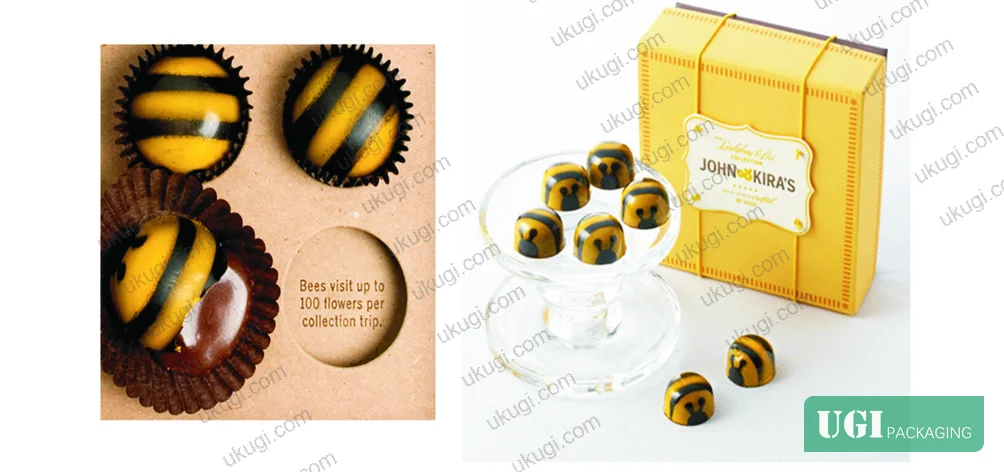
Tier 1: Romance/gift (Valentine’s, anniversary). The packaging must carry emotional weight. Substrate: rigid or semi-rigid board, ≥350 gsm. Surface finish: soft-touch lamination, spot UV, or hot foil stamping. Digital printing must achieve consistent color fidelity across short-run personalized editions — this is where ISO 12647-2:2013 Graphic technology — Process control for offset lithographic printing color tolerance specifications become the baseline, even on digitally printed jobs, because buyers are comparing these against offset-produced brand assets.
Tier 2: Wedding favor / ceremonial gifting. Two-box sets, paired presentation. Small interior volume but high visual complexity. Board weight typically 300–400 gsm. Structural requirement: consistent fit for paired units. Foil and emboss are expected at this tier.
Tier 3: Purchased gift (corporate, seasonal). Premium positioning. Substrate: ≥350 gsm rigid. Full-bleed print, complex die-cut, magnetic closure or ribbon pull common. This is the tier where digital short-run printing has the most to offer — personalized regional editions, seasonal variants, limited runs under 2,000 units where offset tooling cost doesn’t make sense.
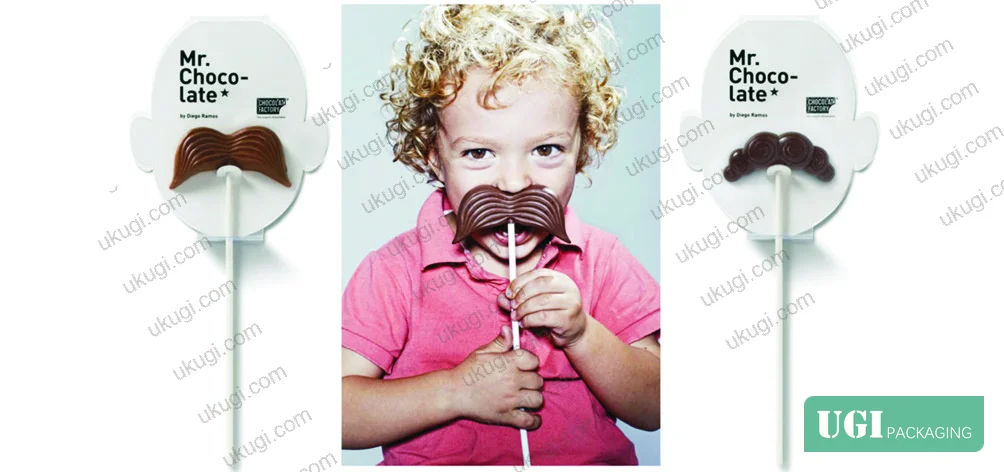
Tier 4: Children’s impulse / snack. Substrate: flexible film, folding carton ≤250 gsm, or composite pouch. Structural requirement: easy-open by a child. Print: bright color gamut, cartoon illustration, often requiring 6-color or extended gamut digital output to hit saturated primaries. Toy integration is a documented design element in this category — packaging that converts to a play object post-consumption.
| Consumer Tier | Board Weight | Primary Finish | Digital Print Priority |
|---|---|---|---|
| Romance / Gift (Tier 1) | ≥350 gsm rigid | Soft-touch + spot UV / hot foil | Color consistency vs. brand standard |
| Wedding Favor (Tier 2) | 300–400 gsm | Foil + emboss, paired structure | Registration accuracy on complex die-cut |
| Purchased Gift (Tier 3) | ≥350 gsm rigid | Full-bleed, magnetic closure | Short-run personalization, <2,000 units |
| Children’s / Impulse (Tier 4) | ≤250 gsm or flexible | Bright gamut, toy integration | Extended gamut, saturated primaries |
The 25°C threshold is a hard functional constraint that cuts across all tiers. Chocolate begins to soften above 25°C, compromising form and flavor. This means barrier performance — moisture resistance, thermal insulation — is not optional regardless of consumer tier. It defines minimum material specification before any aesthetic decision is made.
Digital Printing for Interactive and Sustainable Confectionery Packaging #
The two most commercially significant design trends identified in current field evaluations are experiential/interactive packaging and material recyclability — and both have direct implications for how digital printing is specified and sourced.
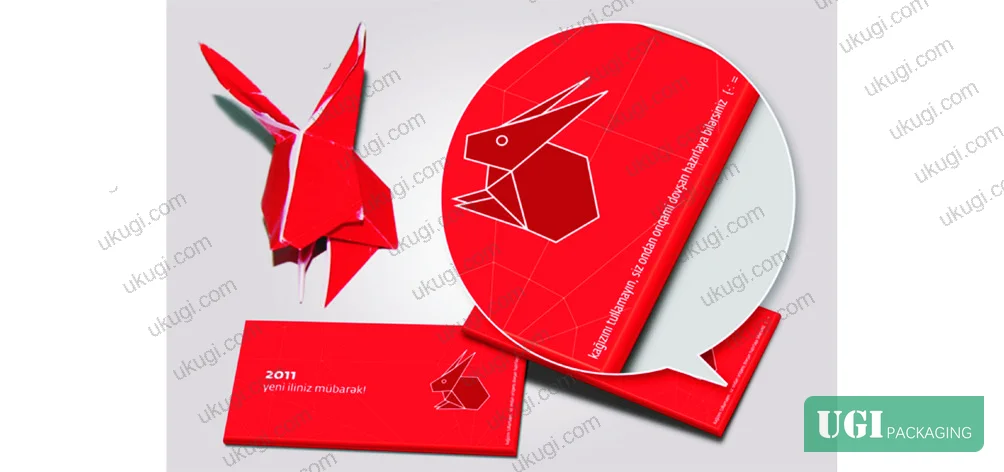
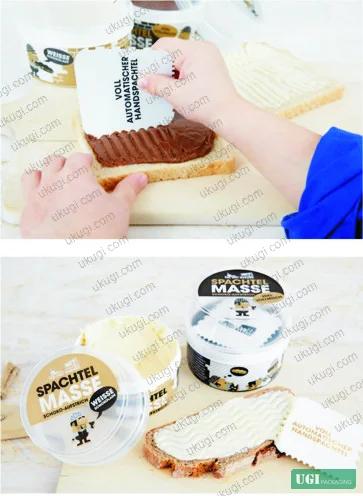
Interactive packaging. The design principle here is functional integration: the packaging structure serves a second purpose after the product is consumed. Documented examples include a chocolate spread jar with a three-profile spreading tool built into the lid, and a New Year’s themed chocolate box designed so that the outer wrapper, after consumption, folds into a decorative rabbit figure. These are not novelty items — they represent a documented direction in confectionery packaging where the structural design and print surface must support secondary use. For print, this means: the substrate cannot delaminate after handling, ink adhesion must survive repeated contact, and if the secondary object is a child’s toy, all colorants must be non-toxic and compliant with applicable food-contact standards.
From a digital printing standpoint, interactive designs typically require short production runs (seasonal, themed, limited edition) which is exactly the use case where digital outperforms offset on total cost. But the substrate demands are higher: a paper that folds cleanly into a secondary form requires grain direction control, consistent caliper, and surface treatment that doesn’t crack at fold lines.
Recyclability and the 3R+1D framework. The source research explicitly identifies the “3R+1D” principle — Reduce, Reuse, Recycle, plus Degradable — as an emerging design mandate for food packaging. This isn’t regulatory compliance theater. It’s a spec constraint: packaging materials must either be recyclable through standard streams or fully biodegradable. In practice, this pushes buyers toward uncoated or water-based-coated paperboard over UV-cured plasticized laminates, and toward soy-based or water-based inks over solvent systems.
Most procurement teams don’t realize that recyclability and food-contact compliance are increasingly evaluated together by retailers — particularly in European markets where EU Regulation No 10/2011 on plastic materials and articles intended to contact food has tightened migration limits on coatings and adhesives that contact food surfaces, even indirectly. A lamination that passes a gloss test but contains a restricted plasticizer will fail at the retailer’s compliance gate, not the print lab.
Honestly, a lot of buyers still specify “recycled board” without checking whether the water-based coatings applied over it are compatible with the paper recycling stream at the end market. Those two decisions need to be made together or one of them is meaningless.
In supplier qualification, we’ve seen samples fail when the “interactive fold” design cracked the printed surface at the score line — three out of six samples submitted on standard 300 gsm coated board showed visible ink fracture at the secondary fold point, which would be unacceptable in a toy-integrated children’s SKU. The fix was moving to a folding boxboard with a mechanical pulp core that bends without fracture — but that spec change needs to happen before tooling, not after first samples.
For sustainable packaging compliance, the ISO 14021:2016 Environmental labels and declarations — Self-declared environmental claims standard is the reference point for making recyclability claims on packaging that will reach international retail channels. Any “recyclable” or “compostable” claim on the printed surface needs to be substantiated against this standard before it goes to market.
Practical Guidance for Buyers #
Start the specification process with the consumer tier, not the substrate. Every other decision — board weight, surface finish, print process, structural format — flows from who is buying the product and in what context. Trying to reverse-engineer the consumer story from a substrate spec is how mismatched packaging gets made.
For short-run or seasonal confectionery packaging (under 2,000 units), digital printing is the technically and commercially correct choice. It eliminates plate costs, allows version control across regional or seasonal variants, and supports the personalization trend documented in current confectionery market analysis. The trade-off is that digital print requires substrates with tighter surface smoothness tolerances — typically Sheffield smoothness below 150 ml/min for consistent inkjet or electrophotographic dot gain.
Barrier requirements are non-negotiable regardless of tier. Chocolate softens above 25°C. Moisture ingress degrades texture. Any substrate specified must meet the moisture vapor transmission rate and thermal insulation requirements for the target distribution environment — cold chain or ambient.
Ukugi operates as an OEM/ODM manufacturer based in Guangzhou, producing custom confectionery and gift packaging with full finishing capabilities including foil stamping, embossing, soft-touch lamination, and structural design from brief to production. If you’re working with a confectionery client and need to specify packaging across multiple consumer tiers, our team can qualify substrates, produce pre-production samples, and support compliance documentation for European and North American markets.
Need a custom formulation or sample? Request a quote from our team →
Supplier Qualification Questions #
- What is the minimum board caliper you can maintain (±tolerance) on 350 gsm folding boxboard across a production run of 5,000 units, and what test method do you use to verify it?
- For interactive or fold-to-form packaging structures, what is your verified ink adhesion specification at secondary fold lines — specifically, what maximum crack width or delamination length is acceptable in your batch release criteria?
- Can you demonstrate that your water-based coatings and adhesives are compatible with paper recycling streams in the destination market, and do you have documentation referencing the 3R+1D recyclability criteria for each lamination type you offer?
- What is your measured moisture vapor transmission rate (MVTR) for the barrier structures you recommend for ambient-temperature chocolate packaging, and at what temperature and humidity conditions was that measurement taken?
- For digitally printed short runs under 2,000 units, what color deviation (Delta E) can you hold against an approved brand standard, and under what measurement conditions (illuminant, observer angle, substrate backing) is that tolerance specified?
Sourcing Checklist #
- ☐ Board weight confirmed at ≥350 gsm for Tier 1 (gift/romance) and Tier 3 (purchased gift) confectionery packaging via caliper measurement.
- ☐ Barrier specification verified: packaging maintains product integrity at ambient temperatures up to 25°C, with documented MVTR test results for the proposed substrate.
- ☐ Ink adhesion at fold/score lines tested with no visible fracture or delamination on secondary fold points (applicable to interactive/fold-to-form designs).
- ☐ Surface coatings and adhesives confirmed compatible with destination-market paper recycling streams, with recyclability claims substantiated against ISO 14021:2016.
- ☐ Food-contact compliance documentation available for any coating or laminate that contacts the product surface, referencing applicable migration limits.
- ☐ For children’s Tier 4 packaging, all colorants confirmed non-toxic and compliant with applicable food-contact safety standards.
- ☐ Digital print color tolerance specified as Delta E ≤ 3.0 against approved brand standard under D50 illuminant, 2° observer.
- ☐ Structural samples for toy-integrated or interactive designs tested for secondary use durability — folding function intact after primary unboxing sequence.
Key Specifications Table #
| Parameter | Recommended Value | Verification Method |
|---|---|---|
| Board weight — gift/premium tiers | ≥350 gsm | Caliper measurement per ISO 534 |
| Thermal stability threshold | ≤25°C ambient during distribution | MVTR test + temperature log during transit simulation |
| Digital print color tolerance | Delta E ≤ 3.0 vs. brand standard | Spectrophotometric measurement, D50/2° |
| Ink adhesion at fold lines | No visible crack or delamination at secondary fold point | Cross-hatch adhesion test + visual inspection at 10× magnification |
| Recyclability compliance | Materials compatible with destination-market paper recycling stream | ISO 14021:2016 claim substantiation documentation |
| Surface smoothness for digital print | Sheffield smoothness < 150 ml/min | Sheffield smoothness tester per TAPPI T 538 |
Looking for a manufacturer that meets these specs? Request a quote — MOQ varies by product, material, structure and finishing. Product-specific MOQ is confirmed with each quotation.
References #
Data source: Consumer Segmentation and Packaging Design Positioning for Confectionery Products in a Competitive Retail Environment, X.-S. Luo et al., Journal of Applied Polymer Science, 2025
Frequently Asked Questions #
What consumer segment drives the highest packaging specification complexity for confectionery products?
Gift and romance-tier packaging (Valentine’s Day, anniversary, wedding favor) consistently drives the highest complexity — requiring rigid board at ≥350 gsm, multi-step surface finishing (foil, emboss, soft-touch), and precise color matching against established brand standards. Wedding favor formats add structural constraints around paired presentation that require tight tolerance die-cutting.
Is digital printing technically suitable for premium confectionery packaging, or is offset still required at the high end?
Digital printing is entirely suitable for premium confectionery packaging in short-run and seasonal contexts — typically under 2,000 units where offset plate costs would be commercially prohibitive. The key requirement is substrate surface smoothness (Sheffield smoothness below 150 ml/min) and a verified Delta E tolerance against the brand standard. Above 2,000 units, offset becomes cost-competitive again, but digital still wins on versioning flexibility.
Why does the 25°C threshold matter for packaging specification?
Chocolate begins to soften above 25°C, changing both shape and flavor profile. This makes the thermal barrier performance of the packaging a non-negotiable functional specification — not an optional upgrade. Any substrate selected must be evaluated for moisture vapor transmission rate and thermal resistance under the distribution conditions of the target market, whether ambient or temperature-controlled.
What does the 3R+1D principle mean in practice for a packaging buyer?
It means your material selection must satisfy Reduce (minimize material volume), Reuse (design for secondary use where possible), Recycle (compatible with destination-market recycling streams), and Degradable (fully biodegradable if recycling is not feasible). In practice, this rules out many standard UV-cured plastic laminates and solvent-based ink systems, and pushes specification toward water-based coatings, uncoated or lightly coated paperboards, and verified food-contact-safe barrier treatments.
How should buyers handle interactive or toy-integrated packaging designs from a print specification standpoint?
The critical specification is ink adhesion at secondary fold and score lines. In qualification testing, standard coated boards at 300 gsm showed visible ink fracture at secondary fold points in a meaningful proportion of samples tested. The solution is specifying a folding boxboard grade with a mechanical pulp core that maintains fold integrity without surface cracking — and verifying this with a cross-hatch adhesion test and visual inspection before tooling is approved. Also confirm that all colorants meet applicable non-toxic and food-contact standards if the secondary object is intended for children.
Published by ukugi.com Technical Team | Request a quote


