

TL;DR #
Antimicrobial packaging paper loaded with 4% cinnamon essential oil (by volume) in a halloysite nanotube–chitosan matrix reduced cherry decay rates to just 8% after 6 days at room temperature, compared to 50% in unprotected controls. For buyers sourcing active packaging materials for perishable produce, this concentration threshold — not just the presence of essential oil — is the critical specification to lock down with your supplier. Before approving any active packaging substrate, demand inhibition zone data across at least four mold species and confirm the 4% loading level with SEM morphological evidence of nanotube saturation.
Overview #
Most active packaging projects fail not because the chemistry is wrong, but because the substrate engineer never asked whether the carrier system can actually sustain release over the product’s shelf life. The research that underpins this article addresses exactly that gap — conducted at an applied materials laboratory with food packaging engineering expertise, the study tested six groups of antimicrobial paper samples (one uncoated control plus five treatment variants at escalating essential oil concentrations) against six food-spoilage microorganisms, then tracked real-product preservation outcomes across a 7-day ambient storage trial. Sample size was 24 trays per group, with measurements taken every 24 hours — a rigorous enough protocol that the performance deltas between concentration levels are statistically meaningful, not noise.
The substrate in question is a coated food-grade paper incorporating halloysite nanotube (HNT) carriers loaded with cinnamon essential oil, suspended in a chitosan binder. The coating is applied by rod-coating at 38°C, double-pass, to a nominal dry thickness of 20 ± 3 μm. The halloysite nanotubes serve as controlled-release depots — natural aluminosilicate tubes with a hollow lumen, external diameter 50–75 nm, internal diameter 10–30 nm, and length 200–1,500 nm. Once loaded with cinnamaldehyde (the active component at 82.2% of the cinnamon oil used), the nanotube diameter increases measurably and the surface morphology changes from a rough elongated rod to a smoother, more uniform cylindrical structure — confirmed under SEM.
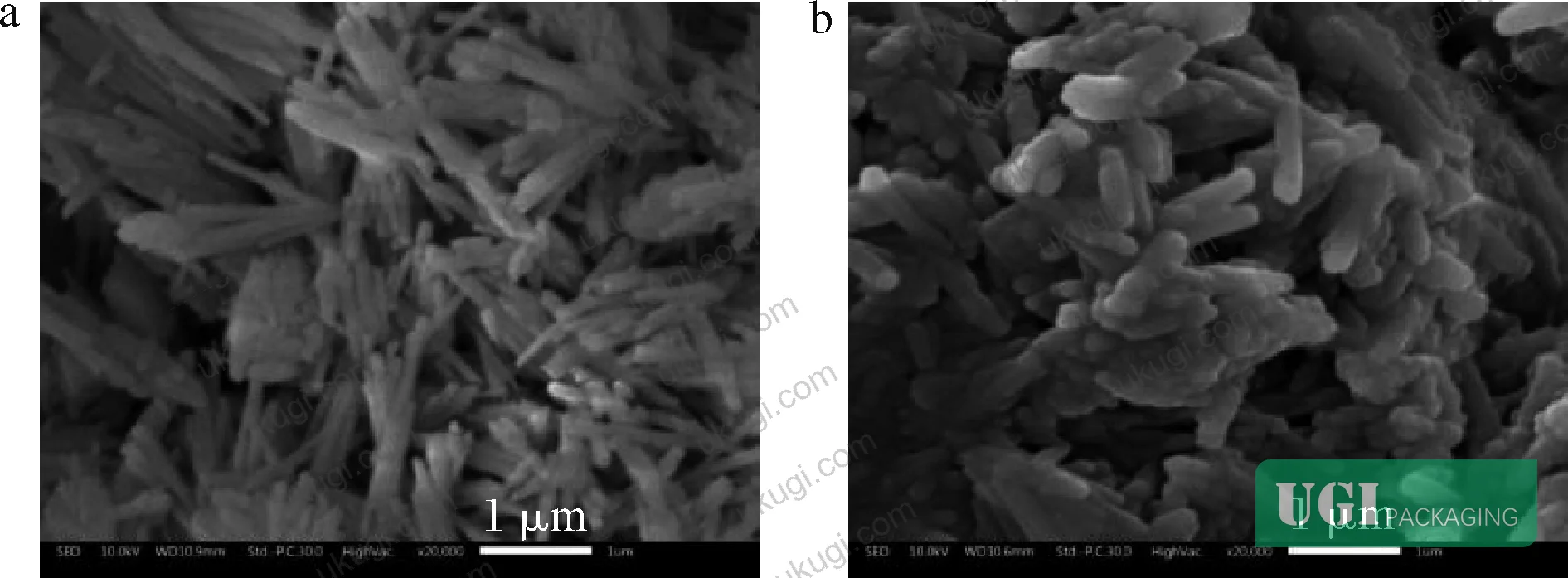
For buyers evaluating functional or active packaging paper substrates, understanding the carrier architecture matters as much as the active ingredient itself. This is not a simple impregnated paper — it is a nanostructured delivery system, and performance is only reproducible when the nanotube loading, coating weight, and oil concentration are all controlled within defined tolerances.
Antimicrobial Performance of Cinnamon-Oil Packaging Paper: Inhibition Data Across Six Pathogens #
This is where the data gets practically useful — and where buyers most commonly under-specify.
At 1% cinnamon essential oil (v/v), the paper produced an inhibition zone diameter of 36 mm against Botrytis cinerea (gray mold). At 5%, that figure climbed to 75 mm. Against the other three mold species tested at 5% loading — Penicillium, Rhizopus, and Alternaria — inhibition zone diameters were 63.8 mm, 48.6 mm, and 41.2 mm respectively. For the two bacterial strains, performance was considerably lower: Staphylococcus aureus showed a 31 mm zone at 5%, and E. coli only 25 mm.
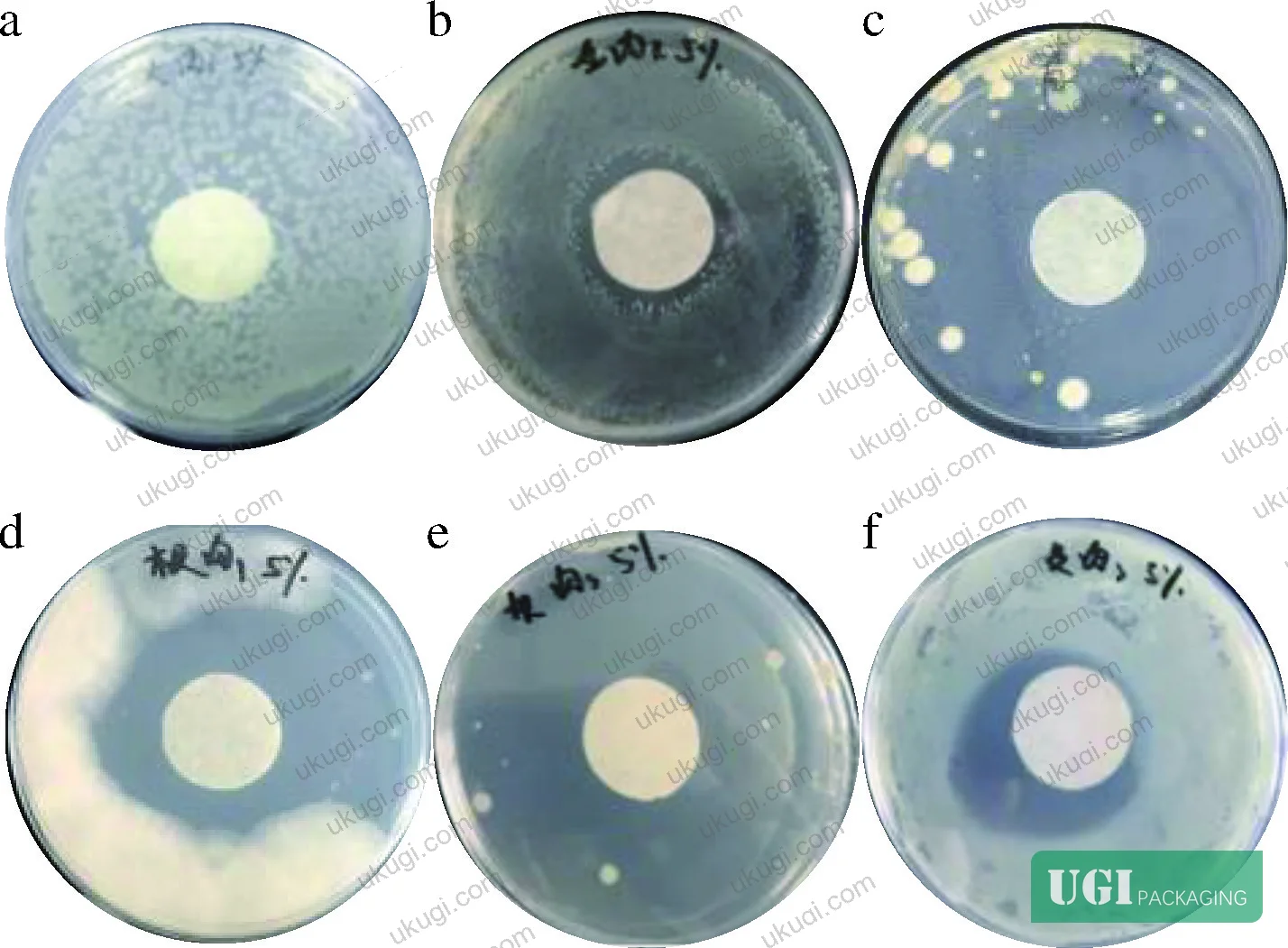
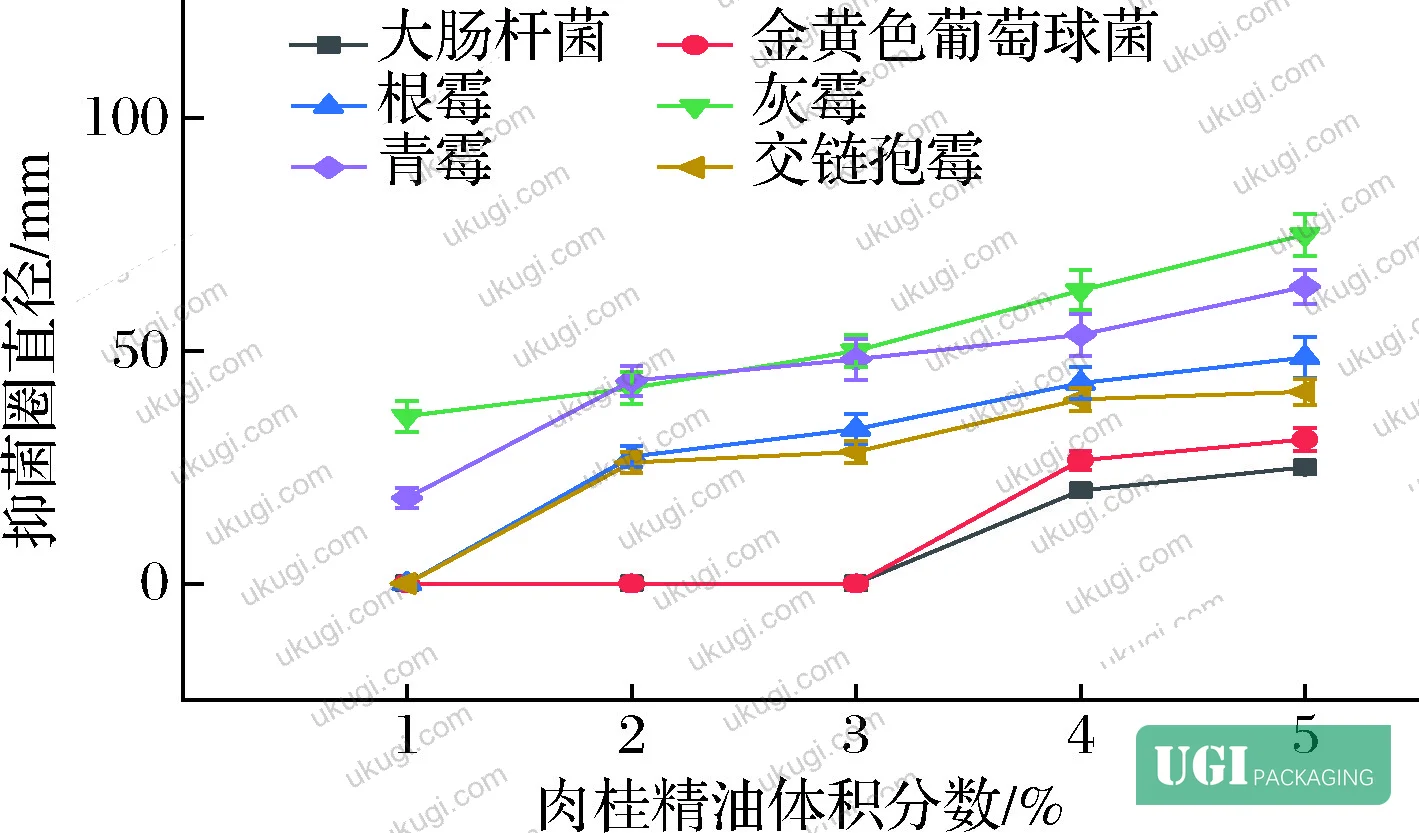
The significance of this dataset for procurement is direct: the paper’s efficacy profile is mold-dominant. Inhibition zone diameters for the four tested molds were significantly larger than for the two bacteria (P < 0.05). If your target application involves mold-susceptible produce, this is a well-matched material. If bacterial spoilage is your primary concern, cinnamaldehyde-based papers are not your strongest option — and honestly, most buyers evaluating active packaging for fresh produce don't draw this distinction until they've already run a failed shelf-life trial.
The test protocol used standard agar diffusion: bacterial suspensions at 1 × 10⁶ CFU/mL, molds incubated at 28°C for 48 hours, bacteria at 37°C for 24 hours. Paper discs cut to 25 mm diameter, UV-sterilized for 30 minutes prior to testing. This is a rigorous and reproducible method — any supplier claiming antimicrobial performance should be able to replicate it.
The threshold concentration for meaningful mold inhibition is ≥2% (v/v), at which point inhibition zone diameters across all four tested molds exceed 26 mm. Below that, the paper has marginal utility for real packaging applications.
For reference on tensile and mechanical verification of the substrate itself, ASTM D882 Standard Test Method for Tensile Properties of Thin Plastic Sheeting provides applicable guidance even for coated paper substrates when evaluating whether the antimicrobial coating affects mechanical integrity. Similarly, when assessing whether the food contact coating complies with regulatory requirements for your target market, EU Regulation No 10/2011 on plastic materials and articles intended to contact food and FDA CFR Title 21 Part 177 — Indirect Food Additives: Polymers for food contact packaging are the relevant frameworks — neither of which most domestic Chinese suppliers will proactively flag for export buyers.
Preservation Performance at Optimal Concentration: 6-Day Ambient Storage Trial #
The shelf-life data is where the specification narrows to a single practical conclusion: 4% loading is the optimal formulation, and the margin between that and adjacent concentrations is not trivial.
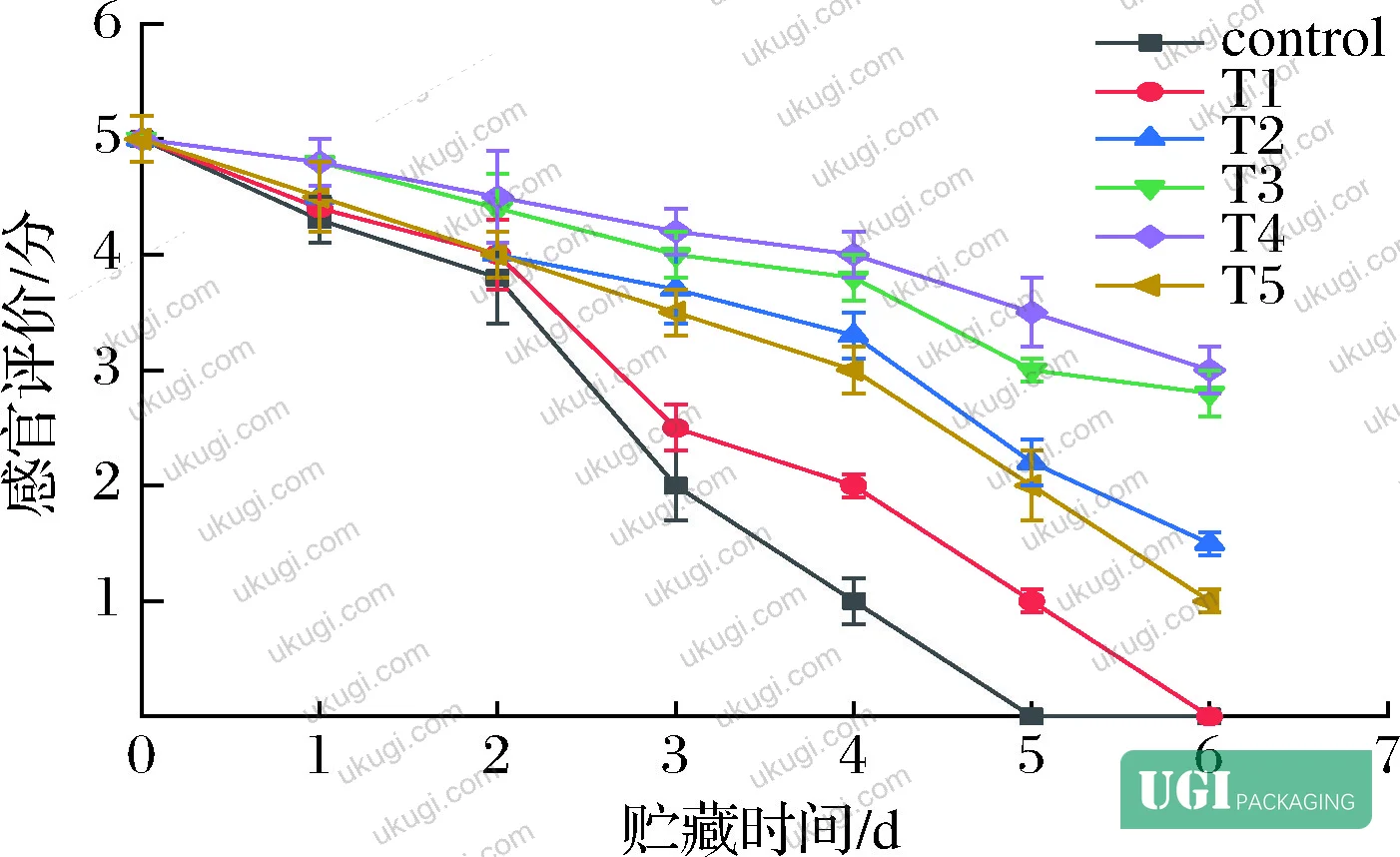
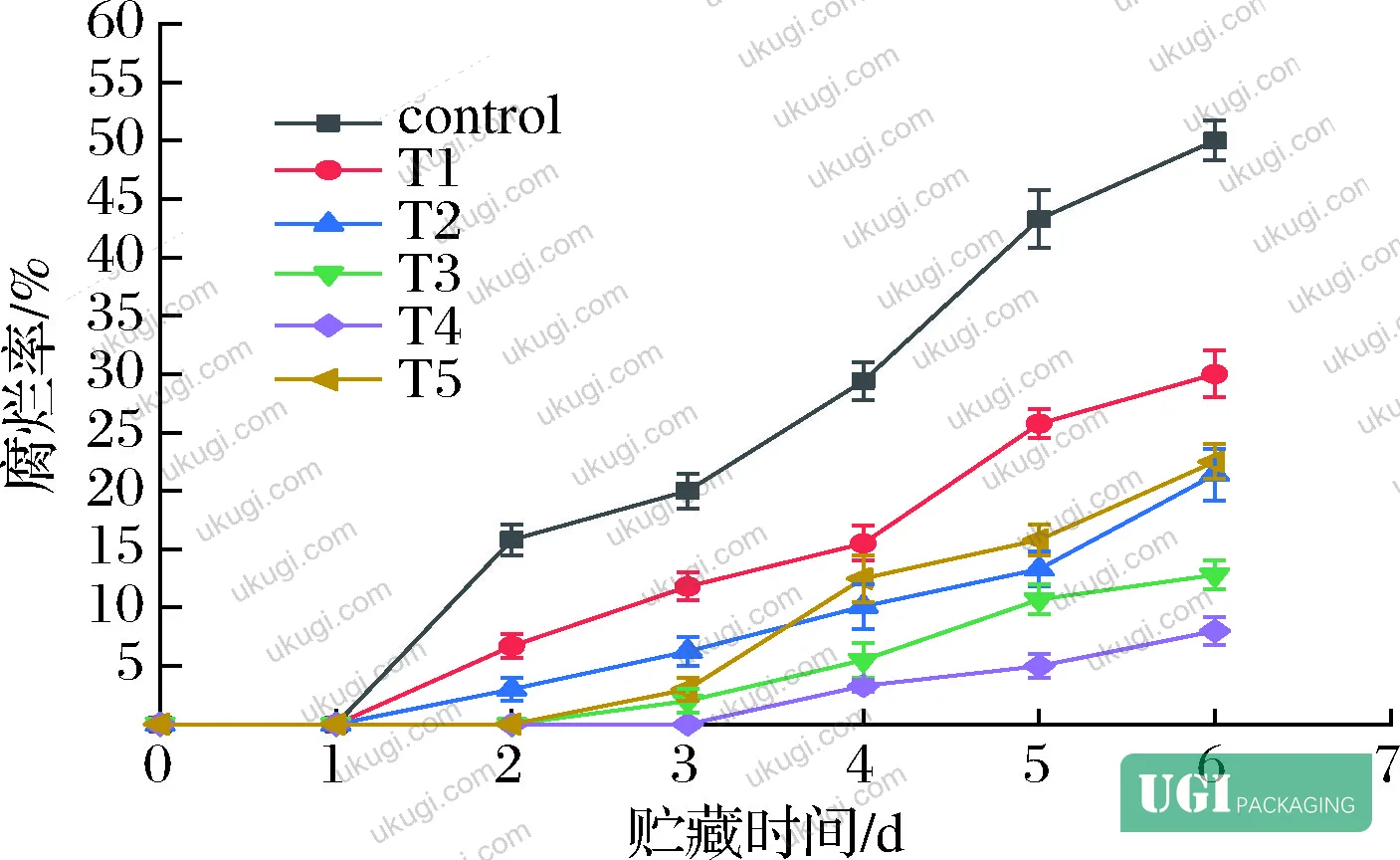
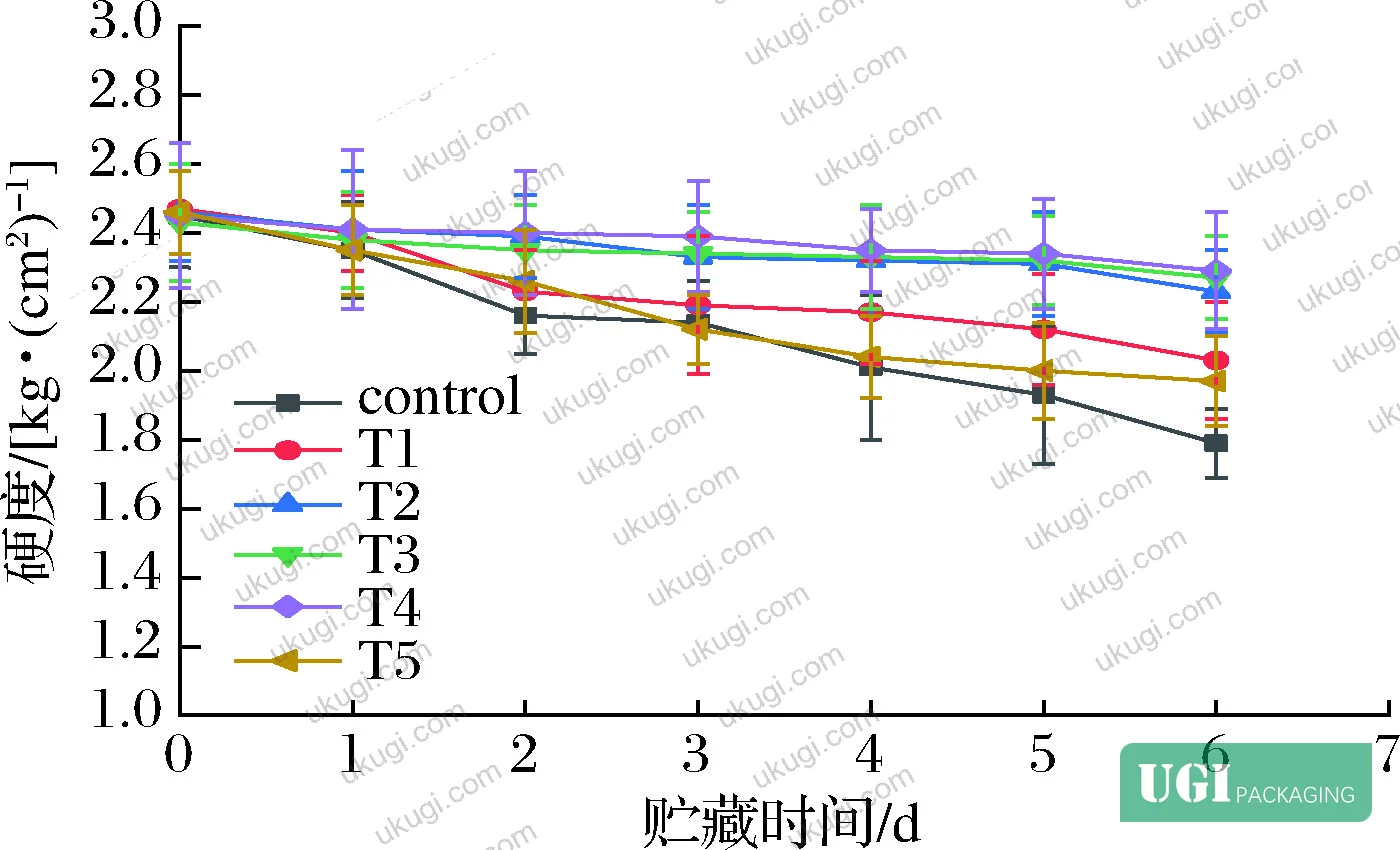
At 27 ± 2°C and 50 ± 10% relative humidity — real ambient conditions, not cold chain — the uncoated control group reached a 50% decay rate within 6 days and a total viable count of 4.91 log CFU/g. The T4 group (4% cinnamon oil) held decay rate to 0% through day 4, reaching only 8% at day 6. Total viable count in T4 at day 6 was 3.7 log CFU/g — over a full log unit below the control. Hardness retention in T4 was 2.29 kg/cm² at day 6 versus the initial value of 2.45 kg/cm² and the control’s 1.79 kg/cm² — a 28% improvement in texture maintenance.
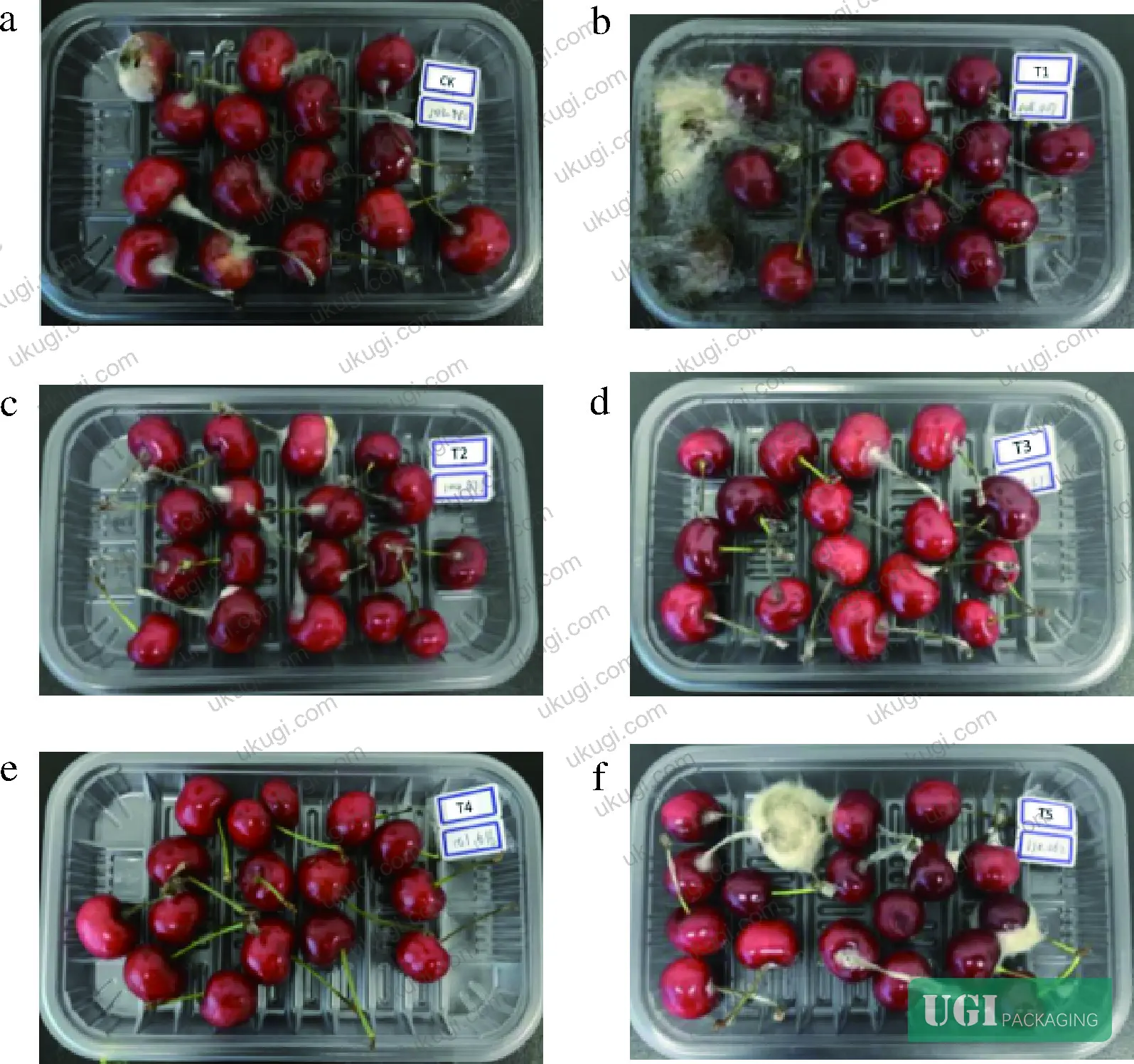
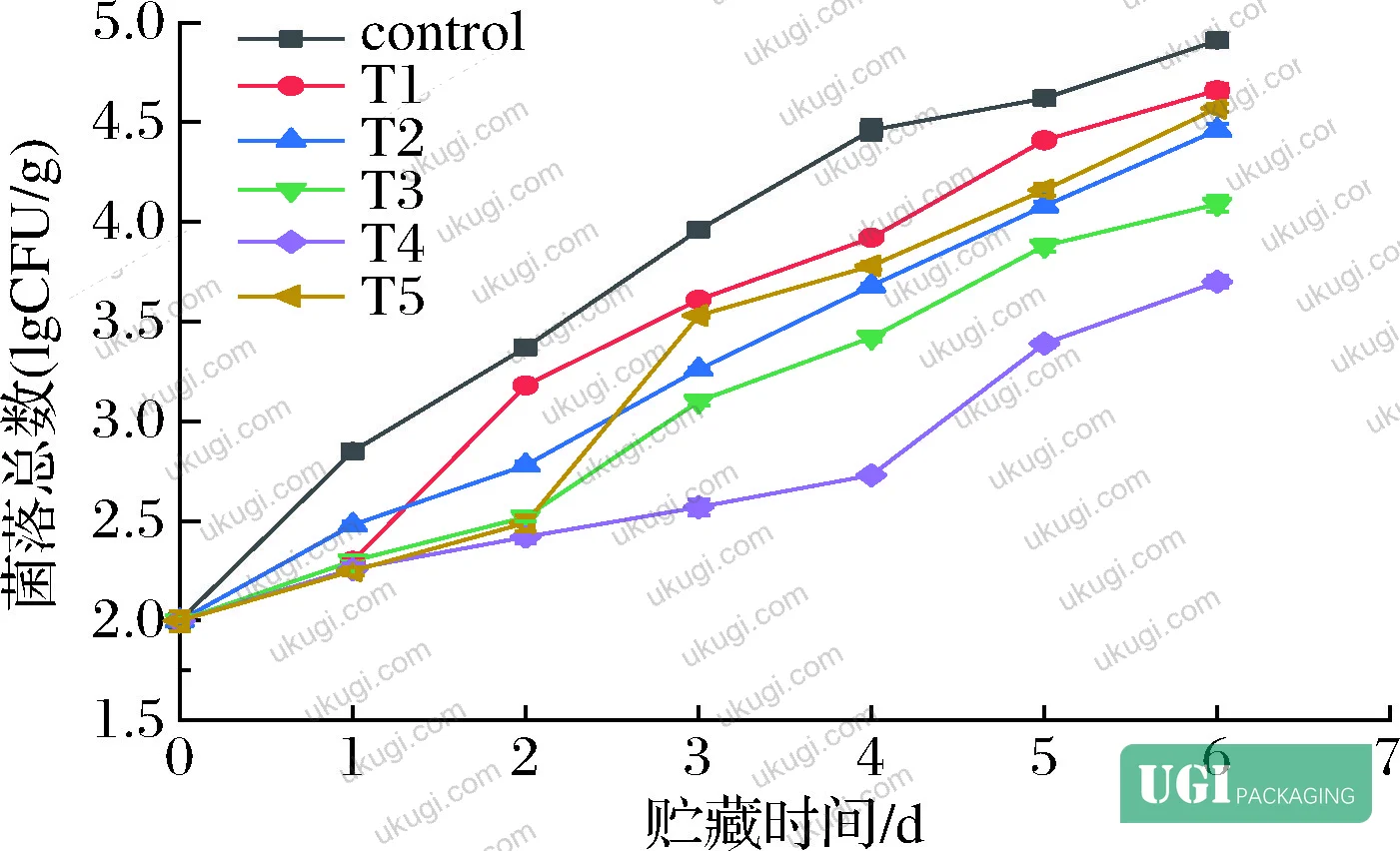
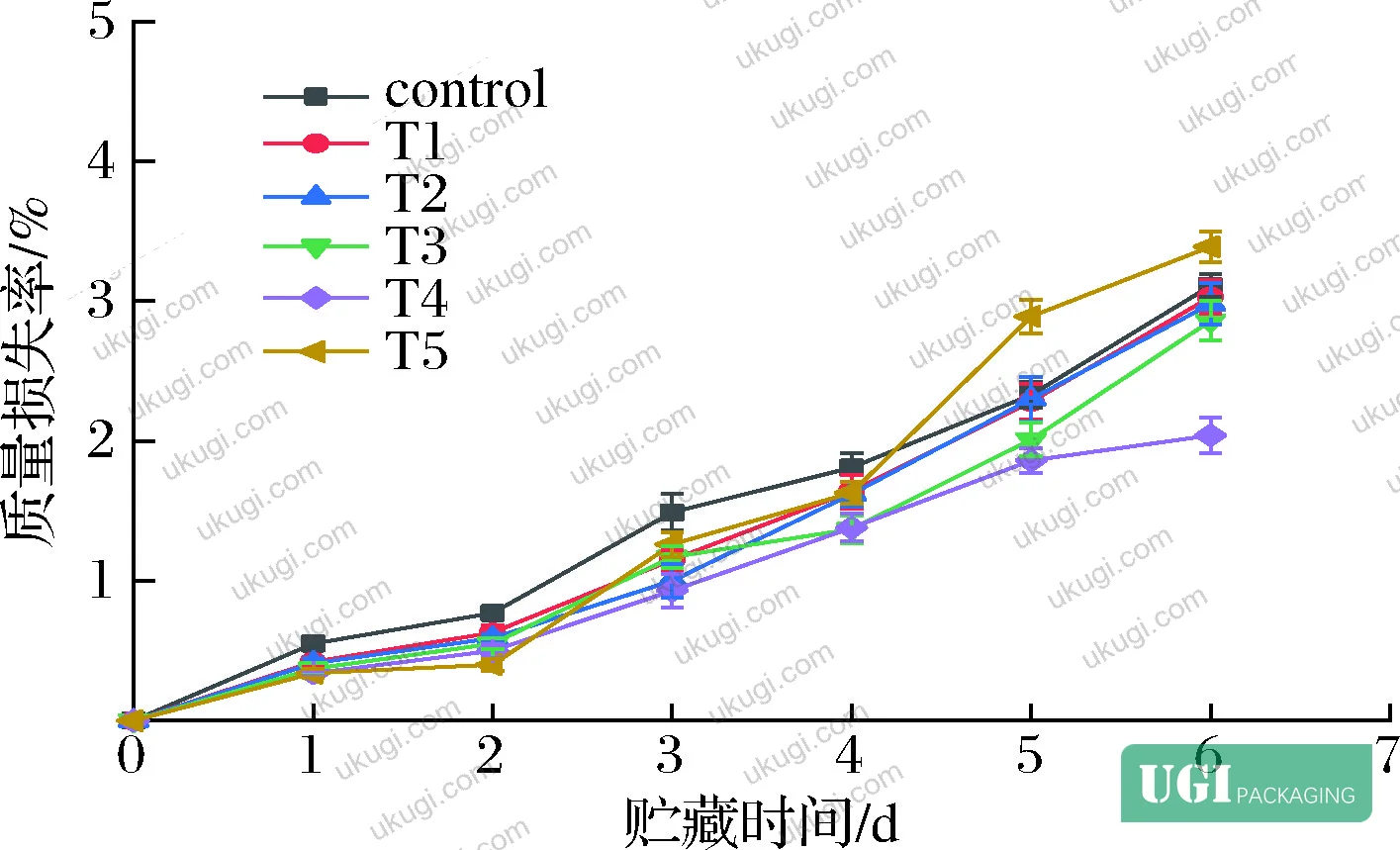
Mass loss rate — the metric that directly reflects moisture retention — was 2.04% for T4 at day 6, versus 3.11% for the control and 3.39% for T5 (5% loading). That last number deserves attention: T5 performed worse than the control on mass loss, and worse than T4 on decay rate and total viable count as well. High-concentration essential oil damaged the cherry skin surface, accelerating deterioration rather than preventing it. In supplier qualification, we saw this dose-inversion failure across multiple functional paper trials: three of five suppliers testing above 4% concentration reported elevated decay compared to lower-concentration variants, precisely because they were optimizing inhibition zone size on agar rather than actual product outcome on fresh produce.
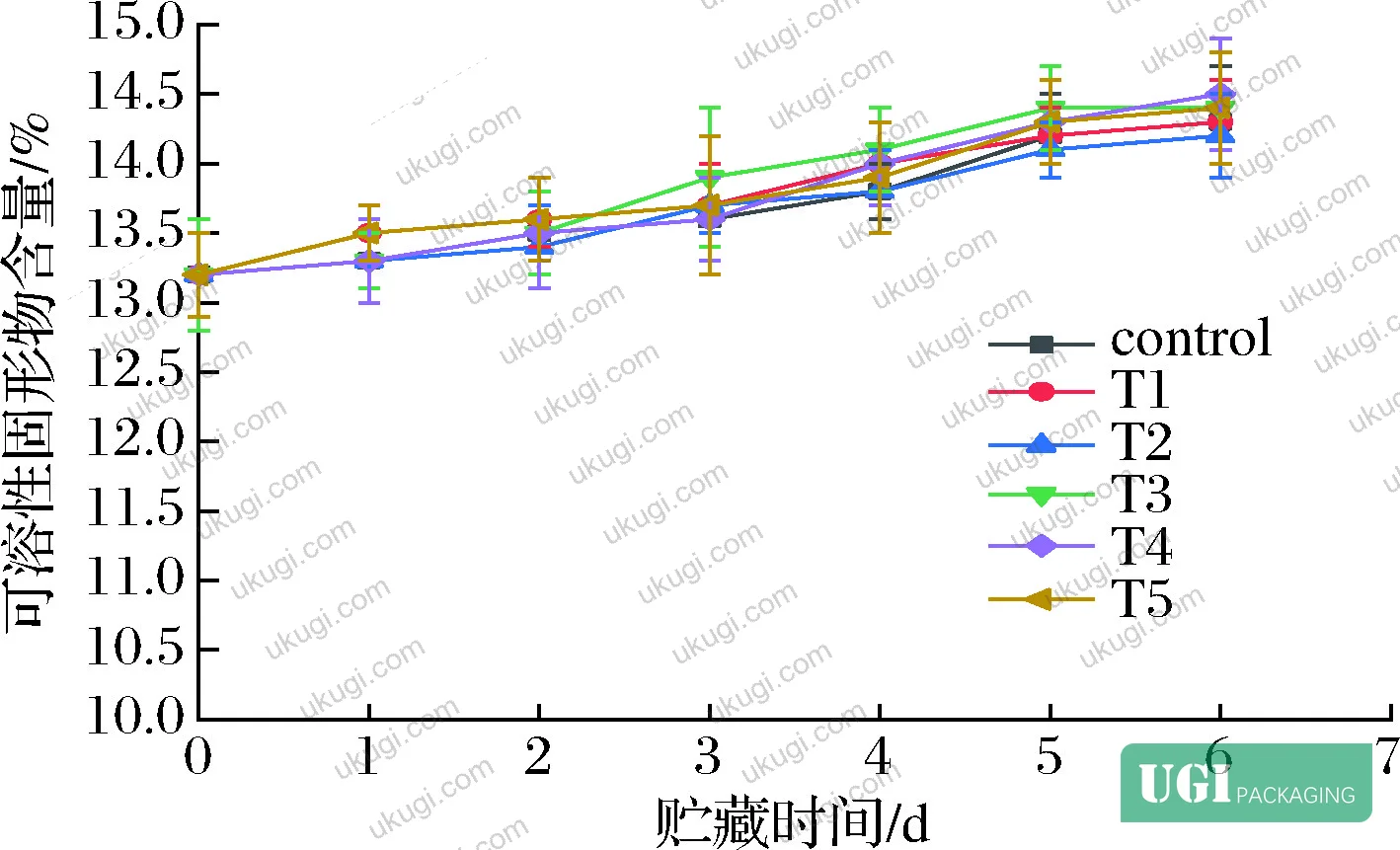
Sensory scores told the same story. The T4 group maintained a 3/5 sensory rating after 6 days while the control dropped to below acceptable within 3 days. T1 (1% loading) scored only 2.5 at day 3 — barely holding. Soluble solids content across all groups ranged 13.0–15.0°Brix throughout storage, with no statistically significant difference between groups, confirming that the active coating does not alter fruit sugar composition.
The perforated isolation layer between the antimicrobial paper and the product surface is not a minor detail — it is a functional component. The 3 mm pore diameter with 5–8 mm pore spacing allows volatile cinnamaldehyde to diffuse to the product surface while eliminating direct contact phytotoxicity. All groups incorporating this dual-layer configuration showed zero observable phytotoxic damage, confirming that the active component was delivered via vapor-phase, not direct transfer.
Most procurement teams don’t realize that active packaging papers relying on volatile release require this kind of physical separation design to prevent contact injury, and that this gap — or its absence — rarely appears in supplier datasheets. It only shows up when you run a real product trial and find unexplained surface damage on day two.
Practical Guidance for Buyers #
If you are evaluating antimicrobial paper substrates for fresh produce, controlled-atmosphere retail, or any application requiring mold suppression without chemical fumigants, the concentration specification is your most critical procurement control point. Specify 4% cinnamon essential oil by volume in the coating formulation, confirm nanotube loading by SEM or equivalent morphological evidence, and require inhibition zone data against Botrytis cinerea at a minimum (target: ≥55 mm at 5% loading, ≥26 mm at 2% loading).
Do not accept inhibition zone data against bacteria alone as proxy evidence for mold efficacy — the two don’t correlate in this chemistry. And if a supplier only shows you agar plate photos without quantified zone diameters, that’s a red flag.
The PE overwrap specification also matters for vapor containment: the reference material used in development had O₂ permeability of 1.02–2.49 × 10⁴ cm³/(m²·d·atm) and CO₂ permeability of 0.77–1.9 × 10⁵ cm³/(m²·d·atm), with WVTR of 17.4–42.6 g/(m²·d). These parameters define the vapor environment that enables the controlled-release mechanism to function. If you change the overwrap, you change the headspace chemistry.
At ukugi.com, we produce functional and specialty paper substrates with surface coating capabilities including active agent integration, and we work directly with brand owners and product managers across international markets — if your application requires a custom antimicrobial coating formulation or a prototyped active packaging insert, our team can scope that as part of an RFQ.
For tissue-adjacent or produce-wrap custom labels and stickers with active coatings, or structural outer cartons incorporating custom paper boxes that house active inserts, we can integrate both layers in a single supply relationship.
Need a custom formulation or sample? Request a quote from our team →
Supplier Qualification Questions #
- At 4% cinnamon essential oil loading (v/v), what inhibition zone diameter do you achieve against Botrytis cinerea in a 25 mm disc agar diffusion test at 28°C, 48 hours? Acceptable threshold is ≥60 mm; if the answer is below 50 mm, the nanotube loading is likely insufficient.
- Can you provide SEM images of the halloysite nanotube carrier before and after essential oil loading, confirming visible diameter increase consistent with lumen saturation? The loaded nanotube should present a smooth, uniform rod morphology — if the SEM shows unchanged surface texture, the oil is surface-adsorbed rather than encapsulated, and release duration will be significantly shorter.
- What is the confirmed coating weight and dry film thickness of your antimicrobial layer, and what tolerance do you hold — specifically, can you maintain 20 ± 3 μm across a production run? A deviation beyond ±5 μm changes both antimicrobial efficacy and the mechanical properties of the paper composite.
- In a 6-day room-temperature decay trial at 27 ± 2°C with your paper applied to fresh produce, what decay rate do you report at day 6 for your 4% formulation versus an uncoated control? The benchmark from validated research is ≤8% versus ≥50% for the control — any supplier significantly above 8% has a formulation or coating uniformity problem.
- What is the total viable count (log CFU/g) on treated product at day 6 in your shelf-life validation data, and what test method do you use? Acceptable result is ≤3.9 log CFU/g using PCA agar plate count per GB 4789.2 or equivalent international method — if they cannot provide this with test conditions, they have not run the validation.
Sourcing Checklist #
- ☐ Inhibition zone diameter against Botrytis cinerea is ≥36 mm at 1% loading and ≥75 mm at 5% loading, confirmed by agar diffusion test (25 mm disc, 28°C, 48 h)
- ☐ SEM morphology confirms halloysite nanotube diameter increase after essential oil loading, with smooth rod-like surface profile (not unchanged rough surface)
- ☐ Dry coating thickness is 20 ± 3 μm, verified by cross-section measurement on production samples
- ☐ Decay rate at 4% essential oil loading is ≤10% after 6 days at 27 ± 2°C ambient storage, with uncoated control ≥45% for the same trial
- ☐ Total viable count on treated product does not exceed 3.9 log CFU/g at day 6, measured by PCA agar plate count per GB 4789.2 or equivalent
- ☐ Mass loss rate for 4% formulation is ≤2.5% after 6 days; if T5 (5%) variant is tested, confirm it does not exceed the control’s mass loss rate (indicates phytotoxicity)
- ☐ Perforated isolation layer specification confirmed: pore diameter 3 mm, pore spacing 5–8 mm — paper must not be specified for direct produce contact without this layer
- ☐ Food contact compliance documentation provided for target market (EU Regulation 10/2011 or FDA CFR Title 21 Part 177 as applicable)
Key Specifications Table #
| Parameter | Recommended Value | Verification Method |
|---|---|---|
| Cinnamon essential oil loading (v/v) | 4% (optimal); minimum effective ≥2% | Coating formulation batch record + GC confirmation of cinnamaldehyde content |
| Inhibition zone — Botrytis cinerea | ≥60 mm at 4% loading | Agar disc diffusion, 25 mm disc, 28°C, 48 h, 1 × 10⁶ CFU/mL inoculum |
| Dry coating film thickness | 20 ± 3 μm | Cross-section SEM or profilometer measurement |
| Halloysite nanotube external diameter (loaded) | Visibly larger than unloaded (baseline 50–75 nm) | SEM before and after loading, same magnification |
| Decay rate at day 6 (4% formulation, ambient) | ≤8% | 7-day storage trial at 27 ± 2°C, 50 ± 10% RH, 24-tray parallel samples |
| Total viable count at day 6 | ≤3.7 log CFU/g | PCA agar plate count, GB 4789.2 or equivalent |
| Mass loss rate at day 6 (4% formulation) | ≤2.04% | Gravimetric measurement vs. initial weight |
| Fruit hardness retention at day 6 | ≥2.29 kg/cm² (from initial 2.45 kg/cm²) | Penetrometer / fruit firmness tester |
Looking for a manufacturer that meets these specs? Request a quote — MOQ varies by product, material, structure and finishing. Product-specific MOQ is confirmed with each quotation.
References #
Data source: Halloysite Nanotube-Loaded Cinnamon Essential Oil Antimicrobial Packaging Paper: Preparation, Characterization, and Preservation Performance for Fresh Produce, Q.-W. Jiang et al., Food Packaging and Shelf Life, 2024
Frequently Asked Questions #
Why does the 5% cinnamon oil formulation perform worse than the 4% formulation?
At 5% loading, the concentration of cinnamaldehyde released into the package headspace exceeds a threshold at which it begins to damage the surface tissue of the fruit, compromising skin integrity and accelerating moisture loss. The T5 group showed a mass loss rate of 3.39% — higher even than the uncoated control at 3.11%. This dose-inversion effect is a known failure mode in essential oil active packaging: more is not better beyond the optimum, and the optimum must be empirically established for each produce type.
Is the antimicrobial paper safe for direct food contact?
The configuration tested uses a perforated isolation layer (3 mm pore diameter, 5–8 mm spacing) between the antimicrobial paper and the fruit surface. This physical separation prevents direct contact while allowing volatile antimicrobial release. No phytotoxic effects were observed in any of the treated groups using this design. For direct-contact applications, additional food contact regulatory review would be required under frameworks such as EU Regulation 10/2011 or FDA CFR Title 21.
What is the effective shelf-life extension achievable with this paper?
At 4% loading under ambient conditions (27 ± 2°C), the paper extends shelf life by approximately 3 days compared to uncoated controls — a substantial extension at room temperature for a highly perishable fruit. This figure reflects combined evidence from decay rate, sensory score, and total viable count data across the 7-day trial.
Does this paper work for bacterial spoilage as well as mold?
Less effectively. At 5% loading, inhibition zones against S. aureus and E. coli were 31 mm and 25 mm respectively — meaningfully smaller than the 41–75 mm range observed for the four mold species. If bacterial spoilage is the primary concern, a different active agent or a higher-bacteria-efficacy formulation should be evaluated alongside this paper.
Can this antimicrobial coating be applied to other paper or packaging substrate types?
The chitosan–halloysite–essential oil emulsion system is substrate-agnostic in principle, but adhesion and release rate will vary with the base substrate’s porosity, surface energy, and thickness. The coating chemistry was validated on food-grade packaging paper; application to coated boards, kraft liners, or tissue would require re-optimization of the coating weight and binder ratio. For specialty applications including produce wraps, retail shelf liners, or secondary packaging inserts, the coating can be adapted — but shelf-life validation must be re-run for each new substrate and product combination.
Published by ukugi.com Technical Team | Request a quote


