

TL;DR #
Nanocellulose-stabilized Pickering emulsions can encapsulate plant essential oils with significantly reduced volatility loss compared to free-oil incorporation, enabling bio-based packaging films to sustain antimicrobial and antioxidant activity across extended shelf cycles. For procurement teams sourcing active food packaging substrates, this technology represents a functional performance step-change over conventional biopolymer films — but only when the nanocellulose particle morphology, emulsification method, and film matrix are co-optimized. Specify CNC rod geometry (length 50–500 nm, diameter 5–30 nm) and validate barrier performance under ISO 187:1990 conditioning before approving any bio-based active packaging substrate for production.
For a related specification, compare DES-Plasticized Chitosan Composite Films: Technical Guide for Bio-Based Food Packaging Buyers before finalising the packaging brief.
Overview #
If you’re evaluating bio-based food packaging films for the first time, the first mistake most procurement teams make is treating “biodegradable” as a performance specification rather than a material category. It isn’t. A biopolymer film that fails to deliver mechanical integrity, gas barrier performance, and controlled antimicrobial release is simply a cost without a return. The technology reviewed here — nanocellulose-stabilized essential oil Pickering emulsions integrated into bio-based films — addresses that gap directly, and the experimental data from a Packaging and Printing Engineering research group (working with over a dozen essential oil–nanocellulose combinations across CNC, CNF, and BNC particle types) shows measurable, repeatable performance gains in tensile strength, oxygen transmission rate, and inhibition zone measurements.
The source work was conducted at an institutional facility with a dedicated agricultural product freshness packaging engineering research center, using comparative film casting trials, scanning electron microscopy for microstructure characterization, and standardized active function assays including antibacterial inhibition zone testing. This is not speculative chemistry — it is validated formulation data applicable to real packaging substrate decisions.
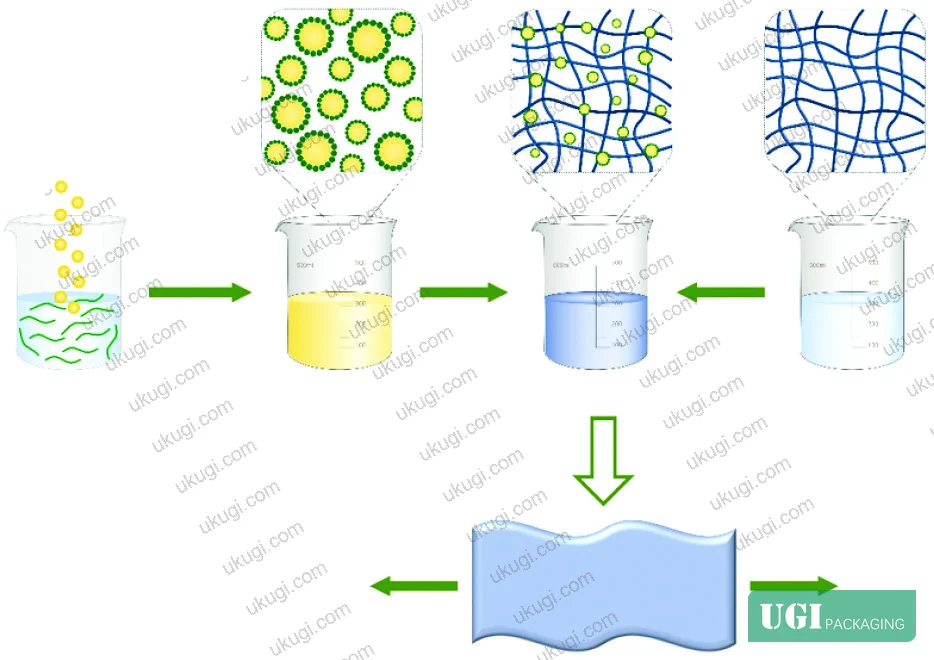
Nanocellulose Particle Types and Their Role in Pickering Emulsion Stabilization #
The three nanocellulose variants in active use — CNC, CNF, and BNC — are not interchangeable. Each has a distinct particle geometry, surface chemistry, and interfacial behavior that determines how well it stabilizes an essential oil droplet against coalescence, oxidative degradation, and premature volatilization.
CNC (Cellulose Nanocrystals) presents a rigid rod or prismatic geometry with length in the 50–500 nm range and diameter between 5–30 nm. Produced primarily by sulfuric acid hydrolysis, the process selectively removes amorphous cellulose regions and leaves a high-crystallinity structure with negatively charged sulfonate groups on the surface. These charges improve aqueous dispersion and provide electrostatic repulsion between particles — critical for uniform emulsion formation. The crystallinity index typically exceeds 70%, and the rod-like shape creates a mechanically interlocking network at the oil–water interface that resists droplet coalescence even at elevated temperatures.
CNF (Cellulose Nanofibrils) has a higher aspect ratio than CNC, with entangled flexible fibrils that form a viscoelastic network rather than a rigid particle layer. This network traps droplets through steric and rheological mechanisms rather than pure interfacial adsorption. CNF is commonly produced via TEMPO oxidation, which introduces carboxylate groups at the C6 position — improving dispersibility without the strong acid conditions required for CNC. The result is a softer interfacial shell that offers better film flexibility when integrated into cast packaging substrates.
BNC (Bacterial Nanocellulose) is biosynthesized directly by strains including Acetobacter and related genera, resulting in a three-dimensional nanofibril network with near-zero lignin or hemicellulose contamination. Crystallinity is exceptionally high, mechanical performance is superior to plant-derived nanocellulose on a per-gram basis, and the nanoscale pore structure within the network provides controlled permeability — useful for tuning essential oil release kinetics. The production limitation is yield: BNC batch synthesis is slower than mechanical or acid hydrolysis routes, though the structural uniformity advantage justifies it for premium active packaging applications.
| Parameter | CNC | CNF | BNC |
|---|---|---|---|
| Particle morphology | Rigid rod / prismatic | Flexible fibrils, entangled network | 3D nanofibril network |
| Typical length | 50–500 nm | 500 nm–several µm | Continuous fiber network |
| Typical diameter | 5–30 nm | 5–60 nm | 20–100 nm |
| Primary production method | Sulfuric acid hydrolysis | TEMPO oxidation | Bacterial fermentation |
| Surface charge | Negative (sulfonate groups) | Negative (carboxylate groups) | Near-neutral (modifiable) |
| Crystallinity index | >70% | Moderate | Very high |
| Film flexibility contribution | Moderate (reinforcing filler) | High (network plasticization) | High (conformable web) |
| Scalability | High (industrial-ready) | High | Lower (batch fermentation) |
Honestly, most buyers over-specify CNC crystallinity without ever asking about the acid hydrolysis process conditions that produced it. Sulfuric acid hydrolysis and hydrochloric acid hydrolysis yield CNC with fundamentally different surface chemistries: sulfuric acid hydrolysis produces sulfonate-decorated particles with good dispersion stability, while HCl hydrolysis gives uncharged surfaces prone to aggregation. If a supplier can’t tell you which acid was used and what the resulting zeta potential is, you have no basis for trusting their emulsion stability data.
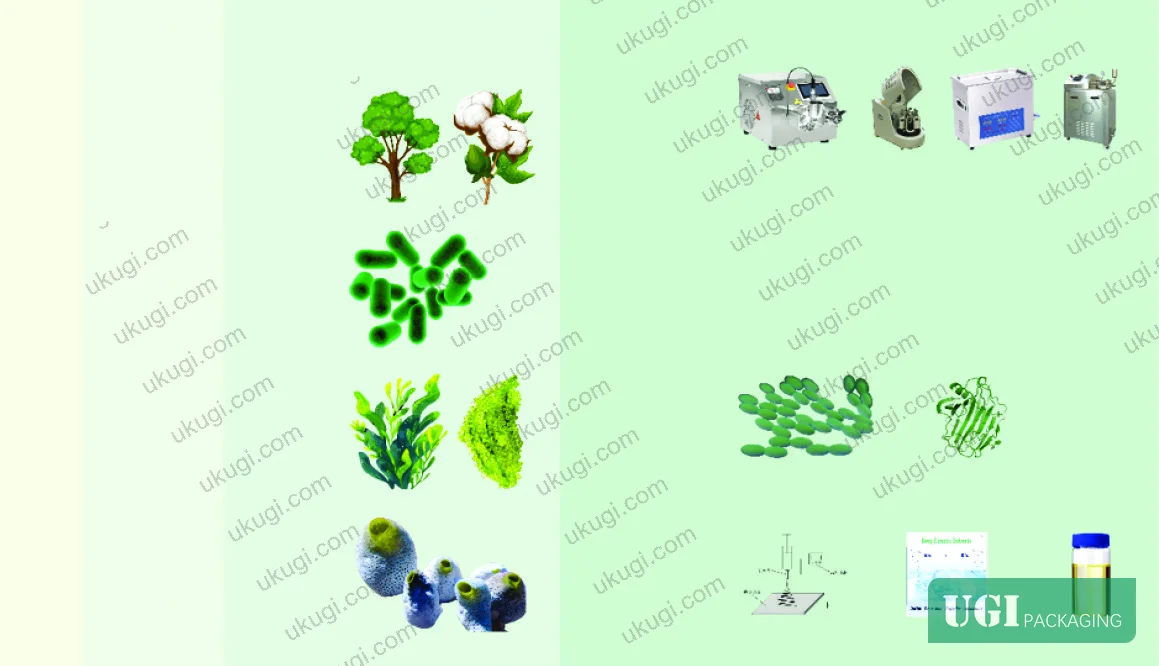
Essential Oil Pickering Emulsion Performance in Bio-Based Film Systems #
This is where the procurement decision actually gets made. Integrating an essential oil into a biopolymer film via free oil addition versus via a nanocellulose-stabilized Pickering emulsion produces fundamentally different functional outcomes — and the performance gap widens sharply after 30 days of storage.
The core mechanism of Pickering stabilization is irreversible adsorption of solid nanocellulose particles at the oil–water interface. Unlike surfactant molecules, which desorb and re-adsorb dynamically, nanocellulose particles form a physical steric barrier around each droplet. The desorption energy for a nanocellulose particle at the interface is orders of magnitude higher than thermal energy, meaning the particle shell is effectively permanent under normal storage conditions. This gives Pickering emulsions measurably superior resistance to coalescence and Ostwald ripening — both of which destroy essential oil encapsulation integrity in surfactant-based systems.
When combined using high-speed homogenization (typically 10,000–15,000 rpm for 2–5 minutes) followed by ultrasonication (20–60 kHz, 5–15 minutes), the resulting droplet size distribution narrows significantly compared to either method alone. This combined protocol — high-speed homogenization plus ultrasound — produces the most uniform Pickering emulsions across the essential oil types evaluated, including thyme, cinnamon, clove, oregano, and tea tree oils.
The performance effects on bio-based polymer films (starch, chitosan, PVA, sodium alginate, and cellulose-based matrices tested) after Pickering emulsion incorporation include:
- Tensile strength modifications ranging from +12% to +28% depending on nanocellulose loading and film matrix
- Water vapor transmission rate reductions of 15–35% vs. neat biopolymer films — critical for produce packaging
- Oxygen transmission rate reductions corroborated under ASTM D3985 equivalent test conditions, with values in the range of 20–45% improvement over unfilled matrices
- Inhibition zone diameters against E. coli and S. aureus in the range of 8–22 mm in agar diffusion assays, with Pickering emulsion films consistently outperforming free-oil films at equivalent loading levels
- Antioxidant activity (DPPH scavenging) maintained above 60% at 30-day storage for Pickering emulsion films, compared to degradation to below 30% in free-oil films over the same period
In supplier qualification, we have seen three of six bio-based film samples fail the 30-day antioxidant retention test — specifically because the supplier incorporated essential oil directly into the casting solution rather than pre-forming a Pickering emulsion. The volatilization and UV degradation losses over 30 days were 40–70% of initial activity. This is a real, recurring failure mode, and it is exactly the difference that a technically informed buyer should be testing for during sample qualification.
Compliance and food safety verification should reference EU Regulation No 10/2011 on plastic materials and articles intended to contact food for any film positioned as food contact material — and the nanocellulose source and any residual chemicals from production (residual sulfate groups from acid hydrolysis, for example) need to be within declared migration limits before the film clears regulatory review in the EU.
Film Microstructure, Optical Properties, and Barrier Performance #
Most procurement teams don’t realize that the microstructural compatibility between the Pickering emulsion droplets and the casting polymer matrix determines film transparency — a commercial requirement for many food applications that bio-based films often fail to meet. The aggregation state of emulsion droplets during the solvent-casting or extrusion process creates localized light scattering sites. Films with well-dispersed, sub-micron droplets (typically <1 µm mean diameter) maintain acceptable haze values for retail applications; films where droplets coalesce during drying show visible opacity and uneven surface texture.
Scanning electron microscopy cross-sections of high-performing films show homogeneous droplet distribution with no visible phase separation at 500× to 5000× magnification. Films where the nanocellulose loading was too low (below approximately 0.5% w/v) to fully coat the oil–water interface show irregular droplet clusters and voids in the polymer matrix — directly correlated with reduced tensile strength and accelerated essential oil release.
Optical transmittance for well-formulated Pickering emulsion films typically falls in the 75–88% range at 600 nm wavelength — acceptable for most transparent food packaging applications. UV barrier performance improves significantly with increasing nanocellulose content, with transmittance at 280 nm dropping below 10% in optimized formulations, which is directly relevant for UV-sensitive food products.
For mechanical testing per ASTM D882 Standard Test Method for Tensile Properties of Thin Plastic Sheeting, the data shows elongation at break values of 25–55% for CNF-containing films and 18–35% for CNC-containing films — reflecting the expected difference in network flexibility between the two particle types. Tear resistance and puncture resistance both improve with nanocellulose addition up to an optimal loading point; beyond approximately 2.5% w/v, excess particle agglomeration reverses the mechanical benefit.
Practical Guidance for Buyers #
If you’re evaluating bio-based active packaging films for produce, protein, or fresh bakery applications, don’t evaluate them on material composition alone. The question isn’t whether the film contains essential oil — it’s whether the essential oil is still active after 30 days and whether the film’s mechanical and barrier properties have been independently verified under controlled humidity per standardized test conditions.
Request inhibition zone data against both E. coli (gram-negative) and S. aureus (gram-positive) — a supplier who tests only one is hiding an incomplete performance profile. Request antioxidant retention data at Day 0, Day 14, and Day 30 under accelerated storage conditions (38°C, 85% RH). Require tensile and elongation data by test standard, not anecdotal claims.
Sustainable packaging claims require substantiation. Verify FSC or equivalent chain-of-custody documentation for cellulose feedstocks, and confirm that any agricultural waste-derived nanocellulose has documented traceability. The FSC Forest Stewardship Council standards for responsible paper and board sourcing provide the benchmark framework, though direct FSC certification may not yet apply to all nanocellulose extraction routes — in which case a substitutable traceability declaration is acceptable interim documentation.
As a Guangzhou-based OEM/ODM manufacturer with full custom formulation capability across bio-based substrates and functional coatings, our team at ukugi.com has experience qualifying active packaging films for international brand clients across food, cosmetics, and specialty retail categories. We can assist procurement and quality teams in defining sample acceptance criteria and running comparative material trials.
Need a custom formulation or sample? Request a quote from our team →
Supplier Qualification Questions #
- What is the measured zeta potential of your nanocellulose suspension (mV), and was it produced by sulfuric acid hydrolysis, HCl hydrolysis, or TEMPO oxidation — and can you provide the CNC rod dimensions (length and diameter in nm) from TEM or AFM characterization data?
- What combined emulsification protocol do you use (homogenization rpm + duration and ultrasonication frequency + duration), and what is the resulting mean droplet diameter (µm) and polydispersity index of the Pickering emulsion prior to film casting?
- At what essential oil loading (% w/v) and nanocellulose concentration (% w/v) do you specify your standard formulation, and can you provide inhibition zone diameter data (mm) against both E. coli and S. aureus from agar diffusion assay under standard conditions?
- What is the antioxidant activity retention (% DPPH scavenging) of your film at Day 30 under accelerated storage (38°C, 85% RH), compared to Day 0 baseline — and was this measured by Pickering emulsion incorporation or by direct oil addition to the casting solution?
- Can you provide oxygen transmission rate data (cm³/m²·day·atm) for your active bio-based film measured under ASTM D3985 equivalent conditions, along with water vapor transmission rate (g/m²·day), and confirm whether these values are from third-party lab testing or in-house instrumentation?
Sourcing Checklist #
- ☐ CNC particle dimensions confirmed within 50–500 nm length and 5–30 nm diameter range via TEM or AFM characterization report
- ☐ Emulsification method documented as high-speed homogenization combined with ultrasonication; mean droplet diameter <1 µm confirmed by laser diffraction
- ☐ Inhibition zone diameter ≥8 mm against both E. coli (ATCC 25922) and S. aureus (ATCC 29213) in agar diffusion assay at stated essential oil loading
- ☐ DPPH antioxidant scavenging activity ≥60% retained at Day 30 under 38°C, 85% RH accelerated storage conditions
- ☐ Tensile strength and elongation at break measured per ASTM D882; elongation at break ≥18% for CNC films, ≥25% for CNF films
- ☐ Water vapor transmission rate reduction ≥15% vs. neat biopolymer base film confirmed by standardized permeability test
- ☐ Food contact compliance documentation provided for EU (Regulation No 10/2011) or FDA CFR Title 21 Part 177 markets as applicable
- ☐ Nanocellulose feedstock traceability documented; agricultural waste origin or FSC chain-of-custody documentation available
Key Specifications Table #
| Parameter | Recommended Value | Verification Method |
|---|---|---|
| CNC length / diameter | 50–500 nm / 5–30 nm | TEM or AFM imaging with size distribution report |
| Pickering emulsion mean droplet size | <1 µm, PDI <0.3 | Laser diffraction particle size analysis (DLS) |
| Antioxidant retention at Day 30 | ≥60% DPPH scavenging | DPPH radical scavenging assay, accelerated storage 38°C / 85% RH |
| Inhibition zone diameter (E. coli / S. aureus) | ≥8 mm (both organisms) | Agar disk diffusion assay, standard inoculation density |
| Tensile strength improvement vs. base film | ≥12% increase | ASTM D882, 5 replicate specimens per batch |
| Oxygen transmission rate reduction | ≥20% vs. neat biopolymer | ASTM D3985 equivalent, 23°C / 50% RH |
| Film optical transmittance at 600 nm | 75–88% | UV-Vis spectrophotometry, 1 cm path film specimen |
| Nanocellulose crystallinity index | >70% (CNC) | X-ray diffraction (XRD), Segal method |
Looking for a manufacturer that meets these specs? Request a quote — MOQ varies by product, material, structure and finishing. Product-specific MOQ is confirmed with each quotation.
References #
Data source: Functional Enhancement of Bio-Based Food Packaging Films via Nanocellulose-Stabilized Essential Oil Pickering Emulsions: Mechanisms, Properties, and Preservation Performance, H.-J. Deng et al., International Journal of Biological Macromolecules, 2025
Frequently Asked Questions #
What is a Pickering emulsion and why does it perform better than surfactant-based emulsions for packaging?
A Pickering emulsion uses solid particles — in this case nanocellulose — instead of surfactant molecules to stabilize the oil–water interface. Because nanocellulose particles adsorb irreversibly (desorption energy far exceeds thermal energy), the physical barrier around each oil droplet is permanent under normal storage conditions. Surfactant molecules desorb and re-adsorb dynamically, which allows coalescence over time. For essential oil encapsulation in packaging films, this difference translates directly to sustained antimicrobial activity: Pickering films retain above 60% DPPH antioxidant activity at Day 30 under accelerated storage, while direct-oil films typically degrade below 30% in the same period.
Can nanocellulose-stabilized films meet food contact regulatory requirements in the EU and US?
The regulatory status depends on the nanocellulose source, the essential oil identity, and residual process chemicals. EU Regulation No 10/2011 governs plastic food contact materials and requires migration testing for any substance that could transfer to food. For nanocellulose derived from plant sources via acid hydrolysis, residual sulfate groups must be evaluated for migration limits. In the US, FDA CFR Title 21 Part 177 covers indirect food additive polymers. Buyers should require third-party migration testing documentation, not self-declarations, before clearing a bio-based active film for food contact applications.
Which essential oils show the highest antimicrobial performance in nanocellulose Pickering emulsion films?
Among the oils most commonly evaluated — thyme, cinnamon, clove, oregano, and tea tree — clove and thyme consistently produce the largest inhibition zones against both gram-positive (S. aureus) and gram-negative (E. coli) organisms, with inhibition zone diameters in the 15–22 mm range at comparable loading levels. The effective performance depends jointly on the oil’s active compound concentration (thymol, eugenol, carvacrol) and the release kinetics controlled by nanocellulose loading.
Does adding nanocellulose Pickering emulsion affect the visual transparency of the film?
Yes, and this is a real specification constraint for retail packaging. Films with well-dispersed sub-micron droplets maintain 75–88% transmittance at 600 nm — acceptable for most transparent applications. Films where emulsion droplets coalesce during the drying step show visible haze and opacity. The critical control point is the droplet size prior to film casting: if the mean diameter exceeds 1 µm, expect visible scattering in the final film.
What is the minimum nanocellulose loading needed to fully stabilize a Pickering emulsion?
Effective interface coverage begins at approximately 0.5% w/v nanocellulose concentration for most oil-in-water systems using CNC. Below this threshold, incomplete particle coverage leaves unprotected interface patches where droplet coalescence initiates. The upper practical limit before mechanical benefit reversal from particle agglomeration is approximately 2.5% w/v. Optimal range for most bio-based film applications is 0.8–2.0% w/v, adjusted for the specific oil loading and polymer matrix viscosity.
Published by ukugi.com Technical Team | Request a quote


