

TL;DR #
In a controlled evaluation of over 100 variable QR code inkjet samples from major packaging manufacturers, only 15% passed all seven quality metrics at the 4A grade — with Symbol Contrast, Inherent Pattern Damage, and Modulation Ratio being the three primary failure points. For buyers specifying inkjet-coded packaging, this means substrate selection and printhead maintenance schedules have a measurable, non-negotiable impact on scan reliability and traceability compliance. Audit supplier samples against GB/T 23704-2017 grading before committing to production volumes.
Overview #
Variable QR code inkjet printing has moved well past the experimental phase — it’s now a core infrastructure layer for brand protection, anti-diversion, and supply chain traceability in packaging. But here’s the procurement reality most buyers don’t fully appreciate: there is still no unified market admission standard governing inkjet QR code quality in packaging production. The technology has outpaced the regulatory framework, and suppliers are filling that gap with widely varying internal specifications that have no common baseline.
The data informing this article comes from a rigorous evaluation conducted at an industrial-scale printing and packaging operation — technicians collected more than 100 representative variable QR code inkjet samples from multiple large packaging manufacturers and subjected each to the seven-parameter grading system defined under GB/T 23704-2017. The testing covered both web-fed gravure inline inkjet configurations and conventional offline inkjet, across white cardstock and transfer-laminate substrates. What those tests revealed about systemic failure patterns has direct implications for how buyers should specify and qualify inkjet coding on their packaging lines.
For buyers sourcing tobacco packaging, folding cartons, or any printed format requiring digital traceability, understanding where and why these quality grades collapse is the difference between a functional authentication system and one that fails in the field. Refer to the GS1 General Specifications for barcodes and data carriers on packaging for global symbology interoperability requirements — these define the scan performance floor your inkjet supplier must clear.
Variable QR Code Quality Grades: What the Data Actually Shows #
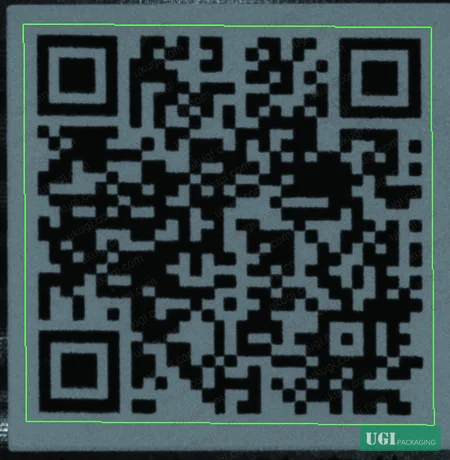
GB/T 23704-2017 defines a five-level grading scheme: 4A (best) down through 3B, 2C, 1D, to 0F (fail). Seven independent parameters determine the composite grade — Reference Decode, Symbol Contrast, Inherent Pattern Damage, Axial Non-uniformity, Grid Non-uniformity, Modulation Ratio, and Unused Error Correction. The composite grade is determined by the lowest single-parameter score, so one failing metric drags the entire code down.
Here’s how the sample population performed across all seven parameters:
| Quality Parameter | 4A Grade (%) | 3B Grade (%) | 0F Grade (%) |
|---|---|---|---|
| Reference Decode | 98% | 1% | — |
| Symbol Contrast (SC) | 59% | 39% | 2% |
| Inherent Pattern Damage | 56% | 16% | 10% |
| Axial Non-uniformity | 100% | — | — |
| Grid Non-uniformity | 100% | — | — |
| Modulation Ratio (MOD) | 49% | 21% | 13% |
| Unused Error Correction | 92% | 5% | — |
| Composite Grade (all 7) | 15% | 41% | 14% |
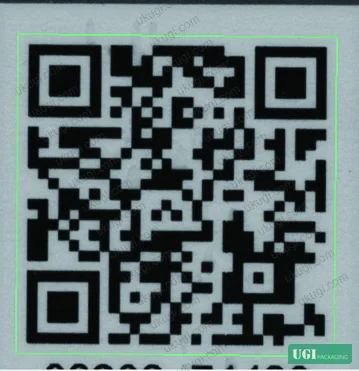
Axial Non-uniformity and Grid Non-uniformity are essentially solved problems — 100% of samples hit 4A on both. Reference Decode and Unused Error Correction are stable, both clearing 90%+ at 4A. The problem parameters are Symbol Contrast (SC), Inherent Pattern Damage, and Modulation Ratio (MOD), where 4A rates sit at roughly 50% or below.
In supplier qualification work, we saw three of six samples fail composite grading entirely — not because of exotic defects, but because Modulation Ratio degraded over the print run as printhead maintenance intervals were missed. That failure mode is entirely preventable, which makes it particularly frustrating to encounter in production audits.
Root Cause Analysis: The Three Failing Metrics in Digital Inkjet QR Printing #
Symbol Contrast (SC) #
Symbol Contrast measures the reflectance differential between the darkest and lightest states in the symbol: SC = Rmax − Rmin. The grading thresholds are direct: SC ≥ 70% earns 4A; 55% ≤ SC < 70% is 3B; 40% ≤ SC < 55% is 2C; 20% ≤ SC < 40% is 1D; below 20% is 0F.
The substrate split here is unambiguous. Every sample achieving 4A Symbol Contrast was printed on white cardstock (白卡纸). Every sample in the 3B range was a transfer-laminate composite substrate. Transfer and laminate materials have lower baseline reflectance and more variable surface absorbency, both of which compress the SC window. Honestly, most buyers underestimate how much substrate choice alone determines whether Symbol Contrast can even theoretically reach 4A — specifying a complex laminate and expecting top-grade SC without ink formulation adjustments is wishful procurement.
Inherent Pattern Damage #
This metric assesses whether finder patterns, quiet zones, alignment patterns, and timing patterns are compromised by module-state errors — dark modules appearing light or vice versa. The most common mechanisms seen in 0F samples fall into two categories:
First, quiet zone violations: the standard QR code design requires a minimum quiet zone of 4 module widths on all sides. When the code is positioned too close to a fold line or package edge, that margin disappears and the scanner’s decode algorithm registers contamination. Second, ink spread and satellite droplets: ink that bleeds into quiet zones or leaves stray droplets in white module areas creates false dark readings. Both mechanisms were present in the 0F population examined — the variation was only in severity.
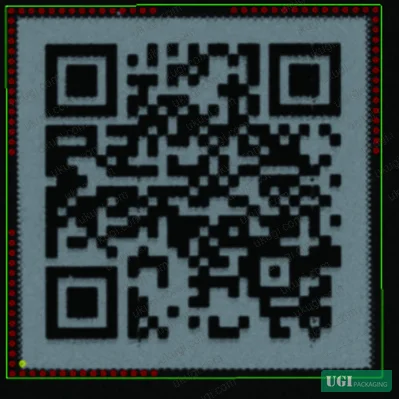
A minimum placement clearance of 3.0 mm from the nearest crease line or package edge is the practical threshold. Less than that and you’re gambling on fold registration consistency.
Modulation Ratio (MOD) #
Modulation Ratio quantifies reflectance consistency across all dark and light modules: MOD = 2[R − GT] / SC, where R is the reflectance of the module closest to the global threshold GT, and SC is Symbol Contrast. The grade thresholds: ≥ 0.50 is 4A; 0.40–0.50 is 3B; 0.30–0.40 is 2C; 0.20–0.30 is 1D; below 0.20 is 0F. Only 49% of samples reached 4A on this parameter, and 13% scored 0F.
The failure types are instructive. At one extreme, over-inked modules spread ink into surrounding white areas — reflectance uniformity across the quiet zone is destroyed. At the other extreme, under-inked modules show intermittent, broken ink coverage — black/white contrast is similarly degraded. Both conditions push MOD toward 0F. Additionally, QR codes sized too small for their version number create module crowding that compounds both defects.
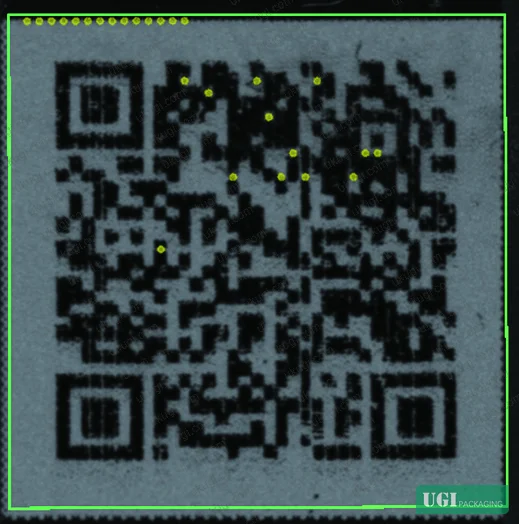
Testing confirmed that printhead-to-substrate standoff distance and the surface tension of the white undercoat ink both influence MOD. Reducing printhead height improved print quality measurably in controlled trials. The maintenance interval finding is critical: the recommended protocol requires printhead servicing after every ink bottle consumed, but observed operational practice fell significantly short of this — and extended intervals correlated directly with MOD degradation.
Inkjet QR Code Design Parameters and Printhead Operation Controls #
QR Code Dimensional Specifications #
Module width must be engineered as an integer multiple of the printer’s native drop size, using the formula X = n/R, where X is module width in mm, R is printer resolution in dots per mm, and n is the integer number of ink drops per module. This ensures that module boundaries are clean and reflectance uniformity is preserved.
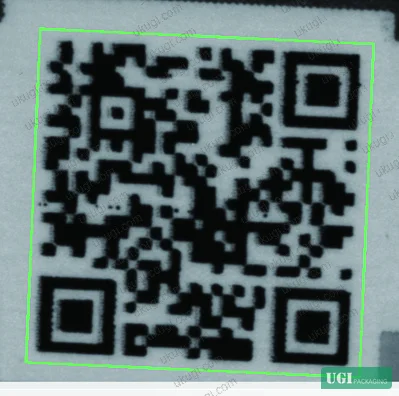
Practical size specifications for common QR code dimensions used in tobacco and folding carton packaging are as follows:
| QR Code Size (mm) | Matrix Version | Module Width (mm) | Min. Quiet Zone Width (mm) |
|---|---|---|---|
| 10 | 29×29 | 0.27 | ≥1.08 (4× module) |
| 12 | 33×33 | 0.24 | ≥0.96 |
| 13 | 33×33 | 0.30 | ≥1.20 |
| 14 | 33×33 | 0.36 | ≥1.44 |
The quiet zone must always be ≥ 4 times the module width, regardless of nominal code size. This is not a recommendation — it’s the threshold below which systematic Inherent Pattern Damage failures become statistically unavoidable.
Most procurement teams don’t realize that quiet zone compliance is frequently compromised by graphic designers who are unaware of QR code placement rules, not by the inkjet system itself. Structural design sign-off and QR code placement approval need to happen together, not in separate workflows.
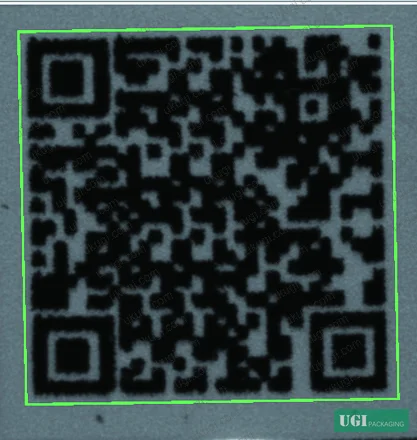
For color selection, light modules may use white, yellow, or red backgrounds. Dark modules should use green, blue, brown, or black. Combinations that reduce effective SC — such as dark blue on black — are disqualifying.
Printhead Operation and Maintenance Standards #
Printhead standoff height must be maintained below 0.5 mm from substrate surface. This is a hard operational limit, not a preference — exceeding it allows satellite droplet formation and directional deflection errors that directly degrade both MOD and Inherent Pattern Damage scores.
The protocol for operational anomaly response: if white lines or stray dots appear during printing, halt and inspect the printhead surface for debris before executing a purge cycle. After completing a web-fed print run, raise the printhead immediately to avoid substrate contact during deceleration. Splice tape on roll-to-roll jobs must lie perfectly flat — any raised edge risks a printhead strike that requires full recalibration.

Printhead cleaning must always be unidirectional — reciprocal wiping redistributes contamination rather than removing it and is explicitly prohibited in compliant operating procedures.
Preventive maintenance checkpoints: when the printhead is idle for extended periods, apply a light-blocking dust cover. During scheduled servicing, fire each nozzle individually to verify drop formation and log the result. Filters require replacement on a 6-month cycle regardless of apparent condition.
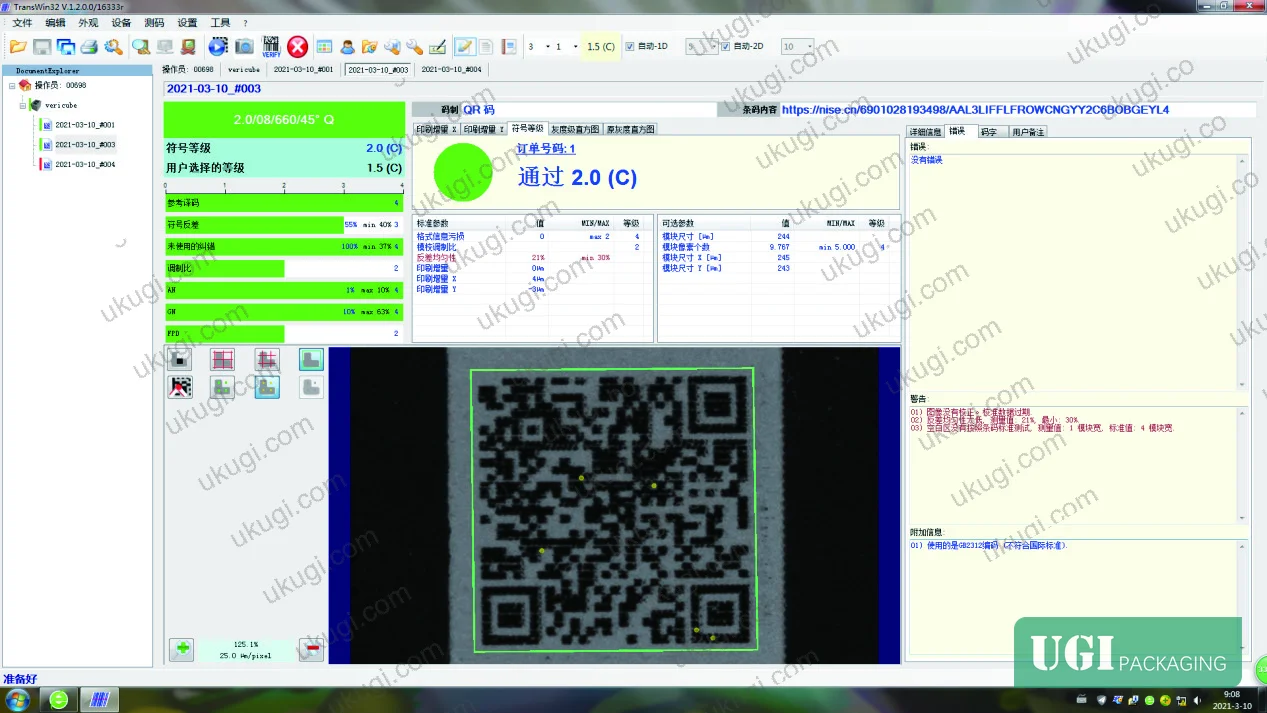
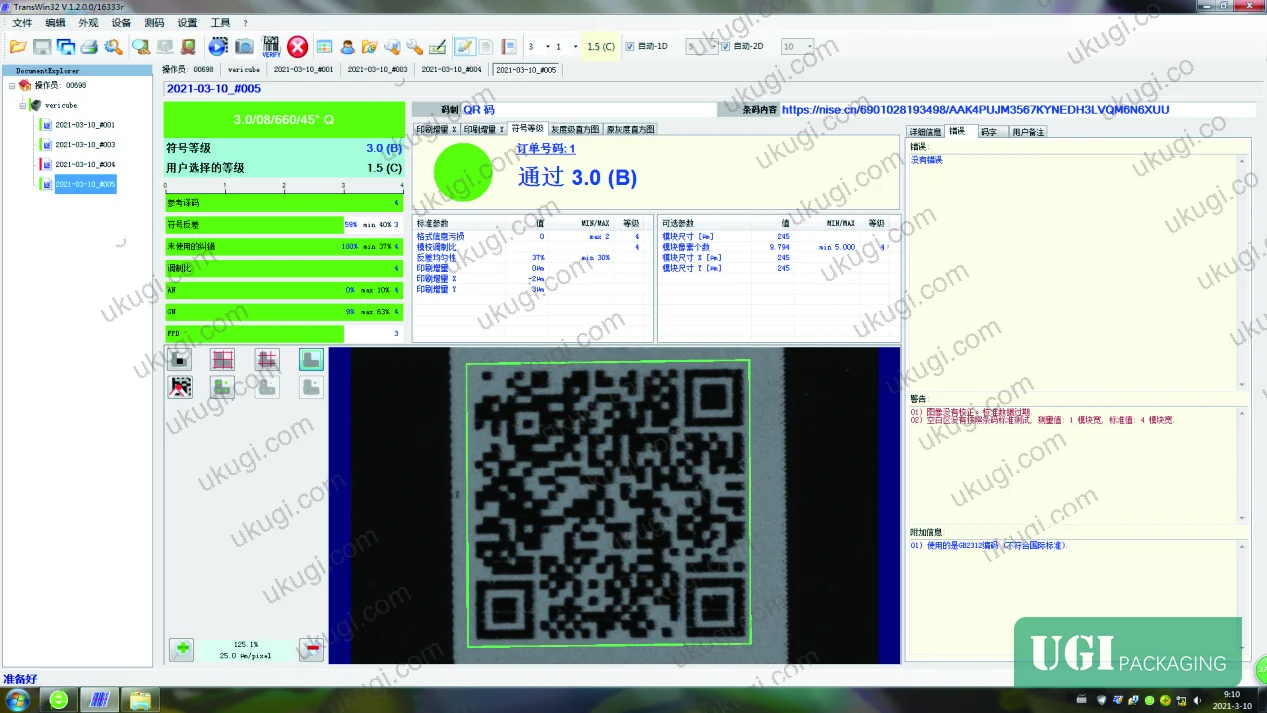
After implementing the full set of design optimization and operational controls described above, re-measurement of the same print line showed a significant uplift in composite QR code quality grade — bringing samples previously graded 2C and 3B into consistent 4A territory.
Practical Guidance for Buyers #
If you’re sourcing packaging with inkjet-applied variable QR codes — whether for brand authentication, anti-diversion, or supply chain traceability — the most expensive mistake is treating QR code quality as an afterthought to be checked at final inspection. By that point, a systematic substrate-ink mismatch or a chronic printhead maintenance gap has already generated defective units across the run.
Start with substrate. If your packaging uses transfer-laminate or composite substrates, accept that achieving SC ≥ 70% (4A grade) requires deliberate ink formulation adjustment — and ask your supplier to demonstrate it with a graded test sample, not just a visual. White cardstock substrates are significantly more forgiving on Symbol Contrast; if you have design flexibility, the substrate choice alone narrows your risk profile considerably.
Require placement drawings with explicit quiet zone measurements annotated before approving structural dies. The 3.0 mm minimum from crease line is the floor; build in margin where packaging geometry allows.
For ongoing production, verify that your supplier’s maintenance log shows printhead servicing intervals consistent with the per-bottle-consumed requirement — not a weekly schedule regardless of volume. Overdue maintenance is the leading process cause of Modulation Ratio degradation, and it’s invisible until you’re grading codes.
The ISO 22000:2018 Food safety management systems for food packaging framework and supply chain integrity requirements reinforce the need for verifiable code quality, especially where traceability data underpins regulatory compliance claims. At ukugi.com, we supply inkjet-compatible custom paper boxes and hologram security stickers with full QR code and security printing integration — our team works directly with procurement engineers on substrate qualification and code placement design before any production run starts. For tobacco packaging specifically, our inline inkjet configurations are qualified against GB/T 23704-2017 grading criteria.
Need a custom formulation or sample? Request a quote from our team →
Technical Verification Questions #
- Can you provide GB/T 23704-2017 grade reports showing composite 4A classification for your variable QR inkjet output, including individual scores for Symbol Contrast (SC), Modulation Ratio (MOD), and Inherent Pattern Damage — not just a pass/fail summary?
- What is your documented printhead-to-substrate standoff distance setting, and can you confirm it is maintained below 0.5 mm across the full web width during production?
- For transfer-laminate or composite substrates, what Symbol Contrast value (SC = Rmax − Rmin) does your ink system achieve in qualification testing, and which ink formulation is used to compensate for lower substrate reflectance?
- What is your printhead servicing interval as a function of ink volume consumed — specifically, can you confirm servicing occurs after each ink bottle unit consumed, and do you maintain a timestamped maintenance log?
- Can you provide dimensional layout drawings showing QR code quiet zone clearance measurements (minimum 4× module width) and the distance from the nearest crease or fold line (minimum 3.0 mm), for the specific packaging construction being quoted?
Quality Verification Checklist #
- ☐ Composite QR code grade confirmed at 4A under GB/T 23704-2017, with all seven individual parameters documented (not composite-only reporting)
- ☐ Symbol Contrast (SC) ≥ 70% verified on production substrate — white cardstock substrates expected to achieve this; transfer-laminate substrates require specific ink formulation evidence
- ☐ Modulation Ratio (MOD) ≥ 0.50 (4A threshold) confirmed in batch qualification sample, not only pre-production trial
- ☐ Quiet zone width verified as ≥ 4× module width on layout drawings, with crease-line clearance ≥ 3.0 mm confirmed on die/structural drawing
- ☐ Printhead standoff height setting confirmed below 0.5 mm, with operational checklist provided
- ☐ Printhead maintenance log reviewed — servicing interval linked to ink volume consumption, not calendar-only scheduling; filter replacement cycle confirmed at 6-month maximum
- ☐ Module width calculated per X = n/R formula and confirmed as an integer multiple of printer drop size for the specified QR code dimensions
- ☐ Color combination reviewed — dark modules confirmed as green, blue, brown, or black; no low-contrast pairings that would reduce effective Symbol Contrast below 70%
Key Specifications Table #
| Parameter | Recommended Value | Verification Method |
|---|---|---|
| Composite QR Code Grade | 4A (all 7 parameters) | GB/T 23704-2017 graded scan test |
| Symbol Contrast (SC) | ≥ 70% (4A threshold) | Reflectance measurement: SC = Rmax − Rmin on reference grayscale image |
| Modulation Ratio (MOD) | ≥ 0.50 (4A threshold) | MOD = 2[R − GT] / SC; measured on worst-case module in symbol |
| Quiet Zone Width | ≥ 4× module width | Physical measurement on printed sample; verify against layout drawing |
| Crease-Line Clearance | ≥ 3.0 mm | Dimensional check on structural die drawing and printed sample |
| Printhead Standoff Height | < 0.5 mm | Feeler gauge or calibrated standoff measurement at press setup |
| Filter Replacement Interval | ≤ 6 months | Maintenance log review |
| Module Width Calculation | X = n/R (integer n) | Print resolution spec cross-referenced with target module dimension |
Looking for a manufacturer that meets these specs? Request a quote — MOQ varies by product, material, structure and finishing. Product-specific MOQ is confirmed with each quotation.
References #
Data source: Quality Assessment and Optimization of Variable QR Code Inkjet Printing on Packaging Substrates, F. Pan et al., Journal of Printing Science and Technology, 2024
Frequently Asked Questions #
What is the most common reason variable QR codes fail composite 4A grading in production?
The composite failure rate in the sample population was 85% — meaning 85% of samples had at least one parameter below 4A. The three primary culprits were Symbol Contrast, Inherent Pattern Damage, and Modulation Ratio. Substrate type and printhead maintenance interval are the two controllable variables that most directly determine whether these three metrics pass or fail.
Does substrate type really have that much impact on QR code scan quality?
Yes, and it’s not marginal. In the evaluation data, every sample achieving 4A Symbol Contrast was printed on white cardstock. Every 3B sample was on a transfer-laminate composite. The reflectance ceiling of the substrate determines the maximum achievable SC — if the substrate can’t deliver sufficient Rmax, no ink adjustment will push SC above 70%.
What does “Inherent Pattern Damage” actually mean in practical terms, and how do I check for it?
It means the finder patterns, timing bars, or quiet zones contain module-state errors — dark where there should be white, or vice versa. The two most common physical causes are quiet zone encroachment (code placed too close to a fold line) and satellite ink droplets landing in white module areas. A graded scan test under GB/T 23704-2017 will score this explicitly; visually, a 0F sample will often show ink hazing or obvious droplet contamination in the white areas of the code.
How should module width be specified when ordering inkjet QR codes for a new package design?
Use the formula X = n/R, where R is your printer’s resolution in dots per mm and n is a positive integer. The integer constraint is what matters — module width must be an exact multiple of the printer’s native drop size, otherwise the rasterization introduces fractional module edges that degrade reflectance uniformity across the symbol. For reference: a 10 mm QR code at common inkjet resolutions typically yields module widths in the 0.24–0.42 mm range. See the ASTM D882 Standard Test Method for Tensile Properties of Thin Plastic Sheeting for context on substrate deformation tolerances that interact with dimensional accuracy in flexible packaging applications.
What is the recommended printhead maintenance frequency for inline inkjet QR code systems?
The qualified protocol requires printhead servicing after each ink bottle consumed — not on a fixed calendar basis. In field observation, maintenance was consistently performed at much lower frequency than this, and extended intervals were directly correlated with Modulation Ratio degradation. Additionally, filters should be replaced on a maximum 6-month cycle, and nozzle firing tests should be logged at each scheduled service event. Buyers should request maintenance logs, not just certificates.
Published by ukugi.com Technical Team | Request a quote


