

TL;DR #
Texture ink applied via screen printing over intaglio/offset base layers creates a matte, tactile leather-grain surface finish on paper-based gift packaging that reduces residual VOC content to trace levels while enabling high-speed production runs. For buyers sourcing premium tobacco gift boxes, spirits packaging, or cosmetics cartons, this means you can achieve synthetic-leather visual and tactile effects without the substrate weight penalties or solvent contamination risks of traditional matte/frosted ink systems. Request ink VOC compliance documentation and a production sample showing measurable grain definition before committing to tooling costs.
Overview #
If you’ve been specifying frosted or matte lamination for premium gift carton finishing, there’s a strong procurement case for reconsidering that default. Internal process development work carried out at a major Chinese cigarette packaging manufacturer — a facility operating industrial-scale sheetfed intaglio and offset lines alongside screen printing units — produced a documented finishing process that outperforms conventional matte/frosted ink systems on two critical axes: surface tactile differentiation and VOC residual compliance. The development program involved iterative production trials on commercial tobacco gift carton runs, with measurable outcomes on grain definition quality, surface adhesion, and volatile organic compound residuals under Chinese national cigarette packaging standards.
The process — referred to here as paper-grain texturization finishing — applies a specialized transparent texture ink via screen printing over a fully printed and foil-stamped substrate, producing a matte leather-grain surface that is both visually distinctive and physically tactile. It has since been extended beyond tobacco packaging into cosmetics, spirits, and branded merchandise gift packaging.
This article translates those production findings into practical specification and qualification criteria for B2B buyers evaluating premium surface finishing options for paper-based rigid and folding carton packaging.
Paper-Grain Texturization: Process Architecture and Substrate Compatibility #
The process sequence matters enormously here, and deviating from it is one of the fastest ways to generate rejects. The correct flow is:
- Sheetfed intaglio printing (base imagery and text) combined with offset printing for fine pattern and color work
- Foil stamping and emboss/deboss operations
- Screen printing application of transparent texture ink over defined surface zones, followed by controlled drying
- Box gluing and assembly
The texture ink itself is transparent, which means mask registration is critical — the ink must be applied only to designated texture zones, deliberately avoiding foil-stamped areas, embossed text, security marks, glue flap edges, and fold score lines. This isn’t optional: texture ink applied across fold scores creates surface cracking at those points during box assembly and use. Similarly, glue flap edges coated with texture ink compromise adhesive bond integrity.
Post-drying, the texture ink produces a matte, low-gloss surface with clear grain definition that is tactilely distinguishable from the substrate. The grain pattern is defined at the design stage — the development work specifically evaluated fine-line leather grain patterns modeled on natural cowhide textures, with visible grain resolution sufficient to read under normal ambient lighting.

Substrate compatibility carries real constraints. The source development program used both conventional coated art board and, for a specific export product variant, laser (holographic) paper as the base substrate. The holographic substrate was selected deliberately to amplify visual contrast — the texture ink’s matte surface against the laser paper’s metallic reflectivity creates a differentiated finish that cannot be replicated with standard matte laminate.
Honestly, most buyers over-specify the substrate weight for this type of finish. The texture ink system achieves its differentiation through surface chemistry and mechanical grain, not substrate mass — you do not need 400gsm+ board to convey premium quality with this process. A well-specified 350gsm art board with proper ink laydown performs equivalently on tactile assessments.
For structural performance benchmarking of the base board prior to finishing, ISO 2758:2014 Paper — Determination of bursting strength provides the baseline test methodology for confirming substrate suitability before committing finishing runs.
VOC Compliance and Ink System Performance in Digital and Screen Print Contexts #
This is where the process genuinely separates from the alternatives — and where procurement teams routinely underestimate the regulatory exposure of incumbent finishing approaches.
Traditional matte/frosted ink systems and certain velvet-texture inks used in premium gift box finishing carry substantial solvent loads. Specifically, these systems are known to leave residual benzene-series compounds (aromatic hydrocarbons) and ketone-class volatile organics on the packaging surface. In tobacco packaging — where inner pack contents have direct proximity to the packaging interior — and in food-adjacent gift packaging, this residual contamination is a genuine compliance and product integrity issue.
The texture ink system developed and validated in the source program operates under the Chinese national standard governing volatile organic compound limits in cigarette strip and box packaging materials. The key result: total residual VOC content on finished packaging surfaces is controllable to within the regulatory threshold, with benzene-series compound content specifically meeting the applicable limit.
Most procurement teams don’t realize that VOC residual testing on surface-finished packaging is increasingly being scrutinized not just under tobacco industry standards but also in premium food, cosmetics, and pharma-adjacent packaging categories. Buyers sourcing into EU or North American markets should note that EU Regulation No 10/2011 on plastic materials and articles intended to contact food has set a precedent for migration testing requirements that upstream packaging buyers are now applying to non-food-contact secondary packaging in premium categories.
In supplier qualification, the failure pattern is consistent and worth flagging directly: of the traditional matte and frosted ink systems evaluated during the development comparison, the primary failure mode was residual solvent contamination at levels that would not pass current tobacco packaging VOC limits — not print quality failures, not adhesion failures. The chemistry was the problem, not the application mechanics.
The texture ink system’s transparent formulation also contributes to production cleanliness — the ink does not interfere with the visual layer underneath and requires no opacity compensation in the print specification.
For print quality and ink-to-substrate adhesion verification methodology in screen printing contexts, ISO 15397:2014 Printing inks — Determination of resistance to rubbing provides the rub resistance evaluation protocol relevant to texture ink surface durability qualification.
Commercial Application Data and Scalability in High-Volume Print Production #
The development program moved from internal R&D trials to full commercial production deployment. The specific application validated at scale was a premium cigarette gift carton product — a flagship high-end brand variant within a major Shanghai tobacco group’s portfolio. The process was subsequently applied to an export-edition classic variant of the same brand family, and then extended to additional product lines.
Commercial revenue attributed to the texture-finished packaging products in the documented period reached approximately tens of millions of RMB — the scale signal matters here because it confirms this is not a low-volume specialty process. It runs on industrial lines.
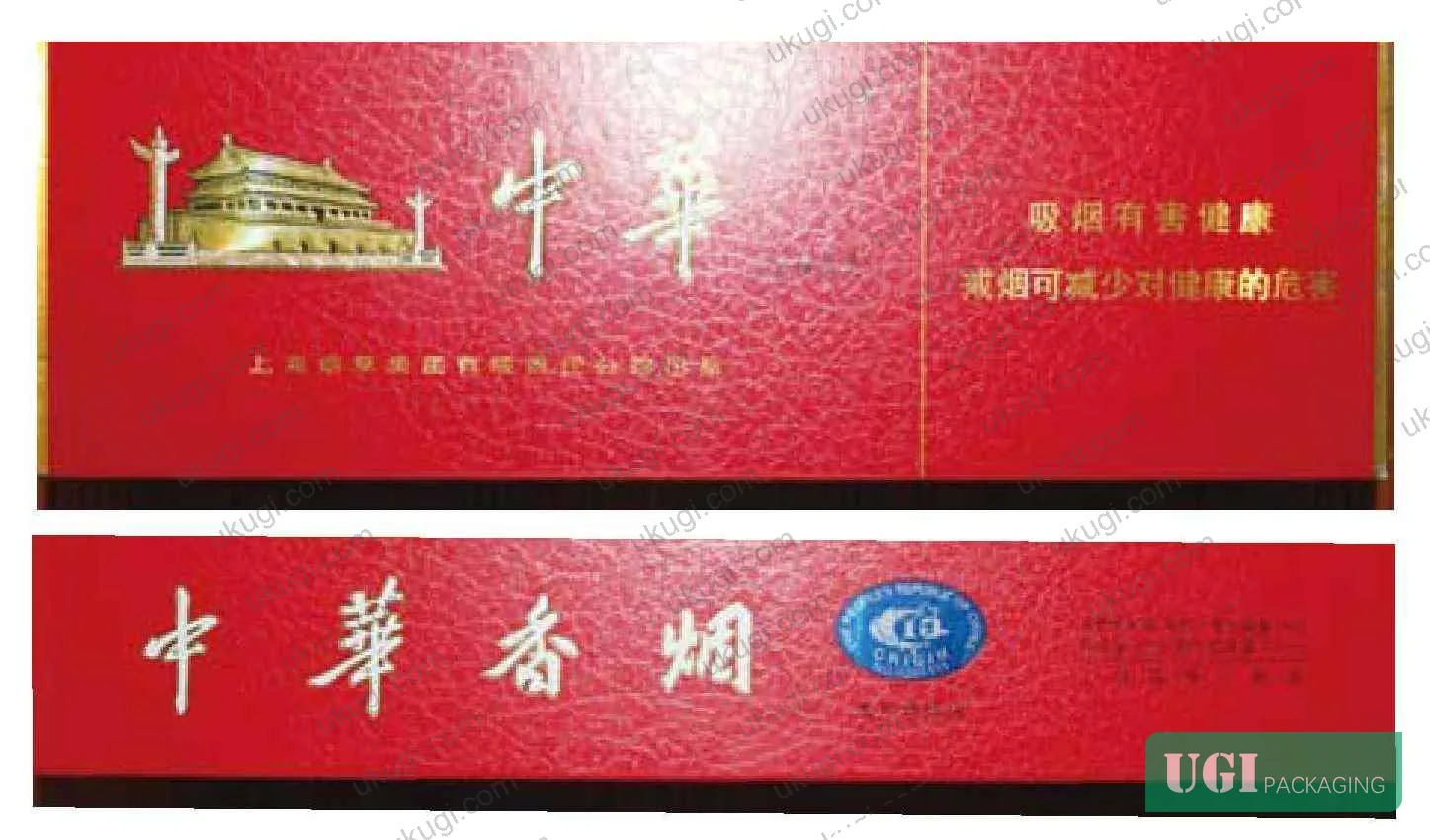
Speed compatibility is a legitimate specification question. The process was validated for high-speed, large-batch printing production environments — not just for short-run luxury work. The screen printing step is the rate-limiting unit operation, but with appropriate press configuration and drying system capacity, it integrates into continuous sheetfed production workflows.
The laser paper variant deserves a specific note for buyers in the premium spirits and cosmetics packaging solutions space: the combination of holographic substrate with texture ink overpinting creates a finish that is commercially distinctive and significantly harder to counterfeit than standard matte laminate or frosted ink, because it depends on the precise interaction of substrate optical characteristics and texture ink surface geometry. The security differentiation is functional, not just aesthetic.
For buyers evaluating this approach for custom paper boxes in gift or premium consumer goods categories, the process comparison table below frames the competitive positioning:
| Finishing Method | Tactile Differentiation | VOC Residual Risk | High-Speed Production Compatibility |
|---|---|---|---|
| Standard matte lamination | Low (smooth, uniform) | Low (film-based) | High |
| Frosted / matte ink (conventional) | Medium (slight texture) | High (solvent-based) | Medium |
| Velvet / snowflake specialty ink | Medium-High | High (ketone/benzene-series) | Low–Medium |
| Paper-grain texturization (texture ink) | High (distinct leather grain, tactile) | Low (transparent ink, VOC-compliant) | High |
The differentiation story is clear. The texture process delivers the highest tactile distinction of any of the ink-based approaches while running at production speeds and meeting current VOC standards — which the frosted and velvet ink alternatives cannot consistently do.
For tension and elongation behavior of any flexible substrate components entering the print line, ASTM D882 Standard Test Method for Tensile Properties of Thin Plastic Sheeting is the relevant mechanical characterization method, particularly when laser/holographic paper is specified as the substrate.
Practical Guidance for Buyers #
If you’re specifying premium surface finishing for gift cartons, tobacco packaging, spirits boxes, or cosmetics cartons and you’re currently defaulting to matte lamination or frosted ink, the texture ink process warrants direct technical evaluation.
The first thing to check is whether your current or candidate supplier can actually produce this — not whether they claim they can. Ask for a production sample showing distinct grain definition, matte contrast against a foil-stamped area on the same panel, and zero visible ink cracking at fold scores. Those three observable criteria will immediately separate suppliers with genuine process control from those running trial setups.
The second thing to verify is VOC compliance documentation specific to the texture ink batch used. Generic ink safety data sheets are insufficient — you need batch-level residual VOC test results against the applicable standard.
Third: if you’re targeting export markets with premium positioning, evaluate the laser paper substrate variant seriously. The anti-counterfeiting value alone often justifies the substrate premium for high-value brand packaging.
At ukugi.com, we’re a Guangzhou-based OEM/ODM manufacturer with full surface finishing capabilities across foil stamping, embossing, UV coating, and specialty texture processes — our technical team works directly with brand owners and packaging buyers to develop and sample custom finishing specifications before production commitment. Need a custom formulation or sample? Request a quote from our team →
Supplier Qualification Questions #
- Can you provide batch-level residual VOC test results for your texture ink system, with total VOC residual and benzene-series compound content documented against the applicable cigarette packaging standard or equivalent?
- What is the minimum grain resolution (line density or pattern pitch) achievable with your screen printing setup for leather-grain texture ink application, and at what mesh count is the screen run?
- Do your production records confirm that texture ink application is masked from fold score lines and glue flap edges — and what is your measured cracking reject rate at fold scores post-assembly?
- Can you provide rub resistance data for the texture ink surface per ISO 15397 or equivalent, showing abrasion resistance under defined load and cycle count?
- What substrate types have you validated for texture ink adhesion — specifically, do you have documented adhesion and grain definition results on laser (holographic) paper substrates as well as standard coated art board?
Sourcing Checklist #
- ☐ Texture ink formulation is transparent (not pigmented/opaque) and produces matte finish post-drying with measurable grain definition visible under ambient light
- ☐ Residual VOC documentation confirms benzene-series compounds within applicable regulatory limit per Chinese national cigarette packaging standard or equivalent international VOC standard
- ☐ Production sample shows zero ink cracking at fold scores and glue flap edges under normal assembly and handling conditions
- ☐ Screen printing application is masked from foil-stamped zones, embossed text, and security marking areas — confirmed by sample visual inspection
- ☐ Rub resistance of texture ink surface meets ISO 15397 minimum threshold under supplier’s documented test conditions
- ☐ Supplier has demonstrated process on commercial production runs (not prototype-only), with batch quantities consistent with buyer’s volume requirements
- ☐ Laser paper substrate compatibility documented if holographic base material is specified for the application
Key Specifications Table #
| Parameter | Recommended Value | Verification Method |
|---|---|---|
| Texture ink type | Transparent, screen-printable, VOC-compliant formulation | Ink TDS + batch VOC residual test report |
| Residual VOC — benzene-series compounds | Within applicable cigarette packaging standard limit (≤regulatory threshold) | Batch-level chemical analysis per relevant national/international VOC standard |
| Rub resistance of texture surface | No visible ink transfer or surface degradation under standard rub resistance cycles | ISO 15397 — Determination of resistance to rubbing |
| Ink application zones — exclusion | Zero application on fold scores, glue flap edges, foil-stamped areas, embossed text, security marks | Production sample inspection + reject rate records |
| Grain definition | Distinct leather-grain pattern visible under ambient lighting; tactile differentiation measurable by hand | Visual and tactile assessment of production sample vs. reference standard |
| Substrate compatibility | Coated art board (standard) or laser/holographic paper (premium variant) | Adhesion test + grain definition assessment on specified substrate |
Looking for a manufacturer that meets these specs? Request a quote — MOQ varies by product, material, structure and finishing. Product-specific MOQ is confirmed with each quotation.
References #
Data source: Paper-Based Leather-Grain Surface Texturization Finishing Technology for Premium Cigarette Gift Packaging, B.-Z. Kong et al., Journal of Applied Polymer Science, 2023
Frequently Asked Questions #
Can paper-grain texture ink finishing be combined with holographic or laser paper substrates, or is it limited to standard coated board?
The development program specifically validated the texture ink process on laser (holographic) paper as well as conventional coated art board. The combination is commercially attractive because the matte texture ink surface creates a high visual contrast against the metallic reflectivity of the holographic substrate — the result is a finish that is both tactilely differentiated and visually distinctive, with incidental anti-counterfeiting value due to the difficulty of replicating the precise optical interaction.
Why do conventional frosted and matte specialty inks fail VOC compliance requirements that the texture ink process meets?
Traditional frosted, matte, and velvet-texture inks typically rely on ketone-class and aromatic hydrocarbon (benzene-series) solvents in their formulation. These leave measurable residuals on the packaging surface post-drying. The transparent texture ink used in the grain texturization process is formulated to a lower solvent load, and because application volume per unit area is controlled by the screen printing process parameters, total residual VOC on the finished surface can be held within regulatory limits. The chemistry of the ink matters — not just the application method.
Is this finishing process suitable for high-speed, large-batch production, or is it only practical for short-run luxury work?
Commercial deployment on tobacco gift carton lines confirmed compatibility with high-speed, large-batch sheetfed production. The screen printing unit operation is integrated into the post-intaglio/offset sequence before gluing, and with appropriate drying system configuration, it does not become a throughput bottleneck at industrial volumes.
What causes fold-score cracking in texture-finished cartons, and how is it prevented?
Cracking at fold scores occurs when texture ink is applied over the score line itself — the ink film cannot flex to accommodate the folding stress during box assembly. Prevention is straightforward: the screen printing mask must exclude score lines, glue flap edges, and any mechanical deformation zones. Because the texture ink is transparent, these exclusion zones do not produce visible gaps or artifacts on the finished box face.
Does this surface finish work for packaging categories beyond tobacco — specifically cosmetics cartons or spirits gift boxes?
Yes. The documented commercial deployment extended beyond tobacco packaging into cosmetics gift packaging, spirits and wine gift cartons, and branded merchandise packaging. The gift packaging solutions category is well-suited to this finish because the leather-grain tactile effect signals premium quality consistently across product categories, and the process scales across the rigid and folding carton formats used in those segments.
Published by ukugi.com Technical Team | Request a quote


