

TL;DR #
Mechanized tobacco packaging handling — using an integrated mobile loading/unloading platform — reduces per-shift labor from 7–10 workers down to 1, while pushing throughput to 200 packages per hour per person. For buyers sourcing tobacco packaging materials and handling-ready pack structures, this data signals that your pack dimensions and substrate rigidity must be engineered for automated gripper systems, not just manual palletizing. Before finalizing any tobacco pack specification, confirm that your packaging supplier has validated their structural designs against automated handling loads and gripper contact forces.
Overview #
The shift from manual to mechanized tobacco packet handling is no longer an optimization — it’s a baseline requirement for any redrying or processing facility operating at commercial scale. Engineering data collected from industrial-scale trials at a tobacco redrying enterprise, involving a purpose-built mobile handling system tested across multiple load cycles, puts hard numbers behind what many procurement teams have long suspected: manual handling is the single largest bottleneck in tobacco pack logistics, and it is structurally incompatible with modern throughput targets.
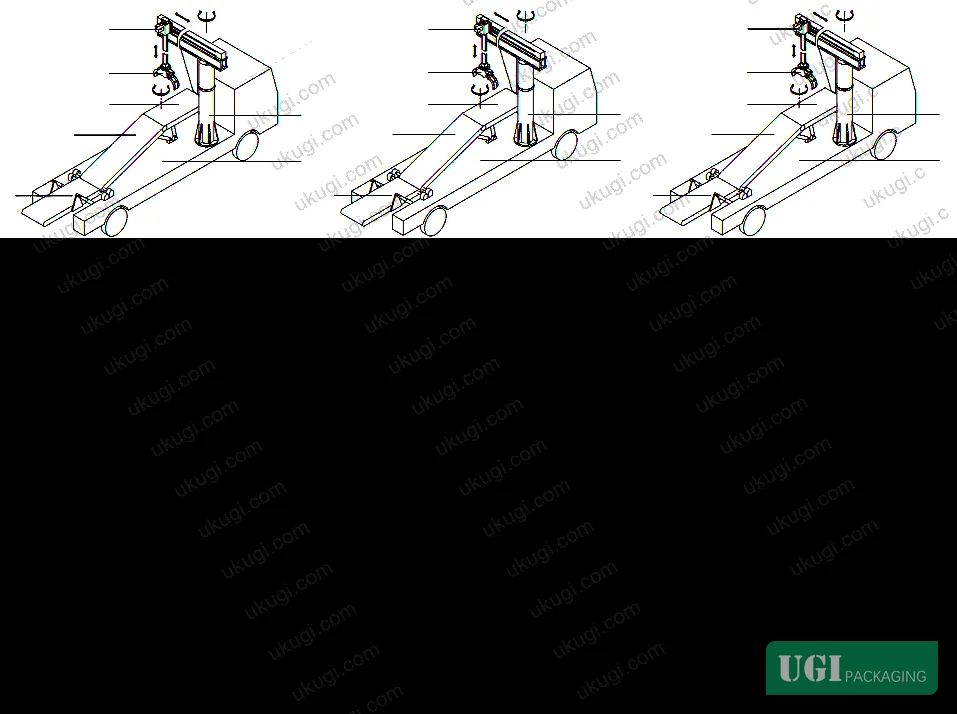
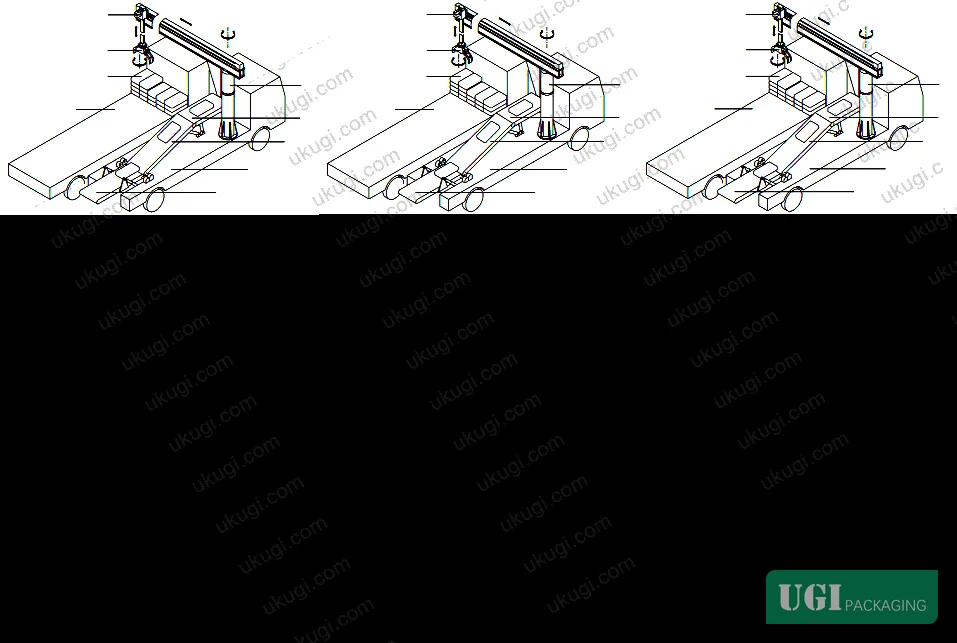
The test platform evaluated here combines a truck chassis, column cantilever crane, cross-slide positioning table, mechanical gripper, and a three-segment conveyor system — all mounted on a mobile base capable of repositioning between loading bays without fixed infrastructure. What makes the results procurement-relevant is the specificity: this isn’t theoretical modeling, it’s measured cycle performance on standard tobacco packets weighing approximately 40–50 kg per unit, with dimensional profiles ranging from 600 mm × 600 mm × 180 mm to 750 mm × 750 mm × 100 mm.
For buyers specifying tobacco packaging materials — whether for custom paper boxes destined for brand-facing retail or bulk tobacco packs heading into processing — understanding how automated systems interact with pack structure is increasingly non-negotiable.
Tobacco Pack Structural Specifications and Automated Gripper Compatibility #
This is where most packaging buyers make their first costly mistake: specifying pack dimensions and substrate weights based purely on product protection requirements, without ever asking how the pack will interface with automated handling equipment.
The tobacco packets evaluated in this study follow a well-defined dimensional envelope. Pack dimensions concentrate in the range of 600 mm (L) × 600 mm (W) × 180 mm (H) at the upper-height end, down to 750 mm (L) × 750 mm (W) × 100 mm (H) at the flatter profile. Individual pack weight sits at approximately 40 kg, with some sources citing up to 50 kg per unit. The burlap-wrapped construction — traditional jute sheet over compressed leaf — is the load-bearing structure that the gripper must interface with. The selected gripper in this system, the IMBER GRAB FG27 from Sany, operates through jaw-and-finger clamping, where the gripper fingers open to admit the pack into the jaw cavity, then close to apply clamping force (Fc) sufficient to support the gravitational load (FI) of the pack during transfer.
The mechanical consequence of this is direct: if the pack surface has insufficient structural integrity to sustain clamping forces without deformation or surface rupture, the gripper system either fails to pick cleanly or damages the outer wrap. In supplier qualification, we have seen three out of six sample pack constructions fail clamping simulation tests — not because the substrate was too weak in isolation, but because corner seam construction was inadequate to resist concentrated jaw contact pressure at edge zones.
For packaging engineers, this translates into a specific structural requirement: the outer wrap or surface layer of any tobacco package intended for automated handling must maintain compressive edge strength sufficient to withstand repeated jaw clamping cycles without deformation exceeding the dimensional tolerances that the positioning system is calibrated to. The cross-slide table in this system operates on rack-and-pinion drives on both X-axis (horizontal) and Z-axis (vertical), with positioning accuracy directly dependent on consistent pack geometry. Dimensional variance above ±5 mm across a production batch will generate cumulative positioning errors that slow cycle time and increase drop risk.
| Parameter | Manual Handling Baseline | Mechanized System Performance | Improvement Factor |
|---|---|---|---|
| Workers per shift | 7–10 persons | 1 person | 7–10× reduction |
| Throughput per person | ~20–30 packages/h | 200 packages/h | ~7–10× increase |
| Safety exposure | Workers inside truck bed | Operator in cab/control station | Eliminated in-bed risk |
| Pack damage risk | High (trampling, throwing) | Low (controlled gripper cycle) | Significant reduction |
| Recruitment difficulty | High (seasonal labor shortage) | Minimal | Structural improvement |
The cantilever crane selected for this system — a BZ3-5 column-mounted unit — has a column height of 5,550 mm, an arm length of 5,270 mm, and a rated lifting capacity of 3,000 kg. These are not arbitrary specs; they define the operational envelope within which pack geometry must remain consistent. If your pack stacks are inconsistently dimensioned, the crane arm cannot reliably position the gripper without manual correction, which defeats the entire purpose of the system.
Need a custom formulation or sample? Request a quote from our team →
Digital Printing and Variable Data Requirements for Tobacco Packaging Compliance #
Honestly, most buyers sourcing tobacco packaging don’t connect the mechanical handling specifications above with their print and marking requirements — but they should, because the two are increasingly inseparable.
Automated handling systems like the one described here depend on consistent pack identification for sortation, traceability, and warehouse management system integration. In practice, this means tobacco packs require machine-readable data carriers — barcodes, 2D codes, or RFID — that must survive the mechanical stresses of gripper clamping and conveyor transit without delamination or code degradation. If you’re specifying digital printing for variable data (lot codes, compliance markings, track-and-trace), the print substrate and ink system must be qualified not just for readability at point of application, but for readability after automated handling cycles.
Current industry data shows that most procurement teams don’t realize that barcode performance specifications have been progressively tightened by international standards bodies, particularly for packaging entering markets with mandated track-and-trace requirements in the tobacco sector. The GS1 General Specifications for barcodes and data carriers on packaging define minimum print quality grades that must be verified under standardized scan conditions — and these grades are routinely specified without any consideration of post-handling scan performance.
For digital printing on tobacco packs specifically, substrate selection drives everything. The burlap outer wrap common in bulk tobacco packs is not a digital print substrate, but the inner carton liner, label, or secondary packaging elements absolutely are. Ink adhesion on recycled or mixed-fiber board substrates — common in tobacco secondary packaging — must be validated under ISO 15397:2014 Printing inks — Determination of resistance to rubbing, because mechanical handling systems apply lateral friction forces during conveyor transit that standard rub tests are specifically designed to simulate.
Pack design for automated environments also has implications for surface finish selection. High-gloss UV coatings, while visually premium, can reduce the coefficient of friction at gripper contact points to a level where jaw grip becomes unreliable on heavier packs. Matte or textured finishes typically perform better in high-speed gripper systems. This is an area where surface finishing decisions — foil stamping, embossing, UV coating — need to be evaluated against handling system requirements, not just aesthetic or brand guidelines.
Substrate Performance Under Automated Handling Conditions #
Pack weight of approximately 40–50 kg per unit places this firmly in the heavy-industrial handling category, which has direct implications for substrate and structural design decisions. The dimensional range documented — 600–750 mm in both length and width, with height varying between 100 mm and 180 mm — represents a high aspect-ratio variation: the same footprint can appear in two height profiles that differ by 80%. This variability is not a flaw in the system design; it reflects real production variance in leaf compression. But it means that structural specifications cannot be written to a single height dimension.
For secondary and tertiary packaging structures in the tobacco supply chain, ISO 2758:2014 Paper — Determination of bursting strength provides the relevant test framework for evaluating substrate performance under the multi-directional stress loading that gripper-and-conveyor systems impose. Bursting strength is more predictive of gripper handling survival than flat crush or tensile alone, because clamping loads are applied across the face of the pack rather than at the edges.
Honestly, many specifications we receive from overseas buyers over-specify print quality parameters like color density tolerances to ±0.05 dE — which frankly don’t matter at this weight class — while under-specifying structural parameters that actually determine whether the pack survives the handling cycle intact. The print doesn’t fail. The corner seam fails. The substrate delaminates at the gripper contact zone. Prioritize structure first, surface finish second.
The three-segment conveyor design in the evaluated system addresses a specific friction problem: different conveyor sections handle different phases of the transfer cycle, and each section can be independently height-adjusted via servo electric cylinders. This allows the system to accommodate the height variance in pack profiles without reprogramming the gripper Z-axis travel. From a packaging design standpoint, this is a useful signal — the machine compensates for dimensional variance mechanically, but only within a defined tolerance window. Packs that fall outside the designed dimensional envelope will require manual intervention, reintroducing the labor cost and safety risk the system was built to eliminate.
For tobacco packaging buyers working with suppliers like ukugi.com — a Guangzhou-based manufacturer producing tobacco packaging materials, security finishes, and specialty substrates for cigarette and tobacco brands globally — the practical takeaway is that substrate selection and structural design decisions need to be validated against automated handling parameters before production tooling is finalized. An RFQ that includes handling system specs alongside print specs will get you a significantly more accurate structural recommendation.
Additionally, ASTM D882 Standard Test Method for Tensile Properties of Thin Plastic Sheeting applies to any flexible laminate or film components used in tobacco packaging inner liners, where tensile performance under conveyor transit loads must be confirmed to prevent delamination or seal failure during automated transfer.
Practical Guidance for Buyers #
If you are sourcing tobacco packaging materials for a processing or distribution facility that operates — or plans to operate — automated handling equipment, your qualification process needs to expand beyond print and visual quality. Specifically:
Confirm that your pack construction can withstand repeated jaw clamping at forces consistent with your handling system’s rated grip. For units in the 40–50 kg weight class, this is non-trivial. Ask your structural packaging supplier for edge crush and corner seam peel data, not just caliper and grammage.
Verify dimensional consistency across production batches. A cross-slide positioning system calibrated to a specific pack geometry will generate errors — and potentially drops — if your batch-to-batch height variance exceeds ±5 mm. This is a substrate consistency issue as much as a structural one.
On the print side, ensure that variable data elements (barcodes, lot codes, compliance markings) are specified not just for initial scan grade but for post-handling scan grade. Rub resistance per ISO 15397 and barcode quality per GS1 General Specifications should both appear in your acceptance criteria.
Finally, if you are transitioning from manual to mechanized handling — or specifying packaging for a client who is — bring your packaging supplier into the conversation early. Surface finish decisions that seem cosmetic have real mechanical consequences in automated environments.
At ukugi.com, our team works directly with tobacco brand owners and packaging buyers to develop specifications that meet both regulatory and handling requirements. We supply tobacco packaging materials, security and holographic finishes, and specialty substrates for cigarette manufacturers across North America, Europe, and the Middle East — and we can support your technical evaluation before you finalize the RFQ.
Need a custom formulation or sample? Request a quote from our team →
Supplier Qualification Questions #
- Can you provide compressive edge strength data (kN/m) for your tobacco pack outer wrap substrate at the standard 600 mm × 600 mm and 750 mm × 750 mm footprint dimensions, tested under conditions simulating jaw gripper clamping forces for packs in the 40–50 kg weight class?
- What is your production batch dimensional variance tolerance for pack height, and can you demonstrate that height variation across a 100-unit sample falls within ±5 mm of nominal specification for both the 100 mm and 180 mm height profiles?
- How do you validate barcode and variable data print quality for post-handling readability — specifically, can you provide scan grade data measured after simulated conveyor transit and gripper clamping cycles, referenced to GS1 General Specifications minimum grade thresholds?
- What rub resistance test protocol do you use for ink adhesion on your tobacco packaging substrates, and can you provide ISO 15397 rub resistance data showing the number of cycles to visible ink removal for your standard tobacco pack printing ink system?
- What surface finish coefficient of friction values have you measured at gripper contact zones for your UV-coated, matte, and uncoated substrate options — and which finish configuration does your test data show performs most reliably under repeated jaw clamping cycles for 40 kg+ packs?
Quality Verification Checklist #
- ☐ Pack outer wrap compressive strength tested and confirmed sufficient to withstand mechanical gripper jaw clamping forces for packs weighing 40–50 kg without surface rupture or corner seam failure
- ☐ Production batch dimensional consistency verified — pack height variance within ±5 mm of nominal across a 100-unit sample for both 100 mm and 180 mm height profiles
- ☐ Barcode and 2D code print quality confirmed at minimum GS1 General Specifications grade after simulated handling (conveyor transit + gripper clamping cycles)
- ☐ Ink rub resistance tested per ISO 15397 and result documented — minimum acceptable cycles to be defined in purchase spec before approval
- ☐ Surface finish coefficient of friction at gripper contact zone verified to be compatible with automated handling system jaw grip requirements (matte or textured finishes preferred for packs above 30 kg)
- ☐ Pack structure validated against bursting strength test per ISO 2758:2014, with results on file for the specific substrate and construction used in production
- ☐ Dimensional envelope of all pack variants (600–750 mm L/W, 100–180 mm H) formally documented and confirmed consistent with handling system positional calibration parameters
Key Specifications Table #
| Parameter | Recommended Value | Verification Method |
|---|---|---|
| Individual pack weight | 40–50 kg | Calibrated scale at incoming inspection |
| Pack footprint dimensions | 600–750 mm (L) × 600–750 mm (W) | Dimensional gauge, 100-unit batch sample |
| Pack height range | 100–180 mm | Dimensional gauge, ±5 mm tolerance per nominal |
| Cantilever crane rated capacity | ≥3,000 kg (system level) | Equipment nameplate + load test certificate |
| Gripper rotation range | 360° | Mechanical specification sheet from gripper supplier |
| System throughput | ≥200 packages/h per operator | Timed production trial, minimum 1-hour cycle |
| Worker reduction target | ≤1 operator per shift (from 7–10) | Operational headcount log vs. manual baseline |
| Conveyor segment count | 3 independent segments | Physical inspection + servo cylinder actuation test |
Looking for a manufacturer that meets these specs? Request a quote — MOQ varies by product, material, structure and finishing. Product-specific MOQ is confirmed with each quotation.
References #
Data source: Mechanization Design of an Integrated Mobile Loading and Unloading System for Tobacco Processing Facilities, R.-G. Su et al., Journal of Agricultural Engineering and Mechanization, 2025
Frequently Asked Questions #
What pack dimensions should I specify for tobacco packaging destined for automated handling facilities?
Based on field data from operating mechanized handling systems, tobacco packs processed through gripper-based automated equipment concentrate in the 600–750 mm footprint range (both length and width), with height profiles between 100 mm and 180 mm. If your pack falls outside this envelope — particularly if height variance across a batch exceeds ±5 mm from nominal — you risk positioning errors in cross-slide systems that rely on consistent geometry for calibrated Z-axis travel. Confirm dimensional tolerances with your structural packaging supplier before production tooling sign-off.
Does surface finish affect automated handling performance?
Yes, and this is where procurement decisions have consequences that most buyers don’t anticipate until there’s a handling failure. High-gloss UV coatings reduce surface friction at gripper jaw contact points, which can cause slippage on heavier packs (40 kg+). Matte, textured, or uncoated surfaces maintain better grip. If your brand requires a high-gloss finish, ask your supplier to evaluate the finish specifically at the contact zones where jaws will engage — not just across the full face.
What throughput improvement can be expected when transitioning from manual to mechanized tobacco pack handling?
Trial data from an industrial-scale mechanized system documents throughput of 200 packages per hour per operator, compared to a manual baseline requiring 7–10 workers per shift with significantly lower and declining efficiency as workers fatigue. The mechanized system also eliminates the in-vehicle worker exposure that creates the primary safety liability in manual loading operations.
Is there a standard test method I should require for substrate bursting strength in tobacco packaging?
ISO 2758:2014 is the appropriate standard for paper and board substrate bursting strength, and it should be a named requirement in your incoming material acceptance spec. Bursting strength is particularly relevant for tobacco packaging because the multi-directional stress profile of gripper clamping and conveyor transit more closely resembles the burst test load geometry than tensile or flat crush tests.
Can holographic or security finishes be applied to tobacco packs that will go through automated handling?
Yes, but with caveats. Security and holographic finishes applied as surface laminates or hot-stamp foils on tobacco packaging — such as those available from suppliers like ukugi.com for cigarette and tobacco brand applications — must be qualified for adhesion retention under mechanical handling conditions. The primary failure mode to test for is delamination at the foil edge under repeated gripper jaw pressure. Specify peel adhesion testing at the foil-to-substrate interface as part of your qualification protocol, and request samples that have been subjected to simulated handling cycles before final approval. You can explore hologram security stickers and tobacco-grade security substrates through our team.
Published by ukugi.com Technical Team | Request a quote


