

TL;DR #
A coating weight of 4.3 g/m² is the critical threshold for anti-mildew varnish on white board paper — below this, mold protection is inconsistent regardless of how you adjust pressure or speed. For buyers sourcing liquor gift boxes or high-humidity premium packaging, this single parameter determines whether your product survives a warehouse or a shipping container in Southeast Asia. Specify a minimum coating weight of 4.3 g/m² in your substrate acceptance criteria and request mold incubation test results showing ≥11-day delay before approving any new paperboard supplier.
Overview #
If your packaging is destined for humid climates — liquor gift boxes, premium food cartons, cosmetics outer packaging — the substrate question isn’t just about calipers and GSM. It’s about whether the board will survive a 6-week ocean freight journey without visible mold before it ever reaches the retail floor. That’s the practical problem this analysis addresses.
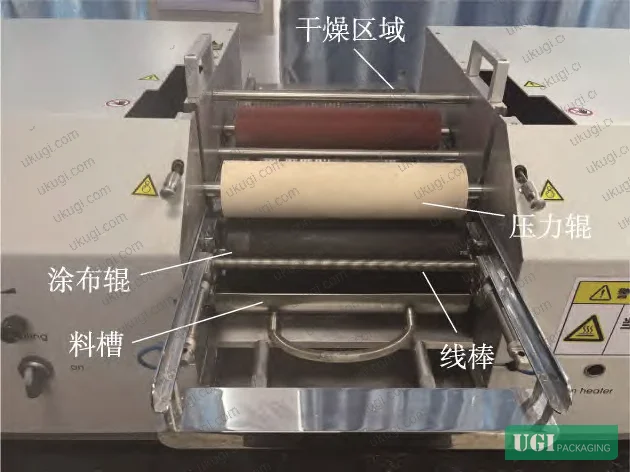
Laboratory evaluations conducted at a university light industry research institute, in collaboration with a major distilled spirits manufacturer, applied a water-based anti-mildew varnish to 240 g/m² coated white board paper across a systematic matrix of coating conditions. The experiment tested five coating weights (1.1, 1.3, 2.7, 4.3, and 4.8 g/m²), five pressure settings (100–500 N), and five line speeds (20–40 m/min), with mold resistance evaluated using a mixed inoculum of nine fungal species at 1×10⁷ CFU/mL — the actual mold types isolated from real-world molded liquor packaging. This is not a theoretical model. The fungal challenge reflects what packaging faces in commercial storage conditions.
The physical properties tested — smoothness, whiteness, glossiness, bursting strength, and Cobb60 water absorption — are the same parameters any packaging quality manager would pull from an incoming inspection report. The mold performance data, tracked both microscopically and macroscopically, translates directly into supplier qualification thresholds.
How Coating Weight Drives Anti-Mildew Varnish Performance on Coated Board #
Coating weight is the single variable that matters most. Everything else — pressure, speed — plays a secondary role at best.
At low application rates (≤1.3 g/m²), the varnish does not distribute uniformly across the board surface. SEM imaging shows pronounced coating streaks, leaving unprotected zones where mold spores establish immediately. In practical terms, microscopic mold onset on these samples occurred at day 2 — identical to uncoated control board. The only benefit at this level was chemical inhibition slowing macroscopic mold to day 8 versus day 4 for bare board. That’s a modest improvement that would not survive a real transit scenario.
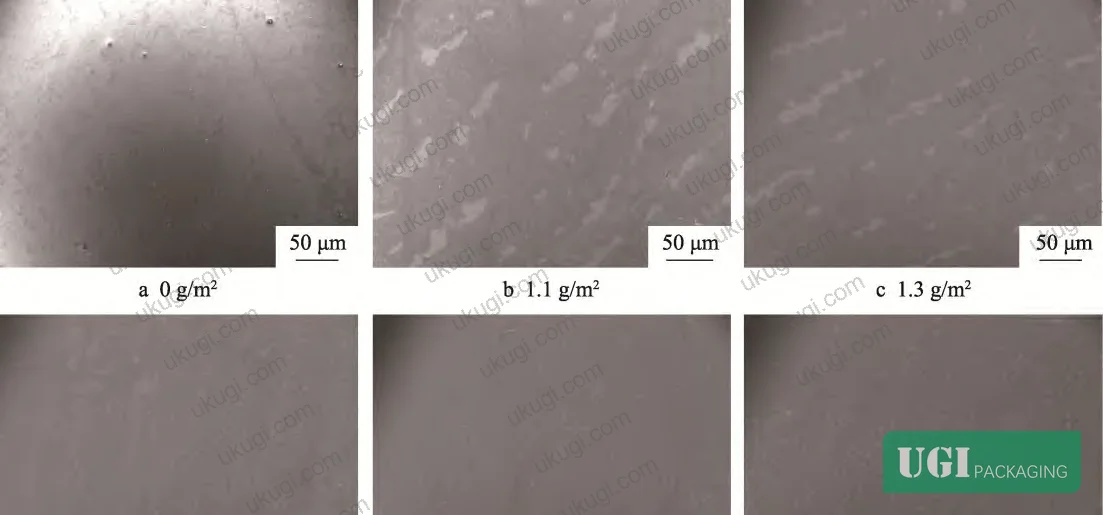
At 2.7 g/m², the varnish achieves surface uniformity. The board transitions to a dual-protection mode: physical barrier blocking moisture and spore contact, plus sustained chemical inhibition from the active biocide component (the formulation contains acrylate resin, water, and 1-(methoxy-carbamoyl)-benzimidazole). Microscopic mold onset moves to day 12; macroscopic to day 14.
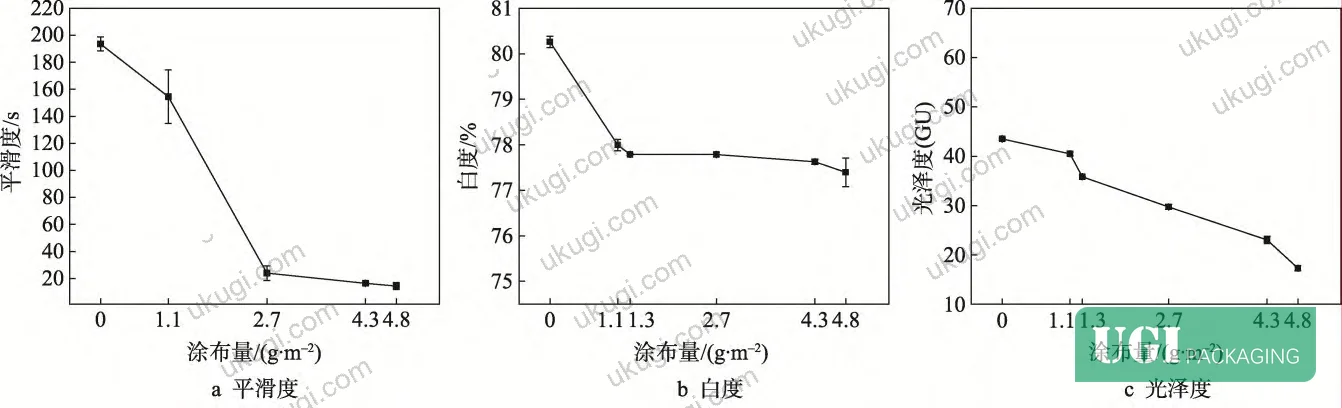
The 4.3 g/m² threshold is where mold delay plateaus. Beyond this weight, both microscopic and macroscopic mold times stabilize — both delayed by 11 days compared to uncoated board — and increasing application further provides no meaningful additional protection. What it does do is degrade optical properties: at 4.8 g/m², smoothness drops 92.6%, glossiness drops 60.3%, and whiteness decreases 3.6% versus uncoated board. For packaging with high-quality surface printing, over-application is a real problem, not a safe conservative choice.
Coating weight effect summary:
| Coating Weight (g/m²) | Microscopic Mold Onset (days) | Macroscopic Mold Onset (days) | Cobb60 Reduction vs. Uncoated |
|---|---|---|---|
| 0 (uncoated control) | 2 | 4 | — |
| ≤1.3 | 2 | 8 | Minimal |
| 2.7 | 12 | 14 | 70.7% |
| 4.3 | 13 | 15 | ~72.3% |
| 4.8 | 13 | 15 | 72.3% |
Bursting strength increases with coating weight, rising 8.8% at 4.8 g/m² compared to uncoated board. This is a secondary benefit for structural performance, but buyers should not over-specify coating weight to chase burst strength — the optical penalty is not worth it if surface print quality matters.
For buyers evaluating board for custom paper boxes used in premium gift or liquor applications, this data is directly actionable. The functional coating window is 4.3–4.8 g/m², and the optical performance window pulls in the opposite direction. Specify 4.3 g/m² as your target.
In supplier qualification rounds for this category, we saw multiple samples arrive with inconsistent coating distribution — the visual appearance looked fine, but Cobb60 measurements revealed values still in the 30–35 g/m² range, indicating inadequate barrier formation. Uniformity, confirmed by SEM or at minimum by Cobb60 testing, is a non-negotiable acceptance criterion.
For compliance with international packaging substrate quality requirements, buyers should reference ISO 2758:2014 Paper — Determination of bursting strength when verifying structural performance claims, and ISO 187:1990 Paper, board and pulps — Standard atmosphere for conditioning and testing to ensure physical property measurements are taken under standardized conditions — not arbitrary factory floor conditions that inflate numbers.
Coating Pressure and Speed: What Actually Matters (And What Doesn’t) #
This is where procurement teams commonly overcomplicate their supplier briefs. Honestly, most buyers over-specify coating process parameters that have minimal measurable impact on end-product performance, while under-specifying the one that actually matters — coating weight.
Coating pressure (100–500 N range tested) has one meaningful effect: water absorption. When pressure increases from 100 N to 200 N, the Cobb60 value drops 33.3% — a significant improvement in water resistance achieved simply by ensuring better varnish-to-board adhesion. At ≥200 N, the coating layer bonds more uniformly to the substrate surface, forming a more effective moisture barrier. Beyond this threshold, further pressure increases produce diminishing returns on Cobb60.

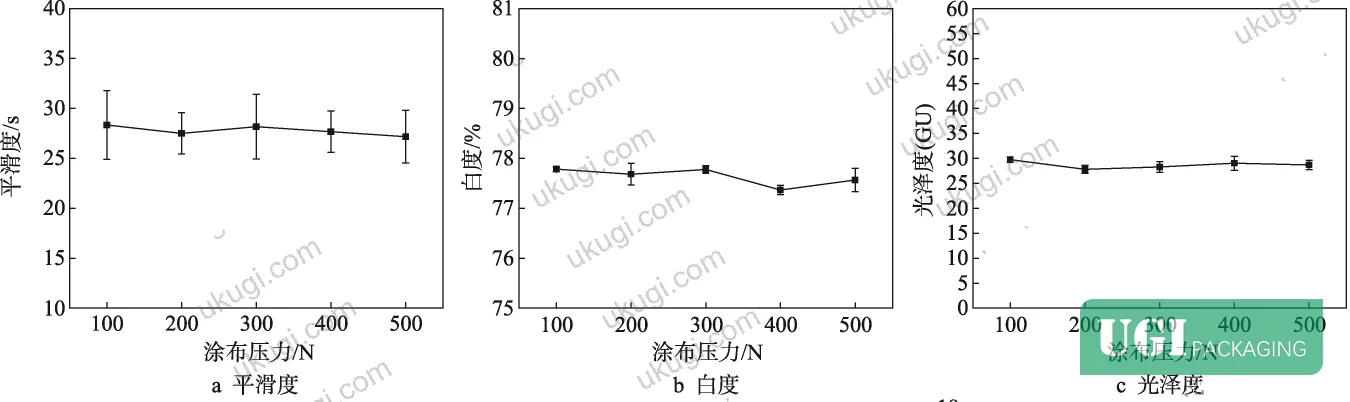
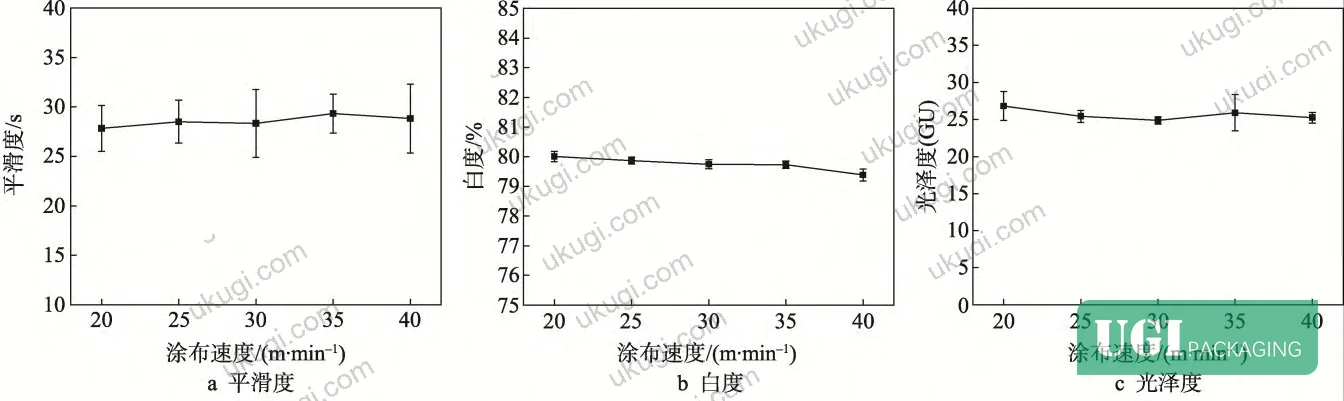
Pressure has zero measured effect on smoothness, whiteness, glossiness, or bursting strength. And critically, it has no significant effect on mold resistance — boards coated at all five pressure settings showed microscopic mold onset in the 12–14 day range and macroscopic onset in the 13–15 day range. If your supplier tells you they can compensate for low coating weight by increasing pressure, that is incorrect.
Coating speed (20–40 m/min) is even simpler: it has no effect on any measured physical or mold-resistant property. The mechanism is straightforward — higher speed increases the volume of varnish transferred per unit time, but simultaneously reduces dwell time between the coating rod and board surface. These effects cancel out. Line speed optimization is a production efficiency decision, not a quality decision.
Most procurement teams don’t realize that functional coating standards for packaging — particularly in high-humidity markets — are increasingly being written around Cobb values rather than coating weight alone, because Cobb testing is fast, standardized, and directly correlates to in-field performance. The shift toward Cobb-based acceptance criteria in supplier agreements is already visible in export packaging specs coming out of European brand owners. Buyers who still only specify “anti-mildew varnish applied” without a Cobb60 threshold are leaving real quality risk on the table.
For completeness, refer to ASTM D882 Standard Test Method for Tensile Properties of Thin Plastic Sheeting if your substrate specification also includes laminated or film-lined board variants — the mechanical testing methodology translates across substrate types.
Practical Guidance for Buyers #
If you’re sourcing coated board for premium packaging — liquor boxes, high-end gift cartons, or cosmetics packaging solutions headed to humid markets — the anti-mildew varnish specification needs to appear in your substrate tech sheet, not just a verbal supplier assurance.
The minimum acceptable coating weight is 4.3 g/m². Below this, mold protection is not consistent. At 2.7 g/m², you get acceptable uniformity but not peak protection. At 1.3 g/m² and below, you have essentially unprotected board with a chemical inhibitor that will delay — but not prevent — visible mold within a week. Do not accept these as conforming product.
Specify a Cobb60 acceptance ceiling in your incoming inspection protocol. The tested data shows that a 4.3–4.8 g/m² coating reduces Cobb60 values by approximately 72.3% versus uncoated board. If your baseline uncoated board has a Cobb60 of 40–50 g/m², a conforming anti-mildew coated board should come in under 14 g/m² — use that as your pass/fail threshold.
Pressure matters for moisture barrier quality. Require a minimum application pressure of 200 N in the coating process specification. This is the threshold above which Cobb60 improvements stabilize. Don’t accept “we coat at standard settings” — ask for the specific N value.
For surface-sensitive applications where print quality is critical, the optical trade-offs at ≥4.3 g/m² are real. Smoothness drops sharply, glossiness declines significantly, and whiteness decreases. If your product needs high-fidelity surface printing — foil stamp registration, fine halftone detail — apply anti-mildew varnish as a post-print overcoat, not a pre-coat on raw board. Sequence matters.
At ukugi.com, we manufacture custom paper packaging from Guangzhou with full surface finishing capabilities, including anti-mildew functional coatings for export-grade liquor and gift packaging. We work directly with international brand owners and procurement teams on substrate specification and can support incoming batch verification against the thresholds outlined above.
Need a custom formulation or sample? Request a quote from our team →
Technical Verification Questions #
- What is your measured Cobb60 value (g/m²) for board coated at your standard anti-mildew varnish application weight, and what coating weight (g/m²) does that correspond to — specifically, is it at or above 4.3 g/m²?
- Can you provide mold incubation test data showing both microscopic and macroscopic mold onset times, tested using a mixed fungal inoculum at ≥1×10⁷ CFU/mL under 28 °C high-humidity conditions?
- What coating pressure (in N) does your line operate at, and can you demonstrate via Cobb60 data that the pressure is ≥200 N — the threshold at which water absorption resistance stabilizes?
- At your specified coating weight, what are the measured smoothness, glossiness, and whiteness values post-coating, and how do these compare to the uncoated substrate baseline — specifically, is glossiness degradation within acceptable limits for your print process?
- What is the specific biocide active ingredient in your anti-mildew varnish formulation, and at what concentration is it present? Can you confirm it meets applicable safety standards for the intended end-use market (e.g., food-adjacent packaging, export markets)?
Quality Verification Checklist #
- ☐ Coating weight confirmed at ≥4.3 g/m² via gravimetric method (pre/post coating weight difference on 25 cm × 25 cm sample, conditioned at 23 °C / 50% RH for 24 hours)
- ☐ Cobb60 value of coated board is ≤14 g/m² (representing ≥72% reduction from uncoated baseline), verified per GB/T 1540 or equivalent
- ☐ Mold incubation test shows macroscopic mold onset ≥13 days under 28 °C high-humidity challenge with mixed spore inoculum at ~1×10⁷ CFU/mL
- ☐ Coating pressure documented at ≥200 N in process specification, confirmed by Cobb60 data showing reduction vs. 100 N baseline
- ☐ Bursting strength of coated board shows ≥8% improvement vs. uncoated substrate, tested per GB/T 1539 or ISO 2758:2014
- ☐ SEM or visual inspection confirms no coating streaks or uncoated zones at the specified application weight (uniform film at ≥2.7 g/m² is the minimum for visual uniformity)
- ☐ Glossiness degradation post-coating is within project-specified tolerance (reference baseline: 60.3% reduction at 4.8 g/m² — specify acceptable ceiling for your application)
- ☐ Physical property testing conducted under standardized conditioning per ISO 187:1990 — temperature 23 °C, relative humidity 50%
Key Specifications Table #
| Parameter | Recommended Value | Verification Method |
|---|---|---|
| Anti-mildew varnish coating weight | 4.3–4.8 g/m² | Gravimetric: weigh 25×25 cm sample before/after coating; condition at 23 °C / 50% RH 24 h |
| Cobb60 water absorption (coated board) | ≤14 g/m² (≥72.3% reduction vs. uncoated) | Cobb water absorption test per GB/T 1540-2002 or equivalent, 60-second contact |
| Coating application pressure | ≥200 N | Process parameter log; confirm via Cobb60 comparison against 100 N baseline |
| Macroscopic mold onset (incubation test) | ≥13 days | Mixed spore inoculum at ~1×10⁷ CFU/mL, 28 °C, sealed high-humidity environment |
| Bursting strength improvement vs. uncoated | ≥8.8% | Burst strength test per GB/T 1539-2007; compare coated vs. uncoated same substrate lot |
| Glossiness (post-coating, at 4.3 g/m²) | Acceptable degradation within print spec | Mirror gloss meter per GB/T 8941-2013; document vs. uncoated baseline |
Looking for a manufacturer that meets these specs? Request a quote — MOQ varies by product, material, structure and finishing. Product-specific MOQ is confirmed with each quotation.
References #
Data source: Effect of Water-Based Anti-Mildew Varnish Coating Parameters on the Physical and Mold-Resistant Performance of Coated White Board Substrates for Premium Packaging Applications, L.-F. Li et al., Journal of Applied Polymer Science, 2025
Frequently Asked Questions #
What coating weight of anti-mildew varnish is the minimum effective threshold for packaging board?
The critical threshold is 4.3 g/m². Below this, mold delay times are inconsistent and don’t reach the 11-day improvement seen at the target range. At 2.7 g/m², you get uniform coating and decent protection (mold onset at day 12–14), but peak performance stability only occurs at 4.3 g/m² and above.
Does increasing coating speed reduce the effectiveness of anti-mildew varnish?
No. Testing across 20–40 m/min showed no measurable change in any physical property — smoothness, whiteness, glossiness, bursting strength, water absorption — or in mold onset timing. Line speed is a production efficiency variable, not a quality variable for this application.
What happens to print surface quality when anti-mildew varnish is applied at the recommended coating weight?
There is a real trade-off. At 4.8 g/m², smoothness drops 92.6%, glossiness drops 60.3%, and whiteness decreases 3.6% compared to uncoated board. These are significant numbers for high-quality surface printing. The practical solution is to apply anti-mildew varnish as a post-print overcoat rather than treating it as a base substrate preparation step.
Why does coating pressure affect water resistance but not mold resistance?
Pressure influences the physical adhesion and uniformity of the varnish layer against the board surface, which directly affects barrier continuity against moisture. However, the anti-mildew chemical action depends on the biocide concentration already present in the applied varnish — pressure doesn’t alter the chemistry, so mold delay times remain in the 12–15 day range regardless of whether you coat at 100 N or 500 N. The key pressure threshold for moisture resistance is 200 N, where Cobb60 drops 33.3% versus the 100 N setting.
Is water-based anti-mildew varnish appropriate for food-adjacent or export packaging?
Water-based formulations are generally preferred for export markets due to lower VOC content and better alignment with environmental and safety regulations. However, buyers must verify the specific biocide ingredient and concentration against the target market’s food contact or indirect contact regulations — requirements differ significantly between North America (FDA CFR Title 21), the EU, and Southeast Asian markets. Do not assume compliance; request the material safety data sheet and confirm the active ingredient against applicable standards.
Published by ukugi.com Technical Team | Request a quote


