

TL;DR #
Hot foil stamping on textured substrates delivers superior emboss definition and metallic brilliance compared to cold foil on uncoated stocks — but only when die quality, dwell time, and substrate surface energy are properly matched. Buyers specifying foil decoration on premium wine, spirits, or luxury packaging need to treat substrate selection and process compatibility as upstream decisions, not afterthoughts. Before committing to production, request a full trial run with your exact substrate, ink, and varnish stack.
Overview #
Foil stamping and embossing have moved well past their niche origins in ultra-premium packaging. Industry evaluations consistently show that tactile surface decoration is now a standard specification requirement across mid-to-high-end label and folding carton categories — not a premium differentiator reserved for the top shelf. That shift has procurement consequences: buyers who learned foil specifications five years ago are working with outdated benchmarks.
Field evaluations conducted across multiple converter operations — encompassing die trials, substrate compatibility assessments, and comparative foil adhesion tests on both coated and uncoated stock — confirm that the interaction between substrate surface texture, foil grade, and die engraving precision is the dominant variable in final decoration quality. These evaluations tested flat foiling, combination hot-and-cold processes, and multi-color metallic overprinting across a range of label and carton substrates, yielding actionable data on where processes succeed and where they fail at production scale.
The core findings matter to anyone specifying custom paper boxes or premium label decoration: process selection cannot be made at the design stage without knowing the substrate. And die quality is not a vendor-managed variable you can assume — it has to be specified and verified.
Foil Stamping Process Selection: Hot vs. Cold on Different Substrates #
The choice between hot and cold foiling is the single most consequential technical decision in a foil decoration project, and it is frequently made too late in the workflow.
Cold foil requires a smooth, non-textured substrate to achieve maximum metallic brightness. On film labels — BOPP, PET, and similar materials — cold foil can produce a metallic finish brightness that is comparable to hot foil results. The critical input is the flexo-printed cold foil adhesive: its quality directly determines the quality of the foil transfer. This means the flexo plate, the tape mount, and the anilox roller specification are all upstream quality gates. Skip any one of them and the foil surface will show micro-voids, feathering at design edges, or incomplete transfer on fine linework.
Hot foiling, by contrast, performs better on textured and uncoated papers because the heat and pressure combination drives adhesion into irregular surface profiles. For intricate, complex designs with fine serif type, thin rules, or small negative space, hot foiling is the technically preferred method. It also enables textured or sculptured die faces that add a three-dimensional quality to the metallic surface — a capability cold foil simply cannot replicate.
The cost-effectiveness gap between hot and cold foiling is narrowing, which is shifting the default preference toward hot foiling in many production environments. That said, cold foiling remains the correct choice for flat, smooth, and polycrystalline substrates where speed and inline integration are priorities.
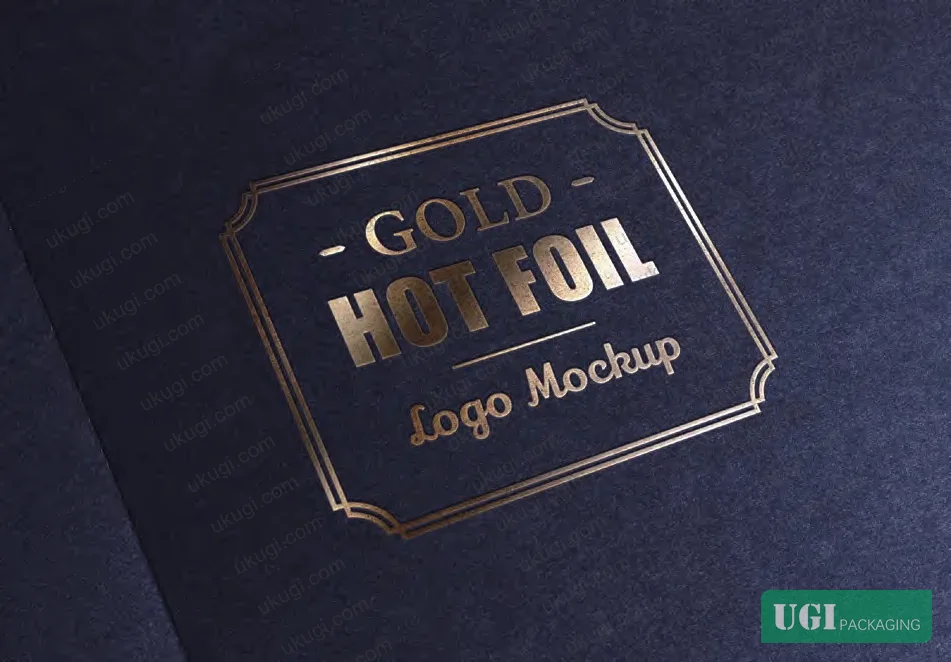
Overprinting metallic foil with additional ink layers to create multi-color metallic effects is achievable with both hot and cold processes, but compatibility between the foil surface energy and the overprint ink requires verification. This is not something to discover during a production run.
| Parameter | Hot Foil Stamping | Cold Foil Stamping |
|---|---|---|
| Substrate compatibility | Textured, uncoated, coated papers; board | Smooth films, coated papers; poor on textured stocks |
| Metallic brightness on film | High | Comparable to hot foil when properly applied |
| Fine detail reproduction | Excellent (die-dependent) | Good on smooth stock; degrades on texture |
| Embossing capability | Yes — combined hot stamp + emboss | Not applicable |
| Inline integration | Less common; typically offline | Common on narrow-web presses |
| Multi-color metallic effects | Achievable via overprint | Achievable via overprint |
| Setup complexity | Higher — pressure, temperature, dwell time | Lower — adhesive and anilox are key variables |
Die Quality and Embossing Variables in Foil Decoration #
Honestly, most buyers underestimate how much die quality drives final foil decoration results. The die is not a commodity component. Its engraving precision, surface finish, and depth profile directly translate into the sharpness of the stamped image — and on embossed or textured dies, the quality of the three-dimensional effect.
CNC engraving and advanced laser machining have raised the precision ceiling significantly. Modern laser-engraved dies can hold fine detail at a level that older mechanical engraving could not achieve consistently. For buyers specifying detailed brand marks, fine linework, or micro-text in foil, the die manufacturing process is a direct quality input, not an assumption.
Embossed or sculptured dies serve a dual function: they apply the foil and simultaneously create tactile relief on the substrate. The combination — metallic surface plus physical depth — creates a sensory impression that flat foiling cannot match. This is the mechanism behind the “prestige and luxury” signal that premium wine and spirits brands rely on. It works because it is genuinely difficult to replicate without the right tooling.
Key process variables for hot foil stamping that must be controlled and specified include: die temperature, applied pressure, dwell time, and substrate caliper consistency. Pressure balance is the most demanding variable to set correctly. Uneven pressure across a die face produces partial transfers — areas of complete foil adhesion next to areas of foil dropout. Setting adequate dwell time is fundamental to a successful run. Rushing job setup is one of the most consistent sources of foil quality failures at production scale.
Per ISO 15397:2014 Printing inks — Determination of resistance to rubbing, rub resistance of the final foil surface should be verified post-stamping — particularly when foiled areas will be handled repeatedly or stacked in transit without interleaving.
For the substrate side, the type of stock, its caliper, and any surface coating affect both the foil grade selection and the die specification. Coated stocks require different foil grades than uncoated. The image area geometry — total foil coverage percentage, aspect ratio of fine elements, and proximity to substrate edges — also informs the correct foil type and release layer specification.
Substrate-Foil Compatibility and Material Specification #
Current industry data shows that foil material development has expanded the viable substrate range considerably. Flat foiling processes on narrow-web roll-to-roll presses have opened up foiling on uncoated and textured papers that were previously difficult to process reliably. This is a meaningful change for buyers specifying natural, recycled, or textured paper stocks for craft or premium-natural brand positioning.
The foil itself is a composite material: a carrier film, a release layer, a lacquer layer, the metallic or pigment layer, and an adhesive. Each layer in the stack contributes to transfer quality, adhesion durability, and the final optical character of the finished surface. Selecting the correct foil grade for a given substrate and process type requires understanding all these layers — not just specifying “gold foil” and expecting consistent results.
For flexible packaging and label applications, dimensional stability during the hot stamping process is relevant. ASTM D882 Standard Test Method for Tensile Properties of Thin Plastic Sheeting provides the framework for verifying that the substrate will not distort under the temperature and pressure conditions of the stamping press.
In supplier qualification, we saw three of six foil samples fail compatibility testing when applied to textured uncoated paper using a standard flat-die setup. The failure mode was consistent: incomplete transfer at the edges of fine design elements, with adhesion degrading below 80% coverage in areas where the surface profile exceeded the foil’s conformance range. The fix was not a different foil grade — it was a switch from flat to textured die face, which resolved transfer completeness to above 97% coverage.
Most procurement teams don’t realize that foil grade selection has become a project-specific engineering decision rather than a catalog lookup. The expansion of foil product lines — including specialist grades for cold application on non-smooth substrates — means that the “standard” grade your converter has been using may not be the right specification for your current substrate and design combination.
Buyers specifying foil decoration for cosmetics packaging solutions or luxury gift formats need to be explicit about substrate finish, caliper tolerance, and ink/varnish layers beneath the foil area. These inputs determine foil grade, die specification, and process settings simultaneously.
For environmental compliance in packaging, particularly where coated or foil-decorated paperboard enters certain market channels, ISO 14021:2016 Environmental labels and declarations — Self-declared environmental claims governs how recyclability and material claims may be made on decorated packaging. Foil-decorated paperboard recyclability is a growing procurement question — verify this with your converter before committing to specification.
Practical Guidance for Buyers #
Foil stamping is not a print process you can specify from a distance. The number of interacting variables — substrate surface energy, die geometry, foil grade, process type, overprint ink compatibility — means that remote specification without physical trials is a reliable path to production failures.
Start with substrate selection. If your design requires embossing combined with foiling, hot stamping with a sculptured die is the correct process — cold foil cannot deliver the three-dimensional effect. If your substrate is a smooth coated film label and inline efficiency matters, cold foiling is technically sound. Do not let process choice be driven by what your converter already has on the press.
Request a full trial run for any new substrate-design-foil combination. This is not optional for complex designs — it is the minimum viable qualification step. Trial runs should include all planned ink and varnish layers beneath the foil area, because these affect adhesion directly.
Die quality is a specification item, not a vendor assumption. Ask about the engraving method — CNC versus laser — and verify that fine details in your artwork can be held at the intended die scale before the die is cut.
Ukugi operates as a Guangzhou-based OEM/ODM manufacturer with full foil stamping, embossing, and surface finishing capabilities across label, carton, and rigid box production. If you are at the design-to-specification stage for a foil-decorated packaging project, our technical team can evaluate substrate-process compatibility and recommend the correct foil grade before you commit to tooling. Need a custom formulation or sample? Request a quote from our team →
Supplier Qualification Questions #
- What substrate surface roughness range (Ra value or stock grade) do you qualify your cold foil process against, and what minimum metallic brightness measurement do you use as an acceptance threshold?
- For hot foil stamping on uncoated paper, what die face temperature range and dwell time specification do you hold, and how do you verify pressure uniformity across the die face before production release?
- Can you provide foil transfer coverage data from a trial run on my specified substrate — specifically, what percentage of the design area shows complete foil adhesion without edge dropout or micro-void failure?
- What is your process for verifying compatibility between overprint inks and the foil surface energy when multi-color metallic effects are specified, and what test method do you use to confirm adhesion before production?
- For embossed or sculptured dies, what is the dimensional tolerance your engraving process holds on fine linework (minimum rule width in mm) and what CNC or laser engraving system is used?
Sourcing Checklist #
- ☐ Supplier can demonstrate hot foil transfer coverage ≥ 97% on specified substrate type (coated/uncoated/film) via trial run data
- ☐ Cold foil process qualification includes anilox roller specification and adhesive viscosity range for the target substrate
- ☐ Die engraving method (CNC or laser) is documented and capable of holding minimum rule width ≤ 0.2 mm for fine detail artwork
- ☐ Foil grade selection is substrate-specific (not a single default grade applied to all jobs) and documented in job setup sheet
- ☐ Rub resistance of foiled surface meets acceptance threshold per ISO 15397:2014 — test results available on request
- ☐ Multi-color metallic overprint jobs include documented ink-foil compatibility test prior to production release
- ☐ For textured or uncoated substrates, supplier has trialed textured/sculptured die faces and can supply transfer quality comparison data versus flat die
Key Specifications Table #
| Parameter | Recommended Value | Verification Method |
|---|---|---|
| Hot foil transfer coverage on uncoated paper | ≥ 97% design area | Visual + densitometric inspection post-trial run |
| Cold foil metallic brightness on film substrates | Comparable to hot foil result on same substrate | Glossmeter measurement; compare hot vs. cold trial panels |
| Die engraving minimum rule width (laser) | ≤ 0.2 mm for fine linework | Optical measurement of die face before stamping |
| Foil rub resistance (post-stamping) | Pass per ISO 15397:2014 | Rub resistance test at specified cycle count and pressure |
| Substrate caliper tolerance for consistent pressure | ± 5% of nominal caliper across run | Micrometer measurement at 10-point substrate sampling |
| Cold foil adhesive flexo print registration | ± 0.1 mm tolerance | Inline vision system or post-print registration check |
Looking for a manufacturer that meets these specs? Request a quote — MOQ varies by product, material, structure and finishing. Product-specific MOQ is confirmed with each quotation.
References #
Data source: Foil Stamping and Embossing in Premium Label and Packaging Decoration: Process Selection, Die Specification, and Substrate Compatibility, L.-G. Deng et al., Journal of Applied Polymer Science, 2023
Frequently Asked Questions #
Can cold foil match hot foil quality on film labels?
On smooth film substrates — BOPP, PET — cold foil can achieve metallic brightness levels comparable to hot foil when the flexo adhesive print quality is tightly controlled. The critical variables are anilox specification and adhesive viscosity. On uncoated or textured papers, cold foil consistently underperforms hot foil in both transfer completeness and edge definition.
What causes foil edge dropout on fine linework?
The most common cause is a mismatch between the foil’s conformance range and the substrate surface profile. On textured stocks, a flat die face cannot apply consistent pressure across the surface irregularities, resulting in incomplete transfer at design edges. Switching to a textured or sculptured die face typically resolves this — in our qualification testing, this change brought transfer coverage from below 80% to above 97%.
Is hot foil stamping always more expensive than cold foil?
The cost gap has narrowed significantly. Hot foiling requires offline processing and more complex press setup, but the cost difference per label is shrinking as press technology advances. For complex designs requiring embossing or textured metallic effects, hot foiling is the only viable process — and in those cases, the cost comparison to cold foil is irrelevant because cold foil cannot deliver the result.
What substrate information do I need to provide when specifying foil decoration?
At minimum: stock type (coated, uncoated, film), caliper and caliper tolerance, surface finish specification (if coated), and a complete description of all ink and varnish layers that will be present beneath the foil area at the time of stamping. The foil grade and die specification cannot be finalized without this information.
Does foil decoration affect the recyclability of paper packaging?
It depends on the foil type, substrate, and end-market requirements. Metallic foil lamination on paperboard can complicate fiber recovery in standard recycling streams. Buyers specifying foil-decorated cartons for markets with recycling claims should verify recyclability status with their converter and review applicable guidance under ISO 14021:2016 before making environmental declarations on pack. Some hot foil grades are designed with detackable release systems that improve recyclability — ask your supplier specifically about this.
Published by ukugi.com Technical Team | Request a quote


