

TL;DR #
Among the digital foil stamping technologies evaluated, the sublimation-plus-foil single-pass process delivers the strongest combination of registration accuracy (±0.1 mm), wash durability, and cost efficiency — outperforming both traditional hot stamping and standalone inkjet foil methods. For buyers sourcing short-run or customized metallic-effect packaging and apparel decoration, this process eliminates the secondary alignment step that accounts for the majority of quality failures in traditional workflows. Request samples using the high-temperature sublimation foil (rated 190–220°C) and verify adhesion against a 140–160°C / 8–12 s heat-press cycle before approving production.
Overview #
Most procurement teams approach foil stamping as a solved problem — pick a supplier, specify gold or silver, approve a sample, done. That framing misses the real complexity. Foil stamping has fragmented into at least six technically distinct process families, each with different substrate requirements, registration tolerances, durability profiles, and cost structures. Choosing the wrong process for your product category is a fast path to rework, delamination complaints, and missed delivery windows.
The analysis underpinning this article draws on process evaluation work conducted at an industrial printing and surface finishing facility, covering both traditional and emerging digital foil processes across multiple substrate categories — paperboard packaging, textile garments, and rigid specialty materials. Test conditions included heat-press cycles from 80°C to 220°C, pressure ranges of 3–6 kg/cm², and hold times of 8–25 seconds, with wash-fastness and abrasion resistance assessed across process variants.
What follows is a structured breakdown of where each process genuinely performs, where it fails, and what the procurement decision should actually hinge on. If you’re sourcing custom metallic decoration — whether for cosmetics packaging solutions, custom paper boxes, or garment decoration — this guide is the starting point.
Digital Inkjet Foil Stamping: Process Architecture and Real-World Limits #
Inkjet-based foil stamping has been commercially discussed since around 2010, when early wide-format platforms introduced metallic silver inks based on weak-solvent (ECO-Sol) chemistry. The execution never matched the promise. Ink prices remained prohibitively high, the ink system stability was poor, and printhead wear costs escalated quickly. That fundamental problem hasn’t gone away — it’s just been reframed by newer UV inkjet systems that still struggle with adhesive and varnish stability compared to conventional UV inks.
The practical architecture of inkjet foil stamping works as follows: a UV varnish or adhesive is inkjet-printed onto the substrate, the foil film is pressed into the adhesive zone, UV-cured (or pressure-cured for cold-transfer variants), then peeled at 180° to leave the foil selectively adhered to the printed pattern. The peel angle matters — film pulled at any angle other than 180° produces tearing artifacts and edge lifting.
Where inkjet foil genuinely earns its place is short-run digital customization. The plateless nature means zero tooling cost and zero setup time for design changes. Printhead resolution runs at 200–300 dpi for thermal transfer variants, which is adequate for display-scale graphics but will not hold fine reversed text or sub-1 mm line work reliably.
The failure mode that comes up repeatedly in supplier qualification: thermal transfer printheads accumulate contamination from the foil carrier film over extended production runs, causing dropout artifacts in transferred image areas. Printhead replacement costs are high and the damage is not field-repairable. This makes inkjet foil systems economically suited to short-run proofing and sample production — not to continuous high-volume production.
Honestly, most buyers over-specify the printhead resolution requirement for foil stamping. At typical viewing distances for packaging and garment decoration, 200 dpi foil registration is perceptually indistinguishable from finer output. The real specification to test is adhesion durability and edge definition — not headline dpi figures.
The ASTM D882 Standard Test Method for Tensile Properties of Thin Plastic Sheeting provides a useful framework for characterizing the PET base film behavior in foil systems, particularly when evaluating film elongation at transfer temperatures. Buyers specifying foil for flexible substrates should request film tensile data alongside transfer process parameters.
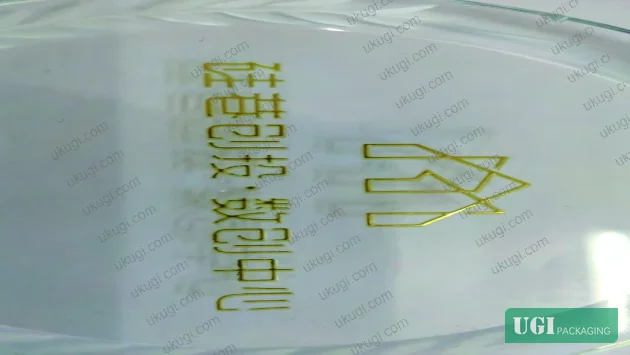
Sublimation + Foil Single-Pass: The Process That Actually Changes the Economics #
This is the process that has genuinely moved the market in recent years, and it deserves a full technical breakdown. The combination process — industry shorthand: FOIL Sublimation — integrates dye-sublimation color printing with foil transfer in a single heat-press cycle. One machine, one print pass, one press operation, simultaneous color and metallic output.
The physics work like this: sublimation disperse dye inks and a dedicated foil adhesive are printed in separate channels on a transfer film or sublimation paper. At 190–210°C under 3–6 kg/cm² pressure for 15–25 seconds, two things happen simultaneously — dye molecules transition from solid to gas phase and migrate into the fiber structure of the substrate, while the heat-activated foil adhesive grips the metallized layer of the transfer foil and bonds it to the substrate surface. Non-adhesive zones release cleanly during peel.
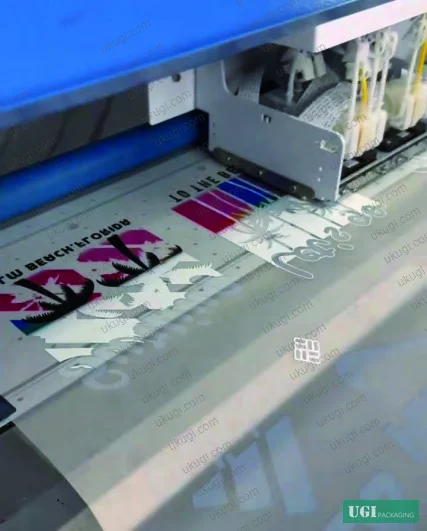
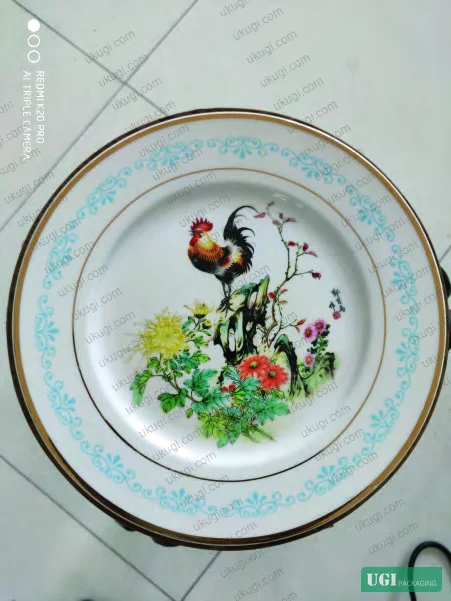
The key material breakthrough enabling this is the high-temperature sublimation foil film. Traditional foil films are rated for 100–150°C — expose them to 200°C and they fail immediately: the release layer fuses, adhesive bleeds, metallization hazes or discolors. The new-generation films are fully reformulated: base film is a high-temperature PET grade, release layer is thermally stable to the process window, adhesive activates only above 180°C (no premature bonding at ink-drying temperatures), and the aluminum layer is oxidation-resistant and haze-free throughout the 190–220°C operating range.
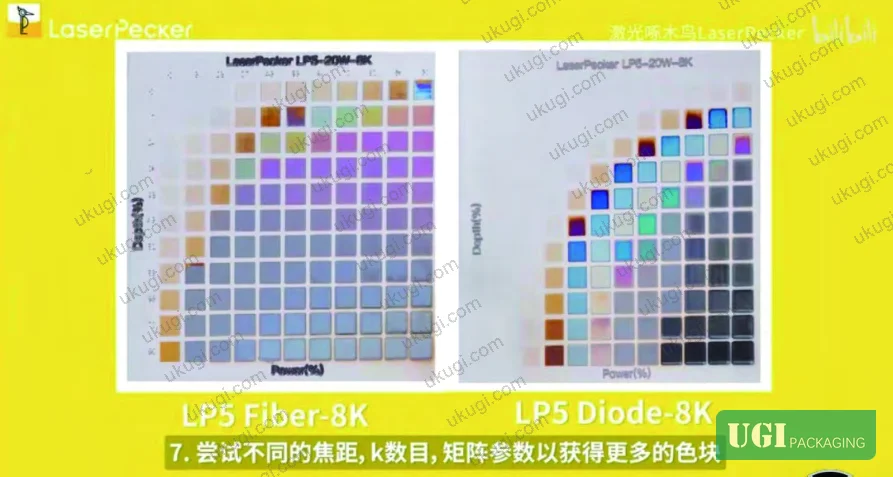
Registration tolerance in the combined process is ±0.1 mm — achieved through synchronized multi-channel printhead control with digital positioning. That’s tighter than most secondary hot-stamping operations can hold on textile substrates, and it eliminates the registration step entirely.
The process yields a 50%+ efficiency improvement over traditional two-step workflows (sublimation print → separate foil stamping operation), and it’s compatible with polyester, polyester-cotton blends, synthetic fibers, and coated fabrics. It is not compatible with 100% natural cotton without a polyester coating treatment, because sublimation chemistry requires a polymer receptor to fix the dye.
In terms of durability: wash fastness, abrasion resistance, and UV exposure resistance all meet standard apparel performance benchmarks. The foil layer doesn’t powder, crack at edges, or delaminate under normal wash cycles — a direct improvement over the screen-print gold ink approach, which sacrifices gloss for wash durability but still doesn’t achieve mirror-foil quality.
This is the process we see specified most often for premium custom T-shirts, branded workwear, sports apparel, gift packaging inserts, and fashion accessories — anywhere that combines photographic-quality imagery with localized metallic accent. For buyers sourcing custom labels and stickers or apparel decoration at short-run MOQs, the single-pass process deserves serious evaluation.
The two-route workflow options for garment foil integration are:
Route 1 (foil-after-transfer): Complete DTF borderless transfer print first (color + white ink + hot-melt adhesive → heat-pressed to fabric). Apply foil adhesive (UV or water-based) to the transferred print surface, apply foil film, second press at 140–160°C / 8–12 s. Foil bonds only to adhesive zones; excess peels. Most stable, most commonly adopted.
Route 2 (simultaneous one-pass): DTF print with color + white + foil adhesive channels synchronized. Apply hot-melt powder, melt, dry. Apply foil film and single press — transfer print and foil bonding complete simultaneously. Faster, but requires precise channel management to avoid adhesive bleed.
Laser Colorization and Holographic Transfer: Where the Technology Is Heading #
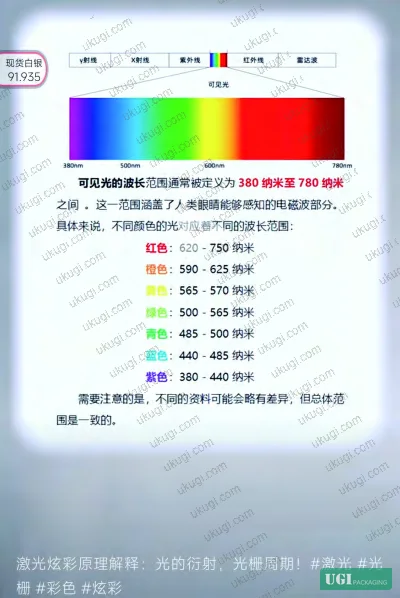
Laser-based metal colorization using picosecond and femtosecond pulse technology represents a genuinely different approach to metallic decoration — no foil, no ink, no plating chemistry. Two coloration mechanisms operate depending on substrate metal:
Thermal oxide colorization (primary application: stainless steel, titanium alloys): controlled laser heating generates ultra-thin oxide films (80–800 nm) on the metal surface. Color is determined entirely by film thickness via thin-film interference. Characteristic color-to-thickness mapping: blue at 80–120 nm, gold at 150–220 nm, red at 280–350 nm. The Cr₂O₃ and TiO₂ oxide chemistries involved are well characterized.
Micro-nano structural colorization (primary application: aluminum, copper, high-reflectance metals): laser ablation creates nanoscale gratings, dot arrays, and groove structures (LIPSS — Laser-Induced Periodic Surface Structures). Color production is through grating diffraction and surface plasmon resonance, enabling rainbow and pure spectral colors.
Key process parameters controlling output quality:
- Pulse width: picosecond (10⁻¹² s) or femtosecond (10⁻¹⁵ s) — minimal heat-affected zone, no burr formation
- Energy density: 5–15 J/cm², surface-only effect with no substrate penetration or deformation
- Repetition rate: 100–200 kHz, controls oxide growth rate and film thickness
- Scan speed: 800–1,200 mm/s, manages thermal accumulation and color uniformity
- Ambient oxygen: 15–25% required — outside this range, oxide layer composition shifts and target colors (particularly gold) cannot be reliably achieved

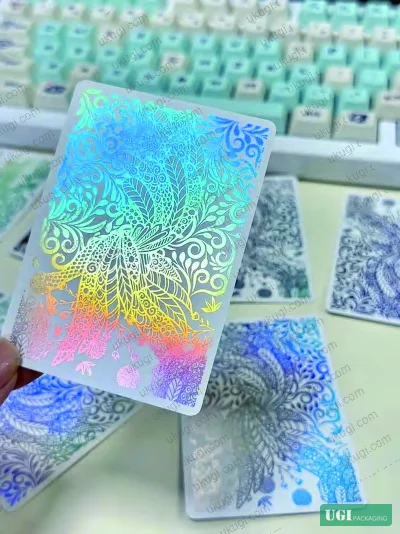
Most procurement teams don’t realize that laser metal colorization has moved from specialty industrial applications into mainstream decorative production. The cost barrier dropped significantly as domestic Chinese equipment manufacturers closed the gap with Western laser systems, and key software that was previously under patent restriction has been superseded by open-architecture alternatives. What was a ¥500,000+ specialty process five years ago is now available at a fraction of that cost from a growing supplier base.
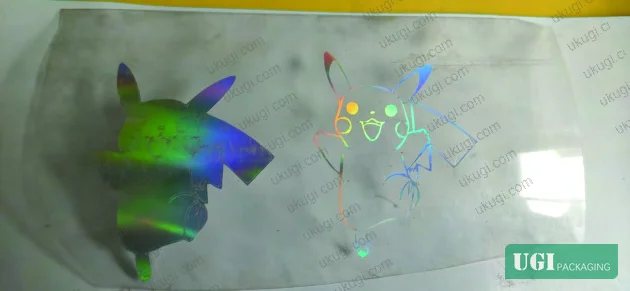
For holographic and laser transfer applications, the dominant production route is film transfer: a PET carrier film with pre-fabricated micro-nano gratings and holographic master patterns is vacuum-metallized, then coated with release and adhesive layers. The film is laminated to the target substrate (paper, plastic, glass, ceramic), heat-pressed or UV-cured, then stripped — leaving the holographic metallic structure on the substrate. Selective transfer is achievable, the film is reusable for multiple impressions, and the process cost is lower than direct laser engraving at production volumes.
The ISO 15397:2014 standard for printing inks — determination of resistance to rubbing is directly relevant when qualifying holographic foil and laser transfer products. Abrasion resistance testing per this standard should be a baseline requirement in any supplier qualification for metallic decoration that will be handled in retail environments.
Foil Process Comparison: Decision Framework by Application #
The table below consolidates performance and capability data across the main foil stamping process families. These values represent typical production conditions, not best-case laboratory results.
| Process | Temperature / Pressure | Substrate Compatibility | Typical Application | Registration Tolerance | Wash / Abrasion Durability | Run Economics |
|---|---|---|---|---|---|---|
| Traditional hot stamping (brass die) | 80–120°C / high pressure | Paperboard, rigid packaging, flat textiles | Long-run packaging, books, luxury boxes | ±0.3–0.5 mm | High (hard surface) | High setup cost, low unit cost at volume |
| Screen print gold ink (simulated foil) | Ambient / squeegee | Textiles, flat substrates | T-shirts, promotional garments | ±1 mm (mesh-limited) | Moderate wash; no mirror finish | Low setup, medium unit cost |
| UV cold foil (offset/flexo inline) | Cold transfer + UV cure | Coated paperboard, labels | Labels, cartons, folding boxes | ±0.2 mm | Good for paper; limited textile use | Medium setup, efficient at mid-volume |
| Inkjet foil (digital plateless) | 80–120°C / low pressure | Flat coated board, card | Short-run samples, custom packaging | ±0.3 mm | Adequate for non-washed applications | No tooling, high unit cost; printhead wear risk |
| Sublimation + foil single-pass | 190–210°C / 3–6 kg/cm², 15–25 s | Polyester, poly-cotton, coated fabric | Apparel, soft goods, custom gifts | ±0.1 mm | High wash and abrasion fastness | No tooling, 50%+ efficiency vs. two-step |
| Laser metal colorization | 5–15 J/cm², 800–1,200 mm/s scan | Stainless steel, titanium, aluminum, copper | Industrial marking, premium gifts, electronics | Sub-0.1 mm | Permanent (oxide/structural) | High equipment cost, low consumable cost |
Practical Guidance for Buyers #
The process selection decision comes down to three variables: substrate type, run volume, and the durability requirement of the end use. Buyers routinely make expensive mistakes by defaulting to traditional hot stamping for all applications — it’s a well-understood process, but it’s the wrong tool for short-run customization, textile decoration, or any situation where secondary alignment operations create cost and quality risk.
For rigid packaging — cartons, boxes, labels — the UV cold foil inline process remains the most cost-efficient option at mid-to-high volumes. For textile and soft-goods applications requiring combined photographic color and metallic effect, the sublimation-foil single-pass process is now the technical and economic benchmark. For premium hard goods (gifts, electronics, jewelry) where permanent metallic marking is required without consumables, laser colorization is the only process that delivers truly permanent, non-degradable results.
Substrate preparation matters more than most buyers appreciate. Inkjet-based foil systems in particular require surface energy management — different ink chemistries require different pre-treatment fluids (corona treatment, primer coating, or plasma activation) to achieve adequate adhesion. A supplier who cannot specify the pre-treatment protocol for your substrate is not technically qualified to run the job.
We produce foil-stamped packaging and decoration across all major process categories from our Guangzhou facility — from inline cold foil on coated paperboard to high-temperature sublimation foil on custom garment transfers. International brand owners and packaging buyers can request sampling across process types before committing to a production specification.
Need a custom formulation or sample? Request a quote from our team →
Technical Verification Questions #
- What is the peel angle and peel speed specification used in your UV cold foil transfer process, and what adhesion force (N/25 mm) do you measure on coated paperboard at your standard process conditions?
- For the sublimation-foil single-pass process, what is the validated temperature window (°C), pressure (kg/cm²), and dwell time (seconds) you use, and how do you verify that foil adhesive and sublimation dye activate within the same thermal cycle without intermixing?
- What printhead resolution (dpi) does your inkjet foil system operate at, and what contamination cleaning protocol and printhead replacement interval do you apply to prevent dropout artifacts in transferred foil areas?
- If offering laser metal colorization, what pulse width (picosecond or femtosecond), energy density (J/cm²), and ambient oxygen concentration (%) do you control during processing, and how do you verify oxide film thickness for color-targeted outputs like gold (150–220 nm)?
- For high-temperature sublimation foil film, what is the rated operating temperature of the film (°C), and can you provide delamination and haze test data confirming the metallized layer integrity after 200°C heat-press exposure?
Quality Verification Checklist #
- ☐ Foil transfer registration tolerance verified at ±0.1 mm or better via digital overlay measurement for sublimation-foil combined process
- ☐ Heat-press parameters documented: temperature 190–210°C, pressure 3–6 kg/cm², dwell time 15–25 s for single-pass sublimation foil
- ☐ High-temperature foil film rated 190–220°C; sample confirms no adhesive bleed, metallization haze, or discoloration after 200°C press test
- ☐ Wash fastness tested and passed for garment foil applications (minimum standard wash cycle assessment, no powder loss or edge cracking)
- ☐ UV cold foil adhesion on coated paperboard confirmed per ASTM D1670 Failure End Point in Accelerated and Outdoor Weathering of Adhesives or equivalent peel test protocol
- ☐ Inkjet foil system printhead resolution confirmed ≥200 dpi; contamination maintenance schedule documented and printhead replacement cost disclosed
- ☐ For laser colorization: ambient oxygen concentration 15–25% confirmed during processing; color-to-oxide-thickness calibration data available for blue (80–120 nm), gold (150–220 nm), and red (280–350 nm) outputs
- ☐ Substrate pre-treatment protocol (primer, corona, plasma) documented for each ink/adhesive system used in inkjet foil workflows
Key Specifications Table #
| Parameter | Recommended Value | Verification Method |
|---|---|---|
| Sublimation-foil heat-press temperature | 190–210°C | Calibrated thermocouple at platen surface; verify ±5°C uniformity |
| Sublimation-foil pressure | 3–6 kg/cm² | Pressure-sensitive film (e.g., Fujifilm Prescale) across platen area |
| Foil registration tolerance (digital process) | ±0.1 mm | Digital overlay measurement of test target, 10-point across print area |
| High-temp foil film operating range | 190–220°C | Heat aging test: 200°C × 30 s; inspect for haze, adhesive bleed, delamination |
| Inkjet foil printhead resolution | ≥200 dpi | Test chart print; measure dot placement under 10× loupe |
| Laser colorization energy density | 5–15 J/cm² | Power meter measurement at workpiece plane; verify for each metal substrate type |
| Laser oxide film thickness (gold color) | 150–220 nm | Spectrophotometric reflectance or AFM surface measurement |
| Ambient oxygen during laser colorization | 15–25% | Inline O₂ sensor in processing enclosure |
Looking for a manufacturer that meets these specs? Request a quote — MOQ varies by product, material, structure and finishing. Product-specific MOQ is confirmed with each quotation.
References #
Data source: Digital Foil Stamping Technologies for Custom Decoration: Process Classification, Material Development, and Combined Printing Workflow Performance, N. Tang et al., Journal of Applied Polymer Science, 2023
Frequently Asked Questions #
Can the sublimation-foil single-pass process work on cotton fabric?
No — and this is one of the most common specification errors we encounter. Sublimation dye chemistry requires a polymer receptor (polyester or polyester-coated fiber) to fix the dye through gas-phase penetration into fiber structure. On 100% natural cotton, the dye will not bond and will wash out. The foil adhesive component can still transfer, but without the color layer functioning correctly, the result is unusable. For natural fabric substrates, DTF with a separate foil lamination step is the correct process.
What causes the dropout artifacts in inkjet foil transfers, and can they be prevented?
Dropout is almost always printhead contamination — foil carrier film leaves adhesive residue on thermal transfer heads during extended runs, which gradually blocks nozzle firing. Prevention requires a documented cleaning cycle, but once thermal damage occurs to the nozzle array, it cannot be field-repaired and the head must be replaced. This is why inkjet foil is correctly positioned for short-run and sampling work, not continuous production.
What is the difference between traditional foil film and high-temperature sublimation foil film?
Traditional foil film is rated 100–150°C — adequate for cold foil, conventional hot stamping, and standard transfer processes. High-temperature sublimation foil film is a fully reformulated product rated 190–220°C, with a heat-activated adhesive layer that only becomes active above 180°C. This prevents premature bonding during ink drying and enables the film to survive the 200°C sublimation press cycle without adhesive bleed, metallization haze, or release layer failure. The two film types are not interchangeable.
How permanent is laser metal colorization compared to foil stamping?
Laser colorization is significantly more durable. The color effect is produced by a physical surface structure (oxide film or micro-nano grating) that is integral to the metal itself — there is no coating, film, or ink layer to abrade, delaminate, or fade. Foil stamping, by contrast, produces a transferred metallic layer bonded by adhesive, which is subject to mechanical abrasion and eventual bond degradation. For premium hard-goods decoration (watch cases, jewelry components, gift metal hardware), laser colorization is the correct long-term specification.
Is UV cold foil suitable for small reversed text on packaging?
Yes, with qualification. Field evaluations have shown that UV cold foil via offset or flexo inline processes can hold reversed (negative) small text at 6–8 pt with acceptable edge definition on well-coated substrates. Screen-print-based UV cold foil is a different matter — the precision is substantially lower due to mesh geometry limitations, and this route is rarely practical for fine-detail work. For critical small-text applications, always request a press proof on your exact substrate before approving the process.
Published by ukugi.com Technical Team | Request a quote


