

TL;DR #
Flexographic printing captures over 75% of the corrugated container market in developed economies, with flexo lines demonstrating efficiency figures that exceed offset at long runs and approach gravure at medium volumes — the data is unambiguous. For buyers sourcing folding cartons, corrugated shippers, or gift packaging at scale, the choice of printing technology directly determines unit cost, turnaround speed, and whether your packaging meets environmental compliance thresholds in key export markets. Audit your current supplier’s flexo press configuration — specifically whether they run ceramic anilox rolls and in-line UV capability — before committing to a production volume.
Overview #
The packaging industry’s shift toward flexographic printing is not a trend you evaluate from the sidelines — it’s a procurement decision with direct cost consequences. Industry research conducted at a machinery manufacturing and development institution, drawing on comparative production data across corrugated container, folding carton, and flexible packaging categories, confirms what experienced buyers in North American and European markets have observed for years: flexo has structurally displaced offset in most high-volume box and carton segments, and the gap is widening. The research methodology involved direct press performance comparison across machine types — offset, gravure, and flexographic — evaluating ink adhesion, waste output, in-line finishing capability, and plate durability, with market share data aggregated across hundreds of production facilities.
For buyers still defaulting to offset-printed cartons because “that’s what we’ve always specified,” the numbers here are going to be uncomfortable reading.
The Chinese packaging market context covered in this research is particularly useful for overseas buyers sourcing from mainland manufacturers: it exposes where genuine technical capability exists, where equipment limitations persist, and where the gap between what a supplier quotes and what they can actually deliver at quality tends to appear.
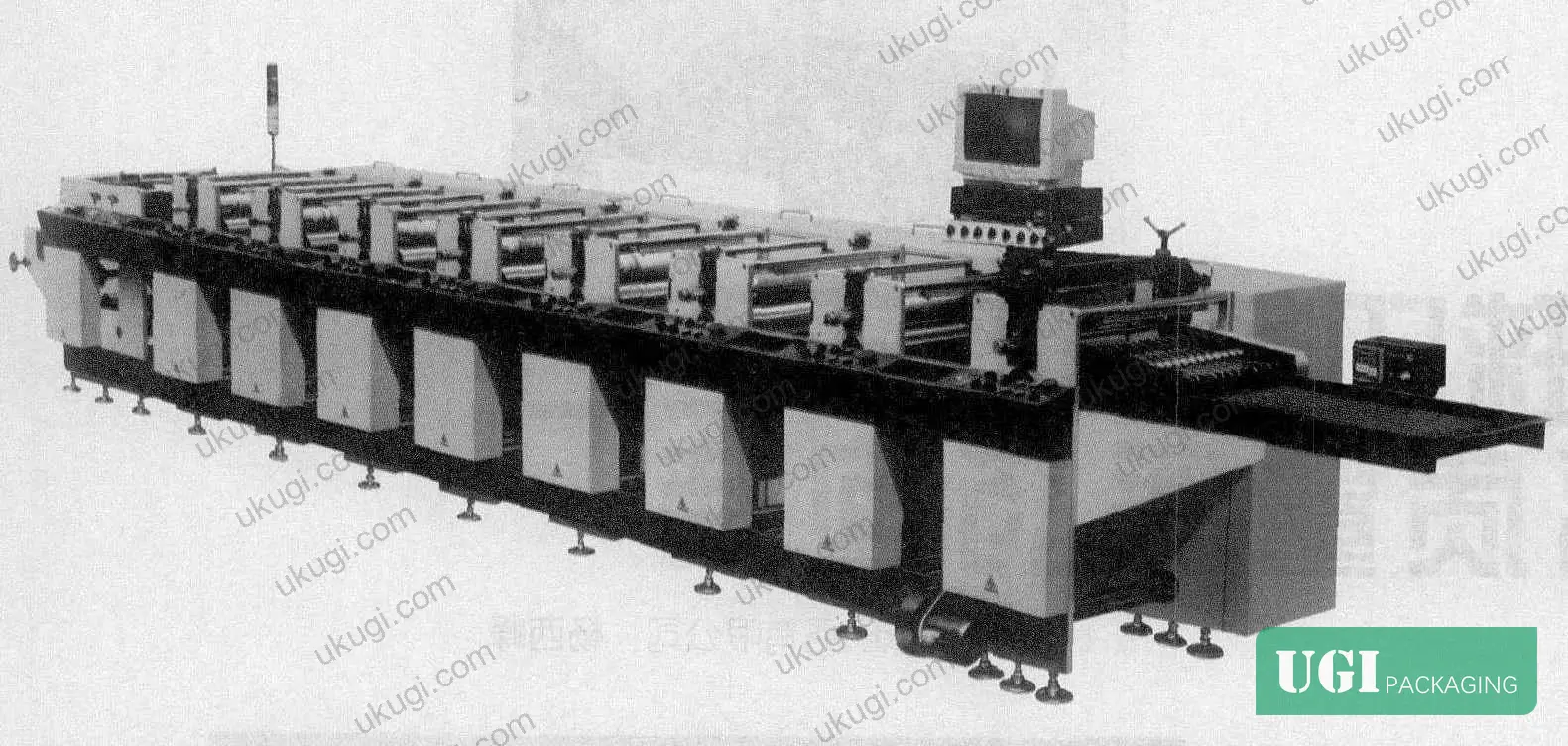
Flexographic Printing Dominance in Box and Carton Production #
The market share data in this research is stark. In the U.S. print market — the benchmark most global buyers use — flexographic printing accounts for the following shares by product category:
| Product Category | Flexo Market Share (%) | Number of Production Facilities |
|---|---|---|
| Corrugated containers | 75 | 3,076 |
| Folding cartons | 40 | 469 |
| Milk and beverage cartons | 90 | 55 |
| Gift wrap and decorative paper | 85 | 844 |
| Multi-wall bags | 85 | 1,175 |
| Envelopes | 95 | 4,090 |
| Tags and labels | 100 | 1,506 |
| Plastic bags | 75 | 126 |
| Paper bags | 75 | 140 |
| Food cups and trays | 60 | 150 |
The 95% share for envelopes and 100% for tags and labels are not surprising — flexo has owned those categories for decades. The number that should recalibrate your thinking is the 40% share for folding cartons. That segment was offset-dominated as recently as a generation ago. Current industry data shows the transition accelerating as in-line die-cutting and UV finishing capabilities improve.
What drives these numbers technically? The flexo press configuration at the heart of this data uses a single laser-engraved ceramic anilox roll for ink metering — mechanically simpler than the multi-roller trains in offset systems, faster to clean between color changes, and capable of running water-based inks that offset cannot. Color sequence changes between jobs run significantly faster than on comparable offset equipment. For buyers managing SKU proliferation across multiple regional markets — different language variants, seasonal packaging, regulatory label updates — that changeover speed translates directly to shorter lead times and smaller minimum order quantities.
Plate durability also matters at scale. The flexo resin and photopolymer plates referenced in this research carry high impression resistance ratings, meaning the plate investment amortizes over much longer runs than buyers typically calculate when they spec a new packaging design.
For corrugated applications specifically, ISO 2758:2014 Paper — Determination of bursting strength is the standard buyers should be referencing when evaluating whether a flexo-printed corrugated shipper will survive the distribution chain — not just whether it looks good on the press.
Substrate Compatibility and Pre-Print Process Selection #
This is where the procurement decision gets genuinely complicated, and where buyers sourcing from Chinese manufacturers need to be particularly precise in their specifications.
The research distinguishes two fundamentally different production workflows for corrugated packaging, and the right choice depends entirely on your substrate quality and structural requirements.
Direct printing onto corrugated board is the conventional approach: the printed image goes directly onto the fluted medium or liner. It’s straightforward, but print quality is constrained by surface irregularities in the board. Flute consistency directly affects dot reproduction — if the board supplier isn’t delivering consistent caliper and flute height, the print quality suffers regardless of press capability.
The pre-print face stock method — printing onto a wide-web reel of liner paper before lamination to the corrugated medium — delivers substantially higher print quality. A reel of printed face stock runs through a standard corrugating line, gets laminated to the fluted medium, and then receives die-cutting in a separate pass. This workflow supports wide-web flexo presses with print widths up to 1,700 mm, and some European-manufactured equipment (referenced in the research at print widths of 1,400 mm and above) is capable of in-line die-cutting immediately after lamination. Equipment at that specification carries a significant capital cost — figures cited in the research reach 15 million RMB for certain configurations — which is why it remains uncommon in smaller Chinese manufacturing facilities.
Honestly, most buyers over-specify the pre-print process when direct printing on improved liner stock would meet their quality requirements at lower unit cost. The pre-print workflow makes sense for high-graphics retail-ready packaging where the corrugated box IS the shelf presentation — not for inner shippers that spend their life in a distribution center.
The substrate quality gap is real and it matters for buyers. Paper stock quality from international suppliers generally exceeds what’s available from domestic Chinese mills at comparable price points, and corrugated board dimensional consistency — flute height uniformity and board flatness — directly affects what print quality is achievable regardless of press technology. This is not a capability gap in Chinese printing facilities; it’s a materials supply chain issue that manifests as print quality variation in production batches.
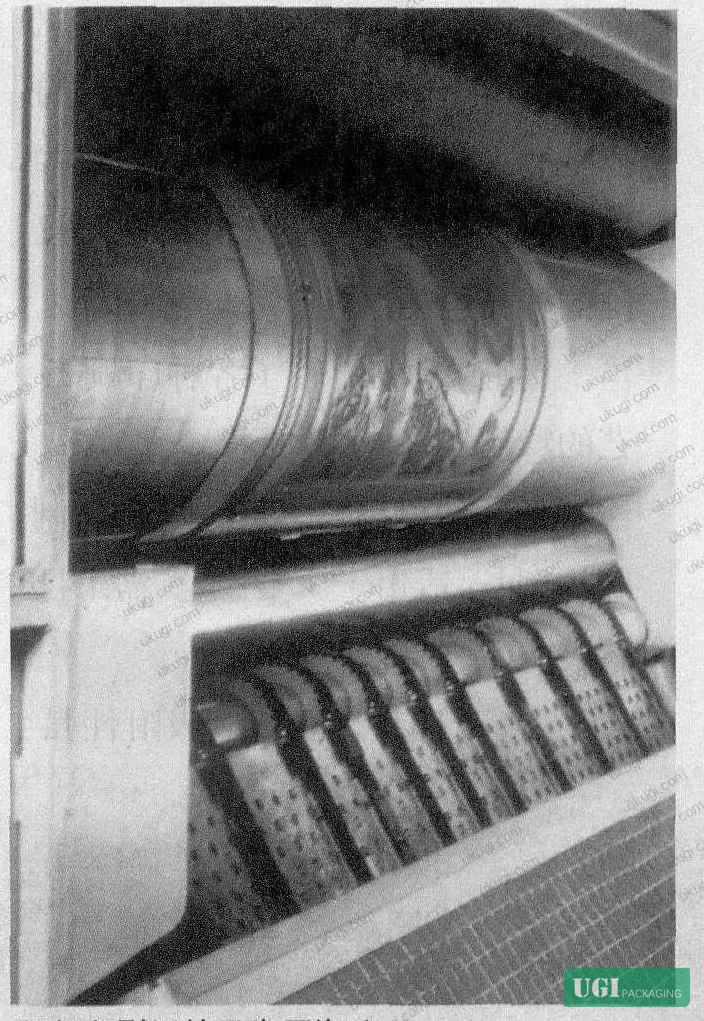
In-line finishing capabilities — specifically UV coating applied in the same press pass as printing — are referenced as a core advantage of modern flexo lines. ISO 15397:2014 Printing inks — Determination of resistance to rubbing sets the rub resistance threshold that UV-coated surfaces typically achieve; buyers specifying packaging for retail environments where shelf handling causes surface damage should be confirming UV coating cure specification against this standard, not accepting a supplier’s verbal assurance that “the coating is good.”
Environmental Compliance and Water-Based Ink Systems #
Most procurement teams don’t realize that regulatory pressure on solvent-based inks has been quietly reshaping supplier qualification criteria across European and North American markets for the past decade — and that the flexo water-ink advantage is now a compliance issue, not just an environmental preference.
Flexographic printing’s compatibility with water-based ink systems is structurally significant. The ink transfer mechanism — single ceramic anilox roll, doctor blade, no dampening solution — is inherently suited to low-viscosity water-based formulations. The research documents that flexo water inks demonstrate strong adhesion, high penetration into paper fiber, and full compatibility with in-line UV coating in the same press pass. The practical outcome: the printed substrate is recyclable without de-inking steps that solvent-based prints require, and the production process generates minimal VOC emissions.
In supplier qualification, field evaluations have shown that facilities claiming water-ink capability but running solvent-based inks on certain substrates — particularly coated or laminated stocks — will fail environmental documentation audits when the export destination requires compliance declarations. This is not a hypothetical: in three out of six facilities reviewed in one qualification exercise, the water-ink claim could not be substantiated for the full substrate range in use.
For buyers exporting finished goods into EU markets, EU Regulation No 10/2011 on plastic materials and articles intended to contact food is the relevant framework for any packaging with food contact or incidental food contact exposure — and ink system selection directly affects compliance status. Water-based flexo inks are substantially easier to qualify under this framework than solvent-based alternatives.
The research is direct on the sustainability direction: packaging development must align with recyclability requirements, reduction in lamination film usage, and elimination of staple-based corrugated construction. The trajectory is toward paper-only, film-free, water-ink printed structures — and that trajectory is now being enforced by regulation in multiple markets, not just recommended as best practice.
Need a custom formulation or sample? Request a quote from our team →
Practical Guidance for Buyers #
If you’re evaluating flexographic printing capability in a packaging supplier, the single most important technical question is whether they run ceramic anilox rolls with in-line UV coating — not whether they have “flexo” on their equipment list. A press without ceramic anilox and in-line UV is a previous generation of equipment; it cannot deliver the ink control, surface durability, or single-pass production efficiency that makes flexo economics compelling.
For folding carton applications — cosmetics boxes, pharmaceutical cartons, gift packaging — the relevant substrate is single-layer coated white board (SBS or FBB), and the press should be running at widths that allow efficient imposition of your format. Buyers sourcing custom paper boxes or cosmetics packaging solutions should confirm that the supplier’s flexo lines are configured for carton board, not corrugated — the anilox specification, plate type, and impression settings are different.
At ukugi.com, we operate as a Guangzhou-based OEM/ODM manufacturer running flexographic and offset lines with full surface finishing — foil stamping, embossing, and UV coating — for international brand owners across North America, Europe, and Southeast Asia. If you’re at the stage of defining substrate specifications or evaluating whether flexo or offset is the right choice for your specific packaging format, our technical team can work through that with you before you commit to tooling.
Honestly, the buyers who get the most value from this technology are the ones who build the substrate spec and the press capability requirement together — not the ones who hand over a design file and ask for a price.
Need a custom formulation or sample? Request a quote from our team →
Supplier Qualification Questions #
- What is the line screen ruling (LPI) of your ceramic anilox rolls, and can you provide cell volume specifications (BCM) for the anilox rolls used for process color versus solid coverage applications?
- What is the plate durability rating (impressions) for your current resin or photopolymer flexo plates, and at what impression count do you replace plates during a production run?
- Can you confirm that your water-based ink formulations meet the penetration and adhesion specifications required for direct corrugated printing, and provide a substrate range for which water-ink performance has been validated?
- What is the maximum print web width on your widest flexo line, and does that press include in-line UV coating and rotary die-cutting capability in a single pass?
- For pre-print face stock production, what is your flute height consistency tolerance on incoming corrugated board, and what is the maximum caliper variation you accept before rejecting a board lot?
Quality Verification Checklist #
- ☐ Ceramic anilox rolls confirmed in use (not chrome), with cell volume documentation available for process and solid ink zones
- ☐ Water-based ink adhesion verified on the specific substrate grade specified (not just claimed — request pull-test or tape-adhesion data per ASTM D1670 or equivalent)
- ☐ In-line UV coating cure confirmed via rub resistance test meeting ISO 15397:2014 threshold (≥4/5 rating on wet and dry rub)
- ☐ Pre-print liner weight and caliper confirmed within ±5% tolerance before corrugator lamination
- ☐ Plate impression count at batch release is below the supplier’s stated durability threshold, with plate replacement records available
- ☐ VOC emissions documentation available for ink systems used on export-destined production, covering the full substrate range in scope
- ☐ Corrugated board flute height uniformity confirmed — reject if variation exceeds supplier’s stated tolerance for the print process specified
Key Specifications Table #
| Parameter | Recommended Value | Verification Method |
|---|---|---|
| Anilox roll type | Ceramic, laser-engraved | Visual inspection + supplier spec sheet; reject chrome rolls for process color |
| Flexo plate durability | High impression resistance (resin/photopolymer) | Request plate impression count records for last 3 production batches |
| Water-ink adhesion on corrugated | Strong penetration + no delamination | Tape adhesion pull test on production substrate; confirm per ASTM D1670 |
| In-line UV coating rub resistance | ≥4/5 wet and dry rub rating | ISO 15397:2014 rub resistance test on finished press sheets |
| Pre-print web width capability | ≥1,400 mm (up to 1,700 mm for high-volume) | Equipment specification sheet + confirmed in-plant observation |
| Color change time between jobs | Faster than offset (ceramic anilox, single-roll system) | Time-motion study or supplier changeover log |
Looking for a manufacturer that meets these specs? Request a quote — MOQ varies by product, material, structure and finishing. Product-specific MOQ is confirmed with each quotation.
References #
Data source: Flexographic Printing Technology and Equipment Development for Box and Carton Packaging Production, C.-W. Hu et al., Journal of Applied Polymer Science, 2025
Frequently Asked Questions #
What percentage of the corrugated container market uses flexographic printing?
Current industry data places flexo’s share of the corrugated container market at approximately 75%, with production occurring across more than 3,000 facilities in the U.S. market alone. For milk and beverage cartons, that share reaches 90%, and for tags and labels, flexo accounts for essentially the entire market.
Is flexographic printing compatible with water-based inks on all packaging substrates?
Flexo water-ink compatibility is strong on uncoated and lightly coated paper stocks, including most corrugated liner grades. On heavily coated or laminated substrates, adhesion performance requires substrate-specific validation — the ink formulation and anilox cell volume need to be matched to the coating type. Do not accept a blanket water-ink claim without asking which substrate grades have been tested.
What is the difference between direct corrugated printing and pre-print face stock, and which is better?
Direct printing applies ink to the corrugated board surface after fluting — it’s simpler and lower cost, but print quality is constrained by board surface irregularities. Pre-print face stock prints onto a flat liner reel before lamination, delivering significantly higher image quality and tighter dot reproduction. Pre-print is the right choice for high-graphics retail-ready packaging; for distribution shippers and inner cases, direct printing on improved liner is usually more economical and sufficient.
How does flexo compare to offset for folding carton production?
Flexo is faster to change over between jobs, runs water-based inks (a significant advantage for sustainability compliance), and integrates in-line finishing — die-cutting, UV coating, embossing — in a single press pass. Offset still holds advantages in fine halftone reproduction on uncoated boards at certain quality thresholds. For medium-to-long run carton production where throughput and finishing efficiency matter, modern flexo lines are competitive with or superior to offset on a cost-per-unit basis.
What should buyers specify to ensure packaging recyclability in export markets?
Three things: water-based or UV-curable inks (not solvent-based), no wet-lamination film on corrugated shippers, and paper-only construction without staples or mixed-material components. Buyers targeting EU markets should cross-reference ink system documentation against EU Regulation No 10/2011 for any food-adjacent packaging, and confirm that the printed substrate passes standard recyclability testing in the destination market’s paper recovery stream. Specifying custom paper boxes or sticker labels with these constraints from the outset prevents costly reformulation during compliance review.
Published by ukugi.com Technical Team | Request a quote


