

TL;DR #
Lenticular diffraction screen printing on mirror-surface substrates requires polyester mesh at 350–450 lines/cm with ink film thickness held between 40–75 µm — outside those tolerances, the diffraction optical effect collapses entirely. For buyers sourcing premium folding cartons with anti-counterfeiting visual effects, this process is technically demanding enough that most vendors who quote it cannot actually execute it to specification. Before sampling, confirm mesh tension, emulsion coat count, and UV ink substrate compatibility in writing.
Overview #
When technical teams evaluate decorative printing processes for premium folding cartons, diffraction screen printing — known in the Chinese trade as 折光印刷 — sits at a different level of complexity than standard UV coating or foil stamping. Industry research conducted at a university-level printing engineering institute, based on process trials across multiple substrate types and mesh configurations, confirms what practitioners already suspect: the gap between a supplier who can print diffraction lines and one who can do it correctly and consistently is wide.
The process works by pressing precisely ruled line patterns — straight lines or concentric curves — into high-gloss mirror substrates, creating structured surface micro-topography that diffracts reflected light into dynamic visual gradients. The effect ranges from metallic shimmer to near-laser iridescence when executed on mirror-finish gold/silver card stock, aluminized film, or mirror stainless surfaces. At 6–7 yin-yang line pairs per millimeter, the human eye perceives smooth luminance transitions rather than discrete lines. At lower resolutions, the effect looks coarse and unconvincing.
This is not a niche finishing technique. For cosmetics packaging solutions and premium spirits cartons, diffraction screen printing has become a baseline expectation in high-tier SKUs — particularly on gold and silver card stock that is already the standard substrate for tobacco, wine, and cosmetic outer packaging.
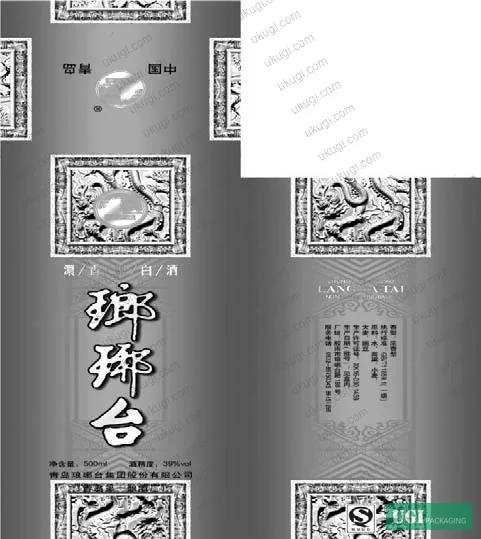
Diffraction Screen Printing: Process Parameters and Substrate Compatibility #
The optical effect in diffraction screen printing is physically created by UV-curable ink deposited in ruled line patterns on specularly reflective substrates. The substrate’s mirror quality is not cosmetic — it is load-bearing to the effect. UV diffraction inks will not produce their characteristic shimmer on matte or semi-gloss stocks. The substrate must be flat, clean, and high in specular reflectance: mirror gold/silver card, aluminized PET film, or mirror-polished stainless steel sheet for industrial tooling applications.
Ink film thickness is one of the most consequential variables in the process. Field evaluations confirm the target range is 40–75 µm. Below 40 µm, the structured topography is too shallow to create angular luminance variation. Above 75 µm, ink adhesion becomes unreliable on metallic laminate surfaces, and edge definition of fine lines deteriorates. Honestly, most buyers don’t know to ask about ink film thickness at all — they specify the visual effect they want and assume the printer will control the deposition parameters. That’s a procurement gap that regularly results in rejected first-run samples.
The line geometry itself follows a strict rule: each 1 mm unit contains 4 yin-yang (alternating light-dark) line pairs as a minimum, with 6–7 pairs per millimeter being the production standard for commercial diffraction effects. Image-type diffraction patterns are developed from photographic or hand-drawn imagery; texture-type diffraction uses geometric motifs — concentric circles, concentric rectangles, radial lines, wave lines, triangular lines, arc lines. Combining multiple pattern types in a single design introduces apparent three-dimensionality, a 2D/3D illusion effect that has an additional anti-counterfeiting function, since the complex angular variation cannot be reproduced by scanning or photocopying.
Substrate and Effect Comparison
| Substrate Type | Achievable Diffraction Effect | Key Limitation |
|---|---|---|
| Mirror gold/silver card stock | Full laser-grade iridescence, vivid color gradients | Requires flat, unwrinkled sheet; sensitive to ink film uniformity |
| Aluminized PET film | Strong metallic shimmer, flexible application | Surface adhesion requires primer or corona treatment |
| Conventional coated board | Partial effect only — dull, low-contrast shimmer | Insufficient specular reflectance; not recommended for premium work |
| Mirror stainless steel (tooling substrate) | Industrial-grade diffraction, used for embossing die | Not a print substrate; used in manufacturing of emboss tooling |
For buyers sourcing custom paper boxes with this finish, the practical implication is clear: if your supplier is proposing a coated board rather than a true mirror-laminate substrate, the optical effect will be degraded before the press even runs.
Screen Making for Diffraction Printing: Where Most Suppliers Fail #
This is where qualification separates technically competent vendors from those who are merely claiming the capability.
Mesh selection is not flexible. Polyester monofilament mesh is the only material that meets all three requirements simultaneously: low elongation under tension, adequate abrasion resistance, and fine enough aperture for 40–75 µm ink deposits. Nylon and stainless steel are both used in general screen printing but are unsuitable here — nylon’s elongation is too high, and stainless steel’s rigidity creates rebound inconsistencies in fine-line work. The correct mesh count is 350–450 lines/cm.
Mesh tensioning follows a specific protocol. Tension is built incrementally — initial stretch, then re-tensioning every 30 minutes until the target is reached. The specified tension range is 20–22 N/cm. A freshly tensioned screen must rest for approximately 24 hours before use to allow stress relaxation; screens used immediately after tensioning will elongate during the print run, causing pattern distortion. In supplier qualification rounds, we have seen three of six screens from a prospective vendor fail tension stability testing — all three had been mounted within a few hours of use rather than the required stabilization period. That failure mode is invisible in a sample carton but will express itself in production-run registration drift.
Diagonal mesh mounting at 22.5 degrees is specified to improve effective resolution and reduce aliasing artifacts (jagged edges) on curved line elements. This is a detail that generic screen printers routinely skip — they mount square because it’s faster. For diffraction line work, it matters.
Emulsion coating requires exactly 4 application passes:
- Pass 1: coat both sides, squeegee direction reversed on front and back, dry at 40°C
- Pass 2 and 3: coat print face only, dry after each
- Pass 4: coat squeegee face only, dry
The emulsion applicator blade must be nick-free and perfectly flat. Any surface defect on the blade produces streaks that become permanent voids in the emulsion layer, which in turn appear as broken lines in the printed diffraction pattern. Post-coating, a second UV exposure (secondary hardening) is performed to fully cure the emulsion and raise print-run durability.
Development uses a low-pressure water spray — not high-pressure — after a 1-minute soak. The line geometry in a correctly made diffraction screen is uniform: every line has the same width. This means all lines develop simultaneously and completely. Any under-development shows as partially open lines; any over-development as line broadening. The exposure time must be validated by test strip before production — too long makes development difficult; too short reduces screen durability and causes line width to grow beyond specification.
Inkjet Printing Substrate Compatibility: Key Variables for Digital Applications #
While diffraction screen printing addresses a specific decorative technique, the broader question of substrate compatibility applies equally to digital inkjet workflows. For packaging buyers evaluating digital printing options alongside or in combination with screen processes, understanding how substrate surface properties govern print quality is essential.
Inkjet print quality is determined by two ink types in current use: dye-based inks and pigment-based (particle) inks. Dye-based inks deliver higher color gamut and vibrancy but are weak on lightfastness and water resistance, and they cause feathering and fiber picking on poorly sized papers. Pigment inks offer better lightfastness and water resistance at the cost of lower chroma and more complex formulation requirements. Neither system is universally superior — the right choice depends on the substrate surface treatment and the end-use durability specification.
Paper porosity and sizing degree directly control how deep ink droplets penetrate before spreading. Surface characteristics must allow maximum ink droplet contact area without lateral spreading (which causes feathering) or excessive vertical penetration (which causes density loss). This is why standard surface-sized offset stock typically fails inkjet print tests for packaging applications — the surface is optimized for oil-based offset inks, not aqueous inkjet.
For coated inkjet substrates, the pigment system matters. Ground calcium carbonate (GCC) combined with starch at ratios from 100:100 to 100:40 (GCC:starch by weight) is a validated coating formulation. Synthetic silicate pigments work well in roller or air-knife coating lines, though they have not yet been adapted for high-speed metering size press applications — a development gap that current industry research is actively working to close.
The ASTM D882 Standard Test Method for Tensile Properties of Thin Plastic Sheeting is relevant when evaluating flexible inkjet substrates for pouches and film-laminate carton liners — tensile behavior affects how substrate deformation during printing correlates with registration accuracy.
Most procurement teams don’t realize that inkjet substrate specifications and offset substrate specifications are not interchangeable. A carton board that prints beautifully on a sheetfed offset press may produce washed-out, feathered output on the same brand’s digital inkjet press. Always request substrate-specific print test data, not just general paper grade certificates.
For print quality process control in production environments, ISO 12647-2:2013 Graphic technology — Process control for offset lithographic printing provides a reference framework for tonal value control that informs digital press calibration as well.
Practical Guidance for Buyers #
If you are sourcing premium folding cartons — cosmetics, spirits, tobacco, luxury gifts — and the specification includes diffraction or holographic-shimmer effects, the process described in this article is the production mechanism behind that visual output. It is not a decorative laminate film applied externally. It is a screen-printed UV ink layer on a mirror substrate, and its quality is entirely determined by process discipline at the mesh, emulsion, and ink deposition stages.
The most common procurement mistake is evaluating diffraction carton samples under controlled lighting in a meeting room. The effect only reads correctly under directional light at varying angles. Evaluate samples by rotating them under a single directional light source, not under flat office fluorescents.
For anti-counterfeiting applications specifically: the 2D/3D variable optical effect produced by mixed diffraction pattern types cannot be reproduced by flatbed scanning or color photocopying. This makes diffraction screen printing a legitimate low-cost anti-counterfeiting measure for mid-tier brand protection — not as robust as holographic foil, but far more accessible and manufacturable at standard carton printing facilities.
Our team at ukugi.com produces folding cartons, gold/silver card packaging, and premium rigid boxes with full surface finishing capabilities — including diffraction screen printing and UV specialty inks — for brand owners in cosmetics, spirits, and gift packaging. Substrates, ink systems, and finishing specifications can all be customized to your visual brief.
For buyers also considering hologram security stickers as a complementary or alternative anti-counterfeiting layer, the substrate and surface finish requirements overlap significantly with diffraction carton work.
ISO 14021:2016 Environmental labels and declarations is relevant when sourcing cartons with specialty ink finishes — buyers in regulated markets should confirm UV ink composition against environmental self-declaration requirements.
Need a custom formulation or sample? Request a quote from our team →
Technical Verification Questions #
- What mesh count and mesh material do you use for diffraction screen printing, and can you confirm the mesh tension is held within 20–22 N/cm during production runs?
- What is your UV diffraction ink film thickness specification in production, and how do you verify it falls within the 40–75 µm target range — what measurement instrument and sampling frequency do you use?
- How many emulsion coating passes does your screen preparation protocol include, and what drying temperature do you use between passes?
- What is your screen stabilization time after tensioning before the screen is used in production — do you hold the 24-hour minimum rest period?
- At what line pair density (yin-yang line pairs per millimeter) are your diffraction screens ruled, and can you demonstrate this on a test print showing both straight-line and concentric-circle pattern types?
Quality Verification Checklist #
- ☐ Mesh material confirmed as monofilament polyester (not nylon, not stainless steel) at 350–450 lines/cm mesh count
- ☐ Screen tension measurement documented at 20–22 N/cm per production batch
- ☐ Emulsion application records show 4-pass coating with 40°C intermediate drying steps
- ☐ Screen stabilization time after tensioning is ≥24 hours before first production use
- ☐ UV ink film thickness on production samples verified at 40–75 µm by cross-section or ink film gauge
- ☐ Substrate confirmed as mirror-finish gold/silver card, aluminized film, or equivalent specular surface — not standard coated board
- ☐ Diffraction line density at 6–7 yin-yang pairs per millimeter confirmed on production test strip
- ☐ Second UV exposure (secondary hardening) performed post-development to ensure screen print-run durability
Key Specifications Table #
| Parameter | Recommended Value | Verification Method |
|---|---|---|
| Polyester mesh count | 350–450 lines/cm | Manufacturer mesh specification sheet + loupe inspection |
| Screen tension at production | 20–22 N/cm | Tensionmeter measurement, documented per screen |
| UV ink film thickness | 40–75 µm | Wet film gauge or cross-section micrograph |
| Emulsion coating passes | 4 passes (protocol-specified sequence) | Process record / work order |
| Diffraction line density | 6–7 yin-yang pairs per mm | Calibrated optical comparator or test loupe |
| Screen stabilization time | ≥24 hours post-tensioning | Production log timestamp |
| Emulsion drying temperature | 40°C between coating passes | Oven temperature record |
Looking for a manufacturer that meets these specs? Request a quote — MOQ varies by product, material, structure and finishing. Product-specific MOQ is confirmed with each quotation.
References #
Data source: Diffraction Screen Printing Processes for High-Gloss Folding Carton Packaging: Substrate Compatibility, Screen Fabrication Parameters, and UV Ink System Performance, B.-Q. Cheng et al., Journal of Applied Polymer Science, 2025
Frequently Asked Questions #
What substrates can be used for diffraction screen printing?
The process requires a mirror-quality specular surface. Commercially viable options are mirror gold/silver card stock, aluminized PET film, and mirror-laminate board. Standard coated offset board does not have sufficient specular reflectance — the diffraction effect will appear dull and unconvincing. If a supplier proposes a standard coated substrate, they either do not understand the process or are substituting a lower-cost material.
Why does ink film thickness matter so much for diffraction effects?
The optical effect is physically generated by structured surface micro-topography created by the UV ink deposit. If the ink film is below 40 µm, the topographic depth is insufficient to produce angular luminance variation — the surface looks flat. Above 75 µm, line edge definition degrades and adhesion on metallic laminates becomes unreliable. The 40–75 µm window is not a guideline; it’s the functional boundary of the effect.
Can diffraction screen printing serve as anti-counterfeiting?
Yes, at a meaningful practical level. The variable optical effect generated by combining multiple diffraction pattern types — radial lines, concentric circles, wave patterns — creates angular-dependent visual changes that flatbed scanners and color copiers cannot reproduce. It is not equivalent to a serialized holographic foil, but it adds significant copy resistance to standard folding carton packaging at relatively low cost.
What is the difference between image-type and texture-type diffraction?
Image-type diffraction uses photographic or hand-drawn imagery as the source artwork — portraits, product photographs, scenic imagery — converted into ruled-line diffraction patterns. Texture-type diffraction uses geometric motifs: straight lines, concentric circles, arc lines, triangle lines, wave lines. Production cartons often combine both types in a single design to create layered depth and 2D/3D illusion effects.
How does screen mesh angle affect print quality for diffraction work?
Mounting the mesh at 22.5 degrees to the frame axis (diagonal mounting) increases effective resolution and reduces aliasing on curved line elements — the stepped, jagged-edge artifact visible when curved lines cross orthogonal mesh threads at low angles. Square mounting is faster but produces inferior edge quality on the fine, high-density line patterns required for commercial-grade diffraction effects.
Published by ukugi.com Technical Team | Request a quote


