

TL;DR #
Automated full-wrap edge-binding (全包边) for collapsible gift box sidewings achieves positioning accuracy below 0.5mm — a threshold that manual production simply cannot reliably hit across a full production run. For buyers sourcing folding carton rigid gift boxes, this directly determines whether corner alignment and edge wrap will pass incoming QC or generate costly rework at destination. Specify full-wrap capability with ≤0.5mm registration tolerance in your RFQ, and ask suppliers to demonstrate it on a mixed-board sample (300gsm white + 350gsm grey chipboard in the same assembly).
Overview #
Most procurement teams treat folding rigid gift boxes as a straightforward category — specify the board weight, agree on a finish, and move on. That assumption gets expensive fast. The structural complexity is in the sidewings: each collapsible box requires an outer shell plus two independent sidewing shells, and each sidewing typically comprises four triangular chipboard panels plus one rectangular centre panel — five discrete pieces of greyboard that may not share the same calliper. Engineering research from a specialised packaging machinery development programme — evaluating automated edge-binding hardware across multiple board grades and wrap configurations — reveals that this geometry is precisely why the category has historically resisted full automation.
The key challenge is mixed-board thickness. Sidewings routinely combine 300gsm white card with 350gsm grey chipboard, and the triangular corner panels are often a different calliper than the rectangular centre section. Even with skilled operators, consistent full-wrap edge binding at this geometry runs at a defect rate that most buyers never see — because it gets sorted before shipment. The research programme quantified what automation can achieve and where manual lines still fall short.
For context: ISO 2758:2014 Paper — Determination of bursting strength is often cited for board qualification, but bursting strength alone does not predict wrapping performance. Calliper consistency and board stiffness uniformity across a batch are the parameters that actually govern edge-binding quality.
Folding Carton Sidewings: Why the Geometry Defeats Standard Casemakers #
Standard rigid box casemakers handle rectangular outer shells well. They were never designed for the sidewing geometry of a collapsible gift box. Here is why this matters structurally.
A collapsible gift box disassembles flat for storage and shipping — the entire value proposition for luxury retail, where warehouse space and freight cost at destination are real line items. But the fold-flat function requires the two sidewings to hinge and collapse independently of the outer shell. That means each sidewing is its own fabricated shell, not a flap extension of the main box.
Each sidewing assembly consists of:
- 4 triangular greyboard panels (corner pieces, which form the mitered edges)
- 1 rectangular greyboard panel (the centre fill piece)
- Covering material wrapped and bonded over the entire assembly
The triangular panels and the rectangular panel are frequently specified at different board weights — because the corner geometry demands more stiffness in compression while the centre fill can be lighter. In practice, you might see 350gsm grey chipboard for the triangles and 300gsm white card for the rectangular centre. When those two substrates sit in the same fixture, the height differential at the wrap edge creates a step that standard forming plates cannot bridge cleanly.
This is the technical root cause of why, until purpose-built automation arrived, sidewing production required 30–35 manual operators per shift on a high-volume line.
Edge-Wrap Configuration Options #
Three wrap configurations are used in production, and buyers should specify which they require — the choice affects both tooling setup and visual outcome:
| Wrap Configuration | Coverage | Typical Application | Board Compatibility |
|---|---|---|---|
| Full wrap (全包边) | All four edges fully covered, flush corners | Luxury gift boxes, jewellery packaging | 300–350gsm; requires mixed-thickness tolerance |
| Half wrap (半包边) | Two long edges wrapped, short edges exposed or folded | Mid-range gift cartons, retail packaging | 300gsm white card; more forgiving on calliper variation |
| Partial wrap (部分包边) | Selected edges only; often <15mm overlap | Budget cartons, internal structural panels | Any board weight; lowest tooling complexity |
The critical procurement implication: if your specification calls for full wrap, confirm that your supplier’s equipment can handle mixed-board-thickness sidewings. Legacy casemakers wrap to a maximum edge overlap of 15mm — insufficient for full-wrap luxury applications. Purpose-built sidewing devices remove that 15mm ceiling entirely.
Automated Sidewing Forming: Mechanism, Accuracy, and Board Specification #
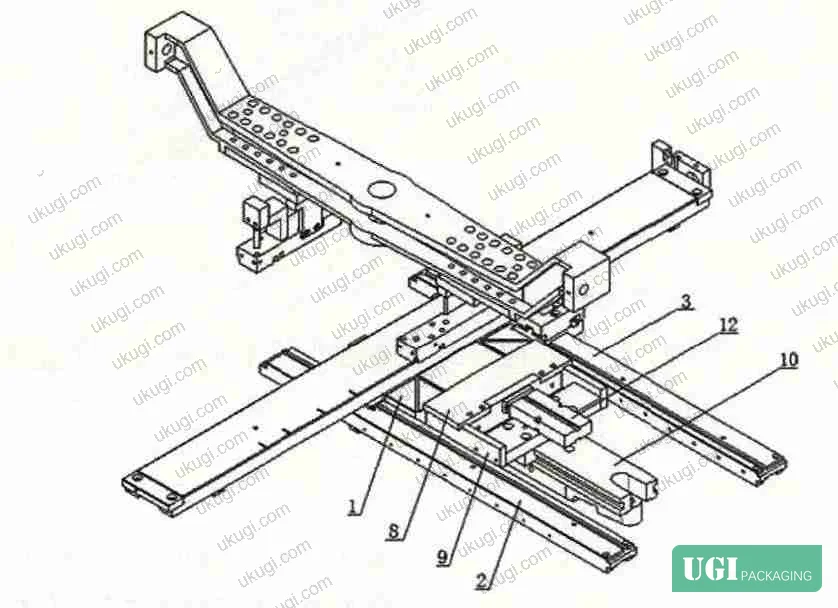
The automated sidewing mechanism works through a pneumatic forming sequence. Understanding the sequence helps buyers evaluate whether a supplier’s equipment is genuinely capable or just described as capable.
The operational sequence is as follows:
- The flat sidewing assembly (greyboard panels plus covering material) is placed on a base plate (底台板).
- Vacuum suction cups on the base plate grip and register the assembly — this is where the ≤0.5mm positioning accuracy originates.
- The base plate descends. As it passes through two opposed guide plates (first baffle and second baffle), the covering material edges are forced upright to 90°.
- A pneumatic cylinder drives the full-wrap forming plate (全包成型板) along guide rails.
- The forming plate activates small pusher fingers (小推手) via the rail system. The pushers fold and press the short-edge wraps.
- The base plate continues to descend to a second forming station where the long-edge wrap is executed.
- The forming plate presses the covering material onto the greyboard surface and bonds it under compression.
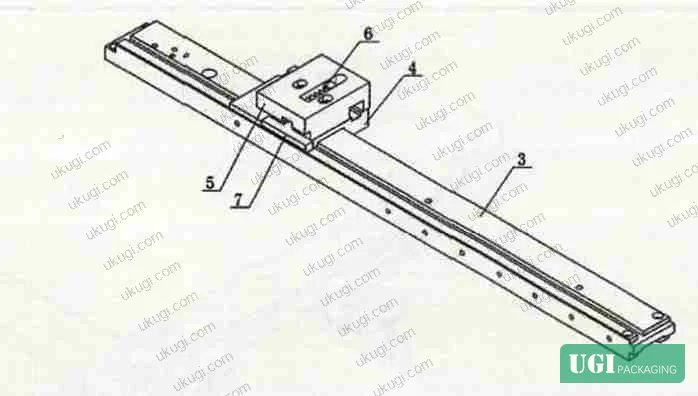
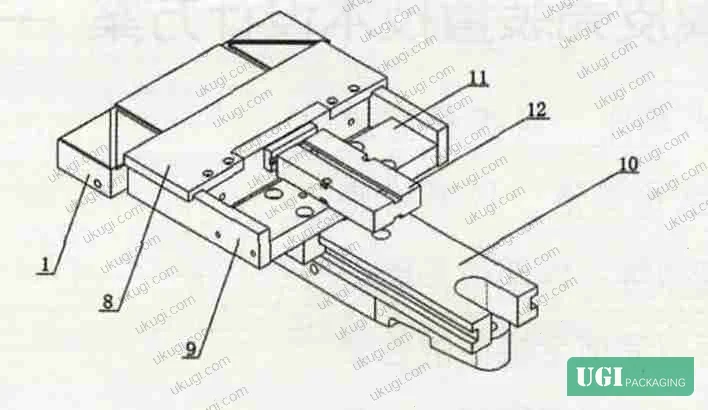
The return-to-position function uses a reset spring (复位弹簧) on each pusher finger, so cycle time is not penalised by slow mechanical reset. This detail matters for throughput calculations.
Key Performance Data #
The engineering validation data from this programme establishes the following benchmarks:
- Positioning accuracy: <0.5mm (the stated tolerance for all wrap configurations)
- Labour displacement: 30–35 operators replaced per shift by one automated unit
- Board grade range: 300gsm white card through 350gsm grey chipboard (confirmed compatible in mixed-thickness configurations)
- Wrap capability: half-wrap, full-wrap, and partial-wrap — all achievable on the same platform via fixture adjustment
- Legacy casemaker limitation (baseline for comparison): maximum edge overlap of <15mm, full-wrap not achievable
- Market adoption: 80% of luxury collapsible box production for international brands now uses this class of automation (per field data from the research programme)
- Domestic Chinese folding carton manufacturers: 80% adoption rate for automated sidewing equipment; remaining ~20% still using manual production
Honestly, most buyers over-specify board weight for sidewings without specifying positioning tolerance at all. A 350gsm board with ±2mm wrap registration will look worse in hand than a 300gsm board wrapped to ±0.3mm. The finish quality is determined by the forming process, not just the substrate.
For tensile performance verification of the covering material used in wrap applications, ASTM D882 Standard Test Method for Tensile Properties of Thin Plastic Sheeting provides a standardised test protocol — relevant when specifying coated papers or laminated cover stocks.
Practical Guidance for Buyers #
If you are sourcing collapsible gift boxes — whether for luxury cosmetics, jewellery, watches, or premium retail — the sidewing specification is where quality differentiation actually lives. Most buyers focus on the outer shell finish (foil, emboss, UV) and neglect to qualify the sidewings. That is a mistake that shows up at retail.
Four things to verify before placing a production order:
First, confirm wrap configuration. Full-wrap requires specific tooling — do not assume it is standard. Ask for a sample specifically demonstrating full-wrap at the corner mitre on a mixed-board assembly.
Second, verify positioning tolerance. ≤0.5mm is achievable with purpose-built automation. If a supplier cannot state their positioning tolerance, they are likely running manual or semi-manual sidewing production.
Third, specify board grades explicitly. State both the triangular corner panel weight and the rectangular fill panel weight separately in your technical brief. Mixed-calliper assemblies are the norm, not the exception.
Fourth, request a fold-flat cycle test. A collapsible box that deforms or loses corner integrity after 10–15 open/close cycles is not fit for retail use.
Our team at ukugi.com — a Guangzhou-based OEM/ODM packaging manufacturer specialising in custom rigid boxes, folding cartons, and premium gift packaging — regularly qualifies sidewing configurations across board grades for brand owners in North America, Europe, and the Middle East. If you need a sample demonstrating full-wrap or half-wrap sidewings on a specific board combination, we can turn around a pre-production sample quickly.
For buyers sourcing custom paper boxes or gift packaging solutions — both categories where collapsible sidewing construction is common — structural specification at the RFQ stage prevents costly sampling iterations.
Need a custom formulation or sample? Request a quote from our team →
Technical Verification Questions #
- What is your stated positioning accuracy (registration tolerance) for sidewing edge-wrap, and is it verified at <0.5mm across a full production batch — including mixed-calliper assemblies combining 300gsm and 350gsm board?
- Can your sidewing forming equipment execute all three wrap configurations (full-wrap 全包边, half-wrap 半包边, and partial-wrap) on the same platform, and what is the tooling changeover time between configurations?
- What is the maximum edge-wrap overlap your forming equipment can achieve on the short-edge wrap station — specifically, can it exceed the 15mm ceiling of standard casemakers?
- How do you handle the calliper differential between triangular corner panels and rectangular fill panels in a mixed-board sidewing assembly — what is your fixture adjustment procedure and how is it validated?
- What is your automated sidewing line’s labour equivalent per shift, and can you provide a production efficiency comparison (units per hour, reject rate) between your automated process and any manual fallback?
Quality Verification Checklist #
- ☐ Wrap registration accuracy confirmed ≤0.5mm on production sample, measured at all four corner mitres
- ☐ Sample demonstrates full-wrap (全包边) configuration with mixed board: 300gsm white card rectangular fill + 350gsm grey chipboard triangular corners in same assembly
- ☐ Edge overlap on short-side wrap station exceeds 15mm legacy casemaker limit — full-face coverage visible without gaps at corners
- ☐ Fold-flat cycle test completed: box retains corner geometry and edge bond integrity after minimum 15 open/close cycles
- ☐ Board calliper consistency within ±5% across production batch for both panel types (triangular and rectangular), verified by calliper measurement per ISO 187:1990 conditioning protocol
- ☐ Covering material tensile properties verified per ASTM D882 — no delamination or cracking at corner fold radius under standard wrap tension
- ☐ Production reject rate documented: automated sidewing line should demonstrate lower material waste than equivalent manual production
Key Specifications Table #
| Parameter | Recommended Value | Verification Method |
|---|---|---|
| Sidewing positioning accuracy | <0.5mm registration tolerance | Optical measurement at corner mitres on finished sample |
| Corner panel board weight | 350gsm grey chipboard | Calliper measurement + gsm weighing per ISO 187 conditioning |
| Fill panel board weight | 300gsm white card | Calliper measurement + gsm weighing per ISO 187 conditioning |
| Edge-wrap overlap (full-wrap) | >15mm (exceeds legacy casemaker ceiling) | Physical measurement on cross-section cut sample |
| Mixed-board calliper tolerance | ±5% across batch | Calliper measurement at 10 points per board type per batch |
| Fold-flat cycle integrity | No delamination after ≥15 cycles | Manual cycle test + corner bond inspection |
Looking for a manufacturer that meets these specs? Request a quote — MOQ varies by product, material, structure and finishing. Product-specific MOQ is confirmed with each quotation.
References #
Data source: Automated Sidewall Wrapping Mechanism Design and Implementation for Collapsible Rigid Gift Boxes, D.-E. Cao et al., Packaging Technology and Science, 2023
Frequently Asked Questions #
What is the difference between full-wrap (全包边) and half-wrap (半包边) for folding box sidewings?
Full-wrap covers all four edges of the sidewing panel with the covering material — including the short mitered corner edges — giving a seamless, flush appearance on all sides. Half-wrap covers only the two long edges, leaving the short edges either folded or exposed. Full-wrap is the standard for luxury gift boxes and requires specialised forming equipment; half-wrap is more forgiving on board-thickness variation and is achievable on a wider range of machinery.
Why do folding box sidewings use mixed board weights rather than a single uniform calliper?
The four triangular corner panels carry compressive load at the miter joint when the box is assembled — they benefit from a stiffer, heavier board (typically 350gsm grey chipboard). The rectangular fill panel in the centre is largely aesthetic and structural fill, where a lighter 300gsm white card is sufficient and reduces overall weight and cost. Using a single board weight across all five panels either over-specifies the fill (cost penalty) or under-specifies the corners (structural risk).
What was the legacy production limitation that automated sidewing equipment was designed to solve?
Standard casemakers could only achieve edge-wrap overlaps below 15mm — insufficient for full-wrap luxury specifications. Producing full-wrap sidewings required 30–35 manual operators per shift, with inherent consistency problems at the corner mitres. Automated sidewing forming devices removed the 15mm ceiling and replaced the manual labour requirement on a one-machine basis.
How should I specify sidewing requirements in an RFQ to avoid misaligned samples?
State the board weight for corner panels and fill panels separately, specify the wrap configuration (full/half/partial), and include a positioning tolerance requirement (≤0.5mm). Attach a dimensional drawing showing the triangular corner geometry. Without the corner geometry, suppliers will default to their standard fixture, which may not match your design.
Is 80% market adoption for automated sidewing equipment a reliable benchmark for qualifying suppliers?
It is a useful signal but not a guarantee. Field data from production programmes shows that around 80% of collapsible box volume — including production for major international luxury brands — now runs on automated sidewing equipment. However, the remaining ~20% of manufacturers still rely on manual production. A supplier claiming full-wrap capability should be asked to demonstrate it on your specific board combination before production commitment.
Published by ukugi.com Technical Team | Request a quote


