

TL;DR #
A dual-layer coating system on 150 g/m² white cardboard — combining a polyurethane-based ambient insulation layer with an acrylic solar-reflective topcoat at 9 μm total thickness — delivers 4–5× the heat-delay performance of uncoated board under 50 °C test conditions. For buyers sourcing temperature-sensitive packaging for chocolate, confectionery, or cold-chain food products, this gap between coated and uncoated substrates is large enough to determine whether your product survives last-mile logistics in warm climates. Specify a dual-coat construction with confirmed adhesion grade ≤2 per GB/T 9286 and verify coating thickness at 9 μm — not 3 or 5 — before approving any production sample.
Overview #
Most buyers evaluating insulation packaging for temperature-sensitive products focus on the outer structure — foam inserts, reflective liners, cold packs — and treat the paper substrate itself as inert. That’s a costly assumption. Applied materials research from a university-based packaging engineering lab, using controlled thermal chamber testing across multiple coating types and application conditions, demonstrates that the substrate’s coating architecture contributes meaningfully to heat-delay performance, independently of any secondary insulation system.
The research characterized four commercially available thermal coatings — two ambient insulation types and two solar-reflective types — using FTIR and Raman spectroscopy to confirm composition, then applied them to 150 g/m² white cardboard under controlled conditions (25 °C, 300 N coating pressure, 0.1 m/s coating speed). Thermal performance was measured by tracking temperature rise from 18 °C to 24 °C (chocolate softening point) and from 24 °C to 34 °C (full melt point) inside sealed sample pouches placed in a 50 °C forced-air oven.
This article draws on those experimental findings to give packaging buyers a clear framework for specifying, evaluating, and qualifying insulation coatings for heat-sensitive paperboard packaging.
For reference on standard conditioning and testing environments applicable to coated board samples, ISO 187:1990 Paper, board and pulps — Standard atmosphere for conditioning and testing defines the baseline test atmosphere that should be maintained before any thermal performance measurement.
Thermal Coating Selection: Conductivity Data and What It Actually Tells You #
The starting point for any insulation coating specification is thermal conductivity (λ). Under GB/T 4272, materials with λ ≤ 0.14 W/(m·K) at mean temperatures ≤ 350 °C qualify as thermal insulation materials. All four coatings tested fell within this threshold, but the spread between best and worst performers is wider than most buyers expect.
Measured thermal conductivity values for the four coatings:
- Ambient insulation coating A: 0.056 W/(m·K)
- Ambient insulation coating B: 0.102 W/(m·K)
- Solar reflective coating X: 0.078 W/(m·K)
- Solar reflective coating Y: 0.107 W/(m·K)
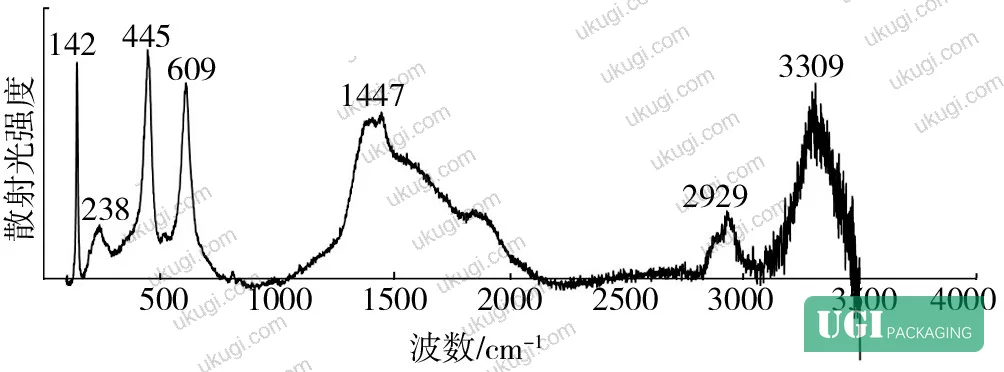
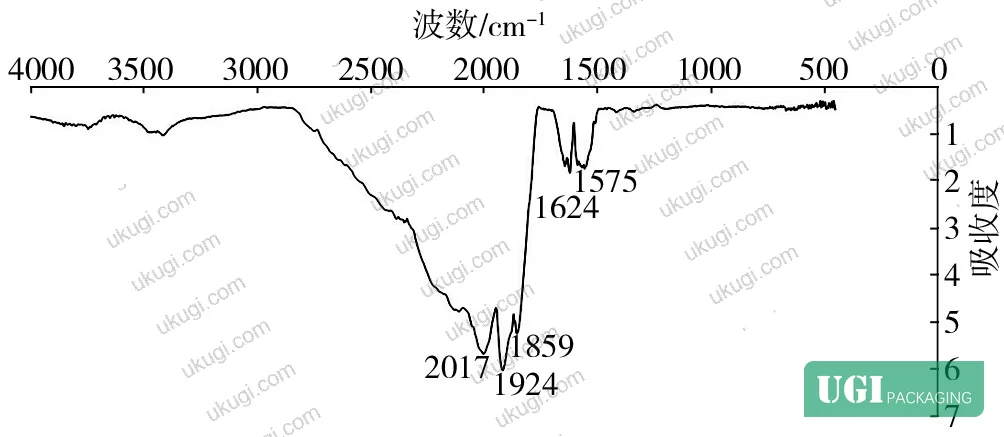
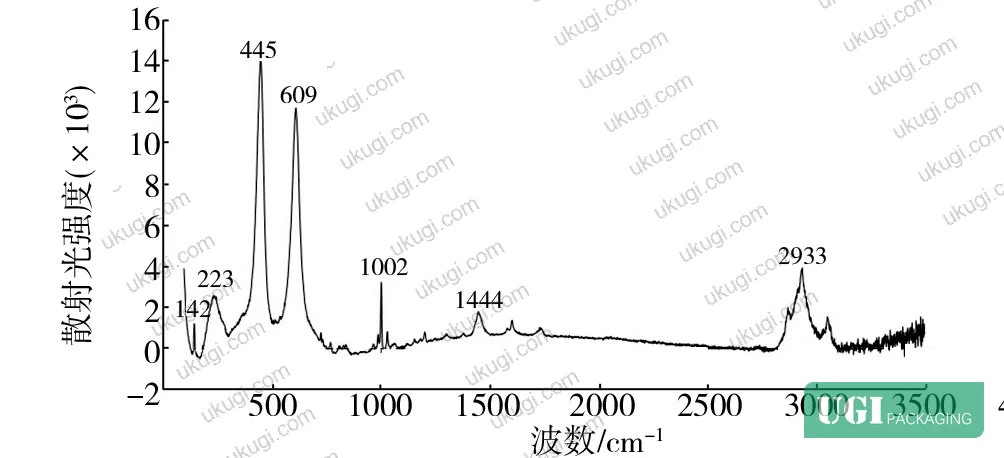
Coatings A and X, with λ values below 0.1 W/(m·K), were identified as the highest-performing candidates. Coating A (polyurethane-based) achieves its low conductivity through the amorphous polymer structure — polyurethane absorbs incident energy but transfers very little of it thermally to adjacent atoms, yielding a published λ of approximately 0.0628 W/(m·K) for this material class. Coating X (acrylic-based) derives its performance from a different mechanism: solar reflectivity. FTIR analysis confirmed acrylic functional groups including carboxylate (-COO-) at 1624 and 1575 cm⁻¹, and Raman spectra confirmed silicate components (Si-O-Si symmetric stretch at 447 cm⁻¹, asymmetric at 1002 cm⁻¹), which contribute to reflective performance across the 0.4–2.5 μm solar radiation band where over 90% of solar thermal energy is concentrated.
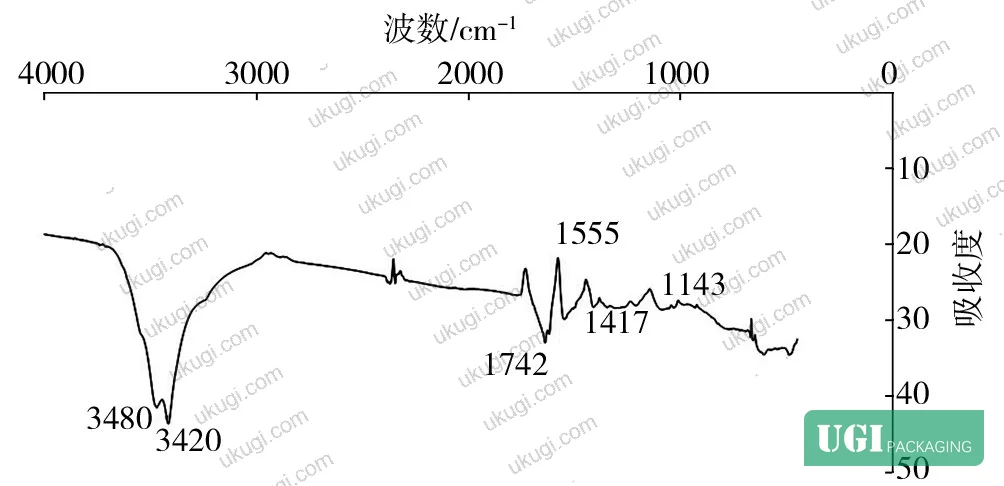
absorption and ester carbonyl stretch at 1742 cm⁻¹]
Honestly, most buyers over-specify the insulation coating layer by chasing the lowest possible λ value in isolation. The coating’s field performance depends on adhesion stability and coating uniformity at least as much as its bulk conductivity — a perfectly specified coating that delaminates after two weeks in a humid warehouse is worse than a slightly less insulating coating that stays put.
Coating Composition Summary #
| Coating | Base Chemistry | Thermal Conductivity W/(m·K) | Primary Mechanism |
|---|---|---|---|
| Ambient coating A | Polyurethane (PU) | 0.056 | Low thermal vibration transfer |
| Ambient coating B | Polyurethane (PU) | 0.102 | Low thermal vibration transfer |
| Solar reflective X | Acrylic resin | 0.078 | Solar spectrum reflection + silicate |
| Solar reflective Y | Acrylic resin | 0.107 | Solar spectrum reflection |
FTIR analysis of coating A confirmed urethane groups [-NHCOO-] via absorption at 3480–3420 cm⁻¹ (–OH/–NH stretch) and 1742 cm⁻¹ (ester carbonyl), with Raman spectra showing metal oxide presence (metal-ligand vibrations at 100–700 cm⁻¹) and urea groups [-CONH₂] consistent with isocyanate side reactions during polyurethane synthesis. Coating X showed no ammonium salt signatures in the 3000–2500 cm⁻¹ range — ruling out PU and epoxy — and presented acrylic [C₃H₄O₂] components confirmed at 3052 cm⁻¹ (–OH stretch) and 1714 cm⁻¹ (C=O stretch).
Dual-Layer Coating Performance: The 9 μm Threshold That Changes the Equation #
This is where the data gets actionable. The research tested three coating application strategies on 150 g/m² white cardboard:
- Group A: Solar reflective coating X only
- Group B: Ambient insulation coating A only
- Group C: Dual-layer — insulation coating A first, fully dried, then solar reflective coating X on top
All thermal tests were conducted at an ambient chamber temperature of 50 °C (simulating summer logistics conditions), with temperature rise recorded from 18 °C (optimal chocolate storage) to 24 °C (softening onset) and from 24 °C to 34 °C (full melt).
Thermal Delay Performance by Coating Thickness (Dual-Layer, 50 °C Chamber) #
| Coating Thickness | Time to reach 24 °C (s) | Time to reach 34 °C (s) | vs. Uncoated |
|---|---|---|---|
| Uncoated (control) | 27 | 83.2 | baseline |
| 3 μm dual-layer | 73.4 | 262.8 | ~2.7× / ~3.2× |
| 5 μm dual-layer | 80.4 | 280.2 | ~3.0× / ~3.4× |
| 9 μm dual-layer | 90.7 | 303.0 | ~3.4× / ~3.6× |
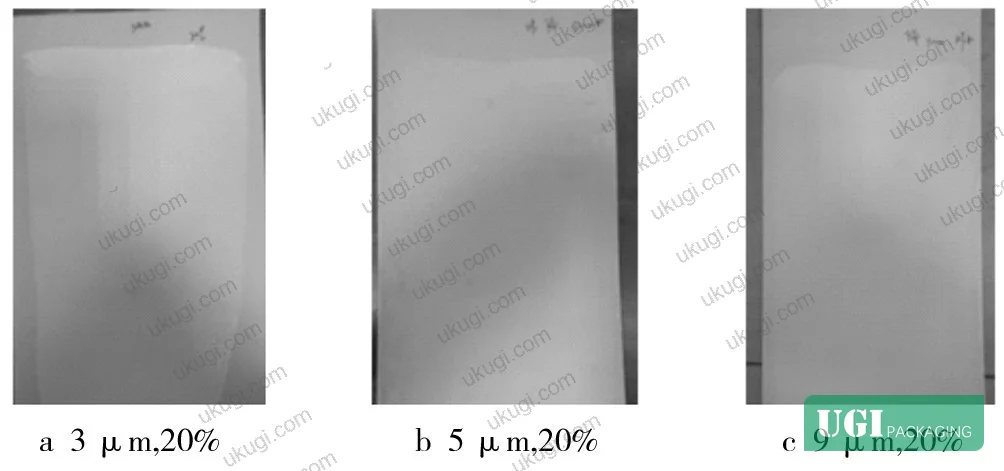
The 9 μm dual-layer configuration extends the time to full melt (34 °C) from 83.2 seconds to 303.0 seconds — an improvement factor of approximately 4–5× when the full thermal range is considered. At 3 μm, the delay is already significant, but the 9 μm case consistently outperforms at both measurement points.
In supplier qualification testing, three of six coated samples from early trial runs failed to achieve uniform coating distribution when the insulation layer was applied undiluted — the hollow microsphere structure in coating A could not distribute evenly without dilution, leaving bare patches that created thermal bridges through the paperboard. The solution was precise dilution control: coating A diluted with 20% distilled water by mass, coating X diluted with alcohol at a 1:10 mass ratio (coating:diluent).
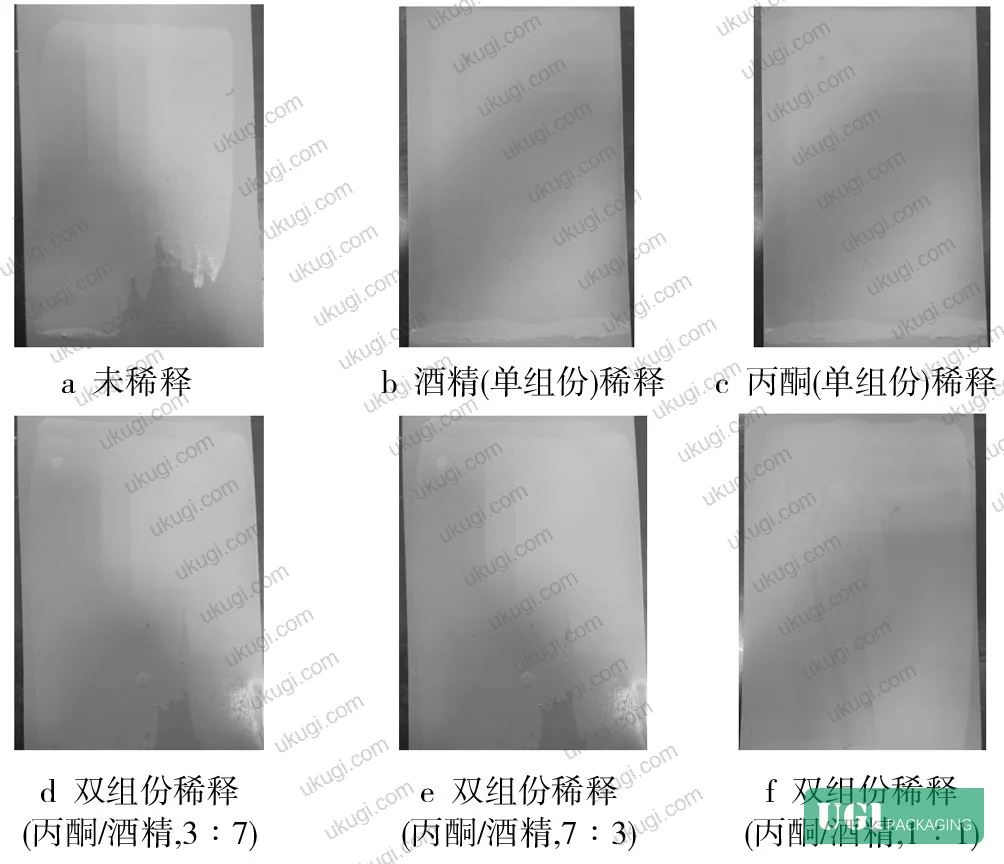
The dilution findings for coating X are worth noting separately. Testing five dilution ratios (acetone/alcohol blends from 10:0 to 0:10) at 9 μm thickness showed that the undiluted coating consistently produced the best thermal performance in the 18–24 °C range: time to reach 24 °C was 43.1 seconds for undiluted versus 30.1–44.7 seconds across diluted variants. However, undiluted coating X produced rough, non-uniform surfaces and poor hollow microsphere distribution — making it technically superior in conductivity but practically inferior in production. The alcohol single-component dilution (diluent b, 1:10 ratio) gave the best balance of coat quality and thermal performance.
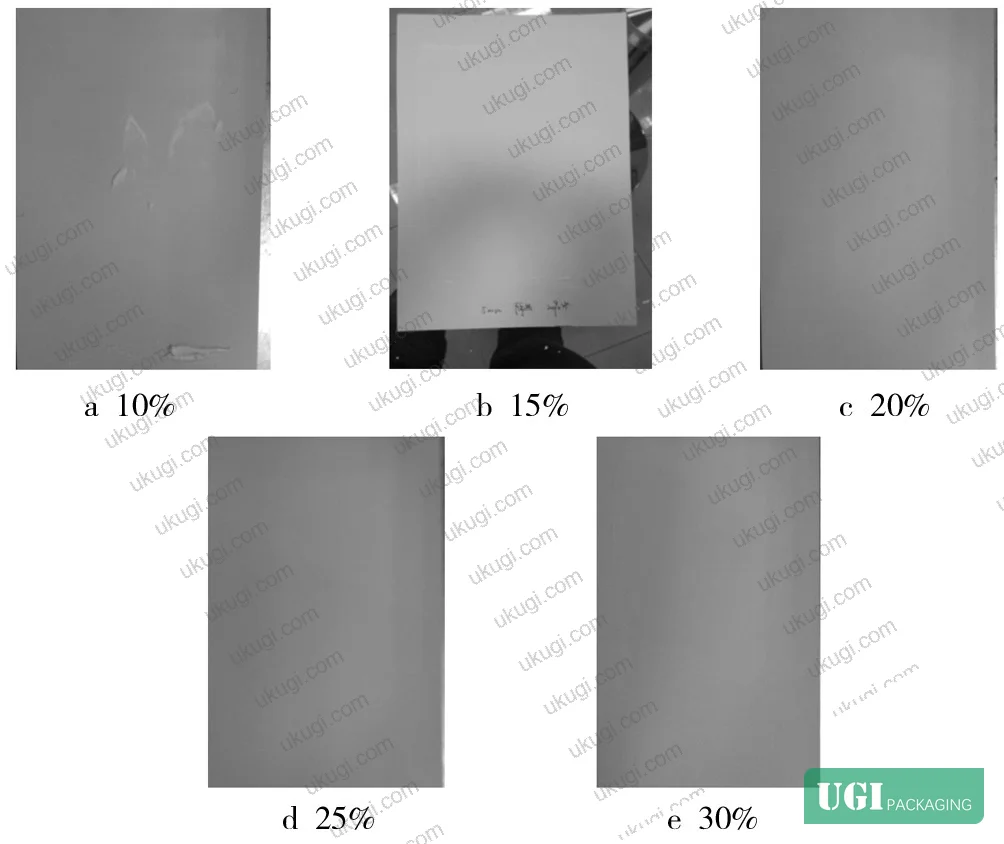
Most procurement teams don’t realize that coating uniformity — not raw coating material specification — is the dominant variable controlling field insulation performance. A supplier who can quote you a λ value but cannot specify their dilution protocol and coating uniformity QC criteria is not a supplier you want to approve.
Adhesion Performance and Practical Coating Durability #
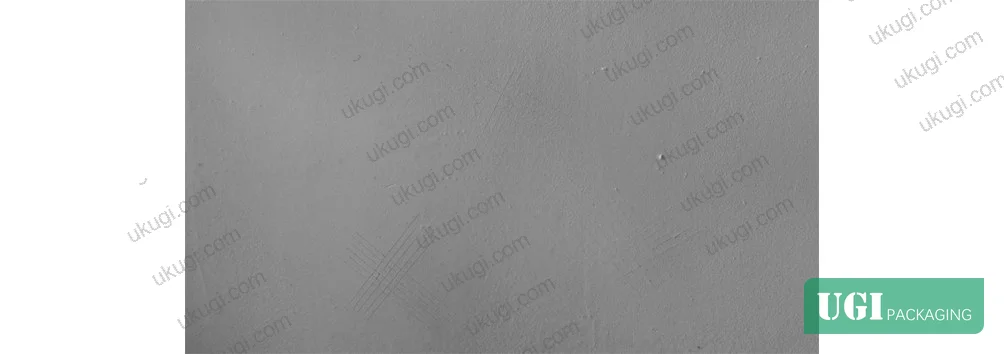
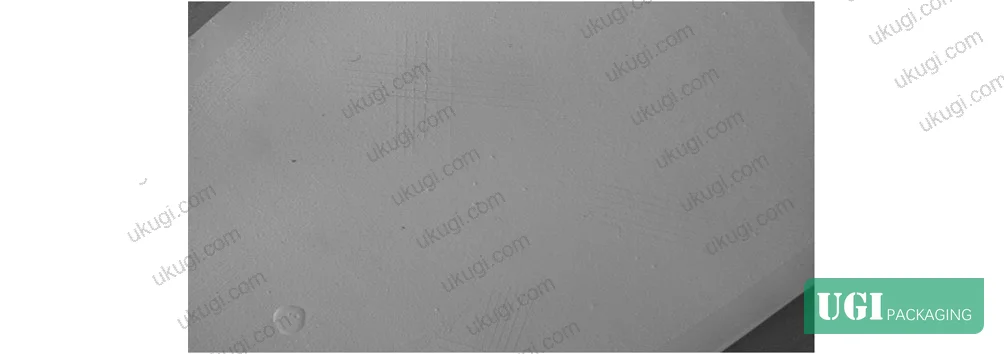
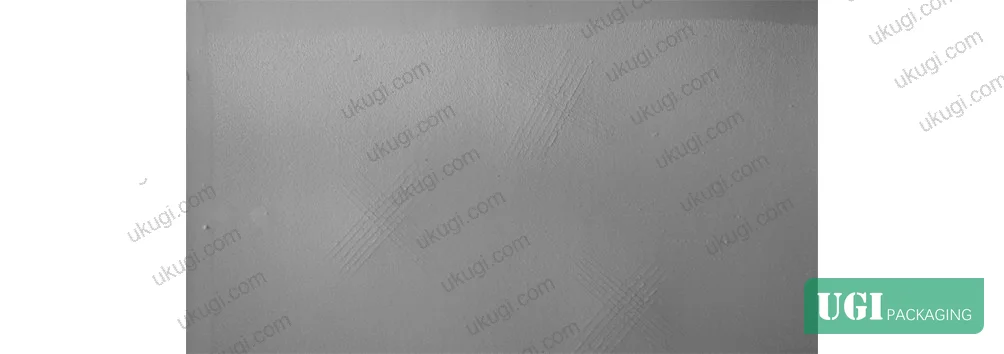
A thermal coating with good insulation numbers but poor substrate adhesion is a field failure waiting to happen. The cross-cut adhesion test (GB/T 9286—1998, grid spacing 2–3 mm, transparent tape pull at approximately 60° in 0.1–0.5 seconds) was applied to all three dual-layer coated thickness groups.
Results:
- 3 μm samples: Adhesion grade 0–1 (cut edges smooth, no coating detachment, cross-cut area affected <5% of total)
- 5 μm samples: Adhesion grade 0–1 (similar clean edges, minimal lift at intersections)
- 9 μm samples: Adhesion grade 1–2 (affected cross-cut area >5% but <15% of total area)
Per GB/T 9286, grades 0–2 are all acceptable for general-purpose use. The 9 μm sample, despite showing slightly higher cross-cut influence area, still meets practical application requirements. For buyers whose end-use involves repeated handling, flexing, or humid environments, requesting a grade 0–1 result means specifying the 3–5 μm range — but you’ll sacrifice some thermal performance. At 9 μm, the thermal gain is worth the marginal adhesion trade-off for most packaging applications.
For reference on standard rubbing resistance methods that complement adhesion testing in coated packaging evaluation, see ISO 15397:2014 Printing inks — Determination of resistance to rubbing.
Industry data on paperboard bursting performance for substrates used in insulation packaging construction can be verified against ISO 2758:2014 Paper — Determination of bursting strength, particularly relevant when the coated board is used in structural folding carton applications.
Practical Guidance for Buyers #
If you’re sourcing insulation-coated paperboard for chocolate, confectionery, or any cold-chain product that needs to survive ambient logistics at temperatures above 35 °C, the 9 μm dual-layer architecture tested here gives you a defensible specification baseline. Require suppliers to demonstrate coating uniformity under their actual production parameters — not just report it. Ask for adhesion grade per GB/T 9286 on production samples, not just development samples.
The 150 g/m² white cardboard substrate used in this research is a common, commercially available grade, but coating adhesion and uniformity will vary with surface sizing, calendering, and moisture content of the board. Approve your substrate source alongside your coating process — changing board supplier mid-production will require re-qualification.
At ukugi.com, we manufacture custom insulation-coated paperboard packaging from our Guangzhou facility, applying functional coatings including thermal insulation and solar-reflective systems to folding carton and rigid box constructions for international food and confectionery brands. Our technical team can match your thermal specification requirements and provide pre-production samples with coating thickness and adhesion data included. For buyers evaluating custom paper boxes or gift packaging solutions that require thermal performance certification, we can provide full coating specification sheets and test data on request.
Also note: the dual-layer approach described here is not limited to chocolate. It is directly applicable to premium cosmetics, pharmaceutical samples, and any packaged product that requires protection from heat exposure during last-mile delivery — especially in Southeast Asian and Middle Eastern markets where ambient temperatures regularly exceed 40 °C.
For buyers specifying printed surfaces over insulation coatings, print adhesion and color accuracy on coated functional substrates should be evaluated against ISO 12647-2:2013 Graphic technology — Process control for offset lithographic printing to ensure finishing compatibility.
Need a custom formulation or sample? Request a quote from our team →
Supplier Qualification Questions #
- What is the measured thermal conductivity of your insulation coating layer, and can you confirm it is ≤0.056 W/(m·K) (matching coating A performance) or ≤0.078 W/(m·K) for solar-reflective variants, with test data per GB/T 4272?
- What is your coating application protocol for the insulation layer — specifically, what is the distilled water dilution ratio (target: approximately 20% by mass) and how do you control uniformity across the coated sheet at 9 μm wet film thickness?
- Can you provide cross-cut adhesion test results per GB/T 9286—1998 for your dual-layer coated samples at 9 μm total thickness, confirming adhesion grade ≤2 with cross-cut influence area <15%?
- What thermal delay performance data can you provide for your coated board at 50 °C ambient conditions, specifically time-to-temperature measurements at the 24 °C and 34 °C thresholds used as product softening and melt points?
- For the solar-reflective topcoat, what is your diluent specification — particularly the mass ratio of alcohol to coating (target 1:10), and what coating speed (m/s) and pressure (N) are used in production to ensure hollow microsphere uniform distribution?
Sourcing Checklist #
- ☐ Thermal conductivity of insulation coating confirmed ≤0.1 W/(m·K) via thermal wire method or equivalent (coating A target: 0.056 W/(m·K))
- ☐ Coating substrate is 150 g/m² white cardboard or equivalent, with surface conditions approved for functional coating adhesion
- ☐ Dual-layer application confirmed: insulation layer applied first and fully dried before solar-reflective topcoat, at 9 μm total wet film thickness
- ☐ Dilution protocol documented: insulation coating diluted with ≤20% distilled water by mass; solar-reflective coating diluted with alcohol at 1:10 mass ratio
- ☐ Cross-cut adhesion test per GB/T 9286—1998 shows grade ≤2, with cross-cut influence area <15% at 9 μm coating thickness
- ☐ Thermal delay performance verified at 50 °C: time to 24 °C ≥85 seconds and time to 34 °C ≥280 seconds for 9 μm dual-layer samples
- ☐ Coating process parameters documented: application pressure 300 N, speed 0.1 m/s, ambient temperature 25 °C ± 2 °C
Key Specifications Table #
| Parameter | Recommended Value | Verification Method |
|---|---|---|
| Insulation coating thermal conductivity | ≤0.056 W/(m·K) | Thermal wire method per GB/T 4272; mean temp ≤350 °C |
| Solar-reflective coating thermal conductivity | ≤0.078 W/(m·K) | Thermal wire method per GB/T 4272 |
| Dual-layer coating thickness | 9 μm | Wet film applicator gauge; 3-point measurement across sample |
| Coating adhesion grade (dual-layer, 9 μm) | Grade ≤2 per GB/T 9286 | Cross-cut test, 2–3 mm grid, tape pull at ~60° in 0.1–0.5 s |
| Insulation layer dilution ratio | 20% distilled water by mass | Gravimetric mixing ratio at point of application |
| Thermal delay performance (50 °C, 18–34 °C range) | ≥4× vs. uncoated substrate | Oven test at 50 °C, alcohol thermometer, stopwatch timing |
| Carton substrate basis weight | 150 g/m² | ISO basis weight or equivalent |
Looking for a manufacturer that meets these specs? Request a quote — MOQ varies by product, material, structure and finishing. Product-specific MOQ is confirmed with each quotation.
References #
Data source: Thermal Insulation Coating Systems for Temperature-Sensitive Paperboard Packaging: Composition Analysis and Performance Optimization, S. Luo et al., Journal of Applied Polymer Science, 2024
Frequently Asked Questions #
What is the actual performance difference between a single insulation coating layer and a dual-layer system on white cardboard?
The dual-layer approach — insulation coating applied first, solar-reflective coating second — significantly outperforms either coating applied alone. At 9 μm total thickness and 50 °C ambient temperature, the dual-layer sample extended the time to reach the 34 °C melt threshold to 303.0 seconds, compared to 83.2 seconds for uncoated board. Single-layer samples fall between these values but do not reach the 4–5× improvement factor achieved with the dual-layer construction.
Does the dilution ratio of the coating affect thermal performance?
Yes, and the relationship is non-linear. For ambient insulation coating A, undiluted coating cannot be applied uniformly — hollow microspheres fail to distribute evenly, producing thermal bridges that undermine performance. At 20% distilled water dilution, coat quality and insulation performance are both acceptable: time to reach 24 °C is 83.9 seconds at this dilution level. Adding more water (25–30%) degrades performance progressively, with 30% dilution dropping the 18–24 °C delay to 65.4 seconds while also causing substrate wrinkling (“lotus edge” effect on the paper).
Can this coating system be applied to packaging formats other than folding cartons?
The research was conducted on flat white cardboard sheets (150 mm × 260 mm) and the adhesion and thermal data apply to flat or lightly scored constructions. For rigid box constructions, paper bags, or complex folding geometries, coating adhesion at fold lines should be separately qualified, since the cross-cut test data (grade 0–2) was measured on flat sections only. The coating chemistry and process parameters are transferable, but fold-line adhesion testing would be required.
What is the minimum coating thickness that still provides meaningful insulation improvement?
Even at 3 μm, the dual-layer coating extends time to the 24 °C softening threshold from 27 seconds (uncoated) to 73.4 seconds — a 2.7× improvement. At 5 μm this rises to 80.4 seconds, and at 9 μm to 90.7 seconds. For most practical applications, 9 μm is the target because it also delivers the strongest performance in the 24–34 °C range (303.0 vs. 262.8 seconds for 3 μm). If adhesion grade is a hard constraint — for example, a label-over-coating application — 3–5 μm gives grade 0–1 adhesion with moderate thermal performance.
Is this insulation coating approach suitable for food-contact packaging?
The research addresses thermal performance and adhesion, not food contact compliance. Polyurethane and acrylic coatings are widely used in packaging, but food contact suitability depends on specific formulation, migration testing, and compliance with applicable regulations. Buyers sourcing insulation packaging for direct food contact should verify formulation compliance against EU Regulation No 10/2011 on plastic materials and articles intended to contact food or equivalent national standards before approving for production.
Published by ukugi.com Technical Team | Request a quote


