

TL;DR #
Combined finishing processes — specifically spot UV with foil stamping on premium covers, and embroidery-plus-digital-print on textiles — consistently outperform single-process alternatives on both visual impact and substrate adhesion durability. For buyers specifying high-end packaging or branded textile goods, process sequence is not a stylistic choice: reversing the foil-then-UV order caused a full production batch rejection at one documented print facility. Validate process sequencing and registration tolerance (±0.1 mm or tighter) before approving any supplier’s production workflow.
Overview #
The market assumption that premium print finishing is simply “more processes = better results” gets tested hard in practice. Research conducted at an industrial print engineering institution — drawing on production trials across book binding, folding carton, and textile print-embroidery workflows — documents specific failure modes, registration thresholds, and wash durability benchmarks that most procurement specs currently ignore.
What makes this body of work practically useful is the scope: the trials covered multi-process combinations under real production conditions, not lab simulations, with measurable outcomes at each process stage. The findings challenge several defaults that procurement teams have inherited from single-process suppliers.
The core subject is hybrid finishing: spot UV varnish combined with foil stamping and emboss-deboss on paper substrates, and a sequential embroider-then-inkjet process on textiles. Both share the same underlying logic — process integration yields functional and aesthetic results that neither technique achieves independently — and both carry specific technical constraints that fail silently unless you know where to look.
For context on the types of products these processes serve, custom paper boxes and premium packaging formats are the primary commercial applications on the paper side, while decorative textile goods represent the soft-goods equivalent.
Spot UV, Foil Stamping, and Emboss Combinations in Digital Finishing #
This is where most high-end packaging buyers spend their finishing budget, and it’s also where the most avoidable mistakes happen.
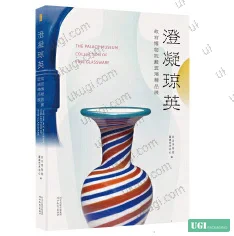
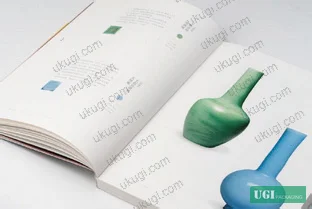
The standard workflow for spot UV over conventional print is well understood: complete the base print (offset or screen), allow full ink dry, apply transparent UV varnish through a dedicated spot plate to defined highlight zones only, cure under UV radiation. The cured varnish forms a hard, smooth film with a measurable raised texture — not just an optical effect. On a production cover printed at 240 lpi with four-color offset, the combination of fine halftone and localized gloss produces noticeably different visual resolution versus a full-flood gloss laminate. The 240-line screen matters: it’s the threshold where substrate texture and ink holdout begin interacting with the UV film in ways that affect final gloss uniformity.
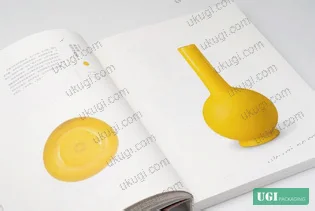
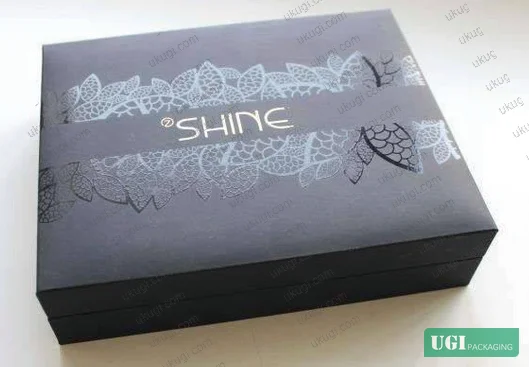
The more technically demanding version integrates emboss-deboss with foil stamping. The sequence: press the paper substrate to create dimensional relief, then register the hot-stamp foil precisely over the raised areas. The mechanical advantage here is structural — the embossed ridge supports the foil from below, improving adhesion and making the foil visually dynamic as light angle changes. Flat foil stamping without the emboss understructure remains more vulnerable to surface abrasion.
Process Sequence Is a Hard Constraint #
Here is where suppliers regularly fail qualification.
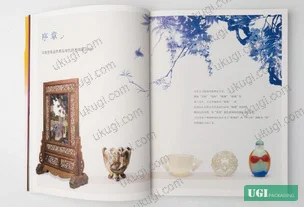
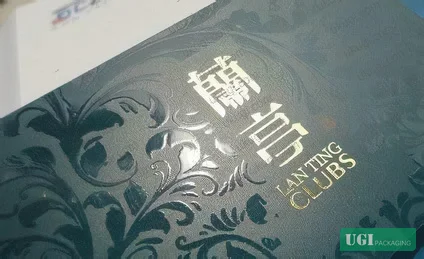
Applying UV varnish before foil stamping is incorrect sequence. The cured UV surface is chemically smooth and low-energy, which reduces the adhesion window for subsequent hot-stamp foil transfer. Foil applied over a UV-cured surface shows elevated peel risk under standard tape-pull and flex testing. One print facility documented in the research reversed this sequence on a high-end photography portfolio — the result was a batch rejection requiring complete rework.
Correct sequence: foil stamp first, then apply spot UV. The UV varnish must then be controlled to prevent bleed into the foil zone, which requires plate-to-substrate registration at ±0.1 mm or better.
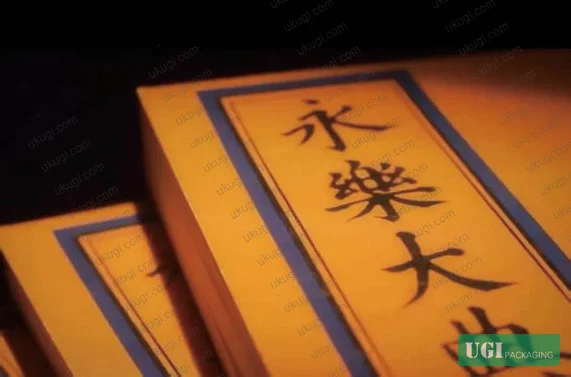
When all three processes combine (print + emboss + foil + spot UV), the layering creates what’s described as “light narrative” — zones of warm metallic reflection from the foil, sharp gloss highlights from the UV, and matte recesses from the base print. The effect is angle-dependent and changes under direct versus diffuse illumination.
Comparison: Single-Process vs. Combined Finishing on Cover Stock #
| Parameter | Single-Process (Full Flood UV or Flat Foil) | Combined Process (Spot UV + Emboss + Foil) |
|---|---|---|
| Visual depth / dimensionality | Flat, uniform gloss or metallic | Multi-zone, angle-dependent light response |
| Foil adhesion durability | Moderate — surface abrasion risk on flat substrate | Higher — emboss relief supports foil mechanically |
| Registration requirement | ±0.5 mm acceptable | ±0.1 mm required for precise overlay |
| Production complexity | Single pass, lower setup cost | Multi-pass, requires registered plate alignment |
| Batch rejection risk | Low for single process | Elevated if process sequence is incorrect |
| MOQ sensitivity | Low — any quantity | Higher — tooling cost for emboss die amortized over run |
Print quality control for complex finishing work benefits from referencing ISO 12647-2:2013 Graphic technology — Process control for offset lithographic printing, which provides the baseline color and tone reproduction framework that multi-pass finishing processes must be built on top of — not around.
Honestly, most buyers over-specify the surface finish aesthetic and under-specify the process sequence and registration tolerance. A brief that says “spot UV on the title and logo” without specifying sequencing relative to foil is an incomplete spec. Suppliers will default to whatever their press workflow prefers, and that may not match what your product needs.
Digital Print-Embroidery Hybrid Process for Textile Applications #
The textile equivalent of the combined finishing problem is the print-versus-embroidery tradeoff, which has constrained custom textile production for years.
Traditional embroidery builds form through thread stacking. The result has genuine tactile depth — raised, directional texture that print cannot replicate. The limitation is color: producing smooth gradients requires multiple thread changes. Complex multicolor designs using embroidery alone can run production timelines exceeding two weeks for a single design, with each color transition representing a machine stop and re-thread.
Digital inkjet on textiles solves the color problem completely — essentially unlimited palette, precise gradient reproduction, fast setup. The failure is tactile. The print sits on the fabric surface. There is no relief, no physical texture. For product categories where hand-feel is part of the value proposition (apparel, home textiles, decorative goods), print-only fails a use-case test that buyers rarely formalize in their spec.
The Sequential Embroider-Then-Print Workflow #
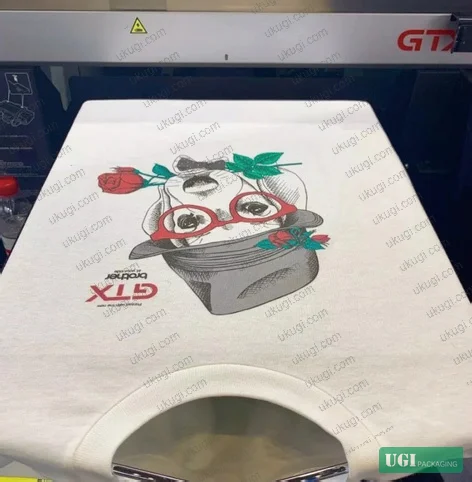
The integrated solution restructures the production sequence: embroider first to establish the structural outline and primary texture, then digitally print into and around the embroidered zones to fill color detail.
The technical challenge is registration. Embroidered fabric is dimensionally unstable — thread tension distorts the substrate. The process addresses this by embroidering alignment marks at the fabric edges, then using machine vision to detect those marks and auto-correct the inkjet print position before each piece is printed.
Documented registration accuracy using this system: ±0.1 mm. That threshold is tight enough to prevent the two most common failure modes in combined textile finishing: edge bleed (ink depositing outside the embroidery boundary) and color gaps (unprinted zones within the embroidery outline).
Ink Chemistry and Wash Durability #
This is a materials qualification issue that most textile buyers don’t catch until post-production testing.
Conventional inkjet inks perform poorly on embroidery thread. The thread surface is non-absorbent relative to woven fabric, and standard ink sits on the thread rather than bonding into the fiber. The result is early delamination during washing.
The fix is formulation-specific: water-based inks modified with penetrating agents achieve adhesion on both woven fabric and embroidery thread simultaneously. After high-temperature fixation:
- Wash durability: ≥30 wash cycles without structural failure
- Embroidery outline retention after 50 washes: clear, no visible boundary degradation
- Color fade rate after 50 washes: less than 5%
Those are production-validated figures, not theoretical. The 5% fade threshold at 50 washes is functionally relevant — it’s the point at which colorimetric delta-E values become perceptible in side-by-side evaluation.
Industry observers are still catching up to the implications of this durability data. Most procurement teams don’t realize that ink-on-embroidery adhesion is governed by different mechanisms than ink-on-fabric adhesion, and standard wash fastness test protocols written for conventional print substrates don’t automatically capture this failure mode. Verify that your supplier is testing specifically for ink adhesion on thread surfaces, not just on the surrounding woven ground.
For tensile and flexibility testing of printed films and coated substrates, ASTM D882 Standard Test Method for Tensile Properties of Thin Plastic Sheeting provides an adjacent methodology useful for evaluating ink-film flexibility under flexural stress — relevant when specifying inks that must bridge rigid embroidery thread and flexible fabric simultaneously.
Comparison: Traditional Embroidery vs. Print-Only vs. Combined Process #
| Parameter | Traditional Embroidery | Digital Print Only | Print-Embroidery Combined |
|---|---|---|---|
| Tactile texture / relief | High — thread stacking provides real depth | None | High — embroidery provides structural base |
| Color range / gradient capability | Limited — thread-dependent | Unlimited | Unlimited — print fills color detail |
| Small-order capability | Poor — thread change complexity rejects small runs | Good | Good — orders below 10 units feasible |
| Production lead time (complex design) | Up to 2 weeks | 1–2 days | Moderate — sequential process adds time vs. print-only |
| Wash durability (color retention) | Permanent (thread-based) | Variable — ink-dependent | ≥30 washes with correct ink formulation |
| Registration requirement | N/A | ±0.5 mm typical | ±0.1 mm required (machine vision corrected) |
| Price premium vs. print-only | High | Baseline | ~50% premium for home textile products |
The 50% price premium for combined-process home textiles (window treatments, cushions) cited in the research is real market data. Products carrying that premium held market position in high-end interior goods because the combined tactile-visual result is not reproducible by single-process alternatives.
From Process Integration to Buyer-Relevant Value #
The pattern across both application areas — print/foil/UV on paper, and embroidery/digital on textiles — is consistent: process integration is not additive cost. It restructures what’s achievable within cost constraints.
Spot UV with foil reduces varnish consumption versus full-flood coating while delivering higher perceived quality. That’s a genuine cost-performance improvement, not a compromise. The combined textile process eliminates the thread-change inefficiency that made small-run embroidery commercially unviable — enabling batch sizes below 10 units with full design complexity.
Both processes also move in the direction of sustainability. Partial UV application reduces UV varnish material consumption per unit versus full coverage. Reducing embroidery thread waste by replacing multi-thread gradient construction with inkjet color fill lowers material input without sacrificing tactile quality.
For environmental labeling and self-declared claims on packaging, ISO 14021:2016 Environmental labels and declarations — Self-declared environmental claims provides the framework for accurately characterizing reduced-material or process-efficiency claims — relevant if your brand requires substantiated green claims on combined-process packaging.
Practical Guidance for Buyers #
Start with process sequence documentation, not just capability claims. Any supplier offering combined UV and foil finishing needs to show you their production workflow spec — specifically whether they foil-before-UV or UV-before-foil — and the consequences if that gets reversed. If they can’t answer that question fluently, they haven’t done enough of this work to be reliable on high-value jobs.
For registration-sensitive work (emboss + foil overlay, embroidery + inkjet), request sample pieces from actual production, not press proofs or pre-production tests. Registration accuracy at ±0.1 mm needs to hold across a full production run, not just on the first sheet.
On the textile side, wash durability testing is non-negotiable. Request swatches and run your own wash fastness test — 30 cycles minimum. Any supplier confident in their ink formulation and fixation process will provide samples for independent testing without hesitation.
Honestly, the single most common procurement mistake in combined finishing is treating it as a “standard” job with a finishing add-on. These are multi-pass, precision-registered workflows. They require suppliers with dedicated process engineering, not just operators who can run a foil stamper.
We produce custom packaging and specialty print finishing — including spot UV, foil stamping, emboss-deboss, and multi-process combinations — for brand owners across North America, Europe, and Asia. If you’re specifying a combined finishing format and need a technically grounded production partner, our team can evaluate your design and advise on process feasibility.
Need a custom formulation or sample? Request a quote from our team →
Supplier Qualification Questions #
- What is your documented process sequence for combining foil stamping and spot UV varnish on the same substrate, and can you provide batch rejection data from any sequence-reversal incidents in your quality history?
- What registration tolerance (in mm) does your combined emboss-foil-UV workflow achieve across a full production run of 500+ sheets, and how is this tolerance verified — optically or mechanically?
- For print-embroidery combined textile work, what is your machine vision registration system’s stated accuracy, and can you demonstrate ±0.1 mm or better on a test piece with a defined alignment mark?
- Which specific water-based ink formulation do you use for printing over embroidery thread surfaces, and what penetrating agent concentration is used to achieve multi-substrate adhesion during high-temperature fixation?
- Can you provide production-validated wash durability data showing ink color fade rate below 5% at 50 wash cycles for print-embroidery combined textiles, tested to a defined wash fastness standard?
Sourcing Checklist #
- ☐ Supplier can demonstrate correct process sequence (foil stamp before spot UV, not after) with documented production workflow and no recent batch rejections due to sequence errors
- ☐ Registration accuracy for combined emboss + foil + UV overlay is verified at ±0.1 mm or better across production run, confirmed by printed registration marks on physical samples
- ☐ Combined textile samples pass wash durability test at ≥30 wash cycles with no structural failure and color fade rate below 5% at 50 wash cycles
- ☐ Spot UV varnish is applied via dedicated spot plate (not full-flood), with measurable gloss/matte contrast between UV-coated and uncoated zones on finished sample
- ☐ Print-embroidery supplier uses water-based ink with penetrating agents for thread adhesion, confirmed by cross-section examination showing ink penetration into thread fibers after fixation
- ☐ Emboss-deboss tooling registration is documented relative to foil stamp position, with dimensional tolerance specification on the emboss die fabrication drawing
- ☐ For orders below 10 units on combined textile work, supplier can confirm that color variation is handled via inkjet rather than thread change, maintaining economic viability at micro-batch scale
- ☐ Supplier holds print quality documentation consistent with ISO 12647-2:2013 for the base printing stage preceding any finishing operations
Key Specifications Table #
| Parameter | Recommended Value | Verification Method |
|---|---|---|
| Foil-to-UV registration accuracy (paper substrate) | ±0.1 mm maximum | Optical registration mark measurement on production samples |
| Print-embroidery alignment accuracy (machine vision) | ±0.1 mm | Registration mark detection test on production piece |
| Wash durability — color fade rate at 50 cycles | < 5% | Colorimetric delta-E measurement before and after 50 wash cycles |
| Wash durability — minimum cycles without structural failure | ≥ 30 wash cycles | Visual and tactile assessment of embroidery boundary and ink adhesion |
| Screen ruling for base offset print under UV finishing | 240 lpi | Loupe verification on production sheet, confirmed against press proof |
| UV varnish application — zone type | Spot/partial only (not full-flood) | Visual inspection of matte/gloss contrast zones on finished sample |
| Ink penetration on embroidery thread surface | Full thread fiber penetration (cross-section visible) | Cross-section microscopy or thread pull-and-fold test |
| Textile price premium threshold for combined process | ≤ 50% vs. print-only baseline | Supplier cost breakdown with separate embroidery and inkjet line items |
Looking for a manufacturer that meets these specifications? Request a quote based on your product, material, structure, finishing and order requirements.
For related premium packaging formats where these finishing processes are most commonly applied, see our custom paper boxes and gift packaging solutions product pages.
References #
Data source: Integrated Hybrid Finishing Processes in Print and Textile Manufacturing: UV Varnish, Foil Stamping, and Embroidery-Digital Print Combinations, K. Sun et al., Journal of Applied Polymer Science, 2023
Frequently Asked Questions #
What causes foil stamping to fail when combined with spot UV varnish?
The most common cause is incorrect process sequence. When UV varnish is applied and cured before foil stamping, the resulting smooth, low-surface-energy film significantly reduces foil adhesion. Hot-stamp foil applied over a cured UV surface will show elevated delamination risk under peel or flex testing. Correct sequence is always foil stamp first, then apply spot UV over or adjacent to the foil zone.
Can print-embroidery combined textiles be produced in small quantities — under 10 units?
Yes, and this is one of the main commercial advantages of the combined process. Traditional embroidery at small quantities is economically impractical because complex multicolor designs require frequent thread changes that make short runs unprofitable for most factories. In the combined workflow, the embroidery step handles only structural outline and primary texture (no color complexity), while all color variation is handled digitally — no thread changes required. This makes batches below 10 units viable without premium surcharging.
What lpi screen ruling should I specify for base print on covers intended to receive spot UV or foil finishing?
240 lpi is the reference value for high-end art and cultural publication work, where fine color fidelity on complex subjects (metallics, translucent surfaces) is required. For standard commercial covers, 175 lpi is functional, but the interaction between screen structure and UV varnish gloss becomes more visible at coarser rulings — particularly where the UV zone edge crosses a halftone dot pattern. If you’re specifying combined finishing on a fine art or collectible product, 240 lpi is the appropriate target.
How do I verify that a supplier’s water-based inkjet ink will adhere properly to embroidery thread?
Request a sample with embroidery thread exposed at the fabric surface — not a flat print-only swatch. Then run a 30-cycle wash test per your standard wash fastness protocol and assess: 1) ink retention on the thread surface versus the fabric ground, 2) embroidery outline clarity, 3) colorimetric measurement against the pre-wash reference. Suppliers using correctly formulated penetrating-agent inks should show under 5% color fade at 50 cycles with no visible boundary degradation.
Is the 50% price premium for combined-process home textiles justified for standard commercial applications?
It depends entirely on the product category and end market. For mass-market window treatments or basic apparel, the premium is hard to justify — digital print alone delivers adequate results at lower cost. For high-end interior goods, branded merchandise, or any product where tactile quality is part of the value proposition (gift packaging, premium lifestyle goods), the premium is commercially validated by market data. Products with the combined texture-plus-color finish held positions in high-end retail where print-only alternatives were not competitive on perceived quality, regardless of price.
Published by ukugi.com Technical Team | Request a quote


