

TL;DR #
The sublimation-foil single-pass process, operating at 190–210 °C with 3–6 kg/cm² pressure for 15–25 s, is the most significant recent advance in digital foil stamping — eliminating secondary registration and cutting production cycles by more than 50% compared to conventional two-step methods. For buyers sourcing short-run premium packaging or decorated apparel with metallic effects, process selection now has a direct cost and quality impact that spec sheets from suppliers often obscure. Before committing to any foil stamping process, require production samples at your actual substrate and run-length, then test wash fastness and metallic adhesion against the parameters in this guide.
Overview #
If you’re evaluating foil stamping processes for custom packaging, decorated apparel, or premium gift products, the technology landscape has shifted substantially. A practical review from a specialist printing research group, drawing on comparative process evaluation across six foil application methods and multiple substrate categories, confirms that no single process dominates across all use cases — and that several widely marketed “digital foil” solutions carry operational limitations that suppliers rarely volunteer upfront.
The review covers traditional hot-stamping die methods, screen-based foil transfer, inkjet-based cold foil, UV inkjet foil film, DTF (direct-to-film) combined foil, sublimation-foil single-pass, and laser/holographic transfer — evaluated against resolution capability, substrate compatibility, production throughput, wash fastness, environmental compliance, and cost structure.
This is not an academic exercise. The findings map directly onto procurement decisions: which process to specify for a given product type, which supplier claims are verifiable, and where the failure modes actually live. Understanding these differences before issuing an RFQ saves significant qualification time — and avoids the scenario where you approve samples produced on a small-format digital foil machine, then receive production runs that look nothing like them.
For context on foil film standards and material performance testing relevant to flexible substrates, ASTM D882 Standard Test Method for Tensile Properties of Thin Plastic Sheeting provides a useful baseline for evaluating PET carrier film behavior under heat and pressure.
Digital Foil Stamping Processes: Inkjet, UV, and DTF Compared #
This is where most of the procurement confusion lives, and frankly, a lot of it stems from suppliers using “digital foil” as a catch-all term for processes with very different capability profiles.
Inkjet Foil Stamping (Thermal Printhead Systems) #
Wide-format thermal printhead foil machines operate at 200–300 dpi resolution. That’s the ceiling, not the average. Substrate requirements are strict: flat, consistent thickness, smooth surface. The foil film selection is narrow because the thermal head is sensitive to film chemistry. In practical qualification runs, thermal printhead contamination from adhesive residue caused visible transfer voids in extended production sessions — missing characters and partial image dropout that were not present in early samples. Circuit damage from head overheating is irreparable; replacement costs are high. The conclusion is straightforward: inkjet foil via thermal head is a proofing and short-run tool, not a production process.
UV Inkjet Cold Foil #
UV-based inkjet foil is more capable. The principle is clean: print UV adhesive in the foil pattern, laminate foil film, UV cure, peel. Resolution is limited primarily by inkjet dot placement, and the process handles irregular shapes and variable data without re-tooling. For packaging cartonboard with flat surfaces, UV cold foil has become increasingly mature — fine reversed text clarity is now comparable to conventional hot-stamp die impression.
The limitation most buyers miss: UV adhesive and UV overcoat stability in inkjet systems is consistently inferior to standard UV ink systems in terms of shelf life and environmental sensitivity. Ink-to-adhesive compatibility requires active management. Different substrate surface energies require matched pre-treatment fluids. Suppliers who can’t explain their pre-treatment protocol for a specific substrate are operating on trial and error.
DTF (Direct-to-Film) Combined Foil #
The DTF combined foil workflow — CMYK + white ink + foil adhesive channel printed simultaneously, hot-melt powder applied, foil laminated, single heat press — has genuine advantages for decorated apparel. The two main routes are:
Route 1 (sequential): Complete DTF transfer first → apply foil adhesive locally → second heat press at 140–160 °C for 8–12 s → peel foil. More process steps, but most stable.
Route 2 (integrated): All channels printed simultaneously including foil adhesive → powder melt → foil application → single press. Faster, but requires precise channel timing and ink compatibility management.
For the integrated route, the foil adhesive adhesion bond strength is the critical variable — if the adhesive layer is too thin, B-film removal causes adhesive overflow or pattern damage. This is a failure mode worth specifically testing in sampling.
Comparison of Primary Digital Foil Processes:
| Process | Resolution Capability | Substrate Range | Effective Batch Size | Key Limitation |
|---|---|---|---|---|
| Thermal inkjet foil (200–300 dpi) | Low–Medium | Flat cartonboard only | Short run / proofing | Head contamination, narrow film selection |
| UV inkjet cold foil | Medium–High | Flat packaging substrates | Short to medium run | Adhesive stability, surface energy management |
| DTF combined foil | Medium | Fabric, paper, some plastic | MOQ 1 unit upward | Dual-channel ink compatibility, second press temp control |
| Sublimation + foil single-pass | High | Polyester/poly-cotton fabric | MOQ 1 unit upward | Substrate limited to dye-sublimation-compatible materials |
| Laser/holographic transfer | Very High | Paper, plastic, glass, ceramic | Medium to high run | Equipment cost, holographic master tooling lead time |
| Screen-print foil transfer | Low | Fabric, flat substrate | Medium to high run | Coarse line detail, wash fastness issues with some films |
Sublimation-Foil Single-Pass and Laser Holographic Transfer: The High-End Digital Options #
Sublimation-Foil Single-Pass (FOIL Sublimation) #
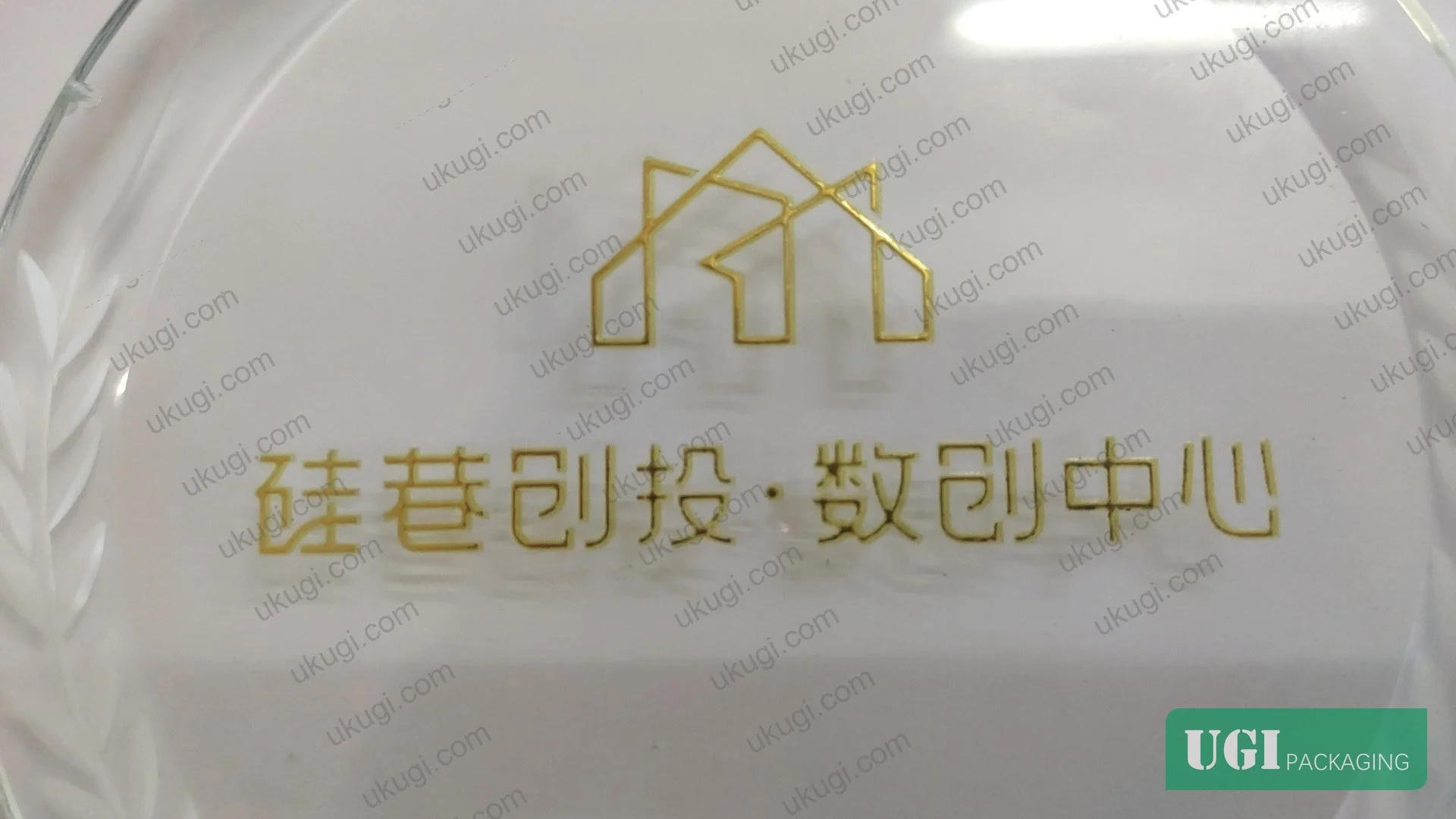
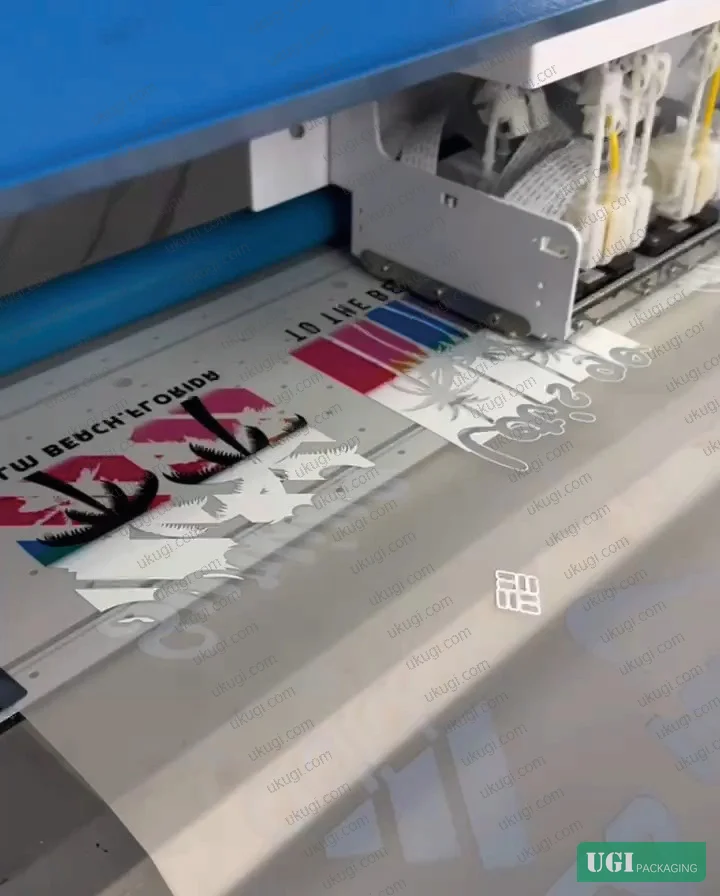
This is the process that has generated the most industry interest recently — and for good reason. The concept is elegant: a multi-channel inkjet machine prints dye-sublimation CMYK ink alongside foil adhesive in the same pass on a dedicated transfer carrier. A single heat press at 195–205 °C, 20 s, 4–5 kg/cm² simultaneously drives dye sublimation into the fiber and activates the foil adhesive. Peel the PET carrier and you have full-color photographic image plus metallic foil — with registration tolerance of ±0.1 mm — in a single production cycle.
The efficiency gain is real. Compared to sequential two-step foil methods, the single-pass approach reduces process time by more than 50% and eliminates the registration error risk entirely. No plates, no dies, no minimum run constraints.
The enabling material is the high-temperature sublimation foil film. Standard foil films are rated to 100–150 °C — running them through a sublimation press at 200 °C destroys them. The new-generation film is re-engineered throughout: PET base film, release layer, metallic layer (non-oxidizing, no yellowing, no fogging at operating temperature), and a heat-melt adhesive that activates above 180 °C and stays stable below that threshold. This is not an incremental improvement — the old and new films are fundamentally incompatible at operating temperature.
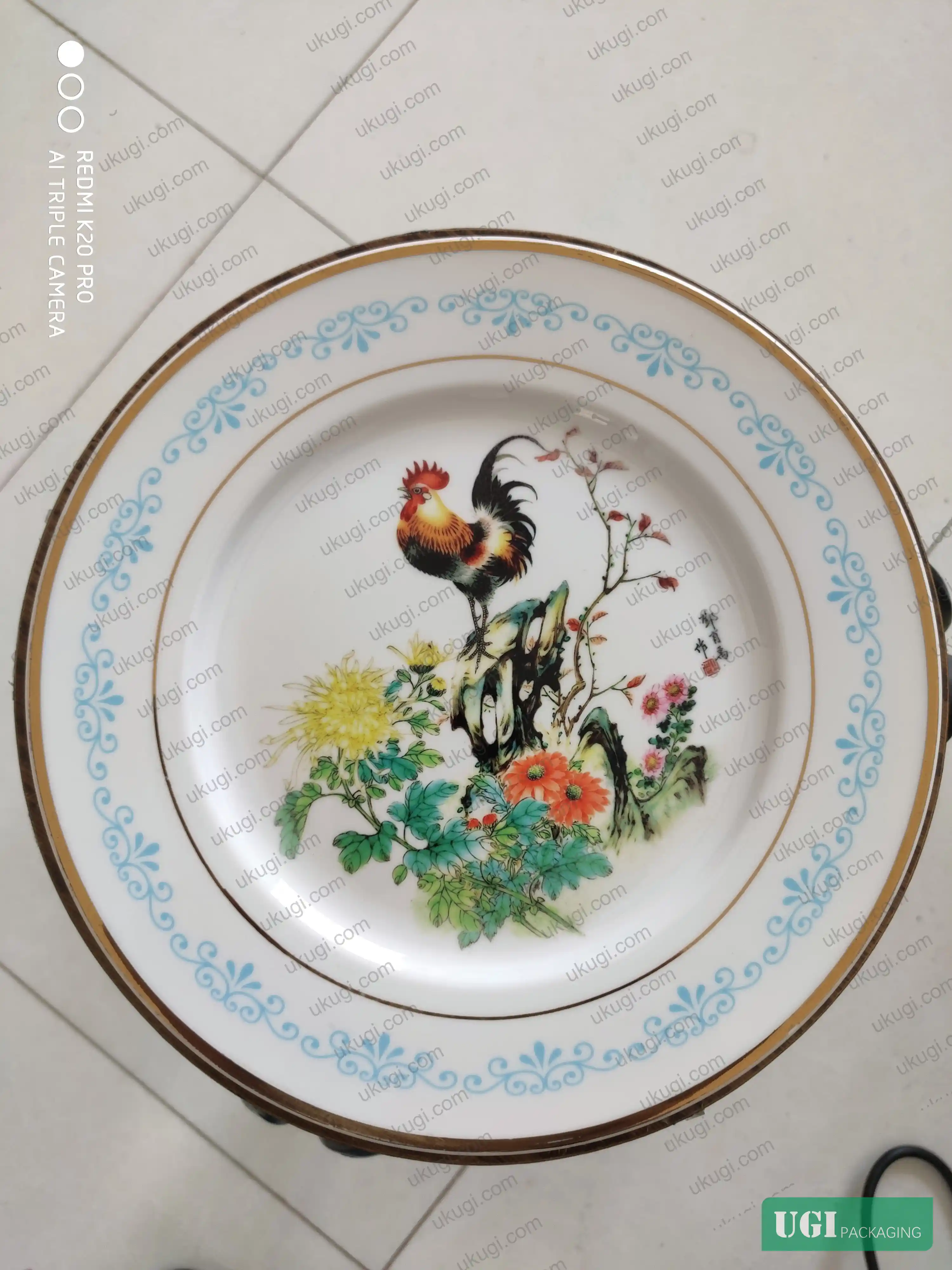
The substrate constraint is genuine: sublimation requires polyester, polyester-cotton, or coated fabrics. It does not work on 100% cotton or natural fibers without surface coating treatment. Buyers sourcing decorated natural-fiber products need a different process.
For wash and abrasion fastness verification on these products, ASTM D1709 Standard Test Methods for Impact Resistance of Plastic Film by the Free-Falling Dart Method is less relevant here than textile-specific fastness standards, but for the film carrier itself, tensile and delamination testing provides useful baseline qualification data.
Laser Picosecond/Femtosecond Metal Coloring #
This is a niche but technically impressive process. Ultra-short pulse lasers create controlled surface micro-nano structures on metal substrates. Two coloring mechanisms are active:
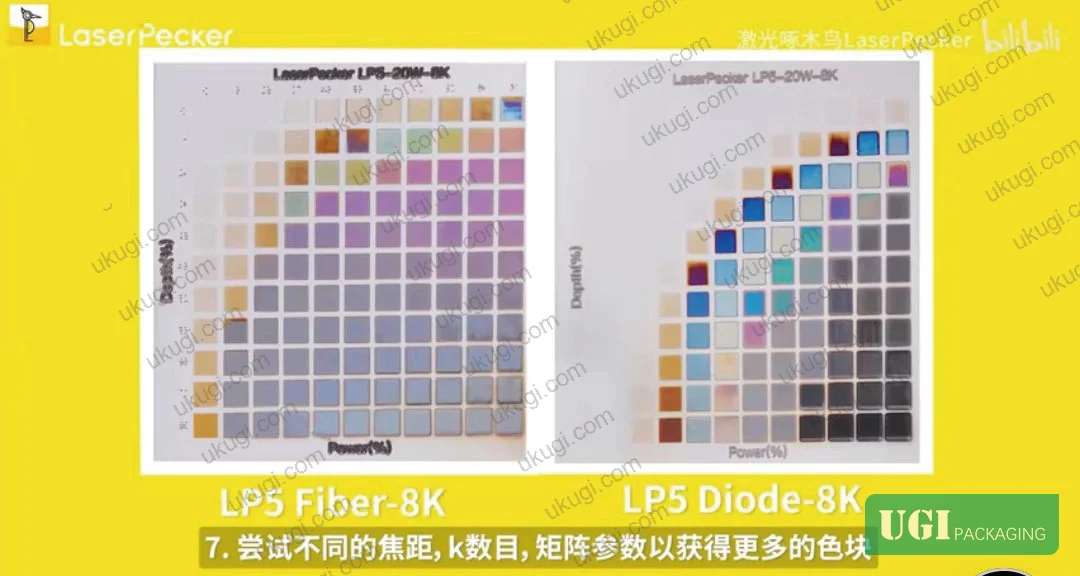
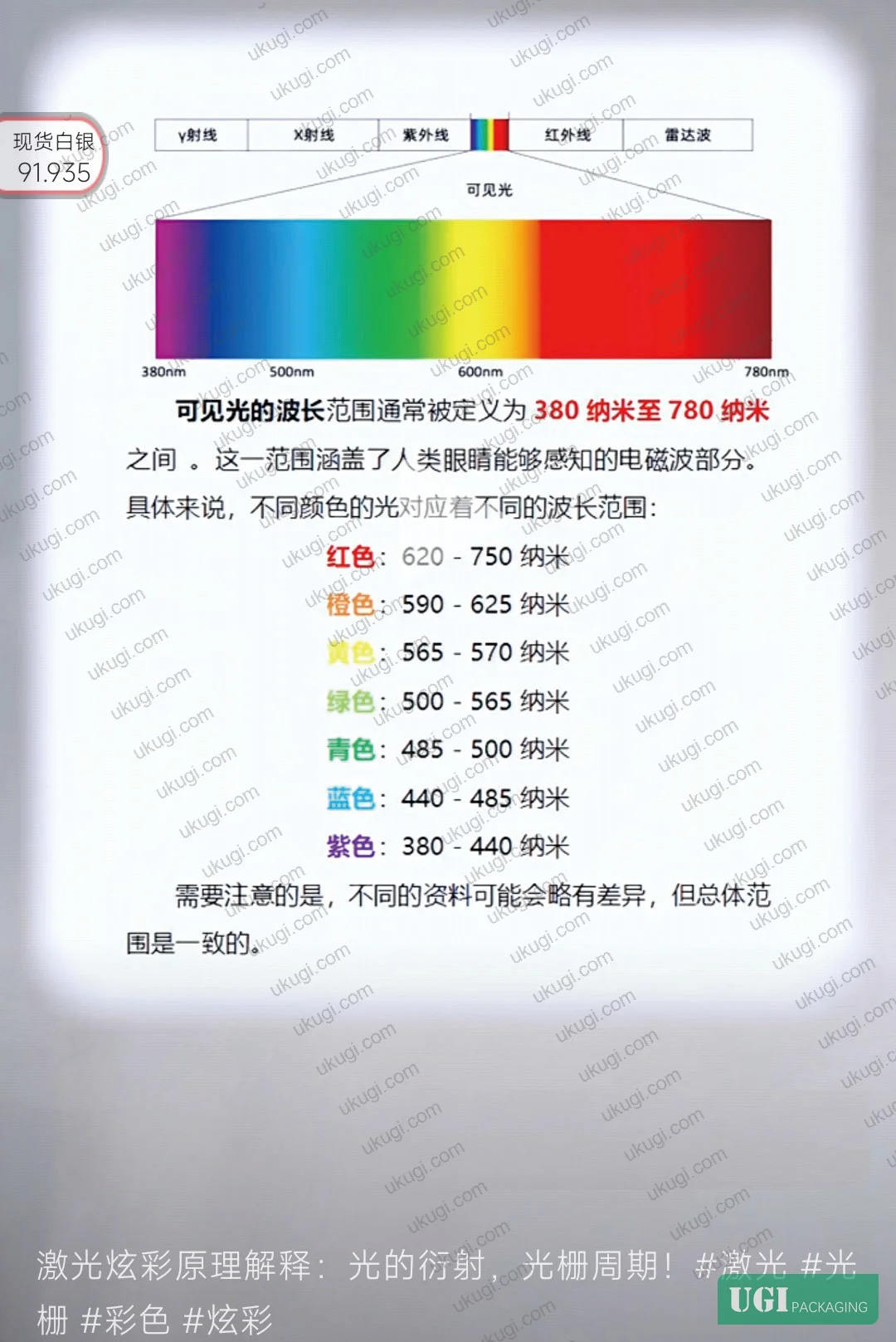
Thermal oxide coloring: Stainless steel and titanium alloy substrates, laser-controlled temperature generates ultra-thin oxide films (80–800 nm). Color is determined by film thickness: blue at 80–120 nm, gold at 150–220 nm, red at 280–350 nm. The effect is thin-film interference — permanent, no ink, no fading.
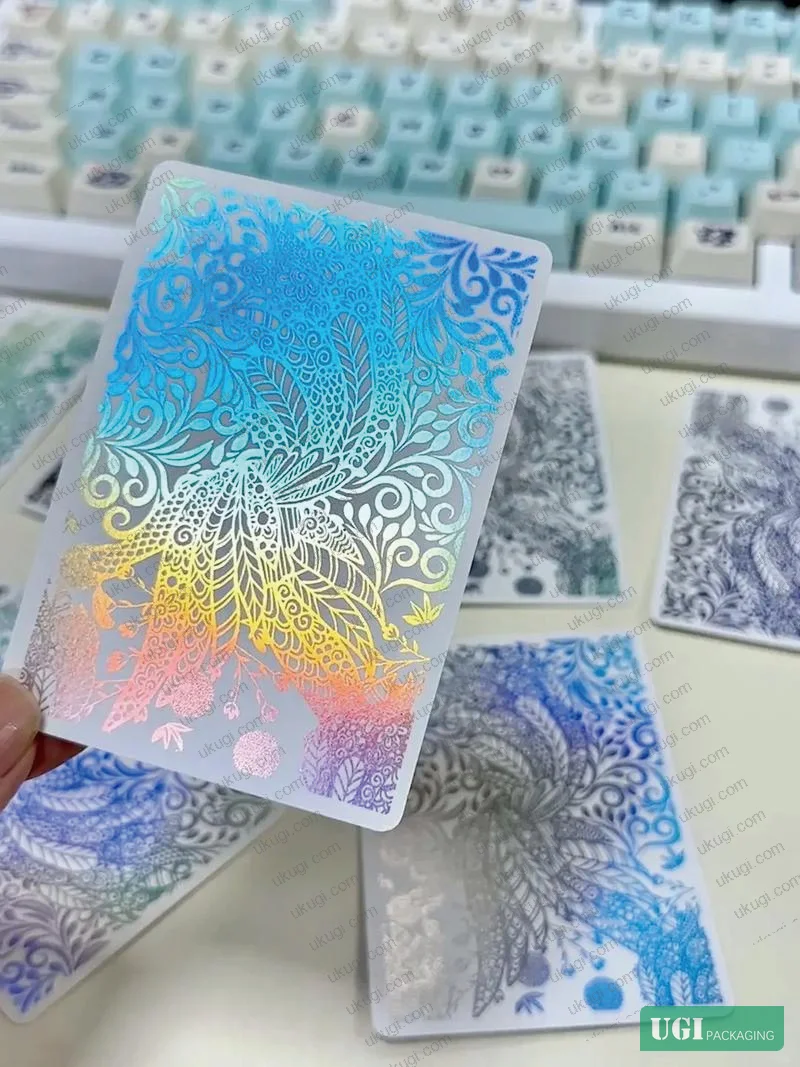
Micro-nano structure coloring: Aluminum and copper substrates, laser etches nano-scale gratings and lattice structures. Color arises from grating diffraction and surface plasmon resonance — rainbow, iridescent, and pure color effects.
Key process parameters: pulse width 10⁻¹² s (picosecond) or 10⁻¹⁵ s (femtosecond); energy density 5–15 J/cm²; repetition rate 100–200 kHz; scan speed 800–1,200 mm/s. Ambient oxygen concentration must be maintained at 15–25% — outside this range, the oxide film composition shifts and target colors like gold cannot be achieved reliably.

Holographic Laser Transfer #
Mirror laser (holographic) transfer applies pre-made holographic film via laser heat or UV cure to paper, plastic, metal, or glass surfaces. The master holographic pattern is created by electroforming and photolithography — this is where the tooling investment lives. Once the master exists, transfer costs drop significantly. Mirror silver foil shows 8–18% silver-white reflectance under standard lighting; layered transparent yellow and orange tints produce gold, brass, and antique copper effects.
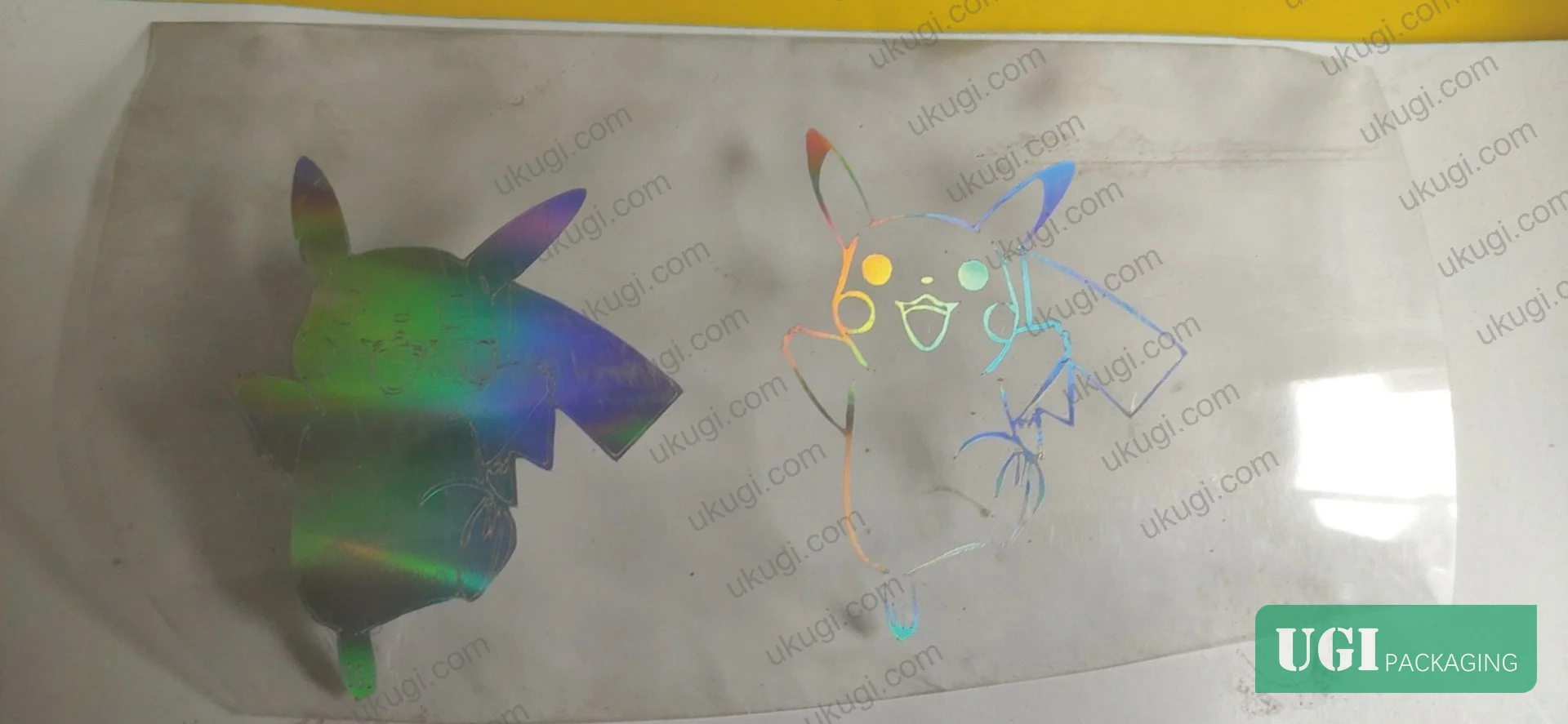
This process is well-established in anti-counterfeiting packaging, premium labels, and cigarette pack decoration. The print quality consistency and security depth are why it remains standard specification for high-end tobacco and spirits packaging worldwide.
For label and packaging applications requiring print quality consistency verification, ISO 12647-2:2013 Graphic technology — Process control for offset lithographic printing provides useful reference tolerances for color and registration that can be adapted to foil registration acceptance criteria.
Most procurement teams don’t realize that the holographic master tooling lead time — typically 3–6 weeks for new pattern development — is often the critical path item in a packaging project timeline, not the print production itself. Build this into your sampling schedule.
Practical Guidance for Buyers #
Process selection for foil decoration is genuinely substrate-driven and run-length-driven. The table above gives you the quick filter, but a few points deserve direct emphasis.
For flat packaging cartonboard in medium-to-high volumes, UV cold foil via offset or inkjet combination is the mature choice. For short-run and variable-data packaging where you need foil registration to variable print content, UV inkjet cold foil is the only viable digital path — but require pre-production substrate compatibility testing as a contract condition.
For decorated apparel with metallic effects, the sublimation-foil single-pass approach is now production-ready and offers a genuine efficiency advantage over sequential methods. The substrate limitation (polyester and poly-cotton) is real — don’t let a supplier skip this. For cotton-dominant garments, DTF combined foil with Route 1 (sequential) is more reliable.
For anti-counterfeiting and premium security applications — tobacco packaging, spirits, luxury retail — holographic transfer remains the specification standard. The visual security depth and micro-structure complexity of a properly made holographic film is not achievable by any of the inkjet-based approaches.
Honestly, most buyers over-specify foil resolution for packaging end-uses. For standard retail packaging at normal viewing distance, 200 dpi thermal inkjet foil transfer produces commercially acceptable results at significantly lower cost. Reserve high-resolution UV inkjet or laser processes for applications where fine reversed type, micro-patterns, or security features are actually in the brief.
We’re a Guangzhou-based OEM manufacturer producing custom packaging and printed decorative products — from foil-stamped folding cartons and rigid gift boxes to security-printed labels and holographic films — and we supply international brand owners who need technically verified production, not just sample-room quality. If your project involves foil decoration across any of the substrate or process categories discussed here, our team can advise on the right process route for your specific substrate and volume before you commit to tooling.
Need a custom formulation or sample? Request a quote from our team →
Supplier Qualification Questions #
- For UV inkjet cold foil on cartonboard, what pre-treatment fluid do you use for substrates with surface energy below 38 mN/m, and what adhesion test method confirms foil bond strength after treatment?
- For sublimation-foil single-pass production, can you demonstrate that your foil film is rated to 190–220 °C operating temperature, and provide data showing the heat-melt adhesive activation threshold is above 180 °C?
- What is your inkjet printhead registration tolerance for foil adhesive placement in DTF combined foil production, and can you confirm ±0.1 mm positional accuracy across a full A3 print width?
- For holographic laser transfer on packaging substrates, what is your holographic master tooling lead time, and can you provide a sample showing successful 15–25% ambient oxygen concentration control during metallic oxide coloring processes?
- For thermal inkjet foil systems operating at 200–300 dpi, what is your protocol for printhead contamination monitoring during extended runs, and what is the maximum continuous production session length before head cleaning is required?
Sourcing Checklist #
- ☐ Sublimation-foil film supplier has confirmed operating temperature rating of 190–220 °C with documentation — not rated for standard 100–150 °C foil film
- ☐ DTF combined foil samples tested for wash fastness at 40 °C and 60 °C, with foil adhesion showing no delamination or color shift after minimum 20 wash cycles
- ☐ Thermal inkjet foil samples produced at stated 200–300 dpi resolution on the specific substrate specified for production — not on a smoother or thicker surrogate
- ☐ UV inkjet cold foil adhesive stability confirmed with shelf-life documentation ≥6 months from production date, and pre-treatment protocol specified per substrate surface energy
- ☐ Laser metal coloring samples verified with ambient oxygen concentration held at 15–25% during production — color consistency checked against reference standard for target hue (gold: 150–220 nm oxide thickness)
- ☐ Sublimation-foil single-pass heat press parameters documented: temperature 195–205 °C, pressure 4–5 kg/cm², dwell time 20 s — deviations from these parameters noted and justified
- ☐ For holographic transfer on security or anti-counterfeiting packaging, holographic master produced by electroforming + photolithography with nano-scale grating pattern confirmed by supplier
- ☐ Registration accuracy of foil placement verified at ±0.1 mm against printed color content on production-representative samples
Key Specifications Table #
| Parameter | Recommended Value | Verification Method |
|---|---|---|
| Sublimation-foil heat press temperature | 190–210 °C (standard window) / 195–205 °C (optimized) | Calibrated press thermocouple, 3-point platen measurement |
| Sublimation-foil press pressure | 3–6 kg/cm² | Pressure-sensitive film (Fuji Prescale or equivalent) across platen |
| Sublimation-foil press dwell time | 15–25 s | Press cycle timer, verified against foil adhesion peel test |
| DTF secondary foil press temperature | Lower than primary transfer press — target 140–160 °C | Thermocouple measurement; over-temp causes DTF layer melt/shift |
| High-temp foil film adhesive activation threshold | >180 °C activation; rated to 190–220 °C operating | Differential scanning calorimetry (DSC) or supplier TDS |
| Laser metal coloring — oxide film thickness for gold | 150–220 nm | Spectroscopic ellipsometry or cross-section SEM |
| Laser metal coloring — ambient oxygen concentration | 15–25% | In-line oxygen sensor, controlled enclosure |
| Laser energy density | 5–15 J/cm² | Laser power meter, beam profiler measurement at substrate |
| Inkjet foil printhead resolution (thermal systems) | 200–300 dpi maximum | Test chart print at rated resolution on production substrate |
| Foil registration tolerance (inkjet/DTF) | ±0.1 mm | Optical comparator measurement on printed registration marks |
Looking for a manufacturer that meets these specs? Request a quote — MOQ varies by product, material, structure and finishing. Product-specific MOQ is confirmed with each quotation.
References #
Data source: Digital Foil Stamping Process Comparison and Performance Evaluation in Customized Decorative Products, B. Deng et al., Journal of Applied Polymer Science, 2023
Frequently Asked Questions #
Can sublimation-foil single-pass be used on 100% cotton garments?
No. Dye-sublimation ink requires polyester, polyester-cotton blends, or synthetic coated fabrics to achieve dye penetration into fiber at 190–210 °C. On untreated 100% cotton, the dye will not fix and wash fastness will be effectively zero. For cotton substrates with metallic effects, DTF combined foil (Route 1 sequential process) is the appropriate alternative.
What causes the “missing character” failure mode in thermal inkjet foil systems during production runs?
Adhesive residue from the foil film accumulates on the thermal printhead over extended production sessions, causing localized blocked nozzles. The result is transfer voids — missing characters, broken lines, partial image dropout. This is not a startup defect; it typically appears after several hundred meters of continuous production. There is no field repair for heat-damaged circuit sections. The practical solution is scheduled head cleaning intervals and strict limits on continuous session length — inkjet foil via thermal head is not suited to high-volume continuous production.
What is the difference between standard foil film and high-temperature sublimation foil film?
Standard foil film is rated to 100–150 °C and covers conventional cold foil, hot-stamp, DTF, and screen transfer applications. High-temperature sublimation foil film is a fully reformulated product rated to 190–220 °C, with a heat-melt adhesive that only activates above 180 °C and a metallic layer reformulated to resist oxidation, yellowing, and fogging at operating temperature. Running standard foil film through a sublimation press at 200 °C destroys the film immediately — the two product categories are not interchangeable.
How does laser oxide coloring achieve gold versus blue color on the same metal surface?
Color is determined by oxide film thickness, not by pigment or ink. At 80–120 nm, the thin-film interference effect produces blue. At 150–220 nm, it produces gold. At 280–350 nm, red. The laser controls film thickness by managing energy density (5–15 J/cm²), repetition rate (100–200 kHz), and scan speed (800–1,200 mm/s). Ambient oxygen concentration must stay at 15–25% — outside this range, oxide stoichiometry shifts and color targeting becomes unreliable.
For holographic packaging and anti-counterfeiting labels, is laser holographic transfer an option for short runs?
The transfer print itself can be done in short runs once the holographic master exists. The master — produced by electroforming and photolithography — is the fixed cost investment and carries a tooling lead time of typically several weeks. For projects where the holographic pattern is brand-specific and reused across multiple production runs, the economics work well. For true short-run one-off holographic effects, pre-made commodity holographic films in standard patterns are available and can be applied via UV cold foil or pressure-sensitive lamination without custom master tooling. Our hologram security stickers and custom labels and stickers product lines include both options.
Published by ukugi.com Technical Team | Request a quote


