

TL;DR #
Cylinder-type (rotary) heat transfer machines produce line-contact impression that consistently outperforms flat-bed foil stamping in transfer adhesion quality on curved and complex substrates — this is confirmed across multiple substrate categories including plastics, glass, and fabric. For buyers commissioning decorative finishing on 3D or irregular surfaces, the machine structure selection is more critical than foil material selection. Specify rotary (cylinder-pressure) equipment for curved substrates and require the supplier to demonstrate eye-mark registration capability before accepting any heat transfer job.
Overview #
Machine structure is the variable most procurement teams ignore — and it’s the one that determines whether a foil stamping or heat transfer job succeeds or fails on any given substrate. Most buyers focus on foil specification, surface coating chemistry, or press temperature, but the fundamental question — flat-bed or rotary cylinder contact — gets buried in a vague line item called “hot stamping machine.” Industry practitioners working across four distinct machine configurations (flat-flat, flat-cylinder, cylinder-flat, cylinder-cylinder) have documented the performance boundaries for each, and the data is not ambiguous.
The technical analysis underpinning this article draws on applied evaluations conducted at specialized printing machinery manufacturers, covering hot foil stamping and heat transfer processes across five substrate categories: polyolefin plastics, glass, paper/card, fabric, and large-format rigid containers. The test scope includes adhesion performance, registration accuracy, defect rate under production conditions, and economic viability by substrate type — a practically oriented dataset that moves well beyond theoretical process description.
One foundational clarification that matters for international buyers: the industry uses “hot stamping machine” and “heat transfer machine” as distinct terms in some regional markets and as interchangeable terms in others. This article adopts the structurally-defined convention — flat-bed machines (flat-flat and flat-cylinder) for foil stamping, rotary machines (cylinder-flat and cylinder-cylinder) for heat transfer — because that distinction has direct implications for machine specification and supplier communication.
Hot Stamping vs. Heat Transfer: Machine Structure Defines Process Capability #
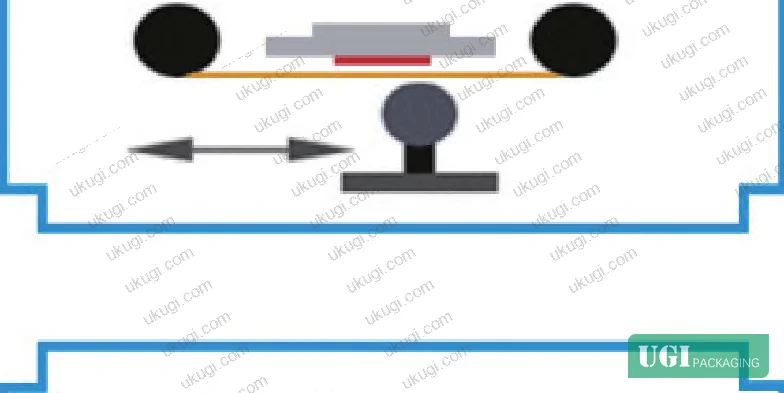
The functional difference between hot stamping and heat transfer is simpler than the industry debate suggests. Hot stamping transfers a metallic or pigment foil layer (electroformed aluminum or pigment foil) onto a substrate using heat and pressure. Heat transfer moves a printed layer from a PET film carrier — which can be gravure-printed, screen-printed, or inkjet-printed — onto the substrate using the same heat-and-pressure mechanism. The transfer medium is the key differentiator: foil for stamping, film for heat transfer.
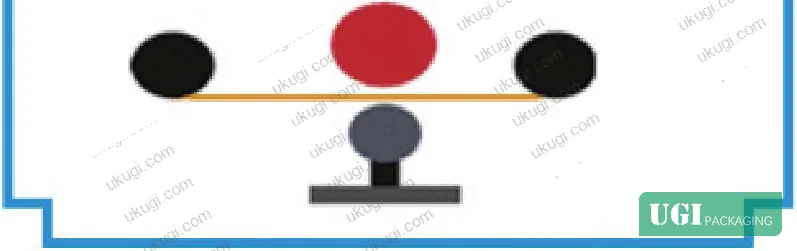
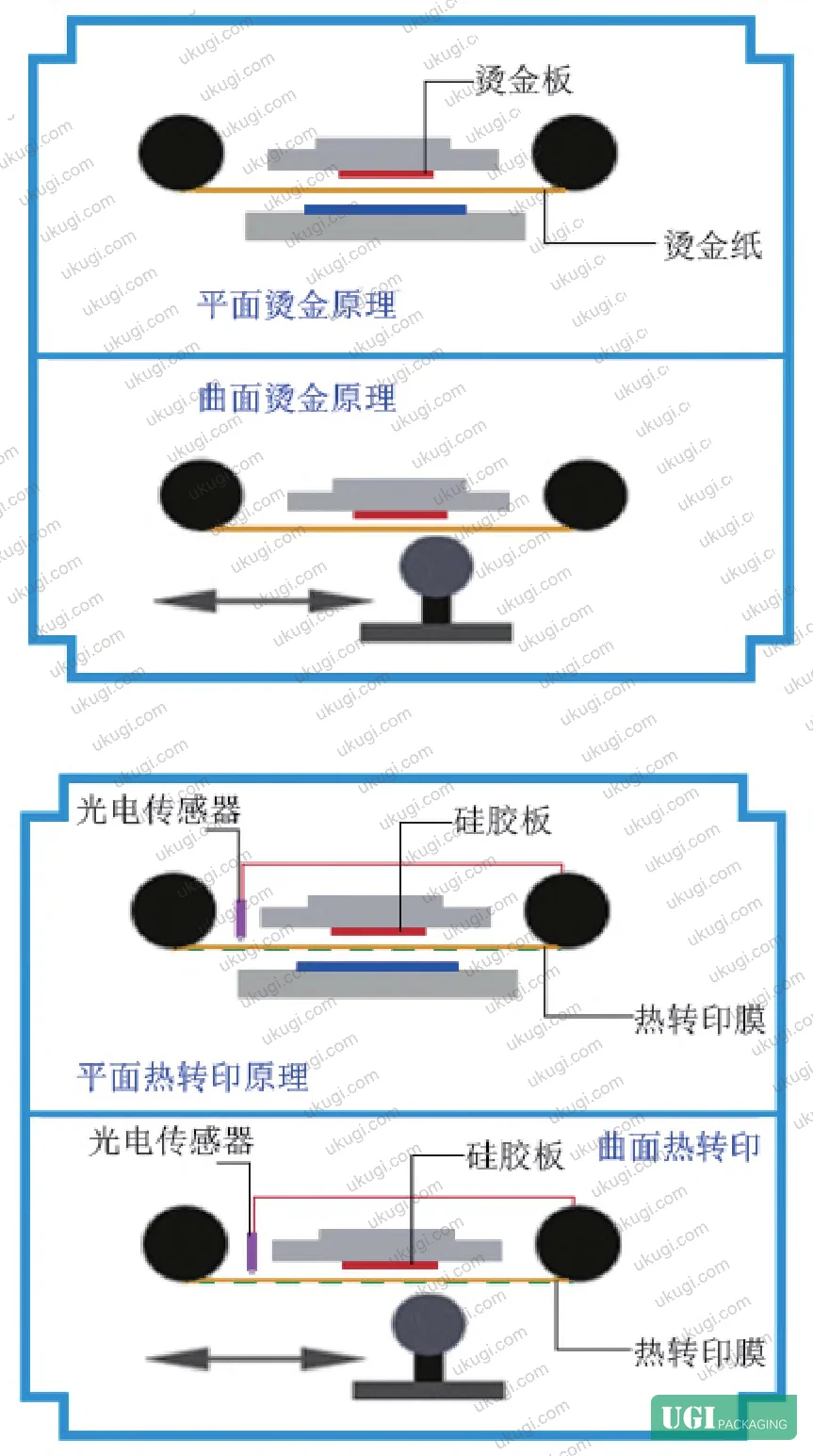
Where buyers get into trouble is in assuming that machine structure follows automatically from process type. It does not. A flat-bed stamping machine can be configured for heat transfer by installing a silicone pad and adding eye-mark tracking — but this is not the recommended configuration for reasons of print quality. The rotary cylinder creates a rolling line-contact impression. The flat-bed creates a simultaneous full-surface contact. That distinction has measurable consequences:
| Machine Type | Contact Mode | Registration Capable | Recommended Substrate |
|---|---|---|---|
| Flat-flat (foil stamping) | Full surface contact | No | Flat paper, card, gift packaging |
| Flat-cylinder (foil stamping) | Line contact, rolling | No | Cylindrical plastics, cups |
| Cylinder-flat (heat transfer) | Line contact, rolling | Yes (eye-mark tracking) | Flat labels, fabric, some paper |
| Cylinder-cylinder (heat transfer) | Line contact, rolling | Yes (eye-mark tracking) | Cylinders, bottles, cups |
The line-contact geometry of the cylinder type is the decisive advantage for heat transfer. Full-surface flat contact traps air at the film interface, and trapped air pockets directly reduce adhesion in the affected zone. In rotary operation, the film advances progressively across the substrate — air has a continuous path to escape. This is not a marginal quality difference. In substrate qualification testing on curved plastic surfaces, flat-bed heat transfer configurations produced localized delamination at contact edges that cylinder-type machines eliminated entirely.
For print quality on complex graphics, this matters even more. Rotary line-contact is the same operating principle that makes gravure and flexo reliable at high speed — the contact mechanics are well understood and controllable. Flat-bed contact is inherently less controllable at the edge zones of large impression areas.
Honestly, most buyers over-specify foil grade when the real variable is contact geometry. Specifying the wrong machine structure and compensating with a premium foil is a common and expensive mistake.
For process verification, the relevant reference standard for print quality control in finishing operations is ISO 12647-2:2013 Graphic technology — Process control for offset lithographic printing, which provides the calibration and tolerance framework that suppliers should be applying to their registration and impression control systems even in non-offset contexts.
Substrate-Specific Process Selection for Foil Stamping and Heat Transfer #
This is where generic process knowledge breaks down and substrate-specific experience becomes critical. Each substrate category has different constraints on pressure requirements, surface preparation, machine configuration, and viable process type.
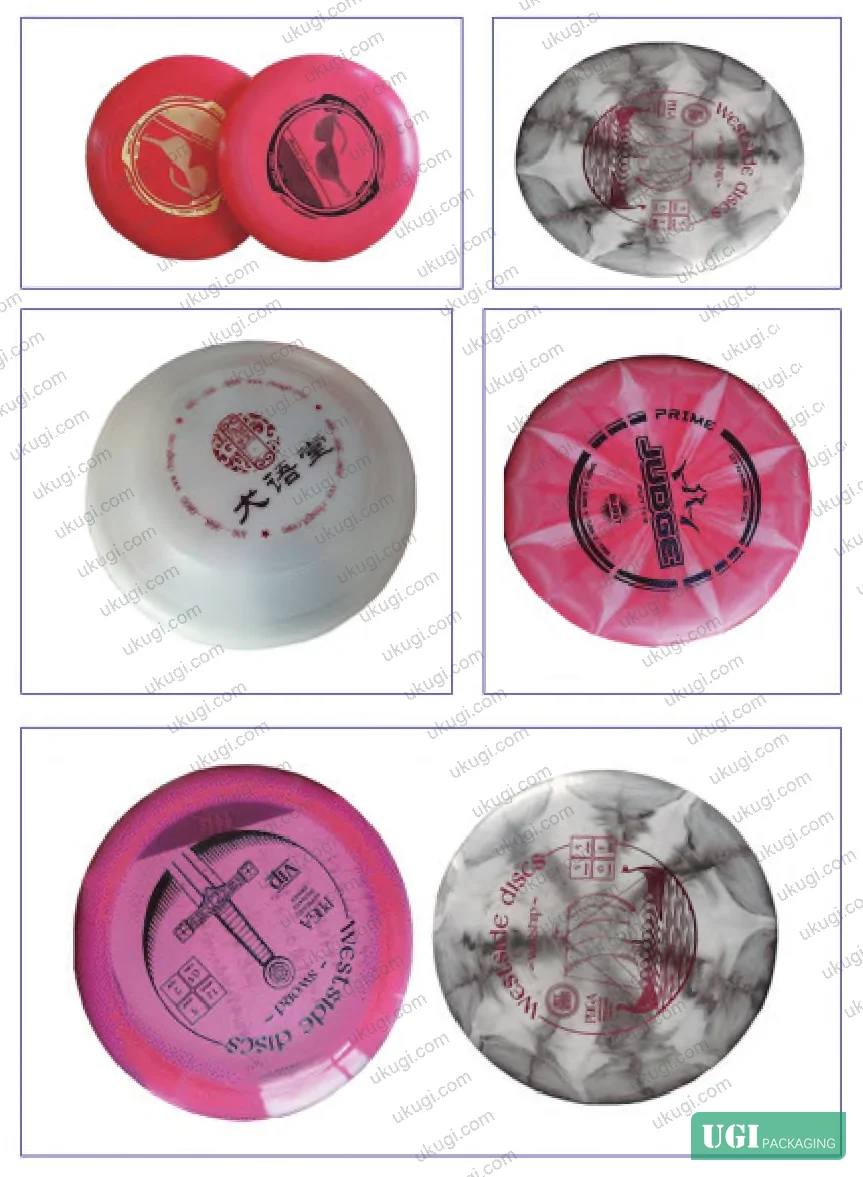
Polyolefin plastics (e.g., injection-molded discs, frisbees, sports equipment)
Polyolefin surfaces are chemically resistant and have low surface energy — this is the hardest substrate category for foil adhesion. Direct foil stamping requires pressure exceeding 5 tonnes to achieve acceptable adhesion. Below that threshold, foil adhesion fails to develop adequate bond strength regardless of temperature setting. Specialized foil selection is mandatory — standard electroformed aluminum foil performs poorly on polyolefin without a formulated adhesive layer designed for low surface energy substrates.
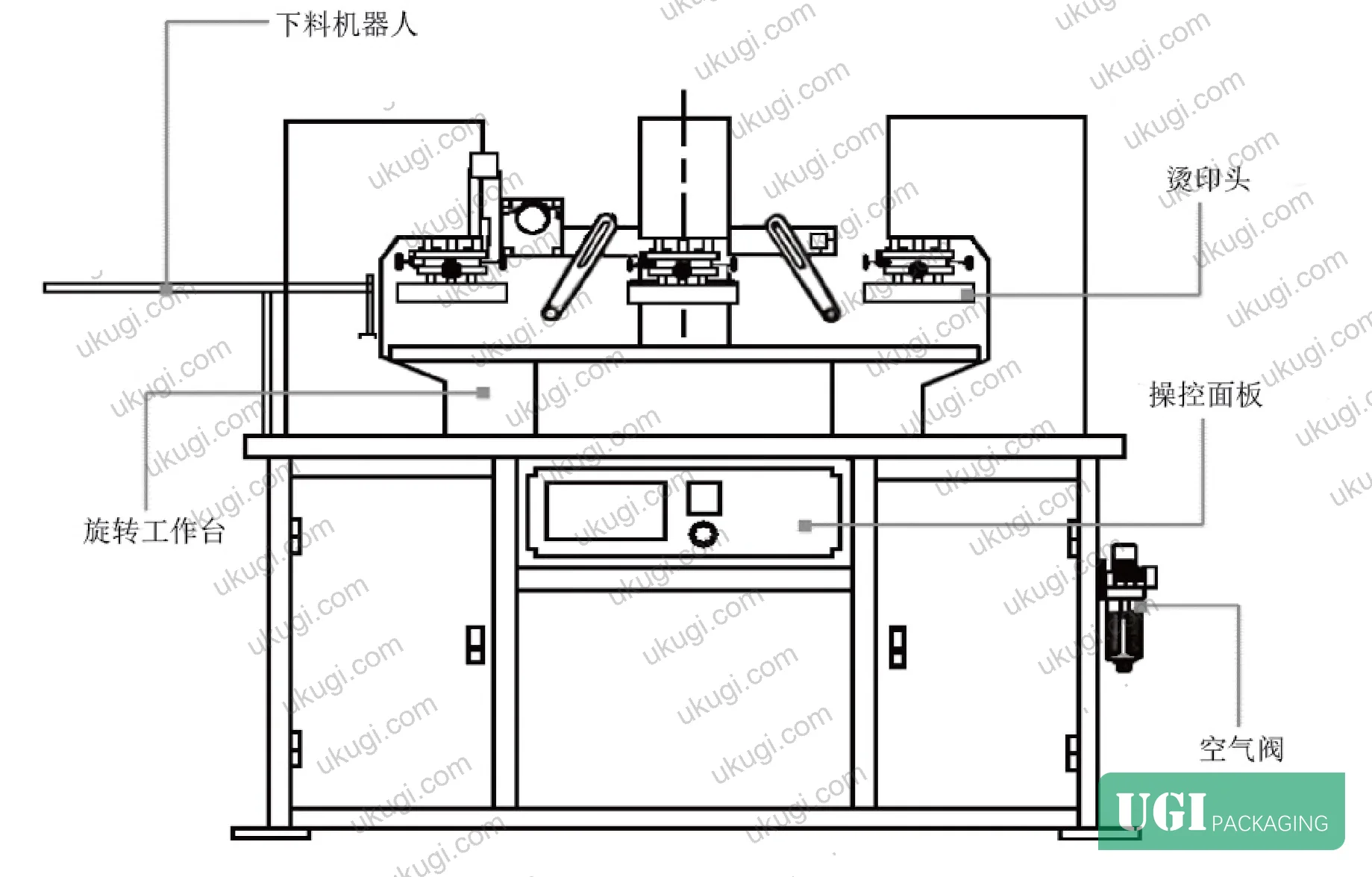
Multi-color foil stamping on plastic has become commercially relevant as single-color stamping has become commoditized. Three-color and higher configurations are available in both inline and rotary-turntable machine configurations, with rotary-turntable being more common in current production. The critical constraint for multi-color work: foil colors cannot be overprinted. Each color occupies a separate, non-overlapping zone. There is no tonal graduation in foil stamping — it is solid color blocks only. This is a fundamental process limitation that no specification improvement can overcome. Buyers who expect photographic gradients from multi-color foil stamping will be disappointed without exception.
Heat transfer on plastics via gravure-printed PET film can achieve full tonal gradation and photographic reproduction that foil stamping cannot. This is the primary technical reason to select heat transfer over foil stamping when image complexity exceeds flat color blocks. The environmental argument also applies: both foil stamping and heat transfer operate ink-free, which is a compliance advantage for manufacturers serving markets with strict VOC emission standards.
Glass containers
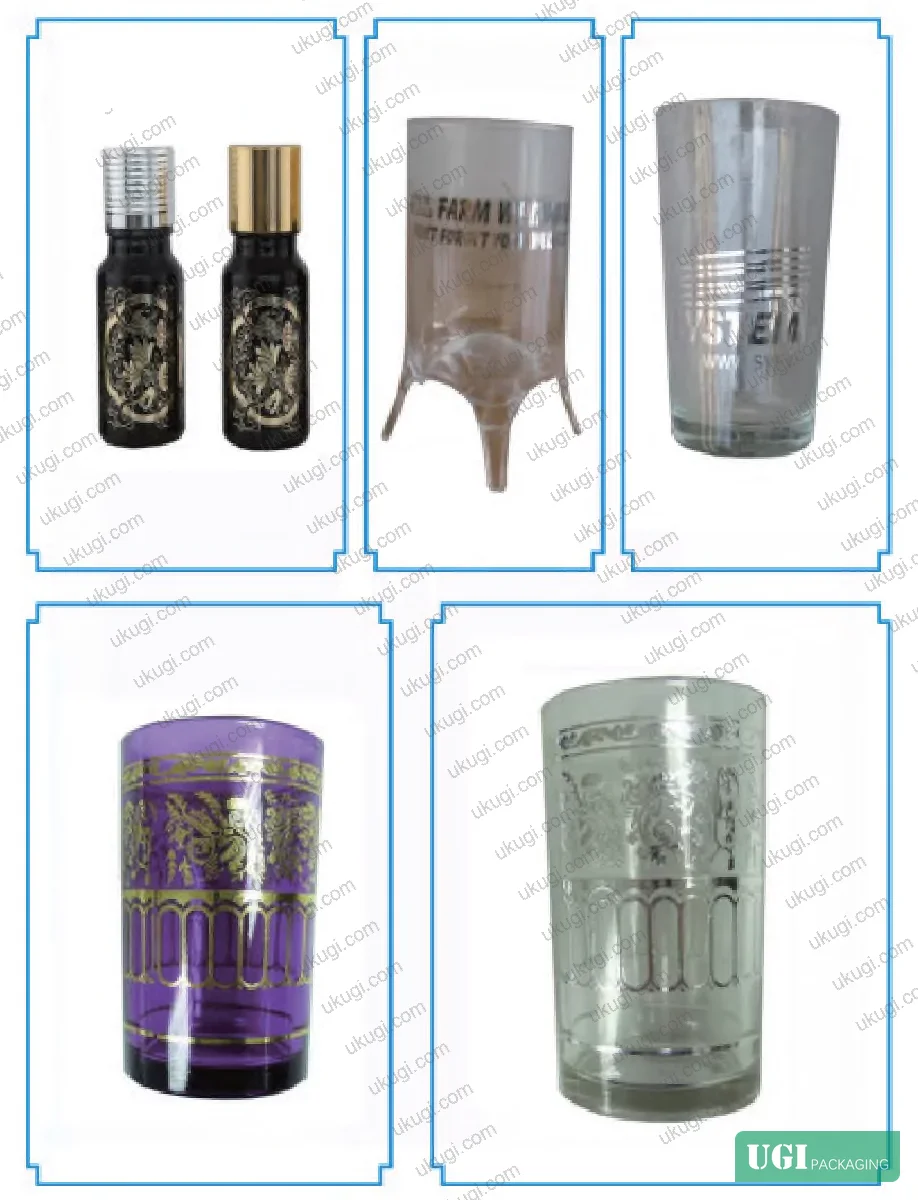
Glass cannot be directly foil-stamped. The current qualified process for glass decoration requires an intermediate step: screen-print a solvent-based or UV-cured varnish onto the glass surface, then apply foil using a flat-cylinder or cylinder-cylinder configuration. This is technically a transfer-foiling process rather than direct stamping. The varnish layer provides the adhesion interface that glass surface chemistry cannot supply directly.
Heat transfer on glass using purpose-formulated glass transfer films is in active commercial development. Multiple production facilities are currently running qualification tests, and early results are described as technically viable. Given that glass packaging commands significant market share in beverage, spirits, and food categories — sectors where screen printing currently dominates — the maturation of glass heat transfer film technology represents a meaningful process substitution opportunity.
Paper and card stock
Paper foil stamping represents the highest technical demands for flat-bed machines, specifically around pressure uniformity. Maintaining even impression across a large flat area requires the stamping plate to be flat within tight tolerances — any bow or surface deviation produces inconsistent foil transfer, particularly on fine text and hairline graphic elements. In production experience with large-format paper foil stamping, defect rates on fine-detail elements can be persistently problematic even on well-maintained equipment. The steel plate flatness control and machine pressure calibration both require active management.
Cold foil technology — which uses a cylinder-flat configuration to press foil onto a pre-applied UV varnish pattern — resolves the air-trapping and pressure-uniformity problems of large-area flat stamping. The varnish acts as a selective adhesive; the cylinder’s rolling contact eliminates trapped air. This is why cold foil adoption has accelerated in commercial label and carton printing where large metallic areas are specified. For adhesion testing of these processes, ASTM D1670 Failure End Point in Accelerated and Outdoor Weathering of Adhesives provides the weathering and adhesion test protocol relevant to verifying foil bond durability.
Fabric
Cotton and natural fiber fabrics cannot be directly foil-stamped — a foil paste must be screen-printed onto the fabric surface first, after which heat transfer stamping is applied. Synthetic fabrics with raised surface features can sometimes be directly stamped if press pressure is sufficient. Fabric heat transfer machines are generally simpler in construction than their plastic-industry equivalents — less precision in film transport, lower registration requirements, manual or semi-automatic operation. The garment decoration market for fabric heat transfer significantly exceeds the plastic components market in total unit volume, even though individual machine precision requirements are lower.
Large rigid containers (e.g., industrial crates)
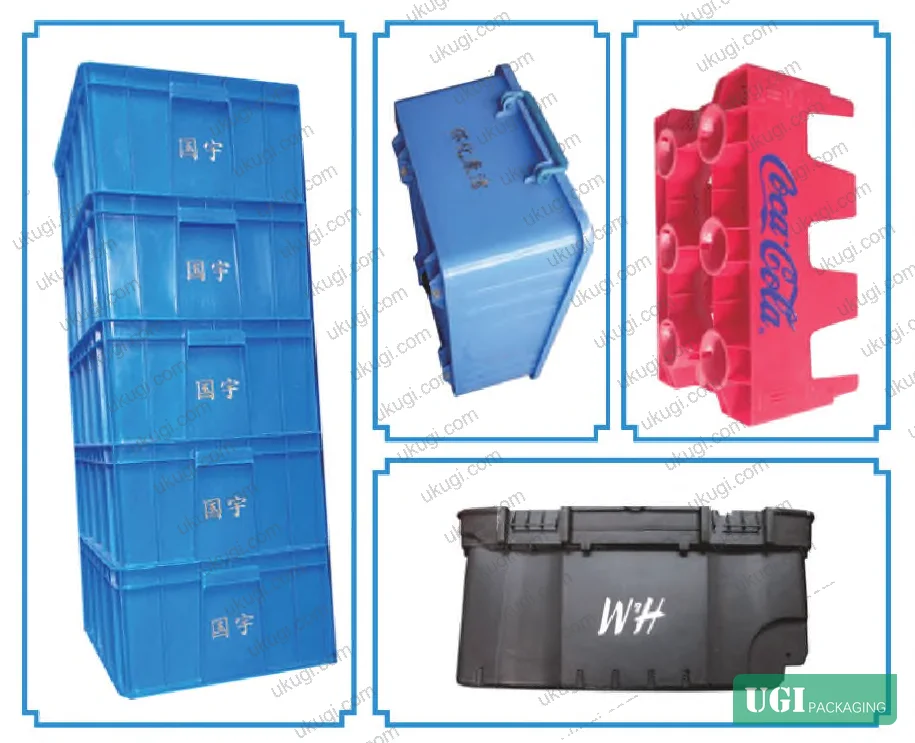
This is the application where heat transfer is economically non-viable and foil stamping is the only practical option. Large plastic crates require large-format machines — equipment size and capital cost scale directly with substrate dimensions, compressing margins to unacceptable levels for heat transfer. Additionally, structural reinforcing ribs segment the crate exterior surface, physically preventing full-format film contact. Flat-bed stamping with a registration fixture handles logo and text decoration on these substrates acceptably. In supplier qualification evaluations, cost modeling consistently returns foil stamping as the only economically justified process for rigid containers above approximately 500mm in any dimension.
Most procurement teams don’t realize that the machine configuration taxonomy — flat-flat, flat-cylinder, cylinder-flat, cylinder-cylinder — is not universally standardized terminology across global equipment suppliers. A supplier quoting a “hot stamping machine” without specifying structural type is leaving the most critical process variable undefined. Always require structural classification in the equipment specification.
Practical Guidance for Buyers #
If you are commissioning foil stamping or heat transfer finishing, start with the substrate geometry and image complexity — not the foil spec. Flat substrates with simple logos: flat-bed stamping is appropriate and cost-effective. Curved substrates or full-color image transfers: cylinder-type equipment is mandatory, and the supplier must demonstrate functional eye-mark registration before production approval.
For multi-color foil work, confirm before sampling that your artwork uses non-overlapping solid color zones. Any overlapping areas in the artwork will either produce a defect or require artwork revision — this is a process constraint, not a supplier capability gap.
Pressure specification matters more than most buyers anticipate. For polyolefin substrates, confirm that the supplier’s equipment can deliver and sustain over 5 tonnes of stamping pressure with consistent thermal control. For glass substrates, verify that the intermediate varnish layer step is part of the quoted process — direct glass stamping without surface preparation is not a mature process.
At ukugi.com, we operate as a Guangzhou-based OEM/ODM manufacturer specializing in premium surface finishing across custom packaging formats — from foil stamping and embossing on custom paper boxes to heat transfer decoration on rigid and flexible packaging. Our team handles both process selection and substrate qualification for international brand clients who need technically defensible results, not guesswork. For verifying adhesion testing protocols relevant to your substrate, ISO 15397:2014 Printing inks — Determination of resistance to rubbing is the applicable rub-resistance reference.
Need a custom formulation or sample? Request a quote from our team →
Technical Verification Questions #
- What is the maximum sustained stamping pressure (in tonnes) your flat-bed machine can deliver, and can you provide pressure calibration records showing consistency across the full impression area for substrates requiring ≥5 t?
- For curved substrate heat transfer jobs, what eye-mark registration system is installed, and what is the demonstrated registration accuracy (in mm) under continuous production conditions?
- For polyolefin substrates (PE, PP), which foil adhesive formulation are you specifying, and can you provide adhesion test data showing foil bond performance after 24-hour cross-hatch adhesion testing per your internal QC protocol?
- For cold foil on paper, what is the UV varnish cure specification (wavelength, power density, line speed) used in your cylinder-flat configuration, and how do you verify varnish cure completeness before foil application?
- For glass substrate decoration, confirm whether your process includes an intermediate screen-printed varnish layer — and if so, what is the varnish open time and minimum cure time before the foil transfer step?
Quality Verification Checklist #
- ☐ Machine structural type confirmed as cylinder-type (cylinder-flat or cylinder-cylinder) for any curved substrate job — flat-bed configuration not accepted for cylindrical or complex 3D surfaces
- ☐ For polyolefin plastic substrates: supplier confirms stamping pressure capability exceeds 5 tonnes with calibration records available
- ☐ Eye-mark registration system installed and functional, with registration accuracy demonstrated at ≤0.3 mm under production-speed film transport
- ☐ Multi-color foil artwork reviewed for non-overlapping color zones — no color overlap present in approved artwork file
- ☐ For glass substrate jobs: intermediate varnish layer step documented in process specification, with varnish type (solvent or UV) specified
- ☐ For fabric jobs: foil paste screen-print step documented for cotton/natural fiber substrates; direct stamping confirmed only for qualifying synthetic fabrics
- ☐ Steel plate flatness verified for flat-bed paper/card stamping jobs — plate deviation within equipment manufacturer’s tolerance specification
- ☐ Cold foil process (cylinder-flat) specified for large-area metallic coverage on paper to prevent air entrapment defects
Key Specifications Table #
| Parameter | Recommended Value | Verification Method |
|---|---|---|
| Stamping pressure for polyolefin substrates | ≥5 tonnes sustained | Hydraulic/pneumatic gauge log, repeat measurement across impression area |
| Machine contact type for curved/cylindrical substrates | Cylinder (line contact) | Inspect machine structural specification; request equipment datasheet |
| Registration accuracy for heat transfer with eye-mark system | ≤0.3 mm | Test run on substrate with registration marks; measure mis-register in 20 consecutive impressions |
| Multi-color foil: maximum color channel overlap | 0 mm (no overlap permitted) | Artwork pre-flight check; confirm in proofing sign-off |
| Intermediate varnish cure (UV cold foil on paper) | Full cure before foil contact | UV energy meter reading at stated line speed; cross-hatch adhesion test on cured varnish |
Looking for a manufacturer that meets these specs? Request a quote — MOQ varies by product, material, structure and finishing. Product-specific MOQ is confirmed with each quotation.
References #
Data source: Machine Structure and Process Selection in Hot Foil Stamping and Heat Transfer Decoration Across Industrial Substrates, R.-J. Xu et al., Journal of Applied Polymer Science, 2023
Frequently Asked Questions #
Can a flat-bed stamping machine perform heat transfer, or is a cylinder machine required?
A flat-bed machine can physically perform heat transfer if configured with a silicone pad and an eye-mark tracking system for film registration. However, this configuration is generally not recommended for production use because the flat full-surface contact traps air at the film interface, reducing adhesion uniformity. Cylinder-type machines produce rolling line contact that allows air to escape progressively, which is why they are the standard choice for heat transfer work.
Why can’t multi-color foil stamping reproduce photographic gradients?
Foil stamping is a solid-transfer process — either the foil adheres or it does not. There is no mechanism for partial or variable density transfer that would produce tonal gradation. Each color must occupy a distinct non-overlapping zone. If photographic tonal reproduction is required on plastic or similar substrates, the correct process is heat transfer using a gravure-printed film, which can carry continuous-tone imagery.
What is cold foil, and when should I specify it?
Cold foil is a process where UV varnish is screen-printed in the desired foil pattern onto paper, then a cylinder-flat machine presses foil onto the varnish — the foil adheres only where the varnish has been applied. It solves the air-entrapment and pressure-uniformity problems that make large-area flat-bed stamping unreliable on paper. Specify cold foil whenever your design calls for large metallic coverage areas on paper or card substrates.
Is glass a viable substrate for heat transfer film decoration?
Not yet at production scale for most applications. The current mature process requires screen-printing a varnish layer onto glass first, then applying foil through a cylinder machine — this is technically a transfer-foiling process, not direct stamping. Purpose-formulated glass heat transfer films are in active commercial testing and showing viable early results, but production-qualified film supply chains for glass heat transfer remain limited. For current glass packaging decoration, varnish-assisted foil stamping is the reliable specification.
How do I spec the right process for custom labels and stickers that include both metallic foil areas and full-color printed graphics?
These two effects require separate process steps. The full-color image is printed conventionally (offset, digital, or flexo), and the metallic foil areas are applied in a subsequent foil stamping or cold foil step. Cold foil inline with a flexo or offset press is the most efficient configuration for label production combining both effects. Specify that foil and print zones are non-overlapping in the artwork at design stage — retrofitting this constraint after artwork approval is costly. For more on specialty finishes for premium packaging, also see our hologram security stickers for applications requiring authentication alongside decoration.
Published by ukugi.com Technical Team | Request a quote


