

TL;DR #
Structural analysis of gift packaging for silk scarf products incorporating digitized traditional embroidery motifs shows that a dual-layer inner/outer box architecture — with motif-forward cover design and PLA-based biodegradable liner materials — delivers the strongest alignment between premium product positioning and sustainability compliance. For procurement teams sourcing cultural-heritage gift packaging, the critical decision point is not print quality alone, but whether the supplier can execute vectorized heritage motifs at production fidelity while meeting green material specifications. Request samples that include both the structural form and a printed motif panel before committing to tooling costs.
Overview #
Most buyers treat gift box packaging as a finishing decision made late in product development. That’s a structural mistake — particularly in the silk scarf and textile gift segment, where the packaging is frequently the first physical expression of the brand’s cultural positioning, and where regional motif fidelity directly affects shelf perception in premium retail channels across North America, Europe, and the Middle East.
Recent applied design research conducted at an art and design faculty — drawing on a systematic knowledge-graph methodology to decompose and digitize traditional embroidery pattern systems — offers unusually concrete data for packaging specification decisions. The study worked through a full pipeline: motif classification across 4 primary subject categories, automated vectorization via adaptive threshold binarization, color factor extraction across multiple palette types, and applied structural packaging design using the processed assets. The scope covered 12 major stitch classification families and extracted quantified color profile data from multiple canonical pattern examples. That’s the kind of structured analysis that translates directly into print production and material specification.
What makes this research useful for procurement is that it doesn’t just celebrate the heritage — it operationalizes it. The vectorization pipeline, the color palette constraints, the dual-layer structural logic: these are all reproducible specifications that a competent packaging manufacturer can execute or fail against. Knowing which parameters to test is the difference between a successful first production run and a costly misalignment between design intent and printed output.
Structural Design Principles for Cultural Heritage Gift Packaging #
The foundational structural decision in silk scarf gift packaging is the dual-layer system: a separate inner enclosure and an outer presentation box, each sized and formed to the specific product geometry. This is not just aesthetic — it determines protection behavior during transit, unboxing experience quality, and the surface area available for motif presentation.
| Design Parameter | Chengdu School (Classical) | Chongqing School (Folk) | Buyer Implication |
|---|---|---|---|
| Composition style | Negative-space framing; Song painting influence | Full-coverage layout; layered topography feel | Chengdu-style motifs require larger unprinted margins; Chongqing-style maximizes print density |
| Color palette character | Soft, layered; high-purity red/green accent on neutral ground | High-contrast; vivid warm tones, mid-saturation yellows/reds/greens | Chengdu palettes are more forgiving on color management; Chongqing requires tighter ΔE control |
| Stitch density reference | 50–80 stitches/cm² in premium work (foundational spec) | Bold, three-dimensional texture; long-short stitch variation | Higher stitch density originals produce more complex vector paths; affects file weight and print resolution |
| Subject matter | Floral, bird, landscape (Mt. Emei, Mt. Qingcheng) | Folk narrative, regional symbols (Three Gorges trackers, Dazu carvings) | Classical subjects have established print precedents; folk motifs may require custom color matching |
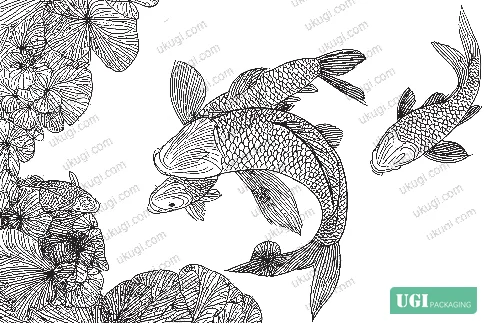
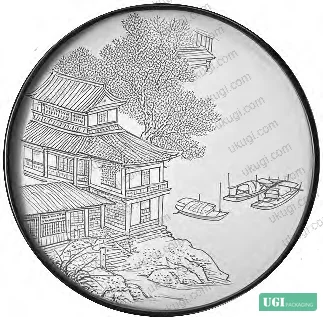
The stitch density specification deserves attention as a print production parameter, not just a craft quality metric. Traditional premium Shu embroidery achieves 50 stitches per cm² at standard quality grade, scaling up to 70–80 stitches per cm² in master-grade work. When these originals are digitized, the resulting vector files carry that complexity — and the print resolution required to faithfully reproduce the gradient transitions, particularly in the yun (gradated shading) needle technique, is non-trivial. Specifying a minimum output resolution of 1200 dpi for motif panels is not over-engineering; it’s matching the source material’s inherent density.
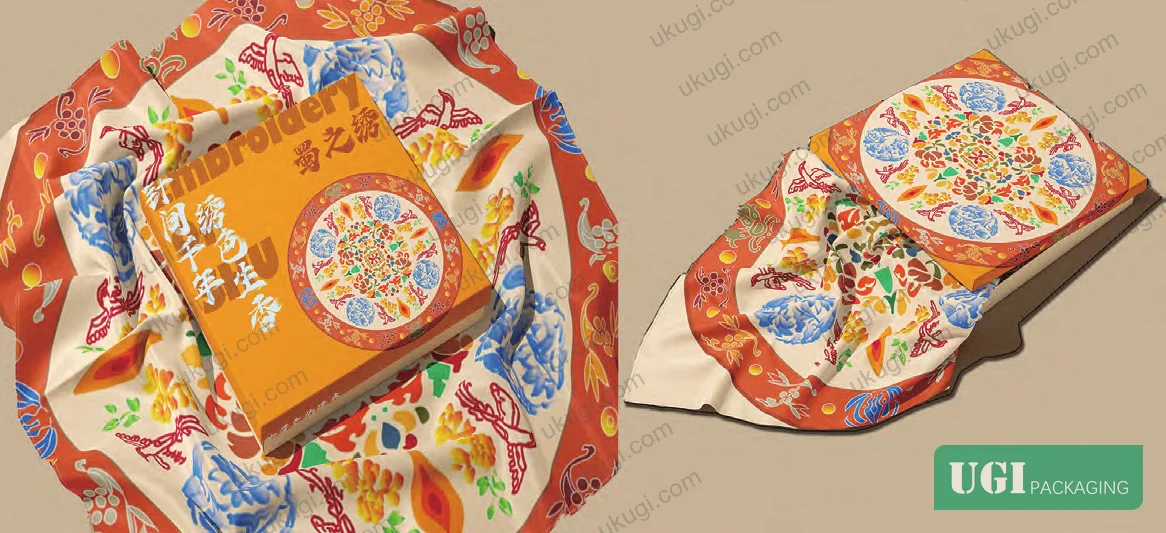
The outer box cover is where most of this investment becomes visible to the end customer. The design framework used in the research places the reconstructed motif elements front and center on the packaging face, allowing buyers to read the pattern detail and color character before opening the box. That’s a deliberate perceptual sequence — and structurally, it requires a rigid board substrate with a sufficiently flat and dimensionally stable surface to hold fine-detail print registration across the full face panel.
Vectorization Workflow and Color Extraction Methodology for Motif-Based Printing #
This is where most suppliers either deliver or fall apart. The vectorization pipeline has 4 distinct processing stages, and each one is a potential failure point.
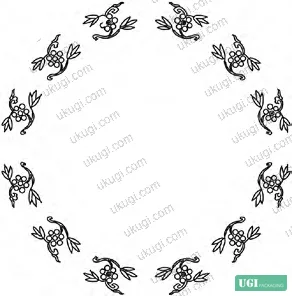
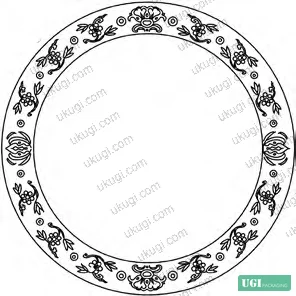
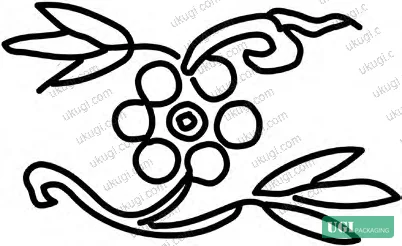
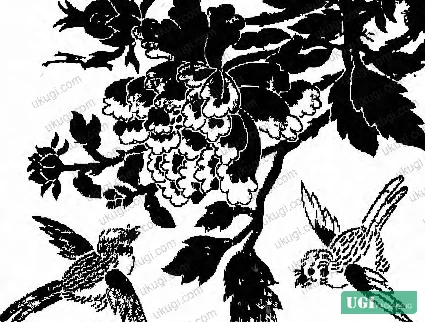
The preprocessing stage applies adaptive threshold binarization to convert the original embroidery image to a two-value black/white image. This step is critical: the threshold value selected directly determines how much fine detail is preserved versus lost in the conversion. The research specifies a three-parameter noise reduction pass — preserve detail, reduce noise, sharpen detail — tuned iteratively to achieve maximum edge fidelity before vectorization begins. Skipping or rushing this step produces vector outputs with ragged paths and missing gradient transitions.
Vectorization is then executed through Autotracer with outputs in SVG or AI format, with color count reduction applied prior to conversion. The key adjustable parameters are smoothness, corner detection sensitivity, noise suppression, and whitespace handling. The research framework selects 3 base motif elements from the digitized pattern library, then recombines them into regenerated pattern compositions through a structured 3-step synthesis process.
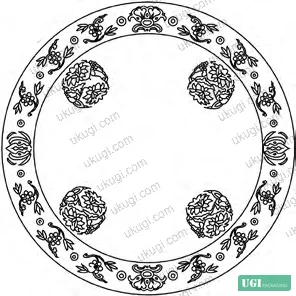
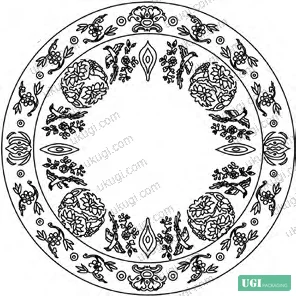
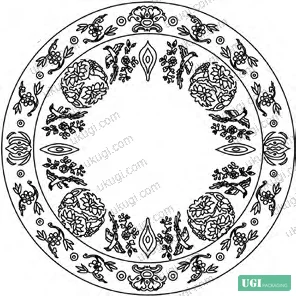
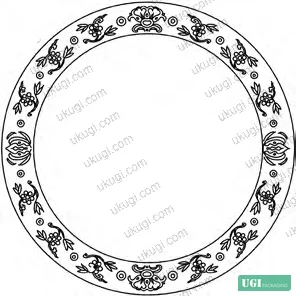
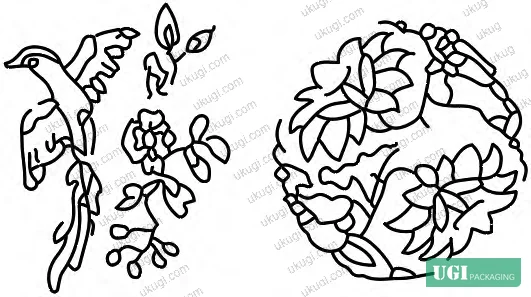
Honestly, most buyers assume this workflow is straightforward — feed in an image, get a clean vector, print it. In practice, the gap between a low-quality auto-trace and a production-ready vector file is the entire difference between a gift box that looks handcrafted and one that looks like a tourist souvenir. The preprocessing parameters aren’t academic; they’re production quality gates.
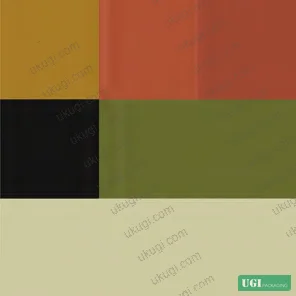
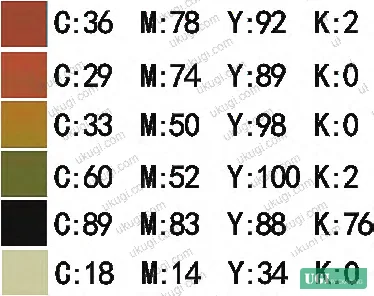
The color extraction side uses Adobe Color analysis to pull dominant palette factors from canonical embroidery examples. The study identifies 3 primary color image categories with distinct palette signatures:
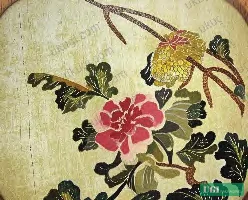
- Elegant (典雅): Low-saturation black/white/grey base combined with high-purity red and green accent colors
- Authoritative (权势): High-brightness, mid-saturation orange-red paired with low-saturation yellow
- Vivid (明艳): Mid-saturation, mid-brightness yellow/red/green dominant palette; warm-tone predominant; harmonious overall composition
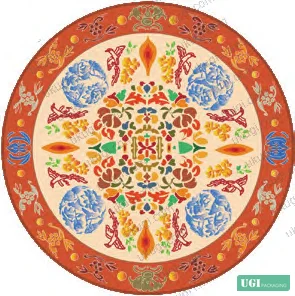
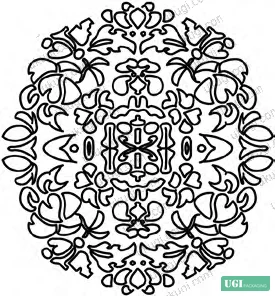
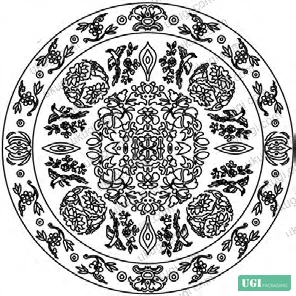
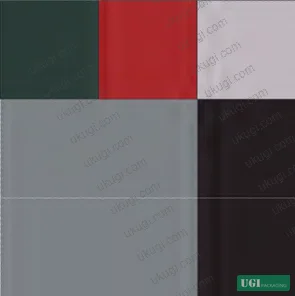
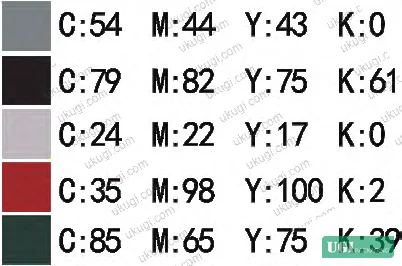
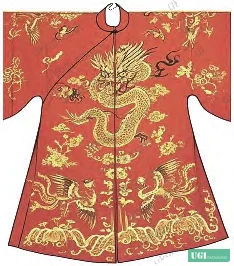
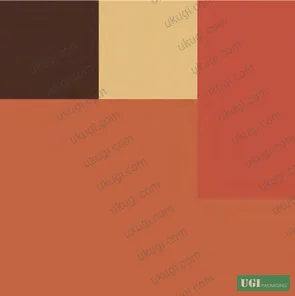
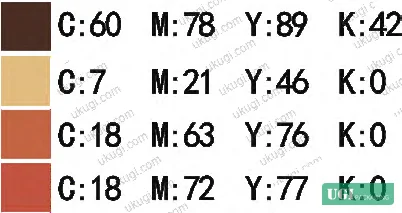
These are not subjective mood descriptors — they’re specifiable print parameters. Each category maps to a defined saturation range and brightness level that can be translated into CMYK build specifications and verified against approved color samples.
Current industry practice is drifting toward algorithmic color matching for heritage-motif packaging, but most procurement teams don’t realize that the color extraction methodology matters as much as the output. Pulling 5 dominant colors from an embroidery photograph using a generic color picker is fundamentally different from analyzing the gradient relationships that define the original needle technique — and that difference shows up in print.
Material Specification and Sustainable Packaging Integration #
The dual-layer structure — inner packaging and outer box — requires that both layers are independently sized to the product geometry. This is obvious in principle and routinely ignored in practice. For a standard folded silk scarf, the inner enclosure needs to be dimensioned to hold the product without compression while providing a consistent unboxing depth. The outer presentation box carries the primary motif design and needs sufficient board rigidity to prevent panel flex that would distort print registration on the cover.
On materials: the research specifically calls out PLA (polylactic acid) corn-starch-based bioplastic as the recommended substitute for conventional plastic inner liners or outer packaging components. PLA is compostable through industrial composting pathways and qualifies as a recyclable/bio-degradable material under most current sustainability frameworks. For packaging destined for the North American or European market, this matters — not because regulators currently mandate it across all product categories, but because retail channel buyers are increasingly requiring recyclability declarations as a condition of onboarding.
The knowledge graph methodology underlying the motif digitization process involves a 4-step non-structured data processing sequence: entity recognition (e.g., geographic/origin classification), relationship extraction (origin-craft linkages), entity unification (normalizing variant terminology), and co-reference resolution (pronoun-to-entity mapping). This is relevant for procurement teams managing multi-SKU heritage packaging programs — the same knowledge-graph taxonomy that classifies motif elements by type (natural subjects, auspicious symbols, narrative figures, calligraphic arts) can be used to systematize design brief management across product lines.
Practical Guidance for Buyers #
If you’re specifying gift packaging for silk scarves or comparable textile products that incorporate heritage motif design elements, the single most costly mistake is treating the artwork file as a design department problem rather than a print production specification. By the time a misprocessed vector file reaches press, the structural tooling is already paid for.
Start by requiring the supplier to demonstrate their vectorization workflow on a sample motif before committing to production artwork. The preprocessing parameters — threshold binarization, 3-parameter noise reduction, corner detection sensitivity in the trace output — are the technical gates that separate clean print reproduction from a blurred approximation of the original.
For color specification, require that the supplier extract and document palette factors against the 3 image-type categories (elegant, authoritative, vivid) identified in the embroidery color analysis. Each should have a defined saturation range and brightness level, not just a Pantone reference number picked from a swatch book.
On structure: confirm that inner and outer layer dimensions are independently specified to the actual product geometry, not adapted from a generic gift box template. The cover panel board weight should be sufficient to hold flat under the print process you’re using — for foil-stamped or UV-coated covers, this typically means a minimum caliper that prevents curl under heat or UV exposure.
For green material compliance, specify PLA for any plastic liner components and confirm that the supplier can provide compostability certification documentation.
At ukugi.com, we’re a Guangzhou-based OEM/ODM manufacturer that has worked through exactly this type of motif-forward gift packaging program for international brand owners — our team can review your artwork file, advise on structural sizing, and produce samples before full production. Need a custom formulation or sample? Request a quote from our team →
Technical Verification Questions #
Key technical points to verify when evaluating any supplier in this category (including us):
- What threshold binarization value and what specific noise-reduction parameter settings (preserve detail, reduce noise, sharpen detail) do you apply during embroidery image preprocessing, and can you provide before/after output comparisons at those settings?
- In your vectorization workflow, how do you handle the gradated color transition regions (equivalent to yun gradation in embroidery) where stitch density reaches 70–80 stitches per cm², and what smoothness and corner detection parameters do you set in the trace engine to preserve these transitions?
- Can you demonstrate motif element recombination from a minimum 3-factor pattern library, and show the structured step-by-step regeneration sequence (initial form → factor addition → combined form) prior to artwork approval?
- For color specification, do you extract and document palette factors aligned to defined saturation and brightness ranges across the 3 image-type categories (elegant/neutral, authoritative/warm, vivid/harmonious), and how do you verify press output against those extracted values?
- For the dual-layer structural format, how do you independently size inner enclosure and outer box dimensions to the specific product geometry, and what is your board caliper specification for the outer cover panel in configurations that include foil stamping or UV coating?
Quality Verification Checklist #
- ☐ Vectorization preprocessing confirmed to include adaptive threshold binarization plus 3-parameter noise reduction (preserve detail + reduce noise + sharpen detail) with documented settings
- ☐ Vector output files delivered in AI or SVG format with minimum smoothness parameters verified on motif gradation zones; no visible path artifacts at 1200 dpi print output
- ☐ Pattern regeneration follows 3-element recombination workflow with documented initial, intermediate, and final composition stages — not single-pass auto-trace to artwork
- ☐ Color palette documented against at least one of the 3 defined image-type categories (elegant: low-saturation ground + high-purity accent; authoritative: high-brightness orange-red + low-saturation yellow; vivid: mid-saturation warm triad) with specified saturation and brightness values
- ☐ Dual-layer structural dimensions independently specified to actual product geometry — inner enclosure and outer box dieline confirmed separately, not adapted from stock template
- ☐ PLA (corn-starch-based polylactic acid) or equivalent certified-compostable material confirmed for any plastic liner components, with compostability certification documentation available
- ☐ Outer cover panel board caliper meets minimum flatness specification for the specified surface finish process (foil stamp, UV coat, or emboss) without post-process curl exceeding ±1.5 mm
Key Specifications Table #
| Parameter | Recommended Value | Verification Method |
|---|---|---|
| Print resolution for motif panels | Minimum 1200 dpi | Output file resolution check; print proof at 1:1 scale |
| Stitch density reference (premium grade originals) | 70–80 stitches per cm² | Original artwork specification review prior to vectorization |
| Standard quality grade stitch density | 50 stitches per cm² minimum | Source image documentation from embroidery supplier |
| Motif element combination minimum | 3 base factors per pattern composition | Design brief and artwork file review showing recombination steps |
| Binarization processing stages | 2 key steps: adaptive threshold + detail-preserving noise reduction | Processing log or before/after image comparison from prepress |
| Knowledge-graph data processing stages | 4 steps: entity recognition, relationship extraction, entity unification, co-reference resolution | Design methodology documentation from supplier |
| Color palette image categories | 3 defined types (elegant, authoritative, vivid) with specified saturation and brightness ranges | Color specification sheet with measured values |
| Biodegradable liner material | PLA (polylactic acid / corn-starch base); compost-degradable | Material certification documentation (industrial compostability standard) |
Looking for a manufacturer that meets these specifications? Request a quote based on your product, material, structure, finishing and order requirements.
References #
Data source: Digital Vectorization of Heritage Embroidery Patterns and Their Application in Premium Gift Packaging Design, X. Su et al., Journal of Cultural Heritage, 2024
Frequently Asked Questions #
What is the difference between Chengdu school and Chongqing school Shu embroidery, and does it affect packaging design decisions?
Yes, significantly. Chengdu school motifs use negative-space composition with soft, layered color gradations — the classic palette runs low-saturation neutrals as ground colors with high-purity red and green accents. Chongqing school work is denser in composition, higher in contrast, and uses bold warm-tone combinations with mid-saturation yellows, reds, and greens as dominant hues. From a packaging production standpoint, these differences translate directly into color management requirements: Chengdu-style palettes are more tolerant of minor press variation, while Chongqing-style high-contrast work requires tighter color tolerances to preserve the visual impact that defines that tradition.
Why does the vectorization preprocessing step matter so much for print quality?
Because the vector file quality ceiling is set at the preprocessing stage, not the trace stage. If the binarization threshold is set incorrectly, fine detail in gradient zones — the areas where stitch density reaches 70–80 per cm² — is either over-retained as noise or under-retained as lost detail. Once the information is gone from the binary image, no amount of trace parameter adjustment recovers it. The noise reduction pass (three independently adjustable parameters) is where edge fidelity versus smoothness is balanced. This is the step that separates a production-grade vector file from one that looks credible on a monitor but falls apart when printed at full panel size.
Can PLA materials be used for the full outer box structure, or only for inner liners?
Current applications are more reliably validated for inner liner and insert applications. PLA in board-weight or rigid box applications has limitations in dimensional stability under humidity variation and structural rigidity compared to conventional folding boxboard or chipboard. The research framework specifically positions PLA as a substitute for traditional plastic inner liner and outer packaging components — which is the appropriate scope. For the rigid outer box, conventional board substrates with PLA lamination or coating are more practical than a full PLA-composition structure.
What does “appropriate proportion” (适度) mean as a design principle for gift packaging?
It means that every structural and visual decision should be calibrated to the specific product — not to a generic premium template. In practical terms: the outer box dimensions are derived from the scarf dimensions, not from a standard gift box size the manufacturer happens to carry as stock tooling. The motif density on the cover panel is chosen to showcase pattern detail without overwhelming the surface. The color intensity is matched to the specific palette category of the embroidery tradition being referenced. Violations of this principle are visible immediately — oversized boxes with undersized product, motif prints so dense they read as texture rather than pattern, color combinations that neutralize each other at the print scale.
How are the 4 knowledge-graph processing steps relevant to a packaging buyer managing multiple SKUs?
For a single-SKU project, they’re mostly background methodology. For a buyer managing 10+ SKUs across a heritage-motif packaging program, the entity recognition and unification steps become genuinely useful as a classification framework. The 4 steps — entity naming/recognition, relationship extraction, entity unification (normalizing variant terms for the same motif element), and co-reference resolution — provide a structured vocabulary for motif cataloguing. This means you can systematically specify “Chengdu school peony motif, elegant palette, 3-element composition” as a repeatable brief parameter rather than re-describing the visual intent from scratch for every new SKU.
Published by ukugi.com Technical Team | Request a quote


