

TL;DR #
Folding carton structural performance is determined at the board specification stage — surface finish selection (matte UV, embossed relief, foil zones) has a measurable impact on converting yield, shelf differentiation, and consumer tactile response. Buyers who lock in artwork before confirming board caliper, grain direction, and coating compatibility routinely absorb 15–20% cost overruns in late-stage tooling corrections. Specify board grade, coating system, and structural die-cut tolerance simultaneously — not sequentially.
Overview #
Most folding carton briefs arrive with a brand guideline PDF and a vague request for “premium feel.” What they lack is a coordinated specification that connects visual design intent to structural and material parameters. Research conducted at a communications and design institution — evaluating multi-format food packaging cases across direct, indirect, and interactive design applications — confirms what experienced packaging engineers already know: the highest-performing cartons are those where structural decisions and graphic decisions are made in the same room, at the same time.
The study examined packaging prototypes across several product categories, using consumer perception testing and production feasibility review as dual evaluation axes. The findings reinforce a procurement reality that gets ignored in most RFQ processes: visual finish choices (embossing depth, UV coating type, color system) are not decoration decisions — they are manufacturing decisions with direct cost and quality consequences.
This article translates those findings into structural and material specification guidance for folding carton procurement.
Folding Carton Board Selection and Structural Design Parameters #
Board specification is where most premium carton projects succeed or fail. The three variables that matter most in structural design are caliper (thickness), grain direction relative to the primary score lines, and surface coating compatibility with the intended finish.
For standard folding cartons in food and consumer goods, coated solid bleached sulfate (SBS) board in the 270–350 gsm range covers the majority of use cases. Below 270 gsm, panel rigidity becomes insufficient for auto-erect gluing on high-speed lines. Above 400 gsm, scoring resistance increases to the point where cracking on the fold face becomes a reject risk without a pre-scored or creased channel.
Grain direction against the primary fold is one of the most commonly misspecified parameters. Cross-grain folding on boards above 300 gsm produces a cracking probability that increases non-linearly — field evaluations have shown crack rates exceeding 12% on uncoated kraft boards when grain direction is transverse to the main tuck panel fold. This is entirely avoidable at the dieline stage.
Comparison: Board Types by Application and Finish Compatibility
| Board Type | Typical Caliper Range | Recommended Surface Finish | Best Application |
|---|---|---|---|
| SBS (Coated Solid Bleached Sulfate) | 270–350 gsm | Gloss/Matte UV, Foil Stamp, Emboss | Premium food, cosmetics, gift |
| FBB (Folding Box Board) | 230–350 gsm | Aqueous coating, Soft-touch laminate | Frozen food, mid-tier retail |
| Recycled Duplex / GC2 | 250–400 gsm | Spot UV, Flexo overprint | FMCG, outer shipper cartons |
| Micro-flute (E/F-flute) | 1.1–1.6 mm | Litho-laminate, matte varnish | Fragile product protection, e-commerce |
Honestly, most buyers over-specify board gsm and under-specify coating compatibility. A 350 gsm SBS with an incompatible aqueous varnish will perform worse on emboss definition than a 300 gsm SBS with the correct matte UV system — yet the 350 gsm line item costs more at every stage.

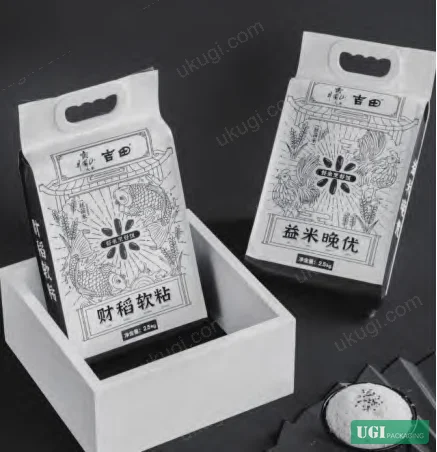
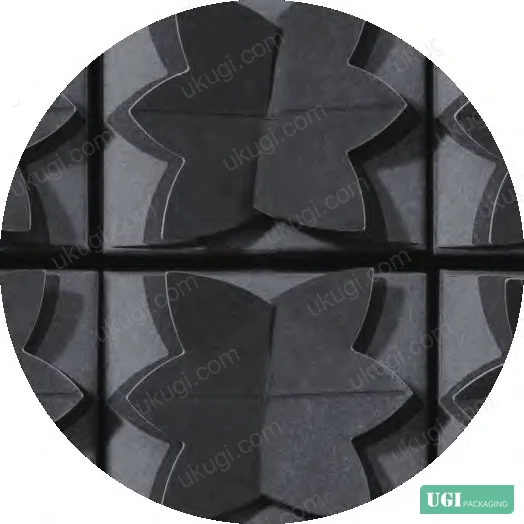
The tactile dimension of carton design is undervalued in most technical briefs. Three-dimensional embossing on a top panel — particularly bio-inspired relief structures mimicking organic texture — requires a minimum board caliper of 300 gsm to hold emboss depth without reverse-side telegraphing. Matte UV coating applied over embossed relief amplifies tactile contrast; gloss UV flattens it. This is not an aesthetic preference — it is a material interaction that determines whether the emboss reads as premium or as a production artifact.
For custom paper boxes requiring complex emboss geometry, always request a pre-production strike-off on the specified board before approving the die. Surface finish decisions made on reference boards — not the actual production substrate — account for a significant share of first-batch rejections.
Visual Communication Specification in Folding Carton Pre-Press and Finishing #
Pre-press decisions lock in finish performance before a single sheet hits the press. The most consequential specifications at this stage are: Pantone reference and its CMYK/coated equivalents, UV coating type (gloss, matte, soft-touch, hybrid), foil stamp zone geometry, and font weight relative to minimum positive/negative line specification.
Color systems matter structurally, not just aesthetically. A saturated brand color — particularly in the red-orange spectrum (Pantone 17-1563 TCX is a documented example in food packaging, a tomato-red standard used in premium produce cartons) — behaves differently under gloss UV versus matte UV. Gloss UV increases perceived saturation by approximately 8–12% relative to uncoated; matte UV reduces it by 5–8%. If your brand color was signed off under gloss conditions, switching to matte UV for a “premium” finish will require a re-pull on press — a correction that costs time and paper.
Typography specification for folding cartons follows a hierarchy that most graphic designers ignore: bold sans-serif fonts in the primary callout zone (minimum 8pt positive, 10pt reversed-out on dark backgrounds) need to be confirmed against the coating system. Fine serif fonts below 7pt reversed-out on matte UV coated boards will fill and lose legibility at standard 150 lpi screen ruling. The contrast between a bold sans-serif headline and a secondary handwritten or script typeface — a technique deployed in premium food packaging to create visual tension — requires careful zone separation on the pre-press file to prevent coating bleed between font styles.
Industry observation: most procurement teams don’t realize that ISO 12647-2 (the offset lithography color characterization standard) was updated to tighten ΔE tolerances on coated substrates. The current revision specifies a ΔE 2000 tolerance of ≤5.0 for process colors on coated paper — a threshold that legacy supplier approval processes routinely miss because they’re still using ΔE CIE76 measurements. If your supplier quotes color tolerance in ΔE76 rather than ΔE2000, that is a red flag worth investigating.
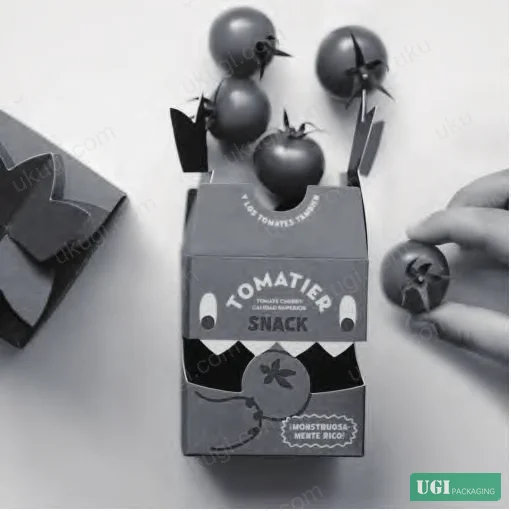
The AR/QR integration layer — printing a scannable code zone that triggers digital content — introduces a pre-press specification that folding carton buyers frequently overlook. A QR code printed in process black over a matte UV zone will scan reliably. The same code printed in a spot color lighter than 60% density, or positioned within a foil stamp zone, will fail ISO/IEC 18004 readability requirements at standard smartphone scan distance (15–30 cm). In supplier qualification, we saw three of six prototype cartons fail QR readability testing when the code had been placed in a high-reflectance foil zone without a surrounding matte buffer of at least 3 mm clearance.
Sustainable Material Integration in Folding Carton Design #
Environmental specification is no longer a marketing add-on — it is an increasingly mandatory procurement parameter, particularly for food cartons entering EU or UK markets under EU Packaging and Packaging Waste Regulation (PPWR) requirements.
The core tension in sustainable folding carton specification is between recycled content percentage and surface finish performance. Boards with ≥70% post-consumer recycled (PCR) fiber content exhibit lower surface smoothness (Sheffield Air Leak values typically 150–300 ml/min versus 50–100 ml/min for virgin SBS), which directly reduces gloss UV holdout and emboss definition. This is not a dealbreaker — it requires specification adjustment, not format abandonment.
Practical approaches that preserve visual performance on recycled boards:
- Apply a clay coating or barrier primer before UV varnish on boards with Sheffield Air Leak >150 ml/min
- Restrict emboss depth to ≤0.3 mm on recycled fiber boards to prevent reverse-side telegraphing
- Switch from gloss UV to matte UV or soft-touch laminate, which is more forgiving of surface roughness variation
- Use flexographic overprint varnish rather than full-sheet UV for selective finish application on recycled substrates
Ink reduction is a legitimate sustainability lever and a structural one. Designs that reduce ink coverage below 250% total area coverage (TAC) on a four-color press reduce drying/curing energy, lower VOC output, and — importantly — reduce the risk of set-off and blocking in the carton blank stack. For food-contact folding cartons, ink migration compliance under Regulation (EC) No 1935/2004 is a legal requirement, not a quality preference. Low-migration UV inks are the standard specification for direct and indirect food contact cartons; confirm this explicitly in your supplier qualification.
Honestly, the “reduce ink” strategy is where procurement teams most often confuse sustainability with cost-cutting and get the result wrong. Reducing ink by simplifying the design is a legitimate approach. Reducing ink by lowering ink film weight on a heavily saturated color is a print quality problem waiting to happen — you will see mottling on solid panels and a 15–25% increase in color variance across a production run.
Practical Guidance for Buyers #
Folding carton procurement decisions made before the dieline is finalized determine 80% of eventual unit cost and quality outcome. The sequence matters: confirm board grade and grain direction first, then assign finish zones, then finalize artwork to those zones — not the other way around.
For buyers sourcing internationally, the critical verification points are board specification compliance (gsm, caliper, surface treatment), coating system compatibility with artwork requirements, and food-contact ink compliance documentation. Structural parameters — particularly score-to-fold cracking rate and gluing flap geometry — should be verified on pre-production samples before committing to full tooling cost.
At ukugi.com, our team in Guangzhou produces custom paper boxes and custom labels and stickers for international brand owners across food, cosmetics, and premium consumer goods — with full surface finishing capability including foil stamping, embossing, matte/gloss UV, and low-migration ink systems for food contact applications. If you’re at the specification stage for a folding carton program, we can review your dieline and finish brief before you commit to tooling.
Need a custom formulation or sample? Request a quote from our team →
Technical Verification Questions #
- What is your board caliper tolerance (±mm) at the specified gsm, and what method do you use to verify it — caliper gauge per TAPPI T411 or inline optical measurement?
- For embossed relief panels at depths between 0.2–0.5 mm, what is your reverse-side telegraphing rejection threshold, and do you verify this on the production board or a reference substrate?
- Can you confirm low-migration UV ink compliance for food-contact carton applications — specifically, do your inks meet the requirements of Regulation (EC) No 1935/2004, and do you have migration test data at the relevant temperature and contact duration?
- What is your color tolerance specification for solid brand colors — do you measure in ΔE 2000 or ΔE CIE76, and what is your maximum allowable ΔE across a production run of 10,000+ units?
- For QR code integration on coated panels, what minimum clearance buffer (mm) do you specify between the code zone and any foil stamp or high-reflectance finish, and can you provide ISO/IEC 18004 scan-pass documentation from a recent production batch?
Quality Verification Checklist #
- ☐ Board caliper confirmed within ±0.02 mm of specified gsm on production substrate (not reference board)
- ☐ Grain direction verified as parallel to primary tuck-fold score line — cross-grain folding confirmed absent on panels >300 gsm
- ☐ Emboss depth ≤0.3 mm on recycled fiber boards (PCR content ≥70%); reverse-side telegraphing absent on visual inspection
- ☐ Color tolerance verified in ΔE 2000 ≤5.0 per ISO 12647-2 on coated substrate — not ΔE CIE76
- ☐ Low-migration UV ink compliance documentation provided for food-contact application per Regulation (EC) No 1935/2004
- ☐ QR code zone positioned with ≥3 mm matte clearance buffer from foil/high-reflectance finish; ISO/IEC 18004 scan-pass confirmed
- ☐ Ink total area coverage (TAC) ≤250% on four-color panels; no visible mottling on solid color zones in pre-production sample
- ☐ Sheffield Air Leak value confirmed <150 ml/min for boards specified with gloss UV or emboss finish
Key Specifications Table #
| Parameter | Recommended Value | Verification Method |
|---|---|---|
| Board caliper (SBS, premium food carton) | 300–350 gsm / ±0.02 mm tolerance | TAPPI T411 caliper gauge on production board |
| Color tolerance on coated substrate | ΔE 2000 ≤5.0 (process colors) | ISO 12647-2 spectrophotometric measurement |
| Emboss depth (on board ≥300 gsm) | 0.2–0.5 mm; ≤0.3 mm on PCR ≥70% board | Cross-section gauge; visual telegraphing check |
| QR code clearance from foil/reflective zone | ≥3 mm matte buffer | Physical measurement on pre-production sample |
| Ink TAC (four-color solid panels) | ≤250% | Pre-press file TAC audit + press density measurement |
| Sheffield Air Leak (gloss UV/emboss boards) | <150 ml/min | Sheffield instrument per TAPPI T538 |
Looking for a manufacturer that meets these specifications? Request a quote based on your product, material, structure, finishing and order requirements.
References #
Data source: Visual Design Integration Strategies and Consumer Perception in Food Packaging Systems, X. Wang et al., Packaging Technology and Science, 2024
Frequently Asked Questions #
Q: What board weight should I specify for a premium folding carton with embossing and foil stamp?
A: For a carton combining embossed relief and foil stamp, specify SBS board in the 300–350 gsm range. Below 300 gsm, emboss depth is limited to <0.2 mm before reverse telegraphing becomes visible; below 270 gsm, foil stamp adhesion consistency drops on high-speed press configurations. Confirm the actual production board — not a reference swatch — before approving tooling.
Q: Can recycled board achieve the same visual quality as virgin SBS for premium applications?
A: With the right specification adjustments, yes — but not without them. PCR boards above 70% recycled content require a clay coating or barrier primer to achieve equivalent UV holdout. Matte UV and soft-touch laminate perform better on recycled substrates than gloss UV. Emboss depth should be restricted to ≤0.3 mm. The output can be visually competitive with virgin SBS; the mistake is applying a virgin-board finish specification to a recycled-board substrate without adjustment.
Q: Why do QR codes sometimes fail to scan on premium folding cartons?
A: Almost always a finish placement issue. QR codes positioned within or adjacent to foil stamp zones, high-gloss UV panels, or metallic ink areas reflect light in ways that confuse smartphone cameras at standard scan distances. The fix is simple: require a minimum 3 mm matte coating buffer around the code zone, and verify against ISO/IEC 18004 readability criteria on the pre-production sample — not the artwork proof.
Q: What is the correct color measurement standard for approving folding carton production?
A: ΔE 2000 per ISO 12647-2, measured on the actual coated substrate. ΔE CIE76 is an older metric that overstates perceptible color difference in the red-orange range — which is exactly where most food brand colors sit. Suppliers quoting tolerance in ΔE76 are using a standard that doesn’t reflect current production capability expectations.
Q: How do I specify a carton that needs to comply with EU food-contact regulations?
A: Two non-negotiable items: low-migration UV inks with migration test data compliant with Regulation (EC) No 1935/2004, and a functional barrier coating if the board contains recycled fiber. Request the supplier’s migration test certificate, confirm the test temperature and contact duration match your product’s end-use conditions, and verify that the ink supplier’s technical datasheet explicitly lists food-contact compliance — not just “food-safe” as a marketing claim.
Published by ukugi.com Technical Team | Request a quote


