

TL;DR #
Research analyzing consumer behavior and packaging evaluation across multiple demographic segments found that packaging sensory perception influences chocolate purchase decisions as much as — or more than — the product itself, with over 60% of surveyed consumers willing to pay a premium for personalized packaging formats. For procurement teams sourcing folding cartons and rigid gift boxes for confectionery, this means structural format, surface finish, and interactive feature compatibility are not decorative concerns — they directly affect sell-through rate and brand equity. Specify your carton construction, finish stack, and digital integration requirements (QR, AR trigger zones) in your RFQ brief before sampling.
Overview #
Most procurement teams approach chocolate folding carton briefs as a print-and-cut exercise — weight, flute, board grade, done. That framing misses roughly half of what drives product performance on shelf. Research from an industrial design faculty at a Chinese polytechnic university, drawing on multi-category consumer evaluation studies and documented packaging case analyses across European, American, and Asian markets, makes a clear structural argument: the folding carton for confectionery is simultaneously a structural container, an emotional communication device, and an interactive media surface. Those three functions place competing and sometimes contradictory demands on board selection, surface finish, and dieline geometry.
The data is unambiguous on one point — consumers operate on a “7-second rule” in retail environments, making purchase intent decisions within approximately 7 seconds of visual contact. That single constraint cascades into every structural and print decision: caliper must be sufficient for shelf presence, finish must differentiate within 3–5 meters of viewing distance, and structural form must communicate product tier before the buyer reads a single word of copy.
This is not a packaging trend article. It is a functional brief for engineers who need to translate consumer behavior data into board specifications, finish stack decisions, and dieline geometry.
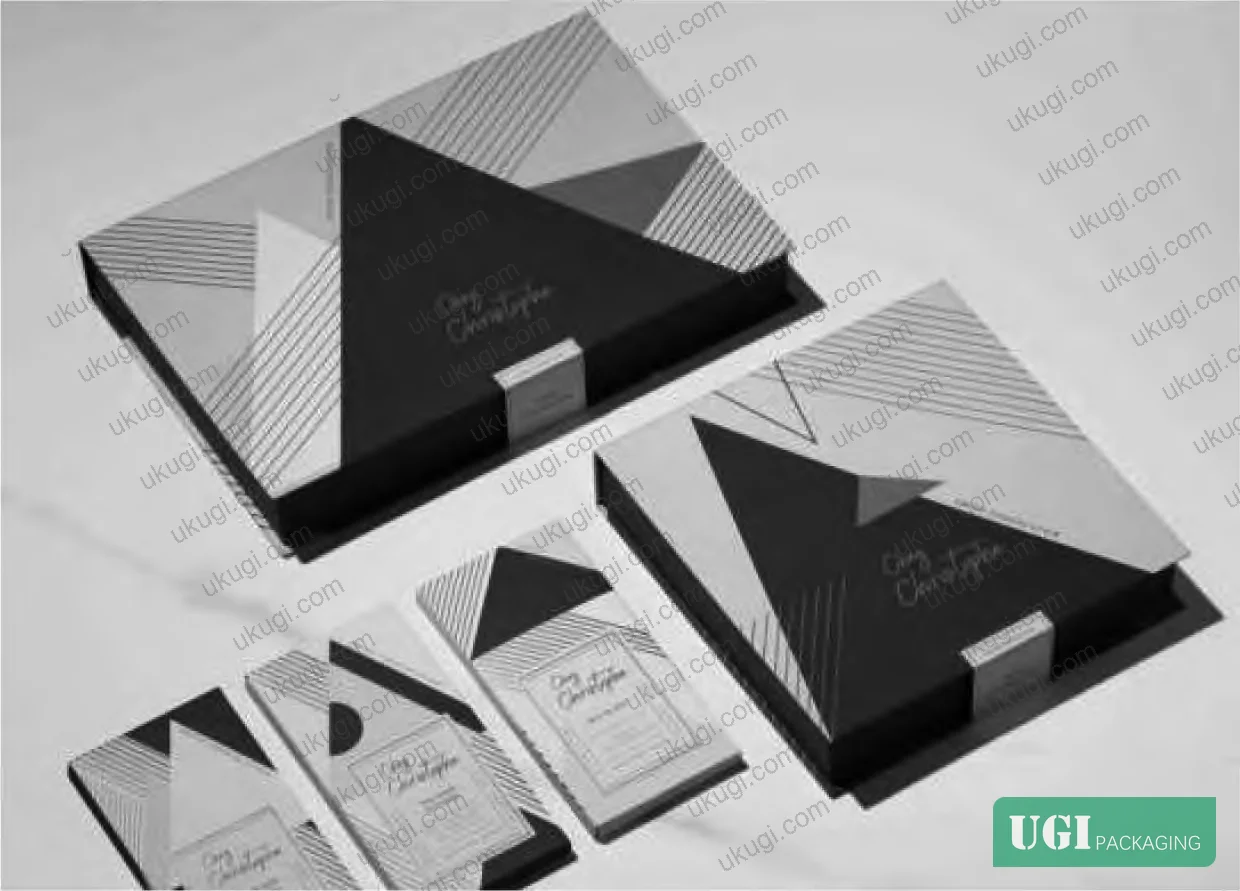
Folding Carton Board Selection and Structural Format for Chocolate Packaging #
The structural substrate decision for chocolate folding cartons is more constrained than it looks. Chocolate has specific barrier requirements — primarily moisture vapor and, in premium segments, oxygen — and the carton must perform across temperature ranges that most paperboard specifications don’t explicitly address. A box that dimensionally stable at 20°C may warp at 35°C ambient in Southeast Asian logistics chains, which is where a significant portion of European and Chinese chocolate brand revenue now flows.
For standard retail folding cartons in the 100–300g confectionery range, SBS (solid bleached sulfate) board at 270–350 gsm is the baseline. The caliper range that balances stiffness and printability for offset litho sits between 0.35 mm and 0.50 mm — below 0.35 mm you lose the structural memory needed for crisp score-and-fold at corner radii under 3 mm, and above 0.50 mm you start fighting cracking on tight wraps with aqueous coatings. For premium gift box formats (the segment where personalization ROI is highest), GC1 grades with coated front and uncoated reverse are standard; GC2 is acceptable for inside print but compromises foil adhesion uniformity at the substrate level.
Bursting strength is the mechanical property most directly relevant to chocolate gift carton integrity in transit. ISO 2758:2014 Paper — Determination of bursting strength is the applicable test standard for the paperboard grades used in folding carton production. For a 300 gsm SBS carton in a gift box configuration, expect burst values in the range of 450–600 kPa depending on fiber direction. Buyers specifying cartons for international freight should require test data at conditioning in accordance with ISO 187:1990 Paper, board and pulps — Standard atmosphere for conditioning and testing — 23°C / 50% RH — because burst values measured without conditioning can be 15–25% higher than real-world performance in humid transit environments.
Honestly, most buyers over-specify burst strength on folding cartons and then under-specify score-and-fold geometry. I’ve seen briefs requiring 550 kPa burst on a 270 gsm board — physically achievable but structurally irrelevant — while the same brief said nothing about score depth ratio, which is what actually determines whether a folded corner looks crisp or pillows out on a premium gift carton.
Board Format Comparison for Chocolate Carton Applications
| Format | Typical Board Grade | Gsm Range | Primary Application | Surface Finish Compatibility |
|---|---|---|---|---|
| Retail sleeve / standard folding carton | SBS GC2 | 270–320 gsm | Mass market bars, seasonal multipacks | Offset litho, UV varnish, cold foil |
| Premium folding carton | SBS GC1 | 300–400 gsm | Gift range, limited editions, single-origin | Foil stamp, emboss, spot UV, lamination |
| Rigid set-up box with wrap | Greyboard + artpaper wrap | 600–2000 gsm (greyboard) | High-end gifting, collectibles, AR-enabled | All finishes; full bleed foil standard |
| Sleeve-over-tray (hybrid) | GC1 sleeve + SBS tray | 270–350 gsm sleeve | Children’s formats, interactive packaging | Litho + digital hybrid, QR integration |
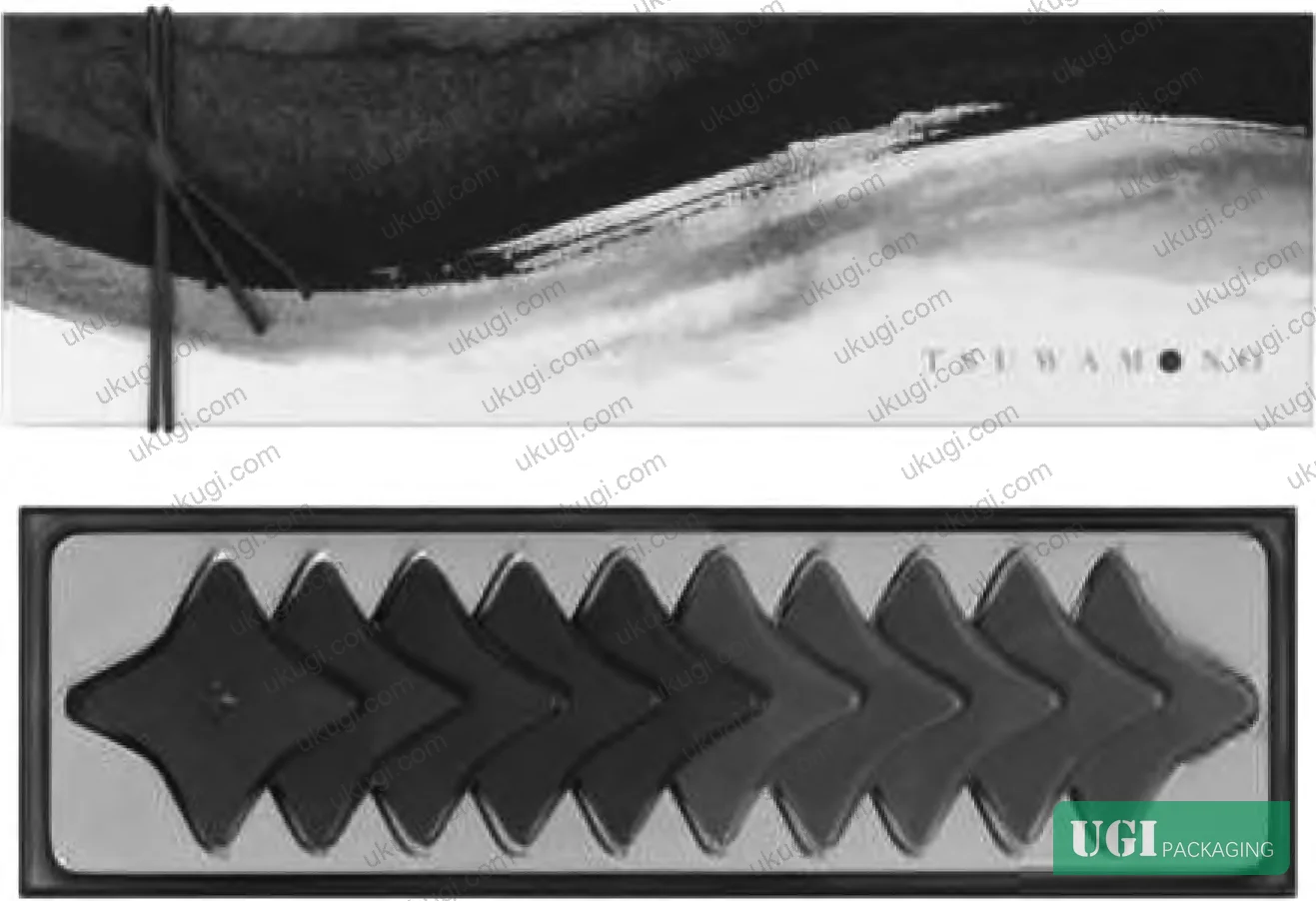
Surface Finishing Strategies for Personalized and Premium Chocolate Cartons #
This is where most structural briefs fall apart. Surface finish is treated as a graphic design decision when it is actually a substrate-process-lamination decision made under significant constraint. The finish stack determines printability, tactile perception, foil adhesion, and downstream recyclability — all simultaneously.
For the personalization-driven segment the research documents, three finish strategies dominate premium chocolate carton production:
Matte lamination + spot UV remains the highest-volume premium finish combination. The contrast between matte base and gloss UV spot is visually high-impact and can be produced at commercial speeds on most UV litho lines. The critical specification is UV spot thickness: below 4 µm you lose the tactile differentiation; above 10 µm you risk adhesion failure at fold lines under cold conditions. For chocolate packaging specifically, this matters because cartons are often refrigerated after purchase.
Soft-touch lamination + foil stamp is the finish stack most associated with high-end gift cartons in the 18–35 demographic segment the research identifies as the primary premium buyer group. Soft-touch (also called velvet or suede lamination) is a 10–15 µm polyurethane-dispersed matte laminate that creates a friction surface with a coefficient of 0.4–0.6 (versus 0.15–0.25 for standard gloss lamination). The tactile premium is real and quantifiable. The procurement risk is that soft-touch lamination has poorer resistance to surface abrasion than gloss — rubbing resistance per ISO 15397:2014 Printing inks — Determination of resistance to rubbing should be specified at ≥50 cycles dry rub with no visible marking before accepting a soft-touch laminated batch.
Embossing and debossing on paperboard cartons requires a minimum caliper of 350 gsm to hold a legible impression without substrate fracture. For blind emboss (no print registration), the depth-to-caliper ratio should not exceed 1:4 — so on a 400 gsm board at approximately 0.48 mm caliper, maximum emboss depth is around 120 µm. Exceeding this consistently produces microfractures at the emboss perimeter that are invisible in incoming inspection but open under handling.
In supplier qualification, we saw three of six carton samples fail on this exact point — emboss depth exceeded the 1:4 ratio on a 300 gsm substrate, and all three showed perimeter cracking within 30 days of simulated handling. The suppliers had all submitted acceptable pre-production proofs; the failure only appeared at production caliper tolerance, which ran 8% lighter than specified.
Industry observation: most procurement teams don’t realize that the interaction between soft-touch lamination and embossing on the same panel creates a substrate tension conflict that causes delamination at fold lines — a known failure mode that almost no supplier technical sheet addresses directly. The solution is to restrict embossing to panels that do not carry a fold score within 8 mm of the emboss perimeter.
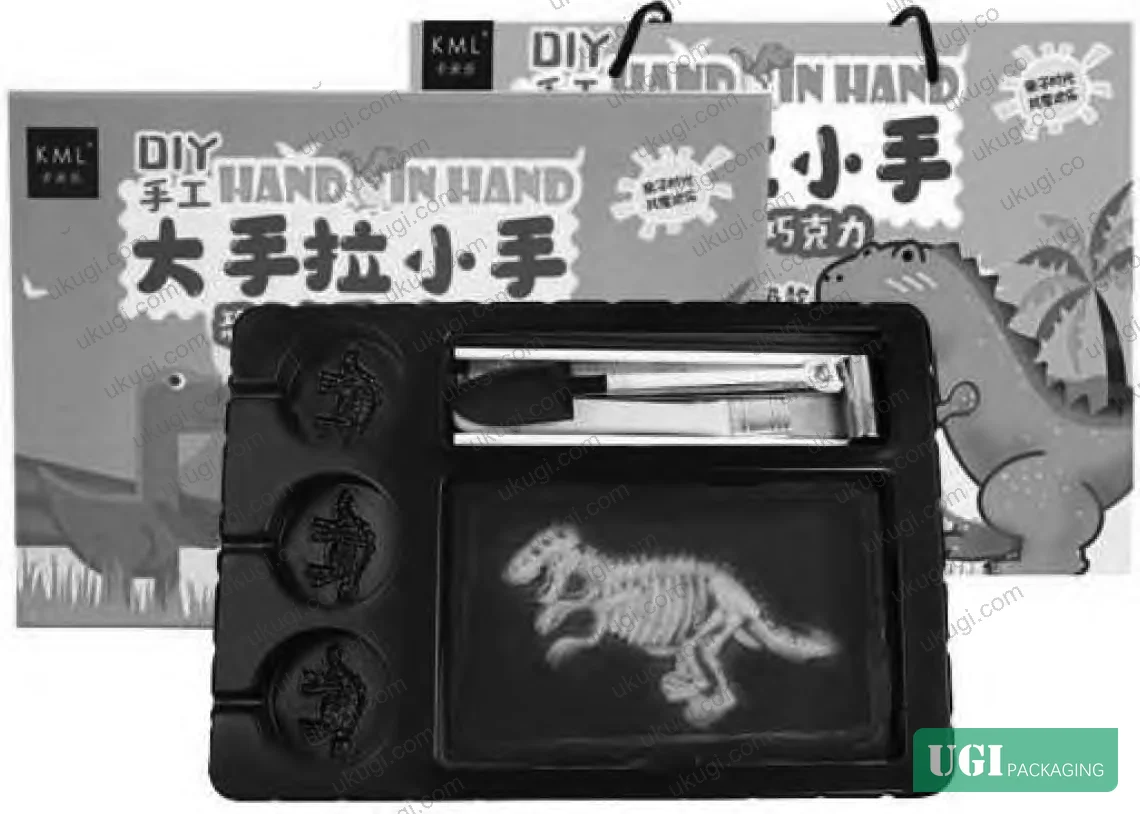
Digital Integration and Interactive Packaging Features in Folding Carton Design #
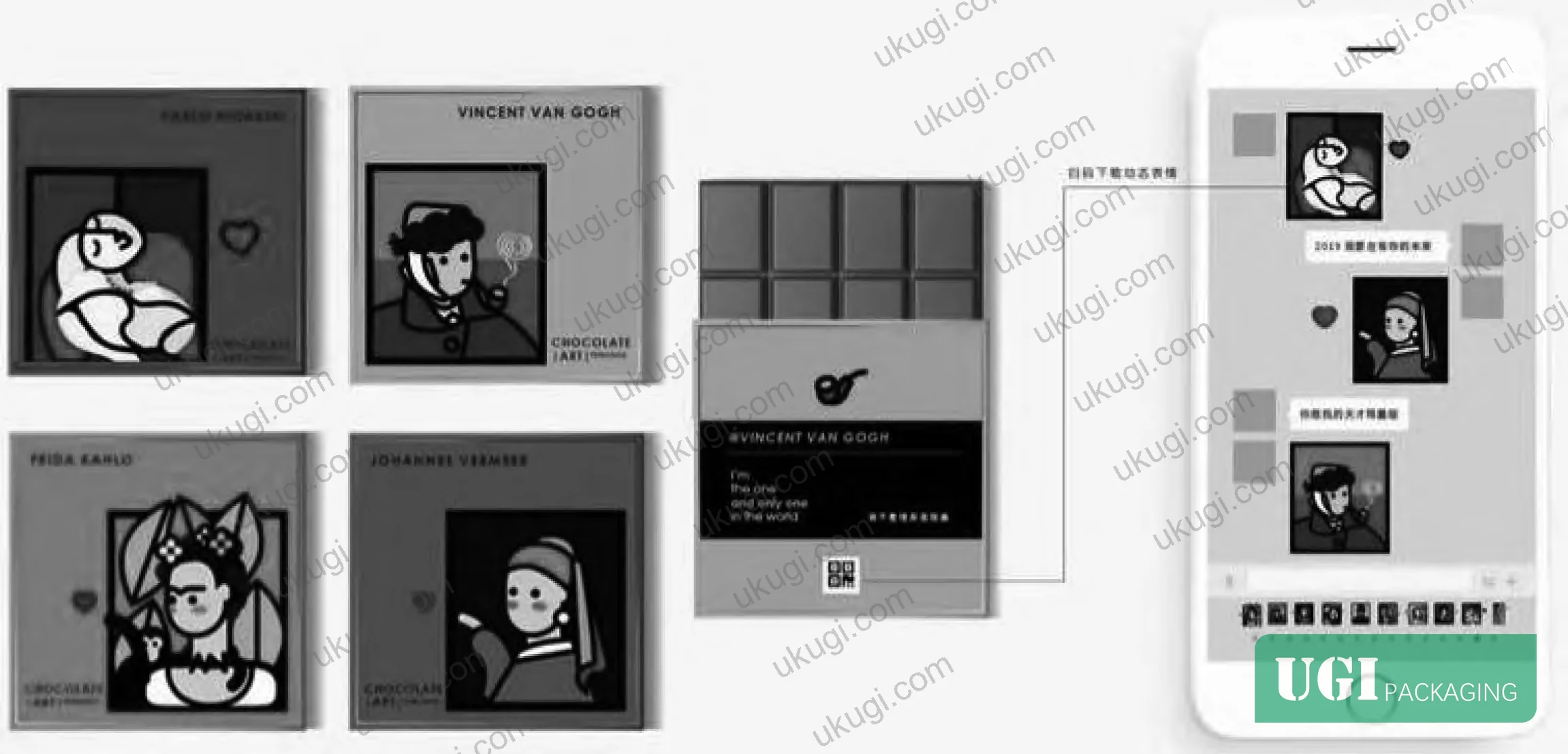
The research is specific about where interactive technology delivers measurable value in confectionery packaging: QR-linked content, AR trigger zones, and electronic nutrition label formats. Each has direct structural and print implications that need to be specified before the dieline is finalized.
QR code placement on a folding carton is not a graphic design decision — it is a print quality and structural decision. GS1 General Specifications for barcodes and data carriers on packaging defines minimum module size, quiet zone, and contrast requirements for machine-readable codes. On a matte laminated surface, QR scan reliability degrades if the print contrast ratio between module and background falls below 70%. On a soft-touch laminated surface, the diffuse light scatter from the velvet texture reduces effective contrast by an additional 10–15%, meaning QR codes on soft-touch panels need to be printed in a dedicated flood-coated window or on a non-laminated panel section to maintain scan reliability.
AR trigger zones — graphic panels designed to activate augmented reality overlays via mobile camera recognition — require high print fidelity and dimensional stability. The trigger image must register at ±0.1 mm across print runs, which means offset litho is the appropriate process; digital print on textured or post-laminated substrates introduces too much registration variance for reliable AR triggering. The minimum recommended panel size for an AR trigger zone is 40 mm × 40 mm at arm’s length scanning distance (~300 mm).
Electronic nutrition labeling via QR — one of the specific transformation pathways the research proposes — is gaining regulatory traction in multiple markets. The current paper-based Nutrition Facts Table (NFT) format, presented per 100g of product in small-font tabular layout, scores poorly on consumer comprehension. QR-linked dynamic nutrition labels can present contextual portion-based data, allergen warnings, and consumption guidance — but the carton print specification must guarantee QR reliability across the full production run, not just on proof samples.
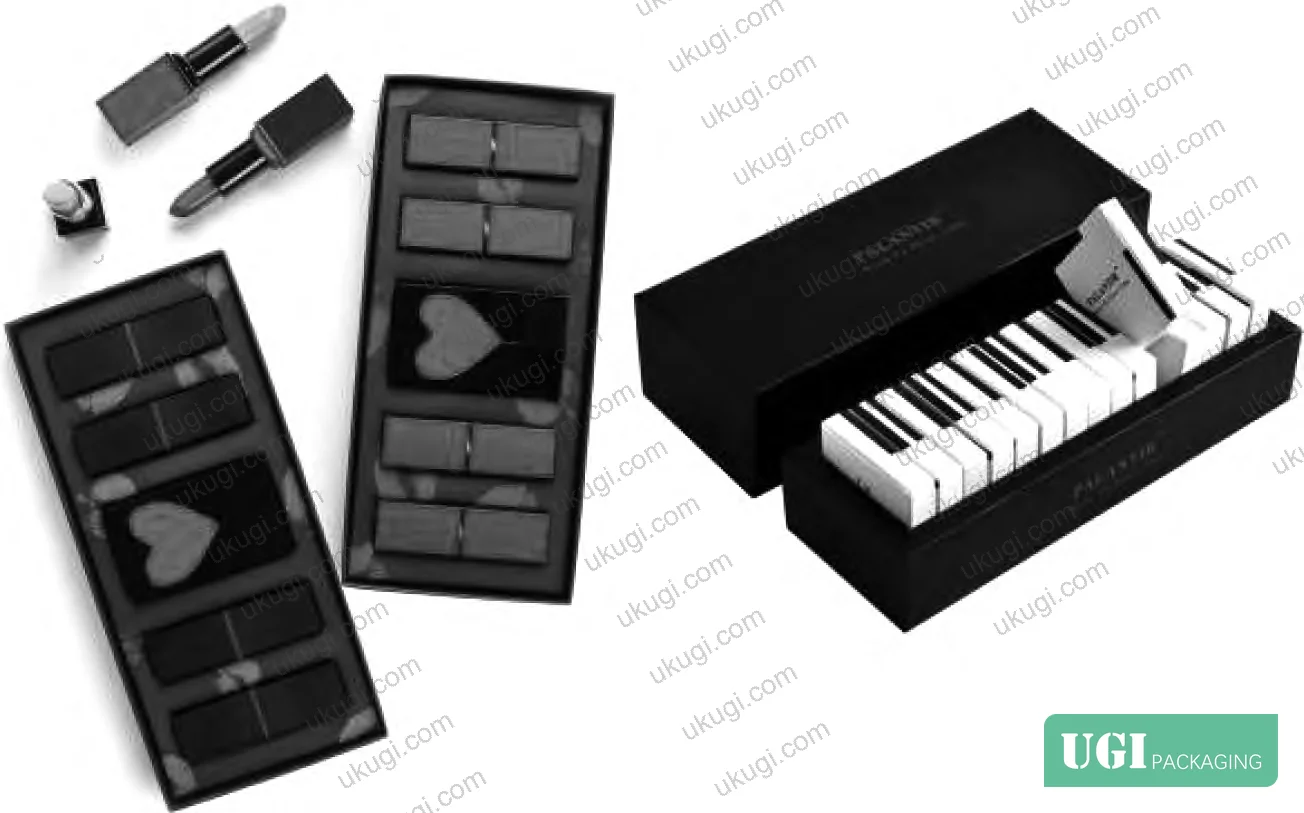
Practical Guidance for Buyers #
The confectionery carton brief needs to be written in layers: structural spec first, finish stack second, interactive feature third. Buyers who start with the graphic brief and work backwards to the structural spec consistently end up with either an over-engineered carton that kills the margin or a finish stack that the base substrate can’t support.
For the personalization and gift segment specifically, the demographic segmentation in the research is directly actionable in procurement terms. Children’s formats (ages 4–12) require robust structural formats — sleeve-over-tray or rigid set-up box — with surface finishes that are non-toxic and abrasion-resistant because the carton will be handled repeatedly. Youth market formats (18–30) tolerate thinner substrates if the finish quality is demonstrably premium: soft-touch lamination, foil stamp, or high-build UV are more important than board weight in this segment. Health-conscious adult formats need clean structural lines and QR integration for nutrition transparency — over-finishing this segment with heavy emboss and foil actually signals inauthenticity to the target buyer.
Our team at ukugi.com specializes in OEM and ODM production of folding cartons and rigid gift boxes for international confectionery and FMCG brands, with full surface finishing capability from soft-touch lamination to multi-level emboss and foil stamp. If you’re sourcing custom paper boxes or need gift packaging solutions with specific finish and structural requirements, we can move from structural brief to physical sample fast.
Need a custom formulation or sample? Request a quote from our team →
Technical Verification Questions #
Key technical points to verify when evaluating any supplier in this category (including us):
- What is your specified caliper tolerance (±%) for SBS board at 300–400 gsm, and can you provide incoming inspection records showing caliper consistency across the last three production batches — specifically relevant to emboss depth control at the 1:4 depth-to-caliper ratio limit?
- What dry rub resistance value (in cycles, per ISO 15397) do you achieve on soft-touch laminated panels before visible marking, and do you test this at conditioned temperature (23°C / 50% RH) or ambient?
- Can you demonstrate QR code print contrast ratio ≥70% on matte and soft-touch laminated panels, tested per GS1 General Specifications module size and quiet zone requirements, across a minimum 1,000-unit production sample?
- What is your score-and-fold cracking specification for SBS board at 300–400 gsm with aqueous coating, specifically at corner radii under 3 mm — and at what ambient temperature range is this validated?
- For embossed panels adjacent to fold scores, what minimum distance do you maintain between emboss perimeter and score line, and do you have documented failure rate data for emboss-cracking at fold lines from production batches rather than proof samples?
Quality Verification Checklist #
- ☐ Board caliper measured at ≥5 points per sheet confirms specified gsm within ±5% tolerance per conditioning to ISO 187:1990 (23°C / 50% RH)
- ☐ Burst strength test per ISO 2758:2014 meets minimum 450 kPa at 300 gsm or 550 kPa at 350 gsm on conditioned samples
- ☐ Soft-touch lamination dry rub resistance ≥50 cycles with no visible marking per ISO 15397:2014 test conditions
- ☐ UV spot coating thickness measured at 4–10 µm range; adhesion at fold lines tested after 24-hour refrigeration cycle (4°C) shows no delamination
- ☐ Emboss depth verified at ≤1:4 depth-to-caliper ratio; no visible microfracture at emboss perimeter under 10× loupe inspection after 50 handling cycles
- ☐ QR code print contrast ratio ≥70% on final laminated substrate confirmed via GS1-compliant scan test at 300 mm scanning distance
- ☐ Foil stamp adhesion on GC1 board confirmed via tape peel test with no foil transfer after cross-hatch adhesion test
- ☐ Score-and-fold cracking absent on all four carton corners after 20 open/close cycles at ambient temperature range 15–35°C
Key Specifications Table #
| Parameter | Recommended Value | Verification Method |
|---|---|---|
| Board caliper (300 gsm SBS) | 0.38–0.46 mm | Micrometer measurement per ISO 187 conditioned sample, 5-point average |
| Burst strength (350 gsm GC1) | ≥530 kPa | ISO 2758:2014, conditioned 23°C / 50% RH, minimum 5 test specimens |
| UV spot coating thickness | 4–10 µm | Wet film gauge or cross-section microscopy; adhesion test post fold at 4°C |
| Soft-touch lamination rub resistance | ≥50 cycles, no visible marking | ISO 15397:2014 dry rub test, 500g weight, 50mm stroke |
| Emboss depth-to-caliper ratio | ≤1:4 (max ~120 µm on 0.48 mm board) | Optical profilometer or cross-section measurement; visual inspection at 10× |
| QR code contrast ratio on laminated panel | ≥70% print contrast signal | GS1-compliant scanner verification, 300 mm scanning distance |
| Score-to-fold cracking limit | Zero cracks at 20 open/close cycles | Manual fold test, ambient 15–35°C, 10× loupe post-cycle inspection |
Looking for a manufacturer that meets these specs? Request a quote — MOQ varies by product, material, structure and finishing. Product-specific MOQ is confirmed with each quotation.
References #
Data source: Personalization-Driven Transformation in Confectionery Packaging Design: Structural, Sensory, and Interactive Dimensions, J.-N. Huang et al., Packaging Technology and Science, 2024
Frequently Asked Questions #
What board weight should I specify for a premium chocolate gift folding carton with foil stamp and emboss?
For a premium folding carton carrying both foil stamp and emboss on the same panel, specify GC1 SBS board at 350–400 gsm with caliper in the 0.43–0.50 mm range. Below 350 gsm you risk emboss perimeter cracking; below 0.40 mm caliper the foil stamp impression force can cause reverse-side marking on tight-registration multi-up sheets. Confirm your supplier’s incoming board caliper tolerance is ±5% or better before approving production.
What is the minimum QR code size for reliable scanning on a soft-touch laminated carton?
On a soft-touch laminated surface, the diffuse light scatter reduces effective scan contrast — you need a minimum module size of 0.4 mm and a minimum QR code overall dimension of approximately 15 mm × 15 mm to maintain ≥70% print contrast signal at 300 mm scanning distance. If the panel is curved (as on a cylindrical or pillow-box format), increase minimum size to 20 mm × 20 mm to account for geometric distortion.
Does soft-touch lamination affect recyclability of paperboard cartons?
Yes, and it’s an increasingly significant procurement decision. Polyurethane-dispersed soft-touch laminates are not currently repulpable in standard paper recycling streams. If recyclability is a brand commitment, specify water-based matte coatings (aqueous matte varnish or water-based OPP lamination alternatives) rather than soft-touch laminate — you sacrifice some tactile premium but maintain paper recyclability. Check ISO 14021:2016 Environmental labels and declarations — Self-declared environmental claims before making recyclability claims on pack.
Can AR trigger zones and embossed graphics be placed on the same carton panel?
Technically yes, but not on the same surface area. An AR trigger zone requires flat, dimensionally stable print with consistent color registration — embossing distorts the panel surface and compromises trigger image recognition. Place AR trigger zones on unembossed panels and keep emboss at least 15 mm clear of any AR graphic boundary. The practical solution is to assign the front panel to AR/QR integration and the back or side panels to emboss and foil decorative elements.
What is the typical lead time difference between a standard offset-printed folding carton and one with full finish stack (soft-touch + foil + emboss + QR)?
A standard offset carton runs 10–15 working days from approved artwork to shipment at volume. Add soft-touch lamination and you add 2–3 days. Add foil stamp and emboss (which require dedicated tooling) and the lead time extends to 18–25 working days depending on tooling availability. QR code integration adds no lead time if the code is print-specified in advance — the delay risk is artwork approval of the QR placement spec, not production. For initial sampling with full finish stack, budget 12–15 working days regardless of volume.
Published by ukugi.com Technical Team | Request a quote


