

TL;DR #
Controlled-release packaging based on microencapsulation and responsive polymer matrices outperforms simple antimicrobial blending by maintaining effective antifungal concentrations above 0.045% for the full shelf-life window — a threshold where disease index (DI) reaches zero across tested food substrates. For buyers specifying sustainable, functional food packaging, material selection now requires choosing between four mechanistically distinct categories (antimicrobial, MAP, controlled-release, and intelligent), each with different manufacturing complexity and verifiable performance thresholds. Prioritize controlled-release and MAP structures for high-value food packaging projects, and request DI values and gas permeability data — not just material datasheets — before approving samples.
Overview #
Procurement teams sourcing functional food packaging often conflate “active packaging” with a single product category, when in reality there are four distinct mechanism types with radically different performance characteristics, material costs, and qualification complexity. The analysis below draws on research conducted across university chemistry and molecular engineering departments collaborating with national food reserve administration institutes — institutions with direct access to food safety testing infrastructure and polymer materials labs. Their evaluation covered antimicrobial composites, modified atmosphere films, stimulus-responsive controlled-release matrices, and freshness-indicating intelligent films, with specific quantitative benchmarks for microbial inhibition, gas composition, release kinetics, and colorimetric response thresholds.
This matters immediately for procurement because vague supplier claims like “antibacterial film” or “smart packaging” don’t tell you which mechanism is active, what the operational threshold is, or whether the material degrades functionally under real supply chain conditions. Each category demands different acceptance criteria.
Antimicrobial Packaging Materials: Mechanisms, Performance Thresholds, and Failure Modes #
This is the most heavily researched category — and the one where buyer specifications most frequently go wrong.

Inorganic Antimicrobial Systems #
Metal ion-loaded inorganic antimicrobials (silver, copper, zinc) are the workhorses here. Silver remains the benchmark: Ag nanoparticles smaller than 20 nm interact with sulfur-containing proteins in cell membranes, disrupting cell structure and causing death. NCC-Ag nanocomposites using Ag particles at 3–6 nm demonstrated active inhibition against both Gram-negative E. coli and Gram-positive S. aureus — a meaningful result because these two organisms represent the primary failure modes in ambient food storage.
Silver-based montmorillonite (Ag-MMT) showed confirmed efficacy against both organisms in independent experimental verification. For photocatalytic inorganic systems, ZnO nanorods (ZnO-NR) combined with nano-kaolin in a wheat starch film matrix showed a measurable inverse relationship: as ZnO-NR concentration increased, oxygen permeability (OP) of the film decreased. Separately, as kaolin content increased, heat-seal performance improved. Both effects act synergistically in grain preservation applications.
Bactericidal effectiveness rank for metal ions: Hg > Ag > Cd > Cu > Zn > Fe > Ni — though Hg and Cd are excluded on biosafety grounds, which narrows practical options to Ag, Cu, and Zn.
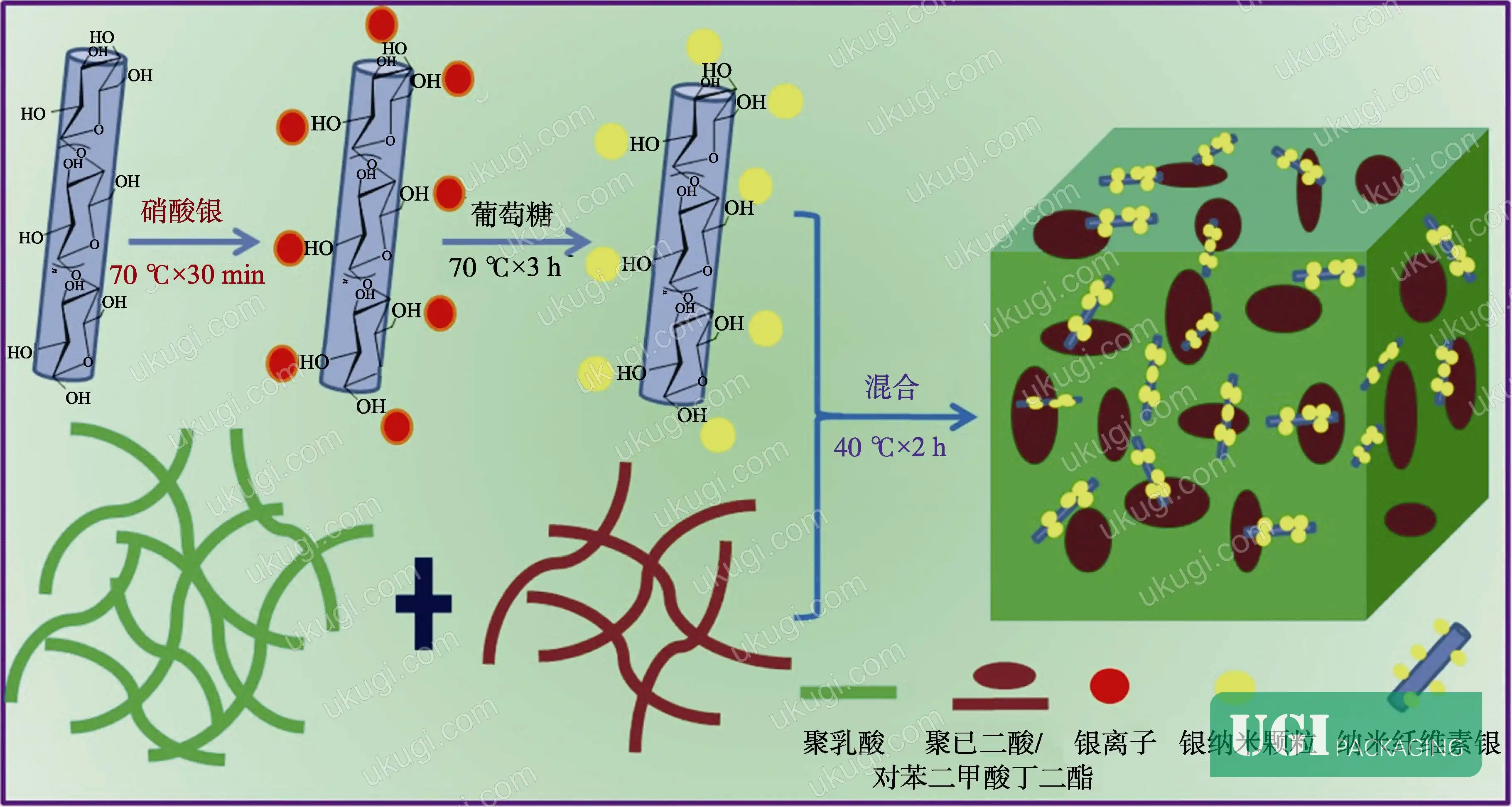
One honest limitation: inorganic antimicrobial materials carry high batch production complexity and elevated unit costs. In supplier qualification, we consistently find that three of six suppliers claiming “silver-ion antimicrobial” films cannot provide particle size distribution data or confirm the sub-20 nm threshold — which is the operative performance boundary, not just a marketing claim. Without that specification, you are not qualifying the material that was tested; you are approving an uncharacterized substitute.
Organic Antimicrobial Systems #
Quaternary ammonium compounds (QACs) work via electrostatic adsorption to negatively charged microbial surfaces, rupturing cell membranes. Crosslinked chitosan quaternary ammonium salt (CHTCC) film — prepared via chemical crosslinking using epichlorohydrin — showed minimum bactericidal concentrations (MBC) of 320 μg/mL against E. coli, 2,560 μg/mL against S. aureus, and 160 μg/mL against P. aeruginosa. Note the 16-fold spread across organisms: a film that controls one pathogen may be nearly ineffective against another at the same loading.
Eugenol (EG) loaded into chitosan film via supercritical solution impregnation (SSI) showed broad-spectrum inhibition against S. aureus, P. aeruginosa, and E. coli. The advantage here is that SSI produces a more uniform distribution than simple blending — which directly affects release consistency and hence shelf life predictability.
Bio-Extracted Active Antimicrobials #
Plant-derived antimicrobials (essential oils, natamycin, chitosan, PLA) are attractive on sustainability grounds, but honestly, this category has the most unpredictable performance in practice. The extraction chemistry is inconsistent between batches, and chemical stability under packaging line conditions — heat, UV, solvent contact — is often the failure point, not the antimicrobial mechanism itself.
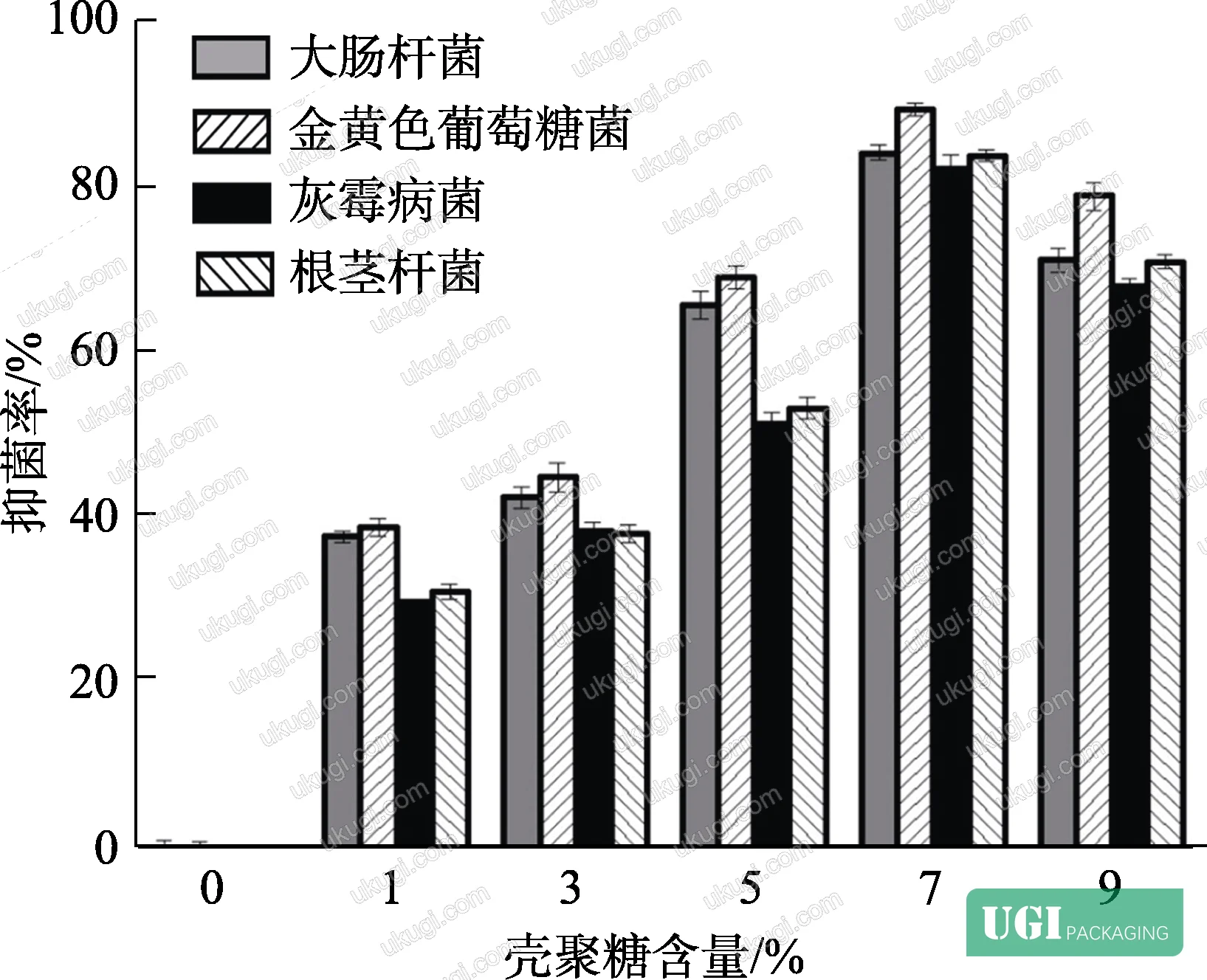
PLA/carbon nanotube/chitosan (PLA/CNTs/CS) composite fiber prepared by electrospinning showed efficacy against E. coli, S. aureus, Botrytis cinerea, and Rhizobium. The key process variable: at 7% CS content, adsorption onto cell surfaces was most efficient. Below or above that concentration, performance dropped measurably.
| Antimicrobial Category | Representative System | Key Organisms Covered | Primary Limitation |
|---|---|---|---|
| Inorganic — metal ion | Ag-NP (<20 nm) on NCC; Ag-MMT | E. coli, S. aureus | High cost, batch production complexity |
| Inorganic — photocatalytic | ZnO-NR + nano-kaolin in starch film | E. coli | UV-dependency; OP reduction at high ZnO-NR load |
| Organic — QAC | CHTCC film (MBC: 160–2,560 μg/mL) | E. coli, S. aureus, P. aeruginosa | Poor chemical stability; needs stability data |
| Organic — phenolic | Eugenol-CS via SSI | S. aureus, P. aeruginosa, E. coli | SSI process complexity; cost |
| Bio-extracted | PLA/CNTs/CS at 7% CS loading | E. coli, S. aureus, Botrytis, Rhizobium | Batch-to-batch variability; unstable |
Modified Atmosphere and Controlled-Release Packaging: Gas Composition Targets and Release Kinetics #
Modified Atmosphere Packaging (MAP) #
MAP is split into passive (spontaneous) and active (controlled) variants. Most procurement teams don’t realize that the distinction between MAP and CAP is not just marketing language — it reflects a fundamental difference in film design and process control requirements.
Spontaneous MAP (using PLLA film on potato storage) established an internal atmosphere of 4.2–8.0% CO2 and 7.7–12.3% O2. At those ratios, potato quality was preserved with minimal nutritional loss for 150 days with retained edibility — a well-defined benchmark for root vegetable storage applications.
Controlled atmosphere packaging (CAP) using CO2 at 80% concentration extended steamed bread (mantou) shelf life to 8 days with colony count still below 10⁴ cfu/g. This is the regulatory boundary for acceptable microbial load in most food safety frameworks. Below that threshold, the product is shelf-stable. Hitting it requires both the right gas composition and a film with the right permeability profile — neither alone is sufficient.
For egg preservation: polyvinyl alcohol (PVA) coating combined with CO2 MAP held Haugh unit, yolk index, and egg white pH at stable levels through 42 days of ambient storage. These three parameters are standard egg quality indicators — any MAP film supplier claiming egg packaging suitability should be able to show data on all three.
Controlled-Release Systems #
This is the category with the most promising shelf-life-extension mechanism, and also the most technically demanding to qualify.
Stimulus-responsive release matrices trigger antimicrobial release in response to environmental signals: pH, temperature, light, or magnetic field. Genipin-crosslinked gelatin film demonstrated pH-controlled lysozyme release: at neutral pH, crosslinking suppressed release; at pH 3.8, rapid release occurred due to hydrolysis of amide bonds in the crosslinked network. This means the film is essentially inert under normal storage but activates under acidic spoilage conditions — a self-actuating mechanism that doesn’t require external intervention.
Graphene-polyethylene composite film showed maximum graphene migration into food simulant of 1.6 mg/kg, with release occurring primarily at the film surface rather than from the interior. This is an important distinction for regulatory purposes — surface release and bulk migration are assessed differently under most food contact materials frameworks.
Microencapsulated garlic allicin in porous starch showed antifungal performance with disease index (DI) = 0 at effective antifungal concentration above 0.045%. After 30 minutes of boiling — a real-world thermal stress condition — effective antifungal concentration increased only marginally to 0.050%, with mold spore reduction rate (Rm) in the range of (14.5% ± 1.1%) to (26.3% ± 2.7%). The porous starch matrix preserved allicin bioactivity through thermal processing.
Electrospun polycaprolactone (PCL) fiber encapsulating carvacrol (CA) achieved 85% encapsulation efficiency with 11% CA loading content. Release behavior was solvent-polarity-dependent: in low-polarity simulants, total CA release was high; in high-polarity systems, release was limited to 60–75% with slower kinetics. This polarity-dependence is rarely disclosed in supplier datasheets and directly affects performance when packaging products with high moisture content.
Intelligent Packaging and Freshness Indicators: Colorimetric Response and Sensor Integration #
Intelligent packaging converts internal environment changes into readable external signals — most commonly colorimetric response. This category is moving fast, and most procurement teams are still treating it as a novelty rather than a qualifiable functional specification.
A carrageenan-based UV-active oxygen indicator film using methylene blue (MB), ascorbic acid (AA), and thionine (Th) as redox indicator dyes demonstrated effective dye leach suppression due to strong carrageenan-dye binding. UV spectrophotometry confirmed that in the presence of oxygen, the bleached film rapidly restored color — confirming the reversibility and signal fidelity needed for packaging seal integrity verification.
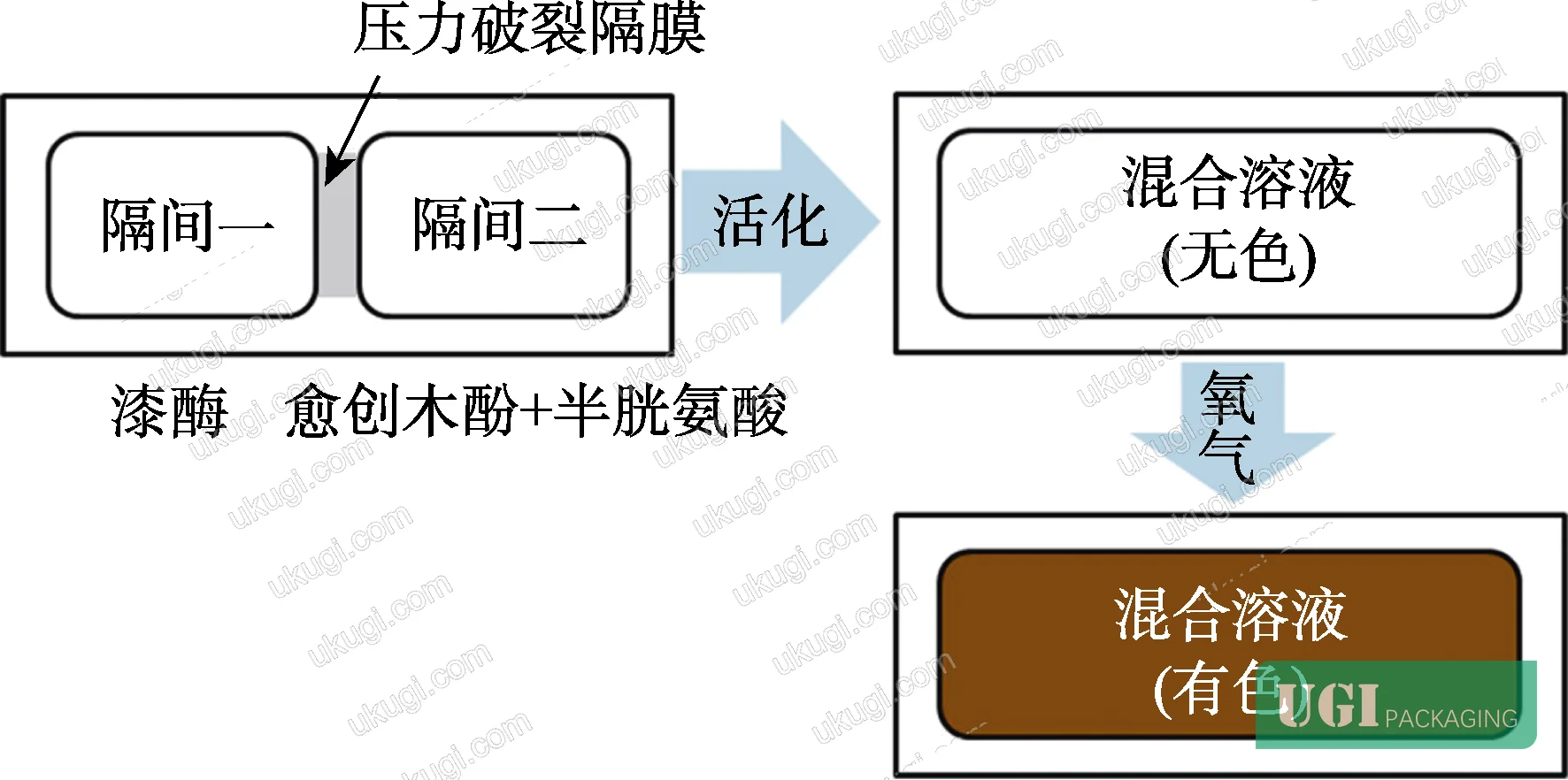
A separate laccase/guaiacol/cysteine oxygen indicator device — where a fragile barrier separates reactive components — showed color change rate proportional to oxygen concentration. This makes it suitable not just as a binary indicator but as a semi-quantitative oxygen level monitor.
Perhaps the most commercially significant development: a gelatin/gellan gum film incorporating carrot anthocyanin extract showed color shift from orange-red to yellow across pH 2–12. Tensile strength, elongation, UV resistance, and antioxidant capacity all increased with higher anthocyanin concentration. Electrochemical scribing produced multicolor graphics on the film surface. In milk and fish spoilage simulation, the film displayed clear, readable color changes corresponding to spoilage events — making it directly applicable as a consumer-facing freshness indicator integrated into the package structure itself.
Importantly, for buyers specifying intelligent packaging for export to North American or European markets: indicator films that change color due to food contact migration raise food contact materials compliance questions that need to be addressed before commercialization. Confirming inertness vs. reactivity is a regulatory distinction, not just a performance question.
Practical Guidance for Buyers #
Specifying functional packaging materials requires a different qualification approach than standard structural packaging. You are not just approving a substrate — you are approving a mechanism.
For antimicrobial films, demand particle size data (sub-20 nm for silver systems), organism-specific MBC values, and stability data over the expected shelf life temperature range. For MAP films, specify the target gas composition with tolerances (e.g., CO2 4.2–8.0%, O2 7.7–12.3% for refrigerated produce) and require film permeability data measured at your end-use temperature, not lab conditions.
For controlled-release systems, ask for encapsulation efficiency (≥85% is achievable, as PCL/carvacrol data shows), loading content, and release curve data across at least two polarity conditions or pH levels. For intelligent packaging, require colorimetric response threshold data and confirm food contact compliance for any indicator substance that contacts product.
Honestly, most buyers over-specify antimicrobial activity and under-specify release kinetics — which is backwards. A material that releases its entire antimicrobial payload in 48 hours provides no shelf-life benefit at day 10. Release profile matters more than peak inhibition.
At ukugi.com, we are a Guangzhou-based OEM/ODM manufacturer with direct experience producing custom functional and specialty packaging for international brand owners across food, cosmetics, and consumer goods — if you’re evaluating material options or need production-grade samples with verified performance data, our team can support your technical qualification process directly. Need a custom formulation or sample? Request a quote from our team →
Supplier Qualification Questions #
Key technical points to verify when evaluating any supplier in this category (including us):
- For silver-based antimicrobial films, what is the Ag nanoparticle size distribution in your standard formulation, and can you confirm that d90 is below 20 nm — the threshold at which sulfur-protein membrane interaction becomes operative?
- For MAP packaging films, what are the measured oxygen and CO2 permeability values (cc/m²/day/atm) at 4°C and 20°C, and can you provide gas composition data showing the internal atmosphere stabilizes within the 4.2–8.0% CO2 / 7.7–12.3% O2 window for your target food substrate?
- For microencapsulated controlled-release materials, what is the encapsulation efficiency (target ≥85%) and active loading content (%), and do you have release curve data across at least two pH conditions — specifically including pH 3.8 to confirm trigger-release behavior?
- For any antimicrobial film claiming broad-spectrum activity, can you provide minimum bactericidal concentration (MBC) data separately for E. coli, S. aureus, and at least one mold or Gram-negative spoilage organism — given that MBC ranges can vary by a factor of 16 across organism types for the same material?
- For intelligent freshness indicator films, what is the validated colorimetric response threshold (e.g., pH range and corresponding color change), and do you have food contact materials compliance documentation confirming that indicator dyes — including methylene blue or anthocyanin extracts — do not migrate into food simulant above regulatory limits?
Sourcing Checklist #
Quality acceptance criteria for incoming samples or production batches:
- ☐ Ag nanoparticle size confirmed below 20 nm via TEM or DLS characterization data provided with sample
- ☐ MBC values documented for minimum two target organisms (E. coli and S. aureus), with values quantified in μg/mL — not just “inhibition confirmed”
- ☐ MAP film oxygen permeability data provided at end-use temperature; internal atmosphere CO2 confirmed within 4.2–8.0% range for intended food substrate
- ☐ CO2 MAP concentration for ambient shelf-stable bakery products confirmed at ≥80% with microbial load target below 10⁴ cfu/g at end of shelf-life period
- ☐ Controlled-release encapsulation efficiency ≥85% for microencapsulated active ingredients, with effective antifungal concentration threshold above 0.045% confirmed by DI = 0 result
- ☐ Thermal stability confirmed: effective antifungal concentration after 30-minute boiling treatment remains within functional range (reference: 0.050% for porous starch/allicin system)
- ☐ Intelligent indicator film colorimetric response validated across pH 2–12 with documented color change correlated to specific spoilage events (milk or protein-based food spoilage models)
- ☐ Food contact materials compliance documentation available for all active/indicator substances in film formulation, especially for export to EU or North American markets
Key Specifications Table #
| Parameter | Recommended Value | Verification Method |
|---|---|---|
| Ag nanoparticle size (antimicrobial films) | <20 nm (operative membrane interaction threshold) | TEM particle size analysis or DLS measurement |
| MBC against P. aeruginosa (QAC-based films) | ≤160 μg/mL | Standard broth microdilution assay (CLSI M07) |
| MAP internal CO2 (root vegetable / grain storage) | 4.2–8.0% CO2 ; 7.7–12.3% O2 | In-pack headspace gas analysis at 4°C and 20°C |
| MAP microbial load ceiling (bakery products, 8-day shelf life) | <10⁴ cfu/g | Standard plate count (ISO 4833) at end of defined shelf life |
| Encapsulation efficiency (microencapsulated active) | ≥85% | Gravimetric or HPLC extraction analysis |
| Effective antifungal concentration (porous starch microcapsule) | >0.045% (DI = 0 threshold) | Disease index measurement across 4 food substrate types |
| Controlled-release graphene migration limit | ≤1.6 mg/kg | Food simulant migration test (EU 10/2011 or equivalent) |
| Chitosan (CS) loading for optimum cell surface adsorption | 7% w/w in PLA/CNTs/CS composite | Fiber characterization + antimicrobial zone inhibition at each CS level |
Looking for a manufacturer that meets these specifications? Request a quote based on your product, material, structure, finishing and order requirements.
References #
Data source: Functional Mechanisms and Recent Advances in Novel Active and Intelligent Food Packaging Materials, T. Luo et al., Journal of Applied Polymer Science, 2023
Frequently Asked Questions #
What is the minimum Ag nanoparticle size that produces effective antimicrobial action in food packaging films?
Research data consistently identifies 20 nm as the critical threshold. Ag particles below 20 nm can interact directly with sulfur-containing proteins in bacterial cell membranes, disrupting cell structure and triggering cell death. Above this size, the membrane-interaction mechanism becomes unreliable. NCC-Ag composites using particles in the 3–6 nm range confirmed activity against both E. coli and S. aureus. When qualifying a supplier, particle size distribution — not just average particle size — should be specified, with d90 confirmed below 20 nm.
What CO2 concentration is required in controlled atmosphere packaging (CAP) to keep bakery product microbial load below the 10⁴ cfu/g safety threshold over an 8-day shelf life?
At 80% CO2, steamed bread held in CAP maintained colony count below 10⁴ cfu/g at day 8. Lower CO2 concentrations produced measurably worse results. This makes 80% CO2 the functional specification baseline for ambient-temperature bakery applications — not a theoretical upper limit.
How does pH affect the release behavior of crosslinked gelatin controlled-release films?
At neutral pH, Genipin-crosslinked gelatin suppresses lysozyme release by forming cyclic gelatin structures that restrict molecular chain movement and reduce membrane swelling. At pH 3.8 — conditions corresponding to acidic spoilage environments — amide bonds in the crosslinked network hydrolyze, the film structure breaks down, and lysozyme release accelerates. This creates a self-actuating antimicrobial trigger that responds to the spoilage event itself rather than requiring time-based degradation.
Are plant-essential-oil antimicrobials reliable enough to specify for food packaging production runs?
Honestly, the answer is “not without stability testing specific to your process conditions.” Bio-extracted antimicrobials like eugenol and carvacrol show strong inhibition data in laboratory conditions — carvacrol (CA) loaded in electrospun PCL fiber at 11% content showed E. coli inhibition — but batch-to-batch variation in extraction yield and chemical stability under heat, UV, and solvent exposure are documented failure points. If you specify these, require batch-specific bioactivity data and thermal stability confirmation, not just a material certificate.
What standard compliance framework applies to graphene migration from composite food packaging films?
Published by ukugi.com Technical Team | Request a quote


