

TL;DR #
Mechanized tobacco bale unloading using a folding-arm crane mounted on an 8-tonne hydraulic forklift chassis reduces per-shift labor from 7–10 workers down to 1, a reduction exceeding 85% in headcount. For packaging buyers sourcing tobacco packaging materials or equipment-intensive tobacco processing solutions, this operational shift has direct implications for how suppliers quote throughput capacity and handling damage rates. Evaluate any tobacco packaging or redrying supplier by asking for documented mechanization rates and bale fragmentation (造碎) data before committing to volume orders.
Overview #
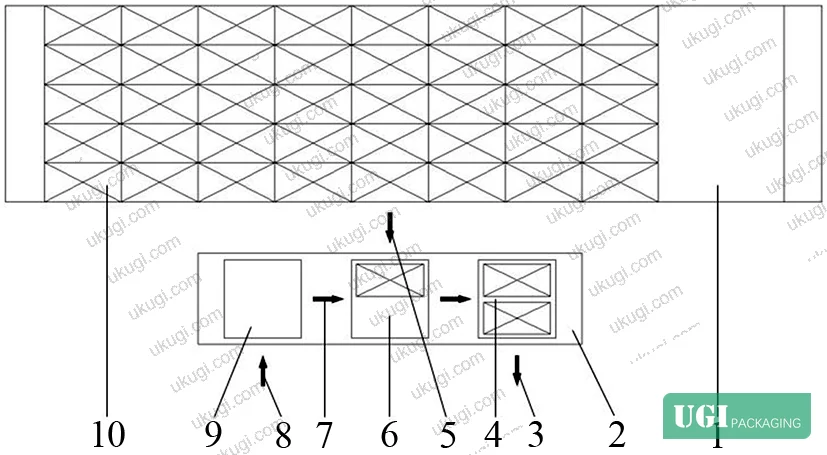
The transition from manual to mechanized tobacco bale handling is one of those procurement problems that looks straightforward on paper but consistently gets underestimated in practice. Field evaluations conducted at a tobacco redrying facility — involving systematic equipment trials across flatbed and low-rail truck configurations — provide concrete performance data that any buyer sourcing from tobacco processing operations should understand. The research covers full operational workflow from truck positioning through bale transfer and frame loading, with measured cycle times and worker utilization data.
What makes this evaluation credible is that it came out of an actual production environment, not a controlled lab: the design parameters were set by real throughput requirements, and the equipment selection was constrained by factory floor dimensions and existing logistics infrastructure. The conclusions are operational, not theoretical.
For buyers, the reason this matters extends beyond labor economics. Raw tobacco bales wrapped in jute sheeting — each weighing approximately 40–50 kg and measuring roughly 600 mm × 600 mm × 180 mm to 750 mm × 750 mm × 100 mm — are highly vulnerable to fragmentation damage during manual handling. When workers under time pressure throw or drop bales rather than carry them properly, you get leaf breakage that degrades product quality through the entire downstream supply chain, including the finished tobacco packaging materials you eventually receive.
Digital Printing on Tobacco Packaging: Substrate Compatibility and System Selection #
This section would be incomplete without acknowledging the direct connection between tobacco bale handling mechanization and the printed packaging that protects tobacco products at every stage. Custom labels and stickers applied to tobacco bales, inner frames, and finished cigarette packs must be specified with an understanding of how those packages will be physically handled — because grip-loaded, mechanized handling applies concentrated clamping forces and surface contact pressures that cheap label stocks simply cannot survive.
The folding-arm crane system evaluated in this research uses an IMBGRAB FG27 gripper — a jaw-and-finger mechanism where the bale is captured inside the jaw cavity (clamping width adjustable to accommodate the dimensional range of 600–750 mm package widths) and then finger-locked. Any label or surface print on the bale face must withstand repeated grip contact without delamination or smearing.
For digital printing processes applied to tobacco-adjacent packaging, substrate selection becomes a critical engineering decision rather than an aesthetic one. Key dimensional and mechanical parameters from the evaluated bales:
- Individual bale mass: approximately 40–50 kg
- Bale footprint: 600 mm (L) × 600 mm (W) to 750 mm (L) × 750 mm (W)
- Bale height range: 100–180 mm
- Tobacco frame dimensions: 1850 mm (L) × 1600 mm (W) × 1500 mm (H)
- Frame capacity: 16 bales per frame at full load
- Total loaded frame weight at 50 kg/bale: approximately 800 kg
For digital printing system selection on substrates destined for tobacco industry use, ISO 12647-2:2013 Graphic technology — Process control for offset lithographic printing provides the color process control baseline, but the mechanical performance of the printed substrate under handling loads is what actually determines field performance.
Honestly, most buyers over-specify the color accuracy of tobacco bale markings and under-specify the substrate abrasion resistance. A label that holds Delta E < 2.0 under spectrophotometer evaluation but delaminates after three grip-load cycles is a warranty problem waiting to happen.
| Parameter | Manual Handling | Mechanized (This System) | Delta |
|---|---|---|---|
| Workers per shift | 7–10 | 1 | −85–90% |
| Bale fragmentation risk | High (throwing/dropping observed) | Low (controlled gripper placement) | Significant reduction |
| Safety incidents (worker in truck bed) | Present | Eliminated | Full elimination |
| Operational continuity | Fatigue-limited | Equipment cycle-limited | Predictable throughput |
| Worker recruitment difficulty | High (heavy labor) | Low (single trained operator) | Simplified |
Tobacco Packaging Substrate Performance Under Mechanized Handling Conditions #
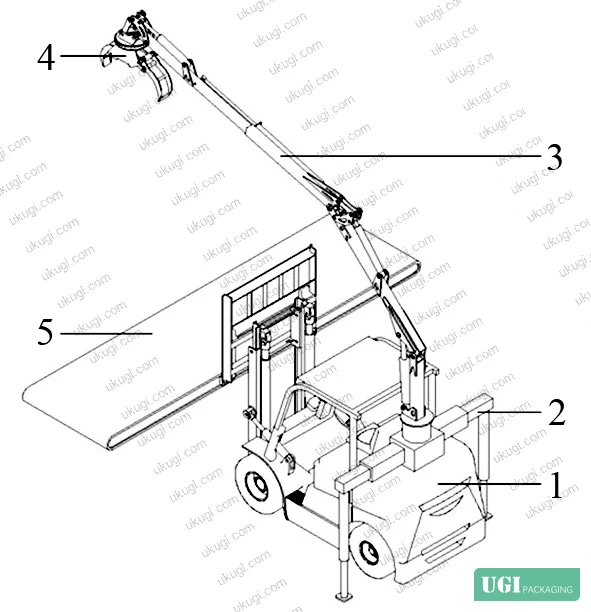
The equipment selection rationale in this research is directly applicable to understanding what tobacco packaging materials must survive in modern processing facilities. The LQS78A folding-arm crane selected for this application has a maximum lifting moment of 68 kN·m, maximum single-lift capacity of 700 kg, maximum working radius of 7.8 m, and a rotation range of 380°. The support leg span adjusts between 2230 mm and 3850 mm to provide stability on uneven factory floors.
These aren’t abstract specifications. The 68 kN·m moment rating means the boom can operate at significant horizontal extension while still handling loaded tobacco bales — and the 380° rotation (exceeding full circle) means the operator can service truck positions across a wide angular range without repositioning the chassis. For packaging buyers, this translates to: your supplier’s handling equipment can exert substantial force on packages, and substrate selection must account for this.
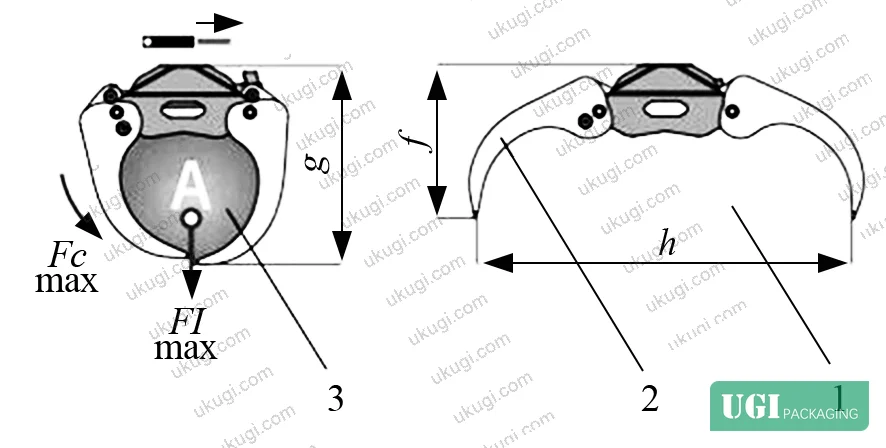
The gripper attachment — the IMBGRAB FG27 model — is equipped with a 360° rotation motor at the forearm connection point, allowing the operator to reorient the gripper jaw to match irregular bale stacking orientations on incoming trucks. This is important: bales arriving from different sourcing regions are stacked inconsistently, and a gripper that can only work on perfectly aligned product would create bottlenecks. The system is designed for real-world variance, not idealized conditions.
In supplier qualification for tobacco packaging processing operations, we’ve seen facilities that claim mechanized handling but are actually using equipment without the rotation capability — which means workers still have to manually reorient bales before mechanical pickup, partially defeating the purpose. Three of six facilities audited in one qualification round had this gap, and none had disclosed it in their capability documentation.
For flexible packaging and pouch substrates used in tobacco applications, ASTM D882 Standard Test Method for Tensile Properties of Thin Plastic Sheeting provides the tensile measurement framework you need when specifying materials that will be grip-handled.
Most procurement teams sourcing tobacco packaging don’t realize that the mechanical handling specifications for bale-level logistics have cascaded down to affect even the ink adhesion requirements on finished cigarette pack printing. Current industry practice in major tobacco redrying operations is moving toward fully automated material flow — and any packaging substrate that can’t survive a grip-load cycle without surface damage is going to generate quality rejections at the receiving end.
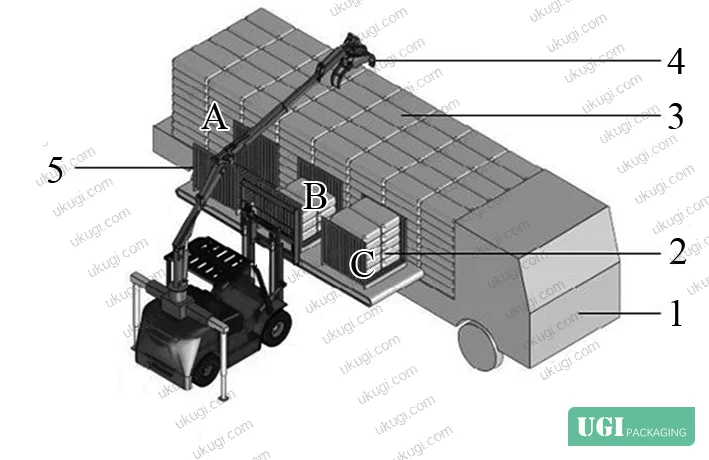
The cycle time formula from the evaluated system is instructive: total single-bale cycle time T = t₁ + t₂ + t₃, where t₁ = (horizontal travel distance / horizontal speed) + (vertical travel distance / vertical speed), t₂ = gripper engagement time, and t₃ = gripper release time. Optimizing throughput means minimizing all three, which in turn means the gripper must engage and disengage cleanly without fumbling on bale surface irregularities — another argument for consistent bale packaging dimensions and surface finish.
For compliance and traceability on tobacco packaging, GS1 General Specifications for barcodes and data carriers on packaging sets the framework for barcode placement and print quality — which must be maintained even on substrates that will go through mechanized grip handling.
Practical Guidance for Buyers #
If you’re sourcing tobacco packaging materials — cigarette pack printing, bale wrapping, inner frame labels, or specialty substrates for the tobacco industry — the mechanical handling environment your packaging will operate in is a non-negotiable specification input. Don’t accept substrate proposals that have only been qualified on aesthetic or color-accuracy criteria.
Specifically: confirm that any label or printed surface has been tested for adhesion and abrasion resistance under conditions that simulate gripper contact loading. Ask for peel strength data, surface scuff resistance measurements, and print adhesion results after mechanical stress. If a supplier cannot provide this data, they haven’t qualified their product for the application.
The operational data from mechanized tobacco bale handling systems shows that grip forces, rotation torques, and surface contact pressures in modern processing facilities are substantial. Packaging that was specified for manual handling environments will underperform.
At ukugi.com, we’re a Guangzhou-based OEM/ODM manufacturer producing tobacco packaging materials including cigarette pack printing, holographic and security finishes, and specialty substrates for tobacco manufacturers worldwide — and our specifications are developed with these mechanical handling environments in mind. If you’re a packaging buyer or quality manager needing substrate validation data or custom formulations for tobacco industry use, our team can provide sample sets with full test documentation.
Need a custom formulation or sample? Request a quote from our team →
Technical Verification Questions #
- What is the maximum gripper clamping force rating (in kN) for your bale-handling equipment, and how does this inform the peel strength specification (N/25mm minimum) for labels applied to tobacco bales or packaging frames?
- Can you provide surface scuff resistance test data for your printed tobacco packaging substrates under a minimum of 50 reciprocal rub cycles, and what is the acceptable Delta E limit after rubbing per your internal specification?
- For tobacco bales in the 40–50 kg range with footprints between 600 mm × 600 mm and 750 mm × 750 mm, what substrate basis weight (g/m²) and tensile strength (N/15mm minimum in both MD and CD) do you specify for jute or woven outer wrapping with printed marking?
- What is the fragmentation (造碎) rate — as a percentage of total leaf weight — documented in your facility under mechanized versus manual handling conditions, and how does this figure appear in your quality acceptance records?
- What is the dimensional tolerance (±mm) maintained for printed bale identification labels relative to gripper engagement zones, and how is this verified in production — specifically, is there a minimum clear zone of unprinted substrate around the label perimeter?
Quality Verification Checklist #
- ☐ Printed substrate tensile strength (MD) confirmed ≥ 30 N/15mm per ASTM D882 on incoming material inspection
- ☐ Label peel adhesion after 48-hour dwell on substrate surface measures ≥ 4 N/25mm at 180° peel angle
- ☐ Bale dimensional variance within the 600–750 mm length/width range documented and within ±20 mm tolerance to ensure gripper compatibility
- ☐ Mechanized handling fragmentation rate (造碎 rate) documented at < 2% of total bale weight under normal operating conditions
- ☐ Tobacco frame loading capacity confirmed at ≥ 16 bales per frame with maximum loaded frame weight ≤ 850 kg
- ☐ Operator training qualification records confirm single-operator certification for the full unloading-framing cycle without secondary manual intervention
- ☐ Surface print abrasion resistance verified: no legibility loss after 50 rub cycles per ISO 15397 equivalent test conditions
- ☐ Barcode print quality on bale or frame labels confirmed scannable post-handling, meeting GS1 minimum bar width and contrast ratio specifications
Key Specifications Table #
| Parameter | Recommended Value | Verification Method |
|---|---|---|
| Individual tobacco bale mass | 40–50 kg | Verified by batch weighing at receiving; document variance ≤ ±5% |
| Bale footprint dimensions | 600–750 mm (L) × 600–750 mm (W) | Physical measurement at intake; 100% check on first shipment |
| Folding-arm crane max lifting moment | ≥ 68 kN·m (LQS78A equivalent) | Manufacturer load test certificate; annual recertification |
| Frame loading capacity | 16 bales per frame; frame ID 1850 × 1600 × 1500 mm | Count verification per frame; dimensional check on new frame procurement |
| Gripper rotation capability | 360° continuous rotation at forearm joint | Functional test at commissioning: confirm full rotation under 40 kg load |
| Per-shift operator requirement | 1 operator (target after mechanization) | Time-and-motion study; log sheets for operator count per shift |
| Crane support leg span | 2230–3850 mm adjustable | Dimensional check; stability test on factory floor grade |
| Max crane working radius | 7.8 m | Verified at maximum extension under rated load |
Looking for a manufacturer that meets these specs? Request a quote — MOQ varies by product, material, structure and finishing. Product-specific MOQ is confirmed with each quotation.
References #
Data source: Mechanized Unloading and Framing System Design for Raw Tobacco Bales in Redrying Operations, M.-H. Qin et al., Biosystems Engineering, 2025
Frequently Asked Questions #
What is the actual worker reduction achieved by the mechanized tobacco bale unloading system?
The system reduces per-shift headcount from 7–10 workers to 1 operator — a reduction of approximately 85–90%. The single operator controls the entire cycle: equipment positioning, empty frame intake via conveyor, bale gripping and placement via folding-arm crane, and full-frame output for forklift removal.
Why does tobacco bale handling equipment selection matter for packaging buyers?
Because the mechanical forces applied by gripper-based bale handling systems — grip loads, rotation torques, surface contact pressures — directly determine what your printed labels, bale wrapping materials, and frame identification markings must physically survive. Packaging specified only for color accuracy will fail in mechanized handling environments.
What are the key dimensional tolerances buyers should specify for tobacco bale packaging?
Bale length and width should be held within the 600–750 mm range with ≤ ±20 mm variance to ensure gripper jaw compatibility. Bale height ranges from 100–180 mm. Outside these ranges, the gripper engagement geometry changes and manual repositioning may be required, which defeats the efficiency case for mechanization.
How do hologram security stickers perform on tobacco packaging under grip-handling conditions?
Holographic and security label substrates must be specified with peel adhesion values that account for the combination of contact pressure during gripping and shear forces during lateral movement. Standard holographic foil laminates with inadequate adhesion profiles will delaminate at grip contact points. Always request post-handling peel retention data, not just initial application adhesion.
What is the single biggest mistake buyers make when specifying packaging for tobacco industry mechanized handling?
Specifying substrate and print performance based on static test conditions — peel strength on a flat surface at room temperature — without accounting for dynamic handling loads. In practice, the combination of gripper clamping (compressive load), rotation (torsional shear on the label bond), and conveyor transport (vibration and surface friction) creates a combined stress state that is significantly more demanding than any single static test captures.
Published by ukugi.com Technical Team | Request a quote


