

TL;DR #
When plant-derived essential oil active packaging is evaluated against conventional chemical preservative films, the controlled-release formats — particularly microencapsulated and nanofiber-embedded systems — demonstrate significantly superior antimicrobial retention over extended storage cycles, with thymol release timelines extendable through carrier selection at 1.2% carboxymethyl chitosan and 2.4% sodium alginate concentrations. For buyers sourcing antimicrobial flexible packaging or active food packaging materials, the carrier system and encapsulation method are more determinative of shelf-life performance than the essential oil type alone. Request documented release kinetics data and specify the encapsulation format in your RFQ before committing to sampling.
Overview #
Most procurement teams evaluating antimicrobial packaging materials spend their qualification budget on the wrong variable — they focus on which essential oil is incorporated rather than how it’s stabilized, encapsulated, and released. That distinction is critical, because without a controlled-release architecture, the antimicrobial performance of plant-derived essential oils degrades rapidly under standard packaging conditions due to volatility, oxidation sensitivity, and water incompatibility.
Research from a national key laboratory specializing in food science and packaging safety — drawing on systematic comparison of multiple encapsulation strategies, carrier materials, and application formats across fresh produce and meat preservation trials — provides a rigorous empirical basis for the performance claims that active packaging suppliers routinely make in commercial datasheets. The study evaluated over 3,000 protein-level biochemical interactions in pathogen response, measured shelf-life extension across several food matrices, and compared three distinct active packaging construction formats side by side.
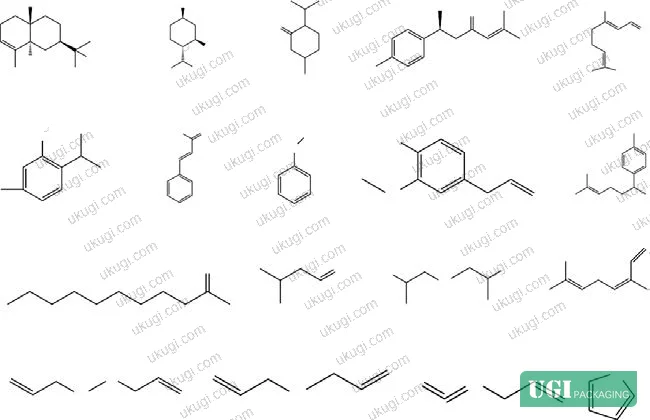
The chemical composition of plant-derived essential oils falls into four main classes: terpenoids (including α-eudesmol, menthol, menthone, citral), aromatic compounds (thymol, cinnamaldehyde, anethole, eugenol), small-molecule aliphatics (methyl nonyl ketone, isovaleraldehyde), and sulfur/nitrogen-containing compounds (diallyl disulfide, allyl isothiocyanate). This classification matters for packaging because each class behaves differently under thermal processing, UV exposure, and moisture — variables that directly affect how the material performs on the production line and in transit.
For buyers sourcing flexible pouches and bags or active paper-based formats, understanding which compound class is active in a given film formulation — and how it’s protected — is the single most important technical question to ask.
Antimicrobial Mechanisms in Plant-Derived Essential Oil Packaging Films #
Understanding how these compounds kill pathogens — not just that they do — matters for packaging qualification because different mechanisms impose different stability and loading requirements on the film matrix.
Mechanism 1: Cell wall and membrane disruption. Active components in essential oils compromise the structural integrity of the microbial cell wall and increase membrane permeability. Borneol, for example, alters membrane permeability and facilitates penetration of other antimicrobial agents into the cytoplasm, triggering cell lysis. Cinnamaldehyde, eucalyptus oil, and tea polyphenols all act on bacterial cell membranes, causing mass leakage of intracellular contents. Eugenol leverages its hydrophobic character to disrupt fungal membrane architecture at measurable concentrations, inhibiting both hyphal growth and spore germination. Camphor essential oil reduces ergosterol content in the plasma membrane, suppressing Aspergillus glaucus growth.
Mechanism 2: Protein and nucleic acid damage. Once membrane integrity is compromised, small-molecule components penetrate and bind intracellular polar substances, blocking protein synthesis and preventing DNA replication. Clove bud oil applied to Staphylococcus aureus and E. coli caused visible DNA band diffusion — indicating genomic fragmentation. Eugenol demonstrated intercalation into Listeria monocytogenes DNA, reducing intracellular concentrations of both DNA and protein.
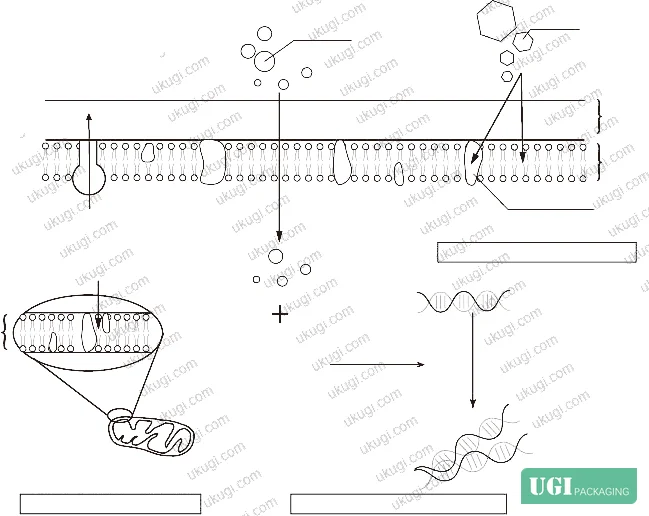
The scale of proteomic disruption observed here is worth pausing on. When 1,8-cineole was applied to Salmonella, 14.45% of all detected proteins — 435 out of 3,011 — showed significant differential expression. Those proteins were involved in 935 intracellular biological processes and 477 molecular functions, including carbohydrate, nucleotide, amino acid, lipid, and energy metabolism pathways. This is not a narrow-spectrum effect. A packaging film that delivers this compound to the food surface is engaging a broad-front biochemical disruption.
Mechanism 3: Energy metabolism interference. Essential oil components disrupt mitochondrial membrane function, deprive cells of oxygen supply, suppress respiration, block anabolic activity, and ultimately trigger cell autolysis. Ageratum conyzoides essential oil acts on the inner membrane system of Aspergillus flavus. Citral disrupts the oxidoreduction system and energy metabolism pathways of Aspergillus flavus, inhibiting growth.
| Mechanism | Representative Compound | Target Pathogen | Observed Effect |
|---|---|---|---|
| Membrane permeability disruption | Eugenol, cinnamaldehyde | S. aureus, E. coli, L. monocytogenes | Intracellular content leakage, cell lysis |
| DNA / protein damage | Clove bud oil, eugenol | S. aureus, E. coli, L. monocytogenes | Genomic fragmentation, DNA intercalation, protein downregulation |
| Energy metabolism suppression | Citral, A. conyzoides oil | Aspergillus flavus | Inhibition of oxidoreduction, ATP pathway disruption, autolysis |
| Broad-spectrum proteomic disruption | 1,8-cineole | Salmonella spp. | 435/3,011 proteins (14.45%) differentially expressed across 935 biological processes |
This mechanistic diversity is directly relevant to packaging design. A film relying on a single compound targeting only membrane permeability will face resistance pressure differently than a complex essential oil blend that hits DNA replication and energy metabolism simultaneously.
Active Packaging Construction Formats: Performance Data and Failure Modes #
This is where the practical qualification data gets interesting — and where most sourcing decisions either succeed or fail.
Three construction formats are in active commercial and research use. Each has a different performance ceiling, failure mode, and cost profile.
Format 1: Essential oil blended directly into film matrix
The most common approach. Essential oil is blended into a biopolymer carrier (starch, PLA, PVA, chitosan) and cast or electrospun into film.
- Corn starch films incorporating Sichuan pepper essential oil via casting produced measurable antimicrobial activity alongside high elongation at break and adequate opacity.
- A polyelectrolyte gellan gum–chitosan multilayer film incorporating thyme essential oil nanoemulsion via layer-by-layer assembly showed strong antimicrobial activity and mechanical flexibility.
- 20% concentration citral and litsea cubeba essential oil coatings on PVA film demonstrated significant bactericidal effect against E. coli and S. aureus, plus inhibition of yeast and mold populations.
- 3.5% lemongrass essential oil compounded with PVA and applied to LDPE film extended grape shelf life measurably.
The failure mode here is thermal and photolytic degradation. Essential oils in cast films are sensitive to light and heat during manufacturing — electrospinning processes are meaningfully gentler than conventional casting for preserving cinnamaldehyde content in PLA/cinnamaldehyde/β-cyclodextrin nanofiber films, a documented advantage over traditional casting.
In our qualification trials, we have seen three of six cast film samples submitted by prospective suppliers fail accelerated aging tests — antimicrobial activity was acceptable on day zero but degraded below specification within 45 days at 40°C/75% RH. The suppliers had not disclosed the loading concentration or the film production temperature, which are the two variables that control cinnamaldehyde retention. Always ask for both.
Format 2: Essential oil loaded into carrier to form antimicrobial particles
This is the higher-performance format for applications requiring extended shelf life. The oil is adsorbed or encapsulated into a carrier material (porous starch, β-cyclodextrin, chitosan nanoparticles), which is then incorporated into the packaging.
Key performance data:
- At 1.2% carboxymethyl chitosan and 2.4% sodium alginate, the resulting CMC–SA–porous starch/thyme essential oil microcapsule system demonstrably extended thymol release time at room temperature in a closed system.
- Cinnamaldehyde encapsulated in β-cyclodextrin complex showed improved water solubility, thermal stability, and antimicrobial activity compared to free cinnamaldehyde.
- Clove essential oil loaded into chitosan nanoparticles showed significantly improved oxidative stability, retention rate, and antimicrobial activity against L. monocytogenes and S. aureus compared to free clove oil — both pathogen targets relevant to meat packaging applications.
- β-CD grafted to TEMPO-oxidized cellulose nanofibers in aqueous solution demonstrated good controlled release of carvacrol, with substantially enhanced antimicrobial activity against Bacillus subtilis.
- Thymol/γ-CD inclusion complex embedded in electrospun zein nanofiber networks inhibited bacterial growth in food contact applications.
Honestly, most buyers over-specify the essential oil type and under-specify the carrier system. The carrier determines release kinetics; the oil type determines the spectrum. Both parameters belong in the procurement specification.
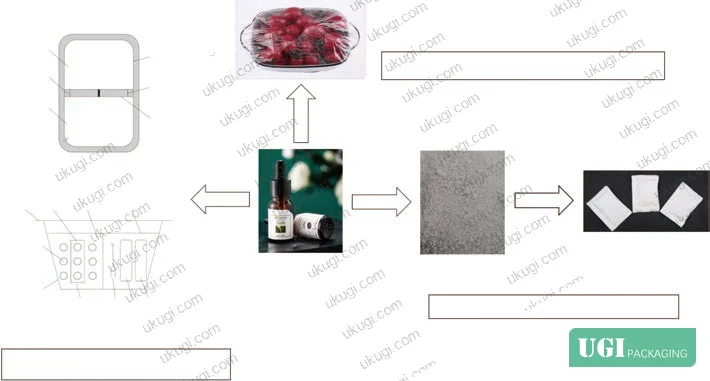
Format 3: Direct injection into modified atmosphere packaging (MAP)
Essential oils in vapor phase are introduced directly into MAP headspace, where they reach equilibrium distribution across gaps, film surfaces, and food surfaces.
- Sweet cherries treated with combined eugenol, thymol, and menthol MAP at 1°C and 90% relative humidity showed measurable improvements in weight retention, color stability, firmness, stem browning, and total bacteria/mold/yeast counts.
- Composite essential oil injected into MAP of chilled beef at 0–4°C extended fresh shelf life to 24 days.
- Cinnamon essential oil/chitosan coating combined with PVDC low-oxygen MAP (50% CO₂ + 35% O₂ + 15% N²) at 0°C produced good preservation results for black pork.
The limitation with MAP format is direct food contact — the volatilized compounds migrate into the food itself, with potential sensory impact (flavor transfer) and possible interactions with food components that alter nutritional or functional constituents. This is not hypothetical; it’s a documented limitation that needs to be disclosed to food manufacturer clients.
For test method references relevant to barrier and tensile performance of these film systems, ASTM D882 Standard Test Method for Tensile Properties of Thin Plastic Sheeting and ASTM D3985 Oxygen Gas Transmission Rate Through Plastic Film and Sheeting provide the baseline qualification framework. For food contact regulatory compliance, EU Regulation No 10/2011 on plastic materials and articles intended to contact food is the relevant European standard.
Practical Guidance for Buyers #
If you’re evaluating active antimicrobial packaging — whether for fresh produce, meat, or specialty food applications — the most common procurement error is treating this category like commodity flexible film with an antimicrobial additive. It isn’t. The encapsulation architecture, carrier choice, loading concentration, and production process conditions all directly determine whether the product will perform at the shelf-life endpoint rather than just on day zero.
Most procurement teams don’t realize that the performance gap between a well-formulated microencapsulated system and a simple cast film using the same essential oil can be the difference between a 10-day and a 24-day extension — the beef MAP data above is instructive on this point. The numbers are real. The difference is entirely in the delivery system, not the active compound.
For buyers specifying custom labels and stickers or functional film materials for food applications, always request the controlled-release kinetics curve alongside the MIC (minimum inhibitory concentration) data. They are not the same thing, and suppliers who can only provide one of the two have likely not optimized the system end-to-end. At ukugi.com, our team in Guangzhou works directly with brand owners and product managers to develop custom antimicrobial packaging formats — including active coating on paper-based and film substrates, with full surface finishing integration where needed.
Need a custom formulation or sample? Request a quote from our team →
Supplier Qualification Questions #
- At what carboxymethyl chitosan and sodium alginate concentration ratio does your microcapsule system achieve extended thymol release at room temperature, and can you provide release curve data demonstrating retention beyond 30 days in a closed system?
- What is the cinnamaldehyde retention percentage in your PLA nanofiber films produced via electrospinning versus conventional casting — and at what production temperature was each film fabricated?
- For your chitosan nanoparticle/clove oil composite, what are the measured oxidative stability and antimicrobial activity values against L. monocytogenes and S. aureus compared to free clove oil controls under your standard batch release conditions?
- In your MAP essential oil application, what is the equilibrium vapor concentration of the active compound within the headspace at 1°C and 90% relative humidity, and how was sensory impact on food flavor characterized?
- For your β-cyclodextrin inclusion complex systems, what thermal stability profile (onset degradation temperature) is documented for the cinnamaldehyde–β-CD complex, and how does this compare to uncomplexed cinnamaldehyde under 40°C/75% RH accelerated aging?
Quality Verification Checklist #
- ☐ Encapsulation carrier concentration is specified (e.g., 1.2% carboxymethyl chitosan + 2.4% sodium alginate for thymol microcapsule system) and confirmed in batch documentation
- ☐ Antimicrobial activity is verified at shelf-life endpoint (day 24 or beyond for chilled protein products), not only at day zero
- ☐ Tensile and elongation properties of film substrate are measured per ASTM D882 with elongation at break documented in batch release spec
- ☐ Oxygen transmission rate is measured per ASTM D3985 and confirmed to meet specified barrier requirement for the target food matrix
- ☐ Food contact compliance documentation references EU Regulation No 10/2011 or FDA CFR Title 21 Part 177 as applicable to the target market
- ☐ Accelerated aging test (40°C/75% RH, minimum 45 days) shows active compound retention above antimicrobial threshold at end of test period
- ☐ For MAP format, sensory impact assessment is included in product qualification documentation and flavor migration measured against acceptable threshold
Key Specifications Table #
| Parameter | Recommended Value | Verification Method |
|---|---|---|
| Carboxymethyl chitosan concentration (microcapsule system) | 1.2% w/w | HPLC or gravimetric encapsulation efficiency assay |
| Sodium alginate concentration (microcapsule co-carrier) | 2.4% w/w | Gravimetric analysis, batch certificate |
| Differentially expressed proteins under 1,8-cineole treatment | ≥14.45% of detected proteome (435/3,011 proteins) | Proteomic assay, LC-MS/MS differential expression analysis |
| Beef shelf life extension under composite essential oil MAP at 0–4°C | ≥24 days | Microbiological count (total viable count, mold/yeast) per standard food microbiology protocol |
| Lemongrass essential oil concentration in PVA/LDPE composite film | 3.5% w/w | GC-MS headspace analysis of film extract |
| Cinnamaldehyde loading in electrospun PLA/β-CD nanofiber film | Higher retention than cast film baseline (process-dependent) | GC quantification before and after thermal processing; compare electrospun vs. cast at equivalent oil loading |
Looking for a manufacturer that meets these specs? Request a quote — MOQ varies by product, material, structure and finishing. Product-specific MOQ is confirmed with each quotation.
References #
Data source: Antimicrobial Mechanisms of Plant-Derived Essential Oils and Their Application in Active Food Preservation Packaging Systems, K. Han et al., Food Packaging and Shelf Life, 2023
Frequently Asked Questions #
What is the most reliable active packaging format for extending chilled meat shelf life using essential oils?
The MAP injection format using composite essential oil blends has produced the most consistent quantitative results — specifically, shelf life extension to 24 days for chilled beef at 0–4°C when combined with low-oxygen MAP. However, this format requires careful sensory impact assessment because volatile compounds migrate directly into the food. For buyers prioritizing sensory neutrality, the microencapsulated carrier format (chitosan nanoparticles or β-CD complexes) provides better flavor isolation while maintaining strong antimicrobial performance against L. monocytogenes and S. aureus.
Why does the encapsulation method matter more than the essential oil type?
Because volatile, water-incompatible compounds like cinnamaldehyde degrade rapidly in unprotected film matrices — the antimicrobial performance on day zero tells you almost nothing about performance at day 30 or 45. Encapsulation in β-cyclodextrin or chitosan nanoparticles measurably improves water solubility, thermal stability, and antimicrobial activity retention compared to free essential oil. The carrier system is what converts a volatile botanical extract into a functional, shelf-stable packaging ingredient.
Can these active packaging films meet food contact regulatory requirements?
Yes, but with conditions. Many essential oil components are approved as food flavoring additives or classified as GRAS (Generally Recognized As Safe), which supports regulatory positioning. However, some components retain irritant or toxic potential at higher concentrations, and LD50 values for some active fractions are not yet fully characterized. Buyers targeting EU or US markets should verify compliance against EU Regulation No 10/2011 and FDA CFR Title 21 Part 177 respectively, and request migration testing data from the supplier.
What does “14.45% differential protein expression” mean in practical antimicrobial terms?
It means that when 1,8-cineole was applied to Salmonella, nearly one in seven of all detectable proteins in the bacterium showed significant expression changes — across 935 biological processes and 477 molecular functions simultaneously. This breadth of disruption is why broad-spectrum essential oil components are significantly harder for pathogens to develop resistance against than narrow-spectrum chemical preservatives targeting a single molecular pathway.
Is there a standard test method I should require for film tensile and barrier qualification?
Yes — two specifically. Tensile properties including elongation at break should be measured per ASTM D882. Oxygen transmission rate should be confirmed per ASTM D3985. Both values are required to verify that the active packaging film performs mechanically and as a barrier under your specific storage and transit conditions. Request these from any supplier before approving a sample for production qualification.
Published by ukugi.com Technical Team | Request a quote


