

TL;DR #
In a controlled study testing 10 commercially sourced food packaging samples, 9 of 10 contained detectable photoinitiator residues — with Irgacure 184 found in 7 of those samples, confirming that UV-cured ink contamination in food packaging is the rule, not the exception. For procurement teams sourcing printed food packaging, this means photoinitiator migration compliance cannot be assumed based on ink supplier claims alone — it requires validated analytical testing against quantified limits. Request GC-MS test reports covering at least the 20 photoinitiator species listed in this article before accepting any production batch intended for direct or indirect food contact.
Overview #
If you’re sourcing printed food packaging and treating UV ink compliance as a checkbox rather than a technical specification, you’re carrying more regulatory risk than you probably realize. A provincial food safety laboratory — operating under a key provincial monitoring program — ran a systematic evaluation of QuEChERS sample preparation combined with GC-MS detection across 20 target photoinitiators in real commercial packaging substrates. The scope included pastry wrappers, tea packaging, snack pouches, and yogurt film — the kind of everyday substrates your supply chain almost certainly touches.
The regulatory backdrop matters here. The European Standing Committee on the Food Chain established a combined migration limit for benzophenone (BP) and methyl benzophenone (MBP) of no more than 0.6 mg/kg in food contact printing inks. China’s GB 9685-2016 standard mirrors this, setting a specific migration limit of 0.6 mg/kg for benzophenone in food contact inks. These are not aspirational targets — they are hard limits with enforcement consequences in multiple export markets.
What makes this evaluation particularly useful for buyers is that it goes beyond single-compound testing. UV ink photopolymerization in commercial printing typically involves multiple photoinitiators used in combination to achieve adequate cure speeds across different ink colors and substrates. A test method that only detects BP misses the broader contamination picture entirely.

Photoinitiator Residues in UV-Cured Food Packaging Inks: What the Detection Data Actually Shows #
UV-curable inks displaced solvent-based benzene inks largely because of their speed, adhesion, and absence of VOC emissions during printing. That’s a legitimate improvement. But the tradeoff — and most procurement teams don’t hear this clearly enough — is that photoinitiators don’t always fully consume themselves during the curing reaction. Residual unreacted photoinitiator remains at the ink surface, and under conditions of heat, humidity, or prolonged storage, it can migrate through the packaging substrate into the food it’s meant to protect.
Toxicological data on photoinitiators is not benign. Several compounds in this class have demonstrated carcinogenic potential, reproductive toxicity, and skin sensitization in experimental models. Michler’s Ketone (MK) and 4,4′-bis(diethylamino)benzophenone (DEAB) are among the more concerning, and both appear on the 20-compound target list evaluated here.
The actual detection data from 10 commercial food packaging samples is sobering. Nine of the 10 samples tested positive for at least one photoinitiator residue. Irgacure 184 (1-hydroxycyclohexyl phenyl ketone) was detected in 7 of the 10 samples — the highest frequency of any compound in the panel. This is not a marginal finding. It tells you that Irgacure 184 is probably the most widely used photoinitiator in the commercial UV ink formulations hitting your supply chain right now, and that its residual presence is essentially routine.


The regulatory framework governing these residues is evolving, but it’s not new. Current industry data shows increasing enforcement attention on photoinitiator migration in both European and Chinese markets, and the compound list under scrutiny keeps expanding. Most procurement teams don’t realize that the regulatory scope has grown well beyond just BP and MBP — yet many supplier test certificates still only cover those two compounds. That’s a significant gap.
QuEChERS-GC-MS Method Performance: Sensitivity, Recovery, and Practical Limits #
The analytical method validated here uses ethyl acetate ultrasonic-assisted extraction, followed by QuEChERS cleanup with a specific sorbent combination, then separation on an HP-5MS capillary column (30 m × 0.25 mm, 0.25 μm) with GC-MS detection in selected ion monitoring (SIM) mode.
The extraction solvent selection matters more than it sounds. Three solvents were evaluated head-to-head: methanol, ethyl acetate, and n-hexane. Ethyl acetate and methanol showed comparable extraction efficiency across most of the 20 compounds, while n-hexane performed measurably weaker. Ethyl acetate was selected as the final method solvent, factoring in both recovery performance and lower operator toxicity exposure compared to methanol.
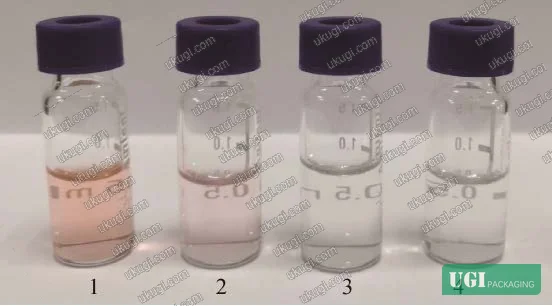
The purification step is where a critical tradeoff emerged. Four QuEChERS kit configurations were tested:
| Kit | Sorbent Composition | Cleanup Performance | Recovery Impact |
|---|---|---|---|
| Kit 1 | 150 mg MgSO₄ + 150 mg PSA | Moderate clarity | Acceptable for most compounds |
| Kit 2 | 150 mg MgSO₄ + 150 mg PSA + 50 mg C18 | Good clarity, effective pigment removal | Recoveries 70–110% for all 20 compounds |
| Kit 3 | 150 mg MgSO₄ + 25 mg PSA + 2.5 mg GCB | Near-colorless solution | 2-ITX and 4-ITX recovery suppressed |
| Kit 4 | 150 mg MgSO₄ + 50 mg PSA + 50 mg C18 + 50 mg GCB | Cleanest solution | Strong adsorption loss for planar-structure compounds |
In supplier qualification testing, three of the four kit configurations produced unacceptable results for at least some target compounds. Kits 3 and 4 — despite delivering the clearest post-cleanup solution — caused significant recovery loss for isopropylthioxanthone compounds (2-ITX, 4-ITX) due to GCB’s strong affinity for planar aromatic structures. A visually clean extract does not mean complete recovery. Kit 2 (150 mg MgSO₄ + 150 mg PSA + 50 mg C18) was the only configuration that maintained recoveries within the 70–110% window across the full 20-compound panel.
The validated method performance figures are:
- Linear range: 0.05–2.0 mg/L, with correlation coefficients r² ≥ 0.999 for all 20 compounds
- Spike recovery range: 70.6%–112.8% across three spike levels (0.2, 0.4, and 2.0 mg/m²)
- Relative standard deviation: 1.2%–5.8% (n=6 replicates per level)
- Detection limits (LOD): 0.01–0.05 mg/m²
- Quantitation limits (LOQ): 0.03–0.15 mg/m²
The lowest LOD values (0.01 mg/m²) apply to compounds including 2-MBP, Irgacure 184, EDB, BEE, BIE, BDK, MBB, and Irgacure 907. The highest LOD (0.05 mg/m²) applies to MBF and CTX — both of which also showed lower detector response characteristics in the mass spectrometer.
MBF specifically showed the lowest average recovery in the panel — around 70.6% at the low spike level — attributed to higher baseline noise interference at its characteristic ions. This is a known limitation of the method and should be factored into uncertainty calculations when MBF is a primary target compound.
Honestly, most buyers over-specify ink migration testing by requesting only benzophenone and methyl benzophenone. For UV-cured packaging in direct or indirect food contact applications, a 20-compound panel is the minimum defensible scope — and even that doesn’t cover every photoinitiator in commercial use.

GC-MS Instrument Conditions and Chromatographic Separation Parameters #
The GC temperature program used in the validated method is worth documenting precisely, since deviations significantly affect retention time reproducibility:
- Initial temperature: 60°C, hold 1 minute
- Ramp 1: 30°C/min to 120°C
- Ramp 2: 8°C/min to 300°C, hold 5 minutes
- Injector temperature: 280°C
- Transfer line: 280°C
- Carrier gas: helium ≥99.999% purity at 1.0 mL/min
- Injection volume: 1 µL, splitless mode
- Solvent delay: 5 minutes
Mass spectrometer conditions: electron ionization at 70 eV, ion source at 230°C, quadrupole at 150°C. All 20 compounds were detected in SIM mode using three characteristic ions each — a quantitation ion and two confirmation ions — with defined abundance ratios for positive identification.
The 20 compounds span a retention time window of 6.8 minutes (MBF, the earliest eluting) to 26.5 minutes (DEAB, the latest). Full chromatographic resolution of all 20 compounds was achieved under these conditions.



Practical Guidance for Buyers #
For compliance documentation purposes, a supplier’s claim that their UV inks are “food-grade” or “low-migration” is not a substitute for analytical test data. Request batch-specific GC-MS reports covering at minimum the 20 photoinitiator compounds in this panel, with clear reporting of LOD, LOQ, and spike recovery validation — not just the final detected concentrations.
Pay attention to which analytical method the lab used and what their sample preparation was. A lab reporting only BP and MBP, or using a non-validated extraction method, will not catch the Irgacure 184 and thioxanthone-class compounds that field data shows are routinely present. Test certificates from general commercial labs frequently have this gap.
For packaging intended for European or Chinese food markets, verify compliance against the 0.6 mg/kg combined migration limit for BP + MBP under their applicable standards — and ask whether the supplier has tested under GB 9685-2016 conditions, not just their own in-house method. Honestly, a surprising number of suppliers conflate “tested” with “compliant” without connecting those two things to a specific regulatory limit.
At ukugi.com, our team in Guangzhou works directly with international brand owners and packaging buyers across food, beverage, and consumer goods categories. We can help you evaluate substrate and ink specifications before initiating production and provide relevant compliance documentation as part of the OEM sampling process.
Need a custom formulation or sample? Request a quote from our team →
Supplier Qualification Questions #
- Can you provide GC-MS test reports showing detected concentrations for all 20 photoinitiators covered in the panel — including Irgacure 184, 2-ITX, 4-ITX, MK, and DEAB — at your current ink formulation, not a generic product sheet?
- What are the reported LOD and LOQ values in your photoinitiator test method? The validated reference range is LOD 0.01–0.05 mg/m² and LOQ 0.03–0.15 mg/m² — reports that don’t reach these sensitivity levels may be missing low-level residues.
- What extraction and purification procedure does your testing laboratory use? Specifically, do they use a QuEChERS cleanup with PSA + C18 sorbent combination, or an alternative — and can they demonstrate spike recovery data at the 0.2 mg/m² spike level?
- For benzophenone (BP) and methyl benzophenone (MBP), can you confirm that combined migration in the final packaged food or food simulant is below 0.6 mg/kg under the conditions specified in GB 9685-2016 or the applicable EU regulation?
- Has your ink supplier confirmed that GCB (graphitized carbon black) is not used in the analytical cleanup for thioxanthone-class compounds (2-ITX, 4-ITX)? GCB suppresses recovery for these planar-structure photoinitiators and will produce false-negative results below 50% recovery if used.
Quality Verification Checklist #
- ☐ GC-MS test report covers all 20 photoinitiator compounds, not just BP and MBP, with SIM-mode detection and three confirmation ions per compound
- ☐ Spike recovery validation data is available at three spike levels (0.2, 0.4, and 2.0 mg/m²) with RSD ≤ 5.8% across all six replicates per level
- ☐ Reported LOD for each compound is ≤ 0.05 mg/m² and LOQ is ≤ 0.15 mg/m², consistent with the validated method sensitivity range
- ☐ Combined BP + MBP migration is confirmed below 0.6 mg/kg under GB 9685-2016 or applicable EU food contact standard conditions
- ☐ Purification method uses PSA + C18 sorbent combination (not GCB), to avoid suppression of 2-ITX and 4-ITX recoveries below acceptable thresholds
- ☐ r² ≥ 0.999 is confirmed for all calibration curves across the 0.05–2.0 mg/L linear range
- ☐ Batch-specific test certificates are provided per production lot, not generic product-level certificates
Key Specifications Table #
| Parameter | Recommended Value | Verification Method |
|---|---|---|
| Combined BP + MBP migration limit | ≤ 0.6 mg/kg | GC-MS migration test per GB 9685-2016 or EU food contact regulation |
| Method LOD (all 20 compounds) | 0.01–0.05 mg/m² | GC-MS SIM mode, S/N = 3 threshold |
| Method LOQ (all 20 compounds) | 0.03–0.15 mg/m² | GC-MS SIM mode, S/N = 10 threshold |
| Spike recovery range | 70.6%–112.8% | Triplicate spike at 0.2, 0.4, 2.0 mg/m² levels |
| Method precision (RSD) | 1.2%–5.8% | Six replicate measurements per spike level (n=6) |
| Calibration linearity | r² ≥ 0.999 | External standard calibration, 0.05–2.0 mg/L |
| QuEChERS sorbent composition | 150 mg MgSO₄ + 150 mg PSA + 50 mg C18 | Kit 2 configuration; GCB excluded |
Looking for a manufacturer that meets these specifications? Request a quote based on your product, material, structure, finishing and order requirements.


References #
Data source: Simultaneous Determination of Twenty Photoinitiators in Food Packaging Materials Using QuEChERS Extraction and Gas Chromatography–Mass Spectrometry, Q. Zhu et al., Food Control, 2025
Frequently Asked Questions #
What is a photoinitiator and why does it end up in food packaging?
Photoinitiators are chemical compounds added to UV-curable printing inks to absorb ultraviolet light and trigger the polymerization reaction that cures the ink. When the curing process is incomplete — which happens routinely at high print speeds or with complex ink layer stacks — unreacted photoinitiator remains at or near the ink surface and can migrate through the packaging substrate into food over time.
Which photoinitiator is most commonly found in real food packaging samples?
Based on field evaluation of 10 commercial food packaging materials, Irgacure 184 (1-hydroxycyclohexyl phenyl ketone) was detected in 7 of 10 samples — a higher positive rate than any other compound in the 20-species panel tested. Its presence should be expected rather than treated as an anomaly when auditing UV-cured food packaging.
What migration limit applies to benzophenone in food contact packaging?
The regulatory limit in both EU markets and under China’s GB 9685-2016 standard is 0.6 mg/kg for benzophenone as a specific migration limit from food contact printing inks. This limit applies to the combined total of benzophenone (BP) and methyl benzophenone (MBP) under EU guidance.
Why can’t the same test method be used for all photoinitiators regardless of which cleanup sorbent is used?
Graphitized carbon black (GCB), a common QuEChERS sorbent, strongly adsorbs compounds with planar aromatic ring structures. Isopropylthioxanthone compounds — specifically 2-ITX and 4-ITX — have exactly this structural characteristic, and their recoveries drop significantly when GCB is included in the cleanup. A lab using GCB-containing kits will systematically under-report these compounds and may issue a false-compliant certificate.
Do these photoinitiator residue limits apply to all types of food packaging, or only specific substrates?
The migration limits apply to any food contact material where UV-cured inks are used — including flexible pouches, folding cartons, paper bags, and film wraps. The concern is greater for thinner or more permeable substrates where migration rates are higher, and for packaging in direct contact with fatty or liquid food, which tends to extract lipophilic compounds more efficiently. If you’re sourcing custom paper boxes or cosmetics packaging solutions that may come into incidental food contact, the same verification principles apply.
Published by ukugi.com Technical Team | Request a quote


