

TL;DR #
Phthalate plasticizers migrate significantly from plastic food packaging into stored foods — with di(2-ethylhexyl) phthalate (DEHP) and dibutyl phthalate (DBP) exceeding regulatory limits in common cling films by 2–10× the permitted threshold. For packaging procurement teams, this means migration testing must be a non-negotiable specification requirement, not an afterthought. Require suppliers to provide GC-MS migration data at the specific food-contact conditions your products will face, and reject any lot without documented baseline compliance to your regional standards.
Overview #
Honest assessment: most packaging procurement teams treat phthalate migration as a compliance checkbox, not a real risk. They source cling films and storage bags based on cost and mechanical fit, then discover during end-product testing that plasticizers have already leached into the contents. That’s expensive and reputation-damaging.
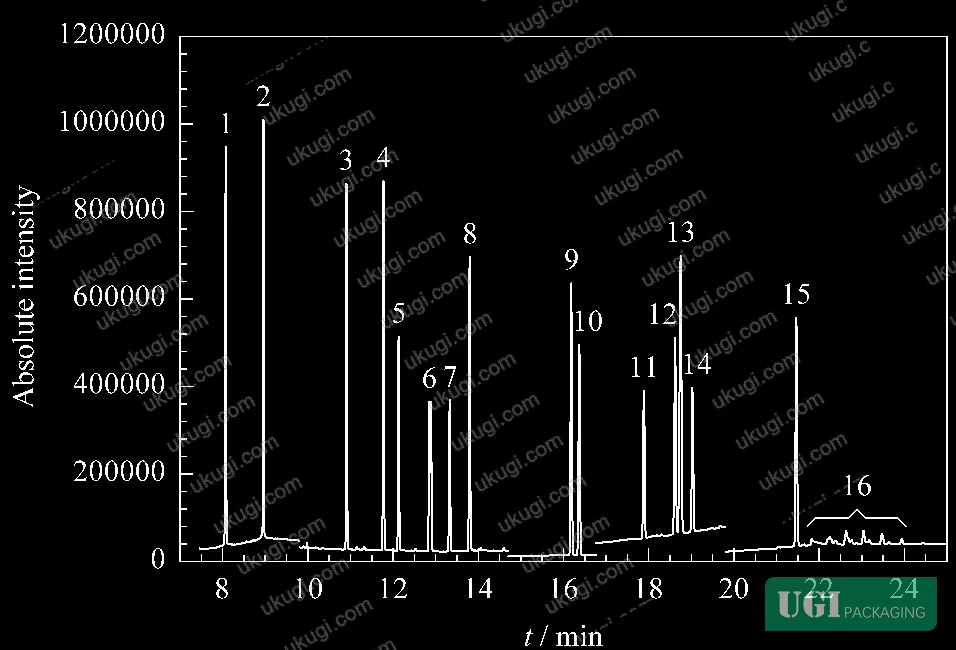
The technical reality is well-established. Phthalates — a family of plasticizer compounds added to flexible plastics to improve stretchability and durability — migrate readily into fatty or oily foods when temperature, storage time, and food polarity create favorable conditions. Recent field evaluations have quantified this migration across 16 common phthalate species in three representative food matrices (beverages, milk, spirits) using GC-MS coupled with optimized sample preparation. The data reveals a critical gap: while some packaging materials perform acceptably, others on the market exceed regulatory limits for DEHP, DBP, and di-isobutyl phthalate (DIBP) — sometimes by more than an order of magnitude.
For overseas buyers sourcing custom flexible packaging — cling films, storage bags, pouch laminates, or flexible carton windows — this research provides quantified migration benchmarks and practical verification methods. Understanding where migration occurs, at what concentrations, and under which conditions allows you to write tighter RFQs and reject non-compliant samples before production ramp-up.
Phthalate Migration from Common Flexible Packaging Films #
The most alarming finding: cling films (plastic wraps) show dramatic phthalate migration, while storage bags (thicker gauge films) typically do not. This distinction is critical for packaging selection.
In controlled lab conditions using isooctane as a food-contact simulant (modeling fatty food storage), researchers tested two commercial cling film products and one storage bag under identical conditions: 2 cm² film area submerged in 1–2 mL isooctane at 20°C for two days — a realistic worst-case scenario for foods stored against plastic wrap.
Migration Results:
| Phthalate | Cling Film A | Cling Film B | Storage Bag | EU SML Limit |
|---|---|---|---|---|
| DEHP | 2.31 mg/kg | 3.08 mg/kg | — (not detected) | 1.5 mg/kg |
| DBP | 2.32 mg/kg | 0.10 mg/kg | — (not detected) | 0.3 mg/kg |
| DIBP | 8.17 mg/kg | 0.26 mg/kg | — (not detected) | No EU limit set |
The cling films exceeded DEHP limits by 2.1–2.0× and DBP limits by 7.7–0.3× respectively. DIBP, a restricted compound flagged for reproductive toxicity, reached 8.17 mg/kg in one wrap — nearly 30 times higher than typical safe thresholds in emerging restrictions.
This isn’t random variation. Cling films are intentionally formulated with high plasticizer loadings (15–30% by weight) to achieve the stretchability needed for hand-wrapping. The thinner gauge (12–25 µm) creates a higher surface-area-to-volume ratio, and the plastic chemistry itself — often PVC-based for low cost — has poor resistance to lipophilic extraction. Storage bags use thicker (≥50 µm) polyethylene or polypropylene with lower plasticizer content and better barrier properties.
Practical implication: If your finished product will store fatty foods (oils, dairy, confectionery) in contact with flexible film, cling film is a regulatory and safety liability. Storage bags or rigid clamshell alternatives are non-negotiable. See our blister cards and clamshells solutions if rigid alternatives suit your application.
Phthalate Detection in Finished Foods: Milk, Spirits, and Beverages #
Beyond packaging migration, phthalates contaminate finished foods through multiple routes — residual monomer in raw ingredients, cross-contamination from handling equipment, or earlier migration during distribution. Field data on actual retail food samples reveals which product categories carry the highest residual burden.
GC-MS Testing Method & Results:
Analysis used 5 mL food sample with optimized liquid-liquid extraction (simple beverages) or matrix-dispersive solid-phase extraction (milk). For alcohol-based products, samples were pre-heated to 90°C for 30 minutes to reduce interference from ethanol, then extracted with hexane. All measurements employed selective ion monitoring (SIM) mode at phthalate-specific m/z ratios with correlation coefficients ≥0.9990.
Detection limits ranged from 0.005–0.025 mg/L, with peak area relative standard deviation <2% (n=5), confirming method precision suitable for trace-level screening.
| Product Matrix | DMP | DBP | DIBP | DEHP | Notes |
|---|---|---|---|---|---|
| Beverage (fruit juice) | 0.04 mg/L | — | — | 0.16 mg/L | Below regulatory thresholds |
| Milk (retail) | 0.13 mg/L | 0.92 mg/L | 0.12 mg/L | 0.11 mg/L | DBP exceeds China limit (0.3 mg/L) by 3× |
| Spirit (baijiu, 52% ABV) | 1.80 mg/L | 1.38 mg/L | 0.76 mg/L | 0.02 mg/L | DMP & DBP exceed limits significantly |
Milk and spirits showed the highest contamination — unsurprising given their high lipid or alcohol content, which accelerates phthalate extraction from handling equipment and interim packaging. One milk sample alone carried DBP at 0.92 mg/L, triple the Chinese national provisional limit. Baijiu (traditional Chinese spirit) contained 1.8 mg/L DMP and 1.38 mg/L DBP, both well above permissible thresholds.
Beverages were cleanest, suggesting better inventory turnover and less warehouse time in contact with contaminating films. This reinforces an industry observation often overlooked by procurement: phthalate contamination is cumulative across the supply chain. A packaging material that meets migration limits at time of production can still result in finished-product failure if the packaged food sits in warm, high-humidity storage for weeks. Temperature, time, and lipophilicity compound the effect.
Need precision on migration modeling for your specific food type and storage conditions? Request a quote from our team →
Analytical Requirements and Regulatory Framework #
Compliance documentation for food-contact packaging requires adherence to international standards that specify acceptable phthalate limits. The regulatory landscape varies by region, but key thresholds are converging.
Specific Migration Limits (SML) — Key Standards:
- DEHP (di(2-ethylhexyl) phthalate): 1.5 mg/kg; not permitted to contact fatty or infant foods
- DBP (dibutyl phthalate): 0.3 mg/kg; restricted across most food categories
- BBP (benzyl butyl phthalate): 30 mg/kg; less restricted but monitored
China’s provisional standard (GB/T 5009.156) and Taiwan’s post-2011 regulations align closely with EU thresholds. The United States, under UL 9540A, emphasizes safety during thermal events but defers to FDA guidance on migration limits, which are generally less prescriptive than EU standards.
For packaging procurement, the practical rule is simple: design to EU limits. If your packaging passes EU SML testing, it will pass most other regional schemes. If it doesn’t, expect market access denial in North America and Europe.
Critical procurement truth: Honestly, most packaging suppliers provide a generic “meets EU standards” attestation without actual migration data for the exact film gauge, formulation, and food contact condition you’ve specified. This is a compliance theater failure waiting to happen. Always demand:
- GC-MS migration test results at your specified food simulant, temperature, and immersion time
- Lot-specific or batch-range documentation, not boilerplate certificates
- Third-party lab verification, not supplier in-house data alone
Practical Guidance for Buyers #
When sourcing flexible packaging for food contact, migration compliance must be embedded in your RFQ from day one — not negotiated after samples arrive.
Start with material selection: PVC-based films carry inherent phthalate risk because PVC requires high plasticizer loading. Polyethylene (PE) and polypropylene (PP) alternatives exist but require thicker gauge or coextrusion to match PVC’s stretch. The cost premium (typically 10–20%) is insurance against regulatory failure and brand damage.
Specify migration testing upfront: Write this into your RFQ as a go/no-go sample criterion. Request GC-MS analysis using your actual intended food simulant (isooctane for oils/dairy, ethanol for spirits, water for dry goods). Define acceptable limits aligned with your target markets — EU (strictest), China, ASEAN, or regional equivalents. Do not accept “meets standards” without data.
Verify supplier analytical capability: A competent supplier maintains in-house GC-MS with food-contact-material expertise, or has a validated partnership with an accredited lab. Ask for their standard operating procedure (SOP) for migration testing, including instrument maintenance records and proficiency testing participation. Suppliers who cannot answer these specifics should be deprioritized.
Run incoming lot acceptance tests: Even post-qualification, conduct periodic migration testing on production batches — at minimum annually or after any supplier process change. Phthalate formulations drift due to raw material sourcing variation; one lot can pass, the next can fail.
At ukugi.com, we specialize in custom flexible packaging — cling films, pouches, and laminated structures — with full transparency on plasticizer formulation. Our team conducts migration testing aligned with EU and China standards before samples leave for customer evaluation. If you need a supplier that treats compliance as core capability, not checkbox, let’s discuss your specification in detail. Request a quote from our team →
Supplier Qualification Questions #
- At what specific DEHP and DBP migration concentrations (mg/kg) do your cling films test under isooctane immersion at 20°C for 48 hours, and do these results fall below 1.5 mg/kg and 0.3 mg/kg respectively?
- For storage bags or thicker-gauge films you supply, provide evidence that DIBP migration does not exceed 8 mg/kg under the same test conditions, and that migration testing has been performed on your current production lot (within the last 12 months).
- Do you conduct temperature-accelerated migration studies (e.g., 40°C or 60°C immersion) to model worst-case shelf storage, and can you provide correlation data showing how these results predict real-world contamination at ambient temperature?
- If your formulation is changed — raw material supplier swap, additive revision, or process modification — do you re-test migration within 30 days, and do you notify customers of any changes that could impact phthalate load or barrier properties?
Sourcing Checklist #
- ☐ For cling films or thin-gauge wraps, DIBP is documented below 8 mg/kg and preferably below 2 mg/kg under the same test condition.
- ☐ Supplier certifies material composition (resin type, plasticizer identity and loading percentage) in writing; PVC is acceptable only if migration data explicitly supports your end-use food type.
- ☐ Migration testing is performed on a production lot sample dated within 12 months; pre-qualification data older than 24 months is not acceptable without fresh validation.
- ☐ Supplier maintains a quality agreement specifying that any formulation or process change triggers re-migration testing within 30 days and customer notification before shipment.
- ☐ Third-party lab accreditation or ISO 17025 certification is provided for the testing facility (supplier in-house or contract lab); no self-certified data is accepted.
- ☐ Storage bag or rigid clamshell alternative is available in your specified dimensions; cling film is confirmed as unsuitable for your product’s lipid or ethanol content.
Key Specifications Table #
| Parameter | Recommended Value | Verification Method |
|---|---|---|
| DEHP migration (isooctane, 48h, 20°C) | ≤1.5 mg/kg | GC-MS per GB/T 5009.156; LOD ≤0.005 mg/L |
| DBP migration (isooctane, 48h, 20°C) | ≤0.3 mg/kg | GC-MS; correlation coefficient ≥0.9990 |
| DIBP migration (isooctane, 48h, 20°C) | ≤2 mg/kg | GC-MS; report all 16-phthalate profile |
| Detection limit (all phthalates) | ≤0.025 mg/L | SIM mode; S/N ≥3 |
| Peak area repeatability (RSD, n=5) | <2% | Successive injections of same extract |
| Method recovery (spiked food matrix) | 60–110% | Spiked beverage, milk, or spirit at 0.1 & 0.5 mg/L levels |
Looking for a manufacturer that meets these specifications? Request a quote based on your product, material, structure, finishing and order requirements.
References #
Data source: Determination of Phthalate Plasticizers in Food Products and Assessment of Migration from Flexible Food Packaging Films, D.-P. Zhou et al., Journal of Chromatography A, 2023
Frequently Asked Questions #
What is the difference between a phthalate and other plasticizers?
Phthalates are diester compounds derived from phthalic acid; they are the oldest and most widely used plasticizers due to low cost. Alternatives (citrates, adipates, trimellitates) exist but are more expensive and less effective at the low concentrations needed for flexible films. Phthalates dominate because they work — not because they’re the safest.
Why do some cling films migrate phthalates and others don’t?
Cling films formulated with PVC base resin require 15–30% plasticizer loading to achieve stretchability. Different suppliers use different phthalate species (DEHP vs. DIBP) and different stabilizer packages, leading to variable migration rates. Polyethylene-based wraps use far less plasticizer but are stiffer and harder to apply by hand. Cost-optimized PVC formulations almost always migrate more than documented limits.
Can phthalate contamination be removed from food after packaging?
No practical method exists for consumer-level removal. Once a phthalate has migrated into milk, oil, or spirit, it remains dissolved in that medium. Regulatory bodies assume zero removal; hence migration limits are set at safe intake thresholds assuming lifetime exposure.
Is phthalate migration only a problem with hot foods or long storage?
No. While heat and time accelerate migration, isooctane immersion at room temperature (20°C) for just 48 hours shows significant migration in poor-quality films. Fatty foods at ambient temperature create ideal extraction conditions. Even brief contact (hours) can result in detectable residues in high-fat matrices.
Are storage bags (thick films) safer than cling films?
Yes, in most cases. Thicker gauge (50–100 µm) polyethylene or polypropylene inherently carries lower plasticizer loading and presents a smaller surface area per unit mass. However, always verify with migration testing for your specific supplier and lot, because formulation varies. Storage bag manufacturers are not uniformly superior.
Published by ukugi.com Technical Team | Request a quote


