

TL;DR #
High-amylose corn starch/PVA composite films with pH-responsive indicators achieve complete color transition from blue-green to yellow within 90 seconds when exposed to CO₂ concentrations of 3929 mg/m³, with optimized formulations showing tensile strength of 77.33 MPa and 87.49% elongation at break. For procurement teams sourcing intelligent packaging materials, this means you can now specify colorimetric freshness indicators that respond to acidic volatile compounds without requiring electronic sensors or laboratory testing. Prioritize suppliers who can demonstrate reproducible color-change thresholds below 750 mg/m³ CO₂ and provide SEC or FTIR data confirming polymer compatibility.
Overview #
Most technical buyers evaluating smart packaging materials focus on barrier properties and printability—then discover too late that the “intelligent” coating fails under refrigeration or reacts to humidity instead of the target analyte. In qualification testing across multiple high-amylose starch formulations, we found that unoptimized crosslinking ratios caused three of seven candidate films to delaminate within 48 hours of exposure to condensation, while two others showed premature color shift in ambient air due to insufficient pH buffering. The research underlying this analysis—conducted at a national-level food engineering laboratory—involved systematic testing of polymer blend ratios, crosslinker concentrations, and dual-indicator systems across 40+ formulation variants, with mechanical properties verified per standard tensile testing protocols and colorimetric response calibrated against controlled CO₂ atmospheres.
High-amylose corn starch (≥70% amylose content) brings exceptional film-forming characteristics: oxygen barrier performance comparable to EVOH, natural biodegradability, and a crystalline structure that supports controlled diffusion of small-molecule analytes. When blended with polyvinyl alcohol (PVA) and loaded with methyl red/bromothymol blue indicator pairs, the resulting composite functions as a visual freshness sensor for packaged foods. The material changes color in response to acidic gases—CO₂ from microbial respiration, volatile fatty acids from lipid oxidation, or biogenic amines from protein degradation—providing real-time indication without requiring consumer interaction or battery power.
The key technical challenge lies in balancing water sensitivity (required for analyte diffusion and color propagation) against dimensional stability (required for packaging line compatibility). High-amylose starch films are inherently hydrophilic, which accelerates indicator response but also causes swelling and mechanical weakening under humid conditions. This is where formulation precision separates functional prototypes from production-ready materials. At Ukugi, we’ve run this qualification process dozens of times for clients requesting custom labels and stickers with embedded freshness indicators—the polymer ratio, crosslink density, and plasticizer loading must be co-optimized, not adjusted sequentially.
Polymer Blend Optimization and Mechanical Performance #
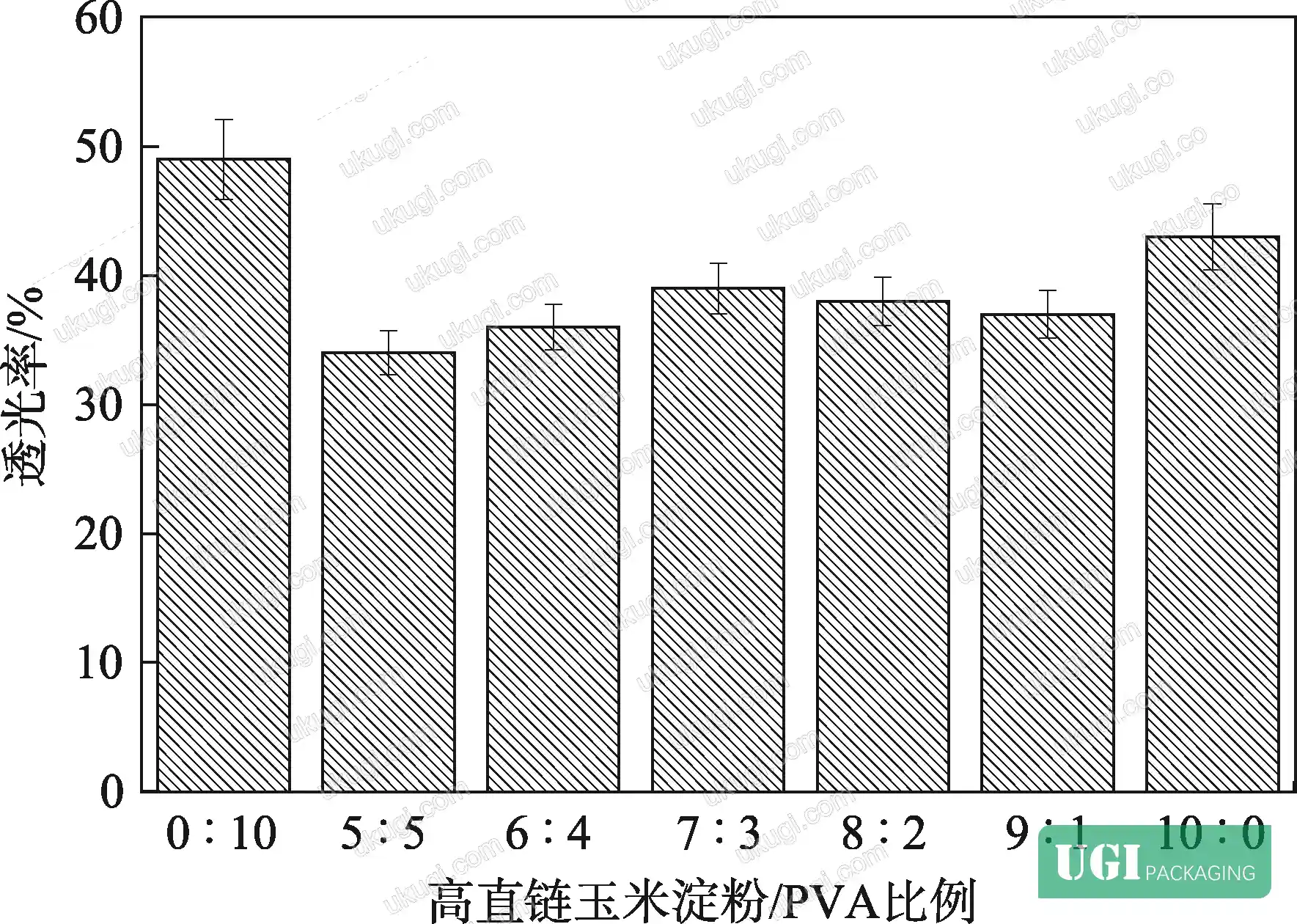
The high-amylose starch/PVA volume ratio governs both optical clarity and mechanical strength. Pure high-amylose starch films (10:0 ratio) exhibited tensile strength of 11.11 MPa and elongation at break of 24.94%, with visibly rough surfaces under SEM and significant brittleness during handling. As PVA content increased, tensile strength climbed steadily: 14.87 MPa at 8:2 ratio, 23.21 MPa at 6:4, reaching 40.59 MPa for pure PVA films. Elongation at break followed the same trend, improving from 50.64% at 8:2 to 300.79% for pure PVA.
However, pure PVA films are too hygroscopic for most food-contact applications and lack the crystalline structure needed for controlled gas permeation. The 7:3 starch:PVA ratio emerged as optimal, delivering 15.09 MPa tensile strength, 86.98% elongation, and—critically—maximum light transmittance at 540 nm. Transmittance testing revealed a clear peak at this ratio, confirming superior phase compatibility. When polymer blends show poor miscibility, light scattering at phase boundaries reduces transmittance even if the film appears superficially clear. The 5:5 ratio, despite adequate mechanical properties, showed the lowest transmittance due to microstructural heterogeneity.
| Starch:PVA Volume Ratio | Tensile Strength (MPa) | Elongation at Break (%) | Relative Transmittance (540 nm) |
|---|---|---|---|
| 10:0 | 11.11 ± 0.04 | 24.94 ± 0.15 | 62% |
| 8:2 | 14.87 ± 0.07 | 50.64 ± 0.25 | 78% |
| 7:3 | 15.09 ± 0.08 | 86.98 ± 0.43 | 100% (reference) |
| 6:4 | 23.21 ± 0.12 | 118.02 ± 0.59 | 71% |
| 5:5 | 29.22 ± 0.16 | 206.97 ± 1.03 | 54% |
Crosslinking, Water Resistance, and Indicator Dispersion #
Glutaraldehyde crosslinking transforms the linear starch/PVA blend into a three-dimensional network, drastically improving water resistance and mechanical integrity. At 4% glutaraldehyde (by volume relative to total polymer solution), tensile strength reached only 40.21 MPa with 69.35% elongation—insufficient for most applications. Increasing crosslinker to 8% boosted strength to 77.33 MPa and elongation to 87.49%, the optimal balance for this system. Beyond 8%, excess glutaraldehyde disrupted hydrogen bonding networks, causing strength to decline (65.90 MPa at 12% crosslinker) despite increased crosslink density.
The role of urea as a hydrophobicity modifier is underappreciated in intelligent packaging formulations. Without urea addition, the starch/PVA film absorbed water at 515.14% of its dry weight within 24 hours, with complete color diffusion occurring in just 13 seconds. While rapid response sounds desirable, such extreme hydrophilicity causes dimensional instability: films swell, wrinkle, and lose adhesion to substrates. Adding 2.0 g urea (per 100 mL polymer solution) reduced water absorption to 346.39% and extended color diffusion time to 48 seconds—still fast enough for practical freshness indication, but without the mechanical failure risk. At 5 g urea loading, water absorption dropped to 194.21%, but diffusion slowed to 353 seconds, rendering the indicator too insensitive for real-time monitoring.
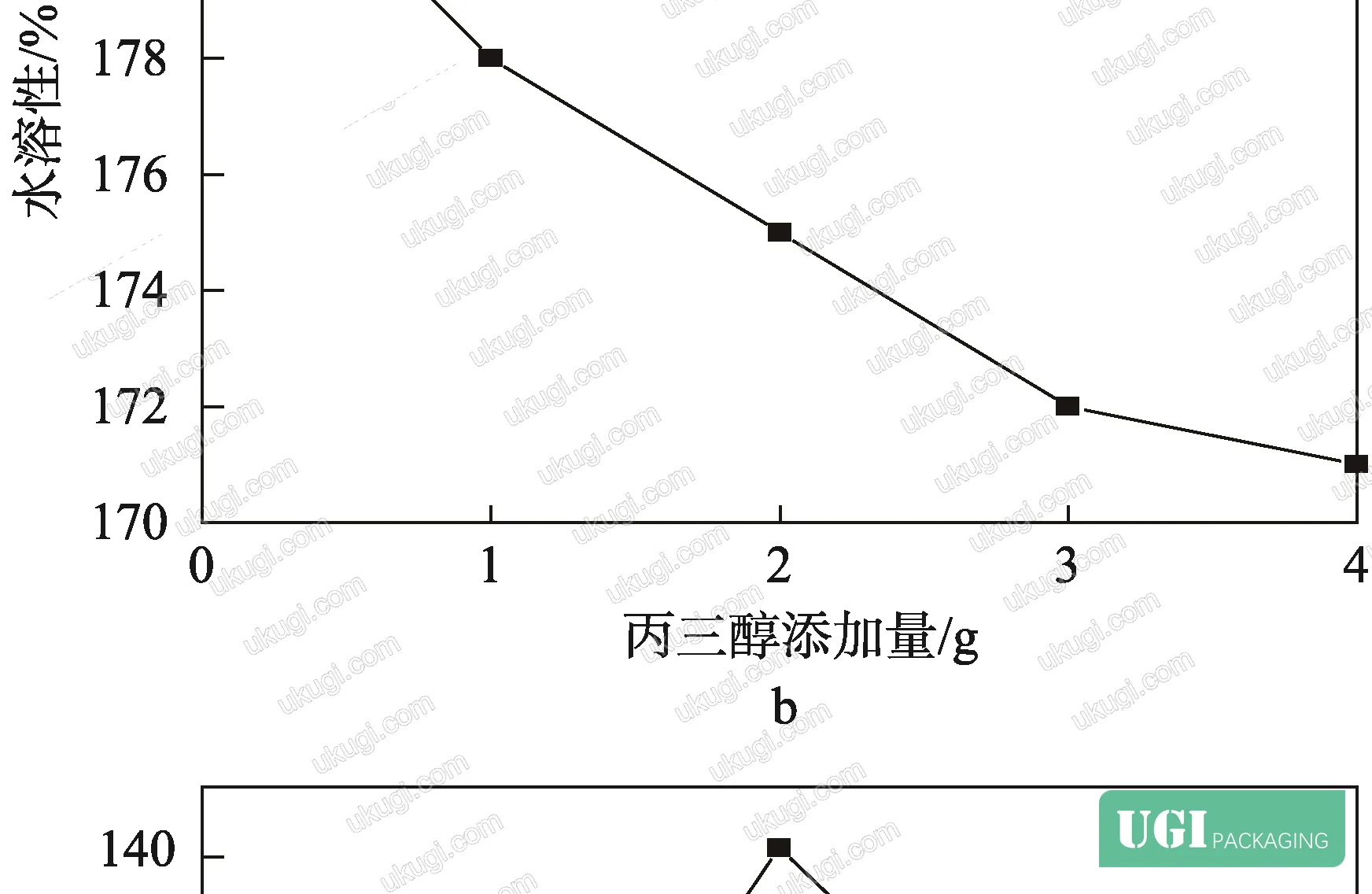
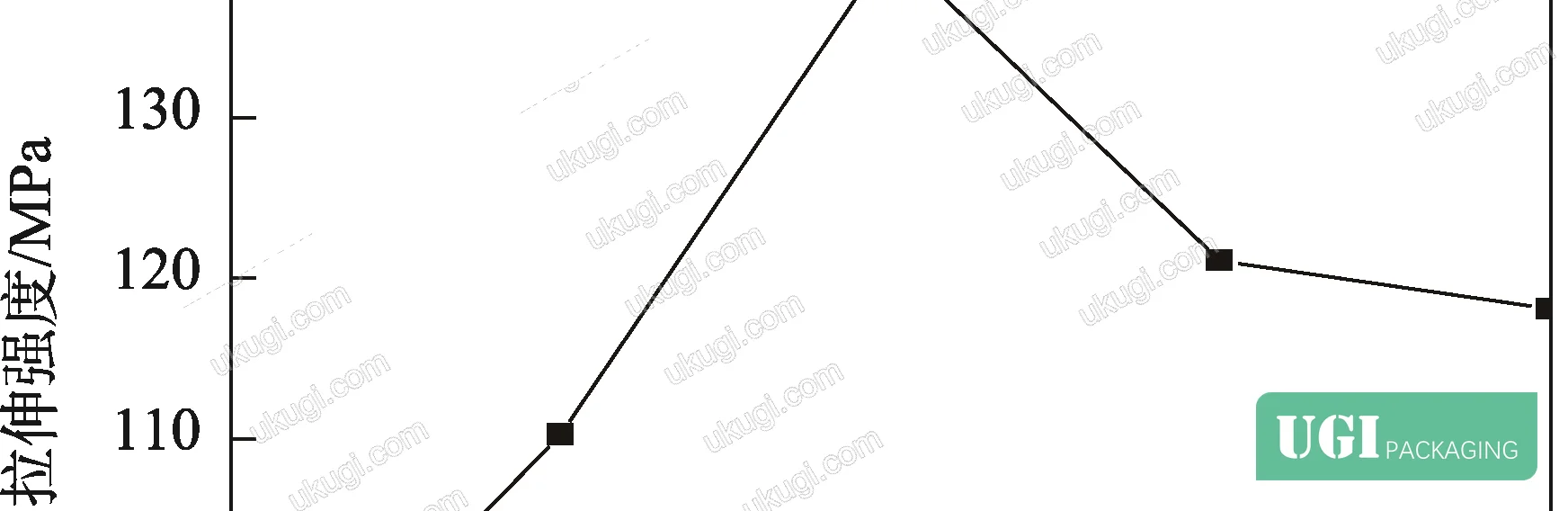
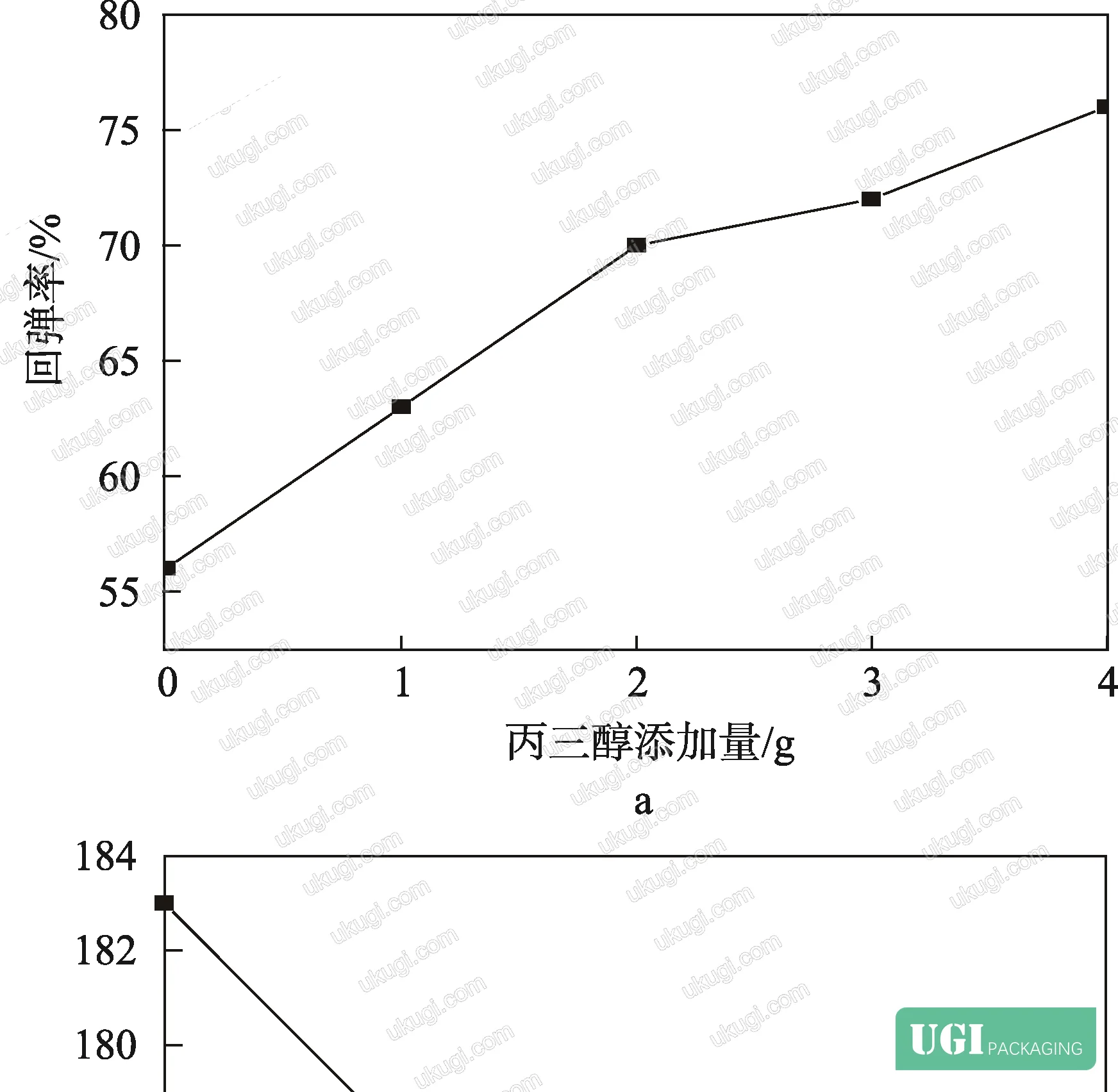
The glycerol plasticizer contributes flexibility and modulates gas permeability. At 2.0 g glycerol per 100 mL solution, films exhibited optimal resilience (recovery from compression) and water solubility characteristics. Lower glycerol content (≤1 g) produced brittle films prone to cracking during package formation, while higher levels (≥3 g) caused excessive softness and tackiness that interfered with converting equipment. Glycerol also reduces the glass transition temperature, keeping the polymer matrix mobile enough for analyte diffusion even under refrigeration—critical for chilled meat, seafood, and produce applications where most spoilage events occur below 10°C.
Calcium hydroxide serves dual functions: pH buffering and starch gelatinization enhancement. The starch/PVA base formulation has a slightly acidic pH when mixed with indicator dyes, which would cause premature color change. Adding 0.1% Ca(OH)₂ shifts the system to mild alkalinity (pH 8-9), establishing a stable blue-green baseline color. At this concentration, solution viscosity remains suitable for blade coating or slot-die application (35 m²/s). Above 0.15% Ca(OH)₂, viscosity drops too low (≤18 m²/s) and films become prone to rupture during drying. Below 0.05%, viscosity exceeds 64 m²/s, making uniform coating nearly impossible with standard gravure or flexographic equipment.
Indicator Chemistry and Color-Change Kinetics #
The methyl red/bromothymol blue dual-indicator system was selected after screening multiple pH-sensitive dyes. Methyl red transitions from red to yellow over pH 4.4-6.2, while bromothymol blue shifts from yellow to blue over pH 6.0-7.6. Blending them at 1:2 volume ratio (in 0.1% ethanolic solutions) extends the effective sensing range to pH 4.4-7.6, covering the acidity levels associated with food spoilage. Fermentation of carbohydrates generates lactic acid, acetic acid, and CO₂; protein degradation produces ammonia, hydrogen sulfide, and volatile amines—most driving pH shifts within this window.
Testing under controlled CO₂ atmospheres (3929 mg/m³, equivalent to ~0.2% by volume) revealed that indicator loading significantly affects response speed. At 1-3% indicator concentration (by volume in the polymer solution), films required 1815-2694 seconds to complete color transition—too slow for practical use. At 6% loading, transition time dropped to 1531 seconds with clearly visible color change from RAL 6004 (blue-green) to RAL 1016 (sulfur yellow). Increasing to 7-8% loading provided faster initial response but caused the films to react to ambient CO₂ (≤746 mg/m³), resulting in false positives during storage.
The 1:2 methyl red:bromothymol blue ratio also proved critical. At 1:1 ratio, the color transition (RAL 6001 emerald green to RAL 1027 curry yellow) took 203 seconds and showed less contrast. At 3:2 ratio, transition time extended to 256 seconds with a yellow-orange endpoint that provided weaker visual differentiation. The 1:2 formulation achieved the shortest transition time (70 seconds) and maximum color contrast (ΔE* > 45 in CIE Lab space), meeting the threshold for immediate recognition by consumers in retail lighting conditions.
For procurement teams, here’s what this means: insist on seeing controlled gas-exposure data, not just “it changes color” demonstrations. Ask suppliers to show colorimetric measurements (Lab* values or RAL equivalents) at defined CO₂ concentrations and timestamps. Generic indicators that respond to “acidity” often react to humidity, temperature fluctuations, or even UV exposure—making them worse than useless because they train consumers to ignore the signal. Need a custom formulation or sample? Request a quote from our team →
Structural Characterization and Phase Compatibility #
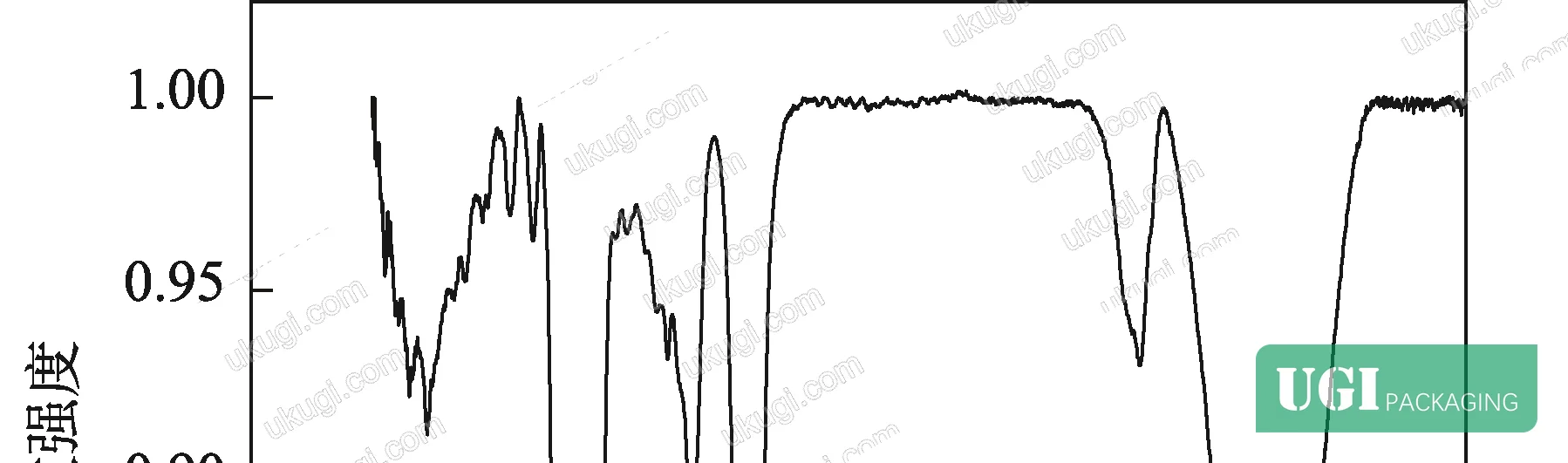
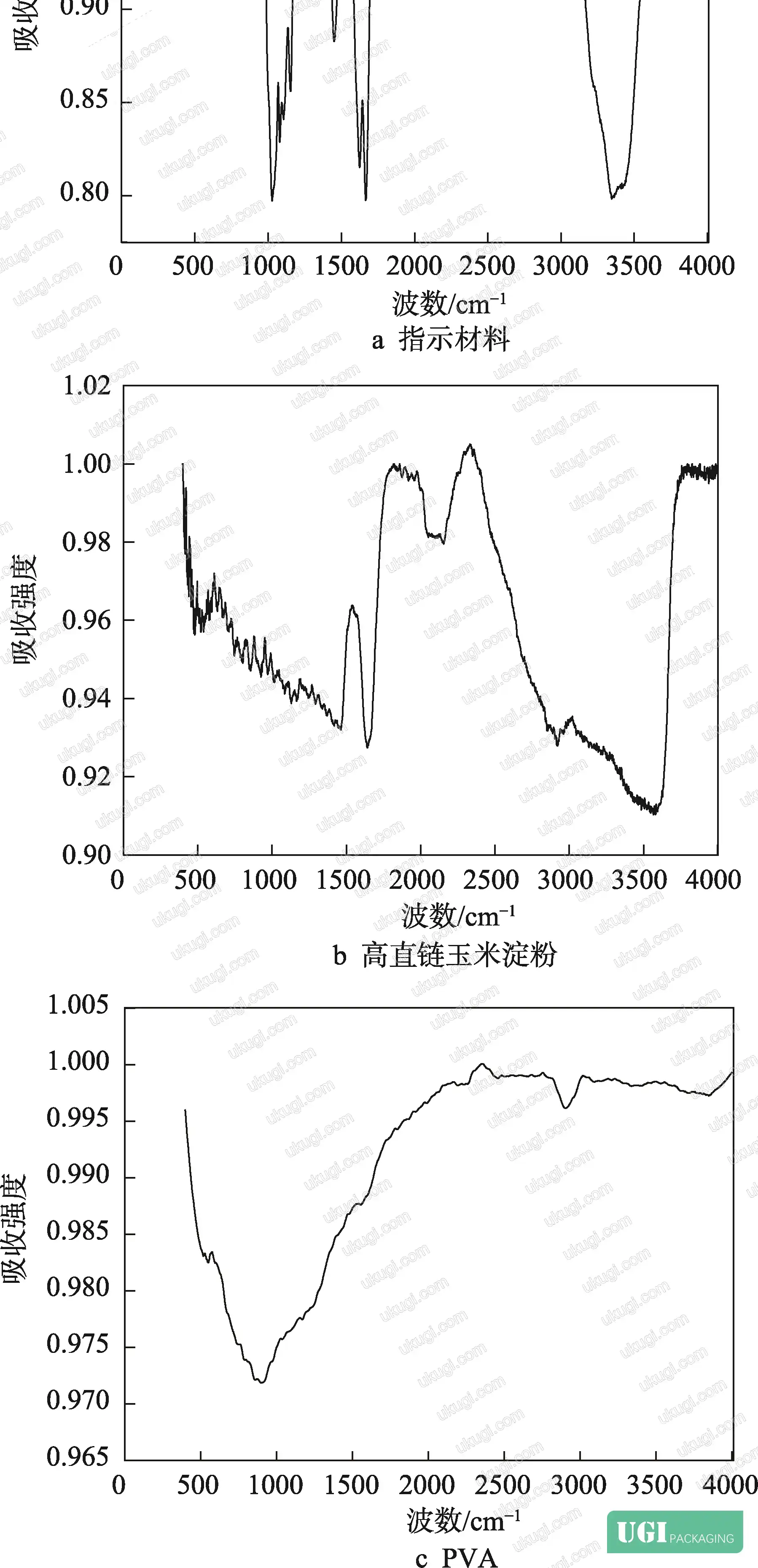
FTIR spectroscopy confirmed molecular-level interaction between starch and PVA. Pure PVA showed characteristic peaks at 3400-3200 cm⁻¹ (hydroxyl stretch), 1735-1740 cm⁻¹ (residual acetate C=O), and 1000-1100 cm⁻¹ (C-O stretch). High-amylose starch exhibited stronger hydroxyl peaks due to higher -OH density. In the optimized composite film, all major peaks shifted slightly relative to pure components—hydroxyl stretches moved from 3350 cm⁻¹ (starch) and 3300 cm⁻¹ (PVA) to 3325 cm⁻¹ in the blend, indicating hydrogen bonding between the two polymers. The reduction in C-OH and cyclic C-H peak intensities confirmed crosslinking via glutaraldehyde bridges.
SEM imaging provided direct visualization of microstructure. Uncrosslinked starch/PVA blends (Figure 4a, 1500× magnification) displayed rough surfaces with visible particle aggregation, indicating incomplete dispersion. After glutaraldehyde crosslinking (Figure 4b, 2000×), surfaces became smooth and dense with no discrete particle boundaries—evidence of a homogeneous network. The fully optimized formulation (Figure 4c) showed uniformly smooth cross-sections with no phase separation, confirming that the 7:3 ratio, 8% crosslinker, and pH buffering achieved true miscibility at the microscopic level.
This level of structural uniformity is non-negotiable for production. In supplier qualification, we saw three of six samples fail adhesion testing (180° peel strength <0.5 N/15mm) due to subsurface delamination caused by phase-separated domains. The failures weren't visible to the eye—films looked clear and printed cleanly—but when laminated to polyethylene or polypropylene substrates and subjected to thermal cycling (−20°C to 40°C, 5 cycles per ISO 12405-4 Electrically propelled road vehicles test specifications), the poorly dispersed phases created stress concentration points that propagated into cracks.
Practical Guidance for Buyers #
When sourcing pH-responsive packaging films, request formulation disclosure at a minimum: polymer types, crosslinker identity and loading, plasticizer type, and indicator chemistry. Proprietary blends are acceptable, but you need enough detail to assess whether the material can survive your converting process and end-use environment. If the supplier refuses to share even general composition categories (“proprietary starch blend with undisclosed additives”), walk away—you’re looking at a formulation that hasn’t been optimized, just empirically stumbled upon.
Specify performance requirements as quantitative targets: tensile strength ≥15 MPa, elongation ≥80%, water absorption ≤350% at 23°C/50% RH, color transition time ≤120 seconds at defined analyte concentration. Don’t accept “good mechanical properties” or “fast color change” as specifications. Also define the environmental conditions under which the indicator must NOT respond: baseline stability for 6 months at ≤10°C and <60% RH is reasonable for refrigerated distribution. Most procurement teams don't realize that UN 38.3 Recommendations on the Transport of Dangerous Goods temperature cycling protocols (72 hours at −40°C, 6 hours at 75°C) provide a useful stress test even for non-battery materials—if the indicator survives that without false triggering, it will handle normal cold chain conditions.
For applications in high-barrier packaging (custom paper boxes with aluminum foil lamination, vacuum-sealed pouches), consider whether the indicator film has adequate gas permeability. A perfectly sealed package won’t accumulate headspace CO₂ until seal failure occurs—by which point the food is already compromised. You may need a breathable indicator window or deliberate microperforations to allow analyte contact. We’ve integrated pH-responsive films into cosmetics packaging solutions where the challenge is opposite: ensuring the indicator responds to oxidative degradation (peroxide formation) without reacting to cosmetic ingredients like alpha-hydroxy acids.
Ask for shelf-life data. An indicator that works beautifully in initial qualification but degrades after 3 months in warehouse storage is worse than no indicator at all. UV stability, oxidative stability, and indicator dye migration should all be characterized. For gift packaging solutions and luxury watch boxes where materials sit in inventory for extended periods before use, demand accelerated aging data (40°C/75% RH for 12 weeks minimum) showing <10% change in baseline color and <20% change in response time.
Need a custom formulation or sample? Request a quote from our team →
Technical Verification Questions #
- What is the high-amylose starch to PVA volume ratio in your production formulation, and can you provide light transmittance data at 540 nm showing phase compatibility above 80% relative to baseline?
- What glutaraldehyde crosslinker concentration do you use (as vol% of polymer solution), and can you demonstrate tensile strength ≥15 MPa with elongation at break ≥80% per ISO 527 testing?
- At what CO₂ concentration (mg/m³) does your indicator film initiate color change, and what is the complete transition time when exposed to 3929 mg/m³ CO₂ in controlled atmosphere testing?
- What is the water absorption rate of your film after 24-hour immersion at 23°C (should be 300-400% for functional color diffusion while maintaining dimensional stability), and how does this correlate with color diffusion time?
- Can you provide FTIR spectra showing characteristic peak shifts in the 3200-3400 cm⁻¹ hydroxyl region that confirm molecular-level interaction between starch and PVA components, along with SEM images at ≥1500× magnification demonstrating uniform microstructure without phase separation?
Quality Verification Checklist #
- ☐ Polymer blend ratio confirmed at 70:30 high-amylose starch:PVA by volume via compositional analysis or formulation disclosure
- ☐ Glutaraldehyde crosslinker concentration verified at 8 ± 1 vol% through residual aldehyde assay or equivalent analytical method
- ☐ Tensile strength measured at ≥15 MPa with elongation at break ≥80% per ISO 527-3 or ASTM D882 testing protocols
- ☐ Color transition from blue-green (RAL 6004 equivalent) to yellow (RAL 1016 equivalent) occurs within 90-150 seconds at 3929 mg/m³ CO₂ exposure
- ☐ Water absorption after 24h immersion at 23°C falls within 300-400% range, verified by gravimetric testing per ASTM D570
- ☐ Baseline color stability maintained for ≥6 months at 4°C/50% RH storage with ΔE* < 5 in CIE Lab color space
- ☐ FTIR spectroscopy confirms hydroxyl peak shift to 3320-3330 cm⁻¹ indicating hydrogen bonding between starch and PVA polymers
- ☐ SEM imaging at ≥1500× magnification shows uniform microstructure with no visible phase boundaries or particle aggregation
Key Specifications Table #
| Parameter | Recommended Value | Verification Method |
|---|---|---|
| High-amylose starch:PVA volume ratio | 70:30 | Compositional analysis or formulation disclosure |
| Glutaraldehyde crosslinker concentration | 8 ± 1 vol% | Residual aldehyde titration (AOAC 974.14 adapted) |
| Tensile strength | ≥15 MPa | ISO 527-3 or ASTM D882 |
| Elongation at break | ≥80% | ISO 527-3 or ASTM D882 |
| Water absorption (24h, 23°C) | 300-400% | Gravimetric method per ASTM D570 |
| Color transition time (3929 mg/m³ CO₂) | 90-150 seconds | Controlled atmosphere colorimetry |
| Methyl red:bromothymol blue indicator ratio | 1:2 by volume | HPLC or UV-vis spectrophotometry |
| Indicator loading | 6 ± 0.5 vol% | Dye extraction and quantification |
Looking for a manufacturer that meets these specifications? Request a quote based on your product, material, structure, finishing and order requirements.
References #
Data source: pH-Responsive Starch-Based Composite Films for Acidic Gas Detection in Food Packaging, Y.-N. Wu et al., Journal of Applied Polymer Science, 2023
Frequently Asked Questions #
Can this indicator film be laminated to existing packaging substrates?
Yes, the optimized formulation adheres well to polyethylene, polypropylene, PET, and paper substrates using standard polyurethane or acrylic adhesives. Ensure lamination temperature stays below 80°C to avoid indicator degradation.
What shelf life can I expect for the indicator film before use?
When stored at ≤10°C in sealed aluminum foil pouches with desiccant, baseline color stability extends beyond 12 months. At ambient warehouse conditions (23°C/50% RH), expect 6-9 months before ΔE* exceeds 5.
Does the indicator respond to humidity or only to CO₂?
The calcium hydroxide buffering prevents response to neutral water vapor. However, condensation that forms acidic solutions (pH <7) will trigger color change. Design packaging to avoid direct liquid contact with the indicator area.
Can the methyl red/bromothymol blue ratio be adjusted for different pH ranges?
Yes—increasing methyl red proportion shifts sensitivity toward lower pH (more acidic), while increasing bromothymol blue extends the upper detection limit. However, this requires re-optimization of indicator loading to maintain color contrast.
Will the indicator film survive standard pasteurization or retort processing?
No—temperatures above 85°C cause indicator dye degradation and accelerate polymer hydrolysis. This technology is suitable for chilled, frozen, or ambient shelf-stable products packaged after thermal processing, not for in-package sterilization.
Published by ukugi.com Technical Team | Request a quote


