
Material Qualification Case — Internal Screening Completed
Why We Tested a Freezer-Grade Beverage Can Label Before Final Quotation
An Australian beverage buyer needed labels for chilled retail storage and possible ice-bucket use. Before locking the material specification and quotation, our purchasing and engineering teams sourced a specialty sample and checked it under refrigerated conditions and 24 hours of water immersion. In both observations, we found no edge curling on the applied label samples.
The decision: confirm the material before final quotation
The buyer was comfortable proceeding with a matte varnish or matte coating and freezer-grade permanent adhesive if the final pricing was workable. The application, however, included more than ordinary dry room-temperature use: the cans would be sold from chilled refrigerators or coolers and could be placed in ice buckets containing ice and water for several hours during events.
At UGI Packging, we did not want to finalize the material route from a supplier description alone. Our purchasing team obtained a specialty material sample. We applied it to beverage cans, observed the labels under refrigerated conditions and then recorded the result after 24 hours of water immersion before continuing the quotation decision.
Case facts
Case type
Material qualification
Use conditions
Chilled retail, condensation and possible ice-bucket exposure
Quotation quantities
8,000 sheet/roll labels and 200,000 roll labels
Status
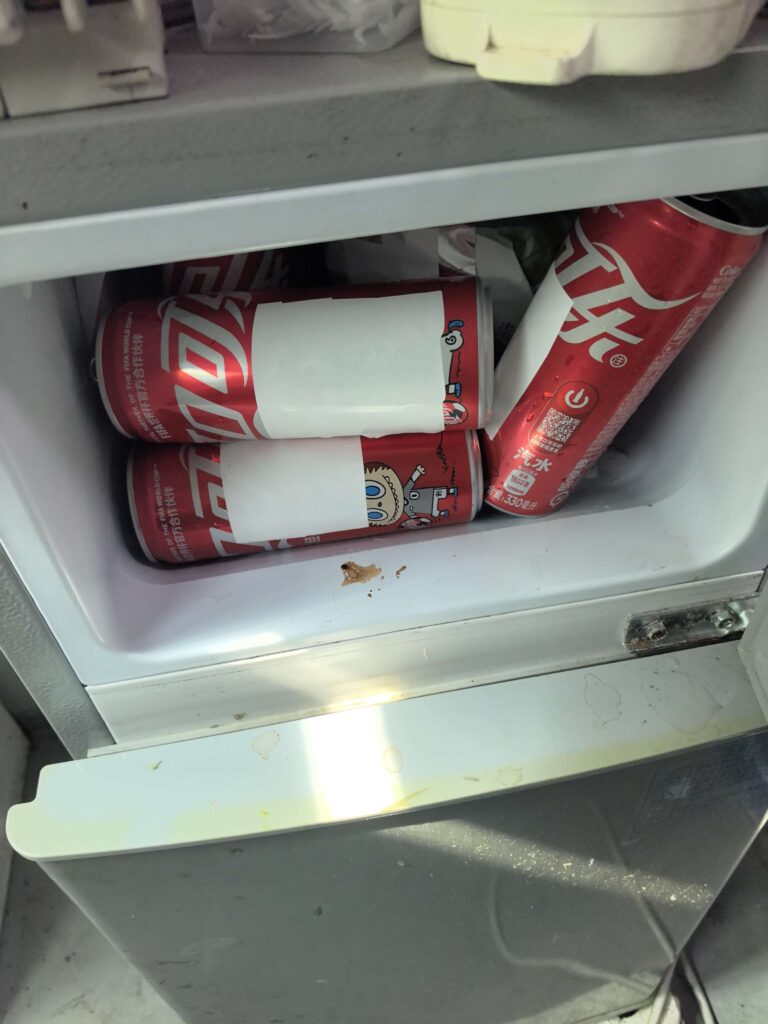
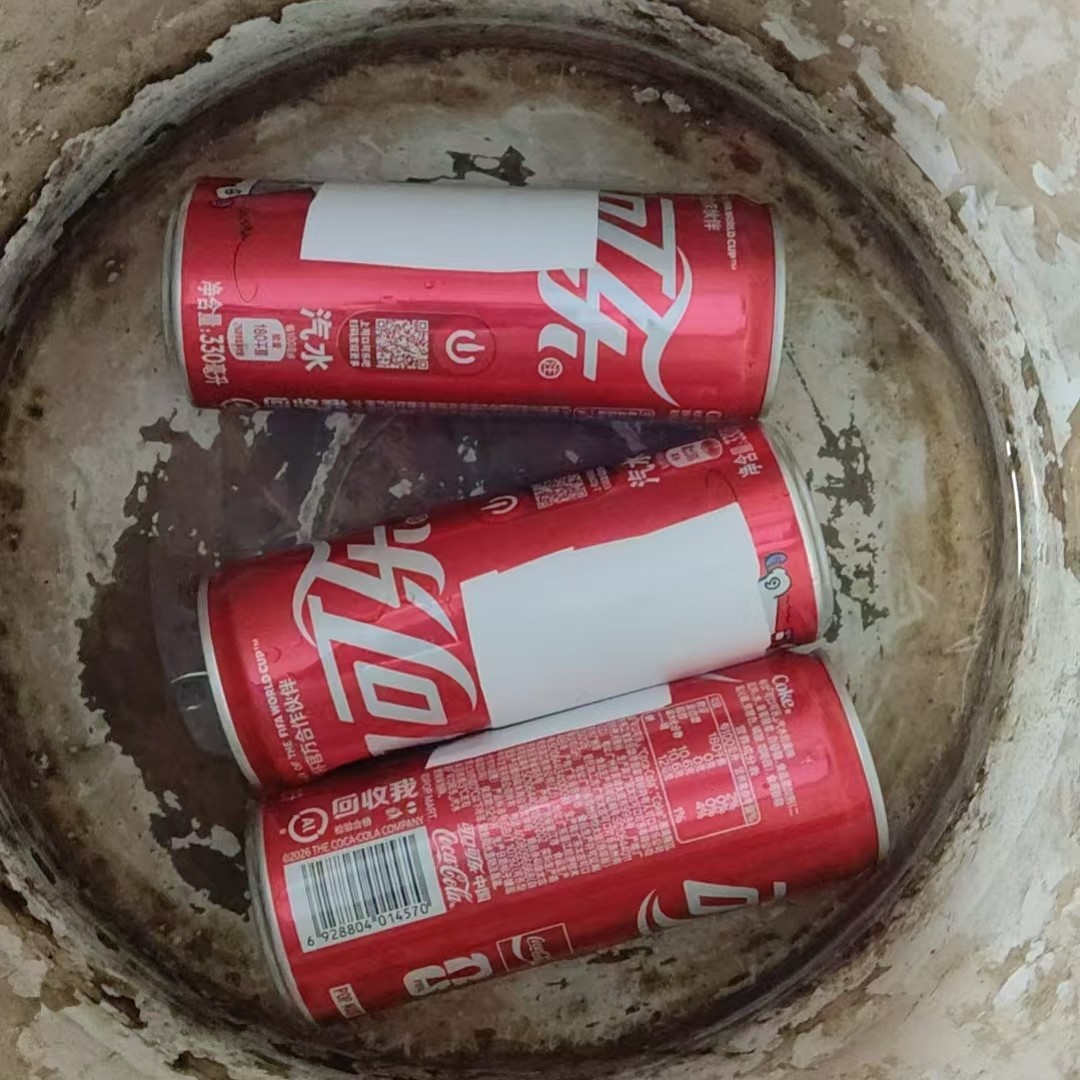
Refrigerated and 24-hour water-immersion observations completed; no edge curling observed
The actual screening and result
These UGI Packging workshop images document the applied samples during refrigerated observation and after 24 hours of water immersion.
What the buyer needed in the final quotation
The requested quotation was not a single unit-price question. It needed to separate the practical production routes and the fixed or project-specific charges:
- Unit and total pricing for 8,000 pieces in sheet and roll formats, if those formats produced a real price difference.
- Unit and total pricing for 200,000 pieces in roll format.
- Any one-time die, plate or tooling cost.
- The substrate, coating and adhesive specification.
- Lead time from artwork approval to delivery.
- Payment terms, shipping cost and Incoterms to Melbourne, Australia.
The 8,000-piece and 200,000-piece routes also required different consideration of sheet, roll, digital and flexographic production. Buyers comparing those routes can review our digital versus flexographic and roll versus sheet beverage label FAQ.
Why we could not finalize the quotation immediately
The proposed freezer-grade adhesive label material is a specialty item that we source for the order. Our material supplier applies a starting purchase quantity to that material. This supplier requirement has to be confirmed and included in the commercial calculation, especially when one requested quantity is 8,000 pieces.
That does not create one universal MOQ for all freezer-grade labels. It means the economical production quantity for this project depends on the material supplier’s starting quantity, the amount of material consumed by the label size and layout, the print and finishing route, sheet or roll conversion, setup requirements and usable leftover material.
The buyer can also review the relevant custom labels and stickers product options, while the actual quotation remains tied to this project’s can, application and production conditions.
What UGI Packging did before locking the specification
- We clarified that the cans would face chilled storage, condensation and possible ice-bucket use rather than dry indoor use only.
- Our purchasing team discussed the specialty freezer-grade material with the material supplier and confirmed that supplier-side starting purchase quantity had to be checked.
- Our purchaser obtained a physical sample from the material source instead of relying only on a data sheet or verbal description.
- We cut sample pieces and applied them to beverage cans.
- We observed the applied samples under refrigerated conditions and found no edge curling.
- We then immersed the labelled cans in water for 24 hours and again found no edge curling on the samples.
- We used the recorded result as a practical material-qualification input before continuing the quotation decision.
What the completed internal check confirmed
| Project question | What UGI Packging has done | Current status |
|---|---|---|
| Is a physical specialty sample available? | Purchasing obtained sample material from the material source. | Confirmed |
| Was it applied to an actual can? | Sample pieces were cut and applied to beverage cans. | Confirmed |
| What happened under refrigerated conditions? | UGI Packging observed the applied samples in the refrigerated check. | No edge curling observed |
| What happened after 24 hours in water? | The labelled cans remained immersed in water for 24 hours. | No edge curling observed |
| Does this establish every production condition? | No. This is one internal sample check under the recorded refrigerated and 24-hour water-immersion conditions. | Production specification and approval still remain project-specific |
What this check can and cannot establish
This is an internal practical screening check, not an accredited laboratory test. It records that we observed no edge curling on these applied samples under the refrigerated condition and after 24 hours of water immersion. It does not by itself establish performance for every can coating, application method, dwell time, water temperature, repeated temperature cycle, transport route or storage life.
The 24-hour water-immersion result is directly relevant to the buyer’s wet-use concern, but production approval should still record the application temperature, can surface condition, dwell time after labelling, water temperature and agreed pass/fail criteria for the final material and print construction.
The next decision gate
Continue the quotation calculation
The completed sample observations allow us to continue comparing the material, sheet/roll format, supplier starting quantity and production route using evidence from the actual sample.
Define production approval conditions
Before mass production, the final material construction, can surface, application method and agreed wet-use acceptance criteria still need to match the quoted order.
What buyers should provide for a similar project
Can and environment
Can material and surface, labelling temperature, chilled-storage range, condensation and ice-water exposure time.
Application method
Manual, semi-automatic or automatic application, plus roll direction, core, maximum roll diameter and dispensing requirements.
Commercial inputs
Label size, artwork, colours, finish, quantity by format, delivery destination and required sample approval route.
Continue the Beverage Can Label Procurement Series
Use these technical FAQs to define the application before comparing material and production quotations.
Need a label route checked before quotation?
Send the can surface, label size, application method, quantity, storage temperature, condensation and ice-water conditions. UGI Packging can identify what should be sourced, sampled and confirmed before production pricing is locked.