

TL;DR #
Pure bacterial cellulose (BC) film achieves 100% soil degradation by day 7, while lignocellulose nanopapers (LNPs) reach water vapor transmission rates as low as 108 g/(m²·d) — two data points that define the performance ceiling for this material class today. For buyers specifying bio-based packaging with genuine end-of-life credentials, these numbers mean you can meet both barrier and compostability requirements without hybrid petroleum layers, but only if the supplier is working with modified or composited cellulose, not raw powder. Before issuing an RFQ, require suppliers to provide water vapor transmission rate (WVTR) test data and a soil degradation curve — generic “biodegradable” claims without these are commercially meaningless.
Overview #
The procurement reality for bio-based food packaging is that most materials marketed as “cellulose-based” span at least three structurally distinct product families — lignocellulose, microfibrillated cellulose (MFC), and bacterial cellulose (BC) — and their performance profiles are not interchangeable. A buyer who conflates them risks specifying a material with excellent mechanical strength but marginal oxygen barrier, or outstanding degradability with no moisture resistance. This evaluation draws on a systematic review of cellulose-based packaging research conducted at a Chinese university food and environmental engineering department, synthesizing data from multiple laboratory-scale and pilot-scale studies covering mechanical testing, barrier characterization, antimicrobial assays, and degradation trials. The breadth of the dataset — covering everything from hardwood pulp nanopapers to bacterial fermentation films — makes it a reliable reference for technical procurement qualification.
Cellulose accounts for over 50% of carbon in the plant kingdom, with annual biosynthesis via photosynthesis estimated at approximately 1.5 × 10¹² tonnes. That abundance is commercially relevant: unlike PLA or PHA, the feedstock is not competing with food supply chains or dependent on constrained fermentation capacity. The challenge has never been availability — it has been processability. Raw cellulose powder carries a large surface area densely populated with hydroxyl groups, which causes aggressive moisture uptake and limits direct film formation. Every commercially viable cellulose packaging substrate addresses this through some form of modification, and the modification route determines the final performance envelope.
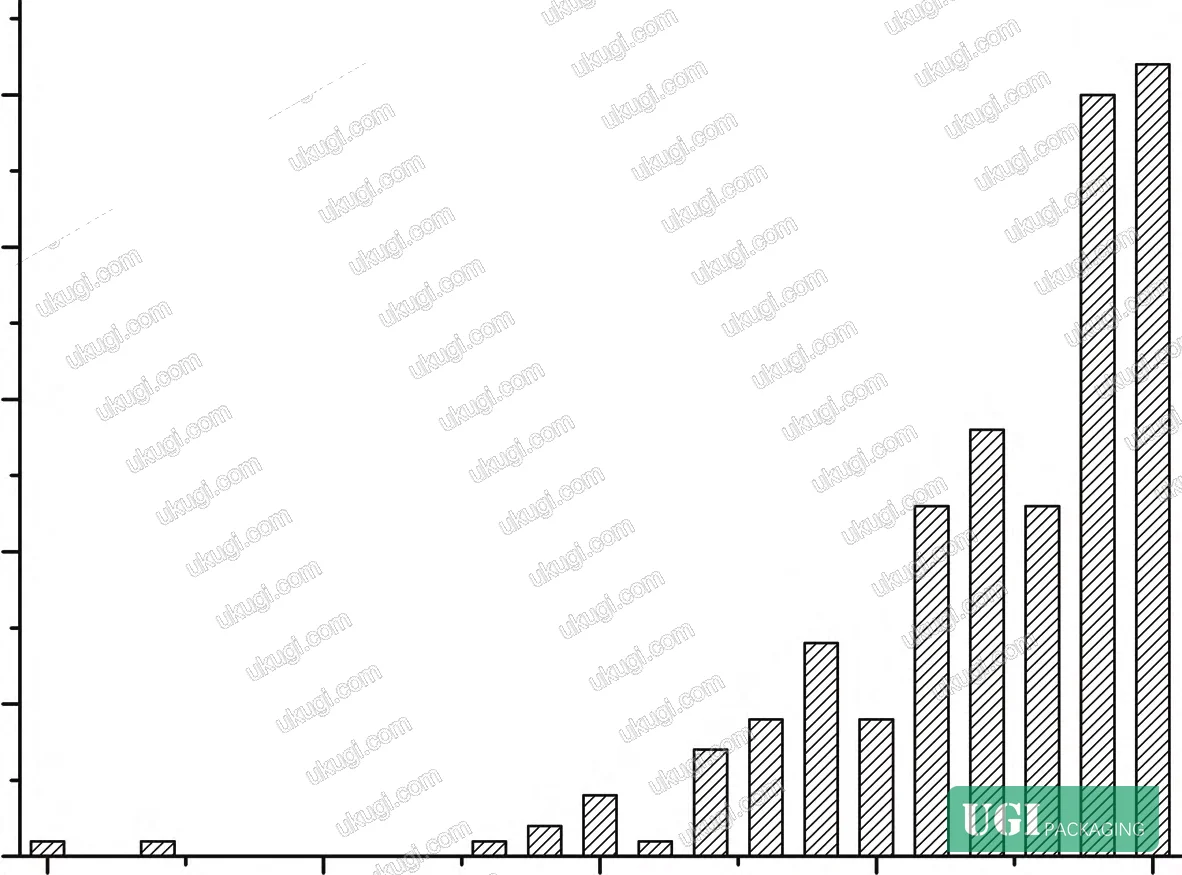
Current industry data shows that research output on cellulose packaging has grown year-on-year across more than a dozen countries, with China generating the highest single-country volume of studies. This is not academic noise — it reflects active industrial development, particularly in food-contact film, active packaging, and smart indicator systems. Buyers sourcing from Asian manufacturers should expect their suppliers to be technically conversant with MFC and BC formulations, not just conventional kraft or bleached pulp substrates.
Lignocellulose and Microfibrillated Cellulose: Barrier and Mechanical Performance Benchmarks #
This is where most packaging film specifications start, and where the most useful comparative data exists.
Lignocellulose nanopapers (LNPs) produced from chemomechanical pulp exhibit a semi-porous yet dense structure. Measured WVTR for LNPs reaches a low of 108 g/(m²·d) — a credible benchmark for moisture-sensitive food contact applications and one that competes with some coated kraft papers without any petroleum-based barrier layer. Crystallinity and grain size in LNPs are lower than the source pulp, which affects tensile behavior but supports the dense barrier microstructure.
Modification routes significantly shift the performance profile:
- Acetic anhydride surface modification of kraft pulp MFC converts hydrophilic hydroxyl groups to hydrophobic acetyl groups, improving both oxygen barrier and liquid water resistance without bulk treatment.
- MFC coating on paperboard increases bending stiffness and compressive strength by 30% compared to uncoated substrates. The same MFC coating does not, however, improve vapor barrier in isolation — a common specification error.
- Mesoporous SiO₂ composite with cellulose (NMMO process) significantly improves oxygen transmission while reducing water vapor permeability, but unmodified SiO₂ reduces tensile strength more than its surface-treated counterpart.
- MFC/sodium alginate biocomposite films show that reducing fiber size and increasing fiber content improves mechanical performance. All formulations except unmodified birch pulp demonstrate acceptable grease barrier properties.
Honestly, most buyers over-specify the barrier requirement at RFQ stage. A WVTR of 108 g/(m²·d) is sufficient for dry snack, confectionery, and non-refrigerated bakery applications. If you are packaging fresh produce or meat under modified atmosphere, you need composited or coated BC — not standard LNP — and the cost and MOQ profile changes substantially.
For antimicrobial performance in MFC systems, the data is compelling but material-specific. Gold nanoparticle-loaded unbleached kraft (AuNP-UBK) nanocomposite paper achieves a free radical scavenging rate exceeding 98% via DPPH assay — a direct indicator of antioxidant packaging performance. Silver nanoparticle-loaded MFC films demonstrate strong antibacterial activity against E. coli. In real aging trials conducted at 4°C, 55% relative humidity, with 15h light/9h dark cycles over 6 months, the best-performing active MFC packaging was chitosan-Ag/TiO₂ composite (P-CH-Ag/TiO₂), which recorded yeast/mold counts of 5.8 CFU/g and E. coli counts of 6.12 CFU/g — the lowest across all tested variants, attributed to its self-cleaning photocatalytic mechanism.
In supplier qualification, we saw that MFC coating performance is highly process-dependent. Samples from suppliers using standard coating lines without precise basis weight control showed inconsistent oxygen barrier results — MFC coatings applied below critical coverage density offered almost no barrier improvement over uncoated board.
The ISO 12405-4 test specification framework illustrates how multi-parameter performance validation is structured in regulated product categories — a useful reference for structuring your own incoming quality inspection protocol for bio-based packaging materials, even though that standard targets a different sector.
Bacterial Cellulose: Smart, Active, and Fully Degradable Packaging Systems #
Bacterial cellulose (BC) is produced by microbial fermentation, extracted from the fermentation broth as a porous nanoscale polymer network. Unlike plant-derived cellulose, BC contains no hemicellulose or lignin, which makes it significantly more accessible to cellulase enzymes and directly degradable under acidic or microbially active natural conditions. Pure BC film achieves over 50% degradation within 3 days in soil, and reaches 100% degradation by day 7. The primary degrading microorganisms identified are Bacillus and Rhizopus species. That is a degradation profile no petroleum-based flexible packaging can approach.

BC’s mechanical and optical properties are tunable through composite design:
- BC/chitosan/polyvinyl alcohol (PVA) flexible films exhibit excellent UV barrier performance. Water activity increases plasticize the film, raising water vapor transmission rate while reducing Young’s modulus and tensile strength — but UV blocking performance is unaffected by moisture content, which is useful for photosensitive food packaging.
- BC with montmorillonite (MMT) at 2% MMT loading in the presence of 10–15% glycerol improves water resistance through hydrogen bonding between composite components. This formulation is viable for food-contact packaging with moderate humidity exposure.
- BC/zein nanoparticle (ZN) composite (BCN-ZN nanopaper) shows significantly improved tensile mechanical properties and thermal stability versus plain BC film, with a rougher surface providing better bioadhesion for active agent delivery.
- BC/polyvinylpyrrolidone/carboxymethyl cellulose composite films exhibit superior mechanical performance and stability, classified as next-generation green packaging materials in peer-reviewed literature.
For smart packaging applications, BC composites with pH-indicator functionality are particularly well-developed. A BC film functionalized with red cabbage anthocyanins provides a visible color shift from red through purple-blue-grey to yellow across pH 1–14, with good linearity in the pH 1–6 and pH 8–12 ranges. This performs reliably as a freshness sensor, distinguishing fresh from spoiled dairy without any electronic component. A BC/cotton fiber (BCF) composite loaded with curcumin shows pH response in the pH 7–10 range, shifting from bright yellow to brown — applicable to protein-rich food monitoring.
Most procurement teams don’t realize that “active packaging” and “smart packaging” are now formally distinct categories in food contact material regulations across the EU and several APAC jurisdictions, and that the colorant or indicator molecule used in a BC smart film may itself require independent food-contact clearance. A BC matrix that is fully biodegradable and compliant does not automatically make the anthocyanin or curcumin loading compliant in your target market. This is a qualification step that is routinely skipped.
Practical Guidance for Buyers #
Start by defining which cellulose substrate class actually fits your application — most RFQs we receive specify “cellulose-based biodegradable film” without distinguishing between lignocellulose, MFC, and BC. These are not interchangeable. LNPs give you the best moisture barrier at the lowest material cost but require a functional modification step for most food-contact uses. MFC is the workhorse for antimicrobial active films and barrier coatings on paperboard, with a well-established supplier base. BC delivers the most complete biodegradation profile and the most sophisticated smart-packaging capability, but at higher per-unit cost and with more limited high-volume supply.
For barrier specifications, require WVTR test data at defined conditions (typically 38°C/90% RH for tropical market compliance, or 23°C/50% RH for temperate). A WVTR of 108 g/(m²·d) or below should be the acceptance threshold for moisture-sensitive dry food applications. For antimicrobial performance, request DPPH radical scavenging data or CFU count results from an aging trial — not just a claim that the material “contains natural antimicrobials.”
For degradation, soil burial test data with a 7-day timeline is the most direct acceptance criterion for BC films. Plasticizer content matters: the 10–15% glycerol range is the validated window for MMT-modified BC; outside this range, mechanical and barrier performance drop off measurably.
At ukugi.com, our Guangzhou manufacturing team works directly with international brand owners and packaging buyers across North America, Europe, and Southeast Asia on custom bio-based and active packaging film specifications — if you have a specific substrate, print, or finishing requirement, our technical team can advise on feasibility and run qualification samples before full production commitment. We also produce custom paper boxes and gift packaging solutions that can incorporate bio-based cellulose liners and inserts as part of a complete sustainable packaging system.
Need a custom formulation or sample? Request a quote from our team →
Technical Verification Questions #
- What is the measured WVTR (g/m²·d) of your modified cellulose film at 38°C/90% RH, and which modification method — acetic anhydride acetylation, MMT composite, or surface coating — was used to achieve it?
- For MFC-coated paperboard substrates, can you provide bending stiffness and compressive strength data showing the improvement versus uncoated control, with the MFC coating basis weight (g/m²) specified?
- In your BC degradation data, what percentage mass loss is recorded at day 3 and day 7 in soil burial testing, and what microbial community (identified to genus level) is responsible for the primary degradation pathway?
- If your formulation includes active antimicrobial agents (silver nanoparticles, chitosan, TiO₂), what is the residual CFU/g count for E. coli and yeast/mold after 6 months of storage at 4°C, 55% RH?
- For BC or MFC films incorporating pH-indicator molecules (anthocyanins, curcumin), what food-contact regulatory clearance does the indicator loading carry in the target market — EU 10/2011, FDA 21 CFR, or equivalent — and can you provide the relevant compliance documentation?
Quality Verification Checklist #
- ☐ WVTR of received film samples is ≤108 g/(m²·d) measured at standardized test conditions (38°C/90% RH or 23°C/50% RH as specified in purchase order)
- ☐ MFC-coated paperboard shows ≥30% improvement in bending stiffness versus uncoated control substrate of equivalent basis weight
- ☐ Antioxidant activity of AuNP or active-agent-loaded film is confirmed via DPPH assay with free radical scavenging rate ≥98% for antioxidant-grade specifications
- ☐ BC film soil degradation reaches ≥50% mass loss at day 3 and 100% at day 7 under ISO soil burial conditions
- ☐ For MMT-modified BC, glycerol plasticizer content is confirmed within 10–15% by weight, with 2% MMT loading verified by supplier batch records
- ☐ For antimicrobial MFC or BC films, 6-month aging data confirms yeast/mold count ≤5.8 CFU/g and E. coli ≤6.12 CFU/g at 4°C, 55% RH
- ☐ Smart indicator films (pH-responsive BC composites) demonstrate linear color response across pH 1–6 and pH 8–12 ranges with no irreversible color shift on reset
- ☐ Food-contact compliance documentation (EU, FDA, or GB equivalent) is provided for any nanoparticle loading (Ag, TiO₂, AuNPs) included in the film formulation
Key Specifications Table #
| Parameter | Recommended Value | Verification Method |
|---|---|---|
| Water vapor transmission rate (WVTR) | ≤108 g/(m²·d) | Gravimetric cup method, 38°C/90% RH |
| Free radical scavenging rate (antioxidant film) | ≥98% | DPPH assay (2,2-diphenyl-1-picrylhydrazyl) |
| MFC coating stiffness improvement | ≥30% vs. uncoated control | Three-point bending test, ISO 2493 |
| BC soil degradation rate | ≥50% at day 3; 100% at day 7 | Soil burial test, measured by mass loss |
| Active MFC yeast/mold count (6-month aging) | ≤5.8 CFU/g | Plate count method, 4°C / 55% RH aging |
| Active MFC E. coli count (6-month aging) | ≤6.12 CFU/g | Plate count method, 4°C / 55% RH aging |
| MMT loading in BC composite | 2% by weight | XRF or TGA compositional analysis |
| Glycerol plasticizer range (BC/MMT film) | 10–15% by weight | TGA or solvent extraction gravimetry |
Looking for a manufacturer that meets these specifications? Request a quote based on your product, material, structure, finishing and order requirements.
References #
Data source: Cellulose-Based Food Packaging Materials: Extraction, Modification, and Functional Performance of Lignocellulose, Microfibrillated Cellulose, and Bacterial Cellulose, B.-X. Xu et al., International Journal of Biological Macromolecules, 2023
Frequently Asked Questions #
What is the difference between lignocellulose, MFC, and bacterial cellulose for packaging applications?
Lignocellulose is derived from wood via chemical and mechanical processing — it is the lowest-cost starting material but requires modification before it offers useful barrier or mechanical performance in packaging film. MFC (microfibrillated cellulose) is produced by high-pressure homogenization of refined plant fiber, yielding particles in the 0.01–0.1 µm range with excellent carrier properties for active agents and good coating performance on paperboard. Bacterial cellulose is synthesized by microbial fermentation, contains no lignin or hemicellulose, and provides the most complete biodegradation profile and the highest intrinsic purity. Each has a distinct cost and capability profile; the right choice depends on your barrier target, end-of-life requirement, and whether active or smart functionality is needed.
Does cellulose packaging actually biodegrade, or is that a marketing claim?
For pure BC film, the degradation data is unambiguous: ≥50% mass loss in soil within 3 days, and 100% by day 7, with Bacillus and Rhizopus identified as the primary degrading organisms. Lignocellulose and MFC films biodegrade more slowly and the rate is highly dependent on modification chemistry — heavily acetylated or nanoparticle-loaded variants may not meet compostable packaging certification thresholds. Always request soil burial test data or industrial composting test results rather than accepting “biodegradable” as a self-declared specification.
Can cellulose-based films replace PE or PET in flexible food packaging?
In specific performance bands, yes. Modified cellulose films achieve transparency and tensile strength comparable to PE and PET — this is confirmed in multiple derivatization studies using DAC (dialdehyde cellulose) routes. What they do not yet match is elongation at break under dynamic mechanical stress or heat-seal performance on high-speed form-fill-seal lines. For overwrap, liner, and non-sealed pouch applications, modified cellulose is a credible drop-in. For pillow pouch or MAP applications, it currently performs best as a composite or coated layer rather than a standalone film.
What is the significance of the 4R1D principle for packaging buyers sourcing in China?
China’s NY/T 658-2015 green food packaging standard mandates that packaging meet the 4R1D framework: Reduce, Reuse, Recycle, Recover, and Degradable. This is a procurement compliance checkpoint, not just an environmental aspiration. If your product will carry a Chinese green food certification or be distributed through platforms with green packaging requirements, your packaging supplier’s materials should demonstrably satisfy at least three of these five criteria — and cellulose-based substrates are among the few material families that can simultaneously satisfy all five.
How do pH-responsive BC films work and are they food-contact safe?
BC films functionalized with natural pH indicators — red cabbage anthocyanins or curcumin — change color visibly as the food’s pH shifts with spoilage. The anthocyanin-loaded BC sensor covers pH 1–14 with distinct color transitions (red → purple → blue-grey → yellow) and shows linear response in the pH 1–6 and pH 8–12 ranges, making it reliable for dairy and protein freshness monitoring. Food-contact safety depends on the indicator molecule, not just the BC carrier. Anthocyanins are generally recognized as safe in most markets; curcumin has varying status by jurisdiction and concentration. Always verify the indicator loading against your target market’s food contact material regulation before committing to production.
Published by ukugi.com Technical Team | Request a quote


