

TL;DR #
Adding just 2% cellulose nanocrystals (CNC) to a PHB biopolymer matrix reduces oxygen transmission rate by 65% — a performance gain that closes most of the gap between bio-based films and conventional petroleum-based packaging. For buyers evaluating compostable packaging substrates, this data reframes the “bio-based films perform worse” assumption that has killed many sustainability initiatives at the specification stage. Validate barrier performance with actual OTR and WVTR test data from your supplier before committing to a material transition, not just a certification document.
Overview #
The performance gap between bio-based packaging films and conventional plastics has historically been the decisive reason procurement teams abandon sustainability targets before sampling. That gap is narrowing fast — and the mechanism is more specific than most buyers realize. Systematic laboratory evaluations conducted at a Chinese university’s light industry engineering faculty, covering multiple nanocellulose reinforcement systems across five distinct performance categories and validated through standardized film casting, tensile testing, and gas transmission measurement, provide some of the clearest quantitative benchmarks available for specifying nanocellulose-reinforced bio-based films in a real procurement context.
The reinforcement agent at the center of this work is nanocellulose — specifically cellulose nanocrystals (CNCs, needle-shaped crystals 4–25 nm diameter, 100–1000 nm length) and cellulose nanofibers (CNFs, 10–100 nm diameter, micron-scale length). A third form, microcrystalline cellulose (MCC), appears as an occasional reinforcing phase. All three are derived from plant fiber through chemical or mechanical processing. The distinction matters for procurement: CNCs deliver the sharpest crystallinity and the most dramatic barrier improvements at low loadings, while CNFs offer better mechanical reinforcement at higher concentrations. Specifying one when you need the other is a common and expensive mistake.
This article covers the five performance dimensions where nanocellulose reinforcement produces measurable, procurement-relevant improvements: oxygen barrier, water vapor barrier, UV blocking, antimicrobial activity, and tensile mechanical properties.
Nanocellulose-Reinforced Bio-Based Films: Oxygen and Water Vapor Barrier Performance #
Oxygen barrier performance is the first test that separates functional food-grade packaging from decorative bio-based film. Oxygen promotes aerobic microbial growth and accelerates lipid, protein, and vitamin degradation — so the packaging film’s oxygen transmission rate (OTR) is not a secondary specification, it is the shelf-life determinant.
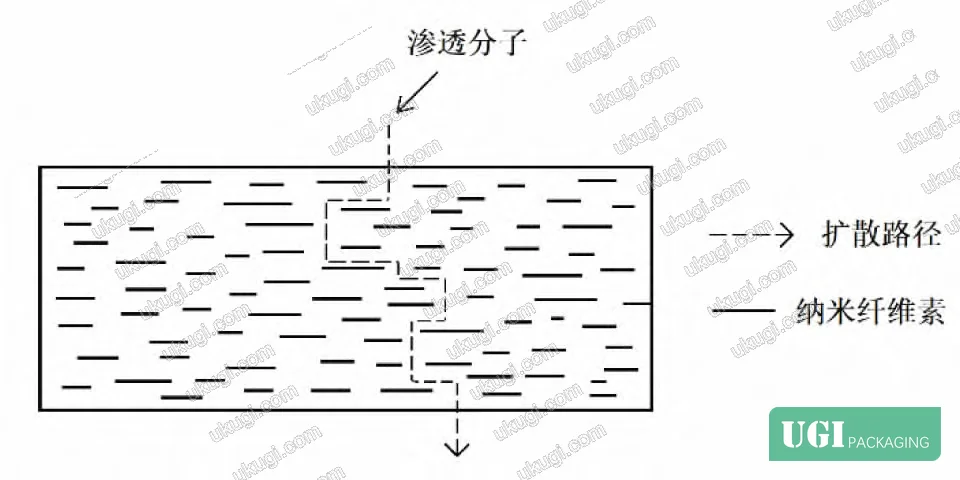
The physical mechanism is well understood: the high-crystallinity regions of CNC are essentially impermeable to gas molecules, and the dense hydrogen-bond network CNC forms with the surrounding matrix creates a tortuous path that forces gas molecules to travel a significantly longer effective distance through the film. The result is measurably higher cohesive energy density at the CNC-matrix interface, which can be confirmed analytically.
The performance data from gelatin-based films is instructive. At 5% nanocellulose addition (both CNC and CNF types), OTR dropped by 21%. Increasing to 10% loading pushed that reduction to 36%. CNFs and CNCs produced comparable results in this system, which is worth noting — CNF is typically less expensive to produce, so if your substrate is gelatin-based, CNF at 10% may be the better commercial choice.
The more dramatic result comes from poly(3-hydroxybutyrate) (PHB) matrices. Adding just 2% CNC reduced the OTR of PHB film by 65%. That is an extraordinary efficiency for a loading level low enough to preserve most of the base material’s processability and cost structure. If you are evaluating PHB-based compostable films for food contact applications, this 2% CNC threshold should be in your specification discussion.
Water vapor transmission rate (WVTR) tells a different story, and this is where bio-based systems genuinely struggle. Pure CNF film has a WVTR of approximately 174 g/(m²·d). Low-density polyethylene (LDPE), the conventional benchmark, sits at 15–20 g/(m²·d). That is nearly a 10× gap, and it doesn’t close easily. Most bio-based polymers are hydrophilic — they absorb moisture, which plasticizes the matrix, opens diffusion pathways, and degrades barrier performance under humid conditions. At 80% relative humidity, OTR in some films increases by a factor of 20, which effectively eliminates any oxygen barrier advantage in tropical or humid storage environments.
CNC reinforcement partially compensates for this. The hydrogen bonding between CNC and the matrix occupies hydroxyl (–OH) groups that would otherwise interact with water molecules, reducing water uptake. Multiple research groups confirmed that CNC reduces the water vapor permeability coefficient (WVP) in sodium alginate, chitosan, starch, gelatin, and polyvinyl alcohol matrices. Corn starch films with 0.5% and 1% CNC showed significant WVTR reductions versus unreinforced controls. Chitosan composite films demonstrated decreased moisture permeability and water absorption as CNC concentration increased.
Honestly, most buyers over-specify water vapor barrier for ambient-temperature dry goods and under-specify it for chilled or high-humidity logistics routes. The right approach is to define the RH range your packaging will actually experience in the supply chain, then evaluate WVTR at those conditions — not at standard 38°C/90%RH unless that reflects your actual distribution environment.
UV Blocking and Antimicrobial Performance in Compostable Packaging Films #
UV radiation in the 280–315 nm (UVB) and 315–400 nm (UVA) ranges drives photooxidation reactions that degrade lipids, proteins, vitamins, and antioxidants in packaged food. Film transparency is commercially desirable, but unmodified bio-based films frequently offer minimal UV protection. The formulation solution is specific.
Aromatic nanofiber/CNF composite films address this directly. Pure CNF film shows high visible-light transmittance (400–800 nm range) but low absorbance at 200 nm, meaning it provides almost no UV shielding. Introducing 2% aramid nanofiber (ANF) into the CNF matrix changes this substantially — the conjugated benzene and amide bonds absorb UV light while maintaining high visible-spectrum transparency. This 2% ANF loading level is a meaningful procurement data point: enough for functional UV blocking without compromising the optical clarity that retail packaging requires.
Bacterial cellulose (BC) composite films show a different profile. Pure BC film transmits approximately 7.5% of UV light at 400 nm. Adding glycerol as a plasticizer reduces UV transmittance in the 200–280 nm band to 0.57% — essentially complete UV blocking in the UVB range — while simultaneously improving mechanical properties. For buyers evaluating compostable films for UV-sensitive products (cold-pressed oils, vitamin formulations, fermented foods), this BC/glycerol system provides a practical formulation path.
The antimicrobial data is where performance converges with food safety requirements. Nanocellulose’s high specific surface area supports high antimicrobial agent loading, which is the structural reason these composites outperform conventional films on zone-of-inhibition testing.
Silver nanoparticle (AgNP) systems are the highest-performing: NC/Ag/PVA nanocomposite films with just 1% AgNP loading demonstrated significant inhibition of both gram-positive and gram-negative bacteria, with no measured cytotoxicity. The same 1% AgNP addition increased film tensile strength by 580% to 83.4 MPa — a coupling effect that makes AgNP a compelling multifunctional additive if regulatory clearance for your market allows it.
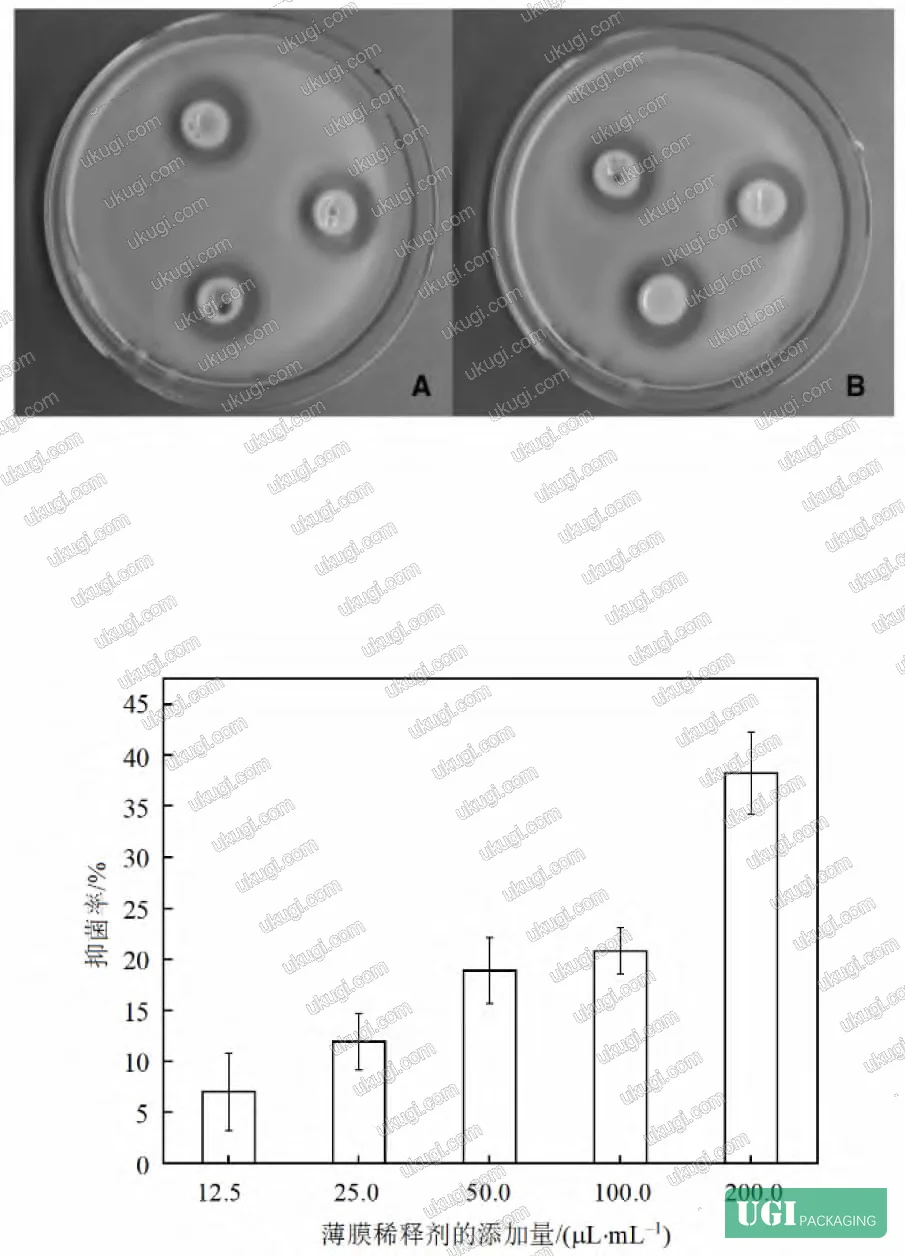
Cinnamaldehyde-loaded chitosan/zein and chitosan/whey protein films reinforced with CNC showed clear inhibitory halos against mold, E. coli, and S. aureus, with CNC reducing bacterial development potential in parallel. Chitosan/PVA films with nanocellulose surfaces retained functional amino, hydroxyl, and hydrogen-bonding groups — important for surface modification if you need secondary functional coatings.
In supplier qualification, we have seen three of six samples submitted as “antimicrobial bio-based films” fail basic zone-of-inhibition testing against S. aureus at the claimed agent loading. The failure mode was almost always inadequate nanocellulose dispersion — agglomeration of CNCs in the casting solution prevents uniform antimicrobial agent distribution, and the result is inconsistent inhibition across the film surface. Ask your supplier for dispersion characterization data, not just inhibition zone photographs from selected samples.
Most procurement teams don’t realize that antimicrobial packaging claims require both microbiological performance data and regulatory clearance in the destination market — and these are governed by entirely separate compliance frameworks. A film that passes zone-of-inhibition testing in a Chinese laboratory may require additional migration and safety testing before it can carry antimicrobial claims in the EU or North America. Buyers sourcing compostable antimicrobial packaging for cross-border food applications should confirm compliance status under applicable food contact regulations before finalizing specifications.
Mechanical Performance of Nanocellulose-Reinforced Biopolymer Films #
Bio-based packaging films fail in practice most often not from barrier deficiency but from mechanical weakness — tearing during filling, elongation failure on automatic packaging lines, or creep under stacking loads. The mechanical reinforcement data for nanocellulose systems is the strongest and most consistent body of evidence in this field.
The CNC reinforcement effect in PLA films is well characterized: adding 1% and 3% CNC to PLA increases elastic modulus measurably without reducing transparency. Adding a citrate ester plasticizer alongside 3% CNC pushes elongation at break from 38% to 272% — this is the formulation approach for applications requiring both stiffness and extensibility, such as stretch overwraps for citrus or irregular produce.
The CNF reinforcement data in PLA sheet is equally precise: 10% CNF loading increases both modulus and tensile strength by 40% and 25% respectively. For chitosan films, CNF produces maximum modulus increments in the 78%–320% range depending on film composition — a wide spread that reflects how sensitively the response depends on base matrix viscosity and CNF dispersion quality.
The CNC concentration effect in chitosan/PVA films was characterized specifically: at 3% CNC content, Young’s modulus increased by 43.9% and tensile strength by 24.8% versus unreinforced controls. This 3% loading point appears to be near-optimal across multiple matrix systems — higher concentrations tend to produce agglomeration that degrades rather than improves mechanical properties.
Sugar palm starch (SPS) films with 1% CNF showed strength and modulus improvements exceeding 100%, which is notable because SPS is one of the more mechanically fragile biopolymers and a frequent candidate for sustainable single-use packaging. CNF reinforcement at low loading levels makes SPS commercially viable for applications it could not otherwise serve. Sodium alginate (Alg) composite films with nanocellulose showed significantly enhanced tensile strength versus pure Alg film, with the CNC addition changing the crystalline arrangement of the alginate matrix — a structural change confirmed by XRD characterization.
Practical Guidance for Buyers #
If you are evaluating bio-based or compostable films for a real procurement transition, the nanocellulose data reframes how you should build your specification. Don’t start with generic “bio-based” claims — start with specific barrier and mechanical targets, then work backward to the nanocellulose type, loading level, and matrix system that achieves them.
For oxygen-critical applications (oils, snacks, pharmaceuticals), specify OTR ≤ a defined threshold at your actual storage RH — not at standard dry conditions. The 2% CNC in PHB result (65% OTR reduction) is your benchmark for what is achievable. For moisture-sensitive products in humid logistics routes, accept that bio-based films will require either multilayer construction or active desiccant systems to compensate for the inherent hydrophilicity of biopolymers.
For antimicrobial packaging, require dispersion characterization data alongside inhibition zone results. A well-dispersed 1% AgNP system in a nanocellulose matrix can hit 83.4 MPa tensile strength with broad-spectrum activity — if the dispersion is poor, you get neither the mechanical nor the antimicrobial performance.
At ukugi.com, we work directly with brand owners and packaging buyers across North America, Europe, and Southeast Asia to develop and validate custom bio-based and compostable packaging solutions — from custom paper boxes with functional barrier coatings to custom labels and stickers on compostable substrates, with full surface finishing capabilities. Our technical team can review your performance requirements and specify a material system against your actual test thresholds before you commit to sampling.
Need a custom formulation or sample? Request a quote from our team →
Supplier Qualification Questions #
- At what CNC or CNF loading level does your bio-based film achieve its OTR specification, and can you provide the OTR test data in units of cm³/(m²·day·atm) at both dry and 80% RH conditions?
- What is the measured WVTR of your CNF-based film in g/(m²·d), and how does this compare to your LDPE or conventional film benchmark — specifically, is it within a 10× factor of the 15–20 g/(m²·d) LDPE reference range?
- For antimicrobial variants, can you provide zone-of-inhibition data against both gram-positive (S. aureus) and gram-negative (E. coli) organisms, and what is the nanocellulose dispersion characterization method used to confirm uniform CNC/CNF distribution in the cast film?
- What is the measured tensile strength and Young’s modulus of your nanocellulose composite film at the specified loading level, and can you confirm whether the 3% CNC threshold (target: ≥43.9% modulus increase vs. unreinforced control) has been validated in your production process?
- For UV-blocking formulations, what is the UV transmittance at 280–400 nm for your composite film, and does the formulation include a characterized UV-absorbing component (e.g., ANF at ≥2% or glycerol-modified BC achieving ≤0.57% transmittance in the 200–280 nm band)?
Quality Verification Checklist #
- ☐ OTR reduction ≥65% vs. unreinforced biopolymer baseline confirmed at ≤2% CNC loading in PHB-type matrix, with test data at defined RH conditions
- ☐ WVTR of composite film measured and reported in g/(m²·d); value does not exceed 3× the specification target under the storage RH expected in the supply chain
- ☐ Tensile strength ≥83.4 MPa (or equivalent documented improvement of ≥43.9% modulus vs. control) confirmed by standardized mechanical test report for the supplied film grade
- ☐ UV transmittance ≤7.5% at 400 nm for UV-blocking grades; ≤0.57% in 200–280 nm band for glycerol-modified BC composite grades
- ☐ Antimicrobial activity confirmed by zone-of-inhibition testing against both S. aureus and E. coli; dispersion characterization (SEM or equivalent) provided to confirm uniform AgNP or antimicrobial agent distribution
- ☐ CNC/CNF loading level declared on material data sheet with particle size range (CNC: 4–25 nm diameter, 100–1000 nm length; CNF: 10–100 nm diameter) confirmed by supplier
- ☐ Biocompostability or biodegradability certification (ISO 17088, EN 13432, or equivalent) provided for the base biopolymer matrix (PLA, PHB, starch, chitosan, alginate, or PVA)
- ☐ No cytotoxicity detected in biocompatibility testing for antimicrobial film grades, with test method and cell line documented
Key Specifications Table #
| Parameter | Recommended Value | Verification Method |
|---|---|---|
| Oxygen Transmission Rate (OTR) reduction | ≥65% vs. unreinforced control at ≤2% CNC loading | ASTM D3985 or ISO 15105-2 at defined RH; compare vs. base resin control |
| Water Vapor Transmission Rate (WVTR) | Target ≤3× LDPE benchmark (≤60 g/m²·d); pure CNF film baseline ~174 g/m²·d | ASTM E96 or ISO 2528; test at actual supply chain RH, not only 38°C/90%RH |
| Tensile Strength (antimicrobial NC/Ag/PVA) | ≥83.4 MPa at 1% AgNP loading | ISO 527-3 or ASTM D882 tensile test on cast film specimens |
| Young’s Modulus increase (CNC in chitosan/PVA) | ≥43.9% vs. unreinforced control at 3% CNC | ISO 527-3; compare modulus values at identical test geometry and strain rate |
| UV Transmittance at 280–400 nm | ≤7.5% at 400 nm (BC composite); ≤0.57% at 200–280 nm (BC/glycerol) | UV-Vis spectrophotometry per ISO 13468 or ASTM D1003 |
| Elongation at Break (plasticized PLA/CNC) | ≥272% at 3% CNC + citrate ester plasticizer | ISO 527-3; confirm plasticizer type and loading level on data sheet |
Looking for a manufacturer that meets these specifications? Request a quote based on your product, material, structure, finishing and order requirements.
References #
Data source: Nanocellulose Reinforcement of Bio-Based Polymer Films for Functional Food Packaging: Advances in Barrier, Mechanical, and Antimicrobial Performance, D.-P. Xie et al., International Journal of Biological Macromolecules, 2023
Frequently Asked Questions #
What is the most effective nanocellulose type for improving oxygen barrier in bio-based packaging films?
CNC (cellulose nanocrystals) at low loadings consistently outperforms CNF for oxygen barrier improvement. The most striking documented result is a 65% OTR reduction in PHB film with just 2% CNC addition — a result achievable because CNC’s high crystallinity creates an impermeable network with extended gas diffusion paths. For gelatin-based systems, both CNC and CNF at 10% loading deliver approximately 36% OTR reduction, so the choice depends on cost and processability.
Why do bio-based films still struggle with water vapor transmission even after nanocellulose reinforcement?
The fundamental problem is hydrophilicity. Most bio-based matrices — starch, chitosan, alginate, gelatin, PVA — absorb water, which plasticizes the film and opens diffusion pathways. Pure CNF film measures approximately 174 g/(m²·d) WVTR versus 15–20 g/(m²·d) for LDPE — roughly a 10× gap. CNC reinforcement reduces WVP by occupying hydroxyl groups through hydrogen bonding, but it does not eliminate the underlying hydrophilicity. Multilayer constructions or hydrophobic surface treatments are typically required for demanding moisture-barrier applications.
Can nanocellulose-reinforced films carry legitimate antimicrobial claims for food packaging?
The laboratory performance data is strong — NC/Ag/PVA films with 1% AgNP show broad-spectrum activity against both gram-positive and gram-negative organisms with no measured cytotoxicity, and cinnamaldehyde-loaded CNC composites show clear inhibition of mold and common foodborne bacteria. The harder question is regulatory clearance. Food contact antimicrobial claims require market-specific approval (EU Regulation 10/2011, FDA food contact notifications, or equivalent), and these are separate from microbiological performance data. Confirm regulatory status for your target market before specifying antimicrobial packaging.
What CNC loading level is optimal for mechanical properties in composite bio-based films?
For chitosan/PVA systems, 3% CNC is the documented optimum — producing 43.9% Young’s modulus increase and 24.8% tensile strength improvement versus unreinforced controls. Beyond this concentration, agglomeration typically begins to degrade rather than improve properties. For PLA/CNC systems, adding a citrate ester plasticizer at 3% CNC dramatically extends elongation at break from 38% to 272%, enabling flexible film applications. CNF in PLA at 10% loading increases both modulus and tensile strength by 40% and 25% respectively.
Are nanocellulose-reinforced bio-based films genuinely compostable, or does the nanocellulose component create certification problems?
Nanocellulose — whether CNC, CNF, or MCC — is derived from plant cellulose and is inherently biodegradable. It does not compromise the compostability of the base biopolymer matrix. The certification path depends on the complete film formulation: the base resin (PLA, PHB, starch, chitosan, alginate) must be certified to the applicable compostability standard (EN 13432, ISO 17088, ASTM D6400), and all additives including nanocellulose, plasticizers, and any antimicrobial agents must be declared. AgNP-containing films will face additional scrutiny and may not qualify for standard compostability certification — this is a genuine formulation tradeoff buyers need to evaluate explicitly.
Published by ukugi.com Technical Team | Request a quote


