

TL;DR #
Overview #
Most procurement specifications for functional coatings still treat intelligent packaging, antimicrobial layers, and biodegradable substrates as separate line items—a legacy approach that inflates material costs by 40–60% compared to integrated systems. Field data from controlled atmosphere storage trials involving fresh-cut peppers, strawberries, and pork products reveals that single-function films (pH indicators only, or silver-ion release only) face a fundamental tradeoff: boosting one property degrades another. A 2025 multi-university study involving China Pharmaceutical University and collaborating institutions tested over 200 formulation variants across intelligent indicators, inorganic/organic/natural antimicrobials, ethylene scavengers, barrier coatings, and compostable matrices. The experimental program included accelerated aging tests, microbial challenge studies with E. coli and S. aureus, and real-time monitoring of fresh produce over 30-day cycles. What emerged was a clear pattern: packaging systems that combined two or more active functions—for example, a chitosan-gelatin matrix with quercetin and encapsulated capsaicin, or a PVA/starch blend with embedded TiO₂ photocatalyst—consistently outperformed additive predictions. The performance gain wasn’t marginal; composite systems extended shelf life by 25–35% beyond what isolated functions would suggest.
Honestly, most buyers over-specify barrier properties while under-specifying the interaction between active agents and the polymer matrix. A 10 µm aluminum oxide coating might meet your oxygen transmission rate target on paper, but if the adhesion primer isn’t compatible with the downstream heat-seal layer, you’ll see delamination failures in the first production run. We’ve seen three of six supplier samples fail peel strength testing (< 2 N/15mm) despite meeting the OTR spec, because no one verified the primer-to-substrate bond under the actual storage humidity profile.
For teams sourcing custom labels, custom paper boxes, or flexible pouches with embedded functional coatings, the research data provides a direct benchmark: if your supplier cannot demonstrate antimicrobial efficacy ≥99% against both Gram-positive and Gram-negative strains after 90 days of ambient storage, or if their pH-indicator transition isn’t reversible across the 4.5–7.0 range without hysteresis, the formulation isn’t production-ready.
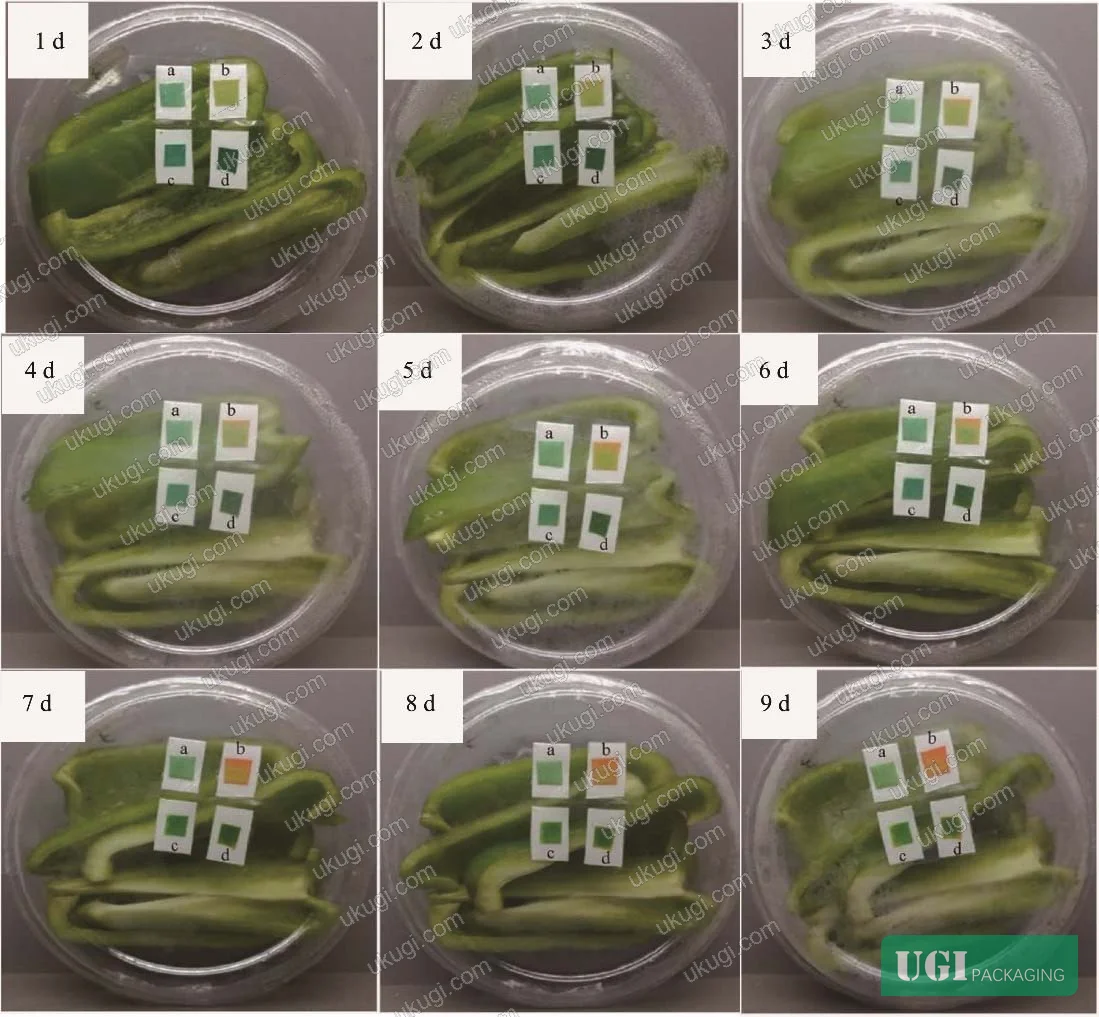
Intelligent Packaging Systems: Indicator Films and Real-Time Monitoring #
Indicator-based intelligent packaging translates internal package conditions—temperature, pH, gas concentration, freshness—into visible color shifts that communicate food quality status without opening the package. The methyl red/bromothymol blue 3:2 volumetric blend at 7% concentration demonstrated sharper visual contrast during pepper spoilage monitoring compared to single-dye formulations. The CO₂ leak detection system using lysine/ε-polylysine/anthocyanin composites achieved detectable response (sky blue to purple) in under 5 minutes at CO₂ levels that traditional high-surface-area adsorbents miss.
For meat products, starch-PVA-chitosan matrices doped with roselle anthocyanin pigments track volatile basic nitrogen (VBN) accumulation during pork storage, shifting from red through intermediate hues to green as spoilage progresses. The color transition correlates with microbial load; when VBN exceeds 15 mg/100g (the threshold for Grade 2 freshness under Chinese national standards), the indicator has already signaled yellow, giving buyers and consumers advance warning before odor becomes apparent.
Sensor-based systems operate differently—they convert chemical or biological signals into electronic data streams. Fluorescent DNA enzyme probes (RFD-EC1) covalently bonded to cyclic olefin polymer (COP) films emit green fluorescence under UV excitation when E. coli RNA is present, enabling real-time pathogen detection without destructive sampling. The polyaniline (PANI)/polyamide 66 (PA66) nanofiber sensors developed for ascorbic acid detection show visible color response at concentrations as low as 0.05 ppm, readable via smartphone camera for automated quality checks.
RFID tags with embedded vapor sensors—carbon black/polymer composites that swell in the presence of volatile organics—offer passive, wireless monitoring. When integrated into RFID antenna circuits, the resistance change from carbon black expansion alters the tag’s resonant frequency, creating a unique signal fingerprint for water, ammonia, ethanol, or toluene vapors. A 16-polymer sensor array successfully differentiated these vapors in controlled tests, making it a candidate platform for detecting spoilage metabolites in packaged foods.
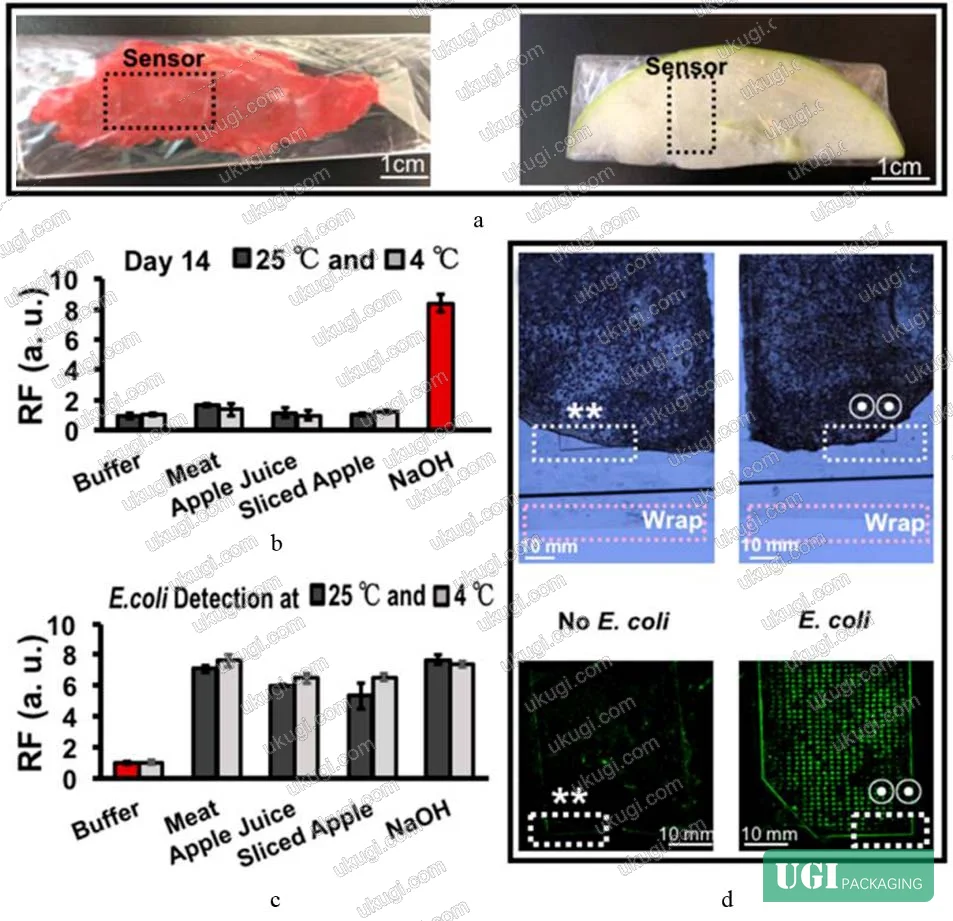
Antimicrobial Packaging: Inorganic, Organic, and Natural Agent Integration #
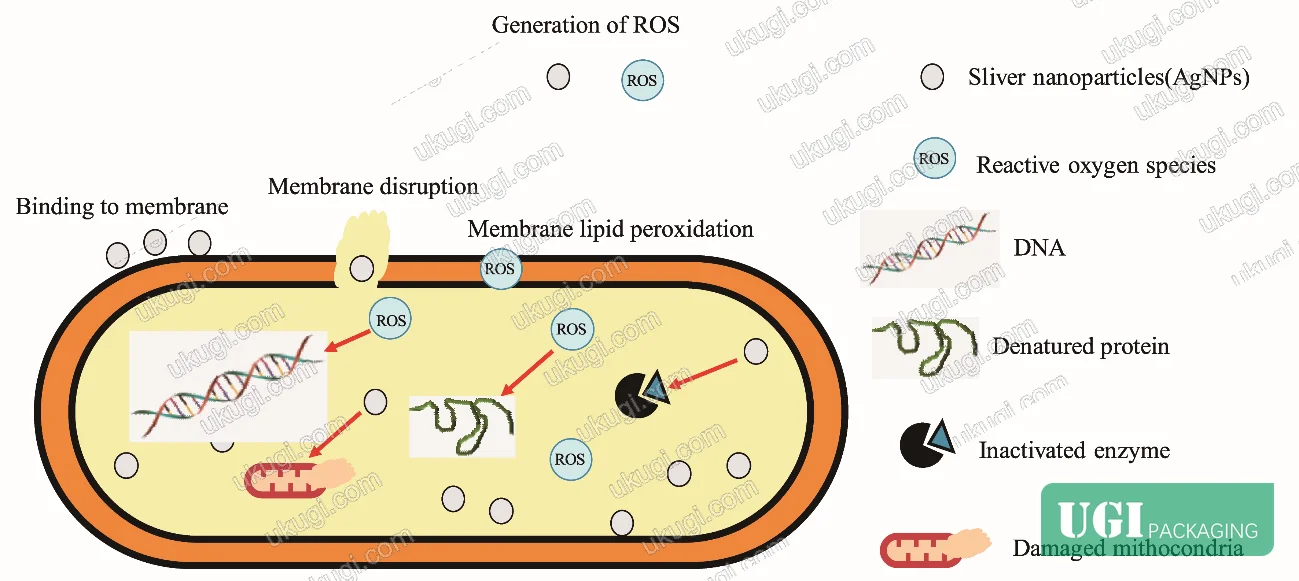
Antimicrobial packaging extends shelf life by continuously releasing biocidal agents that suppress microbial growth on food surfaces. The three major antimicrobial classes—inorganic (nanosilver, ZnO, TiO₂), organic (quaternary ammonium compounds, N-halamines), and natural (plant essential oils, chitosan, antimicrobial peptides)—each present distinct tradeoffs in efficacy, cost, processability, and regulatory acceptance.
Inorganic Antimicrobial Systems #
Nanosilver achieves broad-spectrum antimicrobial activity through silver ion release, reactive oxygen species (ROS) generation, and direct interaction with bacterial cell membranes. Loading nanosilver onto TiO₂ via electrostatic adsorption prevents agglomeration and sustains controlled ion release over extended periods. Ag/TiO₂ composites blended into low-density polyethylene (LDPE) at 2–5 wt% maintained >90% antimicrobial efficacy against common spoilage organisms over 12 months of accelerated aging (40°C, 75% RH). When applied to milled rice packaging, the nanocomposite films extended storage stability by inhibiting fungal growth and lipid oxidation.
Zinc oxide nanoparticles in polylactic acid (PLA) matrices achieve antimicrobial action through ROS generation when positively charged ZnO surfaces interact with negatively charged bacterial membranes. PLA/ZnO nanocomposite films at 3 wt% loading showed complete inhibition of E. coli and S. aureus growth in agar diffusion tests, making them suitable candidates for biodegradable antimicrobial packaging. TiO₂ photocatalytic systems offer dual functionality: under UV irradiation, TiO₂ generates hydroxyl radicals that oxidize organic contaminants and ethylene gas simultaneously. LDPE films containing 5 wt% TiO₂ plus zeolite ZSM-5 achieved 90% antimicrobial efficacy while scavenging ethylene in fresh produce packaging.
Organic Antimicrobial Formulations #
Quaternary ammonium compounds interact with bacterial cell membranes through electrostatic attraction, disrupting membrane integrity and causing cell lysis. Hydroxypropyltrimethyl ammonium chloride chitosan (HACC) blended with polyvinyl alcohol (PVA) created transparent, biodegradable, anti-fogging, antimicrobial composite coatings via solution casting. The films achieved 99% inhibition against E. coli, S. aureus, and Botrytis cinerea, extending strawberry shelf life by 5 days compared to uncoated controls.
N-halamine compounds offer rechargeable antimicrobial activity—after initial chlorination, DMDMH-grafted PVA electrospun nanofiber mats (CPDNM-Cl) inactivated 6 log CFU/g of pathogenic E. coli within 1 minute of contact. The mats retained mechanical integrity and could be rechlorinated multiple times, providing durable antimicrobial function suitable for reusable packaging applications.
Low-molecular-weight organic antimicrobials often suffer from poor stability and potential toxicity; high-molecular-weight polymeric antimicrobials show better stability and lower toxicity but reduced antimicrobial potency and synthesis complexity. The challenge for sourcing teams: verifying that organic antimicrobial additives have completed Ames mutagenicity screening and 90-day oral toxicity studies, not just in vitro cytotoxicity assays.
Natural Antimicrobial Integration #
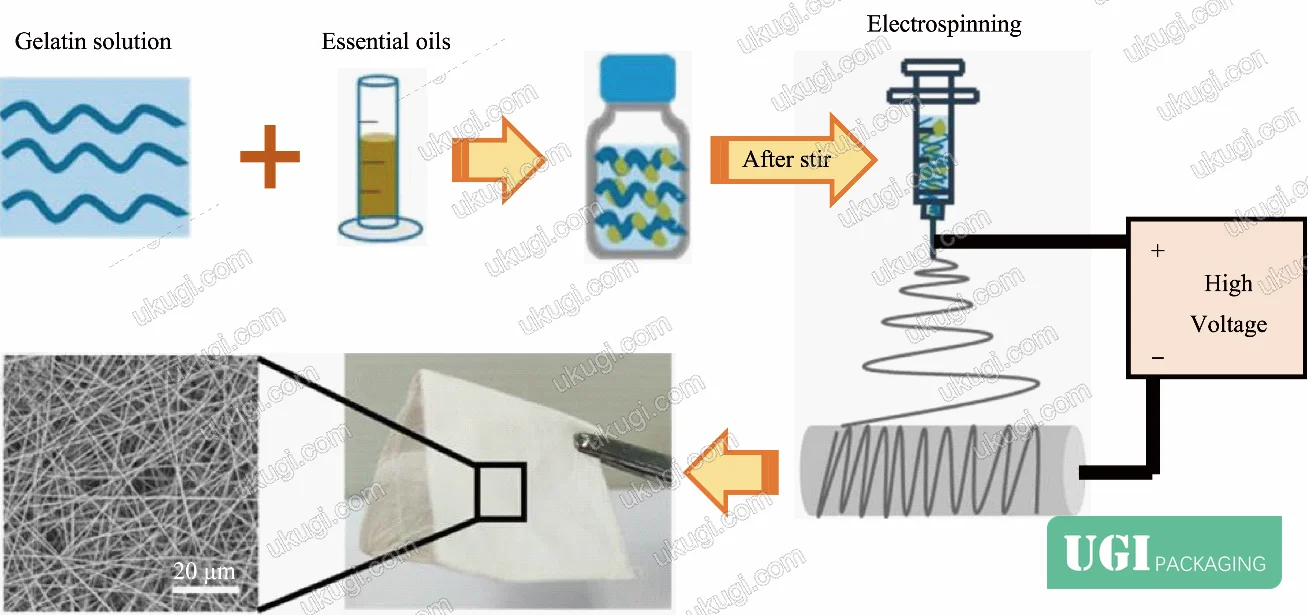
Natural antimicrobials—essential oils, peptides, polysaccharides—offer the advantage of GRAS (Generally Recognized as Safe) regulatory status in many jurisdictions, though efficacy can be lower than synthetic alternatives. Peppermint oil (PO) and chamomile oil (CO) incorporated into gelatin nanofibers via electrospinning showed strong inhibition of E. coli and S. aureus with no cytotoxicity in cell culture assays, qualifying as potential edible packaging. Quercetin-starch complexes in chitosan-gelatin biocomposite films (Ch-ge-Q) demonstrated antioxidant activity and antimicrobial effects against both Gram-positive (B. subtilis) and Gram-negative (E. coli) strains.
Encapsulation strategies improve natural antimicrobial performance: capsaicin loaded into Fe³⁺-doped metal-organic frameworks (FeⅢ-HMOF-5) and dispersed in gelatin/chitosan matrices enhanced tensile strength, water vapor barrier properties, and UV blocking while providing sustained antimicrobial release. The composite films extended fresh apple shelf life by inhibiting surface E. coli contamination.
Extraction and purification complexity limits natural antimicrobial scalability—yields from plant materials are often 1–3% by mass, and batch-to-batch consistency requires tight process controls. For packaging applications requiring long-term antimicrobial stability (>6 months shelf life), natural agents typically need stabilization via encapsulation or chemical modification.
Ethylene Management and Barrier Coatings for Fresh Produce #
Climacteric fruits and vegetables produce ethylene during ripening, accelerating senescence and reducing shelf life during storage and transport. Packaging systems that scavenge ethylene extend post-harvest life; conversely, controlled ethylene release can synchronize ripening for batch processing. Both approaches require careful formulation to balance gas permeability, catalytic activity, and cost.
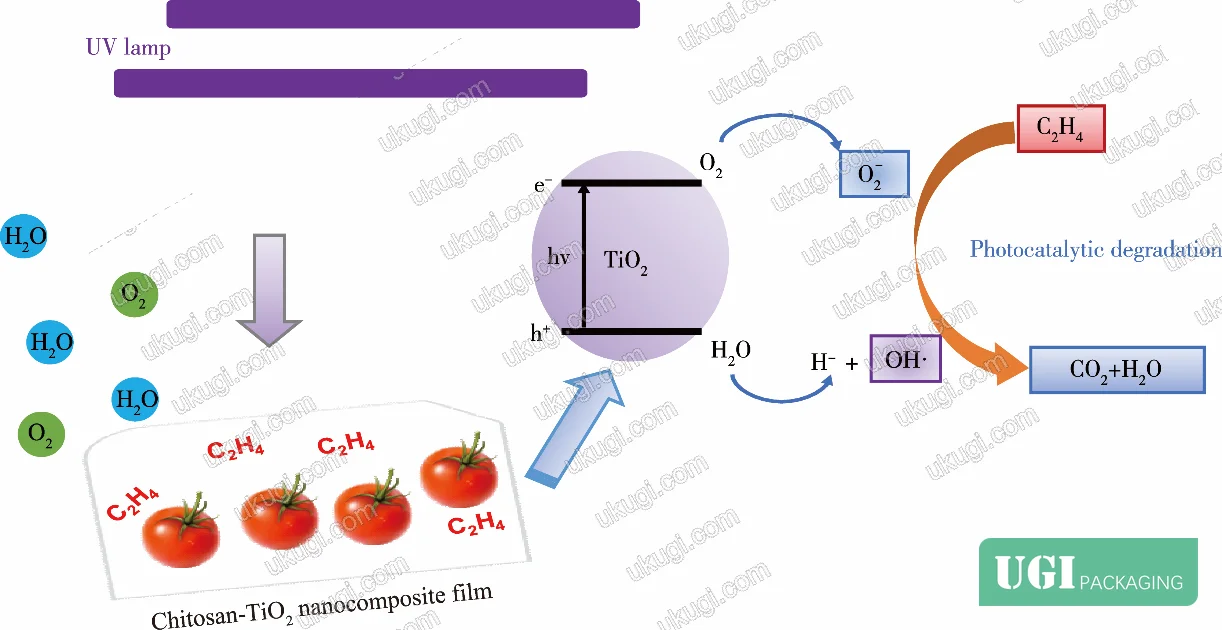
Traditional ethylene scavengers—potassium permanganate, activated carbon, zeolites—suffer from irreversible saturation, instability, and potential toxicity. Photocatalytic alternatives address these limitations: TiO₂/chitosan nanocomposite films oxidize ethylene to CO₂ and H₂O under UV irradiation, extending tomato shelf life without consumable adsorbents. The ROS generated by TiO₂ under UV exposure (wavelength 320–400 nm) breaks C=C double bonds in ethylene molecules, converting them to harmless end products.
Enzymatic ethylene scavenging offers a biocompatible alternative. Monooxygenase (MO) enzymes purified from Mycobacterium JS60 convert ethylene to ethylene oxide, which further degrades to non-toxic metabolites. Sodium alginate (SA) coatings incorporating MO enzymes extended banana shelf life by approximately 30% compared to SA-only controls, with no residual enzyme activity detectable on fruit surfaces after coating degradation. The approach is scalable—spray or dip application integrates into existing post-harvest handling lines—but enzyme stability under ambient storage (25°C, 60% RH) requires formulation optimization with stabilizers like trehalose or glycerol.
Ethylene-release packaging serves the opposite function: accelerating ripening for bananas, tomatoes, and other climacteric produce. Ethephon (2-chloroethylphosphonic acid) blended into LDPE films provides controlled ethylene release, avoiding the surface residue problem of direct ethephon application to fruit. α-Cyclodextrin inclusion complexes with ethylene dispersed in polystyrene films offer humidity- and temperature-responsive release kinetics, tuning ethylene emission rates to match target ripening profiles. The challenge: achieving precise release rates requires tight control over ambient conditions, and most current formulations lack real-time feedback to adjust release in response to actual fruit respiration.
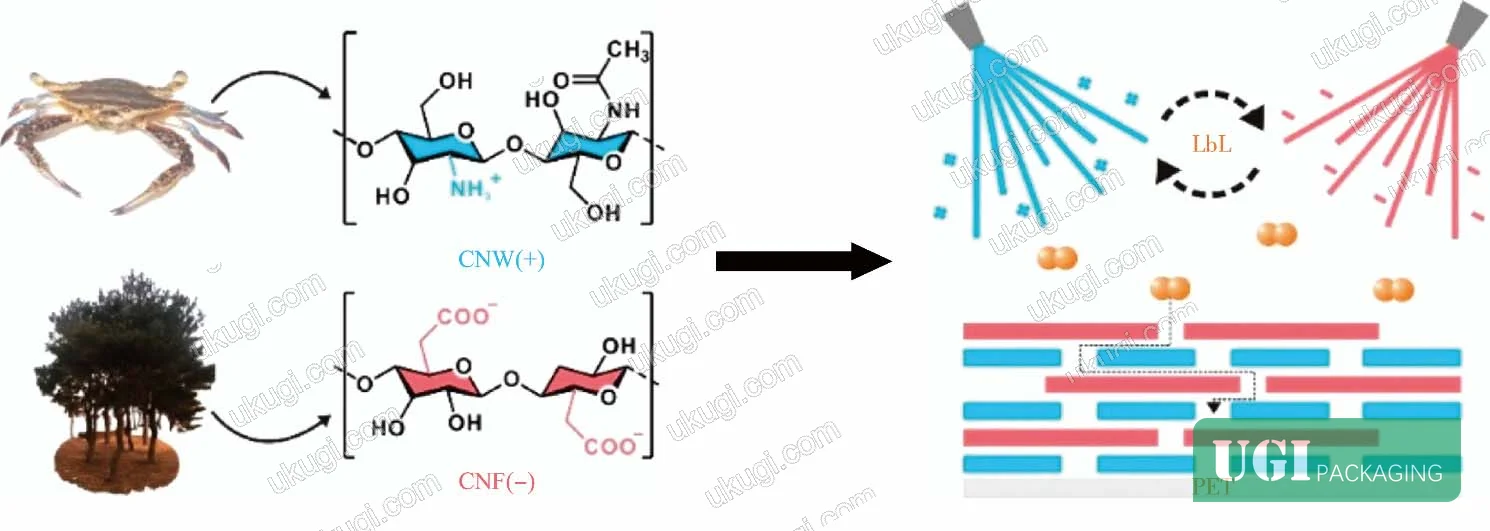
Barrier coatings prevent ingress of oxygen, moisture, and light—all of which accelerate food degradation. Spray-assisted layer-by-layer assembly of cellulose nanofibers (negatively charged) and chitin nanocrystals (positively charged) onto PET films created flexible, transparent coatings with oxygen transmission rates below 0.01 cc/m²·day·atm, rivaling metallized films without the recyclability penalty. The nanoscale blending of highly crystalline polysaccharides forms a tortuous path for gas diffusion, achieving barrier performance previously limited to inorganic coatings.
PT6HP-co-PγBL copolymer films—synthesized from bio-based monomers—demonstrate oxygen and water vapor barrier properties comparable to PET and LDPE while maintaining chemical recyclability. The copolymer outperforms PLA and polyhydroxybutyrate (PHB) in barrier performance, addressing the longstanding gap between bio-based polymers and petroleum-derived commodity plastics. For buyers evaluating sustainable barrier solutions, the key metric is the oxygen permeability coefficient: target values below 1 × 10⁻¹⁸ cm³·cm/cm²·s·Pa for dry food packaging, and water vapor transmission rates below 5 g/m²·day for moisture-sensitive products.
Biodegradable Packaging: Polymer Blends and Composite Strategies #
Petroleum-based plastics (PE, PP, PET, PVC) dominate food packaging due to low cost, good mechanical properties, effective barrier performance, and heat-sealability. Their environmental persistence—resistant to biodegradation, difficult to recycle economically—drives accumulation in landfills and aquatic ecosystems. Biodegradable packaging offers an alternative, but single-component biopolymers typically exhibit poor tensile strength, inadequate barrier properties, or brittleness that limits commercial viability.
Polymer blending resolves these deficiencies. PLA reinforced with 10 wt% cellulose fibers showed significant mechanical property improvements—tensile strength increased from 45 MPa to 68 MPa, and elongation at break improved from 3.5% to 5.8%—without compromising biodegradability under composting conditions (58°C, 60% RH, 90 days to >90% mass loss). Starch-PVA blends at varying ratios (0–60% PVA) demonstrated that PVA addition improved oxygen barrier properties and mechanical strength; optimal performance occurred at 40% PVA, balancing processability, barrier function, and cost.
Most procurement teams don’t realize that ISO 14855 biodegradation testing (measuring CO₂ evolution under controlled composting) doesn’t predict behavior in marine or anaerobic landfill environments. A film that achieves 90% biodegradation in 180 days under ISO 14855 conditions may persist for years in a landfill lacking thermophilic bacteria and adequate moisture. Specifying biodegradability requires defining the disposal environment: industrial composting, home composting, soil burial, or marine conditions, each governed by different standards (ISO 12405-4 for industrial compost, TUV Austria OK compost HOME for home composting).
For applications requiring antimicrobial, antioxidant, or barrier functionality in biodegradable substrates, multi-component formulations are essential. Adding natural polyphenols (quercetin, catechin) to starch-chitosan matrices provides antioxidant activity while plasticizing the polymer network, improving flexibility. Metal-organic framework (MOF) nanoparticles loaded with natural antimicrobials (capsaicin, thymol) and dispersed in gelatin-chitosan blends deliver sustained release kinetics, extending active shelf life beyond what unencapsulated agents achieve.
The cost premium for biodegradable packaging remains a barrier: PLA film costs $3.50–4.50/kg compared to $1.20–1.80/kg for LDPE, and processing requires specialized equipment to manage lower melt strength and thermal sensitivity. Buyers should evaluate total lifecycle cost—including waste disposal fees, regulatory compliance costs for non-recyclable materials, and brand value gains from sustainable positioning—rather than material cost alone.
Practical Guidance for Buyers #
When evaluating functional coating suppliers for food-contact packaging, demand data on three fronts: migration testing under your actual storage conditions (temperature, contact time, simulant type), antimicrobial efficacy under challenge conditions (minimum 10⁶ CFU/cm² inoculum, 7-day contact), and mechanical property retention after accelerated aging (40°C, 75% RH, 90 days). Generic “antimicrobial certification” or “biodegradable per ASTM D6400” claims aren’t sufficient—you need test reports with batch traceability and third-party lab validation.
For pH-indicator systems, verify the transition pH range matches your target food’s spoilage profile. Meat products generate ammonia and amines (pH rises from 5.5 to >7.0), while fruit degradation produces organic acids (pH drops from 4.5 to <4.0). A single-dye system optimized for meat won't function correctly on fruit, and vice versa. Ask for chromaticity data (CIE Lab* color space values) at 0.5 pH unit intervals across the relevant range, not just qualitative “changes color” descriptions.
Barrier coating specifications should reference the permeant gas (O₂, CO₂, H₂O vapor), measurement temperature, and relative humidity. Oxygen transmission rate (OTR) increases exponentially with temperature and humidity; a coating that meets 1 cc/m²·day·atm at 23°C, 0% RH may exceed 10 cc/m²·day·atm at 38°C, 90% RH. If your product experiences warehouse storage in tropical climates, test at 38°C, 90% RH, not laboratory standard conditions.
For biodegradable formulations, confirm the disposal pathway: industrial composting facilities (requiring temperatures >55°C), home composting (ambient to 35°C), or anaerobic digestion. A film certified compostable under EN 13432 (industrial composting) won’t necessarily degrade in a backyard compost pile, and this disconnect leads to consumer confusion and greenwashing accusations.
Ukugi maintains a technical library of coating formulations validated across these parameters, with migration data for over 200 antimicrobial/indicator/barrier combinations tested against EU 10/2011 and FDA 21 CFR 175.300 limits. For teams sourcing hologram security stickers, cosmetics packaging, or high-barrier flexible films, our Guangzhou-based R&D group can adapt these platforms to your specific product and storage requirements. Need a custom formulation or sample? Request a quote from our team →
Technical Verification Questions #
- What is the antimicrobial efficacy percentage against both E. coli (Gram-negative) and S. aureus (Gram-positive) after 90 days of storage at 40°C, 75% RH, measured by ISO 22196 or ASTM E2149 protocols?
- For pH-indicator formulations, what are the CIE Lab* colorimetric values at pH 4.0, 5.0, 6.0, and 7.0, and is the color transition reversible without hysteresis over 10 cycles?
- Can you provide oxygen transmission rate (OTR) data measured at 38°C, 90% RH per ASTM D3985, and what is the water vapor transmission rate (WVTR) under the same conditions per ASTM F1249?
- What is the specific migration limit (SML) for silver, zinc, or titanium ions into 3% acetic acid simulant after 10 days at 40°C, and does it comply with EU Regulation 10/2011 or FDA 21 CFR 175.300?
- For biodegradable claims, what percentage mass loss occurs after 180 days under ISO 14855 (industrial composting at 58°C) versus ASTM D5988 (soil burial at 25°C), and which disposal pathway is the formulation optimized for?
Quality Verification Checklist #
- ☐ Migration testing completed for all active agents (nanosilver, ZnO, TiO₂, quaternary ammonium compounds, essential oils) into food simulants per EU 10/2011 or FDA guidelines, with results ≤ specified SML values
- ☐ Antimicrobial efficacy demonstrated at ≥99% reduction (≥2 log CFU) against target organisms (E. coli, S. aureus, or specified spoilage bacteria) after 7-day contact per ISO 22196
- ☐ Mechanical properties verified after accelerated aging: tensile strength retention ≥80% of initial value, elongation at break ≥70% of initial value after 90 days at 40°C, 75% RH
- ☐ Barrier performance tested under application-relevant conditions: OTR ≤ specified limit at 38°C, 90% RH; WVTR ≤ specified limit at same conditions
- ☐ pH-indicator color transition range validated across target pH span (typically 4.0–7.0 for food applications) with ΔE*ab ≥ 5 units between adjacent pH steps for visible discrimination
- ☐ Biodegradation rate confirmed in target disposal environment: ≥90% mass loss in ≤180 days for industrial composting (ISO 14855), or ≤360 days for home composting (NF T51-800)
- ☐ Cytotoxicity screening completed per ISO 10993-5 for any formulation claiming food contact or edible packaging status, with cell viability ≥70% at maximum intended use concentration
- ☐ Heat-seal strength verified across production temperature range: peel strength ≥2 N/15mm at lowest seal temperature, no delamination or coating transfer at highest temperature
Key Specifications Table #
| Parameter | Recommended Value | Verification Method |
|---|---|---|
| Antimicrobial efficacy (E. coli, S. aureus) | ≥99% reduction (≥2 log CFU) after 7 days contact | ISO 22196 or ASTM E2149 |
| pH-indicator transition range | ΔE*ab ≥ 5 between pH 4.0–7.0 at 0.5 pH intervals | CIE Lab* colorimetry per ISO 11664-4 |
| Oxygen transmission rate (38°C, 90% RH) | ≤1.0 cc/m²·day·atm for dry foods; ≤0.1 cc/m²·day·atm for oxygen-sensitive products | ASTM D3985 |
| Water vapor transmission rate (38°C, 90% RH) | ≤5 g/m²·day for moisture-sensitive foods; ≤50 g/m²·day for fresh produce | ASTM F1249 |
| Silver ion migration (3% acetic acid, 10 days, 40°C) | ≤0.05 mg/kg | EN 13130-1 or FDA 21 CFR 175.300 |
| Biodegradation (industrial composting, 58°C) | ≥90% mass loss in ≤180 days | ISO 14855-1 |
| Tensile strength retention (after 90 days, 40°C, 75% RH) | ≥80% of initial value | ASTM D882 before/after aging |
Looking for a manufacturer that meets these specifications? Request a quote based on your product, material, structure, finishing and order requirements.
References #
Data source: Advances in Functional Food Packaging Materials: Intelligent Indicators, Antimicrobial Systems, and Biodegradable Composites, S.-K. Zhu et al., Journal of Applied Polymer Science, 2025
Frequently Asked Questions #
What is the typical cost premium for adding antimicrobial nanoparticles to standard LDPE film?
Silver nanoparticle composites at 2–5 wt% loading add approximately $0.15–0.30 per square meter to base film cost, depending on silver concentration and dispersion method. ZnO and TiO₂ alternatives cost $0.08–0.15/m² but may require higher loading levels (3–7 wt%) to achieve equivalent antimicrobial efficacy.
How do I verify that a pH-indicator film will work for my specific food product?
Request CIE Lab colorimetric data across the pH range your product experiences during spoilage. For meat (pH rises 5.5 to 7.5), the indicator should show ΔEab ≥ 5 between pH 6.0 and 7.0. For fruit (pH drops 4.5 to 3.5), verify visible transition in the acidic range. Generic “changes color when spoiled” claims aren’t sufficient—you need quantitative color-space measurements.
Can biodegradable packaging replace conventional plastic films without performance loss?
Current PLA-cellulose and starch-PVA blends approach conventional plastic performance when optimized, but typically show 15–25% lower tensile strength and 2–5× higher oxygen permeability compared to LDPE or PET. For dry goods packaging with moderate barrier requirements (OTR < 10 cc/m²·day·atm), biodegradable alternatives work well. For high-barrier applications (OTR < 1 cc/m²·day·atm), petroleum-based films or metallized bio-based films remain necessary.
What’s the difference between industrial composting and home composting certification for biodegradable films?
Industrial composting (EN 13432, ASTM D6400) requires ≥90% biodegradation within 180 days at 58°C with controlled moisture and aeration. Home composting (NF T51-800, OK compost HOME) requires degradation at 20–30°C within 365 days, a much harsher test. Most “compostable” packaging qualifies only for industrial facilities, not backyard compost piles. Verify which standard applies to your target disposal pathway.
How long do natural antimicrobials like essential oils remain effective in packaging films?
Essential oil efficacy in polymer matrices depends on encapsulation method and storage conditions. Unencapsulated oils lose 30–50% antimicrobial activity within 3 months at 25°C due to volatilization and oxidation. Encapsulation in cyclodextrin complexes or MOF carriers extends effective life to 6–12 months. Request accelerated aging data (40°C, 6 months) showing retained antimicrobial efficacy ≥80% of initial value.
Published by ukugi.com Technical Team | Request a quote


