

TL;DR #
In real-sample testing of food packaging films, erucamide was detected at 79.2 mg/kg in aluminum-laminate composite film — a concentration that demands rigorous GC-MS verification before any flexible packaging material enters a food-contact supply chain. Buyers sourcing flexible pouches, wraps, or laminated film packaging need to understand that slip agent migration is not a theoretical risk: it shows up in production-grade materials at measurable levels. Request GC-MS batch test reports covering all six fatty acid amides before approving any food-contact flexible substrate.
Overview #
If you’ve been relying on supplier declarations alone to verify slip agent compliance in food-contact packaging films, this data should change that approach. Customs laboratory testing conducted across multiple Chinese customs technical centers — covering six actual packaging samples (three stretch-wrap films and three aluminum-plastic composite laminates) — found detectable slip agent residues in two of six samples, with erucamide in one composite film reaching 79.2 mg/kg. The analytical method validated here uses GC-MS with selected ion monitoring (SIM), methanol ultrasonic extraction, and a high-temperature ramp program optimized specifically for high-boiling-point fatty acid amides — conditions that matter when you’re trying to separate compounds with overlapping structural profiles.
The six slip agents covered — lauramide, hexadecanamide, oleamide, stearamide, erucamide, and behenamide — are all fatty acid amide derivatives routinely compounded into polyolefin and nylon films to reduce surface friction during high-speed converting. They’re functional additives, not contaminants by design. The problem is migration: these compounds are not covalently bonded to the polymer matrix, and under thermal or fatty-food contact conditions, they transfer into food at measurable rates.
This is directly relevant to buyers of custom paper boxes that incorporate film liners, laminated pouches, or any flexible food-contact layer. Understanding the analytical benchmarks for slip agent testing helps you ask the right questions during supplier qualification — rather than discovering a compliance gap at customs clearance.
Slip Agent Migration in Food Packaging Films: What the Analytical Data Shows #
Fatty acid amides work by blooming to the film surface during cooling after extrusion — this surface migration is the entire mechanism of their slip function. The same mobility that makes them effective also makes them prone to transferring into food contact simulants and, ultimately, food itself.
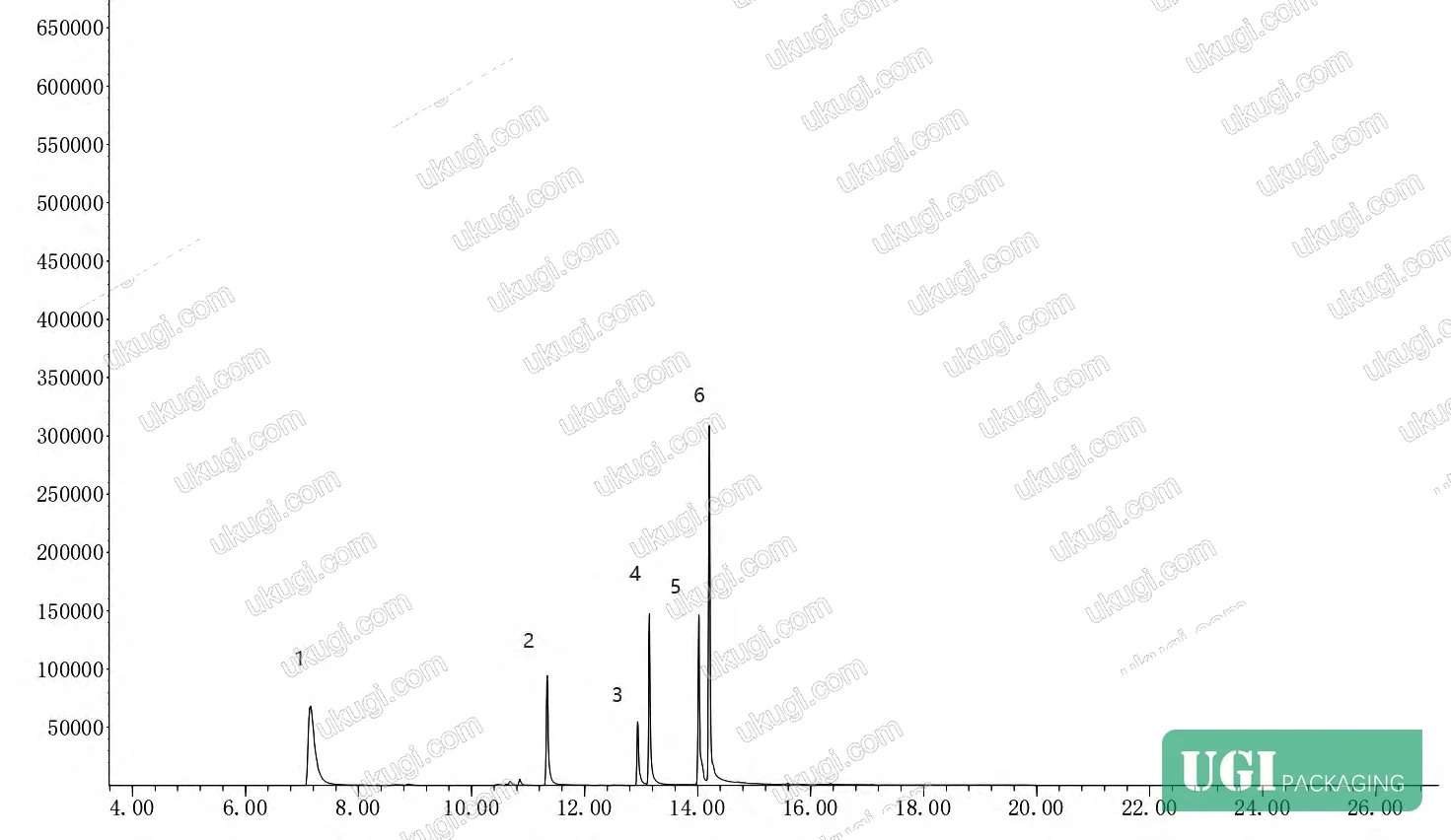
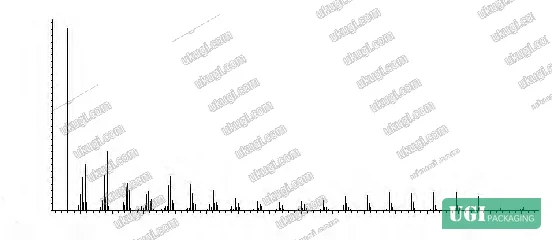
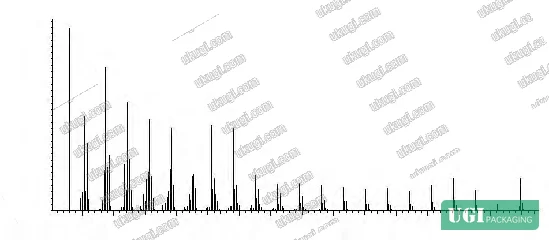
The GC-MS method validated in this study resolves all six amides on an HP-5MS capillary column (30 m × 0.25 mm × 0.25 μm) using a temperature ramp from 150°C (held 3 min) to 280°C at 10°C/min (held 12 min). The inlet temperature is set at 300°C — a deliberate choice, because at 250°C and 280°C, high-boiling compounds showed incomplete transfer at the injector, producing residue buildup and suppressed quantitative signal. This is not a minor instrument parameter: getting the inlet temperature wrong causes the method to systematically underreport erucamide and behenamide, which are the compounds with the highest regulatory scrutiny.
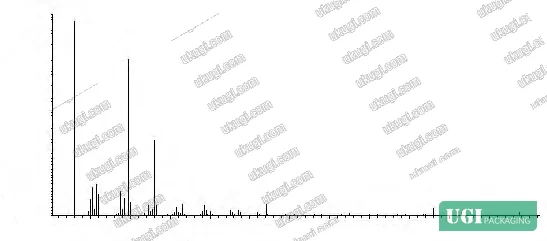
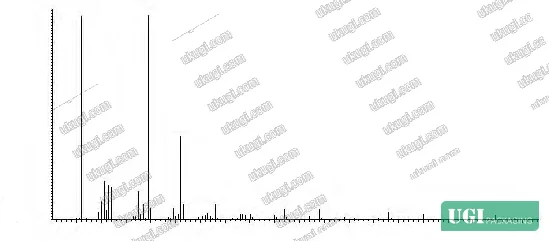
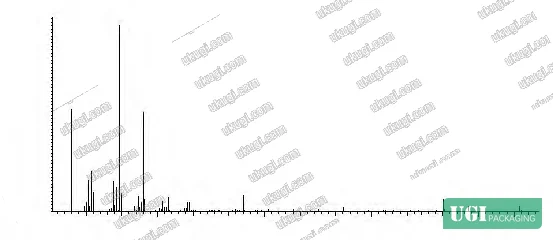
Chromatographic retention and diagnostic ions:
| Compound | Retention Time (min) | Quantitation Ion (m/z) | Qualifier Ions (m/z) |
|---|---|---|---|
| Lauramide | 7.104 | 59 | 72, 199 |
| Hexadecanamide | 11.253 | 59 | 72, 255 |
| Oleamide | 12.969 | 59 | 72, 281 |
| Stearamide | 13.170 | 59 | 72, 283 |
| Erucamide | 14.047 | 57 | 97, 319 |
| Behenamide | 14.357 | 57 | 97, 321 |
Note that oleamide (12.969 min) and stearamide (13.170 min) elute just 0.2 minutes apart. This separation is only reliable under the optimized high-temperature ramp. Any supplier running a faster or flatter temperature program risks co-elution of these two compounds — which would produce artificially elevated stearamide readings and missed oleamide quantification.
The US Code of Federal Regulations limits the monomer residual content of erucamide, oleamide, stearamide, and behenamide to no more than 5% of the finished product. China’s GB 9685-2016 permits these four amide compounds as additives but does not specify quantitative limits or a mandated test method — which creates an asymmetric compliance environment where imported packaging films entering regulated markets can face stricter scrutiny than domestically produced equivalents.
Method Performance and Detection Limits for Slip Agent GC-MS Testing #
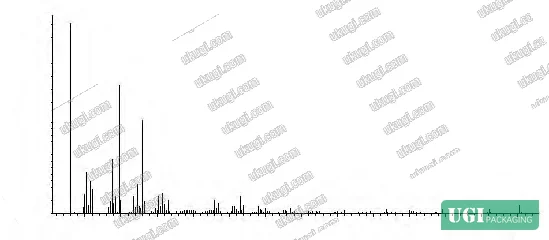
Method performance was validated across three spiking levels (at the LOQ, 2× LOQ, and 10× LOQ) with six replicates per level. All six compounds achieved acceptable linearity, recovery, and precision:
| Compound | Linear Range (mg/L) | R² | LOD (mg/kg) | LOQ (mg/kg) | Recovery Range | RSD (n=6) |
|---|---|---|---|---|---|---|
| Lauramide | 0.4–10.0 | 0.9997 | 0.12 | 0.4 | 85.0–95.0% | 5.6–7.9% |
| Hexadecanamide | 0.3–10.0 | 0.9995 | 0.09 | 0.3 | 83.3–86.7% | 5.8–6.5% |
| Oleamide | 1.5–20.0 | 0.9992 | 0.45 | 1.5 | 80.0–90.0% | 4.6–7.8% |
| Stearamide | 0.6–8.0 | 0.9991 | 0.18 | 0.6 | 83.3–88.3% | 5.6–7.6% |
| Erucamide | 2.2–30.0 | 0.9993 | 0.66 | 2.2 | 81.8–86.4% | 5.8–6.2% |
| Behenamide | 0.4–8.0 | 0.9990 | 0.12 | 0.4 | 85.0–90.0% | 5.9–6.7% |
Recoveries across all six compounds ranged from 80.0% to 95.0%, with RSD values between 4.6% and 7.9% — both within the ±20% recovery and <15% RSD criteria typical for trace contaminant methods in food contact materials.
Honestly, most buyers over-specify the detection sensitivity they request from suppliers. An LOQ of 0.3–2.2 mg/kg for these compounds is more than sufficient for regulatory compliance screening. What matters more is whether the supplier’s laboratory is running SIM mode (not full-scan TIC) and whether they’ve validated the method on the actual substrate matrix rather than a solvent standard curve. Matrix effects on polyolefin films are real, and a calibration curve built in methanol without matrix matching will give you optimistically low readings.
One critical finding in the derivatization comparison: when trifluoroacetic anhydride was tested as a derivatizing agent, only erucamide underwent complete derivatization. The remaining five compounds showed insufficient derivatization efficiency, rendering that approach unworkable for simultaneous multi-compound quantification. This means that any supplier offering derivatization-based GC results for a full six-compound panel should be questioned — the direct injection method with inlet temperature optimization at 300°C is the only validated approach that reliably covers all six analytes.
Real-Sample Results and What They Mean for Incoming Inspection #
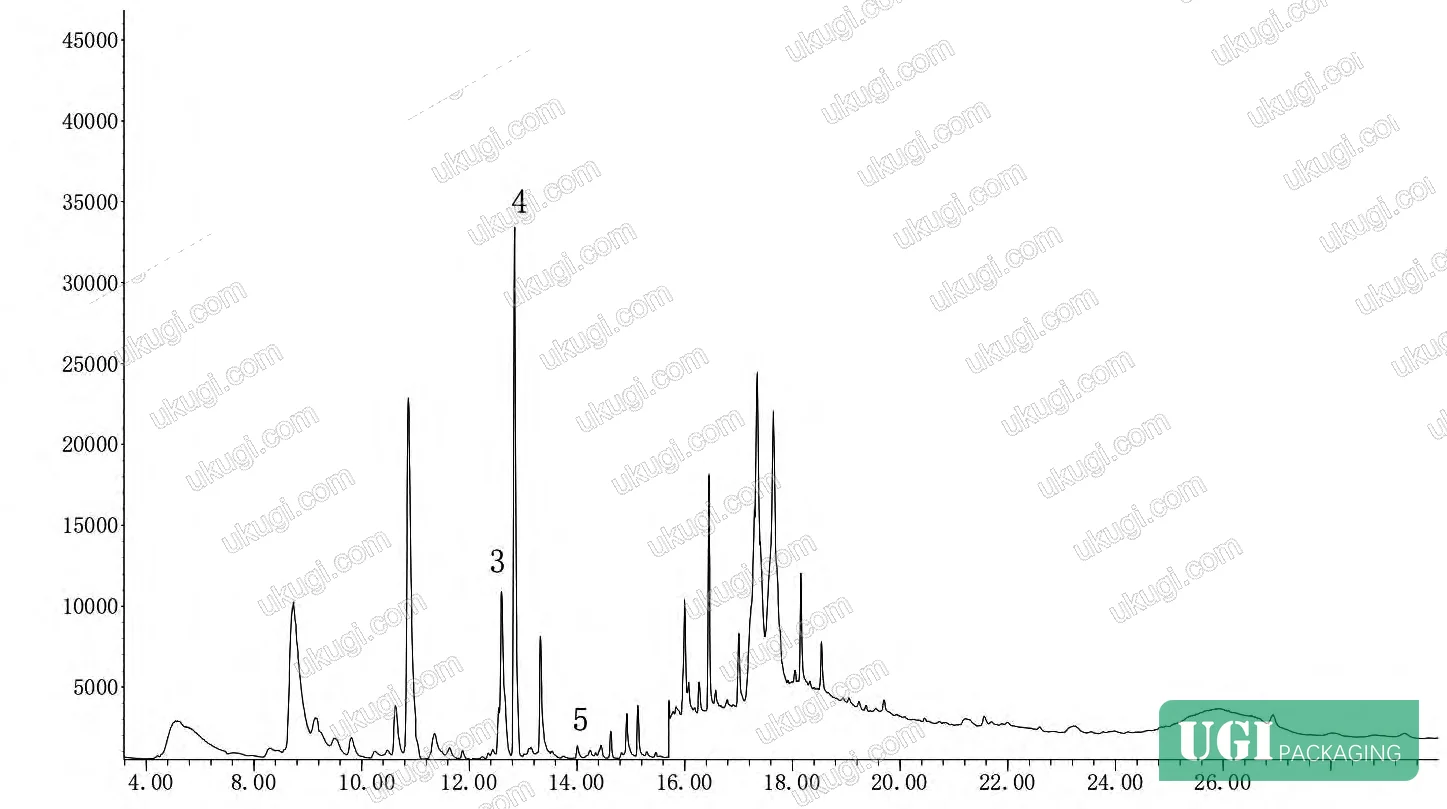
In actual sample testing, two of the six production-grade packaging materials tested positive for slip agent residues:
- Stretch-wrap film (sample 1): oleamide at 45.2 mg/kg, stearamide at 23.7 mg/kg, erucamide at 13.4 mg/kg
- Aluminum-plastic composite film (sample 2): oleamide at 22.1 mg/kg, erucamide at 79.2 mg/kg
Both results were reported as within the regulatory limits applicable under Chinese national standards. But this framing deserves scrutiny. The erucamide level of 79.2 mg/kg in the composite film is not a trace residue — it’s a substantial concentration in a material that will be in direct contact with food. The US CFR 5% monomer residual limit is expressed differently and would require conversion based on the total additive content, but at 79.2 mg/kg, any buyer exporting to North American markets should run an independent verification rather than accepting a supplier’s “within limits” declaration.
In supplier qualification reviews across similar flexible packaging categories, it’s not uncommon to see three of six samples require re-testing when the laboratory cannot confirm SIM mode acquisition or has not optimized the injector temperature above 280°C. The underreporting risk at lower injector temperatures specifically affects erucamide and behenamide — the two longest-chain, highest-boiling compounds in this panel — which happen to be the ones present at the highest concentrations in real samples.
Most procurement teams still treat slip agent testing as a pass/fail documentation exercise rather than a quantitative specification point. That’s a gap worth closing, especially as food safety regulations in the EU and North America continue to tighten requirements for food contact materials, with recent regulatory guidance moving toward stricter specific migration limits for individual fatty acid amides.
For buyers sourcing custom labels and stickers applied to food-contact surfaces, or cosmetics packaging solutions that use polyolefin film components, the same migration risk applies. Slip agents in the film substrate don’t know whether the end use is food or cosmetic.
Practical Guidance for Buyers #
When qualifying a flexible packaging or laminated film supplier for food-contact applications, the analytical method used for slip agent testing matters as much as the result. A GC-MS report showing “not detected” for erucamide is meaningless if the injector was running at 250°C, because the compound was likely not fully volatilized and transferred to the column. Ask specifically for SIM-mode acquisition with inlet temperature at 300°C and a documented high-temperature ramp program. If the supplier cannot tell you their chromatographic conditions, treat the certificate as unverifiable.
At ukugi.com, our manufacturing team in Guangzhou works with international brand owners across North America, Europe, and Southeast Asia on food-contact and cosmetic packaging specifications — and we can provide GC-MS slip agent test data on specific substrate combinations as part of our sampling process. If you’re trying to close a technical gap before issuing an RFQ for flexible pouches or laminated packaging, we know what these tests should look like.
The solvent selection in sample preparation also matters: methanol extraction at 30 minutes ultrasonic is the validated optimum. Shorter extraction times yield incomplete recovery; longer times extract more matrix interferences. A supplier claiming extraction times under 20 minutes should be asked to provide recovery validation data at those conditions.
Erucamide, specifically, warrants the closest attention in flexible film substrates — it has the highest documented concentration in real samples, the widest linear range requirement (up to 30 mg/L), and the most significant regulatory interest due to its biological activity profile.
Need a custom formulation or sample? Request a quote from our team →
Technical Verification Questions #
- What inlet temperature does your GC-MS method use for slip agent analysis, and have you confirmed that erucamide and behenamide are fully quantified at that temperature (no injector residue above 280°C)?
- Can you provide the full SIM acquisition parameters for your six-compound slip agent panel, including the retention time windows, quantitation ions, and qualifier ion ratios for oleamide (m/z 59, qualifier 72 and 281) and stearamide (m/z 59, qualifier 72 and 283)?
- What are the LOQ values in your validated method for each amide compound — specifically, can you demonstrate an LOQ ≤ 2.2 mg/kg for erucamide and ≤ 1.5 mg/kg for oleamide on your production substrate?
- Is your calibration curve constructed in methanol solvent only, or have you performed matrix-matched calibration on the specific film substrate being tested? What recovery percentages did you achieve across the range of 80.0%–95.0%?
- Have your production samples been tested for all six fatty acid amides (lauramide, hexadecanamide, oleamide, stearamide, erucamide, behenamide) simultaneously, and can you share the actual measured concentrations (mg/kg) — not just a pass/fail result — from your most recent batch?
Quality Verification Checklist #
- ☐ GC-MS method uses inlet temperature of 300°C (not 250°C or 280°C) — confirmed via instrument run log or method SOP
- ☐ Chromatographic program includes temperature ramp from 150°C to 280°C at 10°C/min to ensure resolution of oleamide (12.969 min) and stearamide (13.170 min) within 0.2 min separation
- ☐ Erucamide LOQ is ≤ 2.2 mg/kg and oleamide LOQ is ≤ 1.5 mg/kg on the test substrate
- ☐ Spiked recovery data (n ≥ 6) shows 80.0%–95.0% recovery with RSD ≤ 8% across all six amide compounds
- ☐ Test report specifies direct injection method (not derivatization) — derivatization with TFAA is documented to fail for five of the six target compounds
- ☐ Actual measured concentrations (mg/kg) for each amide are reported numerically, not just as “ND” or “compliant”
- ☐ Erucamide concentration in composite film substrates is confirmed below the applicable regulatory threshold (US CFR 5% monomer residual; EU specific migration limits as applicable)
Key Specifications Table #
| Parameter | Recommended Value | Verification Method |
|---|---|---|
| GC inlet temperature | 300°C | Instrument method file / run log |
| Column temperature ramp | 150°C (3 min) → 280°C at 10°C/min, hold 12 min | Method SOP / chromatogram |
| Erucamide LOQ | ≤ 2.2 mg/kg | Spiked recovery at 3× and 10× S/N on production substrate |
| Oleamide LOQ | ≤ 1.5 mg/kg | Spiked recovery validation (n = 6) |
| Spiked recovery (all 6 amides) | 80.0%–95.0% | Six-replicate spiking at LOQ, 2× LOQ, 10× LOQ |
| RSD (n = 6) | ≤ 8% | Precision data from spiking study |
| Extraction conditions | Methanol, 25 mL, 30 min ultrasonic, 3000 rpm × 5 min | Documented sample prep SOP |
| Linearity R² | ≥ 0.999 for all compounds | Calibration curve report (5–6 concentration points) |
Looking for a manufacturer that meets these specifications? Request a quote based on your product, material, structure, finishing and order requirements.
References #
Data source: Simultaneous Determination of Six Fatty Acid Amide Slip Agents in Food Packaging Materials by Gas Chromatography–Mass Spectrometry, G.-J. Wu et al., Food Additives & Contaminants: Part A, 2024
Frequently Asked Questions #
What are slip agents and why are they used in food packaging films?
Slip agents are fatty acid amide compounds added to polyolefin and nylon films during extrusion to reduce surface friction, preventing blocking and enabling high-speed converting. They work by migrating to the film surface during cooling — which is also the reason they can transfer into food under contact conditions.
Is erucamide dangerous at the concentrations found in packaging films?
At 79.2 mg/kg, erucamide is present at a substantial level. Research indicates erucamide can cause delayed reactions and cognitive effects in animal models, and its hydrolysis product erucic acid is associated with skin and eye irritation. Whether this constitutes a regulatory violation depends on the applicable market’s specific migration limits, but buyers should not accept supplier declarations without independent quantitative data at these concentration levels.
Why does the injector temperature matter so much for this test?
At 250°C or 280°C, erucamide and behenamide — the two highest-molecular-weight compounds in the panel — do not fully volatilize at the injection port. They leave residue in the liner, which means the method systematically underreports their concentrations. Only at 300°C are all six compounds reliably and completely transferred to the column. A test report generated at lower injector temperatures may show erroneously low erucamide values.
Can derivatization-based GC methods be used for slip agent testing?
No — not for simultaneous six-compound analysis. Derivatization with trifluoroacetic anhydride produces complete conversion only for erucamide; the other five compounds derivatize poorly at room temperature, with insufficient efficiency for quantitative work. Direct injection at optimized temperature is the only method validated for the full panel.
What regulatory frameworks apply to slip agents in food-contact packaging sold internationally?
The US Code of Federal Regulations limits monomer residuals of erucamide, oleamide, stearamide, and behenamide to no more than 5% of the finished article. China’s GB 9685-2016 permits these four compounds but does not specify quantitative limits or a mandated test method. EU regulations set specific migration limits for individual substances in food contact materials — buyers should verify the applicable framework for each destination market rather than relying on a single compliance declaration.
Published by ukugi.com Technical Team | Request a quote
Additional Resources #
- https://www.ukugi.com/flexible-pouches/
- https://www.ukugi.com/oem-process/


