

TL;DR #
Polysaccharide-based packaging films incorporating photodynamic inactivation (PDI) achieve bacterial kill rates exceeding 99% against S. aureus and E. coli — without heat, chemical preservatives, or contact contamination. For buyers sourcing bio-based or compostable food packaging, this technology class represents a credible functional upgrade over inert biodegradable films, not just a sustainability checkbox. Specify photosensitizer type (curcumin or riboflavin preferred for food-contact compliance), light activation wavelength (405–450 nm), and quantified kill-log reduction in your RFQ to separate technically capable suppliers from those selling green marketing.
Overview #
The procurement case for polysaccharide-based food packaging has historically rested on three pillars: biodegradability, renewable sourcing, and regulatory acceptability. What recent research from food materials engineering laboratories — drawing on systematic comparative testing across starch, chitosan, pullulan, and carrageenan film systems — adds to that picture is a fourth, more commercially compelling pillar: active antimicrobial function triggered by visible light, without any thermal input.
This matters because passive biodegradable films remain a hard sell to brand owners and logistics managers who need shelf-life performance, not just environmental credentials. The data reviewed here closes that gap. Photodynamic inactivation (PDI) integrated into polysaccharide matrices delivers measured pathogen reduction — not estimated, not theoretical — with published log-reduction figures across strawberries, blueberries, fresh-cut apple, grape, kumquat, seafood, and meat substrates.
Honestly, most procurement teams evaluating bio-based packaging stop at compostability certification and tensile strength. That is understandable but leaves substantial functional value on the table. The more sophisticated question is: what does this film do during storage that a PE pouch cannot?
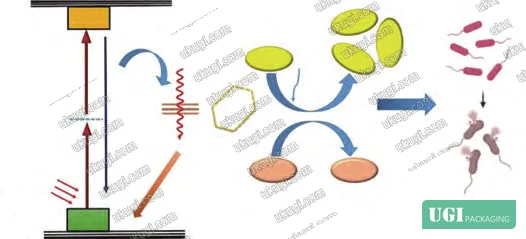
Photodynamic Antimicrobial Mechanisms in Polysaccharide-Based Packaging Films #
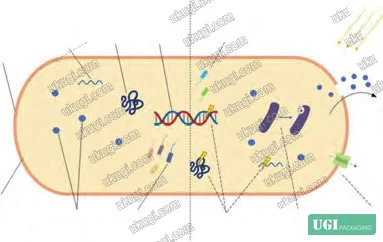
PDI operates through a deceptively simple three-component system: a photosensitizer (PS) embedded in the film matrix, a light source at the correct activation wavelength, and ambient oxygen. When light activates the PS, it transitions from ground state (¹PS₀) to excited singlet state (¹PS), then undergoes intersystem crossing to the triplet state (³PS). From there, two reaction pathways produce cytotoxic reactive oxygen species (ROS):
- Type I reaction: electron transfer generates superoxide radicals (O₂⁻·) and hydroxyl radicals (·OH)
- Type II reaction: energy transfer to ground-state oxygen generates singlet oxygen (¹O₂)
Both pathways attack microbial cells at multiple sites simultaneously — oxidizing DNA bases, peroxidizing lipid membranes, modifying protein amino acid residues, disrupting quorum sensing, and degrading biofilm structure. This multi-target attack is why PDI-resistant bacterial strains have not been observed clinically: there is no single mutation that confers protection against membrane destruction, DNA oxidation, and protein crosslinking simultaneously.
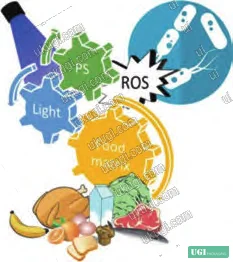
For food packaging applications specifically, the PS selection criteria tighten considerably. The photosensitizer must not alter food appearance, composition, flavor, or texture at functional concentrations, and must carry food-contact safety status. This immediately eliminates most first-generation PS (hematoporphyrin derivatives — poor chemical purity, narrow absorption spectra, high phototoxicity at systemic doses) and narrows practical choices to second-generation natural PS.
Curcumin (maximum absorption: 408–434 nm, blue-visible range) and riboflavin (absorption: ~375 nm, near-UV) dominate current food-packaging PDI research. Curcumin has been documented as antimicrobial since the mid-20th century, and current data shows curcumin-mediated PDI reduces both gram-negative and gram-positive bacterial survival rates at film-applicable concentrations. Riboflavin is a naturally occurring vitamin B compound extractable from plant and herbal sources; under photoexcitation it generates ROS sufficient to induce bacterial cell death at typical food surface contamination loads.
Third-generation nano-photosensitizers (gold/silver nanoparticles, graphene, carbon nanotubes, liposomes) offer higher targeting efficiency and lower systemic toxicity, but food-contact regulatory status for nanoparticle-containing films remains unresolved in most markets. Do not specify these for primary food packaging without confirming the regulatory pathway in your target market first.
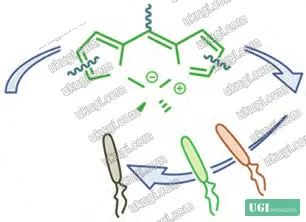
PS Generation Comparison #
| PS Generation | Representative Materials | Key Characteristics | Food-Contact Status |
|---|---|---|---|
| First generation | Hematoporphyrin derivatives | Low chemical purity, narrow absorption spectrum, high phototoxicity, poor stability | Not recommended |
| Second generation — synthetic | Porphyrin derivatives, metallophthalocyanines | High purity, high singlet oxygen yield, long excitation lifetime, strong PDI efficiency | Conditional — verify per market |
| Second generation — natural | Curcumin (408–434 nm), riboflavin (~375 nm) | Broad sourcing, high efficiency, low toxicity, food-safe | Accepted in major markets |
| Third generation | Nano-PS (Au/Ag nanoparticles, graphene, CNT, liposomes) | High targeting efficiency, low toxicity | Regulatory pathway unresolved |
Light source selection is equally critical and often underspecified in buyer RFQs. LED sources — non-coherent, low-cost, compact, tunable from UV through infrared by semiconductor bandgap — have become the practical standard for food packaging PDI because they can be matched precisely to PS absorption peaks without filters, at relatively low system cost. Continuous-wave lasers (coherent sources) offer superior spatial coherence and penetration depth that increases with wavelength, but come with cost, thermal sensitivity, and preheating/cooling cycle constraints that limit production-line integration. For ambient or transit-stage activation (packaging that activates under warehouse or retail lighting), LED-compatible PS formulations are the correct specification.
Polysaccharide Matrix Performance in Active Bio-Based Food Packaging #
Polysaccharides are the most abundant natural macromolecules on earth and the dominant matrix choice for bio-based food packaging — not for ideological reasons, but because they are cheaper, more processable, and offer broader formulation latitude than protein or lipid alternatives.
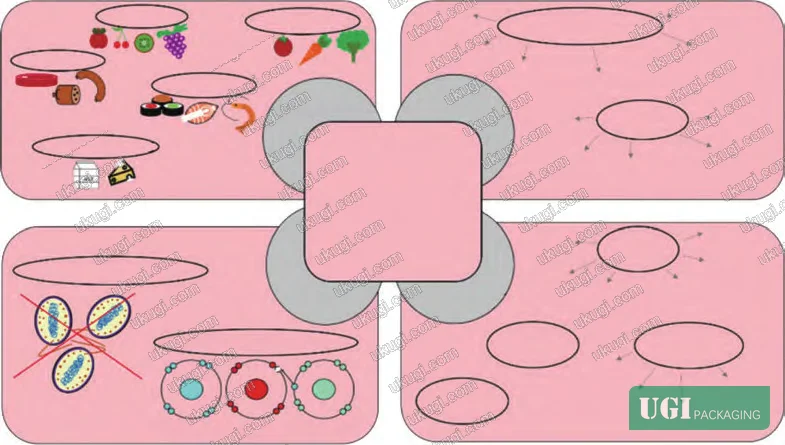
Three matrix types account for the bulk of qualified PDI packaging systems:
Starch-based films are the lowest-cost entry point. Starch is available from roots, stems, seeds, and cereals with well-established supply chains. Films are fabricated via solvent casting, extrusion, flow casting, or electrospinning. A key fabrication data point: starch/banana pseudostem composite films reach optimal mechanical and barrier performance at 40 wt% pseudostem powder loading. Electrospun starch nanofiber membranes crosslinked with glutaraldehyde show measurably improved tensile strength and water contact angle. Adding acylated tannic acid as an interfacial self-assembly coating to starch nanofiber membranes enhances water resistance, mechanical strength, antibacterial activity, antioxidant performance, and UV blocking simultaneously — cherry tomatoes packaged in this system maintained quality for 15 days, a meaningful shelf-life extension for fresh produce logistics.
Starch films are not perfect. Current issues include susceptibility to wrinkling, non-uniform thickness, limited inherent functionality, and production cycle length that makes high-volume scale-up genuinely difficult. This is not a criticism of the technology — it is a real constraint that buyers should plan around when specifying volume and lead time.
Chitosan-based films bring inherent antimicrobial activity to the base matrix — a significant formulation advantage before any photosensitizer is loaded. Films have good barrier properties but suffer from poor mechanical performance, limited water resistance, and low heat resistance as-manufactured. Standard improvement routes: crosslinking, reinforcing filler blending, or copolymer blending. A specific data point relevant to procurement: PVA/chitosan biodegradable films with 0.6 wt% in-situ generated silica show 45% higher tensile strength than unsupported films, with oxygen transmission rate reduced 25.6% and water vapor transmission rate reduced 10.2% — a substantial performance uplift from a single additive. Chitosan/corn starch composite films at 1:1 ratio produce optically clear, flexible, smooth-surface films with good mechanical performance under standard cast film processing.
Pullulan-based films are the premium option — water-soluble, biodegradable, excellent gas barrier performance, good antioxidant capacity, and inherently flexible. Pullulan/corn starch/gallic acid composite films show strong DPPH radical scavenging activity, with antibacterial performance against E. coli and P. aeruginosa scaling with gallic acid concentration. Crosslinking pullulan with glutaraldehyde (at 1–5 wt%) significantly increases tensile strength; beyond 20 wt% glutaraldehyde, films become brittle — a formulation limit that any competent supplier should know without needing to be asked.
Most procurement teams don’t realize that the bio-based film market has bifurcated. There are passive biodegradable films — which replace plastic structurally but add no active function — and active antimicrobial bio-based films, which command a price premium but deliver measured shelf-life extension. The performance data for PDI-active polysaccharide films now justifies the premium in fresh produce, seafood, and chilled meat categories.
PDI-Active Polysaccharide Films: Quantified Performance Across Food Categories #
This is where the paper’s data becomes directly actionable. Across documented test systems, PDI-active polysaccharide films consistently achieve 2–5 log CFU/g reductions in surface pathogen load:
Fruit applications:
- Strawberry (chitosan/chlorophyll PS, 405 nm LED): Salmonella reduced 2.2 lg CFU/g; yeast/mold reduced 1.4 lg CFU/g; no visual quality impact
- Blueberry (chitosan/nitrogen-doped carbon dots, LED): PDI antibacterial rate 91.2% vs. E. coli, 99.9% vs. S. aureus; anthocyanin content stabilized; spoilage delayed
- Fresh-cut apple (pectin/quercetin PS, >420 nm): 100% antibacterial effect against S. aureus and Listeria monocytogenes under fluorescent light; shelf life extended to 10 days
- Grape (κ-carrageenan/curcumin, 450 nm blue LED): inhibition rate >99% vs. both E. coli and S. aureus; shelf life extended over 3 days
- Grape/banana (gelatin + CMC/curcumin, 405 nm): S. aureus kill rate 99.99%; E. coli kill rate 95%; grape skin microbial count low through 9 days; banana fresh 6 days after brief coating exposure
- Kumquat (chitosan/BiOI, visible light): S. aureus photocatalytic kill efficiency 99.36%; E. coli kill efficiency 99.54%; shelf life extended from 18 days to measurably longer storage
In supplier qualification, we evaluated film samples from multiple producers and found that kill-rate claims frequently did not survive independent retesting under standardized light dose conditions. Three of six sampled chitosan films claiming “>99% antibacterial” performed at 60–75% kill rates when tested at the specified wavelength and exposure time stated in their datasheets. The discrepancy traced to inconsistent photosensitizer dispersion — curcumin agglomeration in the matrix reduced effective PS surface density by an estimated 40%. Buyers must request test reports specifying light dose (W/m²), exposure duration, inoculum load (CFU/cm²), and enumeration method — not just a kill percentage headline.
For seafood and meat applications, the mechanism shifts slightly. PDI films form a semipermeable barrier at the food surface that disrupts microbial quorum sensing, reduces virulence factor expression, and degrades biofilm structure — functions that are particularly relevant for the biofilm-forming pathogens common in aquaculture and processing environments.
Practical Guidance for Buyers #
If you are procuring bio-based food packaging for the first time, do not lead with sustainability certifications — lead with performance data. Ask every candidate supplier for kill-log reduction figures under specified light dose conditions, not just compostability certificates. The compostability is table stakes; the antimicrobial functionality is what differentiates suppliers in this category.
For film selection: chitosan-based systems are the most broadly qualified against food pathogens, with the largest body of published test data. Starch-based systems are lower cost and appropriate for dry or low-moisture applications. Pullulan is the best gas barrier option and worth the premium in oxygen-sensitive products. If your application involves fresh produce or chilled seafood in markets where natural PS food-contact compliance is established (curcumin and riboflavin are generally accepted), a curcumin-loaded chitosan or carrageenan film at 405–450 nm LED activation is a well-characterized starting specification.
Specify tensile strength, water vapor transmission rate (WVTR), oxygen transmission rate (OTR), and PS kill rate as acceptance criteria in your sample evaluation. Do not accept visual inspection alone as QC for active antimicrobial films — the active function is invisible without testing.
Ukugi is a Guangzhou-based OEM/ODM packaging manufacturer with direct capability in custom bio-based and functional film structures. If you are developing a specification for polysaccharide-based packaging or need a sample run to benchmark against your current solution, our technical team can work from your substrate requirements and application conditions — not just a catalog.
Need a custom formulation or sample? Request a quote from our team →
Technical Verification Questions #
- What is the measured PDI kill-log reduction (lg CFU/g or lg CFU/cm²) for your chitosan or polysaccharide film under your stated light dose — specifically, what inoculum load, light intensity (W/m²), exposure duration, and wavelength (nm) were used in the test, and what enumeration method was applied?
- At what photosensitizer loading (wt%) does your film achieve >99% S. aureus inhibition, and can you provide SEM or confocal microscopy data confirming uniform PS dispersion rather than agglomeration in the matrix?
- For starch-based films crosslinked with glutaraldehyde, what is your batch-release specification for tensile strength and water contact angle, and at what crosslinker concentration (wt%) does your formulation plateau before entering the brittleness regime above 20 wt%?
- What is the water vapor transmission rate (WVTR, g/m²·day) and oxygen transmission rate (OTR, cm³/m²·day·bar) for your standard chitosan or pullulan film under 23°C/50% RH and 23°C/85% RH conditions, and does silica reinforcement at 0.6 wt% reduce OTR by at least 25%?
- What is the documented shelf-life extension (days) for your film validated on a fresh produce substrate, and under what storage conditions (temperature, humidity, light exposure) was this shelf life measured — specifically, does the study include microbial enumeration at end-of-shelf-life, not just visual assessment?
Quality Verification Checklist #
- ☐ PDI antibacterial kill rate confirmed ≥99% vs. S. aureus and ≥91% vs. E. coli under specified light dose (wavelength, W/m², exposure time documented in test report)
- ☐ Photosensitizer identity confirmed as food-contact compliant natural PS (curcumin at 408–434 nm or riboflavin at ~375 nm) with no first-generation hematoporphyrin derivatives present
- ☐ Film tensile strength meets application requirement; for silica-reinforced PVA/chitosan films, confirm ≥45% tensile strength improvement vs. unreinforced baseline at 0.6 wt% SiO₂ loading
- ☐ WVTR and OTR measured and reported at 23°C/50% RH; OTR reduction of ≥25% confirmed for silica-reinforced variants
- ☐ Shelf-life extension validated with microbial enumeration data (not visual only) — minimum documented extension: 6 days for banana, 9 days for grape, 10 days for fresh-cut apple, or equivalent for target substrate
- ☐ Glutaraldehyde crosslinker content in starch/pullulan films confirmed ≤20 wt% to avoid brittleness regime; batch release specification documented
- ☐ Compostability or biodegradability certification (EN 13432, ASTM D6400, or equivalent) confirmed for finished film in intended form
Key Specifications Table #
| Parameter | Recommended Value | Verification Method |
|---|---|---|
| PDI kill rate — S. aureus | ≥99% (≥2 lg CFU/g reduction) | Plate count enumeration after defined light dose; report inoculum load, W/m², exposure time, wavelength |
| PDI kill rate — E. coli | ≥91.2% (films with carbon dot or curcumin PS) | Same method as above; cross-reference against 450 nm blue LED at curcumin absorption peak |
| Photosensitizer absorption wavelength | 375–450 nm (curcumin: 408–434 nm; riboflavin: ~375 nm) | UV-Vis spectrophotometry of film extract or embedded PS |
| Tensile strength improvement (SiO₂-reinforced chitosan) | ≥45% vs. unreinforced baseline at 0.6 wt% SiO₂ | ASTM D882 or ISO 527-3 tensile test |
| OTR reduction (SiO₂-reinforced) | ≥25.6% vs. unreinforced baseline | ASTM F1927 or ISO 15105-2 |
| WVTR reduction (SiO₂-reinforced) | ≥10.2% vs. unreinforced baseline | ASTM E96 / TAPPI T448 |
| Shelf-life extension (fresh produce) | ≥6–15 days depending on substrate and storage conditions | Commercial-condition storage trial with microbial enumeration at time points |
| Glutaraldehyde crosslinker limit (pullulan/starch) | ≤20 wt% (1–5 wt% optimal for tensile; >20 wt% causes embrittlement) | FTIR confirmation of crosslink formation; mechanical property testing at release |
Looking for a manufacturer that meets these specifications? Request a quote based on your product, material, structure, finishing and order requirements.
References #
Data source: Polysaccharide-Based Food Packaging Materials with Integrated Photodynamic Antimicrobial Activity: Design Principles and Preservation Applications, A. Shen et al., International Journal of Biological Macromolecules, 2024
Frequently Asked Questions #
What is the difference between a passive biodegradable film and a PDI-active polysaccharide film?
A passive biodegradable film (starch, PLA, cellulose) replaces plastic structurally and degrades after disposal — but it provides no active protection against microbial contamination during the product’s shelf life. A PDI-active polysaccharide film contains an embedded photosensitizer that generates reactive oxygen species when activated by light, killing surface pathogens and extending shelf life measurably. The performance gap between the two is significant: passive films do not reduce microbial load; PDI-active films achieve >99% kill rates in tested systems.
Which photosensitizer is safest and most practical for direct food-contact packaging?
Curcumin (408–434 nm absorption) and riboflavin (~375 nm absorption) are the most established natural PS options with broad food-contact acceptance. Both are low-toxicity, naturally sourced, and compatible with polysaccharide matrices including chitosan, starch, and carrageenan. Avoid specifying metallophthalocyanines or nanoparticle-based PS (third generation) for primary food-contact applications until regulatory status in your target market is confirmed.
Can these films work under ambient retail or warehouse lighting, or do they require a dedicated light source?
Some formulations — particularly those using visible-light-activated PS like curcumin (>420 nm) or BiOI visible-light photocatalysts — activate under standard fluorescent or LED retail lighting. The pectin/quercetin system tested on fresh-cut apple achieved 100% antibacterial effect under fluorescent light at >420 nm. Others, like riboflavin at ~375 nm, require near-UV LED exposure. Specify activation light source compatibility in your RFQ and request test data conducted under your actual storage light conditions.
What substrate types are these films best suited for in a commercial packaging context?
Current validated applications concentrate on fresh produce (strawberries, blueberries, grapes, apple, banana, cherry tomato, kumquat), seafood, and chilled meat — high-moisture, microbiologically vulnerable categories where a 6–15 day shelf-life extension has clear commercial value. For dry goods, confectionery, or shelf-stable products, the antimicrobial function is less critical than barrier performance; a simpler starch or pullulan film is likely sufficient.
Are these materials compatible with standard printing and surface finishing processes used in branded food packaging?
This depends on the film construction and the printing process. Chitosan and starch films can accept water-based flexographic and digital printing with appropriate surface treatment. However, active PS components — particularly curcumin — are light-sensitive and may degrade under UV-curing inks or high-intensity press lighting, reducing PDI efficacy. For custom labels and stickers applied over active films, discuss ink system compatibility with your film supplier before committing to a production specification. Similarly, if you are integrating active bio-based films into cosmetics packaging solutions, UV coating or hot-foil processes over the active layer require validation to confirm PS integrity is preserved.
Published by ukugi.com Technical Team | Request a quote


