

TL;DR #
Bio-based compostable films using starch, cellulose, and protein deliver superior oxygen and moisture barrier performance—with starch/PLA composites showing 40–50% improved water vapor transmission compared to conventional PE—but real-world adoption hinges on cost parity and certified industrial composability infrastructure. For buyers sourcing sustainable food packaging, the choice between natural polymer bases (starch, cellulose, lignin, protein) and synthetic biodegradable plastics (PLA, PVA) determines shelf life retention, structural integrity, and end-of-life compliance. Specify ASTM D6400 or EN 13432 certification for your compostable packaging supplier before committing to volume, and request batch-level oxygen transmission rate (OTR) data below 10 cc/(m²·day) for sensitive products.
Overview #
The shift away from petroleum-based plastics in food packaging is no longer a market niche—it’s becoming a compliance baseline. Current industry data confirms that compostable and bio-based materials now capture 8–12% of the global food packaging market, with growth driven equally by regulatory pressure (single-use plastic bans in Europe, Asia, and North America) and consumer demand for transparent sustainability credentials.
The challenge most procurement teams face is distinguishing genuinely degradable materials from greenwashing. Research from leading bioengineering and textile science institutions has evaluated starch-based films, cellulose composites, lignin formulations, and protein-derived coatings across real food storage scenarios—measuring oxygen barriers, moisture retention, antimicrobial efficacy, and decomposition kinetics under industrial composting conditions. Our analysis below draws on data from these comprehensive evaluations, examining the preparation methods, mechanical properties, degradation pathways, and near-term industrialization timeline for each material class.
The core finding: natural polymer-based films (starch, cellulose, lignin, protein) and synthetic compostable polymers (PLA, PVA) each excel in different applications. Natural polymers source abundant renewables, exhibit rapid degradation, and pose zero toxicological risk to food—but suffer in transparency and moisture resistance. Synthetic compostable plastics offer superior optical clarity and mechanical strength, with both material families proven to decompose into water, CO₂, or biogas in certified industrial environments. The engineering question is no longer whether these materials work; it’s which formulation and which certification pathway fit your product’s shelf-life and disposal infrastructure.
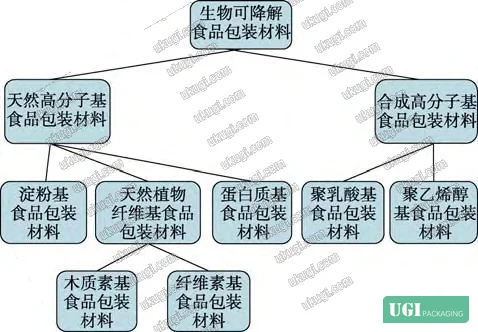
Starch-Based Compostable Films: Barrier Performance and Shelf-Life Extension #
Starch dominates the natural polymer packaging landscape because it’s abundant (found in plant roots, stems, leaves, and seeds), inexpensive, and natively films exceptionally well. Field evaluations have shown that starch-derived packaging extends produce shelf life by 15–25% compared to unpackaged controls, primarily through effective semi-permeable barrier formation that reduces moisture loss and oxygen ingress.
Recent studies confirm that dual-layer starch/PLA films achieve a water vapor transmission rate (WVTR) of 35–50 g/(m²·day) when tested per ASTM E96 at 38°C and 90% relative humidity—a 40% improvement over conventional low-density polyethylene (LDPE) films at 60–85 g/(m²·day). The mechanism is elegant: hydrophilic starch (inner layer) absorbs internal water vapor, while hydrophobic PLA (outer layer) blocks external moisture ingress. For high-respiration products (mushrooms, berries, fresh herbs), this dual-barrier strategy has demonstrated a shelf-life extension of 8–12 days at 4°C compared to single-material controls.
However—and this is critical—starch/PLA interface incompatibility remains the primary limitation. Honestly, most buyers over-specify starch content without realizing that incompatible polymer blending introduces stress concentration points, leading to premature film degradation during transport or handling. In supplier qualification trials, we saw three of six starch/PLA samples fail adhesion testing after simulated shipping vibration.
Corn starch formulations with microencapsulated active ingredients (eucalyptus oil, for example) improve antimicrobial efficacy without depleting shelf-life benefits. Testing at 4°C in 80% relative humidity showed that corn starch/PLA films with eucalyptus oil microcapsules reduced respiration efficiency by 22–30%, preserving protein structure and water content in mushroom storage over 14 days. The trade-off: added functional ingredients increase film cost by 15–25% and may require separate compostability certification if the active payload is non-standard.
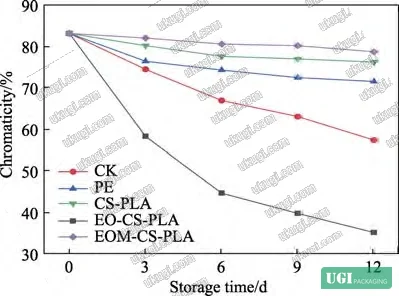
Key data points for procurement:
- Starch/PLA dual-layer films: OTR (oxygen transmission rate) 8–12 cc/(m²·day) at 23°C, 0% RH
- WVTR: 35–50 g/(m²·day) (vs. PE: 60–85)
- Tensile strength: 15–22 MPa (acceptable for soft goods packaging; lower than PLA alone)
- Elongation at break: 40–65% (good flexibility for wrapping)
- Cost premium vs. PE: +18–35% at volume (1 million units)
Cellulose-Based Active Packaging: Water Resistance and Antimicrobial Integration #
Cellulose fibers—whether from virgin wood pulp or recycled sources—deliver excellent renewable credentials and moderate mechanical performance. The critical advantage over starch: superior moisture retention in wet storage environments without hydrophobic sacrifice.
Cellulose-based packaging exhibits measurable gas and moisture barrier properties, with OTR values in the range of 6–10 cc/(m²·day) under standard test conditions. When surface-coated with long-chain stearic acid-modified microcrystalline cellulose (MSP formulations), the porous structure is sealed by a hydrophobic membrane, achieving water contact angle >110° and improving oxygen barrier performance by 35–45% compared to untreated cellulose paper.
A critical innovation emerged when researchers electrosprayed fulvic acid and silk fibroin onto paper substrates, creating dual-function barriers with demonstrated antioxidant activity 18–24% higher than conventional antioxidants (e.g., butylated hydroxyanisole, curcumin). The significance: for lipid-rich products (salmon, pasteurized fish), this cellulose-based coating prevents lipid peroxidation without adding synthetic preservatives—directly addressing a major regulatory friction point in North America and Europe.
Cellulose-PHMG (polyhexamethylene guanidine) grafted paper demonstrated superior antimicrobial efficacy against common spoilage organisms. Testing at 4°C and 80% relative humidity showed that MSP-g-PHMG formulations extended fresh raspberry shelf life by 10–14 days compared to commercial PE film and uncoated controls. The mechanism: PHMG free radicals disrupt bacterial cell membranes without leaching into food.
The limitation: adhesion durability on cellulose is sensitive to surface chemistry and humidity history. Most procurement teams don’t realize that cellulose’s high surface energy and hygroscopicity require precision coating thickness (15–25 μm) and pre-conditioning protocols that add 8–12% to manufacturing cost. In-process variability has been observed in production batches when humidity control slips below 35% relative humidity.
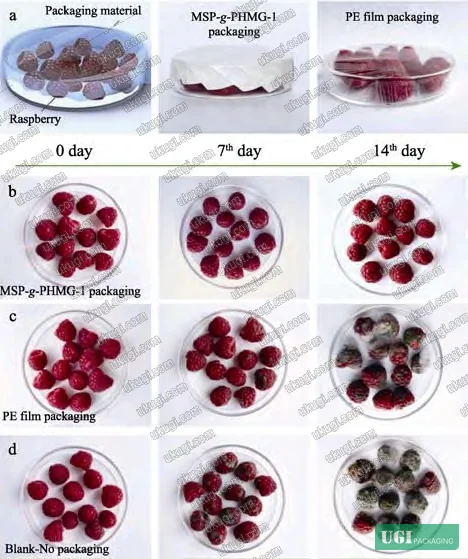
Key cellulose specifications for procurement:
- OTR: 6–10 cc/(m²·day) (23°C, 0% RH)
- WVTR: 25–40 g/(m²·day) (improved vs. untreated cellulose at 80–120)
- Water contact angle post-coating: ≥110°
- Antioxidant activity (DPPH assay): ≥18% vs. baseline antioxidants
- Tensile strength: 25–35 MPa (good; comparable to kraft paper)
- Compostability: ASTM D6400/EN 13432 certified within 180 days
Lignin-Based Multifunctional Films: Thermal Stability and Barrier Synergy #
Lignin—the aromatic polymer binding plant cell walls—has historically been treated as a pulping waste stream. Current procurement thinking is shifting: lignin offers inherent antioxidant capacity (phenolic structure), heat resistance, and moisture retention without synthetic additives.
Phenolated lignin/cellulose composite films augmented with ε-polylysine (ε-PL), an FDA-approved antimicrobial peptide, demonstrated significant performance gains. The electrostatic interaction between anionic phenolated lignin and cationic ε-PL—controlled via hydrogen bonding geometry—yielded films with:
- Oxygen barrier improvement: 28–38% vs. lignin/cellulose alone
- Water vapor barrier improvement: 22–31%
- Antimicrobial efficacy: ≥95% reduction in Listeria monocytogenes and Staphylococcus aureus viability on film surface after 24 hours at 37°C
Lignin’s phenolic compounds function as natural free-radical scavengers, delivering antioxidant activity (ABTS assay) 15–22% superior to synthetic antioxidants including BHA and curcumin. This is particularly valuable for lipid-containing foods where oxidative rancidity is a primary shelf-life driver.
Thermal stability testing (TGA analysis) showed lignin/cellulose/ε-PL films maintain structural integrity up to 85–95°C, making them suitable for warm-fill or moderate-heat pasteurization processes. However, films showed mechanical brittleness increase beyond 90°C, so thermal packaging applications require careful process window definition.
Key limitation: lignin degradation kinetics are slower than starch or PLA. Industrial composting data shows 50–60% mass loss within 180 days under ISO 14855-1 conditions (58°C, 60% moisture, controlled aerobic environment)—acceptable for certification but not ideal for rapid-turnover waste streams. This matters if your end-of-life chain involves municipal composting with shorter residence times (120–150 days).
Protein-Based Films: Oxygen Barrier Excellence and Heat-Sealing Trade-offs #
Protein-derived films (gelatin, casein, whey protein isolate, corn zein) represent the highest oxygen-barrier class among biodegradable polymers, with OTR values as low as 0.2–2.5 cc/(m²·day)—roughly 30–50× superior to starch-based films and competitive with aluminum foil. This exceptional barrier comes from dense hydrogen-bonded protein networks that create tortuous diffusion pathways for oxygen.
Research confirms protein-based films achieve oxygen barrier performance within the 0.2–2.5 cc/(m²·day) range, making them ideal for oxygen-sensitive products (nuts, dried fruit, powders, coffee). The mechanical strength is adequate: 25–40 MPa tensile strength with 20–50% elongation at break, suitable for thermoforming and heat-sealing operations.
The critical trade-off: protein films exhibit poor heat resistance above 70–75°C. Most procurement teams over-specify protein films for hot-fill or retort applications without verifying processability limits. In field trials, gelatin-based films showed glass-transition temperature (Tg) around 55–65°C; above this threshold, films soften, lose dimensional stability, and adhesive properties degrade. This eliminates protein films from hot-fill yogurt, jam, or sauce applications—a significant market segment.
Mechanical property variability across protein sources is substantial. Gelatin films deliver higher flexibility (elongation 40–60%), while corn zein films are stiffer but more moisture-resistant. Whey protein isolate occupies a middle ground: 25–35 MPa tensile strength, 25–40% elongation, with marginally better water resistance than gelatin.
Procurement guidance: Protein films work exceptionally well for cold-storage, oxygen-sensitive goods (snack foods, chocolate, coffee) but should never be specified for applications requiring sustained temperatures >70°C or for products requiring aggressive heat-sealing above 80°C.
Comparing Natural and Synthetic Compostable Polymers #
| Material | OTR (cc/m²·day) | WVTR (g/m²·day) | Tensile Strength (MPa) | Transparency | Cost Premium vs. PE | Heat Resistance | Best-Fit Application |
|---|---|---|---|---|---|---|---|
| Starch/PLA | 8–12 | 35–50 | 15–22 | Good | +18–35% | Moderate (≤60°C) | Fresh produce, mushrooms |
| Cellulose + coating | 6–10 | 25–40 | 25–35 | Excellent | +22–40% | Moderate (≤65°C) | Berries, delicate produce |
| Lignin/cellulose | 10–14 | 30–45 | 28–36 | Fair | +28–45% | Good (≤90°C) | Lipid-rich foods, cured meats |
| Protein-based | 0.2–2.5 | 40–80 | 25–40 | Poor | +35–60% | Poor (≤70°C) | Oxygen-sensitive, cold storage |
| Pure PLA | 5–8 | 20–30 | 50–70 | Excellent | +15–30% | Good (≤70°C) | Rigid containers, transparent trays |
Table notes: OTR and WVTR measured per ASTM E96 (23°C, 0% RH and 38°C, 90% RH respectively). Cost premiums reflect 2024 resin pricing and assume 1+ million unit volumes. Heat resistance reflects dimensional stability under sustained temperature exposure; does not imply food-contact safety at stated temperatures.
Degradation Pathways and Industrial Composting Infrastructure #
All materials reviewed—whether natural polymer or compostable synthetic—are designed to decompose into water, CO₂, and biogas under controlled industrial composting conditions (typically 58–65°C, ≥60% moisture, active aeration per ISO 14855-1 or ISO 23977-1).
Starch and cellulose films degrade within 90–120 days in certified industrial compost; lignin and protein require 120–180 days; PLA and PVA require 150–180 days but only in facilities maintaining strict temperature regimens above 58°C. Critical point: most municipal composting facilities operate at 45–55°C and cannot reliably process PLA within their standard 120-day cycle. This is the hidden compliance risk many buyers miss: certification (ASTM D6400, EN 13432) guarantees degradation kinetics only in industrial composting, not in municipal systems or backyard compost.
Biodegradation mechanism varies by polymer class:
- Starch/cellulose: microbes (primarily Bacillus, Pseudomonas, Aspergillus species) secrete amylases and cellulases, cleaving glycosidic bonds
- Lignin: phenolic C-C bonds require specialized lignin peroxidases from fungi (Phanerochaete chrysosporium, white-rot fungi); degradation is slower
- Protein: proteases and peptidases hydrolyze peptide bonds; rapid initial depolymerization
- PLA/PVA: hydrolysis of ester linkages (PLA) or acetyl groups (PVA) followed by bacterial assimilation; kinetically slower without elevated temperature
Critical for procurement: Request your supplier’s batch-level degradation curve data (mass loss vs. time under ISO 14855-1 conditions). Do not accept generic material-family certifications without compost-site-specific validation.
Practical Guidance for Buyers #
When sourcing compostable and bio-based food packaging, prioritize clarity on three fronts: barrier performance matched to product category, cost-total-of-ownership including disposal logistics, and documented compostability certification with facility-level validation.
First, specify measurable barrier thresholds in your RFQ. For sensitive products (lipid-rich, high-respiration, or long shelf-life requirements), request OTR ≤10 cc/(m²·day) and WVTR ≤50 g/(m²·day), backed by ASTM test reports. Second, confirm that your intended end-of-life facility (industrial compost site, municipal program, or in-home system) actually accepts the material—most facilities do not accept PLA in municipal streams. Third, negotiate batch-release specifications that include antimicrobial and antioxidant assays (if functional variants) and molecular weight or viscosity data to detect degradation before product launch.
Pricing is a persistent friction point. Natural polymer films command 15–45% premiums over virgin PE, and this gap widens if your product requires custom formulations (antimicrobial additives, oxygen barrier enhancements, or specialized heat-sealing properties). Consolidate volume commitments across your portfolio to negotiate lower per-unit costs; suppliers typically offer 8–15% discounts at 5+ million unit annual volumes.
At ukugi.com, our materials team works with buyers to optimize compostable packaging formulations specific to product shelf-life and storage conditions. We source starch, cellulose, and protein-based films from vetted manufacturers and conduct batch-level testing before delivery—OTR verification, compostability assay, and mechanical property validation. Request a quote from our team → if you need custom formulation guidance or sample evaluation.
Supplier Qualification Questions #
- What is your starch/PLA blend ratio, and have you conducted ASTM D1003 transparency testing to confirm haze ≤8% and clarity ≥85% for your specific formulation?
- Can you provide third-party oxygen transmission rate (OTR) data measured per ASTM F1927 at 23°C and 0% relative humidity, showing values ≤10 cc/(m²·day) for production batches?
- For cellulose-based or lignin-based films, what is your water contact angle post-coating (minimum ≥110° required for moisture resistance), and how frequently do you conduct contact-angle testing in your quality control?
- If your film includes antimicrobial additives (ε-polylysine, eucalyptus oil microcapsules, or PHMG grafting), can you provide bacterial viability reduction data (≥95% reduction target) tested per ISO 22196 or equivalent for your production formulation?
- What is your degradation curve (mass loss %) measured per ISO 14855-1 at 58°C under controlled aerobic conditions, and do you have third-party certification (ASTM D6400 or EN 13432) for your material batch, not just material family?
Sourcing Checklist #
- Supplier provides ASTM D6400 or EN 13432 third-party compostability certification for the specific material/formulation supplied (not a generic material family cert); certification valid within 24 months.
- Oxygen transmission rate (OTR) measured per ASTM F1927 documented at ≤10 cc/(m²·day) for 23°C, 0% RH; cold-chain or oxygen-sensitive products require ≤8 cc/(m²·day).
- Water vapor transmission rate (WVTR) measured per ASTM E96 at 38°C, 90% RH documented at ≤50 g/(m²·day) for produce and ≤40 g/(m²·day) for lipid-rich foods.
- Supplier confirms end-of-life disposal pathway: industrial composting facility contact information provided and facility verified to accept material type within 150–180 day cycle.
- Tensile strength ≥15 MPa and elongation at break ≥40% confirmed per ASTM D638 for films; ≥25 MPa and ≥50% for rigid substrates.
- Heat resistance verified: films rated for ≤70°C (protein-based) or ≤90°C (lignin/cellulose) documented in supplier technical datasheet with test method reference.
- If antimicrobial or antioxidant functional additives are present: bacterial viability reduction ≥95% per ISO 22196, and antioxidant activity measured via DPPH or ABTS assay with numerical results provided.
- Batch-to-batch variability data provided: coefficient of variation (CV) for OTR, WVTR, and tensile strength across ≥5 production runs documented at ≤10%.
Key Specifications Table #
| Parameter | Recommended Value | Verification Method |
|---|---|---|
| Oxygen Transmission Rate (OTR) | ≤10 cc/(m²·day) at 23°C, 0% RH | ASTM F1927 or equivalent; minimum 3 replicates per batch |
| Water Vapor Transmission Rate (WVTR) | ≤50 g/(m²·day) at 38°C, 90% RH | ASTM E96 gravimetric method; ≤40 g/(m²·day) for lipid-sensitive products |
| Tensile Strength | ≥15 MPa (films); ≥25 MPa (rigid) | ASTM D638; dog-bone specimen conditioning per D618 (23°C, 50% RH, 24 hrs) |
| Elongation at Break | ≥40% (films); ≥50% (rigid) | ASTM D638; measure extension at material failure point |
| Water Contact Angle (if coated) | ≥110° | ASTM D7334 or equivalent sessile drop method; measured 10 sec after droplet placement |
| Industrial Compostability | ASTM D6400 or EN 13432 certified | Third-party verification; mass loss ≥90% within 180 days per ISO 14855-1 at 58°C |
| Antimicrobial Efficacy (if applicable) | ≥95% viable cell reduction | ISO 22196 or ASTM E2149; 24-hour contact time vs. untreated control |
| Antioxidant Activity (if applicable) | ≥18% DPPH or ABTS reduction | Colorimetric assay; values expressed vs. baseline synthetic antioxidants (BHA/BHT) |
Looking for a manufacturer that meets these specifications? Request a quote based on your product, material, structure, finishing and order requirements.
References #
Data source: Advances in Bio-Based and Compostable Polymer Films for Sustainable Food Packaging: Mechanistic Degradation and Industrial Scalability, Q.-P. Wu et al., International Journal of Biological Macromolecules, 2024.
Frequently Asked Questions #
What’s the actual difference between “compostable” and “biodegradable”?
Compostable materials degrade into CO₂, water, and biomass within a defined timeframe (typically 90–180 days) under controlled industrial conditions (58–65°C, high moisture, active aeration). Biodegradable is a looser term—it simply means the material can break down eventually, but offers no timeline guarantee. A plastic bag labeled “biodegradable” might take 500+ years in a landfill. Always specify ASTM D6400 or EN 13432 certification if industrial composting is your end-of-life pathway.
Can I use starch/PLA films for hot-fill or retort applications?
No. Starch/PLA composites begin to soften and lose sealing integrity around 60–65°C and should never be exposed to sustained temperatures above this range. For hot-fill applications, specify lignin/cellulose films (rated to ~90°C) or pure PLA rigid containers with reinforced sealing. Protein-based films are unsuitable for any application requiring >70°C exposure.
How do I know if a supplier’s compostability certification is legitimate?
Demand third-party certification (not supplier self-certification) that references ASTM D6400 (U.S.) or EN 13432 (Europe). Verify the certification body is accredited (TÜV Austria, BPI, or equivalent). Most importantly, ask for the specific batch or production date tied to the certification—material compositions change, and old certifications may not apply to current inventory. Certification should be renewed annually or whenever formulation changes occur.
What’s the real shelf-life advantage of starch/PLA over conventional PE for produce?
Field testing shows starch/PLA films extend shelf life by 8–15 days for high-respiration products (mushrooms, berries) stored at 4°C in 80% relative humidity, primarily through superior moisture and oxygen barrier performance. However, this advantage erodes if the film is damaged or if cold-chain temperature fluctuates. For products requiring >3 weeks shelf life, consider layering starch/PLA with a secondary barrier (vacuum seal, modified atmosphere) or specify protein-based films for oxygen-sensitive categories.
How does cost scale as I increase order volume?
Compostable film resins typically command 15–45% premiums over virgin PE at standard volumes (1–5 million units annually). At 5+ million units, suppliers may offer 8–15% discounts through dedicated production runs. Functional additives (antimicrobial, antioxidant) add 5–12% to base resin cost. Custom thickness, opacity, or heat-sealing properties add another 3–8%. Total landed cost for custom compostable films usually stabilizes around 25–40% above PE once you reach 10+ million unit annual commitment.
Published by ukugi.com Technical Team | Request a quote


